Pages

Wednesday, June 14, 2017

Donie's Ireland daily news BLOG

Enda Kenny steps down as Taoiseach after forty two years in politics 

‘THIS HAS NEVER BEEN ABOUT ME BUT ALWAYS ABOUT THE CHALLENGES THE PEOPLE OF OUR COUNTRY FACE’

Image result for Enda Kenny steps down as Taoiseach after forty two years in politics   Image result for Enda Kenny steps down as Taoiseach after forty two years in politics 

AN EMOTIONAL ENDA KENNY HAS MADE HIS FINAL ADDRESS TO THE DÁIL AS TAOISEACH, SAYING HE WAS THE FIRST TO ACKNOWLEDGE THAT HE HAD NOT GOT EVERYTHING RIGHT.

“But I can honestly say my motivation was always what I believed was in the best interests of the Irish people,” he added.
He thanked his colleagues in Government and the contribution of Fianna Fáil under leader Micheál Martin.
He had been truly blessed, he said, to lead the country and he thanked the people of Ireland and Mayo.
Taoiseach Enda Kenny leaving Government buildings to go to Áras an Uachtaráin to submit his resignation to President Michael D Higgins.
“I really do believe politics is work worth doing, a noble profession,” he added.
Flanked by Tánaiste Frances Fitzgerald, Minister for Finance Michael Noonan who will also stand down, Mr Kenny’s successor Leo Varadkar, Minister for Housing Simon Coveney and Minister for Health Simon Harris, the Taoiseach informed the Dáil at 2pm he would be going later to Áras an Uachtaráin to submit his resignation to President Michael D Higgins.
He formally handed in in his letter on Tuesday evening.
During his speech in the Dáil, he daid it was a privilege and a pleasure to lead Fine Gael and wished everybody good health in dealing with the challenges ahead.
He quoted Michael Davitt wishing “fond thoughts” and “fullest forgiveness”.
He said he hoped he had made a modest contribution to making Ireland better as envisaged by Davitt.
Mr Kenny then sat down, visibly emotional, to applause from all sides of the House.
Before the Taoiseach offered his resignation, the Dáil stood for the prayer in Irish and English, but there was some confusion when a number of TDs started to sit down during the 30 seconds of meditation.
Members of Mr Kenny’s family sat in the distinguished visitors gallery, including his wife Fionnuala O’Kelly, son Ferdia, his brother Kieran, his personal assistant Sarah Moran and chief of staff Mark Kennelly.
Fianna Fáil leader Micheál Martin described him as “an Irish patriot and an Irish democrat”. Throughout his time in elected office and in government he had been a proud representative of his community, political tradition and country.
Martin tribute
Mr Martin also said Mr Kenny had managed events so that they have proceeded at his desired pace. “He has ensured that those who were stalking the corridors in search of journalists to brief against him have been obliged to issue lengthy statements describing him as the greatest Irishman since Brian Boru”.
The Fianna Fáil leader said “the mischievous enjoyment he has taken in this has been a genuine joy to behold”.
Enda Kenny acknowledges the applause from TDs in the Dáil following his final speech as Taoiseach.
Mr Martin joked it was a “great burden” for Mr Kenny that Mayo had failed to win the Sam Maguire during his time in office.
He said the Taoiseach was courageous when he agreed to take over the leadership of his party when it was at such a low ebb in 2002. He was courageous when he decisively faced down those who challenged him and then went on to win the 2011 general election.
But most of all it was “incredibly courageous to give your heart and soul to working on your job in Government knowing Michael Ring was back in Mayo stealing your votes”.
Sinn Féin leader Gerry Adams said his party and Fine Gael did not agree on many issues but “I always found Enda to be friendly on a personal level. Probably the best leader Fine Gael ever had.”
He said the Taoiseach’s departure from office would be a big change for his family.
“Let me say I will miss you. I will miss your entertaining tales of meetings you have had and meetings you have not had and recollections of people you have met along the way, like the man with the two pints in one hand.”
Mr Adams said he would “miss your optimistic energy”, his jizz, sense of humour and his ability to field questions without giving a clue about his view on the question he was actually asked.
Forty-two years was a long time in the House and he deserved his time out. He also wished Minister for Finance Michael Noonan well in his retirement as a Minister.
Mr Adams said there had been successes including the success of the same-sex marriage referendum. But he said said there had also been abject failures, including the Taoiseach’s consistent failure to recognise the State of Palestine, “the squandering of the biggest mandate in the history of the State as the Fine Gael-Labour Government reneged on election promises, kowtowed to the elites in the EU and the banking and finance sectors, and saddled the people of this State with a debt of €65 billion”.
He said another great failing “has been a clear lack of affinity with the North, one of the deepest problems facing the political system here, and a clear lack of consistent strategic engagement with the process of change that is under way on this island”.
Taoiseach Enda Kenny waves to wellwishers as he leaves Government Buildings to go to Áras an Uachtaráin to resign on Tuesday.
Party backbencher
Mr Kenny stands down after six years as the longest serving Fine Gael Taoiseach and the first to secure a second consecutive term in government for the party.
He now becomes a party backbencher until the next general election when he is expected to retire as a TD.
The Taoiseach is also father of the House as the longest serving TD with 42 years in the Dáil. He was first elected in 1975 in a byelection following the death of his father Henry and fought another 12 elections in his Dáil tenure.
He served three years as a cabinet minister, holding the tourism and trade portfolio in the 1994 to 1997 rainbow coalition.
He also served for a year as minister of state for education and for labour from February 1986 to March 1987.
Mr Kenny took over from Michael Noonan as party leader in 2002 after a disastrous general election for the party and in 2007 the party’s numbers in the Dáil went from 32 to 51 TDs.
In the 2011 general election at the height of the economic recession, Fine Gael secured 76 seats, the most in the party’s history, under his leadership.
For the first time Fine Gael was the largest party in the Dáil and Mr Kenny became the State’s 13th Taoiseach.

AIB secures likely buyers for all of IPO stake

SHARES IN BANK PLUNGE AS SPECULATIVE INVESTORS DIGEST PRICE RANGE FOR 28.8% BEING OFFERED

Image result for AIB secures likely buyers for all of IPO stake  Image result for AIB secures likely buyers for all of IPO stake. shares down

AT ONE STAGE, AIB WAS NOTIONALLY EUROPE’S FIFTH-LARGEST BANK BY MARKET VALUE.

Investment banks and brokers working on AIB’s upcoming flotation have secured enough demand to cover the maximum 28.8% stake the Government plans to sell in the coming weeks, according to market sources.
A spokesman for the Department of Finance said the fact that the order book has been covered is “in line with expectations and shows that there’s good investor interest” in the deal.
Crucially, the initial orders fall within the range of between €3.90 to €4.90 per share that the Government announced as the expected initial public offering price range on Monday evening.
However, the ultimate success of the IPO, due to price around June 23rd, will depend on the extent to which the share sale has been oversubscribed and the type of investors it attracts. AIB’s chief executive Bernard Byrne has set his sights on mainly attracting fund managers with a long-term perspective, rather than hedge funds, who might be willing to pay more but would only have a short-term interest in the bank.
The deal is being led by Deutsche Bank, Bank of America Merrill Lynch and Davy, with Goodbody Stockbrokers, JP Morgan, Goldman Sachs, Citigroup and UBS also on the team.
Shares plunge last Tuesday
Meanwhile, shares in AIB plunged by more than 28% on the junior market in Dublin on Tuesday morning as investors digested the expected price range. By late trading, the drop had reduced, but shares were still almost 14 per cent lower at €5.60.
Many small, speculative investors had ignored repeated warnings from the Minister for Finance Michael Noonan in recent few years that AIB’s stock – of which only 0.2% remained tradable after the State seized the bank in 2010 – had been overvalued amid thin trading volumes.
While the shares spiked late last month at €9.20, the Department of Finance revealed on Monday that it sees €4.90 per share as the top of its likely IPO range. This implies a value of between €10.6 billion and €13.2 billion for the bank.
The overvaluation of AIB first emerged in August 2011 when investors ignored a surge in the number of shares in issuance as taxpayers pumped the final amount of a total €20.8 billion rescue of the bank during the crisis.
At one stage, the bank was notionally Europe’s fifth-largest bank by market value, at over €60 billion, even as it was posting record losses. That was equivalent to nearly the State’s entire €64 billion bill for saving the banking system during the crisis and the €67.5 billion international credit line the Government was forced to accept in 2010 .

Being overweight, not just obese, carries a lot of serious health risks
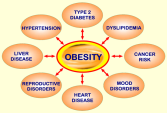
Image result for Being overweight, not just obese, carries a lot of serious health risks  Image result for Being overweight, not just obese, carries a lot of serious health risks  Image result for Being overweight, not just obese, carries a lot of serious health risks
EXCESS WEIGHT CAN TRIGGER A LOT OF KILLER DISEASES.

“Four million people died in 2015 as a result of being too tubby, struck by cancer, heart disease, diabetes and other killer conditions,” reports now show?
This is based on a global study that looked at how the proportion of people who are overweight and obese has changed over time. This was determined by recording body mass index (BMI), where a BMI of 25-29.9 means being overweight and 30 or above is being obese.
Researchers then assessed the link between having an unhealthy BMI and health outcomes including cardiovascular disease, diabetes and cancer.
It found that, despite public health efforts, obesity is on the rise in almost every country and in both adults and children. Prevalence has doubled in most countries over the past 30 years. Researchers also estimated that having a high BMI accounted for 4 million deaths globally, 40% of which occurred in people who were overweight but not yet obese.
This demonstrates that being overweight may almost be as risky to health as being obese. The rate of increase in obesity was also greater in children, showing the need for interventions to halt and reverse this trend to avoid future disease and deaths.
What is considered a healthy weight – BMI 20 to 25 – was unsurprisingly found to be the category with the lowest health risk. The best way to obtain and maintain a healthy BMI is to eat a healthy calorie-restricted diet and exercise regularly; two concepts that are at the core of the NHS Weight Loss Plan.
Where did the story come from?
The study was carried out by researchers from a wide range of global institutions and universities, but was led by the Institute for Health Metrics and Evaluation (IMHE), based at the University of Washington in Seattle. It was funded by the Bill and Melinda Gates Foundation.
The research was published in the peer-reviewed The New England Journal of Medicine on an open-access basis, which means it is free to read online (PDF, 2.3Mb).
A surprising key finding, as the BBC reported, is that “of the 4 million deaths attributed to being overweight in 2015, nearly 40% were not considered clinically obese”. The BBC accurately explains how merely being overweight, and not just obese, can increase risk of death.
What kind of research was this?
This was a review and report of evidence from around the world that looked at how the prevalence of being overweight and obese has changed over time. The researchers then looked at how being overweight affects the risk of various health outcomes, including cardiovascular disease and death.
Gathering high quality data from across many studies over time is the best way to see whether prevalence has changed and to see which health conditions are most strongly related to high body mass index (BMI). However, it is difficult to know how big a role BMI plays in raising your risk of certain health conditions, as other factors also have an influence.
What did the research involve?
The researchers analysed data from 68.5 million people from 195 countries looking at the burden of disease related to BMI between 1990 and 2015, and according to age, sex, and country. They looked at both children and adults.
Disease burden was defined as deaths and disability-adjusted life years (accounting for years of life lost or lived with disability) due to high BMI.
Information on adult BMI was provided by 1,276 unique sources from 176 countries, and 1,211 sources from 173 countries provided data on children’s BMI.
For adults, “overweight” was defined as a BMI between 25 and 29 and “obese” was 30 or above. In children, the International Obesity Task Force definitions of childhood overweight and obesity were used. These definitions are based on the principle of a child being heavier for their age than you would expect. The results were broken down by sex and by 5-year age groups.
They looked at the effect of high BMI on health outcomes and estimated the increase in risk associated with a change of five units of BMI in 5-year age groups for:
  • ischemic heart disease (eg angina and heart attack)
  • ischemic stroke (caused by a blood clot)
  • haemorrhagic stroke (caused by a bleed)
  • hypertensive heart disease (strain on the heart caused by high blood pressure)
  • diabetes
To understand where most of the burden of disease occurs, they looked at three ranges of BMI (20 to 24; 25 to 29 and 30 or over) and for five overarching groups of diseases:
  • cardiovascular disease
  • diabetes
  • chronic kidney disease
  • cancers
  • musculoskeletal disorders
They also determined the BMI associated with the lowest overall risk of death.
What were the basic results?
In 2015, globally 107.7 million children and 603.7 million adults were obese. The prevalence has doubled in more than 70 countries since 1980 and continuously increased in most other countries.
Obesity now affects an estimated 5% of all children and 12% of all adults. In all adult age brackets, prevalence was generally higher among women.
Worldwide findings included:
  • High BMI contributed to 4 million deaths in 2015 (95% confidence interval [CI] 2.7 to 5.3), representing 7.1% (95% CI 4.9 to 9.6) of all deaths globally.
  • High BMI contributed to 120 million disability-adjusted life years lost (95% CI 84 to 158).
  • A total of 39% of the deaths and 37% of the disability-adjusted life years were in people with a BMI of less than 30 (i.e. not obese).
  • Cardiovascular disease was the leading cause of death and disability-adjusted life years with 2.7 million deaths (95% CI 1.8 to 3.7) and 66.3 million disability-adjusted life years (95% CI 45.3 to 88.5).
  • Diabetes was the second leading cause and contributed to 0.6 million deaths (95% CI 0.4 to 0.7) and 30.4 million disability-adjusted life years (95% CI 21.5 to 39.9).
A normal BMI of 20 to 25 in adults was associated with the lowest risk of death (the UK defines this as a healthy level).
How did the researchers interpret the results?
The researchers concluded that their study “provides a comprehensive assessment of the trends in high BMI and the associated disease burden. Our results show that both the prevalence and disease burden of high BMI are increasing globally. These findings highlight the need for implementation of multicomponent interventions to reduce the prevalence and disease burden of high BMI.”
Conclusion?
This impressively large global study demonstrates that the prevalence of obesity is increasing worldwide among both children and adults. It supports what has long been thought, that increased body mass index (BMI) contributes to a range of illnesses and is ultimately responsible for a large number of deaths, particularly from cardiovascular disease.
One potential limitation is the use of self-reported BMI or health outcome data in some of the studies, although the majority used a specific independent measurement so this is unlikely to have biased results too much.
It is also always difficult from observational data to be certain of the exact amount of years of life lost or lived with disability that are directly caused by high BMI. It is possible that being overweight or obese may contribute to the risk of getting a particular disease, for example cancer, in combination with other health and lifestyle factors. Therefore, though based on a large quantity of data, the results must still be considered as estimates.
Nevertheless the study highlights what we already know – that being obese is linked to a large number of chronic diseases. Perhaps more notable was that it also shows that almost half of the years of life lost or lived in poor health could be attributed to people being overweight, not just obese.
This study design cannot explain the increasing prevalence of overweight and obesity. However, the fact that obesity has increased in countries of all levels of development indicates it is no longer a problem solely for high income countries. As the authors suggest, there are multiple factors contributing to this continuing trend, including reduced opportunities for physical education with growing urbanisation, along with increased availability, affordability and accessibility of energy-rich but nutritionally poor food.
There is an ongoing need for effective interventions to tackle overweight and obesity, both at the public health and the individual level. Otherwise the public health burden of obesity could be for the 21st Century what smoking was to the 20th Century – an entirely preventable cause of disability and death.

Ireland is one step closer to lifting the Good Friday alcohol ban

The Irish cabinet approved a number of amendments to a private members bill which would lift the ban.
Image result for Ireland is one step closer to lifting the Good Friday alcohol ban  Image result for Ireland is one step closer to lifting the Good Friday alcohol ban  Image result for Ireland is one step closer to lifting the Good Friday alcohol ban

THE LIFTING OF THE ALCOHOL BAN ON GOOD FRIDAY GOT ONE STEP CLOSER TODAY, AS CABINET APPROVED AMENDMENTS TO A PRIVATE MEMBERS BILL THAT WILL LIFT THE BAN IN RESTAURANTS, REGISTERED CLUBS AND HOTELS.

Tánaiste and Justice Minister Frances Fitzgerald has already said the Government will not oppose the Bill tabled by the Independent Senator Billy Lawless earlier this year.
The Intoxicating Liquor (Amendment) Bill 2017 aims to reverse the obligatory closure of licensed premises every year on Good Friday.
Today’s amendments extend the scope of the Bill, but as it stands the ban on alcohol in pubs on Good Friday still exists.
Originally, the Government had intended to deal with the 90-year old alcohol ban with its own legislation, but it is now happy to allow the private members bill to proceed on, with amendments made to it along the way.
While lifting the ban in pubs is yet to be approved by Cabinet, one government source said today’s amendments “signals the direction and intention” of the government to move towards an overall lifting of the ban in pubs, restaurants, clubs and hotels.
What do you think?
A Mini-poll: Should pubs be allowed to open on Good Friday?
The Poll Results: 

Glamping village owner hits out at banks over loans

Image result for Glamping village owner hits out at banks over loans  Image result for Glamping village owner hits out at banks over loans
The undertaker who made world headlines when he transported a decommissioned Boeing 767 by sea to his planned glamping village, has hit out at banks who he claimed treat the west of Ireland as a “no-go area”.
The Quirky Glamping Village featuring a decommissioned Boeing 767 in Enniscrone, Co Sligo.
Enniscrone-based David McGowan told Sligo County Council that he hopes the first guests will be on site at the Quirky Nights Glamping site this time next year.
However, the entrepreneur who had hoped to be open for business this summer, outlined his difficulty in raising finance for the project saying he had been offered a bank loan, on terms which would have been “suicidal” for him to accept. He said banks had sought a €2m personal guarantee.
“As far as I was concerned I would be putting my family at risk”, said Mr McGowan.
He said the banks’ attitude was that “if it goes down, they are left with a hundred ton of scrap metal”.
Mr McGowan said that as well as being “very soul destroying”, this gave an insight into how lending institutions regard developers in the west of Ireland.
The undertaker said that he will now use Crowdfunding to raise the €2.5m needed to make his dream a reality.
He said he needed 25,000 people to pledge €100 each and was “fairly confident” of achieving that.
“I have 70,000 followers on my Facebook page,” he said.
He told councillors while there was a rumour out there he had run out of money this was not true.
“I am just being cautious. I think the banking system in this country is all wrong. I think they treat people in an inhumane way. They throw you out on the side of the road. They don’t care about your family”.
He told Sligo councillors that he had put the county on the world stage and had been trending third in the world on Twitter — behind Donald Trump and Russian President Vladimir Putin — on the night the Boeing 767 was successfully deposited on Enniscrone beach.
He has moved a decommissioned RAF helicopter, a London train and a number of former London taxis to the site.

A breakthrough in thin electrically conducting sheets paves way for smaller electronic devices

Image result for A breakthrough in thin electrically conducting sheets paves way for smaller electronic devices   Image result for Professor Marty Gregg from Queen's University School of Mathematics and Physics, have created unique 2-D sheets, called domain walls

QUEEN’S UNIVERSITY BELFAST RESEARCHERS HAVE DISCOVERED A NEW WAY TO CREATE EXTREMELY THIN ELECTRICALLY CONDUCTING SHEETS, WHICH COULD REVOLUTIONISE THE TINY ELECTRONIC DEVICES THAT CONTROL EVERYTHING FROM SMART PHONES TO BANKING AND MEDICAL TECHNOLOGY.

Through nanotechnology, physicists Dr Raymond McQuaid, Dr Amit Kumar and Professor Marty Gregg from Queen’s University’s School of Mathematics and Physics, have created unique 2-D sheets, called domain walls, which exist within crystalline materials.
The sheets are almost as thin as the wonder-material graphene, at just a few atomic layers. However, they can do something that graphene can’t – they can appear, disappear or move around within the crystal, without permanently altering the crystal itself.
This means that in future, even smaller electronic devices could be created, as electronic circuits could constantly reconfigure themselves to perform a number of tasks, rather than just having a sole function.
Professor Marty Gregg explains: “Almost all aspects of modern life such as communication, healthcare, finance and entertainment rely on microelectronic devices. The demand for more powerful, smaller technology keeps growing, meaning that the tiniest devices are now composed of just a few atoms – a tiny fraction of the width of human hair.”
“As things currently stand, it will become impossible to make these devices any smaller – we will simply run out of space. This is a huge problem for the computing industry and new, radical, disruptive technologies are needed. One solution is to make electronic circuits more ‘flexible’ so that they can exist at one moment for one purpose, but can be completely reconfigured the next moment for another purpose.”
The team’s findings, which have been published in Nature Communications, pave the way for a completely new way of data processing.
Professor Gregg says: “Our research suggests the possibility to “etch-a-sketch” nanoscale electrical connections, where patterns of electrically conducting wires can be drawn and then wiped away again as often as required.
“In this way, complete electronic circuits could be created and then dynamically reconfigured when needed to carry out a different role, overturning the paradigm that electronic circuits need be fixed components of hardware, typically designed with a dedicated purpose in mind.”
There are two key hurdles to overcome when creating these 2-D sheets, long straight walls need to be created. These need to effectively conduct electricity and mimic the behavior of real metallic wires. It is also essential to be able to choose exactly where and when the domain walls appear and to reposition or delete them.
Through the research, the Queen’s researchers have discovered some solutions to the hurdles. Their research proves that long conducting sheets can be created by squeezing the crystal at precisely the location they are required, using a targeted acupuncture-like approach with a sharp needle. The sheets can then be moved around within the crystal using applied electric fields to position them.
Dr Raymond McQuaid, a recently appointed lecturer in the School of Mathematics and Physics at Queen’s University, added: “Our team has demonstrated for the first time that copper-chlorine boracite crystals can have straight conducting walls that are hundreds of microns in length and yet only nanometres thick. The key is that, when a needle is pressed into the crystal surface, a jigsaw puzzle-like pattern of structural variants, called “domains”, develops around the contact point. The different pieces of the pattern fit together in a unique way with the result that the conducting walls are found along certain boundaries where they meet.
“We have also shown that these walls can then be moved using applied electric fields, therefore suggesting compatibility with more conventional voltage operated devices. Taken together, these two results are a promising sign for the potential use of conducting walls in reconfigurable nano-electronics.”   

Wednesday, May 24, 2017

Donie's Ireland daily news BLOG

The shredding of documents played a key role in downfall of FitzPatrick inquiry

LEGAL ADVISER ‘TAKEN ABACK’ BY GARDA COMMISSIONER’S NOTE ABOUT WITNESS STATEMENTS

Image result for The shredding of documents played a key role in downfall of FitzPatrick inquiry  Image result for The shredding of documents

THE FORMER CHAIRMAN AND CHIEF EXECUTIVE OF ANGLO IRISH BANK, SEÁN FITZPATRICK, HAS BEEN ACQUITTED ON ALL CHARGES AGAINST HIM AT THE CIRCUIT CRIMINAL COURT.

The spectacular ending of the trial of the former chairman of Anglo Irish Bank, Seán FitzPatrick, has come about in part because documents relevant to the case were shredded by a solicitor investigating the alleged offences.
The extraordinary shredding of documents led to a collapse of an earlier trial and contributed to the decision by the judge on Tuesday that he would direct the jury to acquit in this trial.
Kevin O’Connell, a legal adviser with the Office of the Director of Corporate Enforcement, took on a lead role in the investigation but, according to evidence he gave in the absence of the jury, shredded documents during a “panic attack” in his office in May 2015.
He informed the Director of Public Prosecutions as to what he had done, then sought psychiatric help. The first trial of FitzPatrick, then ongoing, collapsed as a result.
The collapse of one of the most significant white-collar crime cases to come before the courts in the wake of the Irish banking crisis is a huge blow to the reputation of the Office of the Director of Corporate Enforcement (ODCE), the agency established to investigate corporate crime. It led the inquiry. It is also a blow to the reputation of An Garda Síochána and the Office of the Director of Public Prosecutions.
FitzPatrick (68), of Whitshed Road, Greystones, Co Wicklow, had pleaded not guilty to 27 charges under the Companies Acts relating to giving false or misleading information to Anglo’s auditors Ernst & Young (now EY).
In announcing his decision on Tuesday, Judge John Aylmer referred to O’Connell’s evidence that the documents he shredded were notes of phone conversations similar to other such notes he had discovered to the DPP.
However, the judge said the fact was we didn’t know what was in them and there must be a doubt about why they were singled out.
O’Connell had given evidence to the first trial of FitzPatrick, over six days, in the absence of the jury, as it was becoming evident that the investigation had been mishandled in relation to the taking of statements from two key witnesses.
In evidence heard by the court in the absence of the jury it emerged that O’Connell feared last year, at the time of the shredding, that he was going to be “hung out to dry” if the case collapsed.
Garda correspondence.
More recently, internal Garda correspondence, released to the trial by Garda Commissioner Nóirín O’Sullivan, showed senior Garda officers being advised in the wake of the shredding that no members of the force were connected with the destruction of documents or with the taking of witness statements from two key witnesses.
O’Connell, in the witness box in the absence of the jury, said he was “taken aback” by the latter claim, given that Garda colleagues in the ODCE had been involved in the inquiry alongside him and had been copied in email correspondence and had attended meetings concerned with the taking of statements from the two witnesses.
Defence counsel Bernard Condon SC commented to the court that the Garda were “attempting to find a bus to put him [O’Connell] under.” An assistant Garda commissioner, the correspondence revealed, had been warned that the case might produce “adverse publicity” for the force.
Extended legal argument heard in the absence of the jury outlined how the inquiry was handled as if it was a civil case before the High Court rather than a criminal case. The process of taking witness statements from two key witnesses, the court heard, was “lawyer led”.
The two key witnesses, EY partners Kieran Kelly and Vincent Bergin, were “coached” and their witness statements contaminated, with some of the wording in both statements having been actually written by the former Director of Corporate Enforcement, Paul Appleby, the court was told. The interference included the suggested changing of key phrases in the statements. The taking of statements occurred as if they were affidavits being prepared for a civil case.
The two key witnesses, both former auditors of Anglo’s books, signed witness statements that were the product of a long engagement involving a number of individuals in the ODCE, as well as lawyers in EY and in the law firm that acts for EY, A&L Goodbody.
It was “statement by committee”, Condon told the judge, during the extended legal argument.
Potential conflict?
There was also an issue of potential conflict. Some of the lawyers acting for EY in the drafting of the statements were also acting for EY in a €50 million damages claim from the Irish Bank Resolution Corporation(IBRC). The State-owned body’s case includes matters relevant to the FitzPatrick trial.
The lawyers were also acting for EY in relation to an inquiry by the firm’s regulatory body, the Chartered Accountants Regulatory Board (Carb), which is investigating the adequacy of the audit work done by EY on Anglo’s books. Condon said the Carb inquiry could potentially lead to EY losing its licence.
One of the complaints from FitzPatrick’s defence team was that the ODCE did not seek out information that went to their client’s potential innocence as well as his potential guilt, a point that has now been accepted by the judge. The ODCE had been trying to “build” a case, the judge said.
FitzPatrick walks away an innocent man. It is the second time he has faced charges that came to trial and from which he has emerged with his innocence intact. In 2014 a jury found him innocent of charges of providing unlawful financial assistance to 10 individuals known as the Maple 10, in July 2008, so that they could buy shares in Anglo Irish Bank.
During that trial, Judge Martin Nolan directed that FitzPatrick be found not guilty of other charges relating to loans issued to members of the family of the businessman Seán Quinn.
The charges on which FitzPatrick is now to be acquitted related to the treatment of loans from the bank which were transferred each year end to the Irish Nationwide Building Society, before being transferred back to the bank. This meant they did not have to be disclosed in Anglo’s end of year accounts.
The so-called “warehousing” of the loans led to FitzPatrick’s resignation when it emerged in December 2008, and contributed to the loss in confidence in the bank that in turn led to it being nationalised in January 2009. The ODCE began investigating the matter in December 2008.
O’Connell said the documents he shredded had been overlooked when disclosure was being made to the FitzPatrick defence, and when he discovered them on a tray on the floor of his office, he realised he was going to have to go back to the witness box and give more evidence. After he informed the State legal team of what he had done, he sought psychiatric help.
Bizarre and dramatic development.
The bizarre and dramatic development turned a crisis caused by how the investigation had been conducted, into a full-blown catastrophe. Although O’Connell said he wasn’t sure what the documents he shredded were, he said he believed they were notes taken in meetings or during phone calls associated with the case. Complaints about disclosure had featured during his giving of evidence in 2015, and when he returned to the office and found more documents that had not been disclosed, he panicked, he said.
In 2015 he referred to eight or nine pages of notes, while this year he said he thought about three or four pages may have been involved. He refused to let the court have access to reports concerning his mental health.
O’Connell had played a key role in gathering evidence against FitzPatrick even though he had never played a role in investigating an indictable offence before.
The court heard that, as problems with the investigation emerged during the trial, the new Director of Corporate Enforcement, Ian Drennan, who had taken over from Appleby in August 2012, informed his staff that only Garda officers were to henceforth take witness statements.
He also said that when the details of what had happened in the FitzPatrick case emerged, it was likely that the agency would suffer “very severe reputational damage” as well as “parliamentary scrutiny”.
All of the interviews with the EY partners occurred in the presence of the solicitors from A&L Goodbody, including partner Liam Kennedy, with whom O’Connell was in regular contact.
There were up to 40 versions of the Kelly and Bergin statements in the huge discovery of documents released to the defence last year. It was after the multiple drafts were received that the defence learned of the flaws it argued existed in relation to how the investigation had been conducted.
Some of the drafts had been going “back and forth” between the ODCE and A&L Goodbody, some within the ODCE, and some within A&L Goodbody. It was “statement by committee”, Condon said. “Conspicuous by their absence were the guards.” He said standards in investigating a suspected crime could not be lowered just because it was an alleged white-collar crime. “Everyone goes to the same prison.”

The FG leadership battle & the candidates Simon Coveney v Leo Varadkar

Image result for The FG leadership battle & the candidates

SIMON COVENEY – PERSONAL: AGED 44. SON OF FORMER FINE GAEL TD AND MINISTER HUGH COVENEY, WHO DIED IN AN ACCIDENT IN 1998.

As well as being a politician, his father was a successful surveyor and wealthy farmer. Married to Ruth Furney, an IDA executive in Cork. They have three young daughters.
Education: Clongowes Wood College. UCC, Gurteen Agricultural College, Tipperary, Royal Agriculture College, Gloucestershire, England. Holds a BSc in agriculture and land management.
Political: First elected a Fine Gael TD for Cork South Central in 1998 by-election caused by his father’s death. Was an MEP 2000-2007 but gave up Euro seat for Dáil politics. Appointed agriculture minister in 2011, took on additional defence portfolio in 2014. Housing Minister since May 2016.
Career trajectory: Began in the shadow of his late father’s reputation and later for a time dubbed “light weight”. But seen as a potential Fine Gael leader for almost a decade. Viewed as earnest and policy-driven – he has been cultivating personal support in recent years.
Strengths: Unfailingly polite, extremely hard-working and pays keen attention to policy details. A dealmaker, capable of standing his ground as well as compromising. Did heavy-lifting on Fine Gael-Fianna Fáil deal to underpin this Government.
Weaknesses: More focused on policy than people. Knockabout politics does not come naturally to him.
Lucky general? In his first job as agriculture minister in 2011, he presided over the only Irish sector doing well. Sided against Enda Kenny in 2010 ‘botched heave’ and still made cabinet.
Unlucky general? He landed the toughest Cabinet job in May 2016, leaving him a housing and homelessness crisis and the future of water charges. These just as he was trying to become taoiseach.
To be expected: From Cork’s wealthy section of society, he sails and played rugby.
A surprise: Was expelled from the elite Clongowes Wood secondary boarding school for partying and drinking, much to the anger of his parents. Specialised in human rights as an MEP.
Soundbite winner: “Whatever ministry I have, whether it’s defence, whether it’s marine, whether it’s agriculture, I’ve tried to make as big a mark as I can in taking on some big challenges and trying to overcome them. I’ve got some very big challenges at the moment to take on and overcome, and there’s a lot of people relying on me to do it,” in December 2016 on facing up to challenge of being the Housing Minister.
Soundbite gaffe: On March 1, 2016, he “dropped the ball” by suggesting abolition of Irish Water could be part of Fine Gael-Fianna Fáil government-making talks. “We need to take on board within reason, what they are looking for,” he said on RTÉ.
Unique Selling Point: Total commitment to policy achievements in whatever job he takes on.
Politician, living or dead, he most admires: Aung San Suu Kyi.
Stated hobbies: Sailing, rugby, GAA and following all sports.

COVENEY’S POLICIES

TAXATION: He would change Fine Gael’s current stance on scrapping USC. Also wants to raise bands so workers don’t hit the 40pc rate at €33,800.
INFRASTRUCTURE: A long-term strategic infrastructure plan as part of ‘Ireland 2040’. Ring-fence up to €20bn for infrastructure, mostly focused on transport.
BREXIT: With his experience as an MEP and agriculture minister, says he is best-placed to represent Ireland in talks.
HOUSING: Sticking to his ‘Rebuilding Ireland’ plan. Has committed more than 20,000 new homes a year being built.
INDUSTRIAL RELATIONS: From a policy point of view, says he agrees with Varadkar.
ABORTION: The Citizens’ Assembly recommendations go “too far” but the current laws need to be changed to recognise crisis pregnancies.
EDUCATION: ‘Action Plan for Education’ and produce specific annual targets.
HEALTH: Also cites the Oireachtas committee as an important process and plans “to substantially reduce health inequalities in Ireland”.
UNITED IRELAND: Committed to immediately drafting a white paper on possible reunification.

LEO VARADKAR

Personal: Aged 38 and a qualified medical doctor. His father, Ashok, is an Indian-born medical doctor and his mother, Miriam, a nurse originally from Co Waterford. His parents met while working in England. He has two sisters – Sophia is a doctor in the neurology department of Great Ormond Street Children’s Hospital in London, while Sonia is a nurse at the Coombe in Dublin. Lived most of his life in the prosperous west Dublin suburb of Castleknock. Is unmarried and in January 2015 became Ireland’s first openly gay government minister.
Education: The King’s Hospital, Dublin, and Trinity College Dublin.
Political: Schoolboy and student Fine Gael activist. Unsuccessfully contested 1999 local elections, elected to Fingal County Council in 2004. TD for Dublin West since 2007. Minister for transport and tourism 2011-2014; health 2014-2016; Social Protection 2016 to date.
Career trajectory: Has been talked about as a potential Fine Gael leader since his arrival at Leinster House in June 2007. One of the party’s young Turks, once dubbed “Tory Boy” in his youth – has been busy dumping the right-wing rhetoric and gravitating to the middle.
Strengths: Quick-thinking and dynamic. Does a refreshingly candid “honesty-in-dishonesty line” and usually gets away with it. Very hard-working.
Weaknesses: More style than substance. For all his talk, was a “manager rather than a doer” as transport, health and finally Social Protection Minister.
Lucky general? His two full winters as health minister, 2014/15 and 2015/16, were mild and did not have a full-blown “trolley crisis”. Sided against Enda Kenny in 2010 ‘botched heave’ and still made cabinet in 2011.
Unlucky general? As tourism and transport minister, his two junior ministers were Michael Ring and Alan Kelly, two of the Dáil’s toughest characters. Had fretful two years in health when he faced high expectations as a doctor.
To be expected: As a medical student in TCD, social life was all about Young Fine Gael.
A surprise: Has been busy brushing up on his Gaeilge – came to this week’s decisive Fine Gael meeting directly after sitting a civil service Irish exam.
Soundbite winner: “It’s not something that defines me. I’m not a half-Indian politician, or a doctor politician, or a gay politician for that matter. It’s just part of who I am, it doesn’t define me,” his summation as he announced he was gay in January 2015.
Best howler: “I really can’t wait to get the keys to one of those government jets. My bowels aren’t feeling the Mae West today.” An over-sharing blog, as an opposition TD in 2009, recounting a marathon journey home from Ulaanbaatar in Mongolia, involving long waits in Moscow and Heathrow.
Unique Selling Point: Can still claim to be “an outsider” carrying a certain air of mystery and intrigue.
Politician, living or dead, he most admires: Michael Collins.
Stated hobbies: Fitness, good food and wine, and good company.

VARADKAR’S POLICIES

TAXATION: Cut high marginal income tax rates.Tax equality for self-employed. Merge USC and PRSI.
INFRASTRUCTURE: Increase capital spending over 10 years, focusing on the Dublin Metro, the M20 between Cork and Limerick and motorway access to the west and north-west.
BREXIT: Five Brexit principles, including trying to keep Northern Ireland in the single market.
HOUSING: Scrap the ‘Help-To-Buy’ scheme if it is inflating prices, and spend on ‘Housing with Care’ for older people.
INDUSTRIAL RELATIONS: Essentially strikes will be banned after a Labour Court judgment has been made.
ABORTION: Would support access to a termination in cases of rape but not on demand.
EDUCATION: Increase the Back to School Clothing and Footwear Allowance. He will also provide subsidised school books/tablets to all children.
HEALTH: “The health service of the future needs to be patient centred and about better access and outcomes”.
UNITED IRELAND: Prepare that it might happen in our lifetime but won’t agitate for it.

FINE GAEL PARLIAMENTARY PARTY ENDORSEMENTS FOR LEADER

The Fine Gael parliamentary party makes up 65pc of the total electorate.
That makes each of the 73 members’ votes worth 0.9% of the total ballot.
Of the remaining electorate, 230 party councillors account for 10%, while the remaining 25% is rank and file members.
Leo Varadkar
Simon Coveney
Total: 45
Total: 19
Ministers: 17
Ministers: 5
TDs: 16
TDs: 5
Senators: 11
Senators: 8
MEPs: 1
MEPs: 1
Richard Bruton -Minister
Simon Harris – Minister
Frances Fitzgerald – Minister
Damien English – Minister
Michael Ring – Minister
Dara Murphy – Minister
Eoghan Murphy – Minister
David Stanton – Minister
Sean Kyne – Minister
Marcella Corcoran Kennedy – Minister
Joe McHugh – Minister
Kate O’Connell – TD
Helen McEntee – Minister
Maria Bailey – TD
Charlie Flanagan – Minister
Sean Barrett TD
Paul Kehoe -Minister
Hildegard Naughton – TD
Patrick O’Donovan – Minister
Peter Fitzpatrick – TD
Regina Doherty – Minister
Tim Lombard – Senator
Mary Mitchell O’Connor – Minister
Jerry Buttimer – Senator
Paschal Donohoe – Minister
Paudie Coffey – Senator
Heather Humphreys – Minister
James Reilly – Senator
Pat Breen – Minister
Colm Burke – Senator
Catherine Byrne – Minister
John O’Mahony – Senator
Andrew Doyle – Minister
Paul Coghlan – Senator
John Paul Phelan – TD
Gabrielle McFadden – Senator
Noel Rock – TD
Deirdre Clune – MEP
Tony McLoughlin – TD
Alan Farrell – TD
Michael D’Arcy – TD
Tom Neville – TD
Josepha Madigan – TD
Pat Deering – TD
Jim Daly – TD
Brendan Griffin – TD
Ciaran Cannon – TD
Colm Brophy – TD
Peter Burke – TD
Fergus O’Dowd – TD
John Deasy – TD
Joe Carey – TD
Neale Richmond – Senator
Catherine Noone – Senator
Paddy Burke – Senator
Martin Conway – Senator
Michelle Mulherin – Senator
Maura Hopkins – Senator
Ray Butler – Senator
Frank Feighan – Senator
Maria Byrne – Senator
Joe O’Reilly – Senator
Kieran O’Donnell – Senator
Brian Hayes – MEP

UNDECLARED

Enda Kenny – Outgoing Party Leader *
Martin Heydon – Party Chairman *
Michael Noonan – Minister Michael Creed – Minister
Bernard Durkan – TDSean Kelly – MEP
Mairead McGuinness MEP
* Outgoing leader Enda Kenny and party chairman Martin Heydon will not make an endorsement

Irish unemployment hits nine-year low as full-time jobs up 84,000 in first quarter

Finance Minister Michael Noonan said full-time employment had increased by more than 84,000 in the first quarter
Image result for Irish unemployment hits nine-year low as full-time jobs up 84,000 in first quarter  Image result for unemployment hits nine-year low in Ireland first quarter
Ireland’s unemployment figures has fallen to levels not seen since the recession and economic collapse hit the country in early 2008.
Official figures released by the Central Statistics Office (CSO) showed 33,200 fewer people out of work at the start of this year, compared with the same time last year.
The unemployment rate is now down to 6.4%, Finance Minister Michael Noonan said, with 148,800 people classed as out of work, the lowest number in nine years.
“The labour market has begun the year in a very positive manner and I welcome the very strong employment growth that was recorded in the first quarter,” Mr Noonan said.
“Employment gains of 68,600 (3.5%) clearly demonstrate that economic growth is generating significant dividends in the labour market. Indeed, it is noteworthy that full-time employment increased by over 84,000 in the first quarter and I particularly welcome this development.
“The policies that have been implemented by the Government continue to bear fruit. The objective in the months and years ahead is to enhance the resilience of the economy in order to protect these gains and generate more jobs in the future.”
A breakdown of the labour market figures recorded in the CSO’s Quarterly National Household Survey showed an 18.5% fall in the number of unemployed people in the year to the end of March.
It said that people who are classed as long- term unemployed after being out of work for a year or more now account for just over half the total number of jobless.
The CSO also said there are 2,191,400 people in the labour market.

As many as 460,000 may be exposed to unsafe radon levels in Ireland

IRISH HOUSEHOLDERS URGED TO TEST THEIR HOMES?

Image result for As many as 460,000 may be exposed to unsafe radon levels in Ireland    Image result for As many as 460,000 may be exposed to unsafe radon levels in Ireland

AS MANY AS 460,000 PEOPLE IN IRELAND MAY BE EXPOSED TO RADON LEVELS THAT ARE DEEMED TO BE UNSAFE, NEW RESEARCH HAS FOUND.

Radon is a naturally occurring radioactive gas present in all rocks and soils. When it surfaces in the open air, it is quickly diluted to harmless concentrations. However when it enters an enclosed space, such as a house, it can sometimes build up to high concentrations, leading to an potentially dangerous health risk.
Globally, radon is the second highest cause of lung cancer, coming after smoking. The gas is linked to around 250 cancer deaths in Ireland every year.
A research team led by geologists from Trinity College Dublin (TCD) has produced a new ‘risk map’ using indoor radon concentration measurements and relevant geological information.
They found that including more geological data, such as bedrock and glacial geology, provided a more detailed picture of the risks posed by radon.
According to this map, around 10% of Ireland’s population is exposed to radon levels that exceed the references safe level – that is around 460,000 people who may currently be at risk.
This new analysis divides the country into three risk categories – high, medium and low. This is based on the probability of having an indoor radon concentration level above the reference level of 200 becquerels per cubic metre.
The map shows that the probability of living in a home with a concentration above this is calculated to be 19% in high risk areas (around 265,000 people), 8% in medium risk areas (160,000) and 3% in low risk areas (35,000).
This map now needs to be validated using new annually available indoor radon data.
“EU member states need to translate European radiation protection legislation into national law, and this requires an accurate definition of radon-prone areas. Our research provides one example of how national-scale radon risk maps can be produced, which is especially relevant to countries developing their national radon programmes,” explained Quentin Crowley, assistant professor in isotopes and the environment at TCD’s School of Natural Sciences.
The researchers emphasised that according to the map, even some homes in the low risk category ‘will have elevated radon levels’.
“No model, no matter how sophisticated, can substitute for having indoor radon levels tested. For this reason we advise all householders to test their homes for radon and, if high levels are found, to have their houses fixed. Further information is available on radon.ie,” commented Barbara Rafferty of the Environmental Protection Agency.

Large study uncovers genes are linked to our intelligence

Image result for Large study uncovers genes are linked to our intelligence  Image result for Large study uncovers genes are linked to our intelligence  Image result for Large study uncovers genes are linked to our intelligence
Exactly what constitutes intelligence, and to what extent it is genetic, are some of the most controversial questions in science. But now a new study of nearly 80,000 people, published in Nature Genetics, has managed to identify a number of genes that seem to be involved in intelligence.
According to a dictionary definition, intelligence is “the ability to learn, understand or deal with new situations” or “the ability to apply knowledge to manipulate one’s environment or to think abstractly”.
This is obviously quite broad. Indeed, even animals display a number of different forms of intelligence, typically critical for survival. These range from reaching or gathering sources of food and escaping predators to the sharing of duties within a group (such as in ant communities). Elephants or monkeys also possess forms of empathy and care, which strengthen their relationships and chances to survive.
Human intelligence started out as “reactive”, enabling us to find solutions to the challenges of nature. But it later became “proactive”, so that we could use the resources of nature to develop preventive measures aimed at solving problems. Ultimately, what makes human intelligence different from that of other animals is our ability to shape the environment, for example through farming. This became possible as we developed communities and started delegating tasks on the basis of talents. When the acute problem of survival was controlled, we could dedicate our intelligence to the development of arts or other higher skills.
There are many factors that enable us to shape and nurture our intelligence – ranging from access to resources and information to skills acquired through experience and repetition. But, like with most human traits, there is also a genetic basis.
The experiment?
The method used to measure intelligence in the new study was the so-called “g-factor” – a measure of analytical intelligence. Although it might appear reductive to catalogue all types of intelligence through a single test, the g-factor is often used in scientific research as being among the most unbiased methods. The authors looked at such scores in 78,000 people of European descent to search for genetic factors and genes that potentially influence human intelligence.
They carried out a genome-wide association study (GWAS). This assesses connections between a trait and a multitude of DNA markers called single-nucleotide polymorphisms, or SNPs, which might determine an individual’s likelihood to develop a specific trait. The test enabled the researchers to identify 336 significant SNPs.
Generally, the vast majority of significant SNPs that result in this way fall in non-coding regions of the DNA. In other words, they indicate portions of the DNA that may regulate gene expression even though the actual regulated gene is unknown. This makes the SNPs from GWAS hard to interpret. So the authors then complemented their analysis with a so called genome-wide gene association analysis (or GWGAS), which calculates the effect of multiple SNPs within genes and can identify actual associated genes. They then combined both kinds of study to strengthen their confidence in naming the genes associated with intelligence.
This work led to isolating 52 candidate genes linked to intelligence. Although 12 of these had been previously associated with “intelligence”, the study needs to be replicated in future studies.
What do we gather?
The researchers discovered that the genes that were the strongest linked to intelligence are ones involved in pathways that play a part in the regulation of the nervous system’s development and apoptosis (a normal form of cell death that is needed in development). The most significant SNP was found within FOXO3, a gene involved in insulin signalling that might trigger apoptosis. The strongest associated gene was CSE1L, a gene involved in apoptosis and cell proliferation.
Does this all mean that intelligence in humans depends on the molecular mechanisms that support the development and preservation of the nervous system throughout an person’s lifespan? It’s possible.
And is it possible to explain intelligence through genetics? This paper suggests it is. Nevertheless, it might be warranted to consider that intelligence is a very complex trait and even if genetics did play a role, environmental factors such as education, healthy living, access to higher education, exposure to stimulating circumstances or environments might play an equally or even stronger role in nurturing and shaping intelligence.
It is also worth considering that the meaning of “intelligence” rather falls within a grey area. There might be different types of intelligence or even intelligence might be interpreted differently: in which category would for example a genius physicist – unable to remember their way home (Albert Einstein) – fall? Selective intelligence? Mozart nearly failed his admission tests to Philharmonic Academy in Bologna because his genius was too wide and innovative to be assessed by rigid tests. Is that another form of selective intelligence? And if so, what’s the genetic basis of this kind of intelligence?
Studies like this are extremely interesting and they do show we are starting to scratch the surface of what the biological basis of intelligence really is.

Europe was the birthplace of mankind, and not Africa, scientists now say?

Image result for Europe was the birthplace of mankind, and not Africa, scientists now say?  Image result for Europe was the birthplace of mankind, and not Africa, scientists now say?  Image result for Europe was the birthplace of mankind, and not Africa, scientists now say?

AN ARTIST’S RECONSTRUCTION OF GRAECOPITHECUS FREYBERGI, LEFT, WITH THE JAWBONE AND TOOTH FOUND IN BULGARIA AND GREECE.

The history of human evolution has been rewritten after scientists discovered that Europe was the birthplace of mankind, not Africa.
Currently, most experts believe that our human lineage split from apes around seven million years ago in central Africa, where hominids remained for the next five million years before venturing further afield.
But two fossils of an ape-like creature which had human-like teeth have been found in Bulgaria and Greece, dating to 7.2 million years ago.
The discovery of the creature, named Graecopithecus freybergi, and nicknameded ‘El Graeco’ by scientists, proves our ancestors were already starting to evolve in Europe 200,000 years before the earliest African hominid.
An international team of researchers say the findings entirely change the beginning of human history and place the last common ancestor of both chimpanzees and humans – the so-called Missing Link – in the Mediterranean region.
At that time climate change had turned Eastern Europe into an open savannah which forced apes to find new food sources, sparking a shift towards bipedalism, the researchers believe.
“This study changes the ideas related to the knowledge about the time and the place of the first steps of the humankind,” said Professor Nikolai Spassov from the Bulgarian Academy of Sciences.
“Graecopithecus is not an ape. He is a member of the tribe of hominins and the direct ancestor of homo.
“The food of the Graecopithecus was related to the rather dry and hard savannah vegetation, unlike that of the recent great apes which are living in forests.  Therefore, like humans, he has wide molars and thick enamel.
The species could be the first hominid ever to exist?
“To some extent this is a newly discovered missing link. But missing links will always exist , because evolution is infinite chain of subsequent forms. Probably  El Graeco’s face will resemble a great ape, with shorter canines.”
The team analysed the two known specimens of Graecopithecus freybergi: a lower jaw from Greece and an upper premolar tooth from Bulgaria.
Using computer tomography, they were able to visualise the internal structures of the fossils and show that the roots of premolars are widely fused.
“While great apes typically have two or three separate and diverging roots, the roots of Graecopithecus converge and are partially fused – a feature that is characteristic of modern humans, early humans and several pre-humans,”, said lead researcher Professor Madelaine Böhme of the University of Tübingen.
The lower jaw, has additional dental root features, suggesting that the species was a hominid.
The tooth of Graecopithecus. Image result for Europe was the birthplace of mankind, and not Africa, scientists now say?
The species was also found to be several hundred thousand years older than the oldest African hominid, Sahelanthropus tchadensis which was found in Chad.
“We were surprised by our results, as pre-humans were previously known only from sub-Saharan Africa,” said doctoral student Jochen Fuss, a Tübingen PhD student who conducted this part of the study.
Professor David Begun, a University of Toronto paleoanthropologist and co-author of this study, added: “This dating allows us to move the human-chimpanzee split into the Mediterranean area.”
During the period the Mediterranean Sea went through frequent periods of drying up completely, forming a land bridge between Europe and Africa and allowing apes and early hominids to pass between the continents.
The jawbone of Graecopithecus.  
The team believe that evolution of hominids may have been driven by dramatic environmental changes which sparked the formation of the North African Sahara more than seven million years ago and pushed species further North.
They found large amounts of Saharan sand in layers dating from the period, suggesting that it lay much further North than today.
Professor Böhme added: “Our findings may eventually change our ideas about the origin of humanity. I personally don’t think that the descendants of Graecopithecus die out, they may have spread to Africa later. The split of chimps and humans was a single event. Our data support the view that this split was happening in the eastern Mediterranean – not in Africa.
“If accepted, this theory will indeed alter the very beginning of human history.” However some experts were more skeptical about the findings.
Retired anthropologist and author Dr Peter Andrews, formerly at the Natural History Museum in London, said: “It is possible that the human lineage originated in Europe, but very substantial fossil evidence places the origin in Africa, including several partial skeletons and skulls.
“I would be hesitant about using a single character from an isolated fossil to set against the evidence from Africa.”