Pages

Wednesday, September 4, 2013

Donie's all Ireland daily news BLOG Tuesday

Cancer patients facing €12,000 costs burden on top of their health care bills


Some patients battling cancer are facing personal costs of more than €12,000 for the first three months of treatment while their caregivers are facing a similar bill.

Data from the National Cancer Registry looked at the additional costs heaped upon cancer sufferers as a result of loss of work time, travel costs and out- of-pocket expenses in the first three months of treatment. These significant expenses are separate to hospital costs for treatment.
It found that patients’ costs for those diagnosed with colorectal cancer amounted to an average of €12,782 for the first three months, a figure that was mirrored for caregivers. The overall personal cost borne by carers over the course of the first year amounted to an average of €29,842.
“The patient themselves receive most of the treatment over the first three or four months and then they are recuperating. There were very few things that changed the cost. We looked at gender, at age but there wasn’t a lot that changed it. Obviously, if you lived further away from where you were getting treatment, you were more likely to have higher travel costs,” explained Dr Linda Sharp of the National Cancer Registry.
The data, which was presented at the Economics of Cancer Research Symposium at NUI, Galway also assessed the cost of cancer deaths to the Irish economy. The total loss of productivity due to early death cost the country €594m a year, or 0.5pc of GDP, while the average cost per person was €260,000.
Dr Sharp told the conference that close to 20,000 people develop cancer here each year.
Dr Sharp said that as a result of our ageing population, a range of cancers in Ireland was on the rise. “We are looking at a time-bomb of cancers and we need to find ways to deal with it,” she added.
Prof John Fitzpatrick, head of research with the Irish Cancer Society, said he believed patients would play a larger role in the setting up of trials into new cancer treatments.
STAKEHOLDERS
During the symposium, Prof Ciaran O’Neill, Dean of the School of Business, Public Policy and Law at NUI, Galway announced the setting up of the Economics of Cancer Research Group.
It will bring all stakeholders involved in cancer research together, including clinicians, patient groups, policymakers and economists.

A surge in Ireland’s working class "double-jobbing" to make ends meet, CSO figures show


THE NUMBER OF PEOPLE WORKING SECOND JOBS HAS SOARED BY 22% THIS YEAR.

New figures from the Central Statistics Office show that there are now 16,500 people working two fulltime jobs to make ends meet.
There are 3,000 more people working two jobs than there were a year ago, which is a rise of 22pc and compares with a general increase in employment of just 1.7pc.
Overall there are 1.645m people in fulltime employment, and one in 100 of these has a second fulltime job.
Most of those working two jobs are aged over 45 and male, the latest Quarterly National Household Surveyreport shows.
Around 11,500 men have a second job compared with 5,000 women.
Farming and fishing was the single biggest sector where people were likely to be doing two jobs accounting for 5,500 of the total.
Around 9,000 doublejobbers were in the services sector which covers a huge spectrum from finance to catering.
However doublejobbing was even more common towards the end of the boom as the numbers working two jobs rose to 20,000 in early 2008.
Total fulltime employment fell by 303,100 in the last five years, the CSO figures show.

Boost for Ireland’s workers as pension market funds increase


Irish workers have been given a boost with the value of their private pension funds rising for the first time in five years.

Rising stock markets and better returns from bond markets sent the value of private-sector pension schemes to more than €80bn last year.
The combined value of pension funds had dropped as low as €72.3bn in 2011, due to falling share prices and poor returns from investments in bonds.
Pension funds here have suffered some of the highest losses in the Western world since the financial collapse in 2008.
VALUE: But the latest figures from the Irish Association of Pension Funds (IAPF) show that some of the losses are being clawed back.
The 11pc growth in the value of pension funds comes despite the Government extracting €500m a year from all private sector schemes in a levy that has been earmarked for job creation.
Head of the IAPF, Jerry Moriarty, said the rise in the value of funds was good news for those workers who were able to put some money aside for their retirement.
“A strong performance across international equity and fixed income markets drove much of the improvement,” he said.
Some €50.5bn of the pension fund money is in defined-benefit schemes. But most of these schemes are facing huge shortfalls.

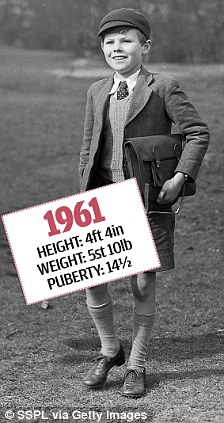
Average height of an Irish man is now 8 cm (three and a half inches)taller than a 100 years ago


But they lag behind their European counterparts, says the Oxford Economics Paper

The average Irish man born in 1980 is now 1.76cm tall (5ft 9in).
Irish men are an average of 8cm or almost three and a half inches taller than they were a century ago, according to new research.
The phenomenon of each generation being taller than the last one has been confirmed in the study published in the journal Oxford Economics Paper.
The average European male born in 1980 is 11cm or four and a half inches taller than their counterparts in 1875. The increase in height has been described as “truly unprecedented” in human history by report author Prof Timothy Hatton of the University of Essex.
He said better disease control and better nutrition account for most of the increases while smaller family sizes may also be a factor.
The average Irish male is only 8cm taller than his counterpart 100 years ago, the smallest increase from the 15 countries surveyed.
Prof Hatton cautioned against reading too much into the Irish figures as he said there was very little data between 1880 and 1950.
He explained that people living in a rural environment have access to better nutrition than those brought up in the “dark Satanic mills” and most Irish people were living in a rural environment at the end of the 19th century.
The average Irish male born in 1980 is now 1.76cm tall (5ft 9ins).

Central Bank set to phase out 1 & 2 cent coins with trial test in Wexford

 

Bank to start a rounding trial on September 16th in Wexford

Newly-minted 2 cent euro coins. The Central Bank’s rounding trial in Wexford will seek to eliminate such coins as part of a trial.
Consumers in Wexford may soon find that the change in their pockets is no good, as the Central Bank starts a trial aimed at phasing out lower denomination coins.
From September 16th to November 17th, more than 240 local businesses will operate the trial, which will reduce the number of 1 and 2 cent coins in circulation; test how rounding will work in practice; and assess the reaction of consumers and retailers.
According to the Central Bank, the rounding trial rules are “simple and fair for all”. Cash transactions will be rounded to the nearest 5 cent at the till, to remove the need for 1 and 2 cent coins in change. So, for example, a transaction costing € 10.21 or € 10.22 will be rounded to € 10.20, while if it costs €10.23 or €10.24, it will be rounded to € 10.25.
Participation in the trial is voluntary, so if you want to keep using your 1 and 2 cent coins, you can.
The price of individual goods or services will remain unchanged as only the total bill will be rounded. Non-cash transactions are not affected. Ronnie O’Toole, programme manager for the National Payments Plan, says that the bank will be engaging inmarket research with consumers and retailers to assess the impact of the trial.
“All the indications are that Wexford will provide an excellent testing ground for issues that might arise and will provide a strong representative sample of experiences from local retailers and consumers,” he says.
For Senator Feargal Quinn, who is attending the launch of the trial, “one and two cent coins are a nuisance and I have questioned their relevance for some time.”

The orangutans of Borneo soon to disappear if their habitat is not saved


The orangutans of Borneo are a sight to behold – but they may not be around for much longer, 

His long arms reach for a lower branch. He grabs it with a strong hand and dangles while deciding which branch to move to next, the long auburn hair on his arms, his chest and his back blowing in the wind. The magnificent man of the forest is lunching on figs and that is all that matters to him.
When we set off that afternoon for our cruise along the Kinabatangan River, deep in the rainforest in the Sabah region of Borneo, our guide had cautiously advised: “You might see some interesting birds, maybe a crocodile if you are very lucky, but don’t expect anything else.”
With these words to dampen our spirits, we boarded a simple wooden boat and quietly motored down this immense river, our eyes keenly focused on its green forested banks.
Coming around the very first corner, we find ourselves face to face with a herd of pygmy elephants. At first, they are grey lumps obscured by foliage, but these hungry beasts soon demolish the obstruction in their feeding rampage. And then there they stand, mere feet from us, all tusks and flapping ears, ignoring us entirely as they eat on, a group of adolescents, a mother and a very small baby.
  Our boatman has the most eagle eyes and has already spotted a tree full of proboscis monkeys (left photo) with their outlandish droopy noses.
We are entirely enrapt when our guide lets out a whoop, loud enough to startle a lounging elephant. He has spotted orangutans. Many of them. They are high up in trees, as casual as can be, swinging lazily to the next tree, paying no heed to the giddy tourists in danger of toppling their boat with excitement.
After taking far too many pictures, we simply sit in our boat watching them; the way they hang by one hand or foot, taking in the breeze they have created while considering their next move. They always seem to be in a good mood, having cracked the secret to enjoying life. It all adds to the majesty of these glorious creatures.
This is not the first time we have seen orangutans, nor is it the closest we will get to them, but there is something magically different about seeing men of the forest – the English translation of their name – in the real jungle, before their natural habitat disappears forever, eradicated by industry.
There is a big illegal market in this endangered species, but this is not the only threat the orangutans face. The rainforest is being destroyed at a terrifying pace to satisfy the ever-increasing demand for palm oil. This, the cheapest form of vegetable oil and a source of biofuel, is increasingly used in both the cosmetic and food industries.
The giant plantations of it engulfing so much of Borneo are devastating the home of so many different species. And once the land has been transformed from a thriving forest to this mono culture, it can never be reverted back, and the many indigenous plants, insects and animals can never be reintroduced.
There is just about enough rainforest left to allow these few remaining wild orangutans to survive, but if it is depleted any further then, yes, our human greed will have wiped them out.
The figures are stark, and they’re the reason I have come to Borneo now, while it is still possible to find orangutans in their own world. More than 90pc of the orangutans’ natural habitat has been sacrificed to the chainsaw and the bulldozer. An area the size of 300 football fields is cleared every hour in Borneo and Sumatra, according to wild life protection groups.
It seems bitterly ironic that a number of the big orangutan reserves are funded by palm-oil plantations, their act of giving back.
Borneo is one of the largest islands in the world and is divided among three countries: Malaysia, Indonesia and Brunei. Sabah, one of the two Malaysian states in the north of the island, has Kota Kinabalu as its capital. KK, as the locals call it, is a modern city, all concrete blocks and shopping centres. Sabah is also home to one of the oldest rainforests in the world.
On this 10-day tour around Sabah, we have already been very close to orangutans at two different rehabilitation centres, first at the Rasa Ria centre on the outskirts of the city of Kota Kinabalu and then at Sepilok, the first rehabilitation centre on the island, established in 1964.
At these centres, you arrive at feeding time and walk along raised wooden pathways through the forest to viewing platforms beside the feeding stages, which are laden with vegetables. At Rasa Ria, they have successfully rehabilitated 38 orangutans and released them back into the wild.
There are currently four orangutans here in early stages of rehabilitation and they have 64 acres to roam in. The good news is that they rarely miss feeding time. And, lo and behold, within moments of our arrival, two playful balls of orange fur arrive and, after demolishing a cabbage and juggling some carrots, are clearly just here to play and perform.
These orangutans have either been orphaned or kept illegally and haven’t been fully ‘dehumanised’. In fact, when most of the visitors have left and there are just four of us left with the keepers, two orangutans come on to our platform and perform acrobatic contortions for our admiration before trying to get hugs from us, which the keepers interrupt.
The animals need to have no human contact at all if they can ever be released back into the wild.
Of course, there is more to Borneo than its hairy jungle men. For those of a delicate stomach, avert your eyes. One of the finest and most valuable gourmet delicacies in the world comes from Borneo. High up in the dark caverns of the limestone Gomantong Caves in the Lower Kinabatangan area, you can find little pockets of edible gold, otherwise known as swiftlets’ nests made from the bird’s solidified saliva – yes, solid spittle.
When we enter the huge, dark cave, we walk along a small track in near dark, soon needing our torches to see even our feet – though they reveal much more than our feet. As we get deeper into the caves, we walk on a deep carpet of cockroaches, so many that it is impossible not to step on them, the crunch echoing around.
It is not the only sound – the other constant echo is the squeal of thousands of bats. We walk fast.
Collecting birds’ nests is an ancient tradition, dating back to at least 500AD. In spring and autumn, locals with expensive licences are allowed into the caves to dangerously climb to the roofs using only old rattan ladders and bamboo poles. The collection happens twice: before the laying of their eggs (the birds go on to build another nest) and then after the eggs are hatched and nests have been abandoned.
There are black nests in the first cave and then more treasured white nests in the upper second chamber, and these are used in birds’-nest soup. Every night, more than two million bats take off from the roofs for their evening feed. Some of them swoop out during the day, too, as we discover on our visit.
Arriving back to KK, we drive to the jetty and board a small motor boat, setting off in the direction of a group of rocky islands. They look uninhabited, wildly forested.
As we near, we see one is fringed by a beach of the purest white sand. This is Manukan Island, the only dwellings ashore being a very small number of beautifully designed wooden lodges in the Sutera Sanctuary, also known as a tropical paradise of the kind to make you behave like a giddy child when you see you have a private beach and your own outside hot tub.
Escape from the giant monitor lizards the size of Shetland ponies that prowl the beach and spend a day snorkelling in the South China Sea with fish of every hue – clown fish, puffer fish, giant star fish. It is hard not to laugh with happiness at it all, but laughing is not advised when wearing a snorkel.
You will laugh a lot when you are in Borneo, but the rampant deforestation and the plight of the magnificent jungle men mean that you will not laugh long.

Tuesday, September 3, 2013

Donie's news Ireland daily BLOG

Irish Banks to face finance committee over mortgage crisis


THE LABOUR PARTY CHAIRMAN OF THE COMMITTEE, CIARAN LYNCH, SAID CHIEF EXECUTIVES COULD HELP SHINE A SPOTLIGHT ON SUSTAINABLE SOLUTIONS TO THE MORTGAGE CRISIS

The State’s four leading banks will have to explain just how they are tackling the mortgage debt crisis and offering people long-term and sustainable solutions to their debts when their executives appear before the Oireachtas Finance Committee starting today .
The Labour Party chairman of the committee, Ciaran Lynch, said last night that the appearance of chief executives of AIB, Bank of Ireland, Ulster Bank and Permanent TSB before the committee would help shine a spotlight on sustainable, long-term solutions to the mortgage crisis.
The first senior executive to appear before the committee will be AIB’s chief executive David Duffy. Bank of Ireland and Ulster Bank executives will be questioned tomorrow, while Permanent TSB will appear at the committee on Thursday.
“A key focus will be finding sustainable, long-term solutions to the mortgage crisis and measures to ease the burden on struggling homeowners and distressed borrowers,” Mr Lynch said.
Specific targets
He pointed out that when the banks last appeared before the committee “there were no specific targets in place to provide solutions for homeowners in arrears. Those targets are now in place and, more specifically, we will consider how AIB is meeting its targets and ensuring that there is a consistency of approach in dealing with distressed borrowers.”
Ahead of the hearings, Fianna Fáil’s finance spokesman Michael McGrath criticised the banks’ piecemeal approach to the mortgage crisis as a “huge drag on the economy” that “is causing enormous distress for thousands of families across the country”.

Ireland’s Junior doctors vote overwhelmingly to go on strike


Industrial action in Irish hospitals likely within weeks after 97% vote by NCHDs

Ireland’s junior doctors have voted overwhelmingly to take industrial action over their campaign to reduce “dangerously long” working hours.
Junior doctors have voted overwhelmingly to take industrial action over their campaign to reduce “dangerously long” working hours.
Some 97% of the 1,000 non-consultant hospital doctors (NCHDs) who voted on the proposed and favoured industrial action, according to the result of the ballot released by the Irish Medical Organisation (IMO) this evening. Some 56 per cent of junior doctors voted in the postal ballot.
It said a special meeting of the organisation’s NCHD committee would take place tomorrow to decide on the next steps in their campaign. A meeting of the IMO Council will also be held tomorrow at which formal approval for the campaign of industrial action will be sought.
Eric Young, the IMO’s assistant director of industrial relations, described the ballot result as unambiguous.
“Doctors are worried and angry. The concerns which they highlighted about the danger posed to hospital patients and to themselves continue to be ignored and there is now a strong appetite to step up the campaign to force the HSE and the Department of Health to do what everyone knows must be done – implement the European Working Time Directive and stop the dangerous and cruel exploitation of NCHDs in Irish hospitals.”
Mr Young criticised Minister for Health James Reilly, who has said he sympathises with the plight of NCHDs.
“When you read his comments in support of NCHDs, you’d think he was still president of the IMO. But he’s the Minister for Health now and he can fix this chaotic situation with the stroke of a pen, but he won’t do it.”
The IMO and the HSE have agreed to meet on Wednesday in relation to contingency plans for industrial action. Major disruption to hospital services is expected in the event of industrial action, with only emergency services certain to be unaffected. The IMO is expected to give three weeks’notice of any action.
The junior doctors are seeking an immediate end to shifts in excess of 24 hours and agreement for a planned move to compliance with the European directive by the end of next year.

John Perry’s credibility badly damaged after Danske Bank ruling against him


A last-minute debt restructuring deal with Danske Bank provides a lifeline to John Perry, who faced the prospect of financial and political ruin when the bank secured judgment for €2.47 million against him and his wife Marie in July.
Perry has won time with the agreement but his standing as minister of state has been severely undermined. He retains the support of Taoiseach Enda Kenny but serious questions remain as to whether he can credibly continue in Government in command of the small business portfolio.
The junior Minister’s statement last evening disclosed little enough about the new arrangement with Danske, with which he has been in prolonged and difficult talks over unpaid debts since the start of 2012.
The agreement is understood to involve assets disposal and longer loan maturities but the debt itself is not settled. A Commercial Court judgment against him remains in place, as does a bank-appointed receiver.
Perry will still have to work hard to uphold his side of the bargain, something he was unable to do in the face of a torrent of Dankse pressure when his finances veered out of control not long after he took office.
In many respects, the embattled Minister has met difficulties similar to those confronted by thousands of small business owners and mortgage holders.
Now that he has reached agreement with his bank, the hope must that he can indeed overcome his troubles and establish order in his affairs. That is only reasonable.
In political terms, however, Perry emerges badly from this affair. Court records show he used his formal ministerial title in correspondence with Danske on his private difficulties. Not only that, but he borrowed from the State-owned Allied Irish Banks to meet certain business liabilities and borrowed from the State-supported Bank of Ireland to meet a big tax bill.
Perry’s statement says all his tax affairs have been and remain up to date – but can he seriously exercise any political authority in exchanges with the banks on small business matters? Hardly.
Further nagging questions arise in relation to the code of conduct for office holders.
His increasingly fraught engagement with Danske is set out in court exhibits and it is fair to assume he spent the summer trying to reach an agreement with Danske.
Still, the official code of conduct says an office-holder “should not carry on a professional practice while in office”. It goes on to say they “may make arrangements for the maintenance of a practice until such time as s/he ceases to be an office-holder and returns to the practice”.
The code also says office-holders “should not take any part in the decision-making or management of the affairs of a company or practice and should dispose of, or otherwise set aside for the time being, any financial interests which might conflict, or be seen to conflict, with their position as an officeholder”.
Perry has never answered how he reconciles his dealings with Danske with his obligations under the code. He retains Kenny’s support but his ministerial stock has been laid very low indeed.

Enda Kenny has yet to respond to Stephanie's letter on Priory Hall suicide dad

00122463 

Enda Kenny has not responded to the heartbreaking letter from Priory Hall resident Stephanie Meehan (above with her two children) four days after she made it public.

There has been an outcry since Stephanie allowed the letter, which she wrote in the wake of her partner Fiachra Daly’s suicide, to be published.
In the letter, she told the Taoiseach how banks were putting them under pressure on their mortgage in the days before Fiachra took his own life in July.
Stephanie told how her life, and the lives of her two children, will never be the same again.
She said Fiachra (37) had ended his life because of the stress and worry over the fire-trap homes from which they were evacuated, along with nearly 300 other families, in 2011.
Pleading for action on the blight of Priory Hall, Stephanie asked the Taoiseach to act.
“What will it take now for someone to listen and act on something that should’ve been dealt with two years ago and saved a lot of taxpayers money and, most of all, saved a life?” she said.
But asked if she had received a reply from the Taoiseach’s office since she sent her letter, Stephanie said she had got nothing “apart from an automated response”. Stephanie made her letter public last Thursday afternoon, and received a wave of support from people all over the country after they read how banks had sent demands for arrears payments and forms to be signed just days before Fiachra took his life.
RESPONSE
She is now set to appear on the Late Late Show in the coming weeks to talk about her life since the family were evacuated from Priory Hall in October 2011.
The Herald contacted the Department of An Taoiseach for a response to Stephanie’s letter, but was told that no statement would be made on it.

HIGH-POTENCY STATIN drugs may help prevent dementia


HIGH-POTENCY STATINS SUCH AS ATORVASTATIN AND ROSUVASTATIN SHOWED A SIGNIFICANT INVERSE ASSOCIATION WITH DEVELOPING DEMENTIA
THE MOST COMMONLY PRESCRIBED CHOLESTEROL-LOWERING DRUGS MAY HELP PREVENT DEMENTIA WHILE ALSO REDUCING THE RISK OF DEVELOPING CATARACTS, NEW RESEARCH SUGGESTS.

A study of almost 58,000 Taiwanese people aged 65 and over who were followed up for four and a half years found that those taking the highest dosage of statin drugs had a lower risk of developing symptoms of pre-senile and senile dementia.
In comparison with a control group, the 5,500 participants who went on to develop dementia were less likely to have been prescribed a statin or had taken the drug in low dose.
Statin effects
Statins are widely used in older people and those with a previous history of cardiovascular disease to reduce the risk of heart attack and stroke.
However, in contrast to this latest research, some recent reports of statin-associated cognitive impairment have led the US Food and Drug Administration (FDA) to list statin-induced cognitive changes as a potential side effect.
Lead investigator Dr Tin-Tse Lin of the National University Hospital in Taipei told the European Society of Cardiology congress at the weekend that “patients who received the highest total equivalent doses of statins had a three-fold decrease in the risk of developing dementia”.
He added: “It was the potency of the statins . . . which was a major determinant in reducing dementia. High-potency statins such as atorvastatin and rosuvastatin showed a significant inverse association with developing dementia.”
Statins can cause side effects such as liver and muscle inflammation and are a common reason why patients stop taking their medication. Taking higher doses of statins may increase the risk of experiencing these side effects.
A Lowers risk of cataracts
Meanwhile, separate research from the US presented at the conference showed statin use was associated with a 19 per cent lower risk of developing cataracts compared with those who did not take them.

Earthlings are really Martians, says a new theory


Life on Earth was kick-started thanks to a key mineral deposited by a meteorite from Mars, according to a novel theory aired on Thursday.

The vital ingredient was an oxidised mineral form of the element molybdenum, which helped prevent carbon molecules — the building blocks of life — from degrading into a tar-like goo.
The idea comes from Steven Benner, a professor at the Westheimer Institute for Science and Technology in Gainesville, Florida, who was to present it at an international conference of geochemists in Florence, Italy.
“It’s only when molybdenum becomes highly oxidized that it is able to influence how early life formed,” Benner said in a press release.
“This form of molybdenum couldn’t have been available on Earth at the time life first began, because three billion years ago the surface of the Earth had very little oxygen, but Mars did.”
In this violent epoch of the Solar System, the infant Earth was pounded by comets and asteroids.
Mars, too, would have come under bombardment, and the impacts would have caused Martian rubble to bounce into space, where they would have lingered until eventually being captured by Earth’s gravity.
Recent analysis of a Martian meteorite showed the presence of molybdenum, as well as a boron, an element that would also have helped nurture life by helping to protect RNA — a primitive cousin to DNA — from the corrosive effects of water.
“The evidence seems to be building that we are actually all Martians, that life started on Mars and came to Earth on a rock,” said Benner.
“It’s lucky that we ended up here nevertheless, as certainly Earth has been the better of the two planets for sustaining life. If our hypothetical Martian ancestors had remained on Mars, there might not have been a story to tell.”
Other theories about how life began on Earth suggest that water, the key ingredient, was brought by comets, famously dubbed “dirty snowballs,” which comprise ice and dust left from the building of the Solar System.
Another hypothesis, called panspermia, suggests bacteria hitched a ride on space rocks, splashing into Earth’s warm and welcoming sea.

Sunday, September 1, 2013

Donie's news Ireland update BLOG

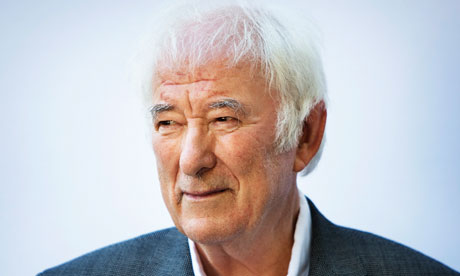
A great, great poet who changed my life says Bono about Seamus Heaney


Bono described Seamus Heaney as “a great, great poet” who “changed my life”

“In so many things he was a gentle genius, whose words challenged us with the grit and beauty of life as much as they gave us solace. He wrote with a brevity that strangely spilled to the brim,” he said.
“We all envied how he made that most complicated of things, the balancing of work and family, appear so simple. In Marie he found his other whole. And it is a joy to be around his kids. . . Michael, Chris and Catherine Ann. They have all of his humility in their sharpness.”
And Bono revealed he carried Heaney’s poetry with him, including on a recent trip to Liberia. “I’m bewildered to think Seamus is no longer with us. Because his words will be around forever, it seemed so would he.”
Actor Liam Neeson also said: “He crafted, through his poetry, who we are as a species. By doing so, he defined our place in the universe. May he rest in peace.”

Fretting about money can make you a stupid person, A study finds


Financial worries create cognitive deficit equivalent to 13-point loss in IQ, research shows

Finding it hard to make ends meet can impoverish the brain and reduce your ability to think, say scientists. Financial worries tax the brain so much they create a “cognitive deficit” equivalent to a 13-point loss in IQ, a study found.
The problem is distinct from the effects of stress and results from too much “mental bandwidth” being used to fret about money. Someone overwhelmed with worries about rent, feeding and clothing children, and paying household bills can suffer a genuine mental handicap, the research shows.
This in turn may lead to poor decisions, such as racking up debt, creating even more difficulties in a vicious cycle. Economics professor Sendhil Mullainathan, from Harvard University in the US, said: “Our results suggest that when you’re poor, money is not the only thing in short supply. Cognitive capacity is also stretched thin.
“That’s not to say that poor people are less intelligent than others. What we show is that the same person experiencing poverty suffers a cognitive deficit, as opposed to when they’re not experiencing poverty.
“What happens is that your effective capacity gets smaller because you have all these other things on your mind. You have less mind to give to everything else. “Imagine you’re sitting in front of a computer and it’s just incredibly slow. But then you realise that it’s working in the background toplay a huge video that’sdownloading. It’s not that the computer is slow, it’s that it’s doing something else, so it seems slow to you. I think that’s the heart of what we’re trying to say.”
Prof Mullanathan’s team carried out a series of experiments in the US and India to highlight the mental cost of poverty. In the first, conducted in a shopping mall inNew Jersey, around 400 people were randomly chosen and asked to ponder how they would solve hypothetical financial problems, such as paying for a car repair. Some problems were easier, that is, cheaper, to sort out than others. For instance, the car repair bill could be either 150 dollars, or 1,500.
At the same time, the volunteers had to undergo simple computer tests of IQ and mental performance. They were split into “poor” and “rich” groups based on their income which ranged from 20,000 dollars per year to around 70,000 dollars. The results, reported in the journal Science, show that when the financial problems were not too severe, both groups performed equally well in the tests. But when they were forced to consider difficult, costly problems, people with lower incomes had significantly worse scores.
In fact, the effect was so strong that for those generally preoccupied with money, merely thinking about a tricky financial problem led to a 13-point dip in IQ. That is on the same scale as losing an entire night’s sleep.
The scientists followed up their study with a visit to rural India where they tested a group of sugar cane farmers who rely on the annual harvest for at least 60 per cent of their income. Since the harvests occur once a year, the farmers find themselves poor before a harvest and rich after it. Given the same tests as the New Jersey shoppers, they did significantly better when they sat them after the harvest.
The impact of poverty on mental capacity reflects a more general phenomenon related to scarcity, say the researchers. Lacking something, whether it be money, time, social ties or even calories, puts a strain on the brain. Co-author Jiaying Zhao, from Princeton University in the US, said: “These findings fit in with our story of how scarcity captures attention. It consumes your mental bandwidth. “Just asking a poor person to think about hypothetical financial problems reduces mental bandwidth. This is an acute, immediate impact and has implications for scarcity of resources of any kind.”
Professor Eldar Shafir, another member of the Princeton team, said: “When you’re poor you can’t say, ‘I’ve had enough, I’m not going to be poor any more, or ‘forget it, I just won’t give my kids dinner, or pay rent this month’. “Poverty imposes a much stronger load that’s not optional and in very many cases is long lasting. It’s not a choice you’re making, you’re just reduced to a few options. This is not something you see with many other types of scarcity.”
Services to the poor should take account of the mental effect of poverty, for instance by providing simpler forms and making it easier to seek assistance, said Prof Shafir. “The poor, who our research suggests are bound to make more mistakes and pay more dearly for errors, inhabit contexts often not designed to help.”

Permanent TSB is on course to get back to profit by 2017


Permanent TSB remains on course to return to profitability — on a group basis — by 2017, with its so-called ‘good bank’ core element likely to make a profit as early as next year, management said yesterday.

On the back of an improving set of interim results showing an annualised reduction in pre-tax losses from €587m to €131m, group chief executive Jeremy Masding said “great progress” had been made this year and PTSB’s core banking element was on track to be profitable, on a pre-provision basis, “in the next 12 months”.
Management’s ‘Bank plus Two’ restructuring strategy, which will see a ‘good’ core lending bank split from a non-core division, and a specialist asset management unit, is expected to be approved by the European Commission by early December.
In the six months to the end of June, PTSB showed an operating loss, before exceptional items, of €449m, down from a figure of €457m a year earlier.
The after-tax loss was €141m, as opposed to €565m last year.
The pre-tax loss figure includes provisions for impairment of €430m and net exceptional items of €318m.
The ‘good bank’ alone made a pre-impairment loss of €12m and a post-impairment/underlying loss of €39m, leading management to say “it’s getting to where we want it to be”.
Mr Masding said PTSB’s recent financial performance had been “firmly in line” with its restructuring plan.
He said the performance showed the bank could, at its core, be a viable business and “an asset of value” to the Irish taxpayer.
Current management had, earlier this year, considered shutting the bank down in order to deal with its problems.
“We are achieving what we said we would achieve,” Mr Masding said, although he did admit that the reduction in group losses was “flattered” by technical accounting issues.
However, he also noted there had been “a modest improvement” in the bank’s like-for-like operating performance, “despite an ongoing prudent approach to impairment provisions”.
PTSB had signed up nearly 30,000 new current account customers to date, this year, and he said it would add “a lot more customers” over the rest of the year.
“We’ve made a good start in re-establishing ourselves as a competitive force for mortgages, deposits and current accounts and we’re very much open for business,” Mr Masding said.

Men lose their desire for physical challenges over the years “a research shows”


THE DESIRE FOR ADVENTURE AND THRILLING ACTIVITIES HAS DECREASED IN MEN OVER THE PAST 35 YEARS, ACCORDING TO RESEARCH.

A team from the school of psychology and neuro-science at St Andrews University discovered men are less willing to take part in physical challenges such as skydiving than before.
The findings of the research led by Dr Kate Cross which was published in the journal Scientific Reports and was co-authored by Dr De-Laine Cyrenne and Dr Gillian Brown.
Researchers focused on the sensation-seeking personality trait which has been described by the university as the desire to pursue novel or intense experiences even if this involves risk.
A sensation-seeking scale, version V (SSS-V) questionnaire was used to find out if people were willing to try various activities.
In the late 1970s more men were more likely to try parachuting, scuba diving or mountaineering than women, but over the years their desire for thrills has decreased.
The male average is now closer to the female average, backing up the argument that some sex differences in behaviour have decreased which is linked to cultural changes. It is thought the reason for this decrease could be because people are less fit.
Dr Cross said: “The decline in the sex difference in thrill and adventure-seeking scores could reflect declines in average fitness levels, which might have reduced people’s interest in physically-challenging activities. Alternatively, the questions were designed in the 1970s, so could now be out of date.”
The activities suggested in the 1970s may be viewed as less intense now – such as skiing.

Ancient Donegal monastic find could be the next ‘Clonmacnoise’


Archaeologists have uncovered an ancient monastic settlement of ‘huge national importance’ during project work for a church car park.

The treasure trove of discoveries in just 48 hours is set to put a boggy field beside an old rural parish church on the archaeological map of Ireland.
Expert Mick O’Droma compared the find in Co Donegal this week to the settlement at Clonmacnoise.
The field beside the Drumholm Church of Ireland graveyard, near the village of Ballintra, is set to be classified a national monument as a result of just two days’ excavation work.
Archaeologist Mick moved onto the site on Monday after being commissioned by the Anglican parishoners to survey the one-acre plot as part of a planning application for a car park and cemetery extension.
“We had mapped the area from above ground, taking pictures and readings and I could see then that it could be exciting,” said the expert from Wexford-based Wolfhound Archaeology.
“When we cut five exploratory trenches to take a closer look it became clear very quickly that we were standing on the remains of a early Christian settlement, probably from around the 7th century.
“The exterior walls of the site are clearly there and there is what could be the remains of a round tower on one part of it. I can’t over-state the national importance of this, it is very very exciting.”
Legend has it that St Ernan, nephew of the late 6th century St Colmcille, was buried in the Drumholm area.
“It is very likely we have found the monastic site where Ernan was based,” said Mick.
A Neolithic axe was discovered two fields away in the 1920s close to an ancient cairn.
“This site beside the old church and graveyard dates back 1300 years and we know from previous discoveries in the area that there has been human activity going back to at least 5,800BC,” he said.
And yesterday he made another discovery in the church field which had this archaeologist even more excited.
He produced two pieces of pottery found in one excavated trench – one from the gaelic tradition and one from the Anglo-Norman tradition.
“We know from the Annals of the Four Masters that the English arrived here at Drumholm and settled with the O’Connors from Munster in 1242 in pursuit of the chieftains here in Donegal,” said the archaeologist.
“And here in my hand is pottery from that time, that was made between around 1200 and 1350.
“This whole site is like a time capsule of a period from the 7th century until the 16th or 17th century.”
Yesterday afternoon as his work was coming to an end, he said he now believes there was a ‘cathedral-style’ church at one end of the plot, the foundations of the outer walls visible under the boggy earth.
He also found ancient animal bones, evidence of a woven wooden footpath and areas used to make iron ore implements.
“Our work is finished here now,” said Mick.
“Our job was to check the site to see if it was of any archaeological importance before any development went ahead.
“I will be reporting the discoveries here to the National Museum of Ireland and to the Department of Arts, Heritage and the Gaeltacht so that it can be declared a national monument and protected.
“Perhaps some day there might be funding for a project or a university project that can come back and explore further but there is no doubt that this is one of the most important discoveries here in many years,” he added.
A spokesman for the Church of Ireland said the parishoners had met yesterday to discuss the find and would now withdraw the car park planning application.
“We will work now with the authorities to have the site protected,” he added.

Freshwater Jellyfish Discovered In Fermanagh’s Lough Derg lake


One angler’s disbelieving discovery in Lough Derg has led to a surprise new marine wildlife find for Ireland’s inland waterways.

Pat Joyce from Caslteconnell in Limerick nearly fell off his fishing stand when, in early August, he spotted what looked like a single small jellyfish pulsing in the water in front of him.
The jellyfish disappeared and Joyce thought that perhaps he was mistaken since, as everyone knows, ‘there is no such thing as a freshwater jellyfish’.
Two weeks later, again angling for bream in the tranquil surrounds of Scarriff Harbour, just off Lough Derg, Joyce noticed not one but hundreds of tiny jellyfish moving on and below the surface.
He immediately contacted the Environment Protection Agency (EPA) to seek clarity, and they put him on to Inland Fisheries Ireland (IFI). Staff from the Clare region of IFI’s Shannon River Basin District sped to the scene and collected up to 20 live specimens. They really did exist!
IFI’s Colum Walsh and Dave Germaine contacted Dr Joe Caffrey, invasive species specialist with IFI, who immediately organised a site visit to Lough Derg with a team of marine science experts. These included Dr Tom Doyle, a jellyfish expert from the Coastal & Marine Research Centre in UCC, and Dr Dan Minchin from the Lough Derg Science Group.
The survey revealed small numbers of the jellyfish at Scarriff Harbour, but specimens were also recorded from two other locations within the lake – at Rossmore Harbour and at Dromineer.
So what is this jellyfish, where did it come from and why was it never spotted in Ireland before?
As soon as specimens were collected IFI forwarded them to Dr Doyle, who identification them as the free-swimming life stage of a species called Craspedacusta sowerbii. This marks the the first official record for this species in Ireland.
This freshwater jellyfish hails from the Yangtze River Valley in China but currently has a worldwide distribution. It was initially discovered in exotic aquatic plant tanks in Regent’s Park, London in 1880 but has since spread to widely throughout the globe.
The jellyfish is about the size of a euro coin and broadly resemble their marine cousins. It is more or less transparent with a distinctive white/greenish cross and a white/cream circular outline, and possesses in the region of 250–300 small tentacles.
These jellyfish have two distinct life stages; one is a tiny attached polyp and the second is what we know as the jellyfish or medusa stage. The polyp buds off medusa under warm water conditions, generally when water temperature reaches 25 degrees centigrade.
The species is known to occur in single sexed populations, and Dr Doyle confirmed that all of the specimens he examined from Lough Derg were female.
It is probable that the discovery of this jellyfish relates to the wonderfully warm summer that we experienced in Ireland this year, when water temperatures in many watercourses exceeded 25 degrees for prolonged periods. This probably stimulated the budding off of the medusae or jellyfish, which pulsed in the warm water in search of plankton prey. It is noteworthy that jellyfish were also reported from Lough Erne in recent days.
Experience in other countries suggests that blooms of such freshwater jellyfish occur only sporadically and that they last, in any one year, for only a few weeks. So it is possible that we may not see such a sight again for many years.
It is important to state that the freshwater jellyfish is not harmful to humans and that, while they do capture their tiny prey by stinging, the stinging cells are not sufficiently powerful to harm humans.
In addition, the jellyfish do not appear to have any significant effect on the biology or ecology of the waters they are recorded in, probably due to their sporadic occurrence and the short period that the jellyfish blooms are in any water body.
“Anglers are the eyes and ears on our rivers and lakes,” said Minister of State Fergus O’Dowd following this amazing discovery. “I ask all anglers to continue to assist in the protection and conservation of this resource, reporting any invasive species they come across to the IFI Hotline immediately.”
One serious cause for concern relates to the pathway whereby this jellyfish – and many other non-native and potentially harmful or invasive species – was introduced to Ireland.
The fact that the two watercourses from which the jellyfish was recently recorded (Loughs Derg and Erne) are both internationally renowned navigation waterways suggests that boating and perhaps ballast water from newly introduced craft may represent an important causative agent.
Boats and cruisers are commonly imported from abroad and are introduced into our waters without having to prove that they were cleaned and disinfected before leaving their country of origin.
“This practice is unacceptable and poses a significant threat to biodiversity in our waters and to their functionality, be it as recreational, amenity or municipal waters,” said Dr Caffrey. “It is imperative that boats being imported into this country carry certificates of disinfection prior to being granted entry if we are to stop the ever-increasing spread of harmful invasive species.”