Pages

Sunday, July 27, 2014

Donie's Ireland daily news BLOG update

I told Enda Kenny that Ireland has no chance of a bank debt deal


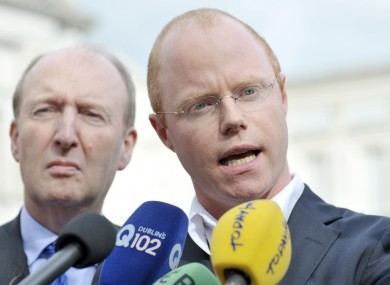
An alley of German chancellor Angela Merkel has said he told Taoiseach Enda Kenny that Ireland cannot use the new eurozone bailout fund to retrospectively recapitalise its banks.

Dr Joachim Pfeiffer, economic policy spokesperson for Merkel’s party the Christian Democrats, has said that the European Stability Mechanism (ESM) can only be used for future banking debt issues and not legacy ones.
He told TheJournal.ie today that he communicated this to Enda Kenny in a meeting yesterday but said the Taoiseach did not share his view.
“He said the instrument was put in situ – that it can be used. But from my point of view it’s an instrument for the future,” Pfeiffer said of Kenny’s response.
For over two years the Irish government has been pushing for the use of the ESM to retrospectively recapitalise its pillar banks, AIB and Bank of Ireland, which received some €25 billion in State funding at the height of the financial crisis.
The government and Finance Minister Michael Noonan have repeatedly maintained that they will seek relief on legacy bank debt when the ESM is fully established later this year but these latest comments will do little to bolster the government’s case.
Pfeiffer has been in Dublin this week attending events and meetings with the German-Irish Chamber of Industry and Commerce. He has repeatedly said in interviews that Ireland has no chance of using the ESM for legacy debt.
“The ESM is an emergency instrument for the handling of the future problems that hopefully we are going to prevent,” he said this morning, adding “definitely not” when asked if it could be used for legacy debt.
He said that every country has to deal with its own debt burden, saying it is not the responsibility of other eurozone nations to provide relief.
He said: “Every country has to carry it’s own burden. We [Germany] took about €500 billion in our account with guarantees and we are not asking [for] Ireland to repay our problems.”
Pfeiffer repeatedly said that the ESM is “an instrument for the future and not for legacy”.
He added that his view was shared unanimously by other German parliamentarians and that he believes Chancellor Merkel also shares his view.

Miriam O’Callaghan gets behind epic children’s charity push


RTE’s  broadcaster Miriam O’Callaghan has put her shoulder to the wheel to help push the Bumbleance all the way from Dingle to Dublin.

Adventurer Mike O’Shea has trekked across Polar icecaps and some of the world’s most unforgiving terrain, but this will be his toughest challenge yet.
The Kerryman will be joined by Tony Heffernan, who founded the national children’s ambulance service, along with his wife Mary of the Saoirse Foundation and a team of volunteers to help them complete the 355km challenge.
The Bumbleance Mega Push, which aims to raise €250,000 and put two more child-friendly interactive ambulances on the road, was launched by charity patron Miriam.
The group will set off from Dingle, Co Kerry, on September 10 and hope reach St Stephen’s Green 10 days later. They will push the ambulance over the Conor Pass before going through towns and villages including Castleisland, Adare and Kill before reaching Dublin.

OVERWHELMING

Mike got behind the charity when he heard about the Bumbleance’s ‘Angel Trips’ – the last journey a terminally-ill child will take to or from hospital.
“This was the project for me. All funds raised will go towards the purchase of a new ambulance, and two if we can make it happen,” he said.
Mary and Tony’s son Liam (5) made his own trip aboard the Bumbleance shortly before he died in May from the extremely rare and fatal Batten’s Disease which also claimed the life of his older sister Saoirse (5).
“The positive effect that Bumbleance has had on the sickest of Irish children has been overwhelming, so much so that it is now a priority to get two more Bumbleances,” Tony said.
Members of the public can get behind Bumbleance by texting BUZZ to 50300 to donate €4. Volunteers are welcome to join the team along the route and can get involved by calling 083 0044444.

Cancer map of Ireland reveals wide variance in both incidence and mortality rate


A map developed as part of the Irish Examiner’s county by county report on the state of Ireland’s health has revealed wide variations in both the incidence and mortality rates for all the main cancer types.
Based on statistics from the National Cancer registry the map reveals Waterford as the county with the highest death rate from breast cancer in the country.
Cork has the highest incidence rates of non-melanoma skin cancer, while Tipperary has the highest death rate from non-melanoma skin cancer.
The map also shows how Kerry has the second highest incidence of breast cancer, while Carlow has the highest number of lung cancer deaths.

An Post plans 80,000 digital era letter boxes


The postal service has started on plans for the manufacture of up to 80,000 new delivery boxes

IT IS a persistent problem for the online shopper – ordering a package but not being home when the postman calls.
But semi-state An Post believes it has found the solution.
The postal service has started on plans for the manufacture of up to 80,000 new delivery boxes.
The company has begun searching for a manufacturer to enter a three-year contract to manufacture new specialised boxes that will be placed at people’s homes.
According to tender documents seen by the Herald, the agreement will consist of an initial supply of 10,000 boxes.

ONLINE

However, it said that the figure for requirements may be extended by 70,000 additional boxes in tranches of 10,000 units.
An Post said that the plan was a response to a steady growth in customers’ online and catalogue shopping preferences and in anticipation of future growth.
Parcel delivery volume increased at the company by 22pc last year.
A trial scheme for prototype boxes in areas including Dublin was “very positive”, according to An Post.
A spokeswoman said the new boxes should be available to households by the first quarter of next year.
“It will be available to anyone who wants one,” she said.
The pricing structure for the boxes has yet to be determined, but the company has promised to keep the prices “as low as possible”.
An Post has also specified that the boxes should be self-
installable.
“We are now looking for expressions of interest from suppliers interested in working with us to perfect the design and produce top quality die-cast metal, secure delivery boxes,” the spokeswoman said.
According to the tender, the boxes will allow for delivery of a range of different-sized mail items directly to a point that sits outside, but in close proximity to, a person’s home.
Specifications have also been laid out for the size of the boxes.
The internal dimensions should allow for the storage of a package 37cm long, 25cm high and 16.5cm wide.
The winning design should also be able to withstand temperatures of between -5C and 35C and be secure against water.

SHOPPING

The boxes will be designed in such a way that only the owner and An Post will be able to gain access.
It has been estimated that the value of Ireland’s internet economy will grow from its current level of €8.4bn a year to €21.1bn by 2020, with consumer spending making up 60pc of this figure.
More than half of online spending by Irish consumers, goes to sites abroad.

Gulls eating rabbit is just ‘normal’, says Birdwatch


Concerns raised about impact of filming Star Wars during breeding season on the world heritage site

A young rabbit defends itself against a herring gull on Skellig Michael, Co Kerry.
As Skellig Michael braces itself for an encounter with Star Wars film crews, life and death continues on the Unescoworld heritage site off the Kerry coast. Birdwatch Irelandhas said that a baby rabbit’s terrifying encounter with a herring gull, as captured by photographer Michael Kelly, is “ a natural enough” event.
Birdwatch Ireland’s senior conservation officer for seabirds, Stephen Newton, said the rabbit population on Dublin’s Dalkey Island was controlled by predatory gulls, and the same could be said for any coastal location. Black-backed gulls were particularly voracious, and he had witnessed one such gull swallowing a mallard duck whole.
Ornithologists say there is no such species as a “seagull”, but gulls have been in the public consciousness sinceFianna Fáil Senator Ned O’Sullivan told the Seanad in mid-July that the birds were attacking children and taking lollipops.
“Rogue gulls tend to be after food, not people,” Mr Newton said.
Skellig Michael’s extensive bird population, including puffins, Manx shearwaters, guillemots and petrels, is in the middle of a breeding season, and there is serious concern among ornithologists about the impact of the proposed filming on the island’s wildlife.
Approval
It is understood that an environmental impact assessment to support approval by the National Parks and Wildlife Service was only sought several weeks ago. Minister for Arts, Heritage and the Gaeltacht Heather Humphreys has responsibility for both the NPWS and the Irish Film Board – a potential conflict of interest, according to environmental sources.
Irish Film Board chief executive James Hickey said “all requisite consents including the NPWS approval are in place with the production company for a limited amount of film-related work on the island”.
The board said the filming programme “has been designed specifically to avoid disturbance of breeding birds” and the NPWS “has approved the proposal on that basis”.

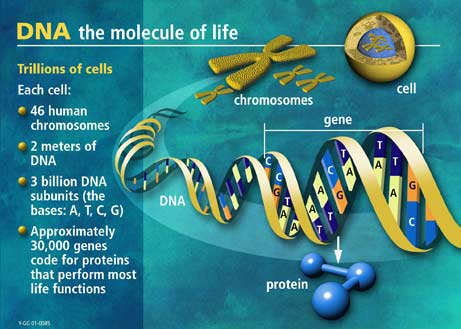
Only 8.2% of Human DNA Is ‘Functional & useful’ The Rest Is Just useless and pure Junk’


ABOUT 90% OF HUMAN DNA COULD JUST BE “JUNK.”

Only about 8.2 percent of human DNA is believed to have an important role.
Past studies have suggested 80 percent of human DNA has a biochemical function, but this new research disputes that idea, University of Oxford reported. The study, published recently in Plos Genetics, suggests past definitions of “functional” have been too broad.
“This isn’t just an academic argument about the nebulous word ‘function’. These definitions matter. When sequencing the genomes of patients, if our DNA was largely functional, we’d need to pay attention to every mutation. In contrast, with only [eight percent] being functional, we have to work out the [eight percent] of the mutations detected that might be important. From a medical point of view, this is essential to interpreting the role of human genetic variation in disease,” said joint senior author Professor Chris Ponting of the MRC Functional Genomics Unit at Oxford University.
To make their findings the researchers looked at how much of the human genome has avoided accumulating changes over the past 100 million years; this indicates the DNA has an important function that must be preserved. The rest of the DNA that has undergone numerous losses or gains is considered to be leftover evolutionary material, or “junk DNA.  The team took a computational approach to comparing completed DNA sequences in humans as well as other mammals such as guinea pigs and horses.
“We tend to have the expectation that all of our DNA must be doing something. In reality, only a small part of it is,” said Doctor Chris Rands, first author of the study and a former DPhil student in the MRC Functional Genomics Unit at Oxford University.
Only about one percent of human DNA is believed to account for the proteins that carry out most biological processes; the other seven percent is responsible for switching on and off genes that encode proteins.
“There appears to be a lot of redundancy in how our biological processes are controlled and kept in check. It’s like having lots of different switches in a room to turn the lights on. Perhaps you could do without some switches on one wall or another, but it’s still the same electrical circuit,” Ponting said.

Is this Britain’s biggest ever jellyfish? Watch giant sea beast stun divers off Cornish coast


Just when you thought it was safe to go back in the water and then this GIANT jellyfish appears off the coast of Cornwall .

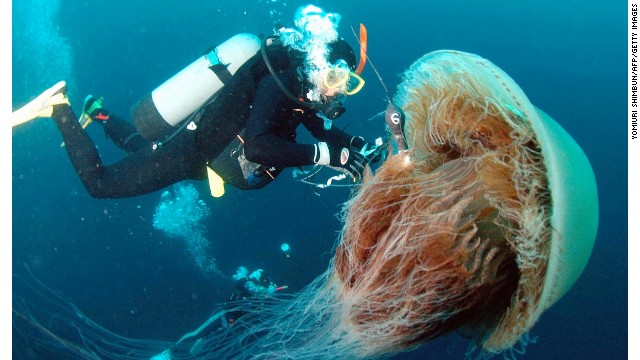
The enormous barrel jellyfish is thought to be one of the biggest of its kind ever recorded in British waters.
Diver Robert Lenfert, 42, was dwarfed by the magnificent creature as he and wife Natasha, 39, swam beside it off Pendennis Point in Falmouth.
The rhizostoma pulmo, also known as a dustbin-lid jellyfish, can measure up to four feet from tip to tail and up to three feet in diameter.
But despite its imposing presence, it has only a mild sting, which is sometimes compared to a nettle sting.
Whopper: Diver Robert Lenfern with the gigantic jellyfish
Experts say record numbers of barrel jellyfish are swimming in our seas this summer, particularly off the coasts of Cornwall, Devon and south Wales.
The boom has been put down to the mild winter, which allowed more adults to survive and resurface in spring.
Other commonly-sighted species include the compass, lion’s mane and blue jellyfish.   

Thursday, July 24, 2014

Donie's Ireland daily news BLOG update

Michael Noonan signals ‘less cuts, less tax increases’ in the next Irish budget


The Irish Cabinet is to hear today of a not so demanding approach in the October budget says Mr. Howlin. 
Minister for Finance Michael Noonan has signalled ‘less cut backs and less tax increases’ than previously expected in October’s budget.
 The Minister for Finance Michael Noonan has signalled there will be “less cut backs and less tax increases” than previously expected in next October’s budget.
Speaking on his way into this morning’s Cabinet meeting, Mr Noonan said the Government would beat its financial target because the first six months of the year had gone better than expected in economic terms.
“We thought it would be necessary to increase tax and cut expenditure by €2 billion. We’ll get under three per cent now by making less cut backs and less tax increases,” he said.
However, he said it was too early in the year to say “by how much”.
Separately, Minister for Public Expenditure and Reform Brendan Howlin has confirmed that Cabinet will learn the “over-arching approach” to a “less demanding” budget this morning.
Speaking on his way into Government Buildings, Mr Howlin said he and Mr Noonan would bring a joint memo to Government today.
“The economy has grown, the tax revenue has increased, the number of unemployed has fallen. So these are all good auguries, they’re assistances,” Mr Howlin said.
He confirmed the budget would “certainly” not include €2 billion in cuts to bring the deficit to the three per cent target or below.
So while he said people would be facing a “less demanding budget than that”, he also warned: “We’re not out of the woods”.
Fianna Fáil finance spokesman Michael McGrath has said the Budgetary adjustment could be less than €1 billion.
He was speaking after Mr Noonan confirmed it would no longer be neccesary to increase tax and cut expenditure by €2 billion
“I welcome very much the confirmation now from Government that the Budget adjustment will be less than €2 billion. I hope it will be considerably less than €2 billion. Some of the emerging data is quite positive,” Mr McGrath said.
“I think it could well be the case that the adjustment is less than €1 billion in fact. I think we’re all hoping that six years into this crisis and €30 billion of a budget adjustment later that this budget will be as painless as possible,” he added.
“The Government has promised now to give something back in this budget.”
However, he warned it would be “deeply unfair and regrettable” if the Government excluded those on low and middle incomes from benefiting from “the first tax cut in a good number of years”.
Mr McGrath said he expected the Labour Party to advocate strongly in this regard.

Does strong Irish coffee sales mean our economy is improving?


Retail Excellence Ireland says that hot beverage sales are an indicator of a stronger economy and employment market.

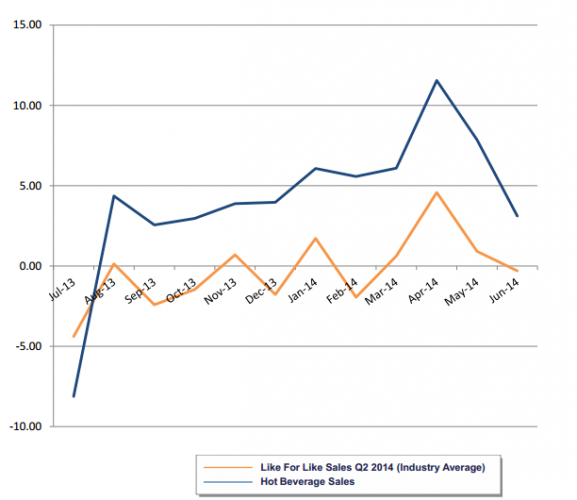
SALES OF HOT beverages are up by almost 8% in the second quarter of the year, providing a strong indicator of employment, Retail Excellence Ireland said.
“The reason we track it is because it’s a really good indicator of footfall and employment”, REI chief executive David Fitzsimons said.
The number covers high street retail chains like Insomnia as well as forecourt outlets including Applegreen and Topaz.
However, despite the positive sales of hot drinks, overall numbers for the second quarter showed only a slight increase on 2013, reflecting the challenging environment for retailers in the country.
Overall like-for-like sales were up just under 2% on average, with sales figures boosted by Easter falling in April and relatively good weather during the second quarter.
Fitzsimons said: “The big point of difference between this quarter and last quarter is the weather. I’d love to say its employment or sentiment but its not.”
The leading sales segment was unsurprisingly among Garden Centres, while camera sales declined by a whopping 28%.
Budget
Fitzsimons called on the Government to preserve the 9% VAT rate in a bid to stoke consumer spending, and also to target reliance on social welfare in the hope that it will encourage people back into the labour market.
“You have pockets of unemployment of up to 20% and employers are saying they can’t find people to come and work for them.”
He also called for a decrease in tax rates in order to put more money back in consumers’ pockets.
Finally, he said that a scrappage scheme for white goods, such as dishwashers and washing machines, would encourage people to trade in older machines that are less water-efficient, and hence more costly once water charges come in.

Manufacturing prices in Ireland rise by 0.3% in June as export sales increase


THE LATEST CSO FIGURES GIVE A MIXED PICTURE OF INDUSTRIAL INFLATION IN IRELAND.

Prices paid for goods leaving Irish factories rose by 0.3 per cent last month, figures from the Central Statistics Office(CSO) show.
However, on an monthly basis, manufacturing prices fell by 1.7 per cent in June, compared with an increase of 3.1 per cent in the year to May.
The price index for export sales increased by 0.3 per cent in June, while the index for home sales increased by 0.1 per cent.
On a yearly basis, there was a decrease of 2.1 per cent in the price index for export sales – which is heavily influenced by currency fluctuations – and an increase of 0.3 per cent in respect of the price index for home sales.
According to the CSO, the most significant changes in June were increases in printing and reproduction of recorded media (+1.4 per cent), computer, electronic and optical products (+0.6 per cent) and basic pharmaceutical products and pharmaceutical preparations (+0.5 per cent).
On the downside, there were decreases in dairy products (-0.5 per cent), meat and meat products (-0.3 per cent) and other manufacturing including medical and dental supplies (-0.1 per cent).
Contributing to the annual change were increases in wood and wood products (+8.3 per cent), dairy products (+7.8 per cent) and other manufacturing including medical and dental supplies (+1.2 per cent).
There were, however, decreases in basic pharmaceutical products and pharmaceutical preparations (-4.9 per cent), other food products including bread and confectionery (-2.9 per cent) and computer, electronic and optical products (-0.2 per cent).

TDs agree a blueprint for Oireachtas banking inquiry


IT WILL SEE SEPARATE MODULES FOR DIFFERENT AREAS OF BANKING

TDs running the Oireachtas banking inquiry have signed off on a blueprint for how it should be run.
Members have agreed to a blueprint which will see separate modules concentrating on the response of the banks, the regulators and the government itself to the banking crisis.
The inquiry has also agreed to hold an extensive phase of initial investigations before it begins to call witnesses for public hearings.
Inquiry chairman Ciaran Lynch says the committee has “ambitious” plans to take a large amount of oral and written evidence.

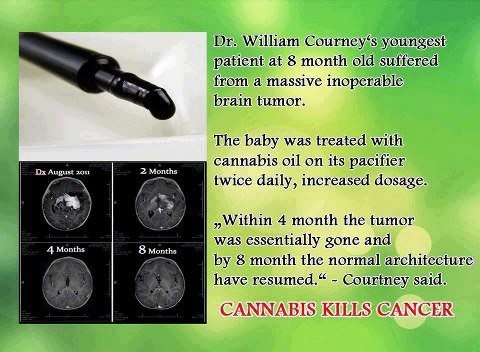
Cannabis oil cured Mike’s terminal cancer


A Cancer patient Mike Cutler has hailed cannabis as a miracle cure for the disease after his symptoms vanished when he began taking the drug.

Mike, 63, was diagnosed with liver cancer in 2009 and was given a transplant. But in late 2012 he learned cancer had attacked the replacement organ.
In desperation he began researching online and found a YouTube video advocating the use of cannabis oil for cancer.
  He decided to try it – and claims that three days after taking the banned Class B drug his excruciating pain disappeared. Two weeks later he began coughing up blood, which he believes contained the dead cancer cells.
I couldn’t accept that I was going to die. And when I found I was cured I was completely shocked
Mike Cutler: The grandfather-of-nine went for a biopsy at the Royal Free Hospital in London in May and doctors told him the cancer cells had gone.
Retired builder Mike, of Hastings, East Sussex, recalled: “Finding I could die was terrible, so I began searching for something that could help me.
“I couldn’t accept that I was going to die. And when I found I was cured I was completely shocked.
“I’m a normal family man, not a druggie. But I had a serious illness and this helped. I can’t believe cannabis oil isn’t being used regularly as a treatment. It is a miracle cure. The NHS should use it.”
Mike resorted to illegally buying the substance from a dealer and used it to make his own tablets, taking one a day.
He is now campaigning for law changes to allow medicinal use of cannabis.
He spoke at a debate on the subject with Professor David Nutt and Green MP Caroline Lucas in Brighton.
Mike’s claim came as research published last week by the University of East Anglia revealed the main psychoactive ingredient in cannabis, Tetrahydrocannabinol or THC, can help fight cancerous cells.
Dr Peter McCormick, from the university’s School of Pharmacy, said: “THC has anti-cancer properties. This compound is known to act through a specific family of cell receptors.
“We have provided an important step towards the future development of therapeutics to reduce tumour growth.”
A number of organisations, including Cancer Research UK, are investigating the medical use of cannabis. Cannabinoids are known to affect brain and nerve activity, energy metabolism, heart function and the immune system.
The Royal Free Hospital confirmed that Mike has received no further cancer treatment since his transplant. 

Wednesday, July 23, 2014

Donie's Ireland daily news BLOG update

The Garda is not a broken organisation says Noirin O’Sullivan


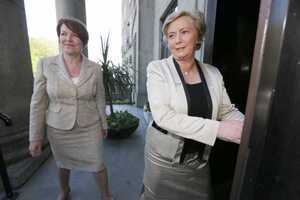
Left Pic. Noirin O’Sullivan (left) with Justice Minister Frances Fitzgerald at the Department of Justice recently & right pic.  Garda Commissioner Noirin O’Sullivan with School director Joe Mulholland pictured at MacGill Summer school in Glenties.
Acting Commissioner says the force is committed to ‘explosive’ change
The Garda is not a broken organisation, but it has been damaged and is hurting, the acting Commissioner said today.
Noirin O’Sullivan told the MacGill summer school in Co Donegal she was impatient for reform and strongly supports Government plans for independent oversight of the force.
“Recent controversies have focused the public mind on instances where we have not lived up to our own standards,” she said.
“In some cases we’ve badly failed those standards. But when we’re good, we’re very, very good.”
Committing the force to “explosive” change she insisted Gardaí at every level were impatient for reform and change.
“As an organisation we’ve been pretty good at development and change,” she said .
“Sometimes that development and change comes gradually and sometimes as right now, it happens explosively. When it happens explosively then the task is to be out in front of reform, to drive change from within, not just accept it under duress.”
In a key part of her address she committed the Garda to the Government’s reform plans including independent oversight.
She said the Garda must commit itself to “taking control of our future, while welcoming stronger oversight from the proposed Independent Authority, as well as GSOC and the Garda Inspectorate”.
“Equally important it means remaining accountable to the communities we serve,” she said.
“We are proud of what we do and where we have come from. We are ready to step up to becoming a human rights-centred world class police service.”
The results of a survey of Gardaí across the State and a meeting involving six officers with Ms Fitzgerald at Farmleigh were “painful, illuminating, exciting and exhilarating,” she said.
Garda reforms introduced in 2005 “ brought clarity to the management and oversight of policing,” she said.
“But it is legislation that’s approaching its 10th anniversary. Ireland has changed utterly in those 10 years.”
The bottom line, she said, is “the Act needs revising and a key element of that revision is the establishment of an Independent Policing Authority. ”
On the question of intelligence handling, she added: “On national security the Commissioner will report to the Minister [for Justice], the Oireachtas and the Government.”
Ms O’Sullivan, who is only the second head or acting head of the Garda to address the MacGill summer school, said management within the force “must drive Government policy into understood standards and lived behaviours within the police service”.
This reform must be incorporated into what she called the “culture” of An Garda Síochána.
“Culture is how any organisation does its business,” she said.
“For as long as I serve in this role, I’ll drive ahead on all of those objectives. We cannot afford to stand still.”
Public confidence in the police would be grown one public contact at a time, one incident at a time, she said.
“Our mission is to stand between the citizen and chaos, guarding the peace that is essential to civilised living.”
She insisted police officers and senior ranks are learning from policing failures.
“We have the positive impetus provided by negative events,” she said.
“None of us would want recent controversies to have happened, but the fact that they happened means that we have been forced to stand back from what the Minister [Frances Fitzgerald] called the ‘accretion of habits’ and re-examine ourselves and our organisation in a brutally honest way.”
Taking questions from the floor, Ms O’Sullivan countered fears of under-staffing by saying Garda recruitment would recommence in the autumn.
Asked about the whistle-blowers she insisted: “Dissent should not be seen as disloyalty.”
She stressed the importance of Garda oversight and said the relationship between the Garda and GSOC “is improving, it’s going in the right direction”.

Blood donations in Ireland fell by 4% last year


THE BLOOD TRANSFUSION SERVICE SAYS REDUCED USAGE OF BLOOD BY HOSPITALS IS FORCING IT TO CUT COSTS

The Irish Blood Transfusion Service said it needs to collect 3,000 donations a week and has called on people to make a particular effort to give blood during the summer.
Blood donations fell by 4 per cent last year compared to the previous year, according to figures contained in the Irish Blood Transfusion Service’s annual report.
The organisation also said less wastage, improved surgical techniques, and a review at hospital level of transfusion practices may have contributed to a decline in the use of blood and platelets which has had a knock-on effect on income for the service.
“The use of blood and platelets has continued to decline which has serious impact on our income,” said transfusion service chief executive Andy Kelly.
“In 2013, 82,697 donors gave 135,547 donations.
This compares to 85,762 donors giving 141,350 donations in 2012, a drop of just over 4 per cent.”
He said the decline in usage has occurred more quickly than expected, especially in the case of red blood cells; a trend which has been noticed throughout Europe.
“It is unclear what the exact reasons are but undoubtedly some of them are less wastage, improved surgical techniques, reviewing at hospital level of transfusion practice and less elective surgery taking place due to the cutbacks in health spending,” he said.
Mr Kelly said it looked like the trend would continue over the next few years and will force the service to reduce costs further.
He warned that although “there may be some scope for further reduction in costs, this will not be sufficient to meet the expected reduction in income”.
As part of cost-saving and reform measures, the transfusion service moved to single-site testing in 2012.
The next step in this programme is to move to single site processing of blood and blood products in the National Blood Centre in Dublin.
The service needs to collect 3,000 donations a week and has called on people to make a particular effort to give blood during the summer months.

Health service’s pressures puts diabetes patients in Ireland at risk


The long-term health of thousands of diabetes sufferers is being put at risk after a leading hospital pushed out their annual check-ups to 18 months due to pressures on the service.

Patient advocacy group Diabetes Ireland issued the warning after St Vincent’s University Hospital confirmed it has been forced to lengthen the wait for the routine examination as a result of junior doctor workload issues and surging patient numbers.
Under best-care plans, anyone with uncomplicated type 2 diabetes should still undergo regular check-ups to ensure their condition is not worsening.
While this form of diabetes — which affects almost 200,000 Irish people — can be tackled by exercise and dietary changes, if it is not addressed it can ultimately cause stroke, heart attack, eyesight problems, and kidney failure.
Although the St Vincent’s annual check-up system did not reach international best practice guidelines that those affected should be examined every four to six months, it was believed the service would pick up any worrying developments in a person’s condition.
However, after the decision to stretch the check-up system out to 18 months, Diabetes Ireland has warned patients are now potentially being put at risk.
“You should be concerned if you are not getting a regular type 2 diabetes check-up to review your control of [the condition],” said Dr Anna Clarke, the group’s health promotion and research officer.
“It should really be a four-month check-up, because otherwise complications can arise.
 “Over 60% of the health budget on diabetes is spent on complications [caused by a person’s condition deteriorating], so there is a real need for people to review their condition regularly,” she said.
While Dr Clarke advised anybody affected by the St Vincent’s change to go to their GP for a regular blood check, she said this may not be possible for everyone due to the €50-€60 charge to attend a GP clinic — meaning some people’s health may deteriorate to dangerous levels before it is flagged by medics.
The concern was raised after consultant endocrinologist at St Vincent’s, Dr Ronan Canavan, said the decision to stretch out the check-up system means diabetes sufferers will receive “less than ideal care” from the service.
Speaking to trade newspaper Irish Medical News, Dr Canavan said that due to attempts to reduce the shift length of junior doctors under the European Working Time Directive, and patient numbers surging by 200% in 20 years, there has been a 30% reduction in the number of junior doctors attending diabetes clinics at the hospital.
“I think it is stretched to where we are trying to provide what might be just about minimal care,” he said.
In a statement, the hospital said: “Earlier this year, it was decided by the diabetes multi-disciplinary team that routine, uncomplicated reviews would be moved from 12 months to 18 months.
“This decision was taken in order to help clinics operate efficiently while dealing with increasing patient numbers. Non-routine reviews have not been affected.”

Leo Varadkar tells health lobby to stop attacking him and weakening his position


The Health Minister has said he will consider proposals from an expert panel on medical card eligibility.

The Health Minister Leo Varadkar has admitted you would need the“wisdom of Solomon” to decide which illnesses should automatically entitle a person to a medical card.
Varadkar warned last week that plans to grant medical cards on the grounds of medical condition may be unworkable and result in nearly everyone qualifying for a card.
This has drawn a concerned response from groups such as the Jack and Jill Foundation which says it has been inundated with complaints and worries from concerned parents following Vardkar’s comments.
But a spokesperson for the minister insisted today that Varadkar’s sole priority is to ensure cards are allocated “in the fairest and most equitable manner possible”.
Speaking at the MacGill Summer School this evening, Varadkar appealed to the health lobby groups to stop attacking him as he faces into “very difficult budget negotiations” in the coming months.
He said: “I am going into very difficult budget negotiations in the next few months to try and secure the biggest budget possible for health and having health interest groups attack me and weaken me is not good for health or people who need to use our health services.”
Wisdom of Solomon
On discretionary medical cards that have been restored to some 15,000 people in recent weeks, he said: “There is no question of them being revoked, no question whatsoever.
“I am happy to reassure anyone who is worried about that that the medical cards that were withdrawn and given back will not now be revoked,” he insisted.
Varadkar also said that an expert medical panel will have a “very difficult job” and are going to need “remarkable wisdom” to carry out a study of what criteria will apply to granting medical cards based on medical need
“No decisions will be made until they make their report and certainly no promises or commitments could possibly be made until they produce their report.”
The panel, made up of doctors and patient groups, is to make recommendations in the autumn setting out the conditions and criteria to be used in deciding who should be automatically entitled to a full medical card.
This follows a change in government policy in May when the controversial review of discretionary medical cards was stopped and the coalition announced plans to grant cards on the basis of medical need for the first time.
Varadkar has indicated such plans could be troublesome, but insisted earlier today that he will consider the proposals of the expert group if they are “fair and affordable”.
He said: “You would need to have the wisdom of Solomon to decide which illnesses should entitle you automatically to medical cards and which ones should not but if the Expert Panel can come up with proposals that are fair and affordable I’ll consider them in depth.”
Also speaking at the MacGill Summer School today, Fianna Fáil leader Micheál Martin said that the government should fully reinstate the discretionary medical card system as it had worked effectively since its inception in the 1970s.

The missing emu was stolen said Carlow wildlife park owner


GARDAÍ INVESTIGATE MYSTERIOUS DISAPPEARANCE OF FLIGHTLESS BIRD

The owner of a Co Carlow wildlife park is reeling after one of his emus went missing last week.
Gardaí have said they are investigating the case of the missing flightless bird.
The owner, Patrick Foley owns the Southern County Fishing Resort and Wildlife Park in Garryhill. He used to have three emus. Now he has two, and a mystery.
The 25-acre park has a 1.8 meter perimeter fence. According to Mr Foley, “nothing can get in or out” and there is no sign of damage to the fence.
He says while emus are fast runners they cannot jump.
He thinks an emu thief could have entered the park through a gate at the main entrance, which is sometimes left unlocked until late at night.
“They’re quite easy to catch. They’re very curious birds, and it’d be easy enough to grab one of them,” he said. He fears the animal will not survive on its own or in the care of its captors.
Mr Foley bought the missing emu and two others from a breeder in Cork a year ago. They were “little chicks” at the time. Now the bird is about one metre tall and could reach two metres when fully grown. He said no license was required to buy the bird.
This is not the first time an exotic bird has gone missing from the park under mysterious circumstances.
Mr Foley believes three pheasants were stolen several years ago.
According to Gillian Bird from the DSPCA (Dublin Society for the Prevention of Cruelty to Animals), emus are considered exotic animals, but there is no limitation as to what you can have as a pet under Irish law.
People can own any kind of animal without a license. “You can have an elephant out the back of your house in Dublin 16 if you want,” she said.

Visitors flock to White Tailed Sea Eagles viewing point in Clare

  
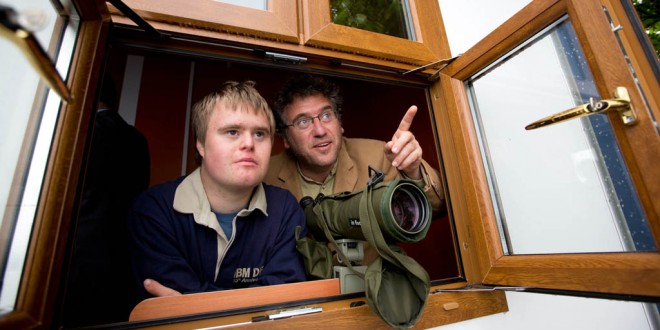
More than 2500 visitors have so far flocked to see the White Tailed Sea Eagles Viewing & Information Point on the shores of Lough Derg in Co. Clare since it was officially opened on July 4th.
 Located at Mountshannon Pier and funded by Clare County Council, the new tourism development features telescopes and information displays about Ireland’s largest and most spectacular breeding birds, including the first of the species to be born in the country in 110 years.
The facility is being operated by the Mountshannon Eagle Group, Mountshannon Community Council and the Golden Eagle Trust, and will remain open until the end of September.
  Congella McGuire, Clare Heritage Officer, said the introduction of the Viewing Point “has further increased public interest in the local White Tailed Sea Eagle population without disturbing them in their natural habitat.”
She added: “Since the birds first arrived in Mountshannon three years ago, the Council has worked closely with the Golden Eagle Trust and the local community to ensure they are afforded every opportunity to thrive. The delivery of this Viewing & Information Point further safeguards these impressive birds and their nesting activities, as well as promotes their ecology and conservation. It’s also an excellent addition to the local tourism infrastructure.”
The Mountshannon breeding pair, a six-year-old male and five-year-old female, were originally collected as chicks on the island of Frøya off the west coast of Norway by the Golden Eagle Trust. The birds were released in Killarney National Park before relocating to Lough Derg in 2011. The pair, named Saoirse and Caimin, created history in 2013 when they reared the first chicks to fly from a nest in Ireland in 110 years. The pair successfully hatched another chick in late April of this year.