Pages

Showing posts with label Ashford Castle. Show all posts

Sunday, October 26, 2014

Donie's Ireland daily news BLOG update

Michael D Higgins rushed from official residence in dead of night after bomb threat


IRISH PRESIDENT MICHAEL D. HIGGINS.

Ireland’s President Michael D Higgins had to be evacuated from his official residence in his pajamas after an alleged IRA bomb threat made in a phone call to the Samaritans.
Police rushed the President and his wife Sabina from Aras an Uachtarain, their Phoenix Park home, in the middle of Tuesday night.
A report in the Irish Independent says President Higgins was moved to a safe area of the estate while officers dealt with the threat.
The full-scale emergency evacuation plan was activated following a phone threat late on Tuesday night.
The alarm was raised following a call to the Samaritans helpline at around 10pm.
The speaker, now believed to be a teenage prankster, reportedly warned; “There is a bomb set to go off in Aras an Uachtarain to kill the President.

“IT’S SET FOR 12.32AM. IRA, IRA.”

The report says senior police officers took the decision to wake President Higgins (72) up, as armed detectives were sent from local stations to Phoenix Park.
An armed guard protected the president and his wife as they waited until their security personnel received the all-clear.
The report adds that the President was said to be ‘gracious’ for his security’s quick decision.
Police investigating the threat believe it could have been a hoax by a young teenager.

PTSB stress test shortfall to be between €800m and €1bn


THE PERM TSB BANK WILL HAVE TWO WEEKS TO SUBMIT ACTION PLAN TO SINGLE SUPERVISORY MECHANISM

PTSB will not have to raise the full amount identified by the ECB on Sunday.
Permanent TSB’s capital shortfall arising from European Central Bank stress tests will be between €800 million and €1 billion, The Irish Times has learned.
PTSB, which is 99.2 per cent owned by the State, will fail the adverse scenario case of the stress test when the results are published on Sunday.
PTSB will have two weeks to submit a plan to the new Single Supervisory Mechanism, which assumes regulatory oversight for the euro zone on November 4th, outlining how it intends to plug the hole in its capital buffer. It will have until the end of July next year to put the funding in place.
PTSB will not have to raise the full amount identified by the ECB on Sunday. The figure announced by the ECB will be a gross number. PTSB will then be able to net off up to €400 million worth of contingent capital notes, or CoCos as they are better known, held by the State as part of the bank’s €2.7 billion bailout.

PROPERTY MARKET

In addition, it will likely be allowed to factor into its plan actions that it has taken this year, such as the sale of its Springboard sub-prime mortgage book, along with provision writebacks that reflect the upturn in the Irish economy and property market.
PTSB will seek to raise whatever capital it needs from the markets, with Deutsche Bank engaged to seek out potential investors. The State is another possible source of funding but Minister for FinanceMichael Noonan last week said he expected PTSB to raise whatever funding it needs from private sources.
As part of the asset quality review undertaken for the comprehensive assessment exercise by the ECB and theEuropean Banking Authority, some 1,100 PTSB debtor files were assessed, along with 4,400 collateral items.
As PTSB has not yet received approval for its restructuring plan its stress test was done on the basis of a static balance sheet based on year-end 2013.
This meant that in applying the stress scenarios into the future the bank was required to maintain the same business mix and asset and liability profile in terms of quality and maturity that it had at the end of last year.
By comparison, the dynamic balance sheet calculations allowed certain exemptions from the static rules to reflect the terms of the restructuring plans agreed with the commission. This applies to varying degrees to Bank of Ireland and AIB.

Positive Action group paid €13,000 for weekend of Hotel pampering


POSITIVE ACTION RACKED UP A WEEKEND BILL OF €13,000 ON PAMPERING. 

POSITIVE Action – the support group for women infected with Hepatitis C – racked up a bill of nearly €13,000 over one weekend hotel break, documents show.
The support group, which was criticised in a HSE audit for its extravagant use of public funding, was set up in 1994 to help 1,000 women infected with the potentially fatal virus after receiving batches of the contaminated Anti-D blood product.
Financial details supplied to the HSE as part of the audit reveal an outlay of €12,847 in February 2012 for a pampering and relaxation weekend at the Athlone Springs Hotel – in spite of an instruction from the HSE that it should halt this kind of discretionary spending. The organisation argued the funding came from its 2011 allocation.
The group, which was wound-up in May, sought €123,920 in 2014 funding for members’ weekends, workshops and meetings. It told the HSE that regional meetings were a critical and central support service for ageing women in bad health.
“We cannot emphasise to you enough the reassurance our members get when they are able to talk and their feelings of isolation dissipate following contact with other members in similar situations.”
It said that giving therapies to women at weekend conferences took away the stigma of having to fill out forms divulging they had hepatitis C in other venues. The letter said that “even in Dublin, some members have issues accessing a qualified nurse therapist in their local area. This is more difficult in rural areas”.
In other instances it was necessary to hold meetings with partners and families of women who died from the virus and who were now left adrift, alone and isolated.
Meanwhile, it is understood a complaint of alleged fraud involving around €150,000 was made by Positive Action to the Gardai. An investigation began late last year and a woman has been interviewed. The alleged irregularities came to light last September, when the directors of Positive Action were compiling documentation for the HSE which was collecting information as part of its audit.
Efforts are also under way to set up a new organisation to support women. A number of former directors are operating from their homes to maintain communications with women who relied on Positive Action for support. They hope a new support group can be established.

Four Irish hotels named among Europe’s Top 10 resorts
Embedded image permalink  

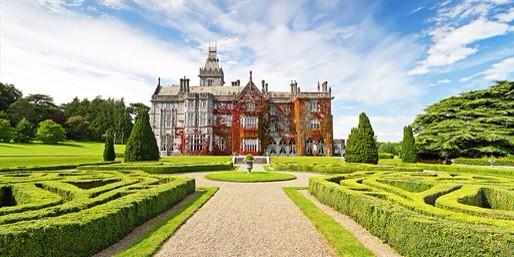
Condé Nast nods for Sheen Falls, Ashford Castle, K Club and Adare Manor cap an extraordinary week for Irish tourism.

Another day; another travel bible showering praise on Ireland.
Yesterday, the country featured on Lonely Planet’s Top 10 to visit in 2015.
Now comes the news that readers of Condé Nast Traveler magazine have named four Irish hotels among their Top 10 European Resorts.
Sheen Falls Lodge tops the list at No.1, with Ashford Castle ranked second, the K Club fourth and Adare Manor rounding off the Irish showing in tenth place.
The Top 10 Resorts in Europe is as follows:
  1. Sheen Falls Lodge, Co. Kerry
  2. Ashford Castle, Co. Mayo
  3. Blue Palace Resort, Crete
  4. Kildare Hotel at the K Club, Co. Kildare
  5. The Gleneagles hotel, Scotland
  6. Badrutt’s Palace, Switzerland
  7. Grand Hotel Zermatterhof, Switzerland
  8. Villa d’Este, Lake Como, Italy
  9. Old Course Hotel, Scotland
  10. Adare Manor, Co. Limerick
Condé Nast Traveler’s Readers’ Choice Awards are published annually, and this year featured over one million votes from almost 77,000 readers. Several lists of best cities, islands, hotels, resorts and cruise lines are drawn up from the results.
Sheen Falls Lodge, which overlooks the picturesque Sheen Waterfalls, also ranks 82nd on the global list of Top 100 Hotels & Resorts.
“We are extremely honoured to be named the number one resort in Europe and to be one of four hotels from the UK and Ireland in the Top 100 hotels and resorts in the world,” said Patrick Hanley, General Manager, Sheen Falls Lodge.
“A special thank you must be extended to the team here who dedicate themselves and make an exceptional effort to ensure all guests have a pleasant and memorable stay.”
The Kenmare five-star is commended by readers for its “first-class service” and “very pretty views”, according to the magazine. Its “very high-quality design” also merits a mention.
Ashford Castle, which ranks 97th in the world, is described as “in a class of its own”.
The Cong, Co. Mayo five-star has “beautiful grounds, fantastic recreational activities” and “outstanding service”, according to readers.
Formerly the Guinness family home, the hotel’s guest rooms come with high ceilings and four-poster beds, the magazine points out, “though they can be tired looking.”
The five-star is currently undergoing an extensive refurbishment programme.
Connemara’s Ballynahinch Castle also features, ranking 23rd of 25 Top Hotels in Europe.
“The setting is something out of a fairy-tale book – lush greenery, lake, silence,” readers report. “It’s just gorgeous, like a rich uncle’s country estate.”
The Condé Nast citations cap an extraordinary run of international recognition for Irish destinations and hotels overseas. In addition to Lonely Planet’s Top 10, Enniskillen’s Lough Erne resort recently topped the Huffington Post’s “Best Hotels for Winter 2014/15″ round-up.

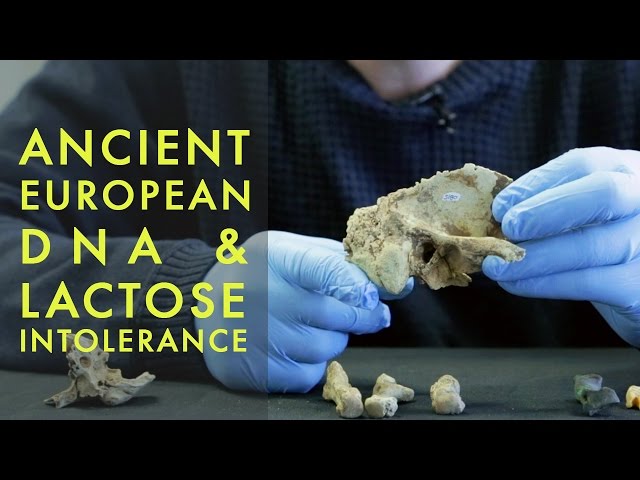
Ancient Europeans were lactose intolerant and cheese makers


New research reveals that Europeans actually began drinking milk long before their genes had adapted to making the most of the nutritional value of milk and learned cheese-making.

New research, which evaluated the ancient DNA found in human bones is bringing an interesting new light on the prehistory of Europe.
Some of the interesting notes, range from changes in skin color and when lactose tolerance began. While the research caught many off-guard, because it was not an expected outcome of the research in the first place.
The study involved looking at the DNA which was extracted from 13 individuals. The individuals were unearthed during construction in the Great Hungarian Plain, which is located in Central Europe. This region is known for its impact in shaping European prehistory. The various finds at the site span 5,000 years, and it was found that the best location to pull DNA from the body, was through the petrous bone, in ancient specimens like that.
The study found that the DNA recovered is revealing of the fact that there was a “progression towards lighter skin pigmentation.” The study also revealed that there was a major shift in technology, and an adoption of farming. In fact, the study found that there were significant shifts between the Bronze Age and the Iron Age.
In fact, the study found that it wasn’t until the Bronze Age that animals began being able to consume milk, and become tolerant of lactose. Lactose is the natural sugar in the milk of mammals. The shift and evolution of the human body was what ultimately led to this, and this study found that the shift happened significantly earlier than first predicted, or assumed.
However, it isn’t ironic that right at this time, was the same time that more modern methods of farming were seen in the communities which consumed lactose. In fact, while most of the world was lactose intolerant, it was found that the development happened and was spurred by long term farming.  

Wednesday, May 22, 2013

Donie's Ireland daily news BLOG Tuesday


Mortgage lending in Ireland plunges by 66% in first quarter of 2013


THE MORTGAGE MARKET SLOWED DRAMATICALLY IN THE FIRST THREE MONTHS OF THE YEAR.

The number of new home loans approved by banks and the amount that was borrowed both dropped by around two-thirds from the levels seen in the previous three months.
The latest figures from the Irish Banking Federation (IBF) and accountants PwC show that in the early part of this year lending was running at lower levels than at any time in 2012.
There were just over 2,000 mortgages approved in the first three months of the year and the amount borrowed was €331m. It is down from 6,000 mortgages approved in the final three months of 2012, when the total borrowed was €999m.
In the first three months of 2012, which is a better comparison, 2,600 mortgages were approved and the total amount borrowed was €450m.
It’s the second recent blow to hopes that the housing market was emerging from a five-year slump. Data published at the end of April showed house prices declined nationally in the early part of the year, though they were up in Dublin.
The IBF’s Felix O’Regan said the latest lending figures reflect the decision to end mortgage interest relief for house buyers at the end of 2012. Earlier data showed a surge in mortgage lending at the end of last year as buyers snapped up houses before the tax break was scrapped. The latest figures also reflect the more normal slowdown in house sales at the start of each year, Mr O’Regan said. But while the first three months of the year are traditionally a quiet time for house sales, the 2013 figures show a 20pc drop even compared to the same period last year.
WORRYING: Conall Mac Coille of Davy Stockbrokers said the end of mortgage interest relief had distorted the market. But he said taking in the whole six-month period from the start of October to the end of March, mortgage approvals were up about 20pc compared to a year earlier.
Yesterday Trevor Grant, who is the chairman of Expert Mortgage Advisors, which represents brokers, said the latest decline in mortgage market activity is “really worrying.”

Irish Credit unions struggling to get a reasonable return on investments


Lending is down and interest rate on savings is dropping

The low level of loans being issued by the credit union movement was identified as a key point at a recent conference in Dublin held to discuss the sector.
Credit unions are putting a lot more money into investments, including bank deposits, than they are directing towards new loans. And the low returns on money not being loaned out to members is a problem.
Yet any move to increase the return from investments will inevitably carry with it a heightened level of risk.
Lack of expertise 
Many credit unions do not have the expertise necessary for entering into such waters and so the sector is faced with the possibility of an extended period of low returns.
The issue feeds into the overall debate about the restructuring of the sector and the change that is coming down the tracks. New forms of control could allow some credit unions look at different categories of loans and services that they could offer.
Asked about the loans issue, Irish League of Credit Unions chief executive Kieran Brennan is anxious to put it in perspective.
“Better to be in our position than the one the banks are in. At least we didn’t lend out multiples of our deposits.”
And if the banks were lending out at the sort of ratio to assets the credit union sector is, he adds, the economy as a whole would be a lot better off. Point made, Brennan is prepared to accept that the ratio of the credit union loans to total assets is not as healthy as it needs be.
At the end of 2012, the league’s member credit unions in the Republic had assets of €12.23 billion, essentially the same as at the end of 2011.
The figure for total loans was €4.25 billion, 2.6 per cent down on the figure for the end of the previous year.
At the Dublin conference, economist Alan Ahearne produced figures showing that, for credit unions overall, the loan to asset ratio had fallen to 36.6 per cent last year from 52 per cent in 2008.
The reasons behind it are easily identified. A lot of people are overburdened with debt, and many are finding it hard to get by in an environment of increased unemployment, reduced incomes and higher taxes. Concern about how the economy will perform over the coming years is persuading people to hold off taking out sizeable loans.
“It is the size of the average loan that is down, rather than the number of loans overall,” says Brennan. The fall in the ratio has been steady, and steep for the sector overall since 2008, according to Ahearne’s figures, though Brennan says that, for league members, the fall has eased somewhat in more recent times.

Red Carnation UK buys Ashford Castle the priciest Hotel in Ireland


Red Carnation Hotels U.K. Ltd. agreed to buy Ashford Castle, Ireland’s most-expensive hotel per night, for an undisclosed price.

The landmark 83-room property, where parts of “The Quiet Man” starring John Wayne were filmed, was sold on behalf of receiver Ernst & Young Ltd. through broker Savills Plc (SVS), according to a statement by E&Y today.
The average room rate was about 315 euros a night last July, Tom Barrett, head of Savills’s hotel and leisure unit in Ireland, said in October, citing data compiled by STR Global. Income-producing properties in Ireland have lost about two-thirds of their value on average since 2007, according to Investment Property Databank Ltd.
“Ashford Castle is the jewel in the crown of Irish hospitality,” Savills’s Barrett said in the statement. “It is a strong vote of confidence in the future of the industry from a leading international hotel and travel group.”
Ashford Castle, about 240 kilometers (150 miles) west of Dublin near the village of Cong, attracted bidders from the U.K., Europe, Asia, the U.S. and Australia, according to the statement. Carnation is a closely held hotelier that runs 14 four and five-star properties including the closest hotel to London’s Buckingham Palace, according to its website.
A plan to develop 13 penthouse bedrooms, 30 lodges and extend the 9-hole golf course to 18 holes at Ashford Castle was drawn up and never completed, London-based Savills said in a statement when the hotel was put up for sale in October.
Irish developer Gerry Barrett bought the hotel, on 365 acres (148 hectares) of land, in 2007 for 50 million euros, according to the Irish Times.
Lloyds Banking Group Plc’s (LLOY) Bank of Scotland (Ireland) unit appointed a receiver to Ashford Castle Properties Ltd. and Ashford Castle Estate Ltd. in November 2011, according to Iris Oifigiuil, the Irish State Gazette.

Half of all young suicide deaths in Ireland may be part of a cluster


UP TO HALF OF YOUNG MEN UNDER THE AGE OF 18 WHO COMMIT SUICIDE MAY HAVE KNOWN SOMEONE ELSE WHO ENDED THEIR OWN LIFE.

So-called ‘suicide clusters’, particularly among younger people, are becoming a worrying issue in this country, according to a new report.
The new Suicide In Modern Ireland survey has identified, for the first time here, the possible true extent of suicide clusters, which involve a number of cases of suicide deaths in a particular area.
The report, authored by Professor Kevin Malone of UCD, has identified “very fragmented communities in the aftermath of a suicide event or events”.
Across all ages, it found as many as 10pc of suicide deaths in this country may be part of a cluster.
Ireland has the fourth highest rate of suicide amongst young males in the EU and now Turn The Tide On Suicide is calling for a Suicide Prevention Authority to reverse this trend.
On average, every 18 days, a child under 18 in Ireland dies by suicide.
In total, over 500 people a year commit suicide, with men accounting for 84pc.
Younger men are particularly at risk, which prompted Kerry teenager Donal Walsh, who died from cancer last week, to publicly appeal to young people not to end their lives.
ANECDOTES: According to Prof Malone, their findings have identified the possible true extent of suicide clusters.
“I think this has been previously under-estimated. If you just rely on anecdotes, you will only see part of the problem. We systematically examined for clustering in every case,” said Prof Malone.
“Our findings suggest that up to 50pc of our under 18 suicide deaths in Ireland may be part of couplets or clusters.
“A young suicide death is a very powerful and destabilising social force. It can reverberate intensely in smaller closed communities, such that the whole community is at increased risk for at least a year, and also at anniversaries,” he said.
“We have to place cluster-busting in our suicide prevention agenda. We need a national, year-round real-time early-warning system – it can’t just be in schools, as several of these young suicide deaths occur in kids who have left the school system,” he said.
Meanwhile, the report has called for an early detection adolescent depression screening programme to be considered.
Alcohol, mental illness and bullying are all highlighted as factors contributing to suicides among young people
The report urged that there should be a “deeper understanding of the role and culture of alcohol and its consumption in teens and young adults”.

Letterkenny Gardai say they are winning the war on crime


Crime in the Letterkenny area has fallen by 15 per cent in the last year, new figures suggest.

The figures were presented to the Letterkenny Joint Policing Committee by Supt. Vincent O’Brien and show that most types of crime in the Garda district are indicating a fall in the first quarter of the year compared to the same period last year.
Robberies from the establishment have fallen by 33 per cent while robberies from the person fell by 100 per cent. Aggravated burglary increased by 300 per cent though Supt. O’Brien stressed that the figure has increased from four incidents to seven.
Burglary fell by 2 per cent and theft fell by 10 per cent although theft from shops increased by 34 per cent which Supt. O’Brien said was a significant increase for Letterkenny.
Theft from vehicles increased by 15 per cent while other theft fell by 18 per cent.
The figures also showed that assaults causing harm fell by 52 per cent while assault was down by 13 per cent.
Supt. O’Brien said Gardaí in Letterkenny had targeted key offenders and three of them “are out of commission because they are in prison”. He also said recent robberies could be connected to a number of high dependency drug users who had moved into the Letterkennny area. He said they had been detected, arrested and charges were being brought.

Penguins evolution from wings to fins saved them energy


 A study of winged and diving birds shows there was an advantage to learning to swim underwater and abandoning flight: less energy expended. 

Flight might make some aspects of penguins’ Antarctic life much easier. The grueling march of the emperor penguins, for example, might take only a few easy hours rather than many deadly days. Escaping predators like leopard seals at the water’s edge would also be easier if penguins could take flight, so scientists have often wondered why and how the birds lost that ability.
The march of the penguins seems to mock evolution. If Emperor penguins just got up and flew 40 miles, they could get to their mates in no time flat. Why would evolution abide a tedious waddle across the ice?
It turns out there’s method in the seeming madness of these blubbery short-winged pedestrian birds. Penguins long ago faced a steep trade-off between the high calorie costs of flight and low energy expenditure of using their wings to swim. They dived into an “adaptive fitness valley” of evolution that fly-and-dive ocean birds such as murres and cormorants still straddle, according to a team of Canadian and American zoologists.
This biomechanical theory for winged flightlessness emerges from a study that measured energy efficiency in thick-billed murres – seabirds also known as guillemots, in the Auk family – and in cormorants.
Murres resemble penguins in their diving and swimming – “flight-based” propulsion by strong wings. But murres can still fly.
That lingering multi-tasking costs murres and other diving sea birds in ways that penguins don’t pay. The metabolic cost of flight for murres is the highest ever recorded for vertebrates, according to the study published Monday in the Proceedings of the National Academy of Science. Murres operate at 31 times their base metabolic rate while flying, placing them at the outer edge of energy efficiency among vertebrates.
Dive costs for murres were lower than those for cormorants, another fly-dive species that uses a “drag-based” paddle, like ducks. But the penguin still beats both in diving energy efficiency.
“Like many people, I have been fascinated by films of penguins walking across the Antarctic ice, and wondered, why on earth they lost the ability to fly?” said University of Aberdeen zoologist John Speakman, a member of the research team. “The lack of flight in penguins has been an enigma, because it leads to some seemingly poorly adapted behavior.”
But penguins are well adapted for finding food in water – adaptions that progressively made flying impossible: Their wings became shorter, with stouter bones. Their body mass increased, both to optimize muscle contraction rates for the slower wing beats, and to allow them to store more energy for longer dives.
These compromises are lacking in the murres, a chubby-bodied flier that has the highest wing loading of any flying bird, according to the study. It needs a whopping 146 watts per kilogram of weight to take flight, more than the record held by a bar-headed goose. A cormorant needed 87 watts per kilogram.
And dive costs increase rapidly with body mass for flying divers such as the murre, compared with flightless divers, such as the penguin. That places the murre at the edge of the “fitness valley” separating winged fliers and their flightless swimming avian cousins, the researchers suggest.
The penguins, however, pay a price for their efficiency: they became the favored prey of leopard seals while in the ocean.
That should be motivation enough for penguins to become even better swimmers.