Pages

Showing posts with label Mortgage distress. Show all posts

Sunday, April 21, 2013

Donie's Irish daily news BLOG Saturday


HOUSE RULES FOR IRISH FAMILIES IN DEBT


The average Irish family will be left with €1,760 a month to live on under new rules outlining what should be considered reasonable living expenses for people in mortgage distress.

Debtors may be asked to move to cheaper accommodation, give up their cars and health insurance, and prove the economic rationale for childcare arrangements under the guidelines for personal insolvency arrangements.
They were given a cautious welcome by advocacy groups, who hoped the rules would re-balance the current one- sided approach of banks’ dealings with customers in arrears.
However, there remained some concern that they leave too much power in the hands of the banks — who will not be compelled to enter arrangements and will have a final veto on any deals.
Anybody entering the arrangements will be subject to strict spending guidelines which the Insolvency Service of Ireland said will be fair, and not draconian.
They will allow: 
– €278 a month for food for an adult and €72 for a pre-school child; 
– €33 a month for personal hygiene and grooming including hairdressers; 
– €35 per month on clothing and footwear and €22 for a pre-school child; 
– €48 a month for electricity and €57 for heating. 
Under the new arrangements, a family will only be allowed to keep its car if it is necessary to get to work and no public transport is available.
The personal insolvency practitioners (PIPs) — or government- appointed mediators — can dictate what type of car is needed, based on a family’s needs, which will be cheaper than €2,000.
They will also decide the hours, location, and type of childcare that working parents can pay for.
A controversial clause in the initial draft guidelines which allowed banks to force parents to give up work if childcare cost more than they earned has been removed.
However, the final version still states that “the reasonableness” of childcare can be considered, and parents will have to prove an economic rationale for paying for it.
Private health insurance will not be allowed, unless the debtor has a particular health condition which would result in spending that costs more than insurance.
It will also be allowed for people with medical conditions that “would make it difficult or impossible to regain insurance cover” when they emerge from the insolvency arrangement.
However — in another last- minute tweaking of the guidelines — people will be allowed to keep their Sky Sports subscriptions.
Sinn Féin said the guidelines “condemn people to live for years hand to mouth because the banks have been so irresponsible with lending”.
Fianna Fáil described them as a bankers’ charter that will “provide little comfort to families crippled by debt”.
But the Justice Minister Alan Shatter said he would keep a “watchful eye” on the banks and would “swiftly intervene” if the process was not working.
“We expect them to do what they have said they are going to do and to properly and fully and constructively engage with people who are in debt difficulties,” he said.
The Free Legal Advice Centre, Flac, said that up to now, banks have been pressing people beyond acceptable limits: “This legislation is badly needed for those who are insolvent and need a proper process to resolve their indebtedness.”

Irish Travellers ‘excluded’ from the labour work force

Council of Europe finds widespread discrimination
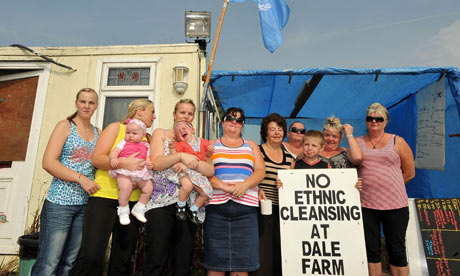
    
Urgent measures need to be taken to address the de facto exclusion of members of the Travelling community in Ireland from the labour market, the Council of Europe has warned.
In a report on Ireland’s implementation of the European treaty on the protection of national minorities, the human rights watchdog found that members of the Travelling community continue to experience discrimination in accessing the labour market and health services in Ireland.
It found despite the “positive developments and the general climate of dialogue existing in Irish society”, towards the Travelling community, Travellers face discrimination accessing health, education and accommodation.
It noted that a large number of Travellers remain unemployed, citing data from the 2006 Census which revealed a 75 per cent unemployment rate for Travellers compared to 9 per cent generally. “The main reasons for this deplorable situation, identified by the Travellers themselves, are discriminatory practices and social exclusion leading to low self-esteem and poor performance in education,” the report states.
Similarly, the school drop-out rate for children aged 15 from the travelling community according to the 2006 census stood at 63.2 per cent, compared to 13.3 per cent nationally, while participation of travellers in higher education was 0.8 per cent, compared to 30.2 per cent of the national population.
While Ireland does not recognise Travellers as a national minority, the report welcomed the fact that Irish authorities had introduced measures to recognise the community’s special position in society and to better protect their rights.
However, it highlighted the persistence of negative stereotypes regarding the community in some written press and electronic media, in particular with regard to criminality, abuse of social benefits and nomadism.
Noting that political representation at both local and national level remains very low, the report added that the various Traveller representative bodies that have been set up remain purely advisory with no decision-making powers. It also described the absence of any Roma representatives from the various Traveller committees that have been established by the State since 2007 as “regrettable”.
In addition, the Council of Europe urged Irish authorities to “finalise the consideration of the proposed recognition of travellers as an ethnic minority”. Responding to the Council of Europe report yesterday, the Government said that “consideration of this issue remains ongoing”, noting that all the protections afforded to ethnic minorities in EU directives and international conventions apply to Travellers in Ireland.
It added that the Bill to establish the Irish Human Rights and Equality Commissionwill be published and presented to the Oireachtas shortly.
The Government also pointed out that significant progress had been achieved in the delivery of Traveller accommodation, including Traveller-specific accommodation, since the enactment of the Housing (Traveller Accommodation) Act 1998.

MINISTER JOAN BURTON REFUSES TO RULE OUT REDUCTION IN SOCIAL WELFARE CUTS


Minister for Social Protection Minister Joan Burton has said any possible easing of austerity measures is going to be a roundtable discussion.

It follows comments by EU Commissioner Ollie Rehn at the G20 in Washington yesterday that Europe will ease austerity in a bid to accelerate growth.
Speaking at a Saint Vincent De Paul conference in Dublin today, Minister Burton refused to rule out seeking a reduction in her own Department’s targeted spending cuts.
Reports during the week suggested that she would seek a reduction in the €440m target set for social welfare cutbacks in October’s budget.
However, the Labour Minister did say the Troika now acknowledges that they got their original approach to austerity wrong.
Ms Burton said: “They got the calculation of the impact of the cuts in expenditure wrong.
“There was an economic model which they said, with some confidence, would produce growth, but it hasn’t produced growth to the level that they estimated.
“In fairness to the IMF they have been very intellectually honest about that.”

Up to 200,000 sleep apnea sufferers, A conference in Galway was told


As much as 100,000 people in Ireland suffer from sleep apnea – but the true figure could be twice that, a conference in Galway was told today.

An expert on the disorder told delegates at the annual conference of the Irish Dental Association that 90% of those who suffer from sleep apnea are undiagnosed.
Sleep apnea occurs when the airway collapses and there is a cessation of airflow for 10 seconds. If this happens constantly during the night every night it prevents the person getting the deep sleep required to function normally.
“Overall we believe the condition affects between 2.5 and 4% of the population but because most people who suffer from it remain undiagnosed that figure may be a little on the conservative side,” said Dr Michael McWeeney, Consultant Respiratory Physician in Galway Clinic and Bon Secours Hospital.
“We are in an obesity epidemic and that increases the severity of apnea. Poor muscle tone and alcohol consumption also increase the risk substantially. What we really want to do is raise awareness of the condition not just among the general population but also among health providers such as doctors and dentists.”

More than 40,000 apply for one-way ticket to Mars

  
It seems that there has been huge interest in signing up to sampling life on Mars in ten years, even though it is a one way ticket.
Mars One — a plan to colonise Mars in stages, with the first humans arriving in 2023, won’t begin accepting 60-second video applications until July, but already more than 40,000 applications have applied for the unique journey.
Heading off to the Red Planet for good wouldn’t be our cup of tea, but it has spiked the interest right across the globe. Mars One will largely be financed through an application fee of up to $25 and a global reality TV show that will help vet the candidates.
Dutch physicist Gerard Hooft told the New Scientist magazine that the interest levels so far have surpassed what they had anticipated.
“This is many more than I had imagined, although some psychologists and cultural anthropologists had apparently predicted there would be at least a million candidates,” he said.

Monday, April 1, 2013

Donie's Ireland daily news BLOG Sunday


Enda Kenny promises a ‘fair’ system to deal with Irish mortgage distress


Enda Kenny said personal insolvency guidelines would not apply in all circumstances

Taoiseach Enda Kenny has said the Government aim to bring in a system that is fair and equitable for people who are in mortgage and debt distress.Responding to criticisms of draft personal insolvency guidelines, Enda Kenny told reporters in Dublin the guidelines were only indicative and would not apply in all circumstances.He added that it was down to the parties involved and the insolvency practitioners to decide on arrangements in individual cases.
Mr Kenny said it was the “gross incompetence” of the previous administration and their “deliberate efforts” to inflate the property market for their “developer friends” that led to a situation where 100,000 people were in trouble with their mortgages.
He also said that there were no problems arising within the Government following the Meath East by-election and it had not affected his solid relationship with Tánaiste Eamon Gilmore.Mr Kenny said there was a programme for Government that had been signed off on by both Fine Gael and Labour at a recent review.He said it was difficult for everyone to implement but this was necessary for the interests of the people and the country.

Church must be ‘restructured’, says Archbishop of Dublin Diarmuid Martin


Christians must be ‘pro-life’ in fullest sense, Diarmuid Martin tells Easter vigil gathering

 “Newness and life will not come out of a church which still wants to look on itself as an institution of power,” Catholic Archbishop of Dublin Diarmuid Martin said in his Easter vigil homily in St Mary’s Pro-Cathedral Dublin.
The church “has to be restructured and destructured to allow it to witness to the sense of meaning and purpose that Jesus brings to the lives of believers,” the Catholic Archbishop of Dublin Diarmuid Martin has said.
“Newness and life will not come out of a church which still wants to look on itself as an institution of power, even a renewed institution, or from a church which is simply a focal point of organised doing good or social reform,” he said. It had to “witness more concretely to the message of Jesus,” he said.
“We have to live in such a way that the energy of life and vitality which spring from Jesus’s resurrection can really touch our hearts and change our church,” he said.
In his Easter vigil homily at Dublin’s Pro Cathedral, he said, “For us believers, the resurrection is not something that we explore with the eye of the historian or the archaeologist or the investigative journalist who gathers evidence or documents to discover possibly what an event of the past might have looked like. We look at the resurrection from the point of view of faith, a point of view which is no less real,” he said.
‘Passion for life’
It represented “the highest and most mysterious event in the whole of human history”. It bestowed “a passion for life, for truth and for the good,” he said.
“If Christians have a passion for life then they should be in the forefront in the fight for life, at every moment of its existence . . . The church and the Christian community must be ‘pro-life’ in the fullest sense of that term. We have to defend the right to life and we must at the same time always accompany that defence with a commitment to ensure that all can live their lives with a level of dignity worthy of the Lord of life in whose image they have been created,” he said.
‘Reasons for hope’
“Christians should be driving forces for a society in which young people receive . . . reasons for hope,” he said. “We have great young people but our years of prosperity have not left them a legacy of hope,” he said.
The church of Ireland Archbishop of Dublin Michael Jackson said the Easter message was “of real significance to us as we find ourselves facing more and more unavoidably into an understanding of Christianity which has become far too settled in on itself”.
It has become “over-anxious about its orthodoxy (correct teaching) as opposed to its orthopraxy (correct doing) in the face of those who genuinely seek to be their best for God and to do their best for their neighbour within their strengths and their limitations. Christianity has become rather too good at ‘getting at’ people,” he said.
“An unfussy rubbing along with others and the genuine capacity to compromise – these are the characteristics which Augustine singles out as essential not only to survival but to flourishing on the Ark of Noah in a truly Catholic spirit,” he said.

Former US Vice President Al Gore to attend Dublin summit on 

“Hunger-Nutrition-Climate Justice”


“Hunger- Nutrition- Climate Justice” at Dublin Presidents Michael D. Higgins, Mary Robinson and Joyce Banda will also attend April’s “Hunger-Nutrition-Climate Justice” conference

Former vice president Al Gore, along with Presidents Michael D. Higgins, Mary Robinson and Joyce Banda and others, to international conference titled “Hunger- Nutrition- Climate Justice” at Dublin Cast
Former vice president Al Gore will visit Dublin next month to attend a summit in Dublin on the links between climate change, hunger and poor nutrition.
Presidents Michael D. Higgins, Mary Robinson and Joyce Banda will also attend the international conference titled “Hunger- Nutrition- Climate Justice” at Dublin Castle on April 15 and 16. The conference is part of Ireland’s presidency of the European Union.
The conference overview on the Irish Aid’s website states, “The objective will be to facilitate a respectful dialogue and learn from practical experience and robust evidence to inform a new approach to addressing hunger, nutrition and climate justice, in the context of the new Post-2015 international development agenda.”
Conference organisers have said that more than 100 people representing farmers’ organizations and vulnerable communities from Africa, Asia and the Arctic will discuss the impact unpredictable weather patterns are having on their lives and what solutions they are working on. People facing rising food prices, failed crops and under-nutrition will speak at the conference.
Representatives from business and advocacy groups, research institutions and academia will also contribute to the conference.
According to the conference overview, the goal of the conference “will not simply be to adopt an outcome document. We hope to inspire new ways of thinking about global development challenges and to invigorate and broaden the debate, at all levels, listening to and learning from the experiences of local people and rooting future thematic policy approaches in their lives and theirs efforts to cope.”
Under-nutrition in mothers and children is the underlying cause of 2.5 million deaths each year. Almost one third of children under the age of five in developing countries suffer from stunted growth and never reach their full potential.
An estimated 870 million people worldwide face hunger. Climate change could increase the number of hunger by 10 to 20% by 2050 and an additional 24 million malnourished children. Predictions suggest that half of those children will be in sub-Saharan Africa.
The conference is hosted by the Irish Government and the Mary Robinson Foundation- Climate Justice. It is organized in partnership with the World Food Programme and the CGIAR Research Program on Climate Change, Agriculture and Food Security.
Participation in the conference is by invitation only, but the event will be live streamed. In addition, several background papers will be available online and the conference will use social media before

IMO accuse pharmacists of compromising Irish peoples health by substituting drugs for profits


THE UNION SAYS PATIENT HEALTH IS BEING COMPROMISED

The Irish Medical Organisation has accused pharmacists of substituting drugs to increase profits.
The union, which represents doctors in Ireland, says patient health is being compromised as a result.
The IMO claims patients are regularly reporting incidents where their prescriptions were being changed without their knowledge or consent.
It has accused pharmacists of swapping medicines prescribed by doctors for cheaper ones.
And it says this is not only a breach of legislation but is also causing great distress and putting patient health at risk.
The union says it has expressed its concerns with the Department for Health but has yet to receive a reply.
Generic medicines are perfectly good alternatives in most cases but the IMO says they’re not always identical.
And it argues that this could create problems with other medication that the patient is taking.
The Pharmaceutical Society of Ireland says it has received a very small number of complaints in relation to this issue

Greenland reaps the benefits of global warming

   
Climate change is allowing agriculture to boom

Inside the Arctic Circle, a chef is growing the kind of vegetables and herbs – potatoes, thyme, tomatoes, green peppers – more fitted for a suburban garden in a temperate zone than a land of northern lights, glaciers and musk oxen. Some Inuit hunters are finding reindeer fatter than ever thanks to more grazing on this frozen tundra, and, for some, there is no longer a need to trek hours to find wild herbs.

This is climate change in Greenland, where locals say longer and warmer summers mean the country can grow the kind of crops unheard of years ago. “Things are just growing quicker,” said Kim Ernst, the Danish chef of Roklubben restaurant, nestled by a frozen lake near a former Cold War-era US military base. “Every year we try new things,” added Mr Ernst, who even managed to grow a handful of strawberries that he served to some surprised Scandinavian royals. “I came here in 1999 and no one would have dreamed of doing this. But now the summer days seem warmer, and longer.”
It was -20C in March but the sun was out and the air was still, with an almost spring-like feel. Mr Ernst showed me his greenhouse and an outdoor winter garden which in a few months may sprout again. Hundreds of miles south, some farmers now produce hay, and sheep farms have grown in size. Some supermarkets in the capital, Nuuk, sell locally grown vegetables in the summer.
Major commercial crop production is still in its infancy. But it is a sign of the changes here that Greenland’s government set up a commission this year to study how a changing climate may help farmers increase agricultural production and replace expensive imported foods. Change is already under way. Potatoes grown commercially in southern Greenland reached over 100 tons in 2012, double the yield of 2008. Vegetable production in the region may double this year compared with 2012, according to government data.
Some politicians hope global warming will allow this country, fully a quarter the size of the United States, to reduce its dependence on its former colonial master, Denmark, for much of its food as political parties push for full independence.
Greenland, which is self-governing aside from defence and security, depends on an annual grant from Denmark of around $600m (£395m), or half the island’s annual budget. But the thawing of its ice sheets has seen a boost in mining and oil exploration as well as an interest in agriculture. “I expect a lot of development in sheep farming and agriculture due to global warming,” said the outgoing Prime Minister, Kuupik Kleist, whose government set up the commission. “It may become an important supplement to our economy.”
Locals love recounting how Erik the Red first arrived in the southern fjords here in the 10th century and labelled this ice-covered island “Greenland” to entice others to settle, an early instance of hype to lure unwary customers. There is evidence that the climate was warmer then, allowing Viking settlements to grow crops for five centuries before mysteriously dying out.
  The scale of this new agriculture is tiny. There are just a few dozen sheep farms in southern Greenland, where most of the impact of climate change can be seen. Cows may number fewer than a hundred. But with 57,000 mostly Inuit human inhabitants, the numbers to feed are also small. “You need to put this into perspective. We used to be high-Arctic and now we are more sub-Arctic,” said Kenneth Hoegh, an agronomist and former senior government adviser. “But we are still Arctic.”
The symbolism is enormous, however, highlighting a changing global climate that has seen temperatures in the Arctic increase by about twice the global average –about 0.8C – since pre-industrial times. “There are now huge areas in southern Greenland where you can grow things,” said Josephine Nymand, a scientist at the Greenland Institute of Natural Resources in Nuuk. “Potatoes have most benefited. Also cabbage has been very successful.”
Sten Erik Langstrup Pedersen, who runs an organic farm on a fjord near Nuuk, first grew potatoes in 1976. Now he can plant crops two weeks earlier in May and harvest three weeks later in October compared with more than a decade ago. He grows 23 kinds of vegetables, compared with 15 a decade ago, including beans, peas, herbs and strawberries. He says he has sold some strawberries to top restaurants in Copenhagen. But Mr Pedersen is sceptical about how much it will catch on. “Greenlanders are impatient,” he said. “They see a seal and they immediately just want to hunt it. They can never wait for vegetables to grow.”
There is still potential. Mr Hoegh estimates Greenland could provide half of its food needs from home-grown produce, which would be cheaper than Danish imports. But global change is not all about benefits. While summers are warmer, there is less rain. Some experts say that Greenland could soon need irrigation works – ironic for a country of ice and lakes.
“We have had dry summers for the last few years.” said Aqqalooraq Frederiksen, a senior agricultural consultant in south Greenland, who said a late spring last year hurt potato crops.
On the Arctic Circle, a flash flood last summer from suspected glacier melt water – which some locals here blamed on warm weather – swept away the only bridge connecting Mr Ernst’s restaurant to the airport. It came right in the middle of the tourist season, and the restaurant lost thousands of dollars.
It was an ominous reminder that global warming will bring its problems. Still, for Mr Pedersen and his fjord in Nuuk, the future looks good. “The hotter, the better,” Mr Pedersen said. “For me.”
Island life
Greenland, • World’s largest island (not counting Australia), part of North America, but politically and culturally linked with Europe.
• In the early 18th century, Denmark claimed sovereignty over Greenland, and still has control over foreign affairs and defence matters.

DEMOGRAPHICS: • POPULATION: 56,370; THE LEAST DENSELY POPULATED COUNTRY IN THE WORLD.

• Language: Greenlandic.
• Official religion: Evangelical Lutheran.
• Unemployment: 4.9 per cent in 2011.
Economy: • The economy relies on fishing and fish exports. Tourism plays a big role in generating capital too, and Greenland receives an annual grant from Denmark of $600m.
• It could be the world’s next mining frontier, as global warming makes it easier to recover precious metals from glacial surroundings.
• The largest employers in Greenland are public bodies, including the central government in Denmark. Most positions are in the capital, Nuuk.
Politics: • Greenlanders elect two representatives to the Folketing – Denmark’s parliament.
• Greenland has its own parliament, with 31 members. The new PM, after winning 42.8 per cent of the popular vote in this month’s election, is Aleqa Hammond of the Siumut (Forward) Party. It wants Greenlandic independence.
• Queen Margrethe of Denmark, is head of state. A high commissioner is appointed to represent the island.