The 1916 Irish Rising commemoration generates lots of interest

The SIGNED PHOTO OF MICHAEL COLLINS AND the COUNTESS MARKIEVICZ LETTERS SOLD AT AUCTION
 A log from 1916 kept by Dublin Fire Brigade’s ambulance service which recorded the first fatalities and injuries of the Rising was bought by an unnamed ‘institutional archive’
Collectors of Irish historical memorabilia were out in force – in person and online – at Whyte’s auction last Saturday, where 84% of the 500 lots sold realising €230,000. Some 20% of lots were bought by internet bidders who had registered from various locations in Ireland and overseas including the US, the UK, France, Belgium, Australia, Canada, South Africa, Italy, Israel, Germany and Qatar.
Auctioneer Ian Whyte said there were “many new collectors at the sale – particularly young collectors – which reflects the great interest in Irish history generated by the decade of centenaries”. Although he could not disclose the identity of buyers, Whyte was pleased that “the institutions – the National Museum and National Library among them – were able to acquire what they needed for public collections without invoking the wrath of our EU masters”.
One of the most notable items was a log kept by the Dublin Fire Brigade’s ambulance service during the Easter Rising in 1916. It recorded the first fatalities and injuries – both military and civilian – and sold for €3,800 (€3,000-€5,000) to an unnamed Irish “institutional archive”.
Two uniforms which belonged to General Sir John Maxwell, the British Army leader who suppressed the Rising, sold as a single lot for €6,600, well below the estimate of €15,000-€20,000.
The top lot in the sale, an Irish tricolour reputedly flown over Dublin during the Rising and painted with the slogan “Sinn Féin go deo” (Sinn Féin forever), had an estimate of €30,000-€50,000, but failed to sell.
A very different flag, a large-fringed tricolour embroidered with the words “Garda Siochana. Presented to the Hon Robert E Enright, Commissioner of Police, New York City, from the Irish Police as a Token of Esteem. International Police Conference 1925’’ sold for €1,700 (€1,500-€2,000).
Two previously unpublished letters, dated 1918 and written by Countess Markievicz deploring all things English, including the introduction of Greenwich Mean Time in Ireland, made €1,900 (€2,000-€3,000).
Two letters written in May 1916 by Lady Wimborne, wife of the viceroy and effectively Ireland’s “first lady” during the Easter Rising on notepaper headed “Vice Regal Lodge”, made €1,400 (€1,000-€1,500).
A photograph of women workers in a first World War munitions factory – the National Shell Factory on Dublin’s Parkgate Street – sold for €220 (€150-€200).
A signed photograph of Michael Collins in a Free State army uniform made €900 (€300-€500). However a souvenir programme signed in pencil on the cover by Michael Collins (in Irish as “Micheál Ó Coileáin”) and a ticket for a 1921 concert in his honour at London’s Royal Albert Hall, estimated at €5,000-€7,000, failed to sell.
Farmers of today are Europe’s new Renaissance men


“Today’s farmers are new Renaissance men: they must possess the right mix of science, economics, entrepreneurialism, and environmental awareness to meet the challenges of the future.”
That’s according to European Parliament President Martin Schulz who made the comment in a recent speech entitled Feeding the Planet: Energy for Life.
He said we need innovative solutions to meet the double challenge of increasing scarcity and growing demand and stressed that the European Union’s Common Agricultural Policy must help farmers to advance in exactly this direction.
In a wide ranging speech on food, Schulz said Europe needs to show its capability to foster a change of culture in the consumption of food.
He cited that the Commission estimates the annual food waste generation in the 28 Member States is over 100 million tonnes, or 179 kilograms per capita.
He said this requires a leap change in our education and habits. The European Parliament set out its position on this in a resolution in January 2012 on how to avoid food waste.
This year the Commission came with a proposal to amend the Waste Framework Directive, aiming at the development of a comprehensive strategy to combat unnecessary food waste.
According to Schulz the sustainability of our food chain in Europe does not mean closing out to the world as some suggest.
He said an open Europe is a Europe that helps lifting millions of people out of poverty and it is one that is advantageous to consumers and helps the competitiveness of our farmers.
“Yet, food is not just another additional tradable commodity like any other,” he said.
Schulz said while investments in agriculture to increase yields and profitability are welcome. Rampant speculation which can have devastating consequences on the lives of millions,
Some 12 ways this winter to slash your heating bills and reduce your future chills & bills


As the beautiful warmth of the summer sun fades away temperatures start to drop, one of our biggest financial worries rears it’s ugly head the HEATING BILLS.
Here are a few things you can do to keep you cosy before it starts to get colder.
1. CHECK YOUR BOILER
It might feel like you are spending a lot of money, but servicing your home boiler once a year could actually become a money saver and save you the hassle of unplanned breakdowns.
And if you can afford it, replace your old boiler with a new one as it will improve your central heating system and save you money in the long run. That’s because a boiler that’s 15 years old or more is only around 60-70% efficient, which means 30p of every pound spent on heating and hot water is pretty much wasted.
2. TAKE A LOOK AT YOUR CYLINDERS
 If you have cash to spare, look for a new cylinder for your boiler – because they generally come with a thick layer of built-in insulation.
Alternately, if you are tight on cash, try fitting your old cylinder with new insulation jacket that’s at least 75mm thick.
According to the UK’s Energy Saving Trust, fitting a jacket to an uninsulated cylinder could save you anything from £85-£130 a year (based on a typical gas-heated home in England, Scotland and Wales).
3. INSULATE YOUR PIPES
 A quick and helpful way to conserve your heating would be to insulate your heating and hot water pipes. By doing this, you will prevent unnecessary heat loss and stop them from freezing in the winter.
The easiest way to insulate pipes is to use pre-scored foam tubes, which snap over and around the pipes and come in different diameters for a snug fit.
4. HAVE CONTROL OVER YOUR RADIATORS
To make sure your radiators are working at full capacity, bleed them with a radiator key (only when the heating is off and the radiators are cold). Many older radiators don’t have adjustable valves (they only have on and off modes) so fitting new valves will enable you to control the heating.
5. GET SMART WITH TEMPERATURE CONTROL
There are an array of smart systems in the market which allow you to control your heating and hot water with the touch of a smartphone. So instead of leaving the heating on when you go out on a cold day, you can turn it on remotely with your smartphone when you’re on your way home.
One of the newest gizmos is therM, which is compatible with any heating system with a thermostat – if you can do basic wiring, you can fit therM yourself.
6. PUT A LOG ON
While there’s nothing more cosy than snuggling in front of a cosy open fire, the sad thing is, they’re not very energy efficient. On the other hand, majority of wood-burning stoves boast 70% to 90% efficiency, so you get all the benefits of a real fire without your money going up in smoke.
The good news is, wood burners are not as expensive as you think and start at less than £200. Also, as long as it’s sustainably sourced, wood is a more environmentally-friendly fuel than oil or gas and subject to fewer price rises.
7. MIND THOSE GAPS
Did you know around a third of the heat lost from uninsulated houses disappears through the walls? That’s because most homes have cavity walls – the gap in the middle of exterior walls. Filling them with insulation can make your home more energy efficient.
This not only means reduced heating costs, you’ll be making your house “greener” in the process. Cavity wall insulation typically costs £450 to £500 – which sounds steep now but they will last a long time and you will recoup the costs through energy savings.
According to the Energy Saving Trust, installing cavity wall insulation in a three-bed semi (with gas central heating) could save you up to €180 a year.
8. SWAP YOUR FURNITURE
 Does your room feel cold despite having your radiators on full blast? One of the reasons could be that you have a piece of furniture in front of it – say a sofa?
In this case, your best option would be to either move the radiator or swap a horizontal radiator for a vertical one, which will take up less space at sofa level. If you can’t afford to do this, move or replace your furniture to get more out of the existing radiator.
9. CHECK YOUR WINDOWS
Old, especially single-glazed, windows are a major source of heat loss. Replacing windows is obviously expensive, but you can work with what you have by fitting secondary glazing units (clear film you fix in place across the windows) or buying thermal curtains.
You can also fit weatherstripping, which is draught-proofing tape that helps to fill the gap between the frame and the window’s moving parts.
10. GET FABRIC DRAFT EXCLUDERS
They come in all colours, shapes and sizes, and can cold-proof your home immediately, with that added benefit of looking nice.
11. INSPECT YOUR LOFT
 One of the best ways to make your home more energy efficient is to insulate the loft.
According to the Energy Saving Trust, a quarter of the heat in an uninsulated home is lost through the roof. They say that laying 27cm of insulation, which is the recommended depth for mineral wool (other materials may vary), in an uninsulated loft will save you up to £180 a year (based on a three-bed semi with gas central heating).
Even if your loft has insulation, it may not be thick enough. The Trust calculates that if everyone in the UK fitted 27cm of loft insulation, the saving would be almost whopping £500 million a year!
12. AND FINALLY, PILE ON THE JUMPER
While this is no replacement for central heating, you can keep your rising bills in check by layering up with cosy cardis and give the heating a break for a few hours.
Eating disorders most common in women of their 30s

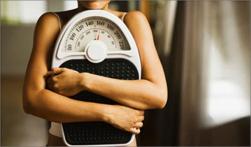
WEIGHT-LOSS FADS ARE PUTTING WOMEN’S LIVES IN DANGER, ACCORDING TO BODY-IMAGE EXPERTS
Weight-loss fads are putting women’s lives in danger, according to body-image experts
CALLS to a helpline for people suffering from eating disorders have soared by 92pc in the first six months of the year, disturbing new figures obtained by the Sunday Independent reveal.
And for the first time, the majority of people reaching out for help are women aged between 25 and 35 years – and not image-conscious teenagers.
The latest figures from Bodywhys – the Eating Disorder Association of Ireland – have revealed anorexia, bulimia, binge eating and unhealthy relationships with food are becoming more prevalent in older women and men, largely due to our increasingly hectic lifestyles.
In an interview with the Sunday Independent, Harriet Parsons, psychotherapist and services co-ordinator at Bodywhys, said “life stresses” have shifted the impact age from 19-24 to 25-35 years.
“Although an anti-stigma message is taking effect, people are still reaching out in their late 20s and early 30s where they really thought their life would have been sorted but they find they are still struggling a bit,” she said.
“Among that age group, you would have people with eating disorders since their teens.”
Last year more than 70pc of those attending Bodywhys support groups were over the age of 25, and some have been battling eating disorders for over 10 years.
“There can be a number of triggers at any age,” said Ms Parsons. “It’s usually something happens in a person’s life that causes them conflict, stress and that’s difficult, and they find themselves in a situation where they might not feel strong enough to deal with it.”
From finishing college and starting a new job, to going through a break-up or deciding to go on a diet – all these situations could potentially spark a problem with food.
“If you think of the life changes that might be happening within that age group, lots of people are probably having a significant relationship, marriage or having children and it can unsettle you or destabilise your world.
“It’s a bit like a comfort blanket. It turns into a way of coping- it actually helps them for a while and makes them feel better and stronger and more capable,” Ms Parsons added.
Dr Sarah Prasad, consultant psychiatrist on the eating disorder programme at St Patrick’s University Hospital, Dublin, agreed that eating disorders are “not a teenage problem”. She said the hospital has also experienced more referrals of older individuals battling the illness.
She told the Sunday Independent: “A lot of people associate the disorder with young girls but we’ve had people in their 20s, 30s, 40s and 50s who’ve had long-standing eating disorders and now are completely overwhelmed and can’t cope. “There is huge pressure on shape and body image on top of other stresses of life and that certainly could be a predisposing factor for the development of eating disorders at an older age. Looking a certain way and fitting a stereotypical thin ideal or image is something people are dealing with at every age.”
Developing an eating disorder in your 30s can also bring further problems for recovery.
“Putting your body under stress at any age is always detrimental. There is some evidence to suggest that the later the onset, sometimes the poorer the prognosis,” Dr Prasad said.
Dr Prasad, who deals specifically with adult patients, said she has often discussed fitness blogs, social media sites and all the latest apps during consultations.
“The message is, everything in moderation but some vulnerable individuals who are perfectionist or with low self-esteem might take these blogs to the extreme, thinking it will make them more acceptable or more valued.”
And she is particularly concerned with the most recent weight-loss trend called “thigh gap” where women and girls want their legs to be so slim that their thighs don’t touch when their feet are together.
“A lot of my patients are under that pressure and we constantly have conversations about this ‘thigh gap’ business and they tell me about the pressure they feel in their 20s, when impression is so huge and they think they have to have this gap between their thighs to fit in, and we have overcome this.”
Eating disorders manifest in different ways, including the restriction of food, skipping meals, over exercising, a focus on not eating, resulting in the person becoming very underweight.
According to Ms Parsons, the behaviour can then become more and more extreme and, depending on the type of eating disorder, be “very destructive to quality of life”.
“It becomes unmanageable, and they can’t do it anymore, and everything just feels like it’s falling down around them so they seek out help,” she added.
Although an eating disorder is always a subjective experience, Ms Parsons warns “living in a culture where there is a diet industry” makes it more difficult to avoid.
“There is always a focus on the ideal image of that very simple message that if you eat less and exercise more you will be a better person and you’ll be happy. It is a very distorted message.”
Ms Parsons said those affected are “very clear” this is not about media and culture, and they would “not want that idea to be associated with them”.
But it’s also more difficult to identify. “They can be quite high achievers and are living their lives, but really they are not well physically and psychologically.”
And for men in their later 20s and 30s, eating disorders manifest in the same way. “There is a growing pressure on the physicality and physique, so it can be identified by extreme over-exercising, but men also express anorexia, bulimia and eating disorders in exactly the same way as women and girls,” Ms Parsons added.
Scientists are divided over the ethics of attempting to cloning & revive an extinct mammal the Woolly mammoth

AN EXCEPTIONALLY WELL PRESERVED ADULT FEMALE WAS DISCOVERED IN SIBERIA IN MAY 2013
Will woolly mammoths stride the Siberian plains once again? DNA samples from an exceptionally well preserved extinct Mammuthus, found in the snowy wastes of Siberia, have raised the prospect of cloning.
But scientists are divided about raising the species from the dead, 10,000 years after becoming extinct.
Russian scientists were amazed at the condition of the mammoth, found embedded in a chunk of ice on a remote Siberian island. The samples were so well preserved that fresh blood was found within muscle tissue.
The team used carbon dating techniques to reveal the animal had walked the Earth around 40,000 years ago and raised hopes that it could be cloned.
Nicknamed Buttercup, the adult female was discovered in May 2013. At 2.5 metres tall, she is not much larger than an Asian elephant. Incredibly, three legs, most of her body, some of her head and her trunk had survived. She was in her fifties when she became trapped in a peat bog and was eaten by predators, scientists believe.
A Channel 4 film, to be shown next weekend, follows Buttercup’s autopsy in Siberia, and the extraction of high-quality DNA and cells for future use by Sooam, a South Korean biotech company.
The Korean researchers hope to find a cell with a complete nucleus, containing an intact genome.
“We’re getting an unprecedented amount of access to mammoth samples through this collaboration,” said Insung Hwang, a geneticist at Sooam.
“DNA has been distributed to multiple institutes for scientific purposes,” he added.
Dr Tori Herridge, a palaeobiologist based at the Natural History Museum in London said: “The guys from South Korea, who are collecting tissue for cloning, were excited because the better preserved the tissue, the greater their hopes were that there would be some intact DNA.”
However she warned that the dream of bringing the woolly mammoth back to life would be a cruel nightmare for their modern- day descendant, the elephant.
Dr Herridge, an expert in mammoth anatomy, said: “The most fundamental step and ethical concern with this kind of procedure is that you need to have an Asian elephant surrogate mum at some point; cloning a mammoth will require you to experiment on probably many, many Asian elephants.” She added: “The most important thing is how much we can learn without having to go down the route of cloning.”
Dr Herridge questioned “whether or not the justifications for cloning a mammoth are worth the suffering, the concerns of keeping an elephant in captivity, experimenting on her, making her go through a 22-month pregnancy, to potentially give birth to something which won’t live, or to carry something which could be damaging to her. And all of those aspects… I don’t think that they are worth it; the reasons just aren’t there.”
The autopsy has already provided crucial information. The growth rings on the mammoth’s tusks, which grew at a slower rate during pregnancy, revealed she had given birth at least eight times. And examination of her teeth revealed dental abnormalities, indicating she wasn’t able to chew her food properly, which may explain the small stones which were found in her gut.
Mr Hwang accepted that “there are inherent ethical questions that we have to address”.
“That’s why we have to start discussing the implications now,” he said. “Some of our colleagues are still working on analysing the genome from Buttercup’s specimen. This is a long and complicated process that is unlikely to be finished anytime in the near future.
“Bringing back the mammoth either through cloning or genetic engineering would be an extremely long process as well. We’re trying hard to make this possible within our generation.”


 2014
2014


