Irtish charities regulator to examine trusts set up towards tax avoidance claims
STEPHEN DONNELLY TELLS THE DÁIL THAT DEBT BUYER PAID €250 CORPORATION TAX ON €300M PROFIT?


SOCIAL DEMOCRAT TDS STEPHEN DONNELLY, CATHERINE MURPHY AND RÓISÍN SHORTALL AT THE LAUNCH OF THE SOCIAL DEMOCRATS PRIVATE MEMBER’S MOTION REGARDING REGULATION IN THE CHARITY SECTOR.
Tánaiste Frances Fitzgerald will ask the charities regulator to examine the issue of charitable trusts, a number of which a TD claimed, had been set up specifically to avoid paying tax in Ireland.
Ms Fitzgerald was responding to Social Democrats TD Stephen Donnelly who highlighted the case of companies using charities to allow the firms avoid paying tax.
Mr Donnelly for the second time in a week in the Dáil had raised the case of Oaktree Capital, which deals in distressed mortgages and uses another firm to invest those funds.
He said Oaktree had paid €80 million for distressed mortgages in Ireland and expected to make a profit of between €300 million and €320 million.
Last year it had income of €14 million but paid corporation tax of just €250.
He said profits “should rightly be taxed in this country with the benefit going to the exchequer”.
He said the firm had three shares, each in the ownership of a charitable trust. “All three are controlled by one of Ireland’s top law firms, Matheson, ” he said.
He said charitable status should not be available to hedge funds, debt collectors, “to companies operating in the shadow banking sector in Ireland with the specific aim of avoiding paying taxes in this country”.
The Wicklow TD said it deprived the State of very valuable taxes “that it could be using to provide the public services that the real charities have stepped in to provide”.
Ms Fitzgerald said she would bring the issues to the charities regulator, adding that Mr Donnelly had raised relevant points about charitable status.
Anti-corruption agency
Both were speaking in a debate on a Social Democrats private member’s motion calling for the establishment of an anti-corruption agency, and for a critical review of the HSE’s 2014 revised framework for all organisations it funds.
The debate follows the controversies involving financial irregularities at the suicide charity Console and pay and pensions top-ups to senior executives at the St John of God organisation.
Introducing the debate, Social Democrats TD Catherine Murphy said “we tend to deal with the scandal rather than prevent its occurrence in the first place.”
She said there was only a very small number of dysfunctional charities “but they bring the whole sector into disrepute”.
Ms Murphy said 50 per cent of the sector’s income came from statutory grants.
“One has to question the effectiveness of a lot of the funding and one has to question whether it would be better utilised in a more streamlined sector where it could be more accurately targeted.”
She pointed out that there were more than 200 suicide charities and as a result funding was fragmented and disjointed. “An amalgamation or an umbrella of those charities would be very welcome,” she believed and it was the same with housing and animal-welfare charities.
The Tánaiste said “the public must have confidence that the money they donate to charity will be managed and used correctly at all times. Anything less is a betrayal of the goodwill of thousands of people around the country and of the taxpayer.”
She said one of the key roles of the charities regulator was to safeguard the future of the charity sector and there had been significant progress.
Ms Fitzgerald said the regulator was engaged with more than 12,500 charitable organisations.
“It has received approximately 300 concerns raised against 132 entities, the majority of which were charities. These concerns ranged from issues to do with an organisation’s purpose to the quality of services provided.” The Minister said the number represented about 1 per cent of all charities.
Referring to the Social Democrats’ call for the establishment of an anti-corruption agency, Ms Fitzgerald acknowledged they were “motivated by a concern to enhance the way in which a broad range of wrongdoing is addressed”.
But she said it was not clear how the amalgamation of the functions of a wide range of agencies with widely varying functions would, of itself, enhance the capacity of the State to fight corruption.
Fianna Fáil justice spokesman Jim O’Callaghan said serious allegations of misappropriation of funds were matters for An Garda Síochána.
“Any misappropriation from funds of charities is theft and should be treated in same way as any other theft,” he insisted.
Mr O’Callaghan added that had the charities regulator been fully implemented when it was passed a number of years ago, inspectors would have been in place and the dysfunction that occurred might have been prevented.
Irish off-licences seek ban on below-cost selling of alcohol
NATIONAL OFF-LICENCE ASSOCIATION ALSO CALLS FOR CUT TO EXCISE DUTY
 V
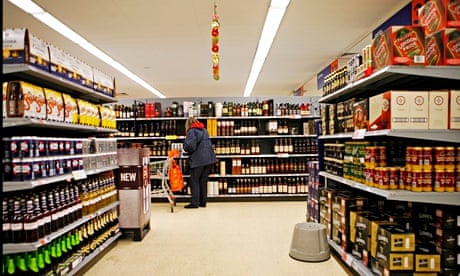
OFF=LICENCES SUPERMARKETS
THE UMBRELLA GROUP FOR OFF-LICENCES IS CALLING ON GOVERNMENT TO REDUCE EXCISE DUTY AND BAN BELOW COST SELLING OF ALCOHOL.
The umbrella group for off-licences is calling on Government to reduce excise duty and ban below-cost selling of alcohol.
In a pre-budget submission, the National Off-Licence Association (NOffLA) said Ireland had the highest excise on wine in the EU and the third highest tax on beer and spirits.
It claimed the budgetary hikes on excise made during the financial crisis have pushed many off-licences to the brink of commercial failure.
Retailers and suppliers have to raise and pay an extra €17,958 per 1,000 cases of wine in excise and Vat due to increases in Budget 2013 and 2014.
The sector’s difficulties are exacerbated by competition from mixed traders, mainly supermarkets, which now control about 80% of alcohol sales in the Republic.
The group claimed supermarkets typically absorb tax increases on popular products – by as much as 68% to keep alcohol prices low and maintain footfall.
The group, which represents about 300 businesses – employing 5,900 people in the Republic, wants the Government to reintroduce a ban on the below cost selling of alcohol.
Alcohol Bill
The Public Health (Alcohol) Bill, which is before the Dáil, contains provisions for the establishment of minimum unit pricing measures to prevent below-cost selling.
A potential obstacle comes in the form of a recent European Court of Justice ruling, which found similar legislation in Scotland contravened EU law.
As part of the submission, NOffLA released the results of its 2016-member survey which indicated that 55% of off-licences would struggle to remain open if the current level of excise is increased in Budget 2017, jeopardising thousands of jobs.
Conversely, the survey suggested if the current level is excise is reduced 81% of respondents would re-invest in their business.
“We are calling on the new Government to take positive and decisive action that will safeguard jobs, encourage local investment and ultimately contribute to the development of local communities,” Noffla’s government affairs director, Evelyn Jones, said.
“A reversal of the punitive Budget 2014 excise increase on alcohol combined with a reduction of the tax on wine, which is significantly higher than that of cider and beer, would facilitate business and indeed consumer choice,” she said.
“Finally, we believe tighter controls on out-of-state online retailers should be introduced to promote higher levels of responsible retailing thus protecting the general public, alcohol consumers and retailers,” she added.
As much as 44% of working adults think their work impacts on their health?
MOST SAY THEIR WORKPLACE IS SUPPORTIVE OF ACTIONS TO IMPROVE THEIR HEALTH


A NEW NPR/ROBERT WOOD JOHNSON FOUNDATION/HARVARD T.H. CHAN SCHOOL OF PUBLIC HEALTH POLL FINDS THAT MORE THAN FOUR IN TEN IE. 4 IN 10 OF WORKING ADULTS (44%) SAY THEIR CURRENT JOB HAS AN IMPACT ON THEIR OVERALL HEALTH, AND ONE IN FOUR (28%) SAY THAT IMPACT IS POSITIVE.
However, in the survey of more than 1,600 workers in the U.S., one in six workers (16%) report that their current job has a negative impact on their health. Workers most likely to say their job has a negative impact on their overall health include those with disabilities (35%), those in dangerous jobs (27%), those in low-paying jobs (26%), those working 50+ hours per week (25%), and those working in the retail sector (26%).
A number of working adults also report that their job has a negative impact on their levels of stress (43%), eating habits (28%), sleeping habits (27%), and weight (22%). “The takeaway here is that job number one for U.S. employers is to reduce stress in the workplace,” said Robert J. Blendon, Richard L. Menschel Professor of Health Policy and Political Analysis at Harvard T.H. Chan School of Public Health, who directed the survey.
Note: View the soon to be posted on-demand recording of Harvard Chan School’s July 11, 2016 Forum webcast, Health in the American Workplace: Are We Doing Enough?, for more perspectives on the topic:https://theforum.sph.harvard.edu/events/health-in-the-american-workplace-are-we-doing-enough/
A summer-long series on the topic began airing July 11, 2016 on NPR.
VIEW THE COMPLETE POLL FINDINGS.
The key Findings are:-
Figure 1. Do you think your current job is good or bad for your [INSERT ITEM], or does it not have an impact one way or another?
Responses: Stress Level: bad impact, 43%, no impact, 39%, good impact, 16%;
Eating Habits: bad impact, 28%, no impact, 56%, good impact, 15%;
Sleeping Habits: bad impact, 27%, no impact, 55%, good impact, 17%;
Weight: bad impact, 22%, no impact, 57%, good impact, 19%
Note: Percentages may not add up to 100% because Don’t Know/Refused responses are not shown.
Chemicals and contaminants top list of biggest health concerns in the workplace
About one in five working adults (22%) say that something at their job may be harmful to their health, including 43% of construction or outdoor workers and 34% of workers in medical jobs.
Among workers with any health concerns about their workplace, the most frequently cited health concerns mentioned are chemicals and other contaminants (30%), unhealthy air (13%), accidents or injuries (12%), and stress (11%).
About one in four workers rate their workplace as fair or poor in providing a healthy work environment; about half are offered wellness or health improvement programs
About one in four workers (24%) rate their workplace as only fair or poor in providing a healthy work environment; however, 34% give their workplace a rating of excellent. About half (51%) say their workplace offers any formal wellness or health improvement programs to help keep themselves healthy.
“Every year, U.S. businesses lose more than $225 billion because of sick and absent workers,” said Robert Wood Johnson President and CEO Risa Lavizzo-Mourey. “But I believe that business drives culture change and with them on board we can succeed in building a Culture of Health in America. It’s not a hard connection to make. In many companies as much as 50 percent of profits are eaten up by health care costs.”
Nearly half of all workers (45%) rate their workplace as only fair or poor in providing healthy food options. Over half of workers in factory or manufacturing jobs (55%), medical jobs (52%), retail outlets (52%), and construction or outdoor jobs (51%) give their workplace a fair or poor rating at providing healthy food options.
A majority of ‘workaholics’ say they work longer hours because it is important to their career; half say they enjoy working longer hours.
About one in five working adults (19%) say they work 50 or more hours per week in their main job; these workers are called ‘workaholics’ in this study. When given a list of possible reasons why they work 50+ hours per week, a majority of these workers (56%) say they do so because it’s important for their career to work longer hours, 50% say they enjoy doing so, and just 37% say they do it because they need the money.
A majority of working adults say they still go to work when they are sick
A majority (55%) of working adults say they still go to work always or most of the time when they have a cold or the flu, including more than half (60%) of those who work in medical jobs and half (50%) of restaurant workers.
Types of workers who are most likely to still go to work always or most of the time when they are sick include those working 50+ hours per week in their main job (70%), those working two or more jobs (68%), workers in low-paying jobs (65%), and younger workers ages 18-29 (60%).
Low-wage workers often face worse conditions than high-wage workers.
Working adults in self-reported low-paying jobs often report worse working conditions than those in high-paying jobs. For instance, more than four in ten workers in low-paying jobs report facing potentially dangerous situations at work (45% vs. 33% in high-paying jobs), and almost two-thirds (65% vs. 48% in high-paying jobs) say they still go to work always or most of the time when they are sick.
One in four workers in low-paying jobs (26%) say their job has a negative impact on their overall health, compared to just 14% of those in high-paying jobs. “In an era of concern about low-wage workers, it’s clear they face more negative health impacts from their jobs compared to those who are paid substantially more,” said Blendon.
Methodology of report?
This poll is part of an ongoing series of surveys developed by researchers at the Harvard Opinion Research Program (HORP) at the Harvard T.H. Chan School of Public Health in partnership with the Robert Wood Johnson Foundation and NPR. The research team consists of the following members at each institution.
- Harvard T.H. Chan School of Public Health: Robert J. Blendon, Professor of Health Policy and Political Analysis and Executive Director of HORP; John M. Benson, Research Scientist and Managing Director of HORP; Justin M. Sayde, Administrative and Research Manager; and Mary T. Gorski, Research Fellow.
- Robert Wood Johnson Foundation: Fred Mann, Vice President, Communications; Carolyn Miller, Senior Program Officer, Research and Evaluation; and Joe Costello, Director of Marketing.
- NPR: Anne Gudenkauf, Senior Supervising Editor, Science Desk; and Joe Neel, Deputy Senior Supervising Editor, Science Desk.
Interviews were conducted by SSRS of Media (PA) via telephone (including both landline and cell phone) using random-digit dialing, January 6 – February 7, 2016, among a nationally representative probability sample of 1,601 workers in the U.S. In this survey, “workers” are defined as adults working full- or part-time who are either employers or work for someone else in their main job (not self-employed), and who work for 20 hours or more hours per week in their main job. The interviews were conducted in English and Spanish. The margin of error for total respondents is +/- 2.9 percentage points at the 95% confidence level.
Possible sources of non-sampling error include non-response bias, as well as question wording and ordering effects. Non-response in telephone surveys produces some known biases in survey-derived estimates because participation tends to vary for different subgroups of the population. To compensate for these known biases and for variations in probability of selection within and across households, sample data are weighted by cell phone/landline use and demographics (sex, age, race/ethnicity, education, and number of adults in household) to reflect the true population. Other techniques, including random-digit dialing, replicate subsamples, and systematic respondent selection within households, are used to ensure that the sample is representative.
People with disabilities have right to a proper professional service,
SAYS JUNIOR MINISTER MCGRATH


THE MINISTER OF STATE FOR DISABILITIES FINIAN MCGRATH HAS SAID THAT PEOPLE WITH DISABILITIES HAVE A RIGHT TO “PROPER PROFESSIONAL SERVICE”.
His comments come after HSE took control of three centres run by the Irish Society for Autism.
A total of 47 adult residents with autism were living in the three farm-based centres at Cluain Farm in Westmeath, Dunfirth Farm in Kildare, and Sarshill House in Co Wexford
“We need to be able to ensure that these people get a proper, professional service,” said Mr McGrath.
“And we also need to change the mindset as well in relation to the whole idea of people with disabilities in charities – as far as I’m concerned, people with disabilities have rights [including] their right to proper services.”
Investigations by the healthcare watchdog HIQA last year revealed that drugs were used to chemically restrain patients, while others left the premises unnoticed or engaged in self-harm.
The charity admitted it has been experiencing “some difficulty in achieving regulation with HIQA”.
It added: “These have been very challenging times for all concerned including our residents and staff, many of whom have been with us for a long time.”
Despite initial objections to two of the takeovers, which were later dropped, the charity said: “We are a small organisation and we believe that, in the long term, this decision is in the best interest of our residents.”
A new MRI technique shows what drinking water does for your appetite, stomach and brain?


STOMACH MRI IMAGES COMBINED WITH FUNCTIONAL FMRI OF THE BRAIN ACTIVITY HAVE PROVIDED SCIENTISTS NEW INSIGHT INTO HOW THE BRAIN LISTENS TO THE STOMACH DURING EATING. RESEARCHERS SHOW — FOR THE FIRST TIME — REAL TIME DATA OF THE BRAIN, THE STOMACH, AND PEOPLE’S FEELINGS OF SATIETY MEASURED SIMULTANEOUSLY DURING A MEAL.
ACTIVATION IN THE INSULA IS INCREASED WHEN THE STOMACH IS DISTENDED MORE.
Stomach MRI images combined with functional fMRI of the brain activity have provided scientists new insight into how the brain listens to the stomach during eating. Research from Wageningen University in the Netherlands shows and for the first time an real time data of the brain, the stomach, and people’s feelings of satiety measured simultaneously during a meal, in a study to be reported this week at the annual meeting of the Society for the Study of Ingestive Behavior, held in Porto, Portugal.
The researchers collected data from 19 participants during two separate sessions with different consumption procedures and found that a simple change like drinking more water can alter messages from the stomach interpreted as fullness by the brain. This new research approach can be used to investigate the interplay between satiety feelings, volume of the stomach and activity in the brain.
In the experiment, participants drank a milk-shake on an empty stomach, which was followed by a small (50 mL) or large glass of water (350 mL). MRI images were used to see how the different amounts of water affected stretching of the stomach: the large glass of water doubled the stomach content compared to the small glass. Together with this larger volume subjects reported to have less hunger and felt fuller.
This novel approach — combining information obtained simultaneously from MRI images of the stomach, feelings reported by the subjects, and brain scans — can offer new insights which would otherwise have been unknown, for example that activation in a brain area called the mid-temporal gyrus seems is in some way influenced by the increased water load in this experiment. The Wageningen University scientists developed the combined MRI method as part of the European Nudge-it research project, which seeks to discover simple changes that promote healthier eating. They will use it to search for a brain signature that leads people to decide to stop eating, to determine how strategies like water with a meal can be effective at feeling fuller sooner.
“Combining these types of measurements is difficult, because MRI scanners are usually set-up to perform only one type of scan. We’ve been able to very quickly switch the scanner from one functionality to another to do this type of research” says Guido Camps, lead author of the study. “In conclusion, we’ve found that simply adding water increases stomach distension, curbs appetite in the short term and increases regional brain activity.”
Global warming is shifting the Earth’s clouds, A new study shows
THE WARMING OF THE PLANET OVER THE PAST FEW DECADES HAS SHIFTED A KEY BAND OF CLOUDS POLEWARD AND INCREASED THE HEIGHTS OF CLOUDS TOPS


CLOUDS ARE A KEY COMPONENT OF THE EARTH’S CLIMATE SYSTEM.
THE REACTION OF CLOUDS TO A WARMING ATMOSPHERE HAS BEEN ONE OF THE MAJOR SOURCES OF UNCERTAINTY IN ESTIMATING EXACTLY HOW MUCH THE WORLD WILL HEAT UP FROM THE ACCUMULATION OF GREENHOUSE GASES, AS SOME CHANGES WOULD ENHANCE WARMING, WHILE OTHERS WOULD COUNTERACT IT.
The study, detailed Monday in the journal Nature, overcomes problems with the satellite record and shows that observations support projections from climate models. But the work is only a first step in understanding the relationship between climate change and clouds, with many uncertainties still to untangle, scientists not involved with the research said.
While clouds are a key component of the climate system, helping to regulate theplanet’s temperature, their small scale makes them difficult to accurately represent in climate models.
Using satellite observations to look for trends is also problematic because they come solely from weather satellites, which aren’t geared to producing consistent, long-term records. In addition, some satellites have been replaced over time, have changed orbit, or seen degradation of their sensors, introducing false trends.
Joel Norris of the Scripps Institution of Oceanography and his colleagues had previously figured out a way to remove those artifacts in the satellite data to reveal actual trends since the early 1980s. They focused on looking for those patterns that showed up in different climate models and that our physical understanding of the atmosphere supports.
Namely, the observations showed that the main area of storm tracks in the middle latitudes of both hemispheres shifted poleward, expanding the area of dryness in the subtropics, and that the height of the highest cloud tops had increased.
Such changes reinforce global warming: There is less solar radiation at the high latitudes near the poles, so as clouds shift that way, they have less radiation to reflect back to space. High cloud tops mean that more of the radiation that is absorbed and re-emitted by Earth’s surface is trapped by the clouds (akin to the greenhouse effect).
To investigate whether these changes in cloud patterns could be chalked up to the natural variation of the climate system, Norris and his team compared climate models that included external influences like rising greenhouse gases and volcanic eruptions with those that did not. The former showed the same trends as the observations, while the latter didn’t.
“The pattern of cloud change we see is the pattern associated with global warming,” Norris said.
Kate Marvel, a climate researcher with NASA’s Goddard Institute for Space Studies, agreed but cautioned that the cloud shifts are also consistent with what would be expected during recovery from major volcano eruptions, of which there were two at the beginning of the study period.
“More work is needed to tease out the relative roles of greenhouse gas emissions and volcanic eruptions,” she said in an email.
Norris plans to tackle this question in future work, as well estimating exactly how much clouds have changed.
The study also doesn’t deal with some of the cloud changes that are expected to be most important, namely those to low clouds in the subtropics, Bjorn Stevens, of the Max-Planck-Institute for Meteorology, said in an email. Stevens is the lead author of the chapter on clouds and aerosols in the most recentIntergovernmental Panel on Climate Change report.
Monday’s study is a step toward better understanding how clouds will change along with the climate, and lays bare the limitations of the satellite record and the need for better long-term observations, said Stevens, who was not involved with the research.
“This study reminds us how poorly prepared we are for detecting signals that might portend more extreme (both large and small) climate changes than are presently anticipated,” he said.


