Pages

Showing posts with label Gut bacteria. Show all posts

Thursday, June 12, 2014

Donie's Ireland daily news BLOG update

Wilbur Ross cashes in his Bank of Ireland shares for a good reason?


THE SALE HAD NOTHING TO DO WITH THE BANK’S PROSPECTS, SAYS THE US BILLIONAIRE

A couple of years back, billionaire US investor Wilbur Ross brought together a number of top executives from the various companies in which his group, WL Ross & Co, is invested.
They met in New York and it included Bank of Ireland chief executive Richie Boucher, who was feeling a touch nervous about the meeting.
To help break the ice, Boucher presented Ross with a Leinster rugby jersey. With the Bank of Ireland brand emblazoned across the chest (as team sponsor), and Ross’s name on the back, the American was charmed by the gesture and proudly modelled the jersey to those assembled.
It was a smart move by Boucher who seemed to enjoy a warm working relationship with Ross throughout his near three-year investment. Ross never tired of praising Boucher publicly at a time when others were looking to stick the knife in and he said on Monday evening that he had “total confidence” that Boucher would “lead the bank to a better performance in the years to come”.
In a sense, Ross and Boucher needed each other. The investment in July 2011 by Ross and a syndicate of other North American investors helped Boucher keep Bank of Ireland out of State control, a fate that befell AIB and Irish Life & Permanent.
It possibly saved Boucher’s job at a time when the Minister for Finance Michael Noonan was under pressure to ditch him and almost certainly allowed him to retain his €843,000 annual remuneration, which is above the Government’s salary cap.
Ross, meanwhile, needed someone to execute a turnaround strategy at Bank of Ireland and earn him a profit for his own investors. Say what you like about Boucher, but the Zambian-born executive is a grafter with an ability to focus in on goals.
He was part of an executive team that made some poor lending decisions in the boom years but he was also hungry to turn around the bank’s fortunes.
Piece by piece, it has fallen into place to the point where Bank of Ireland is now back in profit and has repaid the €4.7 billion in bailout cash that it received from the State. Meanwhile, AIB is still handcuffed to the State and a question mark continues to hang over the future of Ulster Bank.

IMPROVED

Bank of Ireland’s improved performance over the past three years and the sooner-than-expected upturn in the Irish economy has allowed Ross to cash out with a healthy €477 million gain.
Is this latest share sale a call by Ross on Bank of Ireland, some five months before we get the results of the pan-European bank capital stress tests?
Is it a call by the wise one about the nascent Irish economic recovery?

Ireland has the 5th most innovative agri-food sector in the EU


RESEARCH SUGGESTS MOST INNOVATIVE FARMERS TENDED TO HAVE HIGHER FARM INCOMES.

Ireland has the 5th most innovative agri-food sector in the EU behind Denmark, Finland, Germany and theNetherlands, according to a new report.
The Innovation in the Irish Agrifood Sector report, published today, also found the most innovative farmers in Ireland tended to have higher farm incomes, be less dependent on subsidies, invest more, have larger farms and be younger in age.
The study also identified several barriers to innovation including the structure of farm businesses and a lack of land mobility.
It was compiled by researchers from University College Dublin on the basis of interviews with stakeholders from across the sector, and an analysis of data from Eurostat, the OECD, and the Teagasc National Farm Survey.
“It is very encouraging to see that Ireland ranks fifth in terms of innovation in the agrifood sector in the EU, according to this comprehensive report compiled by University College Dublin” Minister for Agriculture, Marine and Food, Simon Coveney said at the launch of the report at a conference in UCD.
“But the real value of this report is that it has identified several key areas where barriers to innovation in the sector exist. Barriers we can work to target and gradually lift in order to further support the sector towards becoming more innovative,” he said.

Trinity College Dublin may help defeat cancer drug resistance

  
Irish researchers have discovered a molecule that could improve targeted treatments for breast cancer and a number of other cancers.
Scientists at Trinity College Dublin believe the new biomarker could be the key to overcoming resistance to drugs such as Herceptin, which targets HER2 positive cancers.
HER2 positive breast cancer tends to be more aggressive than other types of breast cancer and is also less responsive to hormone treatments.
Researchers, led by Prof Lorraine O’Driscoll from TCD’s School of Pharmacy and Pharmaceutical Sciences, discovered a molecule called Neuromedin U (NmU).
NmU is strongly associated with resistance to the new anti-cancer drugs for HER2 positive cancers.
The discovery suggests NmU could be used as a biological marker to indicate the likelihood of responsiveness in a particular patient. It may also be very important in the management of resistance to these drugs.
Their findings are published in the leading international peer-reviewed journal — Cancer Research, the most frequently cited cancer journal in the world.
Herceptin specifically targets HER2, kills these cancer cells and decreases the risk of recurrence.
About one-in-four breast cancer patients are HER2 positive. In such cases the protein HER2 is found in greater amounts on cancer cells compared to normal cells and is associated with a poorer prognosis for the patients.
However, in recent years a new range of targeted anti-cancer drugs have become available to treat patients with HER2 positive breast cancer and some other cancers such as HER2 positive gastric cancer.
The best known drug is Herceptin (trastuzumab), but there are other newer drugs in this family, including lapatinib, neratinib, afatinib, pertuzumab and T-DM1.
“Many patients with HER2 positive tumours gain huge benefits from these drugs.
“Unfortunately, however, some who seem suitable candidates based on a HER2 test don’t gain the maximum intended benefit from these treatments,” said Prof O’Driscoll. “They may have a natural level of resistance to the treatment which is not detectable with currently available tests.”
Prof O’Driscoll said clinicians urgently need ways of predicting which patients with HER2 tumours are likely to gain real benefit.
“Our discovery may offer a new way to predict or identify both innate and acquired resistance, overcome it and potentially block or prevent resistance,” she said.
The research team conducted other studies which found that blocking NmU also significantly slowed tumour growth in the body and they plan to conduct further studies in this area.

RED MEAT RISKS

Eating a large amount of red meat in early adulthood could be associated with an increased risk of breast cancer.
Substituting red meat with legumes — such as peas, beans, and lentils — nuts, poultry, and fish could reduce the risk, according to new research.
Studies have found no significant association between the consumption of red meat and breast cancer, but the team of US researchers said most previous research has been based on diet during mid and later life.
So they decided to assess the dietary habits of 89,000 pre-menopausal women aged 26 to 43, in 1991.
Their study, published on bmj.com, examined frequency of red meat intake as well as other foods through a food frequency questionnaire. The authors also assessed the women’s adolescent food intake.
In the 20-year follow-up period, medical records identified 2,830 cases of breast cancer.
The researchers estimated that for each step-by-step increase in women’s consumption of red meat, there was a step-by-step increase in the risk of getting breast cancer.
Higher intake of red meat was associated with a 22% increased risk of breast cancer overall.
And each additional serving per day of red meat was associated with a 13% increase in risk of breast cancer.
Substituting one serving of red meat each day of combined legumes, nuts, poultry, and fish was associated with a 14% lower risk of breast cancer

Physical Activity boosts good gut bacteria diversity  

A NEW STUDY TELLS US


Physical activity boosts good gut bacteria diversity, according to a new study by the University College Cork in Ireland.

Researchers found that athletes demonstrated greater gut bacteria diversity than normal people.
Previous studies have linked healthy and varied gut bacteria ecosystem to low obesity rates, food allergies, few incidence of mental disorders like ADHD and anxiety and type 1 diabetes, and prevent alcoholics from developing pancreatitis.
Non-diverse gut bacteria is associated with inflammation and markers of metabolic syndrome like weight gain and insulin resistance.
For the study, researchers compared blood and fecal matter of 40 professional rugby players with a control group of 46 healthy men of similar size and age.
The researchers found that rugby players were metabolically healthier than the control group and also had lower inflammation.
The microbiota was more diverse in rugby players than control groups. Researchers discovered 22 phyla, 68 families and 113 genera of bacteria in athlete samples, whereas only 11 phyla, 33 families and 65 genera in low-BMI portion of the control group. The least diversity was observed in high-BMI portion of the control group: 9 phyla, 33 families and 61 genera.
The players, especially had Akkermansiaceae bacteria in higher quantities. The species is related to lower rates of obesity and metabolic diseases.
Besides physical activity, adopting a healthy diet also helps players to have better gut bacteria diversity. They consumed fiber foods and “good fats” (mono- and polyunsaturated fat) in larger quantities than the control groups, especially those in high-BMI group.
“We don’t know for certain if it is the exercise per se or the dietary changes accompanying exercise which mediate the change in diversity of the microbiota,” said Physician-scientist Fergus Shanahan, Huffington Post reports.
Shanahan said that people need not exercise like athletes to get similar results.
“Regardless, what one can say for now is that exercise and diet can have a beneficial effect on microbial diversity, metabolic profile and inflammation,” said Shanahan. “We would not recommend the extreme levels of exercise that were undertaken by the professional athletes in the present study. It is probable that any level of exercise is preferable to none and will help.”

Arctic Animals from the Ice age may have evolved in the High Tibetan plateau  


Scientists have found that evolution of present-day animals in the Arctic region may be intimately connected to ancestors that first adapted to the cold in the high altitude regions of the Tibetan Plateau.

 This is an artist’s reconstruction of the Zanda fauna from the Pliocene about 5-2.5 million years ago.

Scientists have learned a bit more about how Arctic animals evolved. They’ve found that evolution of present-day animals in the Arctic region may be intimately connected to ancestors that first adapted to the cold in the high altitude regions of the Tibetan Plateau.
For the last 2.5 million years, our planet has experienced both cold and warm millennia-long cycles. During the cold periods, though, continental-scale ice sheets blanketed large tracts of the northern hemisphere. When things warmed up, the glaciers receded; this advance and retreat of ice has a huge impact on the geographic distribution of many animals.
Now, scientists may know a bit more about the cold-adapted animals. The researchers found a three to five-million-year-old specimen of a Tibetan fox from the Himalayan Mountains called Vulpes qiuzhudingi which is likely the ancestor of the living Arctic fox. They also discovered an extinct species of a wooly rhino, a three-toed horse, Tibetan bharal, chiru, snow leopard, badger and 23 other mammals.
In the past, the researchers believed that the origins of the cold-adapted Pleistocene megafauna were in the arctic tundra or in cold steppes elsewhere. Yet these latest findings seem to indicate otherwise; it’s very possible that some of the Ice Age megafauna used ancient Tibet as a “training ground” for developing adaptations that allowed them to cope with extremely cold temperatures.
It’s not all that surprising that the researchers are only making these findings now. Looking for fossils in Tibet is a grueling process with its more than 14,000-foot elevation; it’s difficult to breathe, water freezes overnight in camps, and there are many other challenges.
“But in paleontological terms, it is a relatively unexplored environment,” said Xiaoming Wang, one of the researchers, in a news release. “Our efforts are rewriting a significant chapter of our planet’s recent geological history.”         

Wednesday, May 7, 2014

Donie's news Ireland daily BLOG Tuesday

Irish Taxes forcing our young & best educated to leave the country in droves Says Minister Hayes


BRIAN HAYES WANTS A MOVE ON TAX IN THE OCTOBER BUDGET. 

Ireland’s higher rate of income tax is a major factor in the exodus of our young professionals, according to Junior Finance Minister Brian Hayes.
Mr Hayes has become the latest Fine Gael minister to demand a consecutive cut in the income tax in the next two budgets.
Confirmation that the coalition favours tax cuts over wage increases has proved a thorny issue in recent weeks, particularly among union leaders.
SIPTU president Jack O’Connor said last month that the “key to intensifying the momentum in the economy must be pay increases”.
A CAUTIOUS approach, 
His remarks are at odds with those expressed by a number of government ministers who are very cautious about even discussing the prospect of wage increases.
Mr Hayes, who is Fine Gael’s European candidate in Dublin, said he believed tax measures in October’s budget must benefit those who pay the higher rate of income tax.
“Our current rate of tax is a huge disincentive for people to stay in Ireland and work and is encouraging a brain drain of young professionals,” Mr Hayes said.
“We need to keep our best and brightest here in Ireland making a contribution to their own country – not Australia, not Canada, not the US. Our very high tax rates on very modest incomes must be reversed. Young workers deserve a break.”
Government sources insist that Finance Minister Michael Noonan will examine how to “ease the burden” on middle income earners, particularly those with children.
Sources insist that changes to the Universal Social Charge (USC) are also on the table ahead of the budget.
But Mr Hayes said yesterday that while he favours changes to USC, the immediate focus must be on income tax.
His comments come just days after Mr Noonan clearly signalled that he is preparing to raise the band at which workers pay the higher rate of income tax.
At present, workers pay a marginal rate of 52pc on every euro earned above €32,800.
Mr Hayes, a Dublin-South West TD, said this represents a factor in the flow of young people who are being lost to emigration.
He said: “Trade union officials and other economic commentators have been calling for an economic stimulus. The best and fairest economic stimulus of all is a tax cut.”

Irish Central Bank insists people are switching bank accounts to escape fees

HOWEVER NEW FIGURES SHOW JUST ONE IN 10 SWITCHING BANK DESPITE a HIKE IN CHARGES


The Central Bank has insisted that more people are switching bank accounts in a bid to escape higher fees and bad service.

But the regulator also admitted this morning that despite a rise in the numbers moving accounts, the switching figures are still low.
Fewer than 11,000 people switched bank account in the second half of last year, using the Central Bank’s switcher code.
This is out of a total of 5.4 million current accounts. In percentage terms, less than 0.2pc of accounts were switched in the second six months of last year.
In the first half of last year 4,241 consumers moved bank.
This is despite higher fees and charges being imposed by the main banks and the decision of ACC and Danske Bank to pull out of retail banking here.
Director of Consumer Protection, Bernard Sheridan, said: “These new figures show that, while low, an increasing number of consumers are availing of the Central Bank’s Switching Code to manage the changeover when switching current accounts.
“Factors which appear to be influencing the choices that consumers are making include: changing fees and charges; service issues; and announcements regarding the withdrawal of current account providers from the market.”
The code is supposed to make it easier for consumers to move banks, and demands that the switch is completed within 10 days.

A total of 373 suspected abuse cases at Irish homes


Hiqa said it received 5,362 alerts of potentially harmful events in care homes. A total of 373 reports were made last year of alleged, suspected or confirmed abuse of older people in care homes.

The Watchdog Health Information and Quality Authority (Hiqa) said it received 5,362 alerts of potentially harmful events in care homes up and down the country during 2013.
Among them were 4,246 reports of serious injury to a resident.
But the most concerning figure involved the 373 instances of reported abuse in 195 out of the 566 care homes in either the state or private sector.
Phelim Quinn, Hiqa’s director of regulation and chief inspector of social services, said despite the high figures, safety and quality standards are improving.
But he warned: “It is clear from this report that there are areas where further improvement is required and we will focus on these areas as part of our continued regulatory activities.”
The Hiqa report is the first annual overview on the regulation of nursing homes since the rules were introduced more than four years ago.
Its report said inspectors carried out 814 checks of 565 residential centres for older people in 2013.
It recorded 293 notifications of outbreaks of infectious disease; 171 reports of unexplained absence from a home; and 95 reports of alleged misconduct by the care provider or a member of staff.
On abuse, Hiqa said its inspectors identified 303 actions needed to ensure homes complied with rules to prevent issues over residents’ finances in 174 of the centres.
Hiqa said it received unsolicited information 355 times relating to 213 centres last year, most of which came from concerned relatives of residents. Others came from staff in the care homes, health professionals visiting the homes to work and residents themselves.
Most of the information being relayed to inspectors centred on the quality and safety of care, staffing issues and other complaints associated with fees, discharge decisions and contracts of care.
Age Action said it was concerned about the high level of serious injuries reported by nursing homes and the notifications of abuse, which care homes are bound by law to report.
“The report not only highlights the great need which exists for an independent inspection authority, but also the need for nursing home management to improve their service when it comes to issues of health and safety and risk management,” spokesman Eamon Timmins said.
“This must involve training, supervision and strict adherence to the existing procedures and protocols.”
Issues were also identified with medicines in 325 care homes with changes required on the ordering, prescribing, storing and administering of drugs to residents and the handling and disposing of unused or out-of-date medicines.
Inspectors also looked at issues relating to food and found that more than half of the homes reviewed – 30 out of the 52 chosen for this area – were fully compliant in relation to food and nutrition.
It said there were only seven findings of moderate non-compliances and 15 minor non-compliances, such as a lack of choice or issues over staffing levels at meal times or small dining rooms.
Nursing Homes Ireland (NHI) said that of the 565 registered care centres and homes, one was forced to close last year.
“NHI recognises the critical role of Hiqa in supporting care provision and will continue to be proactive in engagement with the authority to continually drive improvements in care delivery for older persons in residential care,” the organisation said.

UK search police teams excavating sites in Portugal for Madeline McCann


Search teams are expected to start excavating a number of sites in Portugal as part of the investigation into the disappearance of Madeleine McCann.

Portuguese authorities are understood to have given permission for the search of several sites in Praia da Luz, where Madeleine went missing in 2007, aged just three.
The move comes just after the seventh anniversary of her disappearance on May 3 2007, part-way through a family holiday.
The request to search a number of sites is thought to be among a series of requests made by British detectives in connection with the search for Madeleine.
The excavations, which are expected to be conducted by forensic experts, are not thought to necessarily be in connection with a search for the youngster’s body or remains.
Detectives from Scotland Yard are expected to be in Portugal for the searches, but it is not thought that Madeleine’s parents Kate and Gerry will return to Praia da Luz.
Scotland Yard have refused to comment on reports about the latest development in the investigation.
The McCanns’ spokesman Clarence Mitchell said: “As always, we simply will not comment on operational details of Operation Grange, that is a matter for the Met Police.
“Kate and Gerry are being kept fully informed throughout.”
At the weekend, Mr and Mrs McCann thanked the public for their unstinting support at a prayer service on the seventh anniversary of her disappearance.
The couple were joined by around 100 well-wishers, friends and relatives for a low-key open-air service in the centre of Rothley, Leicestershire, which saw candles being lit for all children around the world who have been taken away from their parents against their will.
Mr McCann expressed his family’s gratitude that the Metropolitan Police team investigating Madeleine’s disappearance was now moving on to a “very active” phase in their investigation, saying: “They are chipping away and obviously there is new evidence so we are going to continue to hope that we will get a happy outcome.”
Earlier, Mrs McCann disclosed that she privately returns to the Portuguese resort where her daughter disappeared to “walk those streets” and “look for answers”, as she backed a revamped alert system triggered when missing children are kidnapped or their lives are at risk – known as Child Rescue Alerts.

Gut bacteria research could help regulate peoples weight and cholesterol


A Breakthrough research in the role gut bacteria have in regulating weight gain and cholesterol could lead to the design of probiotics for the control of obesity, high cholesterol, and diabetes.

That is according to researchers at the Alimentary Pharmabiotic Centre in University College Cork whose findings are published this week in the prestigious Proceedings of the National Academy of Sciences USA.
Dr Cormac Gahan, who together with Dr Susan Joyce, is leading the UCC team, said they had analysed a protein commonly made by gut bacteria that breaks down bile acids (chemicals produced in the liver) — and found that specifically increasing levels of this protein reduces cholesterol and weight gain in mice.
“We reasoned that in the gastrointestinal tract that if bacteria influence bile acids, they might have an influence on the host’s [mouse] weight gain and metabolism,” Dr Gahan.
“So we went about looking at it experimentally and we basically showed if bacteria can break down bile acids then it influences weight gain in mice,” Dr Gahan said.
However, even though they had shown that a specific mechanism exists by which bacteria in the gut can influence the host’s metabolism, Dr Gahan said they now needed to determine if the same mechanism existed in humans before embarking on the development of probiotics to target this mechanism to regulate weight gain or high cholesterol. Their research meant that they “now have the potential for matching probiotic strains with specific end-user needs”, Dr Joyce said. “Work is under way to determine how this system operates in humans,” she added.
Researchers in China have also looked at what impact gut bacteria have on people’s weight.
Their research has led them to believe that changing the type of bacteria found in the gut may be more effective at helping people to shed weight than cutting calories alone.

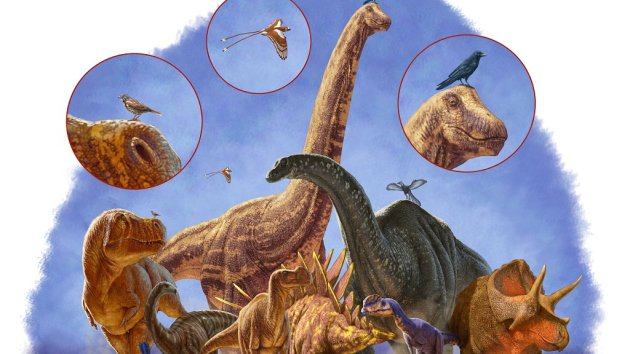
Incredible shrinking process helped the dinosaur’s survival

 A depiction of dinosaur body size evolution and shape over 170 million years

A DEPICTION OF DINOSAUR BODY SIZE EVOLUTION AND SHAPE OVER 170 MILLION YEARS

One of evolution’s greatest success stories is that of the Incredible Shrinking Dinosaur, scientists have revealed.
The reptiles that ruled the world for almost 200 million years never went away. At least some of them just got smaller and turned into birds.
Now researchers have shown that shrinking was key to survival for this group, which became one of the most diverse and abundant families of animals alive today.
Only those dinosaurs destined to be birds broke the lower body weight limit of one kilogram seen in their relatives.
Lead scientist Dr Roger Benson, from the Department of Earth Sciences atOxford University, said: “Dinosaurs aren’t extinct; there are about 10,000 species alive today in the form of birds. We wanted to understand the evolutionary links between this exceptional living group, and their Mesozoic relatives, including well-known extinct species like T rex, Triceratops, and Stegosaurus.
“We found exceptional body mass variation in the dinosaur line leading to birds, especially in the feathered dinosaurs called maniraptorans. These include Jurassic Park’s Velociraptor, birds, and a huge range of other forms, weighing anything from 15 grams to three tonnes, and eating meat, plants, and more omnivorous diets.”
Small body size may have been a vital difference that helped the ancestors of modern birds remain on Earth after other dinosaurs were wiped out 65 million years ago, say the researchers.
A huge asteroid impact off the coast of Mexico is generally thought to have brought the dinosaurs’ long reign to an end. However, many experts believe dinosaurs were already in decline when the meteor delivered the coup de grace that finished them off.
Together with Canadian colleagues from the Royal Ontario Museum, Dr Benson’s team estimated the body mass of 426 dinosaur species by measuring the thickness of their leg bones.
The scientists found that dinosaurs underwent rapid changes in body size shortly after they first appeared around 220 million years ago.
Thereafter only the evolutionary line leading to birds continued to change size at such a fast rate, and did so for a further 170 million years.
The study, published in the online journal Public Library of Science Biology, revealed that dinosaurs ranged in size from the 90 tonne Argentinosaurus – the largest creature ever to walk on land – to the bird-like Qiliania, which weighed 15 grams and was the size of a sparrow.
The team worked on the basis that if members of a family of related animals are similar in size, their evolution is likely to have been slow. On the other hand having close relatives that are very different in size implies fast rate of evolution.
“What we found was striking,” said co-author Dr David Evans, from the Royal Ontario Museum. “Dinosaur body size evolved very rapidly in early forms, likely associated with the invasion of new ecological niches. In general, rates slowed down as these lineages continued to diversify.
“But it’s the sustained high rates of evolution in the feathered maniraptoran dinosaur lineage that led to birds – the second great evolutionary radiation of dinosaurs.”
The bird ancestors kept experimenting with different and often radically smaller body sizes, allowing them to adopt new designs and adaptations more quickly than larger dinosaurs.
Other dinosaur groups became locked into narrow ecological niches from which they could not escape, say the researchers. This may have ultimately contributed to their extinction.
Commenting on the findings in the journal, doctors Daniel Moen and Helene Morlon from the Ecole Normale Superieure in Paris, France, wrote: “What explains why some groups of organisms, like birds, are so species rich? And what explains their extraordinary ecological diversity, ranging from large, flightless birds, to small migratory species that fly thousands of kilometers every year?
“(Benson and colleagues) find that body-size evolution did not slow down in the lineage leading to birds, hinting at why birds survived to the present day and diversified. This paper represents one of the most convincing attempts at understanding deep time adaptive radiations.”