Pages

Showing posts with label IRELAND economy. Show all posts

Wednesday, November 14, 2012

Donie's news Ireland BLOG Tuesday


Over 23,000 people killed on Ireland’s roads since 1959


More than 23,000 people have been killed on Irish roads since records began in 1959, new figures have shown.

The Road Safety Authority (RSA) released the statistics ahead of World Remembrance Day for Road Traffic Victims on Sunday.
Commemoration services, masses and other events are being planned throughout the country over the weekend to remember those who have been killed or seriously injured in road crashes, as well as their families and friends.
  Transport Minister Leo Varadkar said the scale of the deaths should force people to reflect on their own driving.
“Since 1959, 23,227 people have been killed on our roads, more than the population of the town of Athlone. And for every life lost on our roads, hundreds more are devastated by the loss.
“World Remembrance Day gives us all an opportunity to remember the victims of road crashes, the families grieving for their loss and the communities shattered by these tragedies.”
Among the events planned is a day of special prayers in more than 30 churches of all denominations across Co Carlow and a mass in Cork’s Cathedral of St Mary and St Anne, attended by emergency services and crash survivors.
Dedicated services will also be held in Donegal, Derry, Louth and Mayo while a special candle-lit tree-planting ceremony is planned for Belvedere House and Gardens in Co Westmeath. Visit the RSA’s website at www.rsa.ie for a full list of events.
Gay Byrne, chairman of the RSA, said it was a day to remember those who died, their loved ones left behind and the emergency services.
“We also acknowledge those who have been seriously injured on our roads and those who continue to support and care for them every day,” he said.

If your wife is working late

It could be a sign that your marriage is in trouble


  • Women who fear marriage breakdown work longer as a ‘form of insurance’ claims new research from the London School of Economics
  • However this increase was not matched by husbands taking more responsibility around the home
Married men, is your significant other spending more and more time at work? Watch out because it could be a sign that she thinks your relationship is in trouble.
A study found that women who fear their marriage is breaking down begin working longer hours as a ‘form of insurance’.
Scientists have worked out that for every 1 per cent increase in the risk of marital breakdown, they put in an extra twelve minutes a week.
‘Form of insurance’: Women who feel like their marriage is on the rocks spend longer in the office, a new study from LSE researchers claims
But the study also found that there is no strong evidence to suggest men do the same when a relationship is struggling.
Berkay Ozcan and his colleagues at the London School of Economics used the 1996 legalisation of divorce in Ireland to calculate how subsequent marriage breakdown rates affected women’s participation in the workforce.
‘We see women who are at a higher risk of divorce significantly increase how much they work. And it is not that women working outside the home are more likely to get divorced,’ he said.
‘Rather, faced with a rising probability of divorce, women work more, whether they ultimately separate or not. They are working as a form of insurance in case of divorce or in anticipation of it. Divorce is harder on women.’
In Ireland, following the legalisation of divorce, non-religious married women increased how much they worked by about 18 per cent, compared to their churchgoing counterparts.
Religious women were used as a control group by the researchers because they were not affected by the new divorce law – their rate of separation remained constant and their divorce rate is marginal.
The study using a national survey of almost 3,000 households also found women’s increased work outside the home was not compensated by either a decrease in domestic time spent on childcare or an increase in childrearing by fathers.
Dr Ozcan, whose findings are published in the European Economic Review, said: ‘Our results suggest women’s changing work patterns outside of the home were not accompanied by a decrease in specialisation of tasks within the home.
‘Women who have secured their outside options, in case of divorce, may have done so, at least in the short run, at the expense of their leisure time and potentially their wellbeing.’
After the legislation was introduced non religious women were 34 per cent more likely to divorce, and religious women just 7 per cent more likely.
Dr Ozcan said it is unclear whether legalising divorce may have strengthened or weakened wives’ bargaining position within the marriage.
He said: ‘In the short run, women may be hurt more by the higher likelihood of divorce as they are often the weaker spouse financially and would suffer more from a divorce than men.
‘In the longer run, however, they may actually adjust labour supply and strengthen outside options.
 AIB hires debt restructuring expert to head arrears unit
       
AIB plans to restructure 10,000 mortgages by March.
AIB has hired in a debt restructuring expert from Nationwide Building Society in Britain, the bank confirmed this afternoon.
Garry Stran is to head up the arrears unit in AIB and its EBS subsidiary, said an AIB spokeswoman. The arrears unit is part of the bank’s new Financial Support Group division, which has 2,000 staff who will offer customers unable to meet repayments options that could include adding arrears to existing mortgage debt, splitting mortgages and mortgage-to-rent schemes.
The bank plans to restructure 10,000 mortgages by March, it has been reported.

Minister James Reilly plans 10% sugar tax on soft drinks


Irish health Minister James Reilly was today considering a plan for a 10pc excise tax hike on fizzy drinks — just as Denmark decided a “fat tax” doesn’t work.

A confidential reported commissioned by the Health Minister recommends increasing the excise duty on soft drinks, which are already subject to a 23pc VAT rate.
A 10% rise in excise duty could see drink jump by up to 20c a bottle.
The aim is to curb obesity and raise revenue.
The Institute of Public Health In Ireland report, which will be presented to the Department of Health’s obesity committee today, stops short of seeking the introduction of the “fat tax” that has been introduced in some other European countries.
The Department’s special action group on obesity will decide on whether to recommend the price increase, but the report is understood to say that “on balance”, it should go ahead.
If the minister decides to seek the increase, he might take note of Denmark, which introduced a tax in October, 2011 on food containing more than 2.3pc of saturated fat.
Denmark abolish: Now Denmark is to scrap the tax after it said it was costly and failed to change people’s eating habits.
Now it is to abolish the “fat tax” and cancel the planned sugar tax.
If the Health Minister decides he now has the evidence to ask Finance Minister Michael Noonan to impose the increase in next month’s Budget, it will push up the retail price of soft drinks, with consumers paying a third on top of the pre-tax price.
A bottle of lemonade which would cost €2 without tax is already subject to VAT at 23pc, pushing up the price to €2.46.
A further 10pc in sugar tax would add another 20pc to the cost at the till, meaning shoppers would end up paying €2.66 for the same bottle.
The biggest impact of a tax increase would be felt by the young and lower income groups who are the biggest consumers of soft drinks.
Figures show that 60pc of the adult Irish population and almost a quarter of seven-year-olds are either overweight or obese.
France has led the way with a sugar tax.

Sugar tax would have no health benefits says Irish lobby group IBEC

   
On the eve of a day to highlight the scourge of diabetes, November 14, 2012,
A unit of IBEC, the principal Irish business lobby group, says a sugar tax would have no health benefits and it warned “that imposing a discriminatory tax on certain food and drink products would have no health benefits and would further hit already hard-pressed Irish consumers.” Meanwhile, men are more likely to be admitted to hospital as a result of poor management of diabetes than women, even when there are no significant differences in the number of men and women living with diabetes, according to new OECD data.
   Across 25 countries, 8.7% of men and 8.3% of women are currently living with diabetes. The average number of hospital admissions with diabetes was 188 per 100 000 among men, whereas women had a hospital admission rate of 143 per 100 000 – - more than 20% lower.
The greater numbers of men being admitted to hospital for poor management of diabetes ought to raise concerns that men are not managing their diabetes as well or making the most of primary health care services when compared to women.
Across both sexes, countries such as Switzerland, Canada and Portugal have high prevalence of diabetes across their population but low rates of hospital admissions from poor management of diabetes. At the same time, Korea, Mexico and Austria have similarly high prevalence of diabetes but much higher rates of hospital admissions.
Progress in improving diabetes care across OECD countries has been mixed in the last two years for which data is available. Canada, Portugal, Sweden, Denmark, Ireland, Germany and Austria have reduced the number of hospital diabetes-related hospital admissions. However, Iceland, Switzerland, United Kingdom, Italy, Finland and Korea have all seen increases in hospital admissions for diabetes. Admission rates in Norway and the United States have remained about the same.
Diabetes is a health condition where good health policies and good health care can make a big difference. Modest weight loss and dietary changes can delay and prevent the onset of diabetes and better management of blood glucose can reduce further health care complications.
However, the think-tank says that too many patients across OECD countries today do not receive treatment until more serious complications have set in. As countries reflect on how to improve health care for people living with diabetes, the OECD encourages them to think about their men.

Wednesday, October 24, 2012

Donie's Ireland daily news BLOG


Irish Consultants to blame for delay in payments of €73m to Irish health service


On form: the Government says that about €73 million in payments due to the health service from health insurers is outstanding because hospital consultants have delayed in signing the appropriate forms

The failure of some consultants to fill in the forms required by private health insurers is being given as the reason why funding to the health service has been delayed
The Government has said that around €73 million in payments due to the health service from health insurers is outstanding because hospital consultants have delayed in signing the appropriate forms.
However the Government has argued that, as a result of new initiatives, the amounts due will fall significantly over the coming year.
Delays in public hospitals securing payment from insurance companies as a result of consultants not signing forms has been an issue of controversy for some time but it has been brought into sharper focus in recent weeks on foot of the cuts in front-line services introduced by the HSE.
Confidential figures produced by the HSE for the recent talks on work-practice reforms for senior doctors showed that in March there was over €11 million in outstanding claims at the Mid Western Regional Hospital in Limerick awaiting “consultant action”.
The management document, seen by The Irish Times, said this included the requirement for the consultant to sign the appropriate forms. It said over €1 million was outstanding while action was awaited from one consultant.
The report said that at Galway University Hospitals nearly €6 million was outstanding from insurance companies awaiting “consultant action”.
The figure for Cork University Hospital is €4.122 million and at Tallaght Hospital the amount outstanding is over €3.4 million.
In a topical issues debate in the Dáil last Thursday the Minister of State at the Department of Education Ciaran Cannon (speaking on behalf of the Minister for Health James Reilly) said that, as of the end of September, €204 million was due to the HSE from private health insurance companies in respect of treatment of private patients.
He said that of this €204 million, €100 million related to claims under preparation in hospitals, and €104 million related to claims submitted to insurers which were either being processed or are pending.
“Delays in consultants signing off on health insurance forms is one of the issues affecting the claims collation process in public hospitals. Of the €100 million under preparation in hospitals, €73 million relates to delays in consultant sign-off.”
Mr Cannon said that Dr Reilly had instructed the HSE “to address the issue as a matter of urgency”.
He said the HSE had directed hospitals to bring down the value of claims awaiting consultant action. He said hospitals were also targeting the highest value claims.
Mr Cannon also said that moves to deal with this issue had formed part of the proposed agreement between the Government and hospital consultants on work-practice reforms.
“An important feature of the proposals agreed between the parties was a commitment on the part of all consultants to expeditious processing and signing of claims for submission to private health insurers. Consultants will be required to complete and sign private insurance forms within 14 days of receipt of all the relevant documentation and to co-operate with the secondary consultant scheme, whereby a secondary consultant involved in a case can sign the claim form if the primary consultant has not signed it within a reasonable timeframe. “They will also be required to support the implementation of electronic claim preparation.
“Health service management is proceeding with implementation of this and other measures in the coming weeks, having regard to the relevant provisions in the public sector agreement.
“In addition to addressing delays in consultant sign-off, the HSE has also awarded a contract for the phased roll-out of an electronic claims management system in 11 HSE sites. The system will address the many deficiencies of the current paper-based process, will streamline the claims collection process and will ensure standardised work practices are implemented across hospitals. The system is live in six hospital sites with a further three to come on board by mid-November.”
Labour TD Kevin Humphreys, who raised the issue in the Dáil last week said: “Shame on the consultants that the Government had to go to such lengths to ensure the income stream and cashflow of our hospitals were guaranteed. These men and women walk the corridors of the hospitals and see the shortfall in income yet they delayed on signing off on significant sums that would make a substantial difference to the hospitals of the State.”
Mr Cannon said he agreed wholeheartedly that these were significant sums of money that could be expended on front-line services but were “held in abeyance because of a lack of will from certain ranks within the health sector and, perhaps, bureaucratic difficulties associated with the payment process”.
The delays on the part of consultants in signing insurance forms was also criticised by members of the Dáil Public Accounts Committee a fortnight ago.
At that meeting HSE national director of finance Liam Woods said that while most of the amounts outstanding were due for less than six months, the health service had been waiting for more than a year for between €5 million and €8 million.
HSE officials told the Public Accounts Committee that delays in signing the forms meant that consultants themselves did not receive payment from the insurance companies.
However the HSE declined to be drawn into speculating on the motivations on the part of senior doctors in delaying the signing of such forms.
Asked by Fine Gael TD Pascal Donohoe about what lay behind the failure to claim amounts of a significant magnitude, the HSE’s director general-designate Tony O’Brien said, “one could only speculate”.
“Either the individuals are not in need of the income or it suits them to defer that income for whatever reason.
“I am aware of a general provision in the tax code that once one is eligible to issue an invoice, one is also eligible for the tax that arises upon it, regardless of whether one has gained the income. I cannot speak to the individuals who all, no doubt, have different reasons.”
THE PAPER TRAIL: Midwestern Regional Hospital Dooradoyle has the single highest value of claims awaiting sign-off by primary consultants, with more than €11,125,000 outstanding.
The next four in order are:
* Galway University Hospital at €5,936,838
* Cork University Hospital at €4,122,930
* Waterford Regional Hospital at €3,741,323
* Adelaide Meath Hospital at Tallaght, €3,421,719.m

Ireland’s Students urged to ‘pace your drinking’


Peer pressure continues to play a major role in the drinking behaviour of young Irish adults, however a new competition aims to tackle this issue head on.

DARE2BDRINKAWARE is a multimedia competition open to all third level students in the country. It aims to promote responsible drinking and has been running for the last six years. This year’s theme is ‘pacing our drinking’.
According to Fionnuala Sheehan, chief executive of drinkaware.ie, while Irish people are, overall, drinking less than our European counterparts, ‘when we drink, we drink more’.
“This pattern of heavy, episodic drinking is particularly prevalent among young adults, including students attending third level institutions in Ireland,” she noted.
She pointed to research carried out earlier this year, which found that the average number of alcoholic drinks consumed by Irish people on their last visit to a pub or nightclub was 5.6. This is almost three times the amount people in other parts of the EU consume in one outing.
“Peer pressure remains a significant driver in the drinking patterns of young people. We want to empower them to resist the pressure to drink, or to drink more. By pacing our drinking – that is drinking less and more slowly on an occasion of drinking – we enable ourselves to get more out of our nights and our weekends,” Ms Sheehan insisted.
The competition is open to all third-level students over the age of 18. Entries can take the form of an interactive website or short film. Proposals must be submitted by November 23 and participants will then have until March 2013 to complete their entries. The prize fund totals €5,000.
“We’re looking forward to the 2013 competition and anticipate that students will demonstrate high levels of creativity in producing film and website entries on the theme of pacing our drinking,” Ms Sheehan added.

Hunting ban on red deer and curlews as numbers in the wild fall in Ireland


A ban on hunting Kerry red deer and curlews has been imposed in a bid to help protect their dwindling numbers.

A massive decline in curlew numbers — now down by up to 95pc — was behind the Government’s shooting ban.
Poaching of red deer has become a big problem because of the big demand for venison. The ban on shooting female Kerry red deer means that all reds are now protected as it had already been illegal to hunt the red stag in the county.
Heritage Minister Jimmy Deenihan removed the curlew bird from the open season for shooting wild game birds.
The curlew has traditionally had a month-long hunting season during November, although it is thought that few hunters continue to shoot the bird.
An official ban has now been introduced.
Breeding
A number of surveys and studies in the past year have estimated a dramatic reduction in the total number of breeding pairs of curlews in Ireland. These estimates indicate a decrease ranging from 60pc to 96pc.
Mr Deenihan said: “This decision will be welcomed by conservationists and hunters. I am aware that some hunting bodies have already introduced voluntary hunting bans for the curlew and I commend them for this action.”
Meanwhile, new monitoring of red deer in Killarney National Park has found a significant decline in numbers.
At the turn of the 20th Century there were in excess of 1,500 red deer in Killarney. This declined between 1900 and 1960 to as few as 60, according to the Wild Deer Association of Ireland. However, as a result of rigorous protection, numbers increased and hit around 690 in the early 1990s.
The National Parks and Wildlife Service will be monitoring compliance with the initiatives.

Message in a bottle 2 French-Canadian girls found in Quebec Canada

‘Girls wrote the notes eight years ago’


RTÉ has managed to contact the two French-Canadian girls who wrote a message and put it in a bottle in Quebec eight years ago.
The bottle travelled across the Atlantic Ocean before being washed up on the strand at Passage East in Co Waterford.
It was found by local boy Oisín Millea, aged ten.
RTÉ has spoken with Charlene Dalpé, who wrote the note along with her friend Claudia Garneau.
She said she was very excited to find out that the note, which she wrote when she was 12, had been found by somebody on the other side of the ocean.
M/s Dalpé and M/s Garneau spoke with Oisín via Skype this evening.

Sunday, October 7, 2012

Donie's Sunday news Ireland daily BLOG

Ireland has the second shortest working week in Europe says 
   

Irish employers have a shorter working week than everyone else in the EU apart from the Danes last year, according to new data. Irish full-time employees spent an average of 38.4 hours in the workplace, two hours fewer than the EU average.

The figures from the EU’s statistical agency, Eurostat, show that those in the education sector had the shortest working week, putting in just 31.5 hours. This was six hours below the EU average for the sector and slightly below the time spent at work in 2008.
Only in Greece and Italy do education sector workers have shorter working weeks than their Irish counterparts. Hours are longer in the other 24 EU member countries, with British teachers putting in the longest weeks – at more than 42 hours.
In all other sectors, including public administration and health, Irish employees are much closer to EU averages in their respective sectors in terms of hours worked per week.
Employees in the agricultural sector worked longest – more than 42.5 hours a week.
Irish employees in the aggregate have barely changed the number of hours worked since the recession began. In 2008, the average working week was less than half an hour longer. This is in line with patterns elsewhere.
The working hours gap between the sexes in Ireland is the second largest among the 27 EU countries, according to Eurostat’s Labour Force Survey. Salaried Irish men work 3.5 hours more than women. Only in Britain is the gap bigger. The average gap between the sexes across the EU is 1.8 hours. Men work longer hours in paid employment in every country without exception.
The self-employed in Ireland work much longer hours than their salaried counterparts. Self-employed people put in 48 hours a week on average last year, in line with the EU average.
Across Europe, Lithuanian entrepreneurs laboured least, doing a 42-hour week. Their Austrian counterparts were at the other end of the spectrum, working for 55 hours a week.
The figures show no north-south divide in Europe in hours worked, either among salaried employees or the self-employed.
The figures also show Irish employees are less likely to be on limited duration contracts than their counterparts in Europe. One in 10 employees was employed on such contracts last year. The average across the bloc was 50 per cent higher. In Spain and Poland more than one in four people was employed on such contracts.

Ireland’s TDs & Senators to get tablet computers despite delay & order block

    TDs and Senators set to receive tablet computers. 
Senators and TDs are still set to receive tablet computers, despite a tender for some 300 devices being withdrawn by the Oireachtas yesterday.
The public tender for the devices, to be provided for free to politicians, was withdrawn yesterday due to a change in procurement rules.
In July the Oireachtas Commission decided to put the devices to tender. It cancelled the tender yesterday due to a new “framework agreement” by the Department of Public Expenditure under which the devices could be purchased.
However in a statement today, the Oireachtas Commission said it still expected to “complete a tendering process using the framework before the end of 2012”.
The new framework may yield “significant efficiency and cost reductions” so the ICT Unit of the Oireachtas had “cancelled the open tendering process”, it said.
“We believe the minimisation of cost to the taxpayer is paramount, and we regret any inconvenience caused to bidders,” the statement added.
Fine Gael TD John Paul Phelan earlier described the withdrawal of a tender as “common sense prevailing”.
“I simply could not understand the logic behind spending over €100,000 on new technology, when hundreds of thousands of people up and down the country are living on the breadline,” Mr Phelan said in a statement.
Mr Phelan said that every TD and Senator had access to a computer and a mobile phone and there was “absolutely no need” for any additional technology. If they wanted to invest in a tablet it should be “paid for” from their “own pocket” he said.
In a statement the Oireachtas Commission said the purchasing of the devices was “part of a larger project” aimed at “reducing the annual cost of parliamentary printing”.

Mary Robinson warns on climate change & great injustices on our grandchildren    

  
Former Irish President Mary Robinson has warned that climate change will be one of the “greatest injustices” we inflict on our grandchildren.
Addressing the International Bar Association annual conference in Dublin’s Convention Centre yesterday, Mrs Robinson said the public needs to urgently motivate political leaders to act on climate change.
 ”Climate change threatens to be one of the great injustices we inflict on our grandchildren and great-grandchildren.
“We need to look at the potential impacts of climate change 100 years hence and plan for a world very different to that in which we live today.”
“Until there is greater demand from people in all walks of life for meaningful action on climate change, political leaders will continue to be able to return home from unsuccessful climate conferences with little fear of retribution,” she said.
She told delegates that the economic growth experienced in past decades had come at a cost, which was being borne by people in developing countries.
The former UN Commissioner for Human Rights told the lawyers they had a role in tackling climate change — as it was not just an economic and environmental issue, but a human rights issue.

Facebook application to raise mental health awareness


Just how many of your Facebook friends are suffering from depression right now? we really will never know.

This will be answered individually for each of Ireland’s 2.2m Facebook users by the mental health recovery group GROW as part of its campaign to mark World Mental Health Week – which takes place on Monday. October 8.
GROW says it is preparing to launch the first ever interactive social media health awareness campaign in Ireland which is specifically designed to tailor a different and relevant response for every participating user.
Through the GROW Facebook app, each participating user’s number of friends is automatically run through an algorithm to estimate how many of them are likely to be experiencing mental health issues at this point in time.
The exercise produces a relevant unique number for each and every Facebook user.
This new app is designed to be passed on and shared among friends.
GROW points out that social media is the favored communication medium of young people today – the group that is often most vulnerable to depression, isolation and stress – as indicated by the particularly high numbers of suicides among under 25s.
The app is designed to stress to Facebook users and to the population generally, just how much of a toll depression is likely to be taking among their loved ones and their friends at any time.
“Around one in four Irish people will experience depression or other mental health issues in their lifetime,” said Michelle Kerrigan, CEO of GROW in Ireland.
“For World Mental Health Week our message is to ‘share awareness.’ Everyone is entitled to mental health and GROW’s track record in assisting real recovery demonstrates that there is light at the end of the tunnel and that recovery is not only possible but fully achievable.”
On World Mental Health Day next Wednesday, GROW will be raising funds in its first national flag day in order to continue building the resources necessary to raise mental health awareness nationally and to expand GROW’s frontline self-help groups.

Northern Ireland-based Titanic Belfast’s visitor number touches 500,000

  
The 500,000th visitor was Canadian citizen Lynda Price pictured above, who was born in east-Belfast and is the great granddaughter of a shipyard worker.
Titanic Belfast in Northern Ireland recently touched the 500,000-visitor mark, just six months after it was opened on March 31, 2012, exceeding the annual forecast for visitor numbers, which was set at 425,000.
The six-storey Titanic Belfast features nine interpretive and interactive galleries that explore the sights, sounds, smells and stories of Titanic, as well as the city, and the people who constructed the ship. Supported by the Northern Ireland Executive,
Titanic Belfast is a public-private partnership, funded by the Northern Ireland Tourist Board, Belfast City Council, Belfast Harbour and Titanic Quarter Ltd. It is operated by Titanic Belfast Ltd and owned by the Titanic Foundation Ltd.
Of the visitors of Titanic Belfast in the past six months, 65 per cent were non-Northern Ireland residents, with some coming from the Republic of Ireland, the Republic of Korea, USA and the United Arab Emirates. Titanic Belfast has welcomed tourists from 111 countries, from Argentina, Nepal, Qatar and Belize, amongst others, generating significant tourism revenue for not only Belfast, but also for Northern Ireland as a whole. More than 30,000 guests have been served in Titanic Belfast’s conference and banqueting suites, including The Queen of England, The Duke of Edinburgh, Prince Philip, and James Cameron, director of the movie ‘Titanic’.
Howard Hastings, Chairman, Northern Ireland Tourist Board, said, “2012 has been a momentous year for tourism in Northern Ireland, with Titanic Belfast at the heart of its success. This iconic exhibition is now reaping the benefits of worldwide media attention and I am delighted that it has exceeded visitor expectations so far.”

Sunday, September 30, 2012

Donie's Sunday news Ireland BLOG

We cannot continue to provide our services in Ireland anymore free of charge

Says former minister Ray MacSharry
 

All payments from the Exchequer must be means-tested, writes former finance minister Ray MacSharry

IT is going to be a tough Budget but it will have to be humane and protect the most vulnerable. There are, however, areas where we need to give consideration, specifically, to issues that may stimulate the economy.
  In my time we borrowed money through the ACC and the ICC to encourage investment in agriculture, added value projects and small and medium-sized industries.
At that time, it was because interest rates were so high. The problem now is the availability of capital. The banks do not seem to have sufficient resources for the protection of existing jobs and the creation of new ones.
I note where the UK government has set up a special bank with stg£1bn (€1.15bn), to be lent to small and medium-sized industries. We have to do something like this to ensure that the entrepreneurs of this generation can get access to capital for the many great ideas and initiatives they have, whether it be in small industries, tourism, agriculture or the food industry.
We need to do much more in this area and to add value to our own indigenous resources mainly for export. We do not have much growth in Europe or in the world economy, which makes it impossible for us to grow as an exporting country. We have to do more ourselves.
A few areas which we should look at are: the black economy, construction, call centres, an oil excise rebate and a financial transaction tax.
There is no doubt the black economy is growing.
We should consider tax allowances for people who are employing workers on a short-term basis and paying cash.
If a tax allowance was given towards such expenditure, more would be done and people would have to come out of the black economy to participate in this work. This can cover small construction jobs, plumbers, electricians, gardeners, drivers and so on.
In the tourism area, we now earn less from incoming tourists than the amount spent by Irish people on holidays abroad.
We cannot blame them for that due to the kind of weather we have, but for a small additional cost, such as €10 per trip/person, it would not mean much to them — but would mean a lot for the Irish economy.
The rising cost of oil is making it very difficult for industry and is adding to inflation. Consideration must be given for some rebate for the hard-pressed industries of our country.
Another point is consideration be given to a small financial transaction tax, national and international.
The banking debt has to be taken outside the normal budgetary and financial package. We will have to get support for 30-40 year bonds at reasonable interest rates to be paid for by the banks as and when they return to profitability.
Ireland did not cause the world financial crisis. It happened to be first in line when the financial crash came and we had to deal with it ourselves, supported by Europe.
We were not responsible for the recession in the US or the UK, who have printed trillions of dollars and pounds to overcome their difficulties and still they do not have any meaningful growth.
The Irish people have made, and continue to make, their contribution to saving the euro. This has got to be recognised in Europe so that we get support for our banking debt and help to return to the normal markets to secure the finance at reasonable rates to run the country.
Now I will turn to other points. I would say:
In relation to the Government’s strategy of a 2:1 ratio of cuts in expenditure versus increased taxation, I would say that this seems a reasonable approach but cannot be definitive. We must look at all possibilities for savings and improve efficiencies where we can and look at the tax burden on the community.
The Croke Park Agreement can and will have to deliver more, but only through negotiations. The trade unions are responsible people and know better than most that everyone has to make their contribution to overcome the great challenges facing the country. The costs of running government are too high and it is in the interests of all that we only spend what we take in taxes.
Industrial peace is what we all want and it can always be achieved through dialogue, understanding and fairness. The result will always be good for the economy and that is the only gauge.
In relation to the question of allowances and increments for civil servants, I would say that all allowances have to be examined, should be justified and, I am sure through discussion, the necessary savings can be made in the context of the overall review of conditions and practices introduced over the years. Progress will have to be made in this area.
We cannot have a two-tier system of payments for people doing the same job. It will not work because it would not be fair. All must make a contribution, existing and new public servants, because we need the savings urgently.
As to the issue of which is the better option: to cut pay, increments and allowances, or the numbers working in the public sector, I would say that we will have to look at both — and the services they deliver. In future it will have to be what we can afford to deliver.
The Government can decide where the least impact on the services would occur and start there. All job losses should be voluntary and be in the best interests of the necessary services to be provided.
We all know savings have to be made, but the most in need and the most vulnerable must be protected.
The real expenditure is in the areas of health, education, social services, justice — including pay, which means that taxes, social welfare and pay have to be taken into consideration regardless of election promises. The budget deficit has to be reduced.
Also, the tax base has to be widened.
Services can no longer be provided free of charge — except in special cases. Income tax and extra charges, including USC and PRSI and other levies, are too high. That said, I do not think income taxes inhibit growth or affect employment creation.
‘As for calls to introduce a wealth tax, I would say: What wealth?’ I do not believe there is substantial untapped wealth in this country which is untouched by taxation; some maybe…’
All workers are used to paying tax since they began employment. But I do believe that the people who have the most should pay the most and those on salaries and income of €80,000-€100,000-plus could pay more and should pay more.
In principle, I do agree with a property tax based on a fair valuation system, but we must take account of ability to pay for those people who are in negative equity, in mortgage arrears and those who paid very high stamp duty in recent years.
A proper ratable valuation system would be better than a property tax and would be seen to be much more related to the services provided in householders’ own areas such as water, sewage, roads, public lighting, footpaths, parks, playgrounds and environmental matters etc.
As to calls for the introduction of a wealth tax, I would say: What wealth?
I do not believe that there is substantial untapped wealth in this country which is untouched by taxation; some maybe, but not substantial when you take family homes into account or land assets for the farming industry.
But I would agree with those who say that due to the situation the country finds itself in, all payments from the Exchequer must be means- tested. We cannot afford universality at present.
It is not acceptable. At a time when we have robots walking on the moon, it is not beyond the bounds of possibility to introduce a fair means-testing system. Otherwise we will have to tax such payments above a certain income level.

Ireland’s new property (PRSA) price register published today Sunday

   
The publication of the State’s long-awaited residential property price register today will restore “some confidence in the property market,” it has been claimed.
The Minister for Justice Alan Shatter said the Register, compiled by the Property Services Regulatory Authority (PRSA) using Stamp Duty figures from the Revenue Commissioners, was an essential step in bring first-time buyers back into the market and improving transparency.
The Register – accessible at www.propertypriceregister.ie – puts reliable details on exactly how much houses are selling for into the public domain for the first time and includes precise information on residential properties sold in the Republic since January 1st 2010.
Prices for both cash and mortgage sales are included. The information will be updated on a regular basis and the PRSA said it aimed to published price details within a month of the date of sale of the property.
The register includes the date of sale and the address of each residential property sold and can be searched using criteria including sales by county, city or town, individual property addresses and by year.
However the PRSA stressed that it is not intended as a “Property Price Index” as the details are limited to price, address and date of sale .They do not include such details as property size or number of rooms.
The Minister for Justice Alan Shatter expressed the hope that the register would improve the quality of information available on the Irish housing market and restore confidence to the sector.
“In recent years, because of the steep downturn in the property market, it has been difficult to get accurate information on property prices,” he said. “This uncertainty has led to a lack of investor confidence and has contributed to stagnation. . . particularly among first time buyers.
He claimed the Register would help “to remove some of this uncertainty, restore some confidence in the property market and provide transparency in residential property sale prices.”
The PRSA chairwoman Geraldine Clarke said the register would be “of substantial assistance in helping people make decisions in relation to one of the most important purchases of their lives.”

SLIGO MAN CHARGED WITH MURDER OF EUGENE GILLESPIE

AFTER HANDING HIMSELF IN TO GARDAI

      
A 29-year-old man has been charged with the murder of Eugene Gillespie in Sligo Town.
Simon McGinley of Connaughton Road, in Sligo appeared at a special sitting of Carrick-on-Shannon District Court this afternoon, charged with killing 67-year-old Mr Gillespie at Old Market Street in Sligo between September 19 and 21.
Ocean FM’s Niall Delaney, reporting from Carrick-on-Shannon, said the court was told that McGinley had handed himself into gardaí voluntarily on Friday night, in a distraught state.
 Connaughton Road, in Sligo
Inspector Jim Delaney gave evidence of arresting and charging McGinley with murder at 1.15am this morning, to which McGinley responded: ‘Guilty.’
An application to have the accused placed on suicide watch was made by his legal representative. 
Judge Kevin Kilrane said McGinley should be given a full psychiatric assessment and only then, if required, should he be placed on suicide watch.
There was no application for bail and the accused was remanded in custody to Castlereagh Prison to appear in court again on Thursday next.
McGinley sobbed as he briefly spoke with members of his family at the back of the court, before he was led away.

Former Tanaiste McDowell gives his pensions to charity

  
The former Tanaiste Michael McDowel & his wife Professor Niamh Brennan.
The former Tanaiste Michael McDowell, has disclosed that he donates his entire State pension to charity, as new figures show that he received what appeared to be an unexpected pension windfall of €143,000 last year.
Due to a mistake by the Department of Finance, Mr McDowell apparently received the biggest political pension of former office holders last year, according to figures that were released on Friday.
Mr McDowell, a former justice minister, received a pension of €173,683 in 2011 due to a back payment.
This included a €142,877 lump sum, which he was owed because the department had underpaid his pension over four years, and a pension of €31,435 for 2010.
Mr McDowell said this weekend that he and his wife, Professor Niamh Brennan, decided to donate his pensions to charity more than a year after he left politics.
“Since 2009, we agreed that everything I got by way of pension we would give to charity,” he said. “Since then, I have been paying everything due to me on foot of these pensions to charity.”
Mr McDowell said he now donates the money on a yearly basis to a number of charities — both Irish and foreign — which he declined to name.
He draws two pensions as a former attorney-general and former minister. In the three years since he decided to donate his pensions, the charities are likely to have shared more than €200,000.
Mr McDowell is one of several former ministers who chose to give their pensions to charity, rather than handing them back to the Exchequer. Michael Noonan, the Minister for Finance, has said he donates his ministerial pension — about €31,000 — to two charities each month.
Other members of the Government who receive ministerial pensions have surrendered them to the State, including Taoiseach Enda Kenny and Tanaiste Eamon Gilmore.
The State paid out €4.1m in ministerial pensions last year, according to the figures in the Department of Finance accounts. The list showed for the first time which politicians surrendered portions of their pensions. Only 27 chose to do so, collectively giving back €178,600 to the Exchequer.
While Mr McDowell occupied the top slot because of the departmental error, the former President Mary Robinson came in second with her pension of €139,496. She voluntarily surrendered €15,499.
Albert Reynolds received the highest ministerial pension at €99,681, followed by John Bruton, the former Fine Gael leader and Taoiseach, who received €91,446. Bertie Ahern, the former Taoiseach, surrendered €14,600 of his €83,000. Michael Woods, the former environment minister, surrendered €4,100 of his €64,100.
Those who did not surrender their pensions included Brian Cowen, the former Taoiseach, who received a pension of €79,738.
Padraig Flynn, the former minister who featured in the Mahon tribunal on planning corruption, did not surrender any of his €47,800.
The European Commissioner Maura Geoghegan-Quinn surrendered her pension of almost €60,000.
Michael D Higgins, the President, also surrendered €6,600 — which was almost €1,000 more than the pension he actually received.
Junior finance minister Brian Hayes said yesterday that the State pension scheme that saw a total of €15m paid out to all former office-holders last year will be reviewed before the Budget. He added that the scheme needed to be reformed.

Ireland’s problem of suicides is not ‘Somebody’s Else’s Problem’

It is all of our problem?
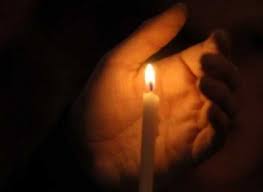
  

We, and our leaders, cannot continue to ignore the relentless rise in deaths

What is wrong with us? Are we all suffering from what psychologists call a “normalcy bias”? Where we go about our business, eyes turned sideways, refusing to acknowledge what’s happening under our noses? Or perhaps some of us are down with a nasty dose of SEP (Somebody Else’s Problem) syndrome?
Even when faced with the facts we say; “Good Lord, that’s only terrible”, and shake our heads as if it were all occurring thousands of miles away, in a place we can only scarcely believe exists.
In case you’re unsure what I’m talking about, it’s the exponential surge in mental distress, chronic mental illness and, particularly, the relentless rise in deaths by suicide, currently taking place, yes, before our eyes.
Last Monday, Terence Casey, coroner for south Kerry, had six inquests for suicides before him. Six. In one day. In tiny south Kerry.
As Mr Casey said: “There was a time when I might have one, or two, suicides out of maybe six inquests on a day, but now it’s becoming rampant. I never before had six in one sitting”. All the deaths by suicide were male — the youngest was 14. Fourteen.
But surely that must be some other Ireland and not the one where mental health budgets continue to be slashed. On Wednesday, on RTE’s Morning Ireland programme, an obviously distressed Des Kavanagh (general secretary of the Psychiatric Nurses Association) discussed the deaths of two patients by suicide in mental health facilities in Dublin and Kerry last week. He said that in mental health “acute beds have been cut and cut and cut”, that there has been a reduction of “a quarter of the total number of nursing posts in psychiatry”, and that “we’ve been the worst hit of any frontline service in this country”.
Consequently, Des Kavan-agh is a fan of the old, paternalistic style of psychiatric
nursing, where patients share large dormitories and staff control their treatment. Because the “libertarian approach”, as Mr Kavanagh put it, is now demanded by patients and advocacy groups alike; as patients reside in single rooms and demand a dignified say in their treatment, the lack of staff and money needed for this type of care is putting some patients — and no doubt staff — at great risk.
Mr Kavanagh’s comments terrified me. When many years ago I ended up in a psychiatric ward — yes, on suicide watch — I shrank from the horror of the communal dorm. The woman in the bed next to me was chain smoking — I was certain she’d set the worn-out curtains between us alight; the old lady opposite was alternating between loud recitals of the rosary and screaming obscenities to attract the attention of the nurse.
Without meaning to sound trite, I knew that to be forced to stay in such an atmosphere would drive me stark raving mad. I was categorised with a stigmatised illness within five minutes of meeting a psychiatrist, never offered talk therapy and made take two types of medication, one of which I felt was unsuitable for me. A case of psychiatric wham, bam, thank you, ma’am.
I had hoped that this style of cheap “care” was on the way out, but Mr Kavanagh’s assessment of the clash between the new humane philosophy and the pitiful monies allotted to mental health care shows that our Government — and consequently ourselves, (they represent us) — would prefer to wipe the arses of senior bond-holders, European top brass and powerful union bosses than care for our own distressed people.
Meanwhile on that far-off island called, eh, Ireland, official statistics show that 525 people died from suicide last year, a seven per cent increase on the year before, with men accounting for 84 per cent of deaths. And anyone with half an eye out for the truth knows that these statistics are far lower than the actual, real figures. They don’t take account of coroners, who, because of the stigma involved, prefer to protect the family involved and assign the term ‘accidental death’ to what was indisputably a suicide. Nor do they include the many single vehicle road deaths which are, in some cases, also deliberate suicides masquerading as traffic accidents — again, one must presume, in order to protect family from stigma.
And really, who can blame them?
Results of a survey last week (commissioned by News-talk and the Irish Countrywoman’s Association) on mental health showed that while 84.3 per cent of those questioned agreed with the statement “Mental illness is an illness like any other”, 87.4 per cent simultaneously thought that there was “a stigma in Ireland about discussing mental health issues”.
So, the vast majority believe that mental illness is like any other illness, yet the vast majority also believe that there’s a huge stigma involved in talking about it. Which is rather ironic when one considers that the “talking cure” can be very effective for many sufferers.
It would be funny if it weren’t so desperately serious. If people weren’t dying of shame; including the shame that they can’t pay bills, get a job, support their family, cover their mortgage, discuss their problems.
Research director Ella Arensman (National Suicide Research Foundation) said of a recent study on male suicide rates in Cork city that she’d never seen such a strong correlation between economic difficulties and mental health.
In a recent paper called Debt and Depression (Economic Journal) Dr John Gathergood reported that people struggling to pay loans are “three times more likely to have mental health problems”. More severe mental health effects, he said, are found among people who are late with housing or rent payments, particularly those with arrears on their mortgage or those in negative equity.
And commenting on the Newstalk/ICA survey, national president Liz Hall said. “The financial implications of the recession and the levels of emigration have severely impacted the lives and mental health of our members and all Irish families.”
With more than 308,000 people currently out of work in Ireland, with the country losing 1,000 jobs a week; with 107,700 mortgages (and rising) in distress; with between 60 and 65 per cent of mortgages in negative equity; with 1.82 million people left with less than €100 in their pockets when the household bills have been paid, it would seem beyond doubt that many of us, our friends, our neighbours, our loved ones, are at risk.
Strangely, our Government continues along with its normalcy bias, giving the impression that the rise in mental distress and deaths by suicide is clearly Somebody Else’s Problem.