The generation game? Who are Ireland’s future political leaders

Who of today’s strong performers could become tomorrow’s political figureheads?
In politics, predictions made when there is no short-term prospect of a change of leader can become moot by the time that change occurs.
In the past it has been generally easier to predict leaders on the Fianna Fáil side. Micheál Martin, Brian Cowen, Bertie Ahern, Albert Reynolds and Charles Haughey were all obvious contenders. In marked contrast, Enda Kenny would not have featured as a strong contender on the Fine Gael side in the late 1990s, but then circumstances conspired to elevate him to the leadership.
Which of today’s strong performers could become tomorrow’s political figureheads?
FINE GAEL? Leo Varadkar
One of the most capable performers in the Dáil, he has been a rising star since emerging on the scene a decade ago. He is very bright, ideologically driven, a clear thinker. He can absorb lots of information and then does what few politicians do well: makes clear decisions and shows good management skills. There’s a bit of spin to his straight-talker reputation. He is not collegial, which sometimes annoys colleagues. It’s impossible to say if his disclosure last weekend that he is gay will have an impact, positive or negative, on his prospects.
One of the most capable performers in the Dáil, he has been a rising star since emerging on the scene a decade ago. He is very bright, ideologically driven, a clear thinker. He can absorb lots of information and then does what few politicians do well: makes clear decisions and shows good management skills. There’s a bit of spin to his straight-talker reputation. He is not collegial, which sometimes annoys colleagues. It’s impossible to say if his disclosure last weekend that he is gay will have an impact, positive or negative, on his prospects.
Simon Coveney. ?
He’s still in his early 40s but has been around for a long time. He’s not the world’s greatest debater and is very much a policy and details person. He has been a good Minister for Agriculture and thinks his way through positions – he has taken a contrarian stand, for example, saying “clean and green” Irish agriculture should get exemptions from climate-change action. Comes from a long-established Fine Gael family and would appeal to traditionalists. His comments this week about potentially sharing power with Fianna Fáil were quite damaging to him.
He’s still in his early 40s but has been around for a long time. He’s not the world’s greatest debater and is very much a policy and details person. He has been a good Minister for Agriculture and thinks his way through positions – he has taken a contrarian stand, for example, saying “clean and green” Irish agriculture should get exemptions from climate-change action. Comes from a long-established Fine Gael family and would appeal to traditionalists. His comments this week about potentially sharing power with Fianna Fáil were quite damaging to him.
Frances Fitzgerald. ?
Unlike Varadkar and Coveney, Fitzgerald sided strongly with Enda Kenny in the last leadership battle. She was rewarded with a senior ministry and has been promoted to Justice. She’s also playing a key role in electoral strategy. Some colleagues criticise her for being slow to decide on issues such as publication of the Children and Family Relationships Bill. Others like her calm and steady style. It has certainly worked for her since she took over from Alan Shatter. The children’s-referendum campaign was not her finest hour, however, and the same-sexmarriage referendum will be a huge test.
Unlike Varadkar and Coveney, Fitzgerald sided strongly with Enda Kenny in the last leadership battle. She was rewarded with a senior ministry and has been promoted to Justice. She’s also playing a key role in electoral strategy. Some colleagues criticise her for being slow to decide on issues such as publication of the Children and Family Relationships Bill. Others like her calm and steady style. It has certainly worked for her since she took over from Alan Shatter. The children’s-referendum campaign was not her finest hour, however, and the same-sexmarriage referendum will be a huge test.
LABOUR, Alan Kelly
Kelly could be the first leader of Labour based outside Dublin since Dick Spring, two decades ago. He trounced the opposition in the deputy-leadership contest and is the favourite to succeed Joan Burton when she steps down. He has a reputation as being assertive, although some colleagues would prefer a Labour leader who was subtler and more urbane.
Kelly could be the first leader of Labour based outside Dublin since Dick Spring, two decades ago. He trounced the opposition in the deputy-leadership contest and is the favourite to succeed Joan Burton when she steps down. He has a reputation as being assertive, although some colleagues would prefer a Labour leader who was subtler and more urbane.
Alex White,
If you are looking for subtle and urbane look no farther than the deputy for Dublin South. He contested the leadership and has loyal supporters but has not made the same ministerial mark as Kelly. It depends on what kind of leader Labour wants after the next election. White might be seen as a good compromise or caretaker choice. His main challenge is trying to retain his seat.
If you are looking for subtle and urbane look no farther than the deputy for Dublin South. He contested the leadership and has loyal supporters but has not made the same ministerial mark as Kelly. It depends on what kind of leader Labour wants after the next election. White might be seen as a good compromise or caretaker choice. His main challenge is trying to retain his seat.
FIANNA FÁIL Michael McGrath
It’s very strange for the leader of Fianna Fáil and its finance spokesman to share a constituency. It is a sign of Michael McGrath’s strength that he managed to win a second seat for Fianna Fáil in Cork South Central in 2011. McGrath, an accountant, is very assured in his brief and a prodigiously hard worker. He has a quiet, self-confident style and is not given to dramatics. He’s the obvious frontrunner in Fianna Fáil. What might stand against him is that he’s quite conservative on moral questions.
It’s very strange for the leader of Fianna Fáil and its finance spokesman to share a constituency. It is a sign of Michael McGrath’s strength that he managed to win a second seat for Fianna Fáil in Cork South Central in 2011. McGrath, an accountant, is very assured in his brief and a prodigiously hard worker. He has a quiet, self-confident style and is not given to dramatics. He’s the obvious frontrunner in Fianna Fáil. What might stand against him is that he’s quite conservative on moral questions.
Billy Kelleher
Fianna Fáil has a handful of bright TDs in their 30s and 40s, including Timmy Dooley, Niall Collins, Dara Calleary and Barry Cowen. But the popular Billy Kelleher has been very strong since taking over the health portfolio. Humorous and puckish, he can also bring gravitas to his Dáil performances when required, and has delivered well-researched critques of health policy. He is also more liberal than McGrath. He made an outstanding speech last year on abortion.
Fianna Fáil has a handful of bright TDs in their 30s and 40s, including Timmy Dooley, Niall Collins, Dara Calleary and Barry Cowen. But the popular Billy Kelleher has been very strong since taking over the health portfolio. Humorous and puckish, he can also bring gravitas to his Dáil performances when required, and has delivered well-researched critques of health policy. He is also more liberal than McGrath. He made an outstanding speech last year on abortion.
SINN FÉIN, Mary Lou McDonald
How long more will Gerry Adams remain as leader? How long is a piece of string? To the outside world Mary Lou McDonald seems the obvious choice to succeed him. She is articulate, intelligent and politically ruthless when necessary. She appeals to non-Sinn Féin voters in her roles as deputy leader and spokeswoman on public expenditure. But although her defence of Gerry Adams and her recent use of Dáil privilege to smear, without any evidence, former politicians as Ansbancher account holders may appeal to core supporters, they could dilute her appeal to prospective supporters.
How long more will Gerry Adams remain as leader? How long is a piece of string? To the outside world Mary Lou McDonald seems the obvious choice to succeed him. She is articulate, intelligent and politically ruthless when necessary. She appeals to non-Sinn Féin voters in her roles as deputy leader and spokeswoman on public expenditure. But although her defence of Gerry Adams and her recent use of Dáil privilege to smear, without any evidence, former politicians as Ansbancher account holders may appeal to core supporters, they could dilute her appeal to prospective supporters.
Pearse Doherty,
He has mellowed a lot in the past few years. The first Sinn Féin politician to give credibility to the finance brief, he is an excellent debater and commands the portfolio very well. Doherty discounts any leadership ambition but is the closest rival to McDonald in the South. The two strongest northern contenders are John O’Dowd and Conor Murphy.
He has mellowed a lot in the past few years. The first Sinn Féin politician to give credibility to the finance brief, he is an excellent debater and commands the portfolio very well. Doherty discounts any leadership ambition but is the closest rival to McDonald in the South. The two strongest northern contenders are John O’Dowd and Conor Murphy.
`REBOOT IRELAND’
Lucinda Creighton, There’s no doubt that Lucinda Creighton will lead her new party – whatever they decide to call themselves – into the next Dáil and possibly into government. She is outspoken and very ideological and would have been seen as a potential future leader if she had stayed in Fine Gael. The new party will be a big gamble for Creighton: the weight of history is against smaller parties surviving beyond the medium term. At present it seems she has burned her bridges with Fine Gael, but, like her political forebear in Connacht James Dillon, she may eventually return to the fold.
INDEPENDENT ALLIANCE, Shane Ross?
Shane Ross, who is as opportunistic as he is talented, is likely to lead a group of Independents into the next Dáil and possibly into the next government. Ross does passion and outrage better than most Irish politicians and is astute when it comes to choosing his campaigns. A brilliant speaker, he also has a knack of leaving his past behind. He was an enthusiastic supporter of Michael Fingleton and Anglo Irish Bank in the past. Ross may be a maverick but as a former stockbroker and senior journalist with the Independent group he is seen very much as an establishment figure. If he and his colleagues enter government he would be the obvious contender for the most senior ministerial portfolio on offer.
Shane Ross, who is as opportunistic as he is talented, is likely to lead a group of Independents into the next Dáil and possibly into the next government. Ross does passion and outrage better than most Irish politicians and is astute when it comes to choosing his campaigns. A brilliant speaker, he also has a knack of leaving his past behind. He was an enthusiastic supporter of Michael Fingleton and Anglo Irish Bank in the past. Ross may be a maverick but as a former stockbroker and senior journalist with the Independent group he is seen very much as an establishment figure. If he and his colleagues enter government he would be the obvious contender for the most senior ministerial portfolio on offer.
NEW LEFT ALLIANCE, Richard Boyd-Barrett and Paul Murphy?
It’s unlikely that any alliance that comes out of smaller parties and groups will itself become a party in the short term. So the question of a leader may be moot. That might not be a good tactic, as the lack of a leadership figure may have contributed to the demise of the United Left Alliance. If there is a new alliance the most obvious contenders to lead it would be Richard Boyd-Barrett and Paul Murphy. They are similar in terms of style and presentation – down to the megaphones that both carry in the boots of their cars. Boyd-Barrett, who represents People Before Profit in Dún Laoghaire, has been a very effective TD and brought a lot of visibility to the street campaigns and protest favoured by the militant left. Murphy is a recent arrival but is committed and well informed. He got a savaging from opponents for the water-charge protest against Joan Burton, but the controversy did him little harm among his supporters.
It’s unlikely that any alliance that comes out of smaller parties and groups will itself become a party in the short term. So the question of a leader may be moot. That might not be a good tactic, as the lack of a leadership figure may have contributed to the demise of the United Left Alliance. If there is a new alliance the most obvious contenders to lead it would be Richard Boyd-Barrett and Paul Murphy. They are similar in terms of style and presentation – down to the megaphones that both carry in the boots of their cars. Boyd-Barrett, who represents People Before Profit in Dún Laoghaire, has been a very effective TD and brought a lot of visibility to the street campaigns and protest favoured by the militant left. Murphy is a recent arrival but is committed and well informed. He got a savaging from opponents for the water-charge protest against Joan Burton, but the controversy did him little harm among his supporters.
Aer Lingus ready ‘to accept’ bid from IAG British Airways owner.


Irish airline Aer Lingus is set to approve a new takeover bid by British Airways owner IAG,
IAG, which also controls Iberia in Spain, has submitted a fresh bid – which could be approved next week – of around €2.50 (£1.87) per share.
The deal – which values the carrier at about €1.3bn (£971m) – could face political resistance because the Irish government still owns 25% of the firm.
The Irish carrier rebuffed two bids from IAG last year.
By acquiring Aer Lingus, IAG would gain more take-off and landing slots at Heathrow – valued at around £30m per pair – allowing it to operate more flights.
Senior Gardaí officers broke rules on penalty points

The Justice Minister Frances Fitzgerald insists there is no longer “any hiding place” for Gardaí who cancel penalty points.
She was commenting after it emerged an internal Garda report found six senior Gardaí cancelled penalty points in breach of policy after the Garda Commissioner ordered that the practice should cease.
These included a number of cases where the officers cancelled points outside their area.
The report, which will be seen by the Cabinet next week, examined allegations made by a Garda whistleblower.
Sergeant Maurice McCabe claimed last September that abuse of the penalty point system was continuing despite efforts by senior Garda management to clamp down on questionable practices.
Commissioner Nóirín O’Sullivan introduced a new policy last June that penalty points could only be cancelled centrally. Despite this, some 54 breaches later took place.
The report revealed that in nine cases, six superintendents or acting-superintendents cancelled penalty points.
This was done either in breach of the policy or outside their own district.
The incidents occurred despite the fact officers had previously been disciplined over cancellations and the issuing of firm directions by Commissioner O’Sullivan and her predecessor, Martin Callinan.
The report also revealed that at least two gardaí had points cancelled in questionable circumstances and one superintendent cancelled penalty points four times without signing the forms properly.
Another garda had penalty points cancelled a total of six times, but his previous history was never checked.
Punishment
The cases are being forwarded to the Garda Ombudsman, although a number of officers involved will escape punishment as they have already retired.
Ms Fitzgerald said the report represented “a cultural shift” for the force.
“I welcome it in terms of the detail that is in it, the monitoring that it represents and the evaluation of the system both before and after June,” she said.
“It is a cultural shift. There is no hiding place for anyone.”
The establishment of a new Garda unit with powers to verify reasons for cancellations is one of 20 recommendations in the report.
Mary Robinson says 2015 will be a crucial year for climate change

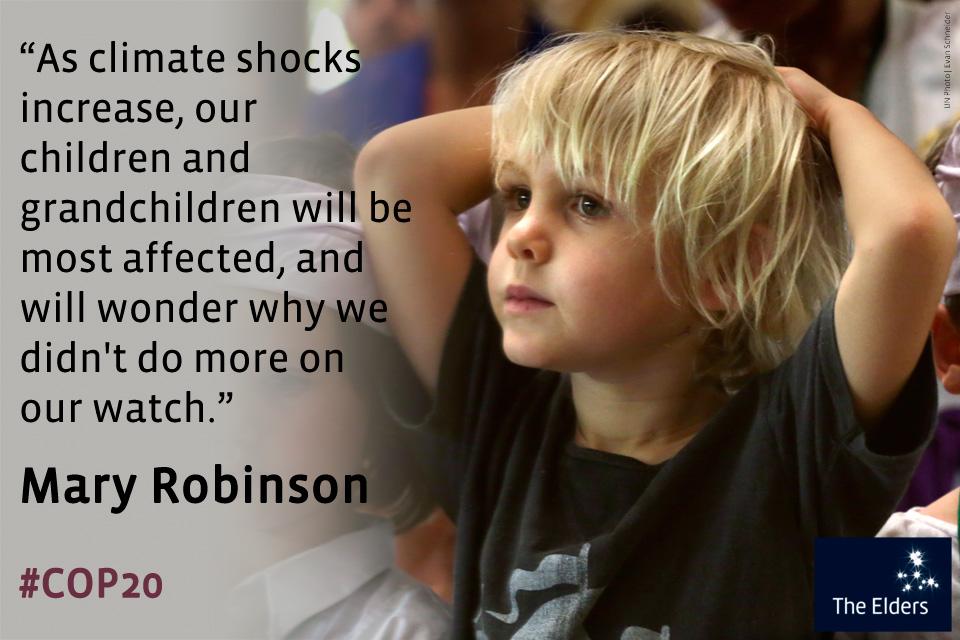
UN Special Envoy says greater urgency needed to tackle issue, Former President and UN Special Envoy on Climate Change Mary Robinson.
UN Special Envoy for Climate Change Mary Robinson has said that 2015 will be a crucial year for climate change.
She said December’s UN conference in Paris will offer an opportunity to set binding climate targets that will be critical the world’s development goals.
The World Economic Forum in Davos, the former President of Ireland said that there needed to be a greater urgency around tackling climate change this year.
“I follow the science very closely. We have very little time left. We are the last generation to be able to do something about climate, and the first generation to understand how serious it is.”
Mrs Robinson participated in a private climate change discussion forum in Davos on Friday alongside businessman Richard Branson and other senior business and civic society leaders. The forum was organised by Bteam, a non-profit initiative which brings together business leaders with a commitment to sustainable development and climate change targets.
Speaking following the meeting, Mrs Robinson said that Davos offered a good opportunity to highlight climate and development issues.
“Davos brings together business leaders, political leaders, civil society leaders and faith leaders,” she said. “Unusually in this meeting there was a common purpose. The business leaders are going to share what they’re doing, the civic society leaders are going to share their ideas and we’re going to cross-message.”
Asked about the role business could play in the fight against climate change, Mrs Robinson, who chairs the Mary Robinson Foundation- Climate Justice centre, said that there was already significant buy-in from the business community.
“I think there are a very significant number of business leaders who are way ahead of politicians at the moment in understanding the climate issue, and understanding that you can’t do business in a climate-conflicted world and that’s the way they see it.”
Mrs. Robinson also pointed out that the session had been co-chaired by three women – herself, Christiana Figuerafrom Costa Rica, who is executive secretary of the United Nations Framework Convention on Climate Chang and Nigerian-born Amina J Mohammed, the special advisor to the UN Secretary general on post-2015 development goals. “Women are still not very present in Davos so I think we sent a good signa,” she said.
Climate change has emerged as a major theme on the agenda of the World Economic Forum in Davos in recent years, thanks to the participation of high-profile campaigners such as former US vice-president Al Gore and Matt Damon, who last year addressed the forum on the challenges surrounding the provision of clean water globally.
Speaking at a session on Saturday, Mexican chemist Mario Molina – who won the Nobel Prize for his research on the impact of CFC’s on the ozone layer – said scientists needed to do more to communicate the threat of climate change. Mr Molina also said that corporates should be fined for their emissions.
Tackling climate change also featured in the key-note speech from French president Francois Hollande, who will host the global environment conference at the end of the year. He urged business leaders to contribute to a fund to fight climate change on Friday.
Outlining the impact of increasing CO2 levels on temperature in a key-note address, climate change campaigner and former US vice-president Al Gore, said the average global temperature has increased dramatically in the last decade, giving rise to extreme weather events. “The cumulative amount of man- made global warming pollution now in the atmosphere traps as much extra heat energy every day that would be relied by 400,000 Hiroshima class atomic weapons going off every day,” he said.
He said that 14 of the 15 hottest years measured had been in the first 14 years of the 21st century, with 2014 being the hottest year on record.
New Horizons probe eyes Pluto for a historic encounter


When it gets to Pluto, the New Horizons probe will have a packed schedule of observations
A Nasa probe is to start photographing the icy world of Pluto, to prepare itself for a historic encounter in July.
The New Horizons spacecraft has travelled 5bn km (3bn miles) over nine years to get near the dwarf planet.
And with 200m km still to go, its images of Pluto will show only a speck of light against the stars.
But the data will be critical in helping to align the probe properly for what will be just a fleeting fly-by.
Pluto will be photographed repeatedly during the approach, to determine the probe’s position relative to the dwarf planet, explained Mark Holdridge, from the Johns Hopkins University’s Applied Physics Laboratory (JHUAPL) in Baltimore.
“We then perform a number of correction manoeuvres to realign our trajectory with the reference trajectory, thus ensuring we hit our aim point to travel through the Pluto system,” he said.
Any initial correction is likely to be made in March.
The Pluto system has five known moons. Others may be discovered in the coming months
When New Horizons arrives at Pluto it will be moving so fast – at almost 14km/s – that going into orbit around the distant world is impossible; it must barrel straight through instead.
One complication is that the seven different instruments aboard the spacecraft need to work at different distances to get their data, and so the team has constructed a very elaborate observation schedule for them all.
But what this means is that very precise timing will be required to make sure the flyby runs smoothly.
The closest approach to Pluto is set for around 11:50 GMT on 14 July – at a miss distance of roughly 13,695km from the surface.
Mission planners want the exact timings nailed to within 100 seconds. New Horizons will know then where and when to point the instruments.
Dwarf Planet Pluto – Demoted but undiminished
Hubble’s best is a synthetic composite of multiple views. What are those shapes?
For people who grew up with the idea that there were “nine planets”, this is the moment they get to complete the set.
Robotic probes have been to all the others, even the distant Uranus and Neptune. Pluto is the last of the “classical nine” to receive a visit.
Of course, this 2,300km-wide ice-covered rock was demoted in 2006 to the status of mere “dwarf planet”, but scientists say that should not dull our enthusiasm.
The dwarfs are the most numerous planetary class in the Solar System, and Nasa’s New Horizons probe is one of the first opportunities to study an example up close.
The first set of navigation pictures may not be anything special, but by May, the probe will be returning views of Pluto that are better than anything from Hubble. Come July, the view should be spectacular, said Andy Cheng, the principal investigator on the probe’s main camera, which is called LORRI.
As Rebecca Morelle reports, even the Hubble Space Telescope could only capture blurry images of Pluto
“The most recent surprise we had was with the Rosetta mission. Hubble had made a ‘shape model’ of Comet 67P but no-one expected it to look like a rubber duckie,” he told BBC News. “I am more than hopeful that we will get similar surprises with New Horizons – it’s what we should expect.”
Those surprises could include yet more moons (five are currently known) and possibly even rings like those seen around some of the bigger planets.
Pluto is currently 5bn km from Earth. It has taken New Horizons more than nine years to get to the dwarf’s doorstep.
Once the flyby is complete, the probe will be targeted at an even more distant object in the Kuiper Belt – the name given to the icy domain beyond the main planets. Scientists think this region of space may contain many thousands of Pluto-like objects, some of which may even rival Mars and Earth in size.
The first optical navigation images should be back on Earth by Tuesday at the latest. They will show Pluto with its largest moon, Charon.


