Pages

Showing posts with label Marie Fleming. Show all posts

Tuesday, December 24, 2013

Donie's Ireland daily news BLOG Tuesday

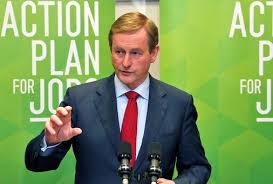
Taoiseach Enda Kenny supports cutting income tax for middle-income families

 Tax cut 

Scope for reduction will not be clear until the budget, says Enda Kenny

Taoiseach Enda Kenny has expressed support for reducing income tax on middle-income families but cautioned that the timing will depend on the state of the Irish economy.
Tánaiste Eamon Gilmore and Minister for Finance Michael Noonan have already backed the notion of reduced taxes on middle-income earners.
In a Christmas interview, Mr Kenny said the scope for tax cuts would not be known until much closer to the next budget in October 2014.
“There will be no income tax increases in the next budget. That is consistent with the programme for government. The scope for any income tax reductions, which I have seen commented on, will not be known until much closer to the budget and they depend upon growth rates and job opportunities,” Mr Kenny said.
Flexibility
He said that whenever room for the required flexibility emerged, action would follow on income tax as well as jobs.
“The priority will be to reduce the very high tax rates faced by families on middle incomes,” said Mr Kenny.
He said the Government expected to get a report by April from a specially established advisory group on tax and social welfare. “That’s likely to focus on family income supplement, on child income supports and rent supplements, and on barriers faced by part-time workers moving into full-time employment,” he added.
‘Relentless push’
Mr Kenny repeated his view that in 2014 he wanted to see a “real relentless push” by the Government on jobs.
“I’ve told Ministers that. I expect all Ministers to come forward now with their own detailed plans with the structure of the medium-term economic plan. We will do that in the new year. There will be a special Cabinet meeting on jobs by end of January, early February. And I want to drive that on so that we focus on helping Irish business to grow and to export more.”
He said he hoped to open 31 new local enterprise offices around the country next year.
“These are the revamping of the local authority system which will provide, hopefully effectively, the sort of one- stop shop for people who have ideas about business or want to form a company, to find out what assistance may be available to them.”
He also said he hoped to attend at the new Intreo offices being opened by the Department of Social Protection to help people find work.
“I actually think, having seen all of this over the years, that this is an initiative which is going to pay dividend. I have seen some of the impact from the group meetings they hold with people, where they ask what you did, your experience, what you didn’t do, what you’d like to do, how you would want to make a contribution,” said Mr Kenny.
“It is about motivating people who have been in the rut of unemployment for some time to get them out of that, in the knowledge that they are respected for the contribution they can make.”

Marie’s Fleming parting message to her family “I’m not frightened”

 
Partner Tom Curran with Marie’s son Simon and daughter Corrinna at the funeral of Marie Fleming at the Church of the Holy Trinity in Castlemacadam,

Right to-die campaigner Marie Fleming penned a final letter of goodbye that was read out at her emotional funeral.

In the note revealed by her daughter Corrina, Ms Fleming thanked her family and friends and said: “I’m not frightened. There is so much to say, and so little time to say it.”
Marie, who died in the arms of her partner Tom Curran in the early hours of Friday, also thanked her legal team for helping her fight for the right for Mr Curran to help her die.
“It is better to have tried and failed than never to have tried at all,” she wrote in the note read to mourners at the funeral in Co Wicklow.
She also left instructions for her “beautiful” children Simon and Corrina.
SPECIAL: She wanted them to think of their own futures and her young grandchildren, and to “guide these seven beautiful stars through life”.
She furthermore had a special message for Mr Curran, who quit his job to act as her full-time carer when the multiple sclerosis she was diagnosed with in 1986 tightened its grip.
“Thank you for loving me, for carrying me, for caring for me, for making sure my voice was heard,” she wrote.
“And if you waver, know that I’m in your heart and walk about the beautiful garden we made together.”
Ms Fleming had meticulously planned her funeral. As requested, she was laid to rest in a simple wicker coffin, and the mass, which was celebrated by family friend Canon George Butler, was shaped to reflect her 59 years of life.
There were flashes of defiant humour – her coffin was brought into the church to the sound of Come On Eileen by Dexy’s Midnight Runners – Eileen was her middle name – and carried out to I Will Survive by Gloria Gaynor.
SONGS: Her friend, Mary Graham, sang a mixture of hymns , Christmas carols and songs including Marie’s favourite, Little Drummer Boy.
And seated in the front pew, her son Simon was wearing a red Christmas jumper – Marie had requested that her family avoid wearing black
Mr Curran painted a picture of his partner’s remarkable courage in her final days.
“She had strength and determination beyond belief,” he said. “She died in my arms – she died a peaceful death in her own home. Unfortunately it was dark so she couldn’t look out on the garden.”

Archbishop Martin says action is needed to halt Ireland’s emigration exodus


Diarmuid Martin Archbishop of Dublin has said there needs to be greater action on emigration, as families will have an “empty chair” at the kitchen table this Christmas.

He said Irish society is right to miss its emigrants at this time of year, because they should never have had to leave here  in the first place.
He said companies need to create opportunities for young people.
“Many more big firms should be looking at that and trying to see that there are apprenticeships available to young people,” he told the Herald.

“MOST YOUNG PEOPLE WANT TO WORK.”

The Archbishop also warned that young people who find themselves out of work for a long period of time are “the most vulnerable”.
Referring to the Europe-wide context, he said high youth unemployment wasn’t just a problem for Ireland.
The Archbishop said he felt particularly for those families who would have an “empty chair” at the kitchen table this year.
EDUCATION: Acknowledging that young emigrants might be enjoying their Christmas in places such as Australia and Canada, the Archbishop said: “Their parents will miss them and we should miss them – because they shouldn’t have had to emigrate.”
The Archbishop said other areas needing investment were education, social protection and the health system.

Irish retailers say Christmas spend for this year is down on 2012


Cautious consumers believed to be holding on to shop at reduced prices in sales

Spending on Christmas shopping will be down this festive season, according to Retail Excellence Ireland.
Spending on Christmas shopping will be down this festive season, according to retailers.
Retail Excellence Ireland claimed customers are being cautious and keeping their cash for the sales, while adverse weather in recent weeks has also impacted footfall.
The organisation’s chief executive David Fitzsimons said retailers are preparing to reduce prices by upwards of 70 per cent in the sales “in a bid to convert stock to cash”.
 “Having contacted over 300 leading retailers nationwide over the past few days it is disappointing to confirm that retail sales are likely to be down marginally against Christmas 2012,” he said.
“While consumers might have a little more discretionary income than this time last year, even with cash in our wallets we have become habitually frugal and discerning.
“It would seem that six years of cautious spending behaviour has become a hard habit to break.”
Mr Fitzsimons said the retail industry was bullish entering the festive season due to the rescheduling of Budget 14 to October, a return to economic growth and the departure of the troika.
“Unfortunately these positives did not impact on spending in the run up to Christmas 2013,” he continued.
“Instead customers remained cautious and retailers responded with significant discounts.”
He said the residential property tax also damaged consumer sentiment and dampened Christmas spending, along with the weather.
Last week Allied Irish Bank (AIB) customers were unable to withdraw money from some ATMs because they were mistakenly registered as being over their daily limit.
“What this means is that retailers are carrying significant stock levels into the sales period,which can only mean one thing — exceptional value for the Irish consumer,” he added.
“It is likely that the sales period will be one of the best on record.
“Retailers have not sold through on significant lines of stock and this will be priced to sell over the period of the sales.”
Mr Fitzsimons said the Irish customer has never had it this good.
“Retailers are preparing to reduce prices by upwards of 70% in a bid to convert stock to cash,” he added.

What’s in store for Cyber-Security in New Year of 2014

  
As the year draws to a close, there is a lot of discussion about what 2014 holds in store for information security. Will the good guys start winning against the bad guys? Have we learned the lessons of 2013? Will we see happier and brighter security days ahead?
It’s fun to look into the crystal ball and make guesses on what may be coming in the year ahead. We do it for fun, like Gravity edging out 12 Years a Slave for the Best Picture Oscar, and the Broncos winning the Super Bowl. In the world of information security, predictions provide insights into what people are worried about and areas businesses are going to invest in. If done right, predictions can be thought-proving and help make decisions about how best to improve our security.
Vague predictions aren’t useful, especially the ones that are just recycled from year to year. Examples include claims that the volume of mobile malware will increase, that there will be more attacks against critical infrastructure, and the number of state-sponsored attacks and cyber-espionage will grow. Some are unhelpful, such as the ones claiming a trend will continue. Yes, attackers will keep using social engineering to target victims, and we will see a lot of rain in the Northeast in April.
Security Watch received hundreds of predictions from security experts addressing a wide array of topics, from data centers to consumer electronics, advanced persistent threats (APTs) to distributed denial of service attacks (DDoS), cloud computing to mobile payments, and software to social engineering, just to name a few. We sifted out the generic, the ho-hum, and the “things will stay the same, just worse” predictions and identified a few gems in the following areas: attack targets, Internet and regulation, mobile security, online payments, and Internet of Things. Check back over the next few days and see what we think are important for 2014.
New Methods, Targets
New technologies will pose new security risks. For example, the popularity for 3D printing means it will become easier to create physical objects to use in attacks, said TK Keanini, CTO of Lancope. Consider the kind of damage a smooth-talking scammer with an access badge can do. Social engineering and 3D printing can be a dangerous combination in 2014.
This isn’t really a prediction, but rather a certainty: Attackers will step up attacks against unsupported software, such as Java 6 and Windows XP. Security experts warn that cyber-criminals are crafting attacks targeting vulnerabilities in Windows XP and will unleash them after April 8, when Microsoft officially ends support for the 12-year old operating system. Tim Rains, director of Trustworthy Computing at Microsoft doesn’t pull any punches. “More Windows XP-based systems will be compromised,” he said.
Perhaps people will abandon XP in the first few months of 2014? Don’t hold your breath. A little under 7 percent of enterprise users and 22 percent of individuals and small business users will still be running Windows XP come April, according to estimates provided by Wolfgang Kandek, CTO of Qualys.
Data Breaches
Trend Micro anticipates “one major data breach will occur every month next year.” That doesn’t seem like a stretch since “major data breach” is subject to interpretation. It can mean thefts of intellectual property such as source code or sensitive documents, ala Adobe or Edward Snowden. Perhaps we mean a large number of customer records compromised. Or a large service provider will be breached. A high-profile site, such as the Healthcare Exchange, may be compromised. I wonder if Trend Micro is underestimating this number.
Offensive Security Will Gain Acceptance
Even as ethical and legal debates continue, acceptance for “offensive security” and “active defense” will grow, said Michael Callahan, vice-president of security product marketing at Juniper Networks. Organizations will adopt active defense methods such as intrusion deception, where security teams act disrupt and foil cyber-attacks as they are happening. Attribution—identifying who the cyber-perpetrator is—will be important but there will be mistakes where the wrong person is accused of launching attacks.  

American Astronauts make rare Christmas Eve spacewalk


Astronauts Make Rare Christmas Eve Spacewalk

Two US space station astronauts ventured out on a rare Christmas Eve spacewalk, hoping to wrap up urgent repairs to a cooling system.
Astronaut Mike Hopkins on the robotic arm moving a spare pump during a spacewalk outside the International Space
Two space station astronauts ventured out on a rare Christmas Eve spacewalk Tuesday, hoping to wrap up urgent repairs to a cooling system.
It was the second spacewalk in four days for U.S. astronauts Rick Mastracchio and Michael Hopkins, and only the second Christmas Eve spacewalk in NASA history.
NASA ordered up the spacewalks to revive a critical cooling loop at the International Space Station. All nonessential equipment had to be turned off when the line conked out Dec. 11, and many science experiments halted.
Messrs. Mastracchio and Hopkins removed a faulty ammonia pump during Saturday’s outing. On Tuesday, they worked to install a new pump 260 miles above the planet.
“It’s like Christmas morning opening up a little present here,” Mr. Mastracchio said as he checked his toolkit. Later, as he worked to remove the spare pump from its storage shelf, he commented: “Now it really feels like I’m unwrapping a present.”
Standing on the end of the station’s main robotic arm, Mr. Hopkins clutched the 780-pound, refrigerator-size pump with both hands as he headed toward its installation spot, and then slid it in. An astronaut working inside, Japan’s Koichi Wakata, gingerly steered the arm and its precious load.
“Mike Hopkins taking a special sleigh ride on this Christmas Eve,” Mission Control commentator Rob Navias said as the space station soared over the Pacific.
Mission Control in Houston was in a festive mood, despite the gravity of the situation. Tabletop Christmas trees, Santa dolls and red Santa caps decorated the desks.
NASA’s only previous Christmas Eve spacewalk occurred in 1999 during a Hubble Space Telescope repair mission.
But NASA’s most memorable Christmas Eve was back on Dec. 24, 1968. Apollo 8 astronauts read from Genesis, the first book of the Bible, as they orbited the moon on mankind’s first lunar flight.
Space station managers considered waiting until January for the repair spacewalks, so an unmanned rocket could blast off with supplies from Virginia. But flight controllers were unable to patch the cooling line by remote control, and the orbiting outpost was considered in too vulnerable a state to put off the spacewalking repairs. The delivery mission was bumped, instead, to January.
A bad valve in the ammonia pump caused the breakdown.
Another team of spacewalking astronauts installed that pump just three years ago, and engineers are perplexed as to why it didn’t last longer. NASA hopes to salvage it in the years ahead.
The 2010 replacement required three spacewalks because of the difficulty in removing pressurized ammonia fluid lines. This time, NASA reduced the pressure and the task was simplified, allowing the astronauts to get ahead Saturday. Although three spacewalks were scheduled this time around, Messrs. Mastracchio and Hopkins’ advance work allowed NASA to squeeze everything into two, barring any problems Tuesday.
The second spacewalk was supposed to take place Monday, but was delayed a day to give Mr. Mastracchio time to switch to another suit. He inadvertently hit a water switch in the air lock at the end of Saturday’s excursion, and a bit of water entered his suit, making it unusable this week.
During the rest of the spacewalk, however, the suits remained dry. Last July, an astronaut almost drowned when water from his suit’s cooling system flooded his helmet. Makeshift snorkels and absorbent pads were added to the suits as a precaution. Midway through Tuesday’s spacewalk, no water leakage had been reported.
A Moscow-led spacewalk, meanwhile, is set for Friday. Two Russian crew members will install new cameras and fresh experiments outside.

Thursday, November 28, 2013

Donie's Ireland daily news BLOG

Taoiseach Kenny wants to visit Marie Fleming


Taoiseach Enda Kenny wants to meet terminally ill multiple sclerosis sufferer Marie Fleming in her home, her partner has revealed.

The right-to-die campaigner had called on the Taoiseach and other legislators to see how she lives in a bid to get them to pass laws on assisted suicide.

Her partner Tom Curran held a “good frank conversation” with Mr Kenny for an hour after he previously rejected the possibility of legislation on the controversial issue.
“She (Marie) wants people to understand her point of view and the way she lives and then make the decision themselves,” said Mr Curran outside Government Buildings.
“So it’s from that point of view that she is saying ‘come and live my life’ not necessarily come and visit me.
“But he did express a wish to come and see her and he’d be more than welcome.”
Ms Fleming, 59, who lost a Supreme Court challenge earlier this year to end her life with assistance, is wheelchair bound and can only move her head.
She lives in constant pain, cannot swallow and suffers choking sessions which she fears will eventually kill her.
Mr Curran – who said his partner has plenty to live for at the moment – faces up to 14 years in jail if convicted of helping her to die.
The meeting with Mr Kenny was arranged before health chiefs were criticised for forcing the couple to prove Ms Fleming’s sickness to have a medical card renewed.
Mr Curran said the Taoiseach also felt the incident had been deplorable.
But the carer and former IT worker said he accepted an explanation that the issuing of medial cards was now centralised through a computer system and no longer personally at a local level.
“The human element hasn’t been put in to it,” said Mr Curran.
“But the thing that infuriated me so much about it was that when media did get hold of it the problem seemed to be resolved.
“I had made several phone calls and all I was getting was numerous letters and the ridiculous situation of being asked to verify Marie’s condition.
“Why couldn’t they have responded to my phone calls?”
He said the couple – who survive on her disability benefit and his carer’s allowance – knew she would eventually get a new card but feared they would not be able to pay for the 30 plus tablets a day Ms Fleming takes when her current card expired at the end of the month.
She was one of thousands of sick people being assessed for eligibility for free health care in a cost-saving crackdown.
Mr Curran said found Mr Kenny “a very understanding man” during their meeting to discuss his views on assisted suicide.
He said they both had differing views, but he understood Mr Kenny’s concerns over safeguards.
“Everybody is entitled to their own opinion and he has an opinion,” he said.
“He is in a position where he has to legislate and where he has to think about everybody else and the whole issue that comes up every time is thing of safeguards.”
Mr Curran has put together a working group to examine possible legislation and safeguards in other countries where assisted suicide is permitted.
“No safeguard going to be completely fool proof,” he added.
“There are going people who will abuse, there’s no doubt about that.
“But for the small number of people that that will happen I don’t think people like Marie and other people, for instance we had eight people travel to Dignitas to be helped to die from Ireland, so it’s obviously something people do want.
“Everybody we speak to is in favour.”

Cesareans births are higher among Irish private patients


Private patients twice as likely to have scheduled caesarean, study of Irish hospital patients finds

A study of more than 30,000 women who gave birth at an Irish hospital found that private patients were more likely to have a C-section or a surgical delivery
)Pregnant women with private health care are twice as likely to have a scheduled caesarean birth, according to a new study.
A study of more than 30,000 women who gave birth at an Irish hospital found that private patients were more likely to have a C-section or a surgical delivery with vacuum or forceps than those whose treatment was publicly funded.
Although women with private health care are generally older, and therefore at higher risk of complications in childbirth, the disparity between the two groups was not fully explained by differences in their medical condition, researchers said.
It was not clear whether the higher rate of operative deliveries was driven by patients or doctors but it “seems quite likely that private patients are provided with greater choice”, they added.
The researchers, from Trinity College Dublin, studied data on 5,479 private patients and 24,574 publicly funded patients at the same Irish hospital to determine whether private care results in greater use of expensive procedures by doctors.
Caesarean deliveries and formula feeding linked to lifelong diseases:
Private patients were on average older, wealthier and better educated than publicly         funded patients, and were less likely to be single, childless, to have had an unplanned pregnancy or to have booked late for obstetric care.
Although they were less likely to have a medical disorder, private patients were also more likely to have had fertility treatment, problems with miscarriages, or had a previous stillbirth or child who died in infancy.
Results published in the BMJ Open journal showed that 21 per cent of private patients had a scheduled caesarean compared with nine per cent of public patients.
The difference was particularly great among women who had given birth before by C-section, while private patients were also more likely to have a surgical vaginal delivery using a vacuum or forceps.
One common argument for planned C-section is that the procedure does less damage to the pelvic floor than a natural birth, but the study showed that very few requests of this type were made.
Researchers said that older age and higher income among private patients could have played a part, while older and better educated women may also be more influenced by the fact that many obstetricians choose scheduled caesarean section for themselves.
They said the study “highlighted important differences in operative delivery rates that raise questions about equity.”
American studies have suggested that private health care can result in patients being over treated because of financial incentives which reward inefficiency.
Private accommodation charges are estimated to generate up to 20 per cent of the hospital budget in Dublin Maternity Hospitals, and changes to UK health policy mean English hospitals will now be allowed to generate up to 49 per cent of their income from private hospitals.
The researchers wrote: “One would expect that every woman, irrespective of the funding source, is managed in a way that results in the best possible outcomes for mother and baby.
“Although speculative, it seems quite likely that private patients are provided with greater choice in relation to a scheduled caesarean section. It is debatable whether this is actually in the woman’s best interest, particularly when it comes to the next birth.
“What does need to be addressed is whether higher rates of scheduled caesarean sections among private patients create access issues for medically indicated caesarean sections, and whether these patients place a disproportionate burden on the service in the postoperative period.”

Many five-year children in Ireland are overweight or obese


Economic background and amount of ‘screen-time’ linked with poor eating

Children who spent three or more hours in front of a screen were considerably more likely to consume unhealthy foods more often and five-year-olds from more socially disadvantaged families were found to have higher levels of daily screen-time
One in five five-year-olds is either overweight or obese, according to findings from the Growing Up in Irelandlongitudinal study published today.
The latest findings represent the results of interviews with the families of 11,100 five-year-olds, previously interviewed in 2008 and 2011. The interviews were carried out between March and September this year.
The problem of obesity was first identified when the children were three years old and continues to be a cause for concern. Girls are more likely than boys to be overweight.
Fifteen per cent of the children are overweight and 5 per cent are obese.
Some 39 per cent of those who were overweight at three years remain so at five with 11 per cent moving into the obese category while 38 per cent of those who were obese at three remained so at five.
A child’s socioeconomic background continues to be associated with being overweight or obese – both occur more frequently among less advantaged families.
Nine per cent of children whose mother had a Junior Certificate or less were in the obese range compared with 4 per cent of those whose mother had a degree.
The study found that the average five-year-old consumed about 1,500 calories per day while children from lower income groups consumed about d 23 per cent more calories on average each day.
The amount of “screen- time” the children engage in – hours spent each day in front of any type of screen such as TV, smartphone, computer – is associated with poorer eating habits and higher levels of obesity.
Children who spent three or more hours in front of a screen were considerably more likely to consume unhealthy foods more often and five-year-olds from more socially disadvantaged families were found to have higher levels of daily screen-time.
Prof James Williams, research professor at the ESRI and principal investigator of the Growing Up in Ireland study, said the issue of obesity needed to be addressed.
“In the main our five-year- olds are in good health. However, the overweight and obesity issue is a major one. If you have a child who is manifesting these trends at this stage of their lives the chances are they have a much higher probability of sustaining that later in life into adulthood and the effects of that are felt in a number of different areas,” he said.
“The child’s immediate wellbeing is affected, their sense of self-esteem can be adversely impacted upon and their peer relationships affected. Into later life you start to pick up other issues – cardiovascular and respiratory problems and a higher chance of type 2 diabetes.”
While the study found that 98 per cent of the five-year-olds were in good health, Prof Williams said it was important to remember the 2 per cent who were not.
The number finding it difficult to make ends meet financially has more than doubled since the families were first interviewed five years ago at the onset of the recession.
Prof Williams said the fact that one in four parents would not have been able to afford to send their child to preschool were it not for the free preschool scheme was significant.
The study found that the majority of parents reported their children had adjusted well to starting school with 84 per cent of them looking forward to going to school more than once a week. Girls were more positive about school than boys.
Most parents have a positive relationship with their five- year-olds, scoring very highly on positive aspects of parent- child relationship scales and being in the lower ranges of scales measuring parent-child conflict.
The Growing Up in Ireland study is funded by theDepartment of Children and Youth Affairs and conducted by researchers led by the Economic and Social Research Institute and Trinity College Dublin.

Wednesday, November 27, 2013

Donie's Ireland daily news BLOG Tuesday

Irish Jobs growth rate speeds up as employment rises by 3.2% in third quarter


Unemployment in Irelnd fell by 12.8% or 41,700 in the year since the third quarter of last year

Minister for Social Protection Joan Burton said there were still far too many people out of work, and that tackling unemployment remained the Government’s number one priority, but said the figures demonstrated steady progress.
The rate of employment growth accelerated during the third quarter of 2013, according to the latest figures from the Central Statistics Office.
There was a year-on-year increase in employment of 3.2 per cent, or 58,000, for the third quarter of this year as compared with the same quarter last year, according to the Quarterly National Household Survey results. Total employment rose to 1,899,300.
The 3.2 per cent year-on-year rise compares with an increase of 1.8 per cent for the previous quarter, 1.1 per cent for the first quarter and 0.1 per cent for the last quarter of 2012. A comparable rate of increase in employment was last seen at the end of 2007, Brian Ring of the CSO told a media briefing yesterday.
The household survey figures are the official or definitive labour force estimates for the Irish economy.
Unemployment fell by 12.8 per cent, or 41,700 in the year since the third quarter of 2012, reducing the total number of people out of work to 282,900.
The comparable percentage fall for the second quarter was 6.9 per cent. The preceding quarter recorded an even higher year-on-year rate of decline, of 9.3 per cent, but the two quarters prior to that recorded falls of 6.1 per cent and 1.1 per cent, making for a general trend towards accelerating fall-off in unemployment.
Long-term jobless: The numbers in long-term unemployment fell at a faster rate than did the numbers of unemployed overall, while the rise in full-time employment was greater than the rise in part-time employment.
Minister for Social Protection Joan Burton said there were still far too many people out of work, and that tackling unemployment remained the Government’s number one priority, but said the figures demonstrated steady progress.
“Especially important is the fact that the majority of people returning to work are returning to full-time employment,” she said.
David McNamara of Davy said the data provides further hard evidence the Irish economy bounced back in the second half of this year. He said he expected the strong rise in employment to drive consumer spending in the second half of this year and into 2014, causing Davy to leave its above-consensus forecasts for gross domestic product growth unchanged at 1 per cent in 2013 and 2.5 per cent in 2014.
If anything, our current unemployment forecasts of 13.7 per cent in 2013 and 12.8 per cent in 2014 now look too pessimistic, so we would expect to revise down those estimates.
SME criticism: Similar positive responses were issued by other observers, though Isme chief executive Mark Fielding said the increase is “needlessly slow” and if the Government would only listen to the owners of small and medium-sized enterprises, more jobs would be created.

HSE has lesson’s to learn from case of Marie Fleming medical card,

  says Taoiseach Kenny


KENNY SAYS MINISTER FOR HEALTH HAS THREE WEEKS TO CONSIDER PLAN FOR HEALTH SERVICES

Sinn Fein Leader Gerry Adams said Ireland was “the worst small country in the western world in which to be sick.”
Taoiseach Enda Kenny has said he accepts the Health Service Executive (HSE) has a lesson to learn following the difficulty terminally-ill multiple sclerosis sufferer Marie Fleming had in retaining her medical card.
He said there should be a simple and effective way of dealing with a person who was terminally ill. “There is a lesson to be learned in there by the HSE in the sense that there is a terminally ill person . . . and that is, unfortunately, not going to change,” he added.
“Therefore, there has to be an effective and compassionate and understanding process of the continuation of the card.”
Mr Kenny said it was something “that, unfortunately, in this case, points out where a change must occur in the process of renewal so that people do not have to deal with the verification of an illness that is terminal”.
He added that while he did not have the details of the case, his understanding was that the medical card was issued, not on a discretionary basis, but on entitlement on income and medical grounds.
“So it is a case of the renewal of an ordinary medical card,” he added. Mr Kenny said a person did not become “unterminally ill”.
‘Outrageous and inhuman’
The Taoiseach was replying to Fianna Fáil leader Micheál Martin, who said Ms Fleming’s case was known to the House and the entire country.
“Her condition is well known: she is terminally ill,” he added. “Yet she did not get her medical card automatically renewed.”
Independent TD John Halligan said what happened was “outrageous and inhuman’’, adding that the Taoiseach knew the details of the case.
Mr Kenny said that if he had listened correctly to Marie’s partner, he was saying he was not objecting to the renewal process. The fact was that it appeared as if there was contact on a number of occasions from the HSE about the verification of her medical condition.
Mr Halligan said the HSE knew the facts. “That is outrageous,’’ he added. “She is critically ill.”
Mr Kenny said that once it was verified that a person had a terminal illness, whatever that illness was, there should be an understanding how to put in place an effective renewal process which took pressure off the person.
Sinn Féin leader Gerry Adams said the 2014 national service plan delivered by the HSE to Minister for HealthJames Reilly included almost €700 million in cuts and there was speculation that the figure could be closer to €1 billion.
Mr Adams said Ireland was “the worst small country in the western world in which to be sick.”
“We were told at the weekend that patients with breast, bowel and cervical cancer fared worse here than in the vast majority of industrialised states from 2006 to 2011,” he added.
He said that last Friday the HSE had confirmed that 24 health agencies, including some hospitals, were paying top-ups to their managers.
“In a republic, or indeed in any decent society, citizens have a right to a first-class health service on the basis of need,” he added.
Three weeks: Mr Kenny said the Minister now had three weeks to reflect upon and consider the plan and comment on it.
“That work is already under way, so I do not want to comment any further on it except to confirm that it has been delivered,” he added.
Pressed further by Mr Adams, the Taoiseach said the Departments of the Taoiseach, Public Expenditure and Health were currently examining the plan.

Over 40,000 people in Ireland have a dangerous heart rhythm disorder

AND THEY DON’T EVEN KNOW ABOUT IT.


Only 2 per cent of us believe Atrial Fibrillation is a serious condition, yet it’s responsible for about 30 per cent of strokes.

Did you ever hear of Atrial Fibrillation? Well, you’re in good company. Three-quarters of us haven’t, according to the Irish Heart Foundation.
The condition is the most common form of heart rhythm disorder, according to the IHF, and the charity’s secured the services of former Munster and Ireland rugby stalwart Frankie Sheahan to help educate the public on the risks associated with it.
The disorder usually has no symptoms, so most people don’t know they have it. However, warning signs can include palpitations, tiredness and shortness of breath. It’s more common as people get older, and it’s estimated more than 40,000 people over 50 years old in Ireland suffer from it; most are unaware.
Diagnosed at the age of 30, Sheahan’s sporting career was thriving until he started having difficulty breathing and feeling like his heart was fluttering.
“I could feel my heart pounding and it was hard to get my breath but my immediate thought was, it will pass so get on with it,” the former hooker said.
“I didn’t want anything to interrupt my rugby career so I was very secretive about it despite having a lot of anxiety about it.”
He says the condition got worse over the next few years “as did my performances,” and after he sustained a serious neck injury at around the same time, Sheahan decided something had to change.
“Dr Gerry Fahy subsequently did a very successful ablation procedure and in hindsight, I wish I’d spoken out about my heart sooner because after the operation, I was better than ever before.”
The IHF launched a new radio awareness campaign yesterday to stress the importance of regular pulse checks to detect the condition, which causes around one in three strokes in Ireland.
The charity’s IHF is also providing a step-by-step guide for adults on how to take their own pulse on its website.
According to IHF Medical Director Dr Angie Brown “The recommended normal heart rate is between 60 and 100 heartbeats per minute but some people can have heart rates over 100″.
“You should see your doctor if you have a persistent heart rate above 120 beats per minute or below 40 beats per minute.”

New bankruptcy regime in Ireland within the week


Current bankrupts will be discharged next summer under new bankruptcy rules

The new legislation will mean bankrupts can be automatically discharged from bankruptcy in three years, down from 12 years at present
Changes in bankruptcy legislation that will reduce the length of time a person remains in bankruptcy are to be introduced within the next seven days.
Minister for Justice Alan Shatter, currently in Lebanon, is expected to sign the commencement order for section 4 of the Personal Insolvency Act 2012 dealing with bankruptcy on his return.
Three years
The new legislation will mean bankrupts can be automatically discharged from bankruptcy in three years, down from 12 years at present, although it does include a clause to require the bankrupt to pay a contribution from their income for five years in certain circumstances.
It will also increase the level of debt required to make a person bankrupt. A debtor must owe a creditor €20,000 under the new system before he or she can be forced into bankruptcy or make a petition to declare themselves bankrupt, compared with €1,900 currently.
When a High Court action for bankruptcy is being brought by an individual on their own behalf, the new legislation also requires they make a sworn statement, namely an affidavit.
Among other things, the affidavit must state that before the application for bankruptcy was made, the debtor made efforts to reach an agreement with their creditors using a personal-insolvency or debt-settlement arrangement, new schemes for dealing with insolvency available under the Personal Insolvency Act 2012.
There will also be changes to the value of assets exempted from being seized by the official assignee, a court-appointed trustee who controls the assets and deals with the creditors of a bankrupt. Household furniture or tools and equipment required for the bankrupt’s occupation up to the value of €6,000 will be exempt, a doubling of the current threshold.
Most pensions will also be exempt from being taken over by the official assignee, although if a debtor is due to receive an income from a pension for up to five years after being adjudicated a bankrupt, then that income will be taken over and distributed to creditors.
“Excessive contributions”
If a person made “excessive pension contributions” for up to three years before they became a bankrupt, the court can order the excess be paid to the official assignee and distributed to creditors.
The new legislation will also affect people who have already been declared bankrupt. Once it is under way, anyone who was declared bankrupt three years ago or more will be automatically discharged from bankruptcy next summer.

Beautiful tiny seahorses stalk their prey by stealth


The Seahorses may appear slow and awkward but they are ferocious and ingenious predators, according to a new study.

The beautiful creatures are famously bad swimmers, but they have a secret weapon to sneak up on their prey.
Their peculiar snouts are shaped to create very few ripples in the water, effectively cloaking them as they creep up and pounce on tiny crustaceans.
People don’t often think of seahorses as amazing predators, but they really are”
To their victims, seahorses are more like sea monsters, say scientists from the University of Texas at Austin.
“The seahorse is one the slowest swimming fish we know of, but it’s able to capture prey that swim at incredible speeds,” said Brad Gemmell, author of the study in Nature Communications. The dwarf seahorse may look delicate, but its snout is a lethal weapon
The prey, in this case, are copepods – extremely small crustaceans that are a favoured meal of seahorses, pipefish and sea dragons (Syngnathidae).
When copepods detect waves from predators, they jolt away at speeds of more than 500 body lengths per second – the equivalent of a 6-foot human swimming at 2,000 mph.
Deadly strike
“Seahorses can overcome one of the most talented escape artists in the aquatic world,” said Dr Gemmell.
“In calm conditions, they catch their intended prey 90% of the time. That’s extremely high, and we wanted to know why.”
Seahorses dine by a method known as pivot feeding. Their arched necks act as a spring – allowing them to rapidly rotate their heads and suck their prey in.
But this suction only works at short distances. The effective strike range for seahorses is about 1 millimetre. And a strike happens in less than 1 millisecond.
Until now it was a mystery how such apparently docile creatures managed to get close enough to their prey without being spotted.
To find out, Dr Gemmell and his colleagues studied the dwarf seahorse, Hippocampus zosterae, which is native to the Bahamas and the US.
They filmed the movement of water around the fish in 3D using holography – a technique where a microscope is fitted with a laser and a high-speed digital camera.
They found that the seahorse’s snout is shaped to minimise the disturbance of water in front of its mouth before it strikes.
Above and in front of its nostrils is a “no wake zone” and it angles its head precisely to attack its prey.
Other small fish with blunter heads, such as the three-spine stickleback, have no such advantage, the researchers found.
“It’s like an arms race between predator and prey, and the seahorse has developed a good method for getting close enough so that their striking distance is very short,” said Dr Gemmell.
“People don’t often think of seahorses as amazing predators, but they really are.”