Pages

Showing posts with label HSE. Show all posts

Friday, May 5, 2017

Donie's Ireland daily news BLOG update

‘More information now needed’ over Garda training college finances?

A Garda graduation ceremony at Templemore, Tipperary
Image result for 'More information now needed' over Garda training college finances?  Image result for 'More information now needed' over Garda training college finances?

A GARDA BOSS HAS SAID IT IS “TOO EARLY TO SAY” IF CRIMES WERE COMMITTED AMID FINANCIAL IRREGULARITIES AT THE FORCE’S TRAINING COLLEGE.

John Barrett, Garda human resources director, told a parliamentary committee he was “alarmed” when he learned about the use and transfer of public money at the Garda College in Templemore, Co Tipperary.
An internal audit by the force uncovered a five million euro surplus in bank accounts and investment policies related to the college.
Concerns were flagged over the leasing out of land and some of the money being spent on entertaining and retirement gifts.
An internal investigation by an assistant commissioner as well as an audit by in-house officials into the findings is ongoing.
Before the Public Accounts Committee, Garda Commissioner Noirin O’Sullivan said no criminality had been detected to date in the ongoing investigations.
However, when a group of senior Garda managers flanking her were asked if they agreed, Mr Barrett insisted there remained “open issues” that needed to be resolved before criminality could be ruled out.
“I think it is too early to say on several fronts,” he said.
“The audit took in total 10 weeks, the matters being dealt with went back some considerable years.
“There are several matters that are now going to be followed up.
“I think we will be in a better position to report at that point.”
Mr Barrett said he was “neither agreeing or disagreeing” with Ms O’Sullivan, and added: “I’m saying there is more information required.”
The former US multinationals human resources boss said he discovered two internal reports, from 2008 and 2010, into the financial irregularities in June 2015.
He then drew up a summary of both reports and began asking questions about the control of the Garda college.
“I was alarmed,” he said, adding that in his experience such governance and “fundamental accounting” issues would have been dealt with much quicker in the private sector.
Mr Barrett said the answers he received were unsatisfactory.

Irish managers not up to speed with our digital revolution

KINGRAM RED DIGITAL TRANSFORMATION REPORT FINDS BUSINESSES LACK VISION FOR DIGITAL FUTURE

Related image   Image result for Irish managers not up to speed with our digital revolution
The KingramRed report on the state of digital transformation in Ireland 2017 found a majority of the participants still believed responsibility for going digital lay below CEO level with IT departments.  to LinkedIn
Businesses in Ireland are “struggling to transform to meet the challenges and opportunities presented by the digital revolution”. That’s according to the 2017 KingramRed Digital Transformation Report. In the second report of its kind by the digital management consultancy, which included a wide range of Irish organisations across a variety of sectors, it was found “boards and senior management are not developing a vision of their digital future [and] leadership capabilities and awareness are not sufficiently developed in this area to drive direction and mitigate risks”.
Less than half of the organisations surveyed had established any formal vision for the future in terms of maintaining competitiveness in a digital world.
Only 53% even recognised there was any urgency to change.
Going digital?
The biggest take-home from the report, however, was that a significant majority of participants still believed responsibility for going digital lay below CEO level with IT departments. Over 60 per cent of those surveyed on management and board levels believed it was not a priority issue for the top levels – an oversight which has resulted in efforts to prepare for the looming digital transformation frequently becoming “dissipated in silos across organisations”.
The shortage of resources and skills is a serious challenge to driving forward with change
The report, which included input from Irish organisations working in finance, logistics, agriculture, food and beverage, measured companies’ awareness/use of current and emerging technologies such as AI, data analytics, robotics, algorithms and the Internet of Things (IoT).
Big data and analytics were far and away the most predominant technology already in use by organisations in Ireland, with “65 per cent already engaged and a further 20 per cent expecting to take advantage within two years”.
An early adoption plan
Robotics was one of the lowest technologies in terms of early adoption by firms, with “almost 30% per cent of organisations either actively investigating or imminently planning to assess robotic solutions”.
There was broad agreement in one area, though. Almost across the board, Irish businesses recognised the major challenge that insufficient digital skills and resources presented and identified the “shortage of skills and resources” as the greatest challenge to pursuing digital transformation.
According to the report, “the shortage of resources and skills is a serious challenge to driving forward with change. This tallies with the responses that, despite the fact that 72 per cent are investing in digital skills, only half of organisations believe that they have the skills and resources (both internally and externally) that they need to manage their digital initiatives.”

Irish Life report 44% increase in profits for Q1 2017

Image result for Irish Life report 44% increase in profits for Q1 2017  Image result for Irish Life report 44% increase in profits for Q1 2017
Irish Life has reported a 44% increase in profits for the first quarter of 2017, contributing €54m to Canadian parent Great West Lifeco’s earnings in the quarter.
Profit in the first three months of this year was up from €37.5m in the same quarter in 2016.
The business was nationalised during the crash and sold on by the Government to Great West for €1.3bn in 2013.
Since then the business has seen continues growth, and paid up more than €210m in dividends to the new owners.
Last year Irish Life expanded into the health insurance market, it bought Aviva Health and took full control of GloHealth, where it had previously held a 49% stake.
David Harney, Chief Executive of Irish Life Group, said that Irish Life’s strong performance was due, in part, to the inclusion of Irish Life Health’s contribution for the first time in the quarter, and the continued success of the company’s multi-asset investment strategies (MAPS).
“We have seen increased investment across Irish Life’s pension, investment and savings plans as investors return to the market.
There is now over €9bn invested in our multi asset strategies including €2.5bn by retail investors. Over the last 12 months the number of individual investors has grown by over 40% to 46,000 and the total value invested in Irish Life MAPS has increased by 70%,” he said.

Brendan Drumm former HSE boss questions nuns’ ownership of maternity hospital

FORMER HSE BOSS ASKS WHY HIQA ARE ‘ALLOWING A BIZARRE GOVERNANCE STRUCTURE’

Image result for Brendan Drumm questions nuns’ ownership of maternity hospital  Image result for Brendan Drumm questions nuns’ ownership of maternity hospital
Brendan Drumm, former chief executive of the HSE.
The former chief executive of the HSE Brendan Drumm has said there is no reason why nuns should want to own the planned new National Maternity Hospital.
The announcement that the new €300 million maternity hospital would be given to a Sisters of Charity-owned healthcare group met with public protest last month, and the resignation of Dr Peter Boylan from the board of Holles Street hospital.
Taoiseach Enda Kenny has said the planned new hospital at the St Vincent’s Hospital campus in south Dublin would have full clinical independence.
“In terms of ownership of hospitals, I can see no reason whatsoever why the nuns would want to own a hospital,” Mr Drumm said. “Hospitals that are invested in by the public should be owned either by a nonprofit organisation or by the public itself.”
Mr Drumm also questioned the management structure at St Vincent’s Hospital. “How can we have two boards or two management structures responsible for the care given to a woman undergoing vaginal surgery in St Vincent Hospital? I don’t believe there’s any governance structure in the world that would say that’s optimal in terms of the care,” he said.
“I believe the women of Ireland should be marching in the streets asking why Hiqa and other agencies, who have very strong governance, seem to be allowing what is a bizarre governance structure that will have two boards running what is essentially a single hospital,” he said.
Mr Drumm was speaking at the launch of Managing the Myths of Healthcare: Bridging the Separations Between Care, Control and Community by Prof Henry Mintzberg at UCD Business School on Thursday night.

Parents this is how to tell your children you’re dealing with depression and anxiety?

 Image result for Parents, this is how to tell your children you’re dealing with depression and anxiety  Image result for Parents, this is how to tell your children you’re dealing with depression and anxiety  Image result for Parents, this is how to tell your children you’re dealing with depression and anxiety
Tracey Starr (Above centre picture) is a Canadian editor and writer, but first and foremost, she’s a mom to her five-year-old daughter.

WHEN IT COMES TO PARENTS REVEALING TO THEIR CHILDREN THEY’RE DEALING WITH DEPRESSION AND/OR ANXIETY, IT’S BEST TO KEEP IN MIND THE AGE OF THE CHILD.

Tracey Starr is a Canadian editor and writer, but first and foremost, she’s a mom to her five-year-old daughter. Starr is also a parent who suffers from depression and anxiety, and chooses to openly share with her daughter what she’s going through.
To Starr, her mental illness is something she lives with every day. She told Global News in a telephone interview that she first suffered from depression as a teenager in high school and was diagnosed with anxiety in her 30s.
“I put on a brave face every day since I could remember,” said Starr. “If I were to walk around crying or have a panic attack — those aren’t things that are well accepted or understood… a lot of people don’t even know, or wouldn’t even know, that I suffer depression or anxiety.”
According to the Canadian Mental Health Association (CMHA), 20 per cent of Canadians will experience some sort of mental illness in their lifetime.
In a recent Ipsos poll, 41 per cent of Canadians born between the years of 1961 to 1981, also known as Generation X, are at “high risk” when it comes to their mental health, while 24 per cent of Baby Boomers — those born between the years of 1946 to 1964 — are at high risk.
Depression and anxiety are also things that Starr talks to her daughter about, in order to not only be honest and open with her, but most importantly, to create a dialogue when it comes to mental illness.
“If she sees me sad, she’ll ask why I’m crying,” said Starr. “And I’ll say, ‘Sometimes it’s hard for mommy to relax and put a smile on my face but I’m doing my best like I ask for you to do your best.’”
Starr also said when she talks to her five-year-old about her mental illness, she doesn’t use the word “depression” to explain what she has.
“It’s not that I don’t want to or that I’m afraid. It’s not about shame because I never ever want her to feel shame about anything. It’s more about saying it in a narrative that she’ll understand so she won’t feel frightened.”
This method Starr chooses to use to talk to her daughter about anxiety and depression is one doctors agree is the best way for parents to approach their children about the situation.
Dr. Jillian Roberts, a registered psychologist who specializes in children and adolescents, said the age of the child and their circumstances should play a big factor into how parents tell their child what they’re going through.
“A mature child who doesn’t have any major stresses could handle more information than a child who is slow to develop when it comes to maturity, or going through a crisis of their own,” said Roberts.
Roberts also says that the younger the child is, the less a parent should share. For example, a child who is in preschool or younger, wouldn’t often need to know the condition the parent is going through.
“This is a time to shelter stress, as much as possible, from your child. Parents must seek treatment and surround themselves with as much support as they possibly can,” said Roberts.
Whereas, if your child is in the middle of elementary school, they could handle a bit more information.
“You could explain that you do not ‘feel well in your mind’ or ‘in your heart.’ It will still be very important to reassure your children, stress that this is not their fault in any whatsoever, and explain that you are getting the best help available.”
Reassuring her child, said Starr, is something she does.
“I say, ‘Mommy loves you, mommy is fine. Mommy just needs a moment but everything will be ok,” said Starr. “I say that to make sure she knows everything will be ok; I need to be her example. I don’t want to frighten her — I want to educate her.”
Dr. Shimi Kang, an adult and youth psychiatrist as well as a parenting author, said using an analogy of a physical illness is also another great method to explain to children about mental illness.
For example, you could tell your child that Johnny’s asthma gets worse in the wintertime, just like how mommy and/or daddy feels better or worse during certain circumstances.
“Kids are very in tune with their parents,” said Kang to Global News. “With older kids, they may see something is wrong and have concerns. Give children some power and talk about what they’ve noticed themselves.
“[The child might say] they’ve noticed you crying a lot more or that you’re angry, and then you can say, ‘Wow, you’re right. I’ve been diagnosed with depression.’”
Kang also said it’s very important for parents to try and be confident in themselves.
“You’re the parent: it’s your job to teach your kids. If they don’t understand, don’t take it personally. Just teach them. Just like math — teach them about it.”
Dr. Oren Amitay, a Toronto-based registered psychologist, said another way to talk to your children is by using celebrities — someone kids may idolize or look up to.
“You could say, ‘So and so’ had it as well. Show them powerful people have it as well.”
Amitay also said it’s a great way for parents to be a role model to their children.
“This is a great life lesson: when you’re knocked down, show them you’re going to get back up somehow,” said Amitay. “Too many parents try to shield it. But kids internalize most things. If mommy can’t get out of bed, or daddy doesn’t smile, then the kids are going to say, ‘What’s wrong with me?’”
Amitay stressed it’s important for parents to remind their child that mental illness isn’t happening because of them.
“Reassure the child so they don’t take it upon themselves.”
In all cases, Roberts, Kang and Amitay spoke about mental illness being just as important as a physical illness, and that parents should seek support, whether from family, friends or their community, about what they’re dealing with in order to get the help they need, and to de-stigmatize mental illness.
“There needs to be more medical services,” said Roberts. “There’s a long wait list to see a specialist and sometimes, parents might be in a crisis — they can’t wait eight months to see someone.”
Starr said her advice to parents is just taking it one day at a time.
“I know it sounds silly but I always say, ‘Take baby steps. Be kind and gentle with yourself,’” said Starr. “I make sure my daughter is safe, happy, loved and surrounded by positivity and happiness. She’s my priority.”

SpaceX is to launch first homegrown satellite this year, and plans broadband network in 2019

Image result for SpaceX is to launch first homegrown satellite this year, and plans broadband network in 2019  Image result for plans broadband network in 2019

SPACEX PLANS TO LAUNCH ITS OWN SATELLITES ON FALCON 9 ROCKETS, LIKE THE ONE SHOWN HERE LIFTING OFF FROM NASA’S LAUNCH COMPLEX 39A IN FLORIDA.

SpaceX has laid out its latest schedule for the satellite broadband service it’s developing in the Seattle area, starting with the launch of a prototype satellite by the end of this year.
The ambitious plan foresees beginning the launch of operational satellites into low Earth orbit aboard Falcon 9 rockets in 2019, with the constellation reaching its full complement of 4,425 satellites by 2024.
That constellation would provide high-speed internet access to billions of people around the globe, beaming data via the Ku and Ka transmission bands to SpaceX’s laptop-sized user terminals. Another 7,500 satellites operating in the V-band could be added later to boost the network’s capabilities.
This week’s update came in testimony provided to the Senate Commerce Committee by Patricia Cooper, SpaceX’s vice president for satellite government affairs.
“SpaceX plans to bring high-speed, reliable and affordable broadband service to consumers in the U.S. and around the world, including areas underserved or currently unserved by existing networks,” Cooper said in her written testimony.
SpaceX’s Redmond office is the center for its satellite operations. (GeekWire photo by Kevin Lisota)
Her statement signals that SpaceX’s satellite development center in Redmond, Wash., is likely to be ramping up in the months ahead – which meshes with the company’s expansion of its Redmond facilities.
Although SpaceX hasn’t provided employment figures for the Redmond operation, the company’s billionaire founder, Elon Musk, has said the figure could eventually rise to 1,000. SpaceX’s website currently lists more than 60 open positions in Redmond.
Cooper said this year’s first launch of a prototype satellite would be followed early next year with a second prototype launch, followed by a demonstration period before the start of the operational launch campaign in 2019.
Each 850-pound satellite would measure about 13 by 6 by 4 feet, with 19-foot-long solar arrays, according to SpaceX’s filing with the Federal Communications Commission. Operating lifetime is estimated at five to seven years per satellite.
The relatively low orbits designated for the satellite constellation – ranging from 690 to 823 miles in altitude – would provide relatively low latency for the flow of data, which has been a significant drawback for satellite broadband.
In her testimony, Cooper urged the senators to support the FCC’s efforts to modernize its regulations for satellite systems.
For example, she noted that current FCC rules require a licensee to launch all the satellites in its constellation within six years of receiving a license. “These systems should be allowed to grow more like cellular networks, where additional assets and updated technology are deployed over time to meet increased demand,” Cooper said.
Cooper also said next-generation satellite systems should be included in any legislation aimed at beefing up the nation’s infrastructure. The Trump administration has called for a $1 trillion public-private infrastructure initiative.
SpaceX isn’t the only venture planning to put satellites in low Earth orbit to provide widescale high-speed internet access. OneWeb, a consortium with backing from Airbus, Virgin Galactic and other partners, aims to start launching satellites within the next two years.
Blue Origin, the space venture founded by Amazon billionaire Jeff Bezos, said in March that it would send up OneWeb’s satellites on its yet-to-be-built New Glenn rocket starting in 2021.
The Boeing Co. has also drawn up plans for a satellite internet system, and last month Bloomberg reported that Boeing has discussed the project with Apple. TMF Associates’ Tim Farrar went further, quoting insiders as saying that Apple was funding Boeing’s V-band satellite development effort.

Tuesday, February 7, 2017

Donie's Ireland daily news BLOG

Irish Government Ministers divided over inviting Donald Trump to Ireland?

KENNY TO GO AHEAD WITH WHITE HOUSE TRIP BUT DECLINES TO CLARIFY IF HE WILL INVITE TRUMP HERE

Image result for Irish Government Ministers divided over inviting Donald Trump to Ireland?   Image result for Irish Government Ministers

US PRESIDENT DONALD TRUMP: MINISTERS ARE AT ODDS OVER WHETHER TAOISEACH ENDA KENNY SHOULD INVITE THE US PRESIDENT TO IRELAND.

Government Ministers are divided over whether Taoiseach Enda Kenny should invite US president Donald Trump to visit Ireland.
Mr Kenny has confirmed he will proceed with his trip to the White House on St Patrick’s Day despite protest from Opposition parties.
However, the Taoiseach has declined to clarify whether he will issue an invitation to Mr Trump to come here.
Minister for Social Protection Leo Varadkar and Minister of State at the Department of Health Finian McGrath have both said they would not support such a proposal being made.
“I’m not sure what purpose it would serve,” Mr Varadkar said. “An invite will be the Taoiseach’s decision. I wouldn’t invite him.”
Minister for Jobs Mary Mitchell O’Connor and Minister for Finance Michael Noonan have indicated they would back a visit from the president.
  • Ministers at odds over inviting Donald Trump to Ireland
  • Diarmaid Ferriter: Supine pragmatism will define Irish dealings with Trump
  • Hundreds attend protest against Trump at US embassy
‘Appalling policies’
Mr McGrath, an Independent Alliance Minister, told The Irish Times: “I do not think we should invite him. His statements and policies are appalling and have to be rejected.”
Mr Varadkar questioned what purpose a visit would have, insisting he would not issue such a request.
Speaking last week, the Taoiseach declined to rule out an invitation to Mr Trump, saying that he would consider the question of an invitation when he was in Washington for St Patrick’s Day.
However, newspaper reports on Sunday said Mr Kenny had decided not to invite Mr Trump.
A Government spokesman then followed up stressing that Mr Kenny’s remarks still stood, but that the Taoiseach would be concentrating on raising the plight of illegal Irish immigrants in the United States when he meets Mr Trump.
Government sources stressed the importance of the meeting with the US president went beyond the occupant of the White House at any one time.
The Minister for Finance said an invitation should not be ruled out but insisted the timing must be right. Mr Noonan was strongly criticised when he welcomed Mr Trump to Ireland previously.
Strong links
While Ms O’Connor claimed Ireland needed to actively work to maintain the strong links with the United States. She said she fully supported Mr Kenny in his decision to travel to meet Mr Trump.
“There are over 150,000 Irish people employed in US companies here in Ireland and I would like to make sure that there is US investment into the country,” Ms O’Connor said.
“I want to see US investment so I want to see a good collaborative environment and a good collaborative relationship between Ireland and the US.”
Mr Trump had planned a visit to Ireland during the election campaign but it did not proceed.

Brexit already hitting English businesses, A UK survey finds

UP TO 58% OF RESPONDENTS FROM BRITAIN’S BIGGEST FIRMS SEE NEGATIVE IMPACT

Image result for Brexit already hitting English businesses, A UK survey finds   Image result for Brexit already hitting English businesses, A UK survey finds

“BUSINESS IN THIS COUNTRY IS ALREADY FEELING THE PAIN OF THE ECONOMIC UPHEAVAL OF LEAVING THE EU,” SAID BEN PAGE, CHIEF EXECUTIVE OF IPSOS MORI.

Business is already suffering from Brexit, according to some of Britain’s biggest companies, lending weight to a cross-party effort by MPs this week to avert the risk of the UK crashing out of the EU without a deal.
Despite a stream of positive economic data, an Ipsos Mori survey of senior executives from more than 100 of the largest 500 companies found 58 per cent felt last year’s vote was already having a negative effect on their business.
Just 11 per cent found the Brexit decision had meant a positive impact while nearly a third – 31 per cent – thought it had made no difference to their company.
“Business in this country is already feeling the pain of the economic upheaval of leaving the EU,” said Ben Page, chief executive of Ipsos Mori. “There is no sign that this is likely to ease this year.”
Company bosses have voiced concern about losing competitive advantage against European rivals if tariffs rise after Brexit, adding to the cost of producing and exporting goods.
Investors also appear to be waiting for greater clarity about the outcome of Brexit negotiations before committing funds to longer-term projects.
Theresa May will this week face a rebellion by pro-European Tory MPs who fear that she could walk away from the negotiating table in Brussels without a deal, with potentially serious effects for business.
The prime minister has said she would prefer “no deal to a bad deal”, raising the prospect of Britain leaving the EU to fall back on World Trade Organization rules, including tariffs.
Steve Baker, a Tory Eurosceptic MP, said up to 27 Tory MPs could this week back a “wrecking amendment” in the committee stage of the bill authorising Mrs May to invoke Article 50 and trigger Brexit.
The amendment would give parliament a say if Mrs May concluded that no deal was possible, in effect requiring her to go back to Brussels to seek better terms. She will order Tory MPs to oppose the measure.
For Labour, the agony over Brexit continues, with Jeremy Corbyn facing the prospect of losing two of his closest allies – Diane Abbott and Clive Lewis – if they defy him and vote against the Article 50 bill on its third reading on Wednesday.
Mr Corbyn said he had yet to decide whether to impose a three-line whip requiring Labour MPs to back Brexit, but hinted that he would show clemency to rebels in any event: “I am a very lenient person,” he told Radio 4’s The World this Weekend.
The Commons battles over Brexit have been played out against a benign economic backdrop, confounding those who predicted a downturn after a Leave vote.
The Office for National Statistics reported last month that the UK was the fastest growing economy in the G7 last year, and was not yet showing any signs of the slowdown that many economists predicted would follow the vote to leave the EU in June.
But the less rosy sentiment from business is supported by economic forecasters, with Sir Charlie Bean of the Office for Budget Responsibility and former deputy governor of the Bank of England saying last week that the strong consumer spending seen after the Brexit vote in June was likely to fall away in coming months.
Bank of England figures show that consumer borrowing growth in December slowed to its lowest in more than two years, while consumer confidence has also dipped.
Two-thirds of the 114 FTSE 500 business leaders surveyed believe the business environment will become more negative over the next 12 months, while only 13 per cent believed the opposite.
A large majority – 84 per cent – said that it was “vital” to their business that the government handled Brexit negotiations well. But half said they were not confident in the government’s ability to negotiate the “best deal possible” with the EU for UK companies.
An even larger majority – 96 per cent – was confident their business could adapt to the consequences of leaving the EU, and more than two-thirds had already taken action in response to the referendum result. A tenth were moving business outside the UK.
In terms of their priorities for the forthcoming negotiations, the business leaders said movement of labour and access to skilled labour came the highest, followed by securing free trade or retaining the single market with the EU and passporting rights.

Nurses’ union talks break down & are now likely to give notice of industrial action

Related image  Related image  Related image

TALKS BETWEEN THE HSE AND NURSES’ UNIONS THAT HAVE BEEN ONGOING FOR THREE WEEKS ENDED THIS EVENING WITHOUT AGREEMENT.

Now, unions will meet to discuss potential industrial action.
The INMO told Health Service management that proposals have to be “radically improved” before any further discussion can take place.
The talks were focused on staffing, recruitment and retention.
They were aimed at restoring the current nursing/midwifery workforce to “at least 2007 levels”.
  1. In a statement issued to the media, the INMO said HSE management,
  2. “Refused to allow Directors of Nursing and Midwifery fill all posts which become vacant during 2017;
  3. Refused to guarantee that sufficient funding would be made available to allow the permanent employment of all Irish trained nurses and midwives graduating in 2016/17; and,
  4. Refused to guarantee replacement of maternity leave vacancies on a one for one basis.”

A 17% rise in complaints to the Food Safety Authority of Ireland

Image result for 17% rise in complaints to the Food Safety Authority of Ireland  Image result for live insects# complaints to the Food Safety Authority of Ireland  Image result for 17% rise in complaints to the Food Safety Authority of Ireland

A LIVE INSECT IN A DESSERT, A HUMAN NAIL IN A TAKEAWAY MEAL, AND A CIGARETTE BUTT IN A BAG OF CHIPS WERE AMONG THOUSANDS OF COMPLAINTS MADE BY THE PUBLIC TO THE FOOD SAFETY AUTHORITY.

New figures from the FSAI show its advice phoneline received 3,202 complaints by consumers relating to food, food premises, and food labelling last year. That was an increase of 17% on the 2015 figure of 2,739.
Meanwhile, the number of complaints about food poisoning jumped by 45% last year compared to 2015.
A total of 1,126 complaints were made relating to unfit food, 864 to hygiene standards, 741 to suspect food poisoning, 221 to incorrect information on food labelling, and 60 related to non-display of allergen information.
Grievances about poor hygiene standards were up 34% on the previous year, while complaints about incorrect information on food labelling were up 15% and those on unfit food was up 7%.
Edel Smyth, FSAI’s information manager, said Irish people are far more likely to complain about hygiene standards than they may have been in the past.
“The statistics from our advice line service continue to show an upward trend, with consumers expressing much more concern and being more conscious about the food they consume, and are being increasingly vigilant about food safety issues,” she said.
“There is a culture developing among consumers, which indicates zero tolerance towards poor hygiene standards and, in particular, food that is unfit to eat.”
The FSAI report says contamination of food with foreign objects was also frequently reported by consumers.
In 2016, reports included allegations of food contaminated with insects and glass, as well as other foreign objects.
Examples included a live insect found in a packaged dessert, a long black hair in garlic sauce, a human nail in a takeaway meal, glass in a dessert, plastic rope in a takeaway meal, and a cigarette butt in a bag of chips.
Other complaints in relation to poor hygiene standards referred to dirty customer toilets, rats observed on the premises, and dirty tables and floors.
In one case, a consumer complained about a staff member at a deli sneezing into their hands and then preparing sandwiches without washing their hands.
All complaints received by the FSAI were followed up and investigated by its enforcement officers throughout the country.
Its advice line received a total of 10,497 queries in 2016 from not only consumers but people working in the food service sector, such as manufacturers, retailers, researchers, and consultants.
The most popular queries were regarding legislation on food labelling requirements, allergens, and additives, as well as requests for FSAI publications.
FSAI chief executive Pamela Byrne said the advice line, as well as the agency’s website are important resources for the food industry where its experts are available to assist food business owners and managers to fully understand their legal requirements.

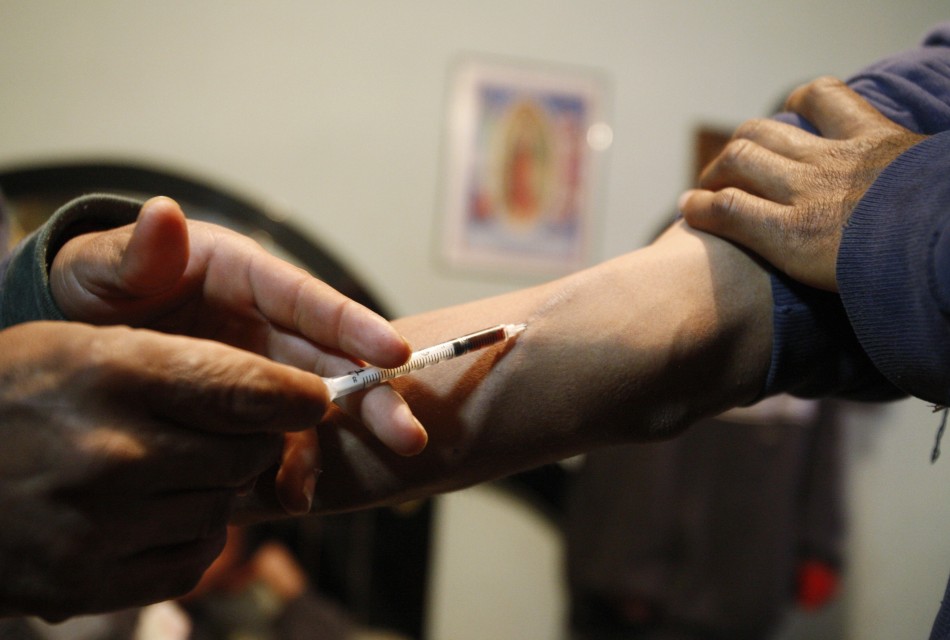
Proposed plan to open injection facility in Dublin for drug users

LAWS WOULD EXEMPT DRUG USERS FROM PROSECUTION IF FOUND WITH CERTAIN DRUGS AT CENTRE

Image result for Proposed plan to open injection facility in Dublin for drug users  Image result for Proposed plan to open injection facility in Dublin for drug users  Related image

THE PROPOSED INJECTION CENTRE WOULD OPEN FOR 12 HOURS A DAY, SEVEN DAYS A WEEK AND WOULD COST BETWEEN €1.5 MILLION AND €1.8 MILLION PER YEAR.

The Government will on Tuesday discuss legislation which would exempt drug users from prosecution if found with certain illegal drugs in a supervised injection facility.
Minister for Drugs Catherine Byrne will seek approval to proceed with plans which would open such a facility in Dublin’s city centre.
The centre would open for 12 hours a day, seven days a week and would cost between €1.5 million and €1.8 million per year.
Government sources stressed the Misuse of Drugs Act, which controls the possession of substances, will still apply.
Exemption from prosecution will only be applicable to authorised users when on the premises and injecting with the licence holder’s permission.
A Government source stressed: “In all other circumstances, inside and outside a supervised injecting facility, the offence of possession of a controlled drug still applies.
“The possession of a drug for the purpose of selling and supplying it to another is unaffected and remains a crime.”
A concern?
Gardaí will be able to enter the premises without a warrant but they will not be able to arrest those inside.
There has been some concern that Gardaí may be unable to adequately enforce the law while reflecting the Government policy.
Ministers have said the law must be clear and insisted there can be no ambiguity which would affect the powers of the Gardaí.
The legislation will also provide an exemption for licence holders to allow them to possess or prepare a controlled substance on the premises.
The initiative, which was first proposed by the former Labour Party minister of state Aodhán Ó Ríordáin, has caused some concern.
However, Ms Byrne will stress the facility will not become a free-for-all for those who want to inject drugs.
Government sources say the aim is to minimise the harm associated with injecting drugs by providing a controlled environment.
The Health Service Executive will be asked to run the facility and will consult with An Garda Síochána and community groups before its establishment.
Minister for Education Richard Bruton has requested that the centres do not open near schools.
Debated
Mr Bruton has asked that proximity to children must be considered as part of the discussion on location and called for schools to be consulted ahead of any decision being made.
The legislation proposed by Ms Byrne is not prescriptive in terms of location but sets out policies which should be considered.
The level and the nature of drug use, paraphernalia and incidents of overdose or death should be factors, according to the Minister.
The legislation, if passed by Cabinet, will be debated in the Dáil and the Seanad.
It is expected the facility may be open by September. It will not be a new building but one that is unused at present.
If the pilot project is successful, it is envisaged a number of others will be opened across the country.
However, funding has only been set aside for one facility and the Department of Health has been advised any additional spend must come from within expenditure allocations.

The moon will smash Earth and turn our planet’s surface into a sea of fire, scientists warn

Image result for The moon will smash Earth and turn our planet’s surface into a sea of fire, scientists warn Image result for The moon will smash Earth and turn our planet’s surface into a sea of fire, scientists warn

STARGAZERS SET OUT THE GRIM DESTINY OF OUR PLANET’S SATELLITE, WHICH WILL PLOUGH INTO HUMANITY’S HOME WORLD IN THE VERY DISTANT FUTURE

The moon is locked into a death spiral which will eventually cause it to smash into Planet Earth, an astronomer has warned.
This apocalyptic event is likely to be so devastating that it will turn the surface of our home world into a seething pit of red hot lava.
The moon will plunge into Earth, although humans may not be around to see it
“The final end-state of tidal evolution in the Earth-Moon system will indeed be the inspiral of the Moon and its subsequent collision… onto Earth,” Jason Barnes, a planetary scientist at the University of Idaho, told Forbes.
“The energy released in the merging would re-melt the Earth into a magma ocean.”
Sadly, humans won’t be around to see this disaster – because they will probably have been wiped out in another one like?
According to the Global Catastrophic Risks 2016 report, the biggest threats humanity should prepare for are climate change-related catastrophes, natural pandemics and nuclear war.
These were all listed as high priority and had the highest likelihood of occurring in the next five years.
However, other threats to look out for include pandemics from man-made pathogens, failure of geo-engineering projects, and catastrophic disruption from artificial intelligence.
In terms of mitigating risks, the report draws comparisons with fatal car accidents, where governments have mandated basic safety features, such as seatbelts and air bags.
It states that while the risk of human extinction is small, at 0.1% each year, it means that a person is five times more likely to die in an extinction event than a car crash.
Catastrophic climate change poses such a high risk due to the cumulative effects of rising carbon dioxide levels, feedback loops in the carbon cycle, and lack of action and financial investment.
The report states of the need for the international community to take strong action to avoid the upper limits of global temperature change, which could have devastating impacts on food security and human life.
The sun will one day swell to a huge size and fry everything on Earth
The moon will crash into Earth in about 65 billion years, which is about 59 billion years after everything in our planet has been burned alive in the death throes of the sun.
If our species manages to avoid being wiped out by nuclear war, doomsday space rocks or apocalyptic epidemics, we may live to see the day our closest star swallows up much of the solar system.
“Five billion years from now, the Sun will have grown into a red giant star, more than a hundred times larger than its current size,” Professor Leen Decin from the KU Leuven Institute of Astronomy said last year.NASA astronaut Eugene Cernan, last man to walk on the moon, dead at 82
Earth will be hit by an asteroid that will wipe out life as we know it today… but not for a million years, say boffins.
“It will also experience an intense mass loss through a very strong stellar wind. The end product of its evolution, 7 billion years from now, will be a tiny white dwarf star.