Labour party ratings down as it fails to get a Budget bounce


LABOUR’S RATING WENT DOWN BY ONE POINT, LEAVING THE PARTY AT ITS LOWEST IN A RED C POLL FOR THE SUNDAY BUSINESS POST.
THE Labour Party failed to get a bounce out of the Budget, but Fine Gael’s support did go up slightly, the latest opinion poll shows.
The coalition parties have largely stabilised with the opposition failing to make any gains.
Despite being perceived as the winner from the Budget, Labour’s rating went down by one point, leaving the party at its lowest in a Red C poll for the Sunday Business Post .
.
.
Fine Gael’s support went up by two points to 29pc, with Labour down one point to nine per cent.
Fianna Fail stayed still at 23pc, Sinn Fein stand on 17pc and Independents are on 22pc, down one point.
The poll was taken amongst 1,000 people between Monday and Wednesday of this week, just days after the Budget.
On the question of the fairness of the Budget, 39pc felt it was fair, 59pc felt it was unfair and two per cent were undecided.
Extra baggage and lower charges herald Ryanair’s new customer-friendly upgrade

Low-cost airline Ryanair aims to improve image by cutting check-in charges and in-flight selling
Ryanair, the low-cost airline, has announced a raft of improvements aimed at enhancing its reputation following criticism over additional charges and strict baggage rules.
Passengers will be allowed on board with a second “small” carry-on bag, such as a “small ladies handbag or [a] small airport shopping bag”, and the airline’s boarding pass re-issue fee is to be cut from £70 to £15.
Other changes include a drop in the charge for checking luggage at the airport, from £60 to £30 per bag, and the introduction of a 24-hour “grace” period during which passengers will be able to correct minor errors, such as spelling mistakes, free of charge. Currently such changes cost £110 per person.
On all flights that operate before 8am, or after 9pm, public announcements will be restricted to essential safety messages and cabin lights dimmed “so that any customers who wish to snooze, can comfortably do so.”
messages and cabin lights dimmed “so that any customers who wish to snooze, can comfortably do so.”
The changes will be implemented over the coming months. From November 1, the “quiet flights” and the post booking “grace period” will come into effect, from December 1 boarding card re-issue fees will be reduced, and a second carry-on bag permitted, and from January 5 the airport bag fees will be cut.
booking “grace period” will come into effect, from December 1 boarding card re-issue fees will be reduced, and a second carry-on bag permitted, and from January 5 the airport bag fees will be cut.
“These are the first in a series of customer service improvements which Ryanair is actively working on to make our low fare services easier to access and even more enjoyable for our millions of customers,” said Caroline Green, Ryanair’s director of customer services.
The changes come after Michael O’Leary, the airline’s chief executive, told shareholders it should scrap its “macho” image and eliminate things that “unnecessarily p*** people off”.
This week he took control of the airline’s Twitter account to answer questions from customers. Users gave him credit for supplying candid answers, but many were disappointed by his failure to address a number of issues. He was also accused of sexism after he praised one woman ’s profile picture with the comment: “Nice pic. Phwoaaarr!”
to answer questions from customers. Users gave him credit for supplying candid answers, but many were disappointed by his failure to address a number of issues. He was also accused of sexism after he praised one woman ’s profile picture with the comment: “Nice pic. Phwoaaarr!”
Last week the airline placed a “suggestion form” on its website, encouraging fliers to tell it what changes they want to see.
Ryanair is regularly criticised for being slow to respond to customer complaints and for forcing passengers to opt-out of various offers – for extras such as carhire and travel insurance – when booking a flight. A study by Telegraph Travel in July found that around 20 clicks of a mouse are required to get to the payment screen when booking with Ryanair – more than any other major carrier.
hire and travel insurance – when booking a flight. A study by Telegraph Travel in July found that around 20 clicks of a mouse are required to get to the payment screen when booking with Ryanair – more than any other major carrier.
It has also been denounced for charging passengers high fees for hold luggage and in-flight food and drink, and huge amounts if they forget to print their own boarding pass or if their hand luggage is overweight.
Traditionally, Mr O’Leary has been notoriously dismissive of customers who complain about the airline. Last year he described a British woman who was charged €300 (£236) after she forgot to print out five boarding passes on a flight from Alicante to Bristol as an “idiot”.
who was charged €300 (£236) after she forgot to print out five boarding passes on a flight from Alicante to Bristol as an “idiot”.
His other notable quotes include: “People say the customer is always right, but you know what – they’re not. Sometimes they are wrong and they need to be told so” and “You’re not getting a refund so **** off. We don’t want to hear your sob stories. What part of ‘no refund’ don’t you understand?”
Euro-stat survey claims Just 4% of Ireland has buildings on it
“even after the boom”


IRELAND IS ONE OF THE MOST UNDEVELOPED COUNTRIES IN THE EU DESPITE A DECADE-LONG BUILDING BOOM.
A new survey from Eurostat says just 4pc of the country is covered in “artificial structures”, and we have the highest proportion of grasslands of any country in Europe.
from Eurostat says just 4pc of the country is covered in “artificial structures”, and we have the highest proportion of grasslands of any country in Europe.
Despite more than 90,000 homes being built per year at the height of the boom and construction of a motorway network and town bypasses, the survey says that Ireland has fewer buildings and roads than our neighbours.
says that Ireland has fewer buildings and roads than our neighbours.
Just 4pc of our land is covered by “artificial areas,” compared with a 5pc EU average.
This compares with one-third of Malta, 13% of Belgium and 12% of the Netherlands and Luxembourg.
The Land Use/Cover Area framesurvey (LucasO) was carried out in 2012 and involved 750 surveyors taking measurements at 270,000 points across 27 countries.
IT FOUND that:
* Just 13pc of Ireland is covered with forest. This compares with more than half of Sweden (76pc), Finland (72pc), Estonia (61pc) and Slovenia (60pc).
* Just 5pc is given over to cropland, compared with an EU average of 25pc.
* More than two-thirds of the country is covered with natural or agricultural grasslands, compared with an average of 20pc – the highest rate in the EU.
* Shrub land and bare land, either dominated by shrubs or low, woody plants or with no dominant vegetation, accounts for a further 4pc.
* Wetlands account for 7% of our area, compared with 5pc among our neighbours.
Professor Rob Kitchin from the Department of Geography in NUI Maynoothsaid the data was somewhat limited because it could not be compared with the pre-boom years.
was somewhat limited because it could not be compared with the pre-boom years.“THE DATA DOESN’T TELL US AN AWFUL LOT,” HE SAID.
SPRAWL: “Maybe we’ve taken up more land, but not necessarily with high-density housing. Dublin grew with Cork and Limerick, but every town in the country grew as well.
“We also had a road-building programme, but we were a low population density country to start with. The sprawl around our cities is about 12 houses per hectare, with two people per house – ten or 20 years ago it would have been four people per house. We have more houses, which take up more space, but there are still a lot of green spaces.”
Artificial structures include houses, offices and greenhouses, as well as yards,car parks, cemeteries and roads and rail networks.
parks, cemeteries and roads and rail networks.Research centre to focus on medical and industrial materials


A Collaborative hub expected to help improve global reputation for nano-science research
The Amber centre will focus on production of discoveries that can translate into products, services and treatments in areas such as computer chip design, medical implants and pharmaceuticals.
and companies.
Trinity College Dublin and its Crann nano technology research centre will host the Amber (Advanced Materials and Bio Engineering Research) Centre, which will work in collaboration with the Royal College of Surgeons in Ireland and University College Cork.
in collaboration with the Royal College of Surgeons in Ireland and University College Cork.
The funding is split between public and private, with €35 million coming from funding body Science Foundation Ireland and €23 million from 18 industrialpartners in a range of sectors, including Intel, DePuy, Medtronic, Merck Millipore and SAB Miller.
in a range of sectors, including Intel, DePuy, Medtronic, Merck Millipore and SAB Miller.
The centre will focus on production of discoveries that can translate into products, services and treatments in areas such as computer chip design, medical implants and pharmaceuticals.
State research spending needs to be targeted at employment opportunities, Minister for Jobs , Enterprise and Innovation Richard Bruton said at the launch today at Croke Park. Ireland ranked among the top 10 countries in the world for nanotechnology research, and this made it easier to attract industry partners willing to invest, he said.
, Enterprise and Innovation Richard Bruton said at the launch today at Croke Park. Ireland ranked among the top 10 countries in the world for nanotechnology research, and this made it easier to attract industry partners willing to invest, he said.
Nanoscience was linked to €15 billion worth of Irish exports and 250,000 jobs in a wide range of sectors, and Amber would play a key role in growing the companies involved, Minister of State for Research and Innovation Sean Sherlock said.
Amber would help develop advanced manufacturing in Ireland and would help attract additional foreign direct investment, the centre’s acting director Prof Stefano Sanvito said. It had the potential to influence everyone’s quality of life.
Amber is one of seven new science centres being set up during 2013 with €300 million in State and private sector funding.
Would a carbon tax divert the world from dangerous climate change?

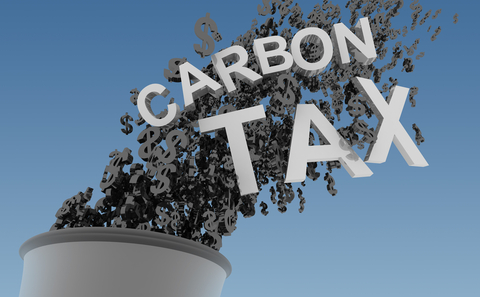
Smoke pouring out of a factory in Romania (above left). The recent IPCC report expresses ‘near certainty’ that humans are causing climate change.
We need an effective mechanism for reducing emissions intensity – and we need it fast, maybe carbon tax could be the solution needed for Governments and its people to focus minds on it.
A few weeks ago, the Intergovernmental Panel on Climate Change(IPCC) put out its Summary for Policymakers, the latest, best estimate of our climate problem.
It’s not a pretty picture. The IPCC is brutally honest about where it can’t provide certainty, such as the exact extent of specific kinds of extreme weather in the future. But the report expresses “near certainty” that humans are causing climate change – that’s science-speak for “we know this” – and that we’re heading for devastating consequences.
The IPCC provides some guidance on what we need to do, broadly speaking. The key idea is the carbon budget (which Climate Centralrecently summarised nicely). In short, we humans can “safely” put only so much carbon into the environment and maintain decent odds of holding warming to 2 degrees. I credit activist Bill McKibben for making this idea mainstream by writing a powerful piece in Rolling Stone last year.
The latest budget numbers this month are not good news. Here’s the crucial paragraph with data on how many gigatons of carbon (GtC) we have left:
on how many gigatons of carbon (GtC) we have left:
“Limiting the warming caused by anthropogenic CO2 emissions alone with a probability of >33%, >50%, and >66% to less than 2°C… will require cumulative CO2 emissions from all anthropogenic sources to stay [below] 1,560 GtC, 1,210 GtC, and 1,000 GtC [respectively]. An amount of 531 GtC was already emitted by 2011.”
with a probability of >33%, >50%, and >66% to less than 2°C… will require cumulative CO2 emissions from all anthropogenic sources to stay [below] 1,560 GtC, 1,210 GtC, and 1,000 GtC [respectively]. An amount of 531 GtC was already emitted by 2011.”
So to boil this down, if we want a 66% probability, we have about 469 GtC left, which is much less than the 565 GtC McKibben outlined last year. And the budget is even smaller if you also consider what IPCC calls “non-CO2 forcings” which Michael Mann – he of The Hockey Stick fame – described to me as “other human-produced greenhouse gases, including methane from agriculture/livestock and potentially now from leaks during [gas] fracking.”
McKinsey and PwC have both taken previous IPCC estimates and translated them into annual targets. Basically, we need to improve our carbon intensity – the carbon we emit per dollar of GDP – by about 5% per year. These new IPCC numbers imply we have to go even faster.
All these numbers raise many questions, but let me pose two important ones:
1. Why aren’t we trying to limit warming with a probability of 90%?
For a two-thirds chance of staying below the 2 degree threshold, we only have 469 GtC left. So how small would the budget be if we wanted a much higher probability? The next paragraph in the IPCC report provides some guidance: “A higher likelihood of remaining below a specific warming target, will require lower cumulative CO2 emissions.”
What I suspect – and this is scary – is that there is no realistic number that gets us to a 90% or 95% chance of holding to 2 degrees. Meaning, we’ve already emitted enough to lock in substantial warming. The report backs up my suspicion by declaring, “a large fraction of anthropogenic climate change resulting from CO2 emissions is reversible on a multi-century to millennial timescale.”
So we’re rolling the dice here and only have a two-thirds shot, even with aggressive reductions.
2. How should companies think about the carbon budget concept?
We have to break down the global budget into smaller bites. The reasonable starting point is for every organisation to set a goal of moving at the required pace, which means reducing emissions intensity by roughly 5% per year.
Of course it’s much more complicated to set equitable targets by sector or company, and it’s a fair question to wonder if companies can take this on given their short-term focus. Meaning, why should a company do more on carbon than it can easily justify with regular investment hurdle rates?
It’s a very tough issue to reconcile. The short answer is that companies should accept the budget logic because, as many have said, business can’t succeed in a world that fails. Climate change threatens society, of which business is a subsidiary.
But the macro logic is hard for companies to act on in a quarter-driven economy. So we need to slash carbon in ways that pay off in traditional terms with one major caveat – we should expand our thinking about what payoff means and include all the business value that we can create from clean economy strategies, value that we don’t currently measure well (like reduced risk and brand value).
But will voluntary efforts get us there? Unlikely. We’ll need an actual mechanism for driving carbon emissions out of our economy fast enough. And that means government help. So companies are also going to have to get off the sidelines, pivot from the normal “all regulations are bad” attitude, and then actually lobby for carbon pricing and limits.
Logic and survival instinct dictate that we work backwards from the budget scientists give us. Our current path – cutting emissions where we can do it cheaply – is not much better than doing nothing. When 5% a year is the best estimate of what’s required, holding carbon emissions flat or cutting a little is nice; but it’s like taking one pill in a 10-day course of antibiotics.
backwards from the budget scientists give us. Our current path – cutting emissions where we can do it cheaply – is not much better than doing nothing. When 5% a year is the best estimate of what’s required, holding carbon emissions flat or cutting a little is nice; but it’s like taking one pill in a 10-day course of antibiotics.
It’ll seem cheaper and easier at first, but you won’t actually solve the problem or feel much better.
