Number of housing units for sale across Ireland at a 9 year low


DAFT.IE SAYS IN ITS LATEST REPORT THAT THE TOTAL NUMBER OF PROPERTIES FOR SALE AT ANY ONE TIME ACROSS IRELAND CONTINUES TO FALL FROM 2015 AND IN THE FIRST QUARTER OF 2016 WAS A 9-YEAR LOW.
At less than 24,000, the report says this is now at its lowest point since February 2007. The biggest falls in availability are now occurring outside Leinster. Across Munster, Connacht and Ulster, there were 13,500 homes for sale in April 2016, compared to almost 21,000 two years previously.
House prices rose by an average of 5.9% in the year to March 2016. The divide between Dublin and the rest of the country persists, with prices effectively stable in the capital — rising just 0.9% in the last year — compared to a rise of 9.7% on average outside Dublin. In almost all parts of the country, however, inflation now is less than three months ago.
The national average asking price in the first quarter of 2016 was €210,000, compared to €198,000 a year ago and €164,000 at its lowest point. In Dublin, prices have risen by an average of €91,000 – or 41% — from their lowest point in mid-2012. Outside the capital, the average increase has been €37,500, or 28%, since the end of 2013.
The report says that while prices are stable in Dublin, they continue to increase strongly in other cities. Compared to the same period in 2015, prices in the first quarter of 2016 were 14.9% higher in Cork, 14% higher in Galway and 18% higher in both Limerick and Waterford cities. Inflation outside the cities varies from 8.3% in Leinster to 10.4% in Connacht-Ulster.
Commenting on the figures, author of the Daft.ie Report Ronan Lyons said: “It is interesting to note that in year-on-year terms, prices are now falling in five Dublin markets — Dublin 2, Dublin 6, Dublin 16, Dublin 18 and South County Dublin. These are some of the most expensive markets in the country and show the effectiveness of the Central Bank rules. Nonetheless, across the country, prices continue to rise, because the increase in population each month is not being matched by an increase in new homes. Addressing the shortage of supply and in particular the high cost base on construction — must a top priority for the new Government.”
Average list price and year-on-year change – major cities, Q1 2016
Average list price and year-on-year change – major cities, Q1 2016
Dublin City: €311,686 – up 0.9%
Cork City: €232,145 – up 14.9%
Galway City: €228,222 – up 14.0%
Limerick City: €149,989 – up 18.0%
Waterford City: €134,945 – up 18.0%
Cork City: €232,145 – up 14.9%
Galway City: €228,222 – up 14.0%
Limerick City: €149,989 – up 18.0%
Waterford City: €134,945 – up 18.0%
The issue in the Irish housing market currently – and in particular in the greater Dublin area – is a lack of homes. Every month, roughly 2,000 new households are formed, each requiring somewhere to live. But each month currently sees the construction of at best 1,000 new homes. In Dublin, the figures are even starker – nearly half of all new households are being formed in or around the capital but only 150 or so properties are being built each month in the city.
The result is that fewer and fewer homes are on the market. And this is a trend that is common to all parts of the country now, not just Dublin, which did not see any significant over-construction during the bubble years. The first graph below shows the total number of properties on the market each month from 2010 on. It is clear from the graph that the tightening of supply in Dublin took place between 2011 and early 2014 and if anything has improved slightly since.
New drug offers some life changing hope to cystic fibrosis patients
A NEW DRUG COULD MAKE A DRAMATIC DIFFERENCE TO ONE PATIENT WITH CYSTIC FIBROSIS,


Claire Meleady with her dog Rupert.
Most 30-somethings woke up this morning wishing they’d something new to wear to work and all Clare Meleady wants, however, is access to a new drug that could enable her to get a job.
A trained reflexologist and tai chi expert, 30-year-old Meleady has cystic fibrosis. However, she is a suitable candidate for Orkambi, an expensive new drug which could significantly improve her quality of life.
Her condition prevents the 30-year-old from working, restricts her attendance at big family events, and has even put a stay on her hopes of starting a family with Barry, her husband of five years.
Orkambi could solve a lot of those problems, but the HSE has yet to decide whether it will pay for the drug, which is expected to cost €150,000 annually per patient.
Currently there are around 1,200 people with cystic fibrosis in Ireland.
However this country not only has the highest rate of the disease per head of population in the world, but also has some of the worst types, because of the particular genotype prevalent in Ireland.
In acknowledgement of this, and of the ongoing need for better facilities for cystic fibrosis patients, Friday next will see a major fundraising campaign in which thousands of volunteers will sell purple roses nationwide to raise €65,000 for the support group Cystic Fibrosis Ireland, whose members anxiously await the HSE’s decision on Orkambi.
“Orkambi is very expensive but a lot of people in the trials have done very well and it’s been a life-changer for many people. I’d like to try it,” says the Ashbourne, Co Meath, woman, who was diagnosed with the disease at the age of 15 months. “It’d enable me to be able to work and my health would be more reliable.”
Although she tries to stay positive, she acknowledges that cystic fibrosis has a severe impact on her day-to-day life: “I cannot work, which puts a huge financial strain on our household,” she says, adding that when she got married, her disability allowance was slashed from €188 a week to just €50.
This has placed the couple under significant financial strain — Barry is a clerical worker and his salary is not huge, she says, adding that they’re currently considering whether they can continue to afford their car.
On a deeply personal level, the loss of her younger brother Paul — the only other member of the extended family to have cystic fibrosis — in February 2015, came as a huge blow to Meleady.
Paul died of heart failure. He had a condition which was unrelated to cystic fibrosis but which, because he had complications related to his cystic fibrosis, could not be treated.
“We were very close, because we both had the condition and we understood how each other felt .”
Her own condition is progressing from moderate to severe.
Although people born in the 1980s are now expected to live into their 30s and early 40s, the average age of death from cystic fibrosis in this country is 27. However, Meleady avoids focusing on the negative. Instead, she spends several hours a day exercising and practising an array of techniques to help her control her symptoms and maintain a positive attitude.
“I practise mindfulness and do meditation and tai chi and I focus on living in the moment.
“You cannot look too far into the future — I deal with the road blocks that come up. Cystic fibrosis has taught me to appreciate a lot,” she explains.
Her devoted husband and a hugely supportive family networks are among the many blessings in her life she says — as is her adored golden retriever Rupert gets her out and about: “He has given me a reason to get up in the mornings.
“The walking has increased my fitness a lot,”says Meleady, who regularly does brisk 10km hikes, often around the Phoenix Park.
Exercise “keeps my lungs clear and keeps me fit,” she says. “I set up a tai chi group locally and I try to do tai chi most days which is very good for strengthening the body and is also a form of meditations.”
She takes a cocktail of medicines — antibiotics as well as medication for digestion, bones, stomach and bowel.
Her big priority now is seeing HSE approval for Orkambi: “I’ve been really anxious for Orkambi to come out. Down the road, I’d love to start a family but with my health the way it is, it’s too risky,” says Meleady, who is on average hospitalised up to three times a year and regularly attends outpatient clinics for a variety of health problems associated with her condition.
However, inadequate staffing and resources means hospitals cannot always cope with the needs of cystic cibrosis patients, says Philip Watt, head of Cystic Fibrosis Ireland.
Ongoing staffing problems can mean delays in admitting patients, he says, while the shortage of dedicated isolation rooms for CF patients is another worry.
“In some cases there can be delays in getting treatment because of staffing shortages or lack of rooms,” he reports, adding that sometimes patients have to stay at home instead of going into hospital, while the lack of specialised staff, such as specialised nurses or psychologists, is another issue.
Orkambi, he says, has been shown to reduce hospitalisation amongst patients by about 50%.
“We probably will know in the next eight weeks — around end of May, the HSE will decide whether they will pay for the drug,” he observes.
Until then Meleady must wait and hope: “This drug could change my life — I’d have more energy, less chest infections, and maybe I would be able to work, see my friends and think about starting a family.”
In the meantime, she continues to count her blessings and fundraise for Cystic Fibrosis Ireland.
A dedicated musician, she and some friends released a single on behalf of the group some years ago, raising €6,000 for CFI.
Last Halloween, Meleady and her family raised more than €4,000 for the association in memory of Paul.
“I have a lot of good in my life,” she says.
WHAT IS CYSTIC FIBROSIS?
Cystic fibrosis is a genetic disorder which affects the glands, damaging many organs including the lungs, pancreas, digestive tract and reproductive system, impacting breathing, digestion and reproduction.
It causes thick sticky mucus to be produced, blocking the bronchial tubes and preventing the body’s natural enzymes from digesting food. n Cystic Fibrosis National Awareness Week takes place from April 11 to 17. On 65 Roses Day is supported by RTÉ’s Keelin Shanley and Bryan Dobson. It takes place on April 15. Volunteers will sell purple roses to raise €65,000 for services for people with cystic fibrosis. People are also undertaking a range of fun 65-themed challenges as part of the fundraising appeal.
Is Ireland eating itself to death?
Ireland has been caught in a perfect storm of poor diet and sedentary lifestyle… and it threatens to turn us into the fattest country in Europe. Are we eating ourselves to death?


SCHOOLED IN FITNESS LEFT PICTURE: FIRST YEAR STUDENTS AT O’FIAICH COLLEGE DUNDALK TAKING PART IN THEIR PE PROGRAMME.
To doctors like Donal O’Shea, it is the race we don’t want to win. The latest figures from medical journal The Lancet show that Irish males are on course to become the fattest men in Europe within the next decade.
The report finds that Irish women are also breaking the scales as they head towards the top of the heavyweight table.
Already, one in four Irish children is classified as “overweight or obese”.
Another report this week showed that the number of young people taking part in any sport at all in a six-month period has dropped to 68%.
So, how did we find ourselves in this position?
“Back in the 1950s, we were the leanest people in Europe. If anything, at that time were too thin,” says Dr O’Shea, Director of the Weight Management Clinic at Dublin’s St Columcille’s Hospital.
Since the 1970s, we have had a transformation in our lifestyles, and are now facing a potentially life-threatening battle of the bulge.
Despite no end of advice, nannyish healthy-eating tips from nutrition watchdogs, food pyramids, countless reports from health quangos and TV shows like Operation Transformation, we seem to be losing the war on weight.
According to the Lancet report, by 2025, 38% of men and 37% of women in Ireland will be obese. And six out of 10 adults are already classified as overweight.
“Just giving advice does not seem to have worked. The average Irish adult is one or two stone heavier than they were 30 years ago,” Dr O’Shea tells Review.
While this trend is common across the world, it is not universal. Women in Singapore, Japan, Belgium, France and Switzerland have hardly increased their body mass index over the past 40 years.
A coincidence of two changes in our lifestyle helped to bring about the great expansion in the national girth.
“We changed to a diet that was high in fat, high in salt and high in sugar, and the number of fast food outlets grew,” says Dr O’Shea. “At the very same time, physical activity started decreasing. These two factors – changing diet and growing inactivity – came together in a rush, and obesity took off and it keeps going up.”
Our grandparents may have had a lower life expectancy, but their unprocessed diet of meat, potatoes and veg – the ‘holy trinity’ – had health benefits.
“There is a lot to be said for your traditional dinner,” says Janis Morrissey, dietitian at the Irish Heart Foundation. “Jobs in our grandparents’ time were also more manual, and that made a lot of difference.”
Some of the causes of our great expansion may be obvious. The popularity of television, the growth in the number of cars, and the decline of manual labour in favour of office jobs, all mean that less physical activity is required to get by.
In 1981, half of all children in Ireland walked to school. Now, that figure is 25pc.
In other countries, the acknowledgement that we lead more sedentary lifestyles is accompanied by more organised physical activities, particularly for young people. Streets are designed to encourage us to walk or cycle.
“Children should be getting one hour of physical activity a day in school. At second-level, students are supposed to have two hours of PE in Irish schools in a week, but many don’t have any at all,” says Elaine Mullan, lecturer in health-related social sciences at Waterford Institute of Technology.
Many secondary schools have no gym and no playing pitches and some of the changes to our lifestyle have happened without us even noticing.
The Irish Heart Foundation’s Morrissey says portion sizes for some foods have grown spectacularly. A survey by Safefood Ireland has shown that the average jam doughnut is three times bigger than the equivalent in the late 1990s. The same goes for croissants and fruit scones. The average muffin and Danish pastry is four times bigger. Did we even notice?
Small and almost imperceptible changes to our lifestyle make a difference to our level of physical activity, and these all add up.
When driving, we used to have to roll the window down manually – now we just press a button. To change channels we had to walk to the TV set and possibly argue over who would do it; and 40 years ago dishes were more commonly washed and dried by hand, requiring a greater expenditure of energy.
The digital age has only added to this surge of inactivity?
Office workers send emails to colleagues who are only a few feet away or down the corridor instead of walking over to them, while kids are more likely to play games on computers than out on the street.
Amid growing safety fears, particularly about traffic, children are given less freedom to roam, and may even be barred from running in school playgrounds. A recent report on obesity by the Royal College of Physicians of Ireland advised that schools should allow “running and free play” in school playgrounds and recreation areas.
Unlike other physical conditions, obesity tends to be regarded as a moral failing, and there is an attitude that it comes about as a result of some sort of gluttony and sloth. But is the preaching tone of so much of the health advice given out counter-productive?
According to Francis Finucane, consultant endocrinologist at Galway University Hospital, making the obese feel ashamed is the wrong approach.
“Rather than seeing it as a moral flaw, we should see it as a complex disorder. The reason there are variations in who is fat and who is thin is largely down to genetics.
“Behaviour to do with physical activity and diet are to some extent beyond our control.”
Dr Finucane believes that we can tackle the obesity epidemic by making changes to our environment and introducing taxes on fast food and sugar-sweetened drinks.
As a significant first step in the war on obesity, a tax on sweet fizzy drinks is now looking more likely after a number of parties included it in their election manifestos.
Some 15pc of people consume sweet fizzy drinks every day, but consumption rates are much higher in the 15-24 age bracket. Some 29pc of young men drink these high-sugar drinks daily.
When you look at the sugar content of some of these drinks, it is not hard to see why doctors are concerned. A typical small bottle of cola, for example, contains the equivalent of 12.5 teaspoons of sugar – and a 500ml energy drink can contain up to 21.5 teaspoons of sugar.
Advocates of such taxes believe that the example of the plastic-bag levy show how this type of measure can affect behaviour.
The Irish Heart Foundation commissioned research from an economist, and found a 20% sugar tax would reduce consumption by 18%, and would yield about €44.5m in revenue.
Waterford IT lecturer Mullan believes we need to change our transport policies to compensate for our sedentary lifestyles by encouraging more cycling and walking to schools and workplaces. Realistically, it may be impossible to drag school parents or workers out of their cars if they live far away, but measures can be taken to alleviate this.
“We can’t expect everybody to walk or cycle all the way to school or work. But it’s normal in other countries to have large park-and-ride facilities where there is room for bike storage,” says Mullan.
At lunchtime in urban Ireland, it is common to see children in school uniforms queuing for fast food at nearby outlets, but there are now signs of a strong backlash.
In Greystones, Co Wicklow, parents mounted an effective campaign to create a “no fry zone” as they tried to stop a McDonald’s opening near three schools. Although planning authorities approved the plans for the fast-food restaurant, the opening was stopped when the owner of the property, Lidl, decided it would use the site for other purposes. One of the local residents behind the campaign in Greystones, Philip Moyles, says: “We have been encouraging people to make submissions to Wicklow County Council’s development plan to ensure that no fast-food restaurants can open within 400 metres of schools. There have been over 210 submissions from the public.
“One of the reasons for the campaign is to minimise the exposure of children to obesity, because this can carry into adulthood.”
We may wring our hands at the preponderance of fast food and unhealthy processed products, but studies have found that the ingredients for a healthy diet can be much more expensive. The foods that make us obese, such as processed fatty meats, are often cheaper, according to Mullan.
It is no surprise, therefore, that social background is an important factor in obesity, particularly in childhood. Children growing up in low-income homes are twice as likely to become obese than those in better-off families, a Safefood study has found.
Unless urgent action is taken to prevent obesity, it may soon become normal, just as it is in the US.
“Our perception of normal body weight is determined by the people around us,” says Mullan.
“If people around us are getting larger and larger, then our concept of what is normal changes – and we are more likely to be obese ourselves.
Smart umbrella now tells you when it’s going to rain
IF YOU CAN AFFORD OOMBRELLA, IT’LL BE THE FANCIEST PARASOL YOU OWN.


Everything is connected these days, so why not an umbrella? Oombrella is an upscale parasol that alerts you if it’s going to rain before you head outside and reminds you not to leave it behind. That’s a neat idea, but is it worth a $75 (€64) bet on Kickstarter? Clement Guillot (above), the Paris-based entrepreneur behind it certainly thinks so, and was recently at theHacking Hôtel de Ville event in Paris to find more backers. I was able to check out the device and found it to be a charming use of connected tech, though the price may dissuade many folks.
Oombrella tries hard to be worth it. It has Kevlar ribs to maximize wind resistance, and the “shiny” style canopy is a head-turner. It even has a camera screw on top to double as a GoPro selfie/boom pole. However, similar weather-resistant dumb umbrellas can be had for under $30. So most of what you’re paying for is the “capsule” tucked inside Oombrella’s handle, which can be bought separately for €29. It’s a mini weather station with temperature, pressure, humidity and light sensors on board. Those communicate with a smartphone app via Bluetooth LE to perform a variety of functions.
The company behind Oombrella already has a weather platform calledWezzoo with some 200,000 users. The app uses that system to give you a 15 minute warning when it’s about to rain so you can grab it before heading out. Another feature is “forget me not,” which helps ensure you don’t lose Oombrella by notifying you when you stray too far away from it.
As with other connected devices, there are tracking and social functions. You can see the stats of your last rainy trip, including where you went, how much you used it and what the weather was like. You can also spot other Oombrella users in the area using the social functions. A nice touch is a handle light that blinks when you get a call or message, in case you can’t hear your phone during a torrential downpour. If you let it, Oombrella can also “collect data and share it with the community to make hyperlocal weather data more accurate,” according to Wezzoo.
The idea of a stout umbrella that reminds you to bring it when it’s raining and helps makes sure you don’t leave it behind it is nice use of connected tech. However, the price may be a touch high for many folks. While Oombrella has sold out at the €59 ($67) early-bird pricing on Kickstarter, the €64 ($73) and up offerings are still available. The campaign is €10,000 short of its €59,000 goal, but if you’re a weather nerd or want a high-end umbrella that doubles as unique connected device, there’s a week left to grab one.
World Bank plan to tackle the changing climate
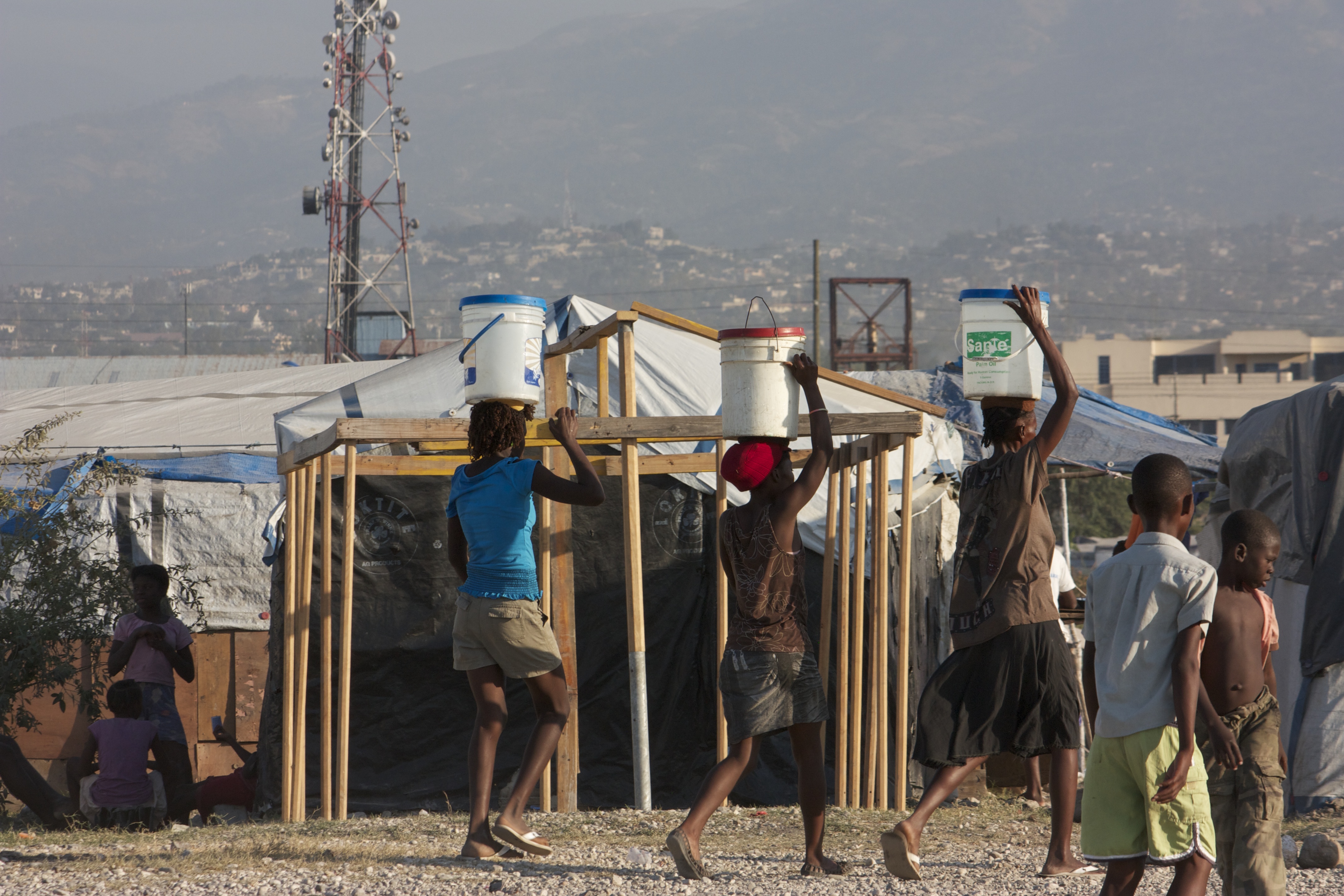

When the rains came to Senegal’s capital and largest city, Dakar, in 2009, the people in Cite de Soleil were up to their chests in water. Even today you can still see the water marks on the walls. People who live there today still talk of the stench, the diarrhea, and the chest ailments suffered by the children.
Travel along the coast and the impact of increased erosion on tourism spots is all too evident. Go inland and you see people having to cope with significant droughts and shorter growing seasons. It’s all too evident that people, particularly poor people, are already suffering the effects of weather-induced stresses.
And looking forward, the climate models suggest that this will only get worse with more extreme rainfall likely in Dakar, stronger coastal erosion, reduced fishing opportunities, and more extreme drought conditions inland.
Senegal is trying to tackle these issues, often with the help of the World Bank. One project is putting in place infrastructure to help manage the floods. It seems to be paying off. People say that when the rains came in 2014, the water washed away quickly. They were able to return to their neighbour-hoods and reinvest in housing. An agricultural project is helping people use new varieties of seeds with a shorter growing season.
These examples illustrate the importance for people and countries for more action to help them adapt to a changing climate. And it’s experiences like these that influenced the thinking behind the World Bank Group’s new Climate Action Plan, with its emphasis on rebalancing our work, with a greater focus on the need to build up the resilience of people and countries to adapt to a changing climate.
At its heart, it’s an action plan that’s intended to help the 140 developing countries who work with the World Bank Group deliver on their ambitious promises in the historic Paris agreement reached last December on climate change. As part of the Paris process, countries committed to implement their national plans, known as NDCs – Nationally Determined Contributions – to put help curb global warming.
Soon leaders will gather in New York to formally sign the agreement. The agreement’s main aim is to keep the global temperature rise well below two degrees Celsius and to drive efforts to limit the temperature increase even further to 1.5 degrees Celsius above pre-industrial levels.
To reach those goals, we know we must bend the curve of emissions. That’s why in our action plan, we’ve laid out a target to help developing countries add 30 gigawatts of renewable energy over the next five years- enough to power 150 million homes – to the developing world’s energy capacity.
And it’s why we’re aiming to invest US$1 billion to promote energy efficiency and resilient building in cities responsible for two-thirds of the world’s energy consumption. We will also work with over 30 cities to come up with lower carbon city plans to help deal with the influx of people to urban areas.
We all know that such changes will require massive amounts of private sector investment. That’s why we’re aiming to mobilize $25 billion more in commercial financing for clean energy over the next five years. It’s also why IFC, our private sector arm plans to increase its climate financing by 50 percent to $3.5 billion per year by 2020 and why it plans to increase its mobilization of private finance to $13 billion a year by 2020. And it’s why too, we’ll continue to help countries to axe damaging fossil fuel subsidies and put a meaningful price on carbon pollution, which has the potential to redirect trillions of dollars of investment into a cleaner greener future.
But between now and when the Paris agreement comes into force in 2020, it will be vital to do more – as the experiences of Senegal illustrate – to help developing countries adapt to the changing climatic conditions impacting so many people.
We know if we don’t act, climate change threatens to drive 100 million more people into poverty in the next 15 years. We have to boost people’s resilience so they can cope with the changing climate. And with natural disasters on the rise, we have recognised the need to do more.
We’re working for universal access to early warning systems. So by 2020, the goal is to provide 100 million more people in 15 developing countries access to early warning systems. We’re also expanding sovereign risk disaster financing and aim to provide 50 million more people with social protection to better to cope when disaster strikes.
We’ll be developing tools to help cities become more resilient, piloting a new approach in 15 cities by 2020 integrating a number of elements such as infrastructure development and investment, land use planning, and disaster risk management. And we’ve set a target to quadruple funding over five years to make transport systems more resilient to climate change.
But as we all know, and our plan recognizes, we can’t overlook one of the most basics of human needs – food. With a changing climate, we need climate smart agricultural systems. We’ll be developing investment plans for at least 40 countries by 2020. We’ll be working to boost high efficiency and low energy use irrigation schemes to help farmers grow crops and also help spur greater use of hybrid crops that can withstand different climate patterns in the future. We will also work to restore degraded lands, to protect communities in at-risk deltas and coastal zones, and support investments in forests in ways that both provide livelihoods to poor people and protect valuable carbon sinks.
Climate-smart land use can not only put more money in the pockets of farmers, but can also increase food production. More than one billion people on the planet are now undernourished, and the world needs to produce at least 50 percent more food by 2050, in tougher climatic conditions. So our ability to feed the world’s future population depends on us all becoming climate smart.
To get the kinds of impact we all aspire to, will need action at scale. So as well as our own increased climate financing, we will work to help governments not only translate their own ambitious national plans into reality but also build climate resilience into their overall policy-making, planning and budgeting systems. And we will be collaborating even more with other partners to increase our impact.
It’s a tough and ambitious agenda, but we know that without such action now, we will not be able to deliver on our ambition to eliminate extreme poverty and increased shared prosperity. We owe it to the children in Senegal and elsewhere around the world.


