85% of disabled funding in Ireland goes on staff ‘Irish Government study reveals’
A Government study examining how €1.5 billion in taxpayers’ money is spent by disability service providers is expected to show that up to 85 per cent of funding is going on staff costs.
The details of the value-for-money report come as pressure is mounting on health authorities and the Government to find places for up to 700 young people with intellectual disabilities who require essential services when they finish school next month.
Several voluntary service providers say they are “cut to the bone” and have started to turn down requests from parents for vital services for their children.
However, the Government has insisted there is no spare money and has called on service providers to find more efficient and flexible ways of providing services.
The report, due to be published over the summer, is expected to show significant variations in the cost of delivering similar services in different parts of the State.
It is understood to show that staffing costs for providing disability services in Ireland are significantly higher than in other jurisdictions.
Informed sources say it will conclude there needs to be a better mix of skills within the service, with less emphasis on nursing staff and a greater focus on staff who can help people live independently.
This finding could have significant implications for staffing and potentially lead to reallocation of nurses to other parts of the health service that are badly in need of nurses.
These issues, however, will not feature in the report.
The report is understood to propose major changes to the way the sector is funded, with greater emphasis on individualised payments for people with disabilities.
It is also likely to suggest a move towards tendering for services on the part of service providers rather than providing block grants.
Many of these findings reflect those in an earlier report commissioned by the Health Service Executive into outdated institutions, or so-called congregated settings.
It found the numbers of nurses employed meant that Irish staff in disability services were much better paid than their British counterparts, earning an average of €54,000 in Ireland compared with £18,000 (€22,000) in Britain.
It also found major variations in the cost of care, ranging between €46,000 and €385,500 for each resident.
In a separate development, the Government, health authorities and the Brothers of Charity in Galway are believed to be close to an agreement on finding services for school-leavers with intellectual disabilities.
Families of people with disabilities had been told in recent days that there was still no guarantee that children leaving school next month would have a service.
As a result, many parents in Galway – and in other parts of the State – fear they will have nowhere to send their children, many of whom require ongoing support.
However, the Minister of State responsible for disability said yesterday that money had been found within the organisation’s own budget to source a service for school-leavers.
Kathleen Lynch insisted that no additional money was available for voluntary service providers this year, unlike last year, when €10 million in emergency funding was sourced for school-leavers.
“I think we have a fairly good solution for the school-leavers in Galway, but I’m equally saying that we need to have longer-term plans to deal with school-leavers,” she said.
“We have found money within the Galway service, and feel it will resolve the problem, but this is not a new problem. We know in advance how many school-leavers there will be and what services they require.
“We have to look at new ways of delivering services,” Ms Lynch added, “and that could mean putting services out to tender.”
Boots pharmacies in Ireland cuts prescription drug prices
The country’s biggest pharmacy chain has reduced the price of 10 most expensive prescription medicines by an average of 25%, saving some patients nearly €300 a year.
Boots Ireland says its price cuts will take effect from this Friday.
It says annual medicine bills for people living with chronic conditions such as asthma or cardiovascular disease who are not eligible for the medical card scheme will benefit most from the reductions.
A person living with asthma has a typical monthly medicine bill of €94.65. This will now drop to approximately €70.43, a 26% decrease, representing an annual saving of up to €290.64.
A typical person living with a cardiovascular condition such as high blood pressure and high cholesterol may see their medicine bill drop from €77.88 to €65.92, a 15% decrease, representing an annual saving of up to €203.88, according to Boots.
The pharmacy chain has ended the practice of adding a 50% mark-up to the cost price of a drug and an additional dispensing fee, and replaced it with a new single €7 professional services fee added to the cost price of a drug.
Ireland’s Energy Minister Pat Rabbite is to push for green energy deal with Britain
Minister for Energy Pat Rabbitte (has got a halo) is to meet his British counterpart Charles Hendry to begin talks on a deal
Minister for Energy Pat Rabbitte, will begin talks with his opposite number in the UK government next month on a deal that will open up the market for large-scale electricity exports to Britain.
Mr Rabbitte launched the Government’s renewable energy strategy today and confirmed that the Republic’s long-standing target of meeting 40 per cent of its electricity needs from green energy will be met.
Speaking at the launch, Mr Rabbitte also said that he will be meeting UK energy minister, Charles Hendry for negotiations on an inter-governmental agreement that will allow the export of electricity generated from wind and other renewable sources can be exported to Britain.
Britain has already signalled that it is interested in importing renewable electricity from the Republic as demand for energy there is growing while it needs to reinvest in its current fleet of power plants.
Mr Rabbitte pointed out today that exporting renewable electricity to Britain requires an inter-governmental agreement.
In the medium- to longer-term, the minister said that the Republic could ultimately export as between 6,000 mega watts and 7,000 mega watts to Britain, as much electricity as is consumed every year in the Republic itself.
Ireland’s retail sales for April down by 1.5%
The volume of retail sales fell by 1.5 per cent in April as hardware, department store and textiles businesses struggled.
The volume of retail sales fell by 1.5 per cent in April as hardware, department store and textiles businesses struggled.
Figures from the Central Statistics Office show that core retail sales have fallen in volume by 2.7 per cent so far this year, and 1.8 per cent in value.
The CSO said that when motor trades were excluded, the volume of retail sales decreased by 1.8 per cent in April and by 3.8 per cent in the year to date.
Lobby group Retail Excellence Ireland said that poor weather conditions had slowed sales in April. The fact that Mother’s Day occurred in March had further sharpened the year on year decline, it added.
“Retail owners are hoping to see more favourable sales levels over the coming weeks and months,” Retail Excellence Ireland chief executive David Fitzsimons said.
He said he hoped a Yes vote in the fiscal treaty referendum would increase consumer confidence and that a further boost was expected from Ireland’s participation in the Euro 2012 football championships.
The April figures erase the small gains made in the sector in February (up 0.2 per cent) and March (0.6 per cent).
Sales of hardware, paints and glass fell most sharply in April (down 6.2 per cent); followed by sales in department stores (down 3.6 per cent); clothing, footwear and textiles (down 2.9 per cent); and the motor trade (down 2.6 per cent).
Increases were recorded in sales of fuel (up 0.5 per cent), electrical goods (0.4 per cent) and other goods (up 1.7 per cent).
Small business group Isme said the figures were “shocking” and confirmed that consumers were still cutting back when it came to spending in shops.
“More than three quarters of retailers are stating that the very viability of their business is under threat, with a third of them expecting to reduce staff in the next year,” Isme chief executive Mark Fielding said.
“The excess capacity, reduced consumer spending and rising government influenced costs in retail, is placing the industry in crisis. The biggest costs to retailers, such as inequitable commercial rates, unrealistic rents and uncompetitive labour costs must be tackled as a matter of urgency.”
Brendan O’Carroll ‘Mrs Brown’s Boys’ wins a Bafta comedy award
Brendan O’Carroll, said: “All we wanted to do was make people laugh and it seems to have worked.”
They were joined by some of the biggest names from the small screen, including Holly Willoughby, Dominic West and the cast of Coronation Street who posed for pictures and signed autographs on a blazing hot day outside the Royal Festival Hall by the Thames in London.
The ceremony, hosted by comedian Dara O’Briain, is one of the biggest showbusiness events of the year.
Substitute host O’Briain told the audience he was only there because he sounded “exactly the same” as Graham Norton who hosted Saturday night’s coverage of the Eurovision Song Contest.
The first award, for a drama series, was presented by The Wire star West and Emilia Fox, with the actor having to pass autocue duties to Fox when he forgot his glasses.
The award went to BBC3 show The Fades which was cancelled recently by the corporation.
Scriptwriter Jack Thorne said he was “amazed and shocked” and put his success down to the “lucky socks” he was wearing.
Newsreader Kate Silverton then presented the single documentary award to BBC2’s Terry Pratchett: Choosing To Die – the best-selling author’s examination of euthanasia.
Pratchett, who has been diagnosed with Alzheimer’s, thanked the BBC for “allowing us to tackle this rather strange subject for a documentary”.
The award for new media went to Psychoville and Stewart Lee’s Comedy Vehicle picked up the comedy programme gong.
The award for news coverage was presented by Clare Balding to Channel 4 News for coverage of the Japanese earthquake.
The award for single drama went to Channel 4’s Random and the current affairs gong was given to BBC1’s Panorama: Undercover Care – The Abuse Exposed.
The factual series award went to BBC3’s Our War which followed British troops on the ground in Afghanistan.
BBC1’s Mrs Brown’s Boys won the situation comedy category, beating competition including Rev and Fresh Meat.
Its star, Brendan O’Carroll, said: “All we wanted to do was make people laugh and it seems to have worked.”
The international award was handed out by actress Vicky McClure and actor Sam Claflin to Danish political drama Borgen.
Actor Timothy Spall presented Monica Dolan with the supporting actress Bafta which he described as the gong for “Best Upstager”.
Coronation Street scooped the award for soap and continuing drama.
Bill Roache, who plays Ken Barlow, accepted the award.
The award for supporting actor went to Andrew Scott who played the villainous Moriarty in Sherlock. – (PA)
A DNA chip can diagnose early bowel cancer

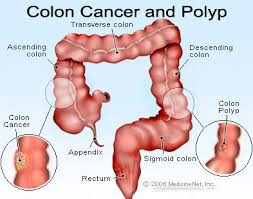
A DNA chip can identify colon cancer quickly and reliability according to new research.
HOW IT WORKS:
Proteins control the processes in the body – both healthy and pathological processes. Instructions on how to build these proteins can be found in their DNA: all proteins are encoded by certain gene segments, some longer, some shorter. To make a protein, body cells first copy the corresponding segment of DNA. This copy – the messenger RNA (mRNA) – is subsequently translated into a protein. Each mRNA molecule thus corresponds to a specific protein. Analyzing the messenger RNA in the cell can thus yield information on the proteins formed – and thus on the processes in the body targeted by the cell.
The study used DNA chips to analyse thousands of different genes in the body. It was found that the chips can tell if genes are cancerous or not with 95% accuracy.
Seven genes were found to make up a biomarker for colon cancer, and by using a mathematical model and a DNA chip, colon cancer can be detected.
In Europe only 42% of people with colon cancer survive and worldwide it is the third most common type of cancer.
Early diagnosis has a key part to play in reducing death amongst people living with colon cancer.
Thirty-one tumours of colon cancer and 33 tumour-free samples were analysed by researchers from the Technical University of Madrid and the University of the Basque Country, Spain.

