Pages

Showing posts with label retail sales. Show all posts

Wednesday, December 21, 2016

Donie's Ireland daily news BLOG

Former Apollo House owner supports aims of occupation by Home Sweet Home

LIAM Ó MAONLAÍ, GLEN HANSARD, HOZIER AND CHRISTY DIGNAM PERFORM AT SUPPORT GIG

Image result for Former Apollo House owner supports aims of occupation by Home Sweet Home   Image result for Former Apollo House owner supports aims of occupation by Home Sweet Home  Image result for Former Apollo House owner supports aims of occupation by Home Sweet Home

GLEN HANSARD AND CHRISTY DIGNAM PLAYED IN SUPPORT OF APOLLO HOUSE THAT IS BEING OCCUPIED BY HOUSING ACTIVISTS AND HOMELESS PEOPLE.

The former owner of Apollo House says he supports the aims of Home Sweet Home, a group of housing activist who have occupied the vacant office building since Thursday, to accommodate rough sleepers. Property developer Garrett Kelleher controlled Shelbourne Developments which included the building in its portfolio of loans until 2014.
He said “nobody” should be homeless this Christmas and it was “heartwarming that so many people really care” about the homelessness crisis. “People have been squatting in vacant property for generations,” he said. “The receivers for Apollo and Nama should seek to immediately do what they can to help, not allow this to become a political football but actually help, have their lawyers down tools and do the right thing.”
Mr Kelleher, who is based in Chicago, said he became aware of the occupation through the media. He said he had not been in the building for three years.
Thirty-five people slept in the building on Monday night, according to Home Sweet Home spokeswoman Rosi Leonard. She rejected suggestions that the group had refused to meet receivers Mazars, saying they wanted to co-operate. Another spokesman said “solicitors” were in communication and a meeting was expected later this week.
There were now two fully-fitted kitchens and showers had been installed in the building, where they planned to be over Christmas, Ms Leonard said.
Up to 1,000 people gathered for a free gig in support of Home Sweet Home at Apollo House on Tuesday. Gardaí closed off the small street shortly before 1pm as singers Glen Hansard, Hozier, Liam Ó Maonlaí, Christy Dignam and the band Kodaline arrived at the building.
Hansard sang first from a small raised platform on the street, in front of the side gate into Apollo House, performing Woody Guthrie’s This Land Is your Land before being joined by Christy Dignam who delivered a performance of his band Aslan’s Crazy World. A number of former rough sleepers, who spent Monday night in Apollo House, watched from a roof above the ground floor over the car park.
Director Jim Sheridan joined in a performance of The Auld Triangle, followed by Kodaline singing Bob Dylan’s The Times They are a-Changing and their own tracks, High Hopes and All I Want. Hozier performed his hit Take Me To Church.
Volunteers passed through the crowd with buckets seeking donations towards the running costs of the project.
During the gig, Dean Scurry of the Home Sweet Home project, spoke of the need to end poverty and homelessness, with “people plus love”. He said Home Sweet Home and Apollo House were symbols of “freedom, hope, love, nourishment and respect”.
Among those present for the impromptu concert was Martina Balfe, who works in the GPO. She said she had come to “show support to the homeless”, adding “it’s a duty of everyone to be concerned about this”.
Julia Woods, Steve Woods and Shirley Kenny travelled from Athlone. “It’s a great cause and it’s really important to show solidarity and support,” said Mr Woods. Éanna Gordon, a student, said he was pleased to see the “movement” was “popular and growing”. “This has two purposes – a practical one to give shelter to homeless people and as well to draw attention to the issue. That’s a good thing,” he said.

Incentives to Bank staff  to increase lending undermined the quality of the product?

CENTRAL BANK SAYS IT ACTED TO STOP USE OF LEAGUE TABLES TO ACHIEVE NEW FINANCIAL TARGETS

Image result for Incentives to Irish Bank staff  to increase lending undermined the quality of the product?  Image result for The Central Bank told the Oireachtas finance committee that more oversight of retail banks by boards of directors and by shareholders was needed   Image result for The Central Bank told the Oireachtas finance committee that more oversight of retail banks by boards of directors and by shareholders was needed

THE CENTRAL BANK TOLD THE OIREACHTAS FINANCE COMMITTEE THAT MORE OVERSIGHT OF RETAIL BANKS BY BOARDS OF DIRECTORS AND BY SHAREHOLDERS WAS NEEDED?

Irish retail banks have been using league tables to incentivise staff in driving new lending without giving proper consideration to quality, the Governor of the Central Bank Philip Lane told the Oireachtas finance committee on Tuesday.
Image result for The Central Bank told the Oireachtas finance committee that more oversight of retail banks by boards of directors and by shareholders was needed Mr Lane said this emerged in recent inspections by the regulator of the Irish retail banks.
Other weaknesses identified included a need for “better oversight and challenge” from boards in relation to the risk appetites of banks, which are used to govern and quantify lending decisions across sectors and borrower types.
It also included strategies focused on driving increased volumes without sufficient consideration of the risks associated with long-term lending, and the use of the league tables to incentivise staff to push lending volumes without due consideration to quality.
It is not clear which banks were using the league tables but it is understood that the they were operated informally and their use has stopped after interventions from the Central Bank.
Mr Lane said the culture within Irish banks also needs to change so that they “truly put the customer first”. He called for more oversight by boards of directors and by shareholders.
Separately, Mr Lane said “significant risks” remain on the horizon for the domestic Irish banks, in spite of the measures that have taken place to repair their businesses. “All have relatively concentrated business models, focused primarily on Ireland and to some extent the UK,” he said. “This makes them especially vulnerable to any shocks affecting the Irish economy.”
Mr Lane said that while Irish banks continue to work out their non-performing loans (NPLs), they still “remain high” both in absolute and relative terms. In absolute terms, NPLs have declined by just more than €48.5 billion or 57 percent since their peak in 2013, and now represent 17.3 per cent of all loans.
On the Central Bank’s view of it being given powers to regulate standard variable interest rates, Mr Lane said there were “many downsides” to this but it was ultimately a matter for the Oireachtas to decide.
In the absence of new lenders to the Irish market, Mr Lane encouraged mortgage customers to consider switching their home loan to another lender or transferring to a lower-cost product with their existing bank.
“More can be done to encourage switching,” he said, adding that the incidence of switching here was currently “too low”.
Mr Lane said Brexit presented a “significant challenge” for the domestic banking sector. “Depending on the outcome [of negotiations], the UK’s exit from the EU could have long-term structural consequences for those Irish banks with a significant presence there. This will become clearer during the next two years, as the elements of the EU-UK relationship take shape.”
He said Dublin was “in the mix” with other EU cities in terms of where London-based financial institutions might relocate their activities, adding that the Central Bank had a “neutral” view on this matter and would consider any applications by firms on their merits.

Christmas showdown as SuperValu and Dunnes go to battle for Irish consumers

Image result for Christmas showdown as SuperValu and Dunnes go to battle for Irish consumers  Image result for Christmas showdown as SuperValu and Dunnes go to battle for Irish consumers  Related image

DUNNES STORES SNATCHED THE TITLE OF THE COUNTRY’S LARGEST GROCERY RETAILER LAST MONTH FROM SUPERVALU.

Dunnes Stores and SuperValu now hold an equal share of Ireland’s multi-billion euro grocery market, as the pair battle it out for supremacy among consumers over Christmas.
New figures from research group Kantar Worldpanel show the retailers each have a 22.5% share of the market.
Dunnes Stores, headed by Margaret Heffernan and Frank Dunne, snatched the title of the country’s largest grocery retailer last month from SuperValu. It was the first time in over a decade that Dunnes had secured the top spot.
But SuperValu, under managing director Martin Kelleher, which is controlled by the Cork-based Musgrave group, will be vying to reclaim the title.
And with shoppers now in the final week before Christmas, there are intense efforts by all the chains to lure customers who are splashing out for the festive season.
Previous figures from Kantar Worldpanel showed that Dunnes Stores had a 22.6% share of the grocery market during the 12 weeks to the end of November 6. SuperValu had 22.4%.
The latest figures, for the 12 weeks ended December 4, show that the two retailers now share the number one position, while Tesco has a 21.8% share.
Dunnes’ share, in value terms, rose by 4.8%, while SuperValu’s was 1% higher. Grocery inflation in the period stood at 0.6%.
Tesco has been focusing on cutting prices to attract more customers. That hits the value of its sales – the figure that Kantar Worldpanel reports on. But the value of its sales was still 1% higher in the latest period.
David Berry, director at Kantar Worldpanel, said the latest figures are a “real testament” to how competitive the grocery market is.
“Just 0.7 percentage points now separate the three largest retailers as we enter the all-important festive period,” he said.
He added that evidence of Tesco’s turnaround has been seen in the last quarter. Mr Berry said that the chain’s sales have shown positive growth for the first time since March.
“An additional 10,000 households have chosen to shop with Tesco in 2016 and are returning to the retailer more frequently – a clear positive sign for the grocer,” he said.
Dunnes Stores has built its loyalty through its ‘Shop and Save’ campaign, a discounting ploy that has cost it tens of millions of euro.
But it has been also developing its product lines and acquiring businesses, moves designed to help it improve its overall offer to consumers.
Almost 64pc of households visited Dunnes Stores in the latest reported period, spending an average of €39.50 a visit. That’s a €3 increase per trip compared to the corresponding period last year.
Mr Berry said that Dunnes Stores has also seen more shoppers opt to buy branded goods – the only retailer to experience that in the latest period. Branded sales at the chain rose 5.7%, while own-label goods sales were up 3.3%.
Lidl increased its share of the market by 4.3% to 11.1%. Aldi’s rose by 6.1%, also to 11.1%.
Grocery chains are facing increased pressure this Christmas following the decline in Sterling after the UK’s June Brexit vote.
A report yesterday from credit risk analyst firm Vision-net.ie showed that 24% of Irish shoppers intend to travel across the border to avail of weaker Sterling. “Irish consumers are cognisant of the impact of Brexit and a weakened Sterling, and plan to avail of the knock-on benefits this Christmas,” said Christine Cullen, managing director of Vision-net.ie.

Smartphones could soon come with software signal blocker for driving?

Image result for Smartphones could soon come with software signal blocker for driving?   Image result for Smartphones could soon come with software signal blocker for driving?

THE MOBILE PHONE INDUSTRY IS UNDER PRESSURE TO INTRODUCE SOFTWARE ON PHONES TO PREVENT DRIVERS BEING DISTRACTED BY NOTIFICATIONS.

According to The Guardian, an informal government meeting is due to take place early next year at which ministers will tell phone manufacturers and network providers that software similar to airplane mode should be built into phones to block the data signal while the owner is driving.
The report said that ministers want a basic software to become standard, with suggestions it could be triggered using GPS technology to detect when certain speeds are reached.
The software would also differ from airplane mode in that it would still allow emergency calls or to accept calls from designated contacts.
From next spring the fixed penalty charge for using a mobile phone that isn’t hands-free while driving will double to £200, with the fixed penalty notice also set to double from three points to six.
It is hoped the new software could add further discouragement to drivers who still use a phone while at the wheel.
According to the RAC annual motoring report, which was published in September, the number of drivers who admitted using a phone in their hands while driving has risen from 8% in 2014 to 31% this year.

Eating leafy greens is good for your brain says researchers?

Image result for Eating leafy greens is good for your brain says researchers?   Related image   Image result for Eating leafy greens is good for your brain says researchers?
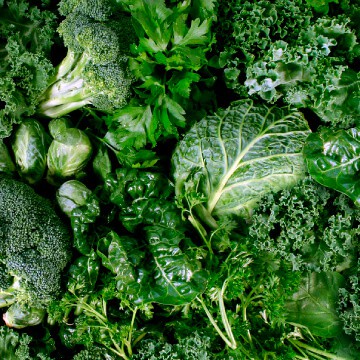
RESEARCHERS HAVE IDENTIFIED AN IMPORTANT LINK BETWEEN THE CONSUMPTION OF LUTEIN-RICH FOODS AND BRAIN HEALTH IN OLDER ADULTS.

While most kids are told to eat their spinach and broccoli so they grow up strong, a new study published in the journal Frontiers in Aging Neuroscience suggests that these greens can significantly affect basic brain functions and intelligence later on.
Researchers at the University of Illinois have identified an important link between the consumption of lutein-rich foods and brain health in older adults. Lutein, a plant pigment prevalent in leafy green vegetables, cruciferous vegetables, accumulates in the brain over time, embedding in cell membranes and influencing certain neurological functions.
According to Marta Zamroziewicz, a University of Illinois graduate student who led the study, lutein plays “a neuroprotective role,” and can be “linked to cognitive performance across the lifespan.” While previous research has shown that lutein gathers in the gray matter of the brain “known to underlie the preservation of cognitive function in healthy brain aging,” Zamroziewicz set out to determine the specific cognitive elements most affected by the plant pigment.
A test group of 122 healthy adults aged 65-75 were asked to solve problems and answer questions that reflected “crystallized intelligence,” or the ability to effectively use the knowledge and skills acquired over a lifetime. Researchers also collected blood from each participant to test for blood serum levels of lutein, and performed MRI imagery on each of the test subjects’ brains to measure for the volumes of various structures.
After evaluating each participant’s brain make-up and test results, the researchers determined that adults with higher blood serum levels of lutein performed better on the crystallized intelligence tests. Zamroziewicz noted that while serum levels primarily reflect recent dietary intake, they have also been associated with long-term dietary intake in older adults.
Those with higher lutein levels in their blood also tended to have a greater volume of gray matter in their parahippocampal cortex, a focal region imperative for healthy aging. According to Aron Barbey, Illinois psychology professor and co-lead of the study, the “gray-matter volume of the parahippocampal cortex on the right side of the brain accounts for the relationship between lutein and crystallized intelligence.” This new-found data offers “the first clue as to which brain regions specifically play a role in the preservation of crystallized intelligence, and how factors such as diet may contribute to that relationship.”
Though Zamroziewicz notes that further testing will be needed to further determine how lutein in the diet specifically affects long-term brain structure, it’s clear that an extra helping of kale salad at dinner could pay off big time down the line.

Pregnancy may spur changes in a Woman’s brain?

IMAGING SHOWS ADAPTATIONS IN GRAY MATTER, BUT NO SIGN THAT MEMORY IS AFFECTED.

Image result for Pregnancy may spur changes in a Woman's brain?   Surface-based measures.

NEW MOTHERS OFTEN REMARK THAT THEY’VE GOT “BABY BRAIN,” A NEW WAY OF THINKING THAT SEEMS TO ACCOMPANY PREGNANCY AND CHILDBIRTH.

NEW RESEARCH SUGGESTS THEY’RE RIGHT.

Pregnancy causes long-term changes in a woman’s brain that probably evolved to improve her ability to protect and nurture her child, Spanish researchers report.
The investigators used MRI scans to compare the brain structures of 25 women before and after their first pregnancies.
After giving birth, the women had significant reductions of gray matter in areas of the brain associated with social interactions, the findings showed. Those brain regions overlapped with ones that activated when mothers watched images of their own babies.
The “changes concern brain areas associated with functions necessary to manage the challenges of motherhood,” study co-lead author Erika Barba said in a news release from the Autonomous University of Barcelona.
Though some expectant moms complain of fuzzy thinking — the downside of “baby brain” — researchers reported the women had no changes in memory or other thinking functions during pregnancy. That means the loss of gray matter does not lead to problems in those areas.
The brain changes, which lasted for at least two years after the women gave birth, probably help them adapt to motherhood, the study authors suggested.
According to study co-director Oscar Vilarroya: “The findings point to an adaptive process related to the benefits of better detecting the needs of the child, such as identifying the newborn’s emotional state. Moreover, they provide primary clues regarding the neural basis of motherhood, perinatal mental health and brain plasticity in general.”
Study co-lead author Elseline Hoekzema said in the news release that the changes “may reflect, at least in part, a mechanism of synaptic pruning … where weak synapses are eliminated giving way to more efficient and specialized neural networks.”
The researchers also found that they were able to use these brain changes to predict a mother’s attachment to her baby, according to the study published Dec. 19 in the journal Nature Neuroscience.
The changes were similar whether women got pregnant naturally or through fertility treatments.      

Tuesday, August 30, 2016

Donie's Ireland daily news BLOG update

17% increase in claims involving uninsured drivers in Ireland

WARNING OF INCREASED PREMIUMS AS MORE CLAIMS RECORDED DURING FIRST SEVEN MONTHS

Image result for 17% increase in claims involving uninsured drivers in Ireland   Image result for 17% increase in claims involving uninsured drivers in Ireland

OVERALL, THERE WERE 688 CLAIMS RECORDED IN DUBLIN, UP 78 ON THE 610 CLAIMS SEEN DURING THE FIRST SEVEN MONTHS OF 2015

The number of motor insurance claims involving uninsured or untraced drivers jumped by 17% between January and July, according to new figures.
The data show there were 1,644 claims involving such drivers during the first seven months of 2016, up by 235 versus the 1,409 claims lodged during the same period a year earlier.
The Motor Insurers’ Bureau of Ireland (MIBI) figures show 42% of such claims were made in Dublin with the capital also showing a big spike in general claims made compared to last year.
Overall, there were 688 claims recorded in Dublin, up 78 on the 610 claims seen during the first seven months of 2015. The next highest number of claims were in Cork (129) and Galway (92).
Between January and July, claims increased in 20 counties, with the largest percentage change being in Roscommon, which recorded an increase of 500% as the number of claims rose from 2 to 12.
A decline in four counties.
Four counties experienced a decline in the number of claims, the largest drop being in Limerick which had 80 claims, down from 95 in 2015.
The number of claims in Clare and Kildare were the same across both years.
MIBI, which was established by the Government and the insurance industry in the 1950s, pays out approximately €60 million a year on claims involving uninsured or untraced drivers. David Fitzgerald, the body’s chief executive, warned that the jump in claims involving such drivers would likely impact on premiums in the future.
“An increase of 17% represents a significant jump in the number of claims being lodged. It showcases the increased pipeline of payments facing the MIBI. While no sums are yet attached to these claims, unfortunately more claims generally means higher levels of payments coming from the MIBI and ultimately, that will impact on motor insurance premiums,” he said.

Hiqa reports critical of HSE disability services

PEER ABUSE, FAILURE TO INVESTIGATE COMPLAINTS AND MISMANAGEMENT AMONG FINDINGS

Image result for Hiqa reports critical of HSE disability services   Image result for Hiqa reports critical of HSE disability services

HIQA INSPECTORS FOUND THAT SOME STAFF FELT THEY WERE BEING TROUBLEMAKERS IF THEY RAISED CONCERNS ABOUT THE QUALITY OF DISABILITY SERVICES.

Major patient safety concerns have been raised in a series of critical reports into HSE-run disability services around the country.
Inspectors from the Health Information and Quality Authority (Hiqa) noted incidents of peer-to-peer abuse, misadministration of medications and failures to adequately report complaints of alleged mistreatment following visits to a number of large disability centres in Cork, Kilkenny and Donegal.
During an unannounced visit to the St Raphael’s Campus in Youghal, Co Cork, it was found that a resident had not been given adequate food and nutrition for a period of more than 18 hours.
Those working at the centre said there were not enough members of staff on duty on that particular day to get the resident out of bed and feed them appropriately.
The Youghal campus, which had court-applied restrictive conditions placed on its registration last year due to previous negative findings by Hiqa, also came in for criticism for incorrect use of seizure and antimicrobial medicines which could have “potentially catastrophic” or even fatal impacts on patients.
The facility is currently in the middle of a winding-down process and is due to close next year, but inspectors recorded an ongoing “lack of clarity for staff around the reporting of allegations of abuse”.
One resident alone had made 15 complaints of physical abuse by one of his peers over the space of less than a month, but none of these incidents were properly investigated, inspectors said.
Serious failings in governance and management were identified at an unnamed disability service in Donegal during another unannounced inspection in March.
Despite initially being told by the person in charge that there had been no “incidents, suspicions, allegations or investigations of abuse” there since 2013, Hiqa officials later found that such allegations had indeed been made and investigations were instigated.
Inspectors said the person in charge subsequently handed over documents relating to the alleged incidents of abuse, and they concluded that “there was a significant risk to the safety of residents as a consequence of seriously inadequate safeguarding arrangements in the centre”.
Speaking to inspectors, some members of staff felt they were being seen as “troublemakers” if they highlighted problems with safeguarding measures or instances of possible mistreatment.
Elsewhere, Hiqa was not satisfied that the requisite improvements had been made to service provision at St Patrick’s Centre in Kilkenny which was taken over by the HSE in October 2015 following “significant failings” by the previous care provider.
Incidents of peer-to-peer aggression had continued since the handover, and there were still “significant concerns regarding the lack of suitable governance and management arrangements to oversee the quality and safety of care provided to residents” which had “direct negative outcomes for residents”.
A smaller community-based facility for six residents in Westmeath failed to demonstrate compliance for any of the nine standards tested during a visit in March, and the two-story house had no overall evacuation plan in the event of a fire.
It was also found to be deficient as regards safeguarding measures, as the member of staff designated to deal with complaints told inspectors they were “not aware that they had been assigned this responsibility” and said they did not have time to carry out managerial roles alongside their frontline duties.
The findings came in a raft of 11 inspection reports released by Hiqa on Monday. Other centres visited managed to demonstrate more consistent compliance with regulations, and there was evidence of a good quality of life for residents within these services.
The State’s health watchdog also provided an update on two autism care centres which are operated by Gheel Autism Services on behalf of the HSE after it took over control from the Irish Autism Society following negative inspection outcomes published in July.
Inspectors found that significant improvements had been made in safety and quality of life of residents at both premises.

Ireland’s retail sales up by 12.6% for July 2016

BIG JUMP IN CAR SALES ACCOUNTS FOR THE OVERALL BOOST?

Image result for Ireland's retail sales up by 12.6% for July 2016    Image result for Ireland's retail sales up by 12.6% for July 2016

THE VOLUME OF RETAIL SALES INCREASED BY 12.6% IN JULY WHEN COMPARED WITH JUNE AND THERE WAS AN INCREASE OF 6.3% IN THE ANNUAL FIGURE.

If car sales are excluded, there was a decrease of 0.5% in the volume of retail sales in July when compared with June and there was an increase of 2.7% in the annual figure.
The sectors with the largest month on month volume increases were motors which were up 12.5%, furniture and lighting, up 5.3%, and books, newspapers and stationery, up 2%.
The sectors with the largest monthly decreases were clothing, footwear and textiles which were down 2.5 per cent.
Other retail sales are down 2.4% and food, beverages and tobacco are down 0.9%.
There was an increase of 4.5% in the value of retail sales in July when compared with June and there was an annual increase of 3.9% when compared with July 2015.

The genetics of Type 2 Diabetes is in a mess

A RECENT STUDY SHOWS WHY GENETIC ADVANCES IN MEDICINE ARE SO CHALLENGING.

Image result for The genetics of Type 2 Diabetes is in a mess Image result for The Human Genome Project was both a spectacular success Image result for The Human Genome Project was both a spectacular success

The Human Genome Project was both a spectacular success and a frustrating disappointment. It has revolutionized the science of biology and spawned a multi-billion dollar industry. It has alsofailed to deliver on the ambitious promise that genome science will, as President Bill Clinton stated 16 years ago, “revolutionize the diagnosis, prevention and treatment of most, if not all human diseases.”
But hype springs eternal. The human genome is now old news; today scientists study tens or even hundreds of thousands of human genomes. We now hear promises about the imminent benefits of personalized medicine, medicine that is tailored to an individual’s unique genetic make-up. President Barack Obama hopes that “10 years from now we can look back and say we have revolutionized medicine,” from cancer to Alzheimer’s. To achieve this, the White House has launched another large research effort: the Precision Medicine Initiative, which will devote hundreds of millions of dollars to advance the use of genomics and other cutting-edge science in medical practice.
It’s an admirably ambitious vision, but in 10 years we shouldn’t expect to look back and see a revolution. Scientifically, this is the right direction — over the long-term, genomic discoveries will certainly drive major medical advances. But it’s going to be a long slog. The major challenges that lie ahead are laid bare in a recent genetic study of Type 2 diabetes. This study, published inNature earlier this month, shows that the genetics of diabetes is a mess — and it illustrates why the big promises of genetic medicine won’t be realized any time soon.
Known mutations account for only 10 percent of the estimated genetic contribution to the disease. After more than a decade of large, high-tech studies, the genetic basis of diabetes remains, for the most part, unexplained.
Type 2 diabetes is one of the major diseases that biomedical scientists hope to conquer with genomics. It’s one of our most common diseases — the Centers for Disease Control and Prevention estimates that nearly 10 percent of all Americans have it. Diabetes is also expensive: It accounts for an estimated $176 billion in medical costs each year. And while most of us have the impression that diabetes is something you prevent with a healthy diet and exercise, the disease also has a strong genetic component.
By understanding the genetics of diabetes, we hope to combat the disease in three big ways. First, we’ll be able to identify people with a high genetic risk, and make them the focus of prevention efforts. Second, we might recognize and specifically treat different molecular forms of the disease — different people likely have different underlying genetic mutations, which means that not all diabetics respond the same way to a one-size-fits-all therapy. And third, genetics will help us understand the disease’s molecular underpinnings, and guide us toward better treatments that directly target those molecules. If we achieved all three goals, we would indeed revolutionize the treatment of diabetes.
And so, for the past decade, researchers have conducted large genetic studies, involving at first thousands, and now tens of thousands of diabetics. The results have been somewhat disappointing: Though researchers have linked dozens of mutations with diabetes, we’re clearly still missing much of the picture. Known mutations account for only 10 percent of the estimated genetic contribution to the disease. After more than a decade of large, high-tech studies, the genetic basis of diabetes remains, for the most part, unexplained.
To find the missing mutations in diabetes, scientists of two large international research consortia performed a deeper DNA analysis of a large set of study subjects. Earlier studies used a lower-cost, coarse-grained scan of the subjects’ DNA. These scans only had the power to detect mutations that are relatively common in the population. In this most recent study, the researchers decided to survey the subjects’ genomes much more comprehensively.
The hypothesis behind this approach is that diabetes is a bit like Leo Tolstoy’sfamous claim about unhappy families: Each case of diabetes is affected by genetics in its own way. In other words, although diabetes is a common disease, its genetic component might not be caused by a set of relatively common mutations. Rather, each person’s genetic risk could be the result of distinctly different, and relatively rare, mutations.
If that were true, this new, more comprehensive study should have turned up many of these hypothetical rare mutations. But that’s not what the researchers found. After analyzing the DNA of over 100,000 diabetics and healthy volunteers, the researchers largely re-discovered the same set of common mutations that had been previously found. They discovered few rare mutations.
The hypothesis behind this approach is that diabetes is a bit like Tolstoy’s famous claim about unhappy families: Each case of diabetes is affected by genetics in its own way.
Why is this bad news? Because it means that finding the genetic risk factors for diabetes is going to be very hard. If rare mutations were important genetic drivers of diabetes, then the task of understanding diabetes genetics would likely be easier. Rare mutations are expected to have larger effects, and therefore a person’s individual genetic risk for the disease would come down to just one or a few mutations. If we knew what mutations to look for, we could easily test for them in a routine, clinical genetic test.
Mutations that are common in the population, on the other hand, tend to have smaller effects on disease. (Mutations with large effects tend not to become common, thanks to natural selection.) This latest study suggests that the genetic basis of diabetes involved the combined effects of many mutations, each one only making a small contribution. These small contributions are statistically challenging to detect in a scientific study, and much harder to evaluate in a clinical genetic test. This is why the study authors argue that “Genome sequencing in much larger numbers of individuals than included in the current study are needed.” As one scientist put it: “Once dubbed ‘a geneticist’s nightmare,’ diabetes seems to be living up to its reputation.”
Fortunately, with today’s technologies, very large genetic studies are becoming feasible. Obama’s Precision Medicine Initiative proposes to put together a study cohort of one million Americans over the next several years. And given the hundreds of billions of dollars that diabetes costs America each year, such large studies, if successful, are clearly worth the expense.
The challenging genetics of diabetes and other common diseases, however, means that the benefits of such studies will mostly arrive in the long term. We are laying an important foundation for the medicine of the future — but people also need care today. Fortunately, even without the genetics, we understand a lot about how to prevent diabetes though lifestyle changes. Investing in large efforts to help people change their diet and exercise habits may not sound as exciting as high-tech genetic medicine. But, just as we shouldn’t overhype the near-term prospects of genetics, we shouldn’t undersell the value of the effective care we can provide today.

Putting lemon wedges in your drink is actually a bit gross

BACTERIA IS APPARENTLY RIFE THERE?

Image result for Putting lemon wedges in your drink is actually a bit gross  Image result for Bartender asks would you like a lemon slice with your cold drink  Image result for Putting lemon wedges in your drink is actually a bit gross

BARTENDER ASKS WOULD YOU LIKE A LEMON SLICE WITH YOUR COLD ALCOHOLIC BEVERAGE? YOUR REPLY “THAT SOUNDS BLOODY MARVELLOUS” – STICK IT RIGHT IN. THANKS KIND SIR FOR SUPPLYING ME WITH ALCOHOL AND A LOVELY BIT OF CITRUS FRUIT THAT PERFECTLY COMPLIMENTS MY BEVERAGE.

There’s nothing wrong with that Friday night (tad overly enthusiastic) exchange right? Wrong. According to a study published in the Journal of Environmental Health the lemons and limes given out at bars are actually rife with all kinds of bacteria. That’s just not what you want. Plus we just found out that water bottles can be pretty rank too. Can someone just cut us some slack.
The research team swabbed lemon slices that were on their drinks at 21 different restaurants, and they discovered that almost 70% of the samples had some sort of microbial growth, including 25 different microbial species. Ewwwww. But also I wonder if they got to expense all those drinks. Not a bad life despite the germs.
“The microbes found on the lemon samples in our investigation all have the potential to cause infectious diseases at various body sites, although the likelihood was not determined in this study. Restaurant patrons should be aware that lemon slices added to beverages may include potentially pathogenic microbes.”
Wow – way to ruin the humble lemon guys. Elle magazine spoke to Philip Tierno, PhD, a clinical professor of microbiology and pathology at New York University School of Medicine and author of The Secret Life of Germs who explained why they can be so gross.
“People are touching the lemon in your glass, handling it, cutting it, placing it in a container or a cup, or a glass; and then picking up those slices at a later point in time and dropping them into a drink and putting them on the rim of a glass. You can easily see how those lemon slices and lemon wedges can be contaminated.”
But here at Cosmopolitan we deal with solutions, not problems. What you’re gonna need to do is eyeball your bartender as he prepares your drink, and then send it back if you see the bartender put their fingers all over the rim of the glass or use a dirty rag to clean the glass. Thanks for the tips Tierno.

“Weather bomb” could shed new light on mysteries of the Earth’s interior

Image result for “Weather bomb” could shed new light on mysteries of the Earth’s interior Image result for “Weather bomb” could shed new light on mysteries of the Earth’s interior Image result for “Weather bomb” could shed light on mysteries of Earth’s interior

THE RARELY-DETECTED S-WAVES FROM A “WEATHER BOMB” STORM MAY HELP SCIENTISTS UNCOVER THE EARTH’S HIDDEN STRUCTURE

Researchers from the University of Tokyo have uncovered a rarely detected type of seismic wave deep inside of the Earth stemming from a “weather bomb,” an extratropical storm that is small, fast-developing and possesses central pressure that rapidly increases in intensity. The findings could help scientists map out the hidden, deeper structure of the Earth.
Despite their rapidly intensifying central pressure – typically more than one millibar per hour for the course of 24 hours – weather bombs are fairly small storms. However, their fast-moving nature creates steep pressure gradients, leading to the formation of strong winds.
In the current study, the weather bomb occurred between Greenland and Iceland in 2014, creating a pressure pulse that spread to the seafloor and transformed into microseismic waves – tremors deep inside of the Earth that stem from natural phenomena – that rippled through both the surface and interior of the Earth.
Microseismic waves are detectable as both surface and body waves. Although it is typically not possible for surface waves to be observed past the coast, body waves make their way deep into the Earth’s interior and can be detected by land-based seismic stations, making them ideal for deconstructing the internal structure of the Earth.
Body waves can be split into two categories: P-waves and S-waves. P-waves contain particles that move parallel to the direction of the waves’ motion, whereas the particles in S-waves move perpendicular to the direction of the waves’ motion. While seismologists frequently detect P-waves, the detection of S-waves by seismic stations is not a common occurrence.
Thanks to the Atlantic weather bomb, the current study is one of the first ever to detect S-waves, a feat that was accomplished through the use of 202 wave-detection stations. These stations were able to trace the movement and direction of the microseismic waves created by the weather bomb using “Hi-net arrays.”
Hi-net arrays work by taking the information gathered by seismometers that pick up the “noise” created by microseismic waves as they move through the various layers of the Earth and transforming it into electronic data that can be charted and analyzed in the lab.
The successful detection of rare S-waves provides seismologists with a novel method of uncovering the Earth’s deeper structure. S-waves are of particular use due to the fact that they are more sensitive to liquids than other waveforms, meaning scientists can use them to determine areas of the Earth’s interior where solids turn into liquids.
“This [study] demonstrates the connection of the solid Earth to the atmosphere and ocean climate system,” said Peter Bromirski, a geophysical oceanographer who co-authored a perspective on the current study. “New discoveries of any kind are always exciting, particularly when multiple fields of study are involved.”