Pages

Showing posts with label Stephen Donnelly. Show all posts

Monday, September 12, 2016

Donie's Ireland daily news BLOG update

Hillary Clinton collapses & later is diagnosed with pneumonia

Image result for Hillary Clinton collapses & later is diagnosed with pneumonia  Image result for Hillary Clinton collapses & later is diagnosed with pneumonia  Clinton was filmed looking very unwell  
The US DEMOCRATIC candidate Hillary Clinton, diagnosed with pneumonia, became overheated and fell ill at a Sept. 11 memorial ceremony in an episode that renewed focus on her health less than two months before U.S. voters to elect their next president.
Clinton had a medical examination when she got back to her home in Chappaqua, New York, according to a campaign aide. Her doctor, Lisa Bardack, said in a statement that she has been experiencing a cough related to allergies and that an examination on Friday showed that she was suffering from pneumonia.
Hillary Clinton appeared to faint at the 9/11 memorial cermony?
“She was put on antibiotics and advised to rest and modify her schedule. While at this morning’s event, she became overheated and dehydrated. I have just examined her and she is now re-hydrated and recovering nicely,” Bardack said.
The 68-year-old Clinton abruptly departed the high-profile, televised event in New York City earlier Sunday and a video on social media appears to show her swaying and her knees buckling before she is helped into a motorcade event.
She was taken to her daughter Chelsea’s home in Manhattan and emerged around two hours later on a warm and muggy morning, wearing sunglasses and telling reporters that she was “feeling great.”
The video came from an unverified Twitter account under the name Zdenek Gazda, who did not respond to a request for comment.
Democratic presidential candidate Hillary Clinton waves after leaving an apartment building Sunday, Sept. 11, 2016, in New York. Clinton’s campaign said the Democratic presidential nominee left the 9/11 anniversary ceremony in New York early after feeling “overheated.” (AP Photo/Andrew Harnik)
The Clinton campaign did not respond to repeated requests for comment about the authenticity of the video.
Political strategists said the campaign should confront the health issue head-on to tamp down any concerns, particularly as Republican rival Donald Trump and some of his high-profile supporters have repeatedly argued that she lacked the “stamina” to battle adversaries abroad.
“The bottom line is the Clinton campaign is going to have to be completely forthright about Clinton’s health,” said Bud Jackson, a Virginia-based Democratic strategist.
Jackson suggested that “it would not be a bad move” if the campaign released more information in a crucial time of the race in which conservatives have touted conspiracies about Clinton’s health.
They have implied in recent weeks that Clinton’s coughing spells on the campaign trail were a sign of deeper problems.
PRESIDENTIAL PRECEDENTS
Past presidential candidates have released much more detailed information about their health than either Trump, 70, or Clinton.
For example, John McCain, the failed 2008 Republican presidential nominee, allowed reporters to see 1,173 pages of medical records after concerns were raised about a cancer scare.
Republican strategist Art Hackney of Alaska, who chaired former President George W. Bush’s campaigns there, doubted Sunday’s health scare will fade away quickly, saying that the Trump campaign “will milk it.”
“These things tend to be fanned; the flames fanned like crazy by those who will use it to make one story take attention away from other stories,” he said.
He added, however, “I just can’t for the life of me think this impacts any American who isn’t already on one side or the other” in the Clinton-Trump race for the White House.
Clinton had no more events on her schedule for Sunday and went, as previously planned, to her home in Chappaqua, 30 miles (50 km) north of New York City.
She is scheduled to begin a trip to California and Nevada on Monday.
As the solemn ceremony began at the site of the World Trade Center that was attacked by two hijacked airliners 15 years ago, there was patchy sunlight, with temperatures at about 80 degrees Fahrenheit (26.6 Celsius). But the high humidity early into the ceremony caused it to feel much hotter in the crowd at times.
Clinton wore a high-collared shirt and a dark pant suit and donned sunglasses for the morning event.
Democratic Representative Joe Crowley of New York, a Clinton supporter who attended the event, told Reuters that it was “incredibly, stiflingly hot” during the ceremony.
DIFFICULT DAYS of the past

CLINTON HAS BEEN IN THE NEWS BEFORE FOR SERIOUS HEALTH ISSUES.

In December 2012, she suffered a concussion and shortly afterwards developed a blood clot.
In a letter released by her doctor in July 2015, Clinton was described as being in “excellent health” and “fit to serve” in the White House. It noted that her current medical conditions include hyperthyroidism and seasonal pollen allergies.
However brief her illness was on Sunday, it comes in the wake of some tough days for Clinton, as national polls showed her lead over Trump diminishing. A Reuters/Ipsos poll of likely voters showed an 8-point lead for Clinton had vanished by the last week of August.
On Saturday, Clinton came under fire from Republicans and on social media for saying Friday night that “half” of Trump’s supporters belonged in a “basket of deplorables.” She later said she regretted using the word “half.”
Clinton’s speech at a campaign rally earlier this month in Cleveland was interrupted by a coughing spell. During the speech, she quipped, “Every time I think about Trump I get allergic.” She then resumed her speech.
That episode fueled speculation from conservative political quarters about her health. Trump supporters have been tweeting unsubstantiated theories regarding Clinton’s health under the hashtag #HillarysHealth.
Trump has also been under pressure to release detailed information on his health and medical history.
Instead, in December, Trump’s doctor wrote in a short letter that was made public that his blood pressure and laboratory results “were astonishingly excellent” and that he would be “the healthiest individual ever elected to the presidency.”

Watchdog report into NAMA’s "Project Eagle" sale is to be published

Image result for Watchdog report into NAMA's Project Eagle sale to be published  Image result for Watchdog report into NAMA's Project Eagle sale to be published   Image result for Watchdog report into NAMA's Project Eagle sale to be published
The Treasury Building on Grand Canal Street Lower where NAMA is based.

THE GOVERNMENT WILL THIS WEEK PUBLISH ITS REPORT ON NAMA’S €1.6BN SALE OF ITS NORTHERN IRELAND LOAN BOOK.

Minister for Finance Michael Noonan said last Wednesday he had been in possession of the report since the middle of August.
Government Chief Whip Regina Doherty said that the report will be published late Wednesday evening or Thursday morning.
Speaking on RTE’s ‘The Week in Politics,’ she said if an inquiry was needed, the Cabinet would make a decision in a prudent manner.
Nama’s northern loans, more commonly known as Project Eagle, were sold to US Investment company Cerberus Capital Management in 2014.
The sale has been ensnared in controversy as it had a book value of £4.5bn. Nama did not disclose the purchase price at the time but maintained it was the biggest single transaction in the agency’s history.
The Comptroller and Auditor General report has allegedly found shortcomings and irregularities which could have resulted in hundreds of millions of euro being lost.
Labour deputy leader Alan Kelly, Public Accounts Committee vice-chairman, called for a cross-border inquiry.
Speaking on RTE Radio One’s This Week, he said he was contacted privately by a Nama executive to meet prior to the forthcoming publication of the report
Why I had no option but to leave the Social Democrats
As things stands, vulture funds could take €10bn to €20bn offshore over the next decade

Why Stephen Donnelly had no option but to leave the Social Democrats

AS THINGS STANDS, VULTURE FUNDS COULD TAKE €10BN TO €20BN OFF SHORE OVER THE NEXT DECADE

Image result for Why Stephen Donnelly had no option but to leave the Social Democrats VImage result for Why Stephen Donnelly had no option but to leave the Social Democrats V Image result for Why Stephen Donnelly had no option but to leave the Social Democrats

WHAT IS REALLY DANGEROUS ABOUT THIS IS THAT IT WOULD EFFECTIVELY LEGITIMISE THE USE OF SECTION 110 TO AVOID IRISH DOMESTIC CORPORATE TAXES.1.

What is really dangerous about this is that it would effectively legitimise the use of Section 110 to avoid Irish domestic corporate taxes.
I’m writing today about what the State needs to do to secure in the region of €10bn to €20bn in potentially lost taxes from the so-called vulture funds. However, I would first like to comment briefly on my decision to resign from the Social Democrats.
Having vested so much in the party, and worked with so many amazing people on the project, Monday’s decision was a difficult one, and was considered and discussed at length. Many have been supportive of the decision, though some naturally feel let down, which was the hardest part of making the decision. To them I would say that if I thought there was a different option, I would have taken it.
The hard reality is that the leadership team wasn’t working. This had been flagged at a senior level in the party for some time, and in spite of the efforts of many involved, I concluded that the team would never work well enough to establish the party as a growing, outward-looking, mainstream, progressive social democratic political force, something Ireland needs in the coming years.
This was in evidence at the Budget Oversight Committee last week, where we heard from a range of experts that the tax base should not be eroded. It is evident in recent drops in our college rankings, highlighting the need for funding and operational changes in third-level education. The Apple ruling could be the start of a prolonged attack on our corporation tax offer, with a renewed call from the European Commission last week for the introduction of the Common Consolidated Corporate Tax Base (CCCTB) – something with the potential to damage our economy. The new national fibre network is set to be privatised, with the potential for years of under-investment and monopoly pricing.
Brexit is throwing challenges our way, Portugal is edging closer to a new bailout and Greece closer to another default. Global bond markets are doing worrying things; the world is over-leveraged, and global capital is running for the hills.
For all of these challenges, opportunities abound, too – in modern public service models, in advances in science and technology and in social policy. But to seize them, the country needs smart, long-term progressive thinking, a stable revenue base and serious investment in services and productive infrastructure. And one critical, shorter-term opportunity to help with this is to close down tax avoidance by the so-called vulture funds – something that has as much potential for the public purse as the Apple ruling.
As things stand, less than 20 so-called vulture funds could take offshore somewhere between €10bn and €20bn in potential taxes in the next decade. Last Wednesday, after months of political pressure and investigative journalism, Minister for Finance Michael Noonan agreed that vulture funds were using Section 110 vehicles to avoid taxes on Irish profits. He also agreed that the principle to apply is that profits generated by economic activity in Ireland should be taxed here. The proposed amendment is a welcome first step, but as it stands, has more holes in it than a Swiss cheese.
Less than 24 hours after his announcement, some of the big accounting firms were briefing their clients on the proposed amendment. The message was clear – it would involve a small tax leakage, at worst. It also seems clear they had had a significant role in designing the amendment. One source told me it was believed that between 90pc and 100pc of the taxes currently avoided would remain as such under the draft amendment. So what are the loopholes?
First, while not explicitly stated, the accounting firms confirmed the vulture funds would be allowed to mark their assets to current market prices at the 0pc Section 110 rate. This would allow them avoid capital gains taxes (CGT) on the increase in property prices in recent years – a massive and unnecessary concession. In contrast, when Government changes CGT rates, it doesn’t allow you mark your assets to market value at the old rate just before the change. You just have to suck it up. The loophole is easily closed by ignoring any mark-to-market and setting an earlier date for any actual asset realisations.
Second, the draft amendment also allows vulture funds preserve their ability to get tax relief on interest they pay on their loans. At face value, this should be fine – tax relief is available to all companies in Ireland on their bank loans. However, companies can’t avoid taxes by making loans to themselves at interest rates that reduce their taxable profits to near zero. Again on this, the accounting firms believe there are structures possible that would allow the vulture funds use “arm’s length interest rates” to relocate profits offshore. This loophole could be closed by explicitly only allowing genuine third-party bank-debt financing, and only up to a limit of a rate of say 5pc (most vulture bank debt is at less than 3.5%).
Third, the amendment only applies to property assets. This would allow the many billions in Irish personal unsecured loan portfolios be exempt, as well as all general corporate and SME loans.
What is really dangerous about this is that it would effectively legitimise the use of Section 110 to avoid Irish domestic corporate taxes. So if you want to buy a business, don’t do it the ‘old way’. Instead, get the business to set up a loan and use a Section 110 company to buy this loan. This would be your route to tax-free Irish profits. Again, this can be solved by prohibiting Section 110 status not just for Irish property assets, but any assets who derive their value or income from the domestic Irish economy. Given the scale of the tax avoidance here, it would be possible to list the circa 100 portfolios sold by Nama, IBRC and other private banks to vulture funds, which are prohibited. Problem solved.
The Government accepts that what is happening with vulture funds needs to change. Noonan has signalled he’s open to debate on the draft proposal. Given the scale of the monies involved, this amendment provides a real test for whether we are serious about shutting down tax avoidance, or still feel we need it to attract foreign capital and investment.
At the Budget Oversight Committee last week, Professor Alan Ahearne explained that pressures on the public purse in coming years mean the tax take is going to have to rise. In light of this, he argued, it made no sense to erode the tax base in the coming budget. I agree – sociodemographic changes, coupled with much-needed investment in public services and infrastructure, are essential to securing future prosperity. In the same vein, it makes no sense to let billions of euro in legitimate taxes on vulture fund profits drift out of the country. Profits generated on economic activity in Ireland should be taxed in Ireland – and for this to happen, it’s imperative the proposed amendment to Section 110 companies is made fit for purpose.

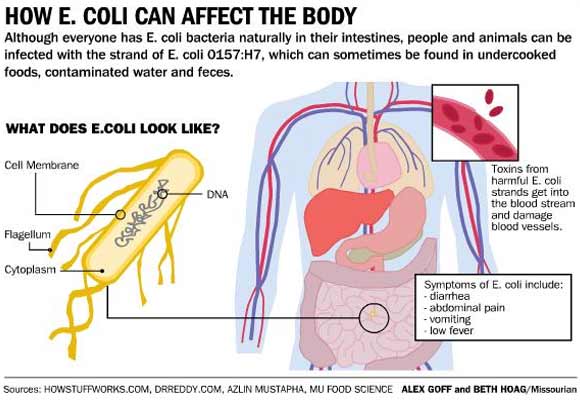
An investigation starts into child’s E.coli death

Image result for An investigation starts into child's E.coli death  Image result for E.coli death   Culprit: The analysis by a multi-agency team found those affected had consumed Dunsyre Blue (file picture), made by Lanarkshire-based Errington Cheese, before they became unwell

AN INVESTIGATION HAS BEGUN AFTER A THREE-YEAR-OLD GIRL DIED DURING AN E.COLI OUTBREAK LINKED TO A BRAND OF BLUE CHEESE.

The child, who died on September 2, was among 20 confirmed cases of infection with E.coli 0157.
Authorities looking into the outbreak found those affected had consumed Dunsyre Blue, made by Lanarkshire-based Errington Cheese, before they became unwell.
A Crown Office spokesman said: “The Procurator Fiscal has received a report in connection with the death of a three-year-old girl in Dunbartonshire on 2 September 2016.
“The investigation into the death, under the direction of Scottish Fatalities Investigation Unit (SFIU), is ongoing and the family will continue to be kept updated in relation to any significant developments.”
All confirmed cases became unwell before the end of July. Of the 20 cases identified, 11 required hospital treatment.
In July, two batches of Dunsyre Blue were voluntarily recalled and earlier this week a third was taken off the market as a “precautionary” measure.
Errington Cheese has maintained there is no conclusive evidence linking its products to the outbreak.
E.coli O157 infection can occur after eating food or drinking water that is contaminated with the faeces from infected animals, or from contact with animals or their environments.

Gene discovery could yield to new treatments of Diabetes

Image result for Gene discovery could yield to new treatments of Diabetes   Image result for TNFR5 gene destroys beta cells [A blood glucose test]

RESEARCHERS FROM THE UNITED KINGDOM HAVE DISCOVERED A GENE THAT AIDS THE DESTRUCTION OF INSULIN-PRODUCING CELLS IN THE PANCREAS, CONTRIBUTING TO TYPE 2 DIABETES.

Researchers have uncovered a gene that plays a key role in type 2 diabetes, but blocking it could lead to new treatments.
Reporting their findings in the journal Cell Death and Disease, the researchers reveal how blocking the gene – called TNFR5 – halted the destruction process, a discovery that could lead to new treatments for type 2 diabetes.
According to the American Diabetes Association, around 29.1 million Americans are living with diabetes.
The majority of these cases are type 2 diabetes, where the beta cells in the pancreas either do not produce enough insulin or the body is unable the use the insulin that is produced. Insulin is the hormone that helps regulate blood sugar levels.
While regular blood glucose testing and medications can help people with type 2 diabetes manage their blood sugar levels, there is a need for more effective therapies.
Lead researcher Dr. Mark Turner, of the School of Science and Technology at Nottingham Trent University in the U.K., and colleagues believe their gene discovery may have the potential to meet this need.
TNFR5 gene destroys beta cells in response to high levels of sugar, fat
The team says it is well established that long-term exposure to a high-fat and high-sugar diet can exacerbate destruction of beta cells among people with type 2 diabetes, but the mechanisms behind this process have been unclear.
For their study, Dr. Turner and colleagues set out to determine whether there is a genetic explanation.
Using high-density microarray analysis, the researchers evaluated more than 31,000 genes associated with the pancreas, with the aim of pinpointing which ones were most sensitive to glucose and fatty acids – the products of diets high in fat and sugar.
The researchers found that the gene TNFR5 had the highest sensitivity to glucose and fatty acids, and overexpression of this gene in response to high levels of fat and sugar led to beta cell destruction.
The authors say these findings suggest that people with type 2 diabetes – particularly those with poor blood glucose management or who have not been diagnosed – are more likely to overexpress the TNFR5 gene, and, therefore, beta cell damage is exacerbated.
But there is some good news; in laboratory tests, the team found that blocking TNFR5 in beta cells exposed to glucose and fatty acids halted their destruction.
This suggests that inhibiting TNFR5 activity could be a promising treatment strategy for type 2 diabetes.
“We believe we have found one of the key early events that leads to the decline of insulin-producing pancreatic beta cells caused by high levels of sugar and fat.
As such the gene may represent an important target in the search for new drug intervention strategies, which if successful, could help preserve pancreatic function and help control blood sugar levels in patients with type 2 diabetes.”   

Thursday, June 19, 2014

Donie's Ireland daily news BLOG update

Higgins raring to get his teeth into his old foes in Irish Banking inquiry


There was no sign of eggs frying on the sun-soaked plinth of Leinster House, but temperatures were running a little high inside the building.

The Technical Group were in conclave. It should’ve been a short meeting, simply a procedural rubber-stamp of Joe Higgins’s candidacy to replace Stephen Donnelly on the banking inquiry committee, as the Socialist Party TD’s nomination was unopposed.
But Joe’s former comrade, Clare Daly, took exception to the notion that her one-time ally had been selected unanimously by the group. A bemused John Halligan asked if she was opposing the choice, but the Dublin North deputy wasn’t. However, she was objecting to the use of the ‘unanimous’ word.
A lengthy wrangle ensued but in the end – as planned all along – Joe was selected unopposed in a sort-of unanimous way.
What is it about this infernal banking inquiry which seems to spark more shemozzles than the Football Championship?
First it came to pass (eventually) that the Government announced it would hold an official inquisition into how our banking sector scampered over the cliffs like a cartoon roadrunner. It was surely a no-brainer, providing an admiring electorate with the edifying spectacle of all sorts of toppled masters of the financial and political universe being summoned to account for their movements in front of a democratically selected cross-party committee of gimlet-eyed TDs and senators.
What could possibly go wrong?
Having proved themselves in recent months to be experts at the art of porcine couture (the ability to fashion a sow’s ear out of a silk purse), the Coalition didn’t disappoint this time either. A serious outbreak of faffing about by government senators led to them losing their majority on the committee – a cock-up which the Coalition promptly compounded by drafting in two extra Fine Gael and Labour recruits to restore the status quo, thereby causing opposition uproar in the Upper House.
And this hoohah led to Independent TD Stephen Donnelly throwing a strop over the inequity of it all and throwing his hat at it, declaring the Taoiseach was “treating democracy in a cavalier manner” as he headed for the door.
In steps Joe Higgins: Out on the plinth after the Technical Group pow-wow, the newest kid on the committee block was doing his damnedest not to lick his chops in anticipation of another chance to sink his fangs into his same old foes.
“I am sure that the Taoiseach who was in charge of the country when the property bubble was being blown up, Taoiseach Bertie Ahern, will be brought before the inquiry,” Joe reckoned with relish. “And that Taoiseach Cowen, who presided over the initial bailout, and I also believe that Taoiseach Kenny, who continued the bailout, should be among those who would be called.”
He was clearly raring to get started, and while he may not have the in-depth knowledge of banking arcana like financial whizz-kid Stephen Donnelly, Joe has a PhD in winding up the great and the good.
“I am prepared to sit and to quiz and question in the inquiry those individuals who were central to the political and economic events of the time, and interrogate them very strenuously,” he vowed.
However, a short time later during Leaders’ Questions, a gloomy Clare Daly was determined to rain on the committee’s parade. “It’s quite clear that the toothless banking inquiry is not going to expose anything, except maybe a few politicians to a bit of badly needed publicity,” she sniped.
“It has dawned on many citizens now that the Oireachtas inquiry into banking has about as much chance of getting to the bottom of what happened in the banking sector as Billy Bunter would have in finding out who robbed the school tuck shop. It is a joke,” she sneered.
Across the chamber the Taoiseach looked a bit weary. He must be fatigued from all his recent travelling (San Francisco, Guernsey and Lebanon) and recent U-turns (banking inquiry and discretionary medical cards). “I am glad to note the political policy regulatory structures on banking governance will be examined by the Oireachtas committee free of any direction from the Government,” he began, before being drowned out by cackles from the far side.
Finian McGrath comforted Enda. “Don’t worry – Joe will sort it out,” he assured the Taoiseach, but there was general agreement among the Opposition. But it wasn’t unanimous.

Irish Central Bank issues warning on crowd-funding (peer to peer) regulations


The Irish central bank has issued a warning to consumers over the unregulated status of crowd-funding and peer-to-peer lending.

The two cash-raising techniques have become increasingly widespread as small businesses find it hard to raise traditional bank finance.
  They involve businesses raising funds by amalgamating small sums invested by non-experts, often through third part platforms.
The Central Bank’s warning details concerns about risks specific to lending money through crowdfunding platforms, including the risk of the investor company or indeed the platform itself failing.
It also flags “the risk of misleading or insufficient information disclosure, unfair contract terms of misleading commercial practices, and the absence of dispute resolution and redress mechanisms”.
The bank’s statement does acknowledge that crowd-funding or peer-to-peer lending “is a type of market-based finance that could help stimulate funding to small and medium sized enterprises as well as personal lending”.
Borrowing without banks – here’s how you’ve done it.
While the Central Bank told TheJournal.ie this morning that it is not hitting the ‘red alert’ button on crowdfunding and peer-to-peer lending, it considers it important nonetheless that consumers know its regulatory status.
Industry response
A spokesperson for peer-to-peer platform linkedfinance.ie said that the company wanted to see the industry regulated.
“We want it regulated…we’ve engaged with the Department of Finance and the Central Bank from the start on this. We’re lobbying to get the industry regulated.”
He added that much of the transactional activity around crowd-funding took place through ordinary bank accounts, which are themselves regulated.

Gardai Commissioner O’Sullivan announces overhaul of penalty points system


The Garda Commissioner, Noirin O’Sullivan, has announced an overhaul of the controversial penalty points system.

The changes to the fixed charge penalty scheme are designed to strengthen oversight of how it operates and make it easier for the public to apply for cancellations.
The moves follow an examination of the system by the Garda Inspectorate, which found widespread breaches in policy.
The inspectorate’s probe came amid allegations by Garda whistleblowers regarding the cancellation of points for some motorists.
Ms O’Sullivan announced that the authority to cancel fixed charge penalty notices will now be centralised at the processing office in Thurles, Co Tipperary.
A guide explaining how the cancellation system works will be published on the force’s website, garda.ie, while a special form for cancellation requests will be made publicly available on the website, or through the Thurles office.
Regular audits will be undertaken to keep a watch on the operation of the system and a revised internal manual outlining the changes to policies and procedures will be published.
Ms O’Sullivan said: “These and other ongoing changes of the Fixed Charged Penalty System demonstrate An Garda Siochana’s commitment to improving the effectiveness and transparency of the process.
“We will continue to work with the Criminal Justice Working Group to examine how best to implement the short, medium and long-term recommendations set out in the inspectorate’s report.
SAFETY
“An Garda Siochana’s primary focus is in ensuring that the system continues its success in improving road safety and reducing road deaths,” she added.
Justice Minister Frances Fitzgerald last night welcomed the announcement.
“They are very important steps in ensuring that we 
have an efficient fixed charge penalty system in which people can have full confidence,” she said.

Ireland to lift top rate tax for offshore oil groups to 55%

  
The Irish government is to raise the maximum amount of tax levied on offshore oil and gas production to 55 per cent but has stopped short of setting up a national oil company along the lines of Norway’s Statoil.
Amid public controversy over the potential of oil and gas deposits in Irish waters, and the amount of tax companies pay on any profits any commercial fields would generate, Pat Rabbitte, Ireland’s energy minister, said on Wednesday that the new fiscal regime would increase the state’s tax take at an earlier stage in the production process.
The arrangements mean that the overall amount of tax oil companies will pay on commercial production would rise to a maximum 55 per cent, depending on the size of the field, from 40 per cent currently. The new higher rate will apply to new licences only; existing contracts are not affected.
The changes follow a report by Wood Mackenzie commissioned by the government into the fiscal regime surrounding oil and gas exploration and production in Irish waters. The consultants compared Ireland’s fiscal arrangements with those in marginal production countries such as South Africa and Spain and recommended the changes based on the potential for commercial oil and gas discoveries.
The UK and Norway were also included in the comparisons because of the frequency with which their experiences are cited by both proponents and opponents of exploring for oil and gas in Irish waters.
Mr Rabbitte said that by acting now to clarify future licensing terms, “it is my intention to communicate a clear message in relation to the stability of Ireland’s fiscal regime for the oil and gas exploration sector”. He said that would allow them to “focus on effective and timely exploration effort”.
Oil and gas companies have been prospecting in Irish waters for more than four decades. The Wood Mackenzie report says that only four commercial gasfields have been discovered, and no commercial oilfields. One industry executive estimates that up to €4bn has been spent on exploration in the waters of the Atlantic and the Celtic Sea so far.
Controversy over the financial returns from Irish oil and gas has been sparked by the delays that have plagued the Corrib gasfield off the northwest coast. It was discovered in 1996 but production is not expected to come onshore until 2015 after public protests against the building of pipelines led to arrests and the jailing of protesters that sparked public outrage.
Industry executives say comparisons of Ireland with Norway are inappropriate and premature. The Wood Mackenzie report said: “The essential point is that . . . offshore Ireland remains a very high risk, very high cost province for exploration.”

Fish do feel pain as well says an expert


Fish do have feelings and intelligence on a par with other animals and deserve better consideration of their welfare, according to a behavioural biologist at Australia’s Macquarie University.

DR Culum Brown came to the conclusion after reviewing the scientific evidence on fish capabilities.
He found that fish have good memories, lived in social communities, co-operated, and learned from one another.
They displayed behaviours normally seen in primates and were even able to build complex structures and use tools.
While their brains differed from those of other vertebrates, they contained structures that performed similar functions seen in other animals.
There was also mounting evidence that they felt pain in the same way humans do.
Brown believes fish are just as likely to be sentient as other animals.
He wrote in the journal Animal Cognition: “Although scientists cannot provide a definitive answer on the level of consciousness for any non-human vertebrate, the extensive evidence of fish behavioural and cognitive sophistication and pain perception suggests that best practice would be to lend fish the same level of protection as any other vertebrate.
“We should therefore include fish in our ‘moral circle’ and afford them the protection they deserve.”
People rarely thought about fish other than as food or pets, said Brown.
He pointed out that fish were second only to mice in terms of the numbers used in scientific experiments.
With more than 32,000 known species, fish far outweighed the diversity of all other vertebrates combined, he added.

Monday, December 30, 2013

Donie's best Ireland news daily BLOG update

Fine Gael's former Minister Lucinda Creighton close to establishing new Irish political party


Former Fine Gael Minister Lucinda Creighton (above left & right pic) Stephen Donnelly Ind. TD.

Reform Alliance registers intent with state commission

Fine Gael rebels are close to establishing a new political party led by former Minister Lucinda Creighton and Stephen Donnelly.
Recent reports say that the proposed Reform Alliance party has registered with Ireland’s Standards in Public Office Commission.
The party is to be headed by Creighton and independent deputy Stephen Donnelly according to the report.
The paper believes the Reform Alliance will be launched in September after local and European elections.
The report says that Creighton and Donnelly have held talks on the formation of the new party in recent weeks.
The Reform Alliance has registered as a ‘third party’ with SIPO to allow it to raise funds for political research and policy development.
The steering group reportedly includes Creighton; her husband, Senator Paul Bradford, deputies Billy Timmins, Denis Naughten, Terence Flanagan and Peter Mathews and Senator Fidelma Healy Eames.
Creighton told the paper: “It is early days but it is about being fully compliant with the rules should we fundraise in order to carry out political research and develop new policy. We want to be a vehicle for new thinking in parliament.”
The report says the former Fine Gael Minister also refused to rule out the possibility of ultimately establishing a fully fledged party. She added: “I can’t say what the future holds.
“You have freedom in what you can say as an independent, but there is also strength in numbers. I am a great believer in party politics.”
After falling out with Fine Gael on the abortion issue, Creighton says she shares common ground with economics expert Donnelly.
She said: “In terms of what he wants to achieve, there is a lot of common ground. On reform, I share a lot of Stephen’s views, there is a lot of shared ground.
“In the coming months, I am happy to co-operate with him and definitely there is an opportunity for us to work together.”
Donnelly has welcomed the progress made by the Reform Alliance in the bid to establish a new political party.
He said: “I would entertain a discussion. I am not sitting here waiting, but I’ll listen.
“There is most undoubtedly a need for a new party, the current system is so old, stale and so badly in need of reform.
“There is a political cartel in Ireland and having a new party to challenge the cartel is a good idea.
“The establishment protects itself very well in Ireland, it’s a very closed system in terms of elites, it would be healthy for democracy if a new party challenged our vested interests.
“This cartel had created the scenario where “huge swathes of the public sector and the political system are stuck in a 1970s style time-warp.”
But Donnelly did warn that Fine Gael rebels need to move away from the abortion issue.
He stated; “They are going to have to work hard to get away from the pro-life single issue, but they have some seriously smart people.

Smart cameras now planned to catch Ireland's speeding cars automatically


New ANPR camera system planned to trap speeding motorists on Irish roads.

The Minister for Transport Leo Varadkar is examining legislation for number plate recognition cameras and average speed detection systems.
The ANPR system is already widely used in the UK and can also be used to track down cars without tax and insurance.
The Sunday Times reports that drivers on motorways in particular will be targeted by the new system, with cameras placed above tollbooths and on overhead gantries.
The technology calculates the time it takes to travel between two cameras which take time stamped images and if it’s too fast, the driver faces speeding penalties.

75% of Ireland’s pharmacies hit by crime


Irish Pharmacists call for more visible Garda presence on our streets and tougher sentences

Pharmacists have said that three out of four community pharmacies have been hit by crime in the last year and have called for increased Garda presence and tougher sentences.
The organisation representing community pharmacists, theIrish Pharmacy Union (IPU), said that shoplifting robbery accounted for most crimes at pharmacies.
It said that a nationwide survey of pharmacies had found that 84% had experienced more than one incident of crime.
The IPU said it was concerned that there had been a significant increase in crimes involving the use of a weapon.
The IPU maintained that almost one in every two crimes were perpetrated by criminals brandishing a weapon.
The IPU said that unless there was increased Garda visibility and tougher sentences to deter crime against pharmacies, “the level of crime will continue to increase with serious ramifications for employers, staff and local communities”.

It said that a survey of around 200 pharmacies nationwide conducted earlier this month on the crime issue found:

  1. 37 per cent of pharmacists who decided not to report a crime did so because they felt the perpetrator would not be charged.
  2. Cosmetics and perfumes were the most likely items to be stolen from pharmacies, with cash taken from one in six premises.
  3. 92 per cent of pharmacists had invested in CCTV to protect their staff and businesses.
  4. Three-quarters of pharmacists had used a Garda crime prevention officer.
  5. 93 per cent reported that more visible policing would be effective in reducing crimes, with 85 per cent identifying tougher sentencing.
The vice president of the IPU’s community pharmacy committee Daragh Connolly said: “The appalling level of crime experienced by pharmacies should send out a strong message to the authorities that unless immediate action is taken, criminals will continue to see retail businesses, including pharmacies, as an easy target.
The belief that criminals will not be charged and the revolving door scenario in our courts is giving the impression to thieves that their criminal activities will go unpunished. It is imperative that a strong message goes out that criminals will be apprehended and dealt with appropriately by the authorities, including tough mandatory sentencing.”
Mr Connolly maintained that crimes against pharmacies and other businesses should never be seen as so-called “petty” crimes or as victimless crimes.
“There is a perception that crimes against business are ‘victimless’ crimes and consequently are not treated as seriously as they should be. The safety of pharmacists, staff and customers is being put at risk by criminals and this cannot be tolerated. Crime also damages businesses, threatens jobs and negatively impacts on staff morale. These hidden costs can have a far bigger impact on the pharmacy business than the direct costs of damage and loss.”

Man arrested after 4X4 van rams into pub and dole office in Buncrana


A 4 x 4 Van ended up crashing through the recently built labour exchange offices in Buncrana after a high speed chase by Garda.

Gardai have arrested a man after a 4X4 rammed into a pub and a dole office in Co Donegal on Friday evening.
Nobody was hurt during either incident but considerable damage was caused.
The first incident happened at 10.30pm at Ture, Muff, when a 4X4 struck a pub. It is believed gardai became aware of the incident and pursued the white 03 vehicle towards Buncrana.
The 4X4 eventually mounted steps and crashed into the front of the Department of Social Protection offices in Buncrana at about 11pm.
A large amount of structural damage was caused to the offices. The building is next door to Buncrana garda station. A 40-year-old man was initially arrested for road traffic offences and released but then rearrested under the Criminal Justice Act. He is currently being questioned at Buncrana garda station.
A spokesman confirmed that nobody was hurt during the bizarre series of events.
The area is still sealed off and the 4X4 remains at the scene and is being forensically examined by gardai.
Local Buncrana town councillor Ciaran McLaughlin said people in the town were shocked.
“Like most other people in Buncrana, I’m shocked at the incidents. Nobody really knows what happened, we are all just relieved that nobody has been hurt,” he said.

Condoms are too large for Indian Men


Condoms made to international sizes are too big for Indian men survey finds.

Condoms made to international standard sizes are too large for many Indian men, a survey has found.

A two-year study by the Indian Council of Medical Research found that more than half of the Indian men measured had penises shorter than international standards for condoms.
It has led to a call for condoms of mixed sizes to be made more widely available in India, where over 2 million people are estimated to live with HIV.
Over 1,200 volunteers across the country had their penises measured precisely, down to the last millimetre, according to a BBC report.

It’s not size, it’s what you do with it that matters”

The scientists concluded that about 60% of Indian men have penises 3-5cm shorter than international standards used in condom manufacture.
Doctor Chander Puri, a specialist in reproductive health at the Indian Council of Medical Research, told the BBC there was an obvious need in India for custom-made condoms, as most of those currently on sale are too large.
Currently around one in every five times a condom is used in India it either falls off or tears, an extremely high failure rate.
Puri said that since Indians would be embarrassed about going to a chemist to ask for smaller condoms there should be vending machines dispensing different sizes all around the country.
He said: “Smaller condoms are on sale in India. But there is a lack of awareness that different sizes are available. There is anxiety talking about the issue. And normally one feels shy to go to a chemist’s shop and ask for a smaller size condom.”
But Sunil Mehra, former editor of the Indian version of Maxim magazine, retorted: “It’s not size, it’s what you do with it that matters.
“From our population, the evidence is Indians are doing pretty well.

Blinding meteor light caught on CCTV shooting across night sky


A flaming meteor hurtling over Earth was spotted by hundreds of residents on Boxing Day as it lit up the dark December sky.

On CCTV footage, the fireball was caught in all its glory as it blazed over shocked onlookers in a short burst into the atmosphere.
The fireball was reported to the American Meteor Society by more than 700 people.
Witnesses from Iowa and Minnesota said they saw the meteor that was ‘as bright as the sun’ cross the state border.
The bright was captured on security footage in the city of North Liberty, northwest of Iowa City.
The tape shows the line of the meteor as it streaked across the sky at around 5.30pm local time.
Many also took to Twitter to show their best view of the blinding light.
The American Meteor Society – a non-organisation which collects information for meteor sightings – wrote on its website: “Witnessed (sic) described a fireball as bright as the Sun that fragmented into many parts.
“Several witnesses reported sonic effects associated with the meteors including at least three reports of delayed booms.