Hillary Clinton collapses & later is diagnosed with pneumonia


The US DEMOCRATIC candidate Hillary Clinton, diagnosed with pneumonia, became overheated and fell ill at a Sept. 11 memorial ceremony in an episode that renewed focus on her health less than two months before U.S. voters to elect their next president.
Clinton had a medical examination when she got back to her home in Chappaqua, New York, according to a campaign aide. Her doctor, Lisa Bardack, said in a statement that she has been experiencing a cough related to allergies and that an examination on Friday showed that she was suffering from pneumonia.
Hillary Clinton appeared to faint at the 9/11 memorial cermony?
“She was put on antibiotics and advised to rest and modify her schedule. While at this morning’s event, she became overheated and dehydrated. I have just examined her and she is now re-hydrated and recovering nicely,” Bardack said.
The 68-year-old Clinton abruptly departed the high-profile, televised event in New York City earlier Sunday and a video on social media appears to show her swaying and her knees buckling before she is helped into a motorcade event.
She was taken to her daughter Chelsea’s home in Manhattan and emerged around two hours later on a warm and muggy morning, wearing sunglasses and telling reporters that she was “feeling great.”
The video came from an unverified Twitter account under the name Zdenek Gazda, who did not respond to a request for comment.
Democratic presidential candidate Hillary Clinton waves after leaving an apartment building Sunday, Sept. 11, 2016, in New York. Clinton’s campaign said the Democratic presidential nominee left the 9/11 anniversary ceremony in New York early after feeling “overheated.” (AP Photo/Andrew Harnik)
The Clinton campaign did not respond to repeated requests for comment about the authenticity of the video.
Political strategists said the campaign should confront the health issue head-on to tamp down any concerns, particularly as Republican rival Donald Trump and some of his high-profile supporters have repeatedly argued that she lacked the “stamina” to battle adversaries abroad.
“The bottom line is the Clinton campaign is going to have to be completely forthright about Clinton’s health,” said Bud Jackson, a Virginia-based Democratic strategist.
Jackson suggested that “it would not be a bad move” if the campaign released more information in a crucial time of the race in which conservatives have touted conspiracies about Clinton’s health.
They have implied in recent weeks that Clinton’s coughing spells on the campaign trail were a sign of deeper problems.
PRESIDENTIAL PRECEDENTS
Past presidential candidates have released much more detailed information about their health than either Trump, 70, or Clinton.
For example, John McCain, the failed 2008 Republican presidential nominee, allowed reporters to see 1,173 pages of medical records after concerns were raised about a cancer scare.
Republican strategist Art Hackney of Alaska, who chaired former President George W. Bush’s campaigns there, doubted Sunday’s health scare will fade away quickly, saying that the Trump campaign “will milk it.”
“These things tend to be fanned; the flames fanned like crazy by those who will use it to make one story take attention away from other stories,” he said.
He added, however, “I just can’t for the life of me think this impacts any American who isn’t already on one side or the other” in the Clinton-Trump race for the White House.
Clinton had no more events on her schedule for Sunday and went, as previously planned, to her home in Chappaqua, 30 miles (50 km) north of New York City.
She is scheduled to begin a trip to California and Nevada on Monday.
As the solemn ceremony began at the site of the World Trade Center that was attacked by two hijacked airliners 15 years ago, there was patchy sunlight, with temperatures at about 80 degrees Fahrenheit (26.6 Celsius). But the high humidity early into the ceremony caused it to feel much hotter in the crowd at times.
Clinton wore a high-collared shirt and a dark pant suit and donned sunglasses for the morning event.
Democratic Representative Joe Crowley of New York, a Clinton supporter who attended the event, told Reuters that it was “incredibly, stiflingly hot” during the ceremony.
DIFFICULT DAYS of the past
CLINTON HAS BEEN IN THE NEWS BEFORE FOR SERIOUS HEALTH ISSUES.
In December 2012, she suffered a concussion and shortly afterwards developed a blood clot.
In a letter released by her doctor in July 2015, Clinton was described as being in “excellent health” and “fit to serve” in the White House. It noted that her current medical conditions include hyperthyroidism and seasonal pollen allergies.
However brief her illness was on Sunday, it comes in the wake of some tough days for Clinton, as national polls showed her lead over Trump diminishing. A Reuters/Ipsos poll of likely voters showed an 8-point lead for Clinton had vanished by the last week of August.
On Saturday, Clinton came under fire from Republicans and on social media for saying Friday night that “half” of Trump’s supporters belonged in a “basket of deplorables.” She later said she regretted using the word “half.”
Clinton’s speech at a campaign rally earlier this month in Cleveland was interrupted by a coughing spell. During the speech, she quipped, “Every time I think about Trump I get allergic.” She then resumed her speech.
That episode fueled speculation from conservative political quarters about her health. Trump supporters have been tweeting unsubstantiated theories regarding Clinton’s health under the hashtag #HillarysHealth.
Trump has also been under pressure to release detailed information on his health and medical history.
Instead, in December, Trump’s doctor wrote in a short letter that was made public that his blood pressure and laboratory results “were astonishingly excellent” and that he would be “the healthiest individual ever elected to the presidency.”
Watchdog report into NAMA’s "Project Eagle" sale is to be published


The Treasury Building on Grand Canal Street Lower where NAMA is based.
THE GOVERNMENT WILL THIS WEEK PUBLISH ITS REPORT ON NAMA’S €1.6BN SALE OF ITS NORTHERN IRELAND LOAN BOOK.
Minister for Finance Michael Noonan said last Wednesday he had been in possession of the report since the middle of August.
Government Chief Whip Regina Doherty said that the report will be published late Wednesday evening or Thursday morning.
Speaking on RTE’s ‘The Week in Politics,’ she said if an inquiry was needed, the Cabinet would make a decision in a prudent manner.
Nama’s northern loans, more commonly known as Project Eagle, were sold to US Investment company Cerberus Capital Management in 2014.
The sale has been ensnared in controversy as it had a book value of £4.5bn. Nama did not disclose the purchase price at the time but maintained it was the biggest single transaction in the agency’s history.
The Comptroller and Auditor General report has allegedly found shortcomings and irregularities which could have resulted in hundreds of millions of euro being lost.
Labour deputy leader Alan Kelly, Public Accounts Committee vice-chairman, called for a cross-border inquiry.
Speaking on RTE Radio One’s This Week, he said he was contacted privately by a Nama executive to meet prior to the forthcoming publication of the report
Why I had no option but to leave the Social Democrats
As things stands, vulture funds could take €10bn to €20bn offshore over the next decade
Why Stephen Donnelly had no option but to leave the Social Democrats
AS THINGS STANDS, VULTURE FUNDS COULD TAKE €10BN TO €20BN OFF SHORE OVER THE NEXT DECADE
 V
V V
V 
WHAT IS REALLY DANGEROUS ABOUT THIS IS THAT IT WOULD EFFECTIVELY LEGITIMISE THE USE OF SECTION 110 TO AVOID IRISH DOMESTIC CORPORATE TAXES.1.
What is really dangerous about this is that it would effectively legitimise the use of Section 110 to avoid Irish domestic corporate taxes.
I’m writing today about what the State needs to do to secure in the region of €10bn to €20bn in potentially lost taxes from the so-called vulture funds. However, I would first like to comment briefly on my decision to resign from the Social Democrats.
Having vested so much in the party, and worked with so many amazing people on the project, Monday’s decision was a difficult one, and was considered and discussed at length. Many have been supportive of the decision, though some naturally feel let down, which was the hardest part of making the decision. To them I would say that if I thought there was a different option, I would have taken it.
The hard reality is that the leadership team wasn’t working. This had been flagged at a senior level in the party for some time, and in spite of the efforts of many involved, I concluded that the team would never work well enough to establish the party as a growing, outward-looking, mainstream, progressive social democratic political force, something Ireland needs in the coming years.
This was in evidence at the Budget Oversight Committee last week, where we heard from a range of experts that the tax base should not be eroded. It is evident in recent drops in our college rankings, highlighting the need for funding and operational changes in third-level education. The Apple ruling could be the start of a prolonged attack on our corporation tax offer, with a renewed call from the European Commission last week for the introduction of the Common Consolidated Corporate Tax Base (CCCTB) – something with the potential to damage our economy. The new national fibre network is set to be privatised, with the potential for years of under-investment and monopoly pricing.
Brexit is throwing challenges our way, Portugal is edging closer to a new bailout and Greece closer to another default. Global bond markets are doing worrying things; the world is over-leveraged, and global capital is running for the hills.
For all of these challenges, opportunities abound, too – in modern public service models, in advances in science and technology and in social policy. But to seize them, the country needs smart, long-term progressive thinking, a stable revenue base and serious investment in services and productive infrastructure. And one critical, shorter-term opportunity to help with this is to close down tax avoidance by the so-called vulture funds – something that has as much potential for the public purse as the Apple ruling.
As things stand, less than 20 so-called vulture funds could take offshore somewhere between €10bn and €20bn in potential taxes in the next decade. Last Wednesday, after months of political pressure and investigative journalism, Minister for Finance Michael Noonan agreed that vulture funds were using Section 110 vehicles to avoid taxes on Irish profits. He also agreed that the principle to apply is that profits generated by economic activity in Ireland should be taxed here. The proposed amendment is a welcome first step, but as it stands, has more holes in it than a Swiss cheese.
Less than 24 hours after his announcement, some of the big accounting firms were briefing their clients on the proposed amendment. The message was clear – it would involve a small tax leakage, at worst. It also seems clear they had had a significant role in designing the amendment. One source told me it was believed that between 90pc and 100pc of the taxes currently avoided would remain as such under the draft amendment. So what are the loopholes?
First, while not explicitly stated, the accounting firms confirmed the vulture funds would be allowed to mark their assets to current market prices at the 0pc Section 110 rate. This would allow them avoid capital gains taxes (CGT) on the increase in property prices in recent years – a massive and unnecessary concession. In contrast, when Government changes CGT rates, it doesn’t allow you mark your assets to market value at the old rate just before the change. You just have to suck it up. The loophole is easily closed by ignoring any mark-to-market and setting an earlier date for any actual asset realisations.
Second, the draft amendment also allows vulture funds preserve their ability to get tax relief on interest they pay on their loans. At face value, this should be fine – tax relief is available to all companies in Ireland on their bank loans. However, companies can’t avoid taxes by making loans to themselves at interest rates that reduce their taxable profits to near zero. Again on this, the accounting firms believe there are structures possible that would allow the vulture funds use “arm’s length interest rates” to relocate profits offshore. This loophole could be closed by explicitly only allowing genuine third-party bank-debt financing, and only up to a limit of a rate of say 5pc (most vulture bank debt is at less than 3.5%).
Third, the amendment only applies to property assets. This would allow the many billions in Irish personal unsecured loan portfolios be exempt, as well as all general corporate and SME loans.
What is really dangerous about this is that it would effectively legitimise the use of Section 110 to avoid Irish domestic corporate taxes. So if you want to buy a business, don’t do it the ‘old way’. Instead, get the business to set up a loan and use a Section 110 company to buy this loan. This would be your route to tax-free Irish profits. Again, this can be solved by prohibiting Section 110 status not just for Irish property assets, but any assets who derive their value or income from the domestic Irish economy. Given the scale of the tax avoidance here, it would be possible to list the circa 100 portfolios sold by Nama, IBRC and other private banks to vulture funds, which are prohibited. Problem solved.
The Government accepts that what is happening with vulture funds needs to change. Noonan has signalled he’s open to debate on the draft proposal. Given the scale of the monies involved, this amendment provides a real test for whether we are serious about shutting down tax avoidance, or still feel we need it to attract foreign capital and investment.
At the Budget Oversight Committee last week, Professor Alan Ahearne explained that pressures on the public purse in coming years mean the tax take is going to have to rise. In light of this, he argued, it made no sense to erode the tax base in the coming budget. I agree – sociodemographic changes, coupled with much-needed investment in public services and infrastructure, are essential to securing future prosperity. In the same vein, it makes no sense to let billions of euro in legitimate taxes on vulture fund profits drift out of the country. Profits generated on economic activity in Ireland should be taxed in Ireland – and for this to happen, it’s imperative the proposed amendment to Section 110 companies is made fit for purpose.
An investigation starts into child’s E.coli death

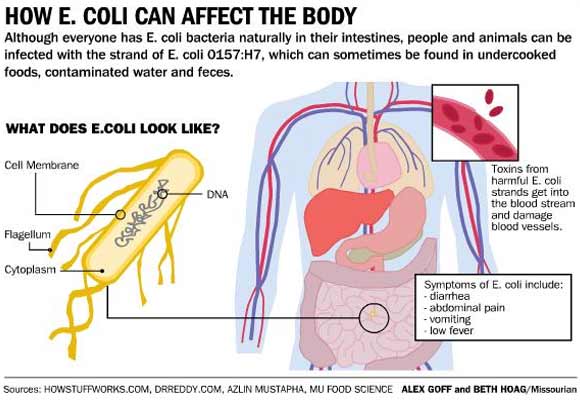

AN INVESTIGATION HAS BEGUN AFTER A THREE-YEAR-OLD GIRL DIED DURING AN E.COLI OUTBREAK LINKED TO A BRAND OF BLUE CHEESE.
The child, who died on September 2, was among 20 confirmed cases of infection with E.coli 0157.
Authorities looking into the outbreak found those affected had consumed Dunsyre Blue, made by Lanarkshire-based Errington Cheese, before they became unwell.
A Crown Office spokesman said: “The Procurator Fiscal has received a report in connection with the death of a three-year-old girl in Dunbartonshire on 2 September 2016.
“The investigation into the death, under the direction of Scottish Fatalities Investigation Unit (SFIU), is ongoing and the family will continue to be kept updated in relation to any significant developments.”
All confirmed cases became unwell before the end of July. Of the 20 cases identified, 11 required hospital treatment.
In July, two batches of Dunsyre Blue were voluntarily recalled and earlier this week a third was taken off the market as a “precautionary” measure.
Errington Cheese has maintained there is no conclusive evidence linking its products to the outbreak.
E.coli O157 infection can occur after eating food or drinking water that is contaminated with the faeces from infected animals, or from contact with animals or their environments.
Gene discovery could yield to new treatments of Diabetes


![[A blood glucose test]](https://i1.wp.com/cdn1.medicalnewstoday.com/content/images/articles/312/312786/a-blood-glucose-test.jpg)
RESEARCHERS FROM THE UNITED KINGDOM HAVE DISCOVERED A GENE THAT AIDS THE DESTRUCTION OF INSULIN-PRODUCING CELLS IN THE PANCREAS, CONTRIBUTING TO TYPE 2 DIABETES.
Researchers have uncovered a gene that plays a key role in type 2 diabetes, but blocking it could lead to new treatments.
Reporting their findings in the journal Cell Death and Disease, the researchers reveal how blocking the gene – called TNFR5 – halted the destruction process, a discovery that could lead to new treatments for type 2 diabetes.
According to the American Diabetes Association, around 29.1 million Americans are living with diabetes.
The majority of these cases are type 2 diabetes, where the beta cells in the pancreas either do not produce enough insulin or the body is unable the use the insulin that is produced. Insulin is the hormone that helps regulate blood sugar levels.
While regular blood glucose testing and medications can help people with type 2 diabetes manage their blood sugar levels, there is a need for more effective therapies.
Lead researcher Dr. Mark Turner, of the School of Science and Technology at Nottingham Trent University in the U.K., and colleagues believe their gene discovery may have the potential to meet this need.
TNFR5 gene destroys beta cells in response to high levels of sugar, fat
The team says it is well established that long-term exposure to a high-fat and high-sugar diet can exacerbate destruction of beta cells among people with type 2 diabetes, but the mechanisms behind this process have been unclear.
For their study, Dr. Turner and colleagues set out to determine whether there is a genetic explanation.
Using high-density microarray analysis, the researchers evaluated more than 31,000 genes associated with the pancreas, with the aim of pinpointing which ones were most sensitive to glucose and fatty acids – the products of diets high in fat and sugar.
The researchers found that the gene TNFR5 had the highest sensitivity to glucose and fatty acids, and overexpression of this gene in response to high levels of fat and sugar led to beta cell destruction.
The authors say these findings suggest that people with type 2 diabetes – particularly those with poor blood glucose management or who have not been diagnosed – are more likely to overexpress the TNFR5 gene, and, therefore, beta cell damage is exacerbated.
But there is some good news; in laboratory tests, the team found that blocking TNFR5 in beta cells exposed to glucose and fatty acids halted their destruction.
This suggests that inhibiting TNFR5 activity could be a promising treatment strategy for type 2 diabetes.
“We believe we have found one of the key early events that leads to the decline of insulin-producing pancreatic beta cells caused by high levels of sugar and fat.
As such the gene may represent an important target in the search for new drug intervention strategies, which if successful, could help preserve pancreatic function and help control blood sugar levels in patients with type 2 diabetes.”


