Pages

Showing posts with label Unemployed. Show all posts

Friday, November 6, 2015

Donie's Ireland daily news BLOG

Numbers signing on Irish live Register down by 1.3% in October

There were 332,200 on the register last month as against 336,600 for September

    
The number of people aged under 25 years continued to decline, falling by 19.7% or 10,084 in the year to October. Annual decreases have occurred in all months since July 2012. 
The number of claimants signing on the Live Register fell by 4,400 last month, a decline of 1.3% versus September, according to new figures from the Central Statistics Office (CSO).
There were 332,200 on the register at the end of October as against 336,600 for the previous month.
In unadjusted terms there were 320,794 people signing on, down 10.6% on October 2014.
The number of male claimants was down by 3,500 or 1.8% versus September and by 28,105 or 12.9% on an annual basis, leaving a total of 189,667 men signing on at the end of October.
The number of female claimants fell by 900 or 0.7% on a monthly basis and by 9,731 or 6.9% compared to October 2014.
According to the latest figures, the number of long-term claimants on the Live Register totalled 149,603 last month, down 12.5% on an annual basis.
There were 65,184 casual and part-time workers on the register, equivalent to 20.3% of the total numbers signing on in October and up from 19.9% a year earlier.
The number of people aged under 25 years continued to decline, falling by 19.7% or 10,084 in the year to October. Annual decreases have occurred in all months since July 2012.
Overall, there were 31,245 new registrants on the Live Register last month with an average of 3,345 male and 2,904 female claimants joining each week of the month.
CSO began publishing a new series of monthly unemployment estimates in June. the latest figures, published earlier this week, put the State’s jobless rate at 9.3% for October with youth unemployment falling to 19.7%.
The estimates replace the Standardised Unemployment Rate (SUR) as the definitive measure of monthly unemployment, which used to be published alongside the Live Register numbers.

Tánaiste Joan Burton says housing excuses are ‘bogus’


Tánaiste Joan Burton has hit out at local authorities who she says are finding “potentially spurious and bogus reasons” not to build social housing.

Government plans to provide modular housing for homeless families have already sparked a backlash, with one councillor claiming it would lead to “shanty towns” and “ghettoisation”.
There has been sharp criticism about the sites chosen for 153 new units in Dublin City Council, which is controlled by Sinn Féin, with questions about why land in more upmarket areas was not used.
The Labour leader said local councillors needed to put the needs of people first. “It is for council officials and the members of the city council to evaluate the sites,” said Ms Burton.
“But can I ask the members of the city council not to be finding potentially spurious and bogus reasons as to why the day keeps being put off when we actually develop social housing.”
Meanwhile, RTÉ refused a request to use space on its Montrose campus for modular housing, saying it would interfere with the day-to-day running of the broadcaster.

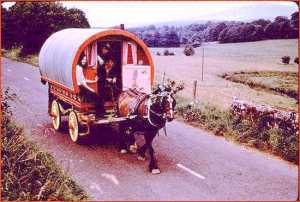
‘It’s not up to Travellers to police other Traveling Communities.

‘It is Extremely naive’ to say no criminal elements within Travelling community’


“Extremely naive” and “nonsense” to suggest there are no Travellers involved in criminal activity. Martin Collins, co-director with Pavee Point.

Pavee Point has said it would be “extremely naive” for the Travelling community to suggest there are no criminal elements in its midst.
Martin Collins, a co-director with the Traveller rights group, was speaking after Sinn Féin justice spokesman Pádraig Mac Lochlainn said some of the “mistrust” felt by the settled community was justified by “very poor behaviour and worse” on the part of some Travellers.
Mr Mac Lochlainn, who is half Traveller and has urged the State to recognise the community as an ethnic group, said: “There is criminality within the Travelling community. They are a disgrace, those involved in criminality, they let down their own community and they shame their own community.”
Mr Collins said it would be “extremely naive for any of us to suggest for one second there isn’t an element in our community involved in criminal activity”.
“That would be just nonsense,” he said. “The point I think Padraig is trying to make is that the rest of the Travellers are being held to account for the minority within the minority who are involved in this behaviour. That’s not acceptable.
“You can’t stereotype and demonise a whole community of people just because of the behaviour of a number within the community.”
Mr Collins added that it was not the responsibility of Travellers to police other Travellers.
“When it comes to Travellers there is an expectation that 100 per cent of Travellers are expected to behave well 100 per cent of the time and it’s only then that Travellers will be treated with respect and dignity,” he said. “We don’t accept that of any other community so there is a case of double standards.
“It’s wrong, it’s unacceptable, and those people need to be held to account, but it’s not up to Travellers to police other Travellers.
“Traveller organisations need to work with the gardaí – and they are working with the gardaí – so that people are held to account for their bad behaviour, but we don’t expect other settled people to police or account for the behaviour of other settled people. That’s just not on.”
Irish Traveller Movement director Brigid Quilligan said Mr Mac Louchlainn’s remarks taken in isolation could present a misleading portrayal of his position in relation to the Travelling community.
“They were made in a bigger context,” she said. “There is a minority of people engaged in criminality within the Traveller community, but he contextualised that by saying that also exists in the settled community.
“When you see what he said out of context, I can see why people might find it offensive but his wider speech was wholeheartedly in favour and full support of Travellers.
“He was acknowledging, as we have done in the past, that there is a small minority of our community engaged in criminality – and we will call those people out as well.”

‘A joint at a concert’ should not be criminalised?

Says Committee


A report says possession of some illegal drugs should be dealt with by ‘Dissuasion Committees’

People caught smoking “a joint at a concert” should not be criminalised, the Oireachtas Justice committee has recommended.
A new report says the possession of small amounts of illegal drugs for personal use should be dealt with by so-called “Dissuasion Committees”, which are used in Portugal, rather than the criminal justice system.
Committee chairman Fine Gael TD David Stanton said gardaí he had spoken to about the proposal informally were “delighted” with the idea of adopting the Portuguese authorities’ approach to small-scale drug offences.
“It’s not going to be legal. It’s not legal in Portugal. We’re not saying it should be legal here, but it should not be criminalised. It should be treated the same way as a road traffic offence or a speeding offence or something like that,” Mr Stanton said.
He said police he had spoken to during a fact-finding mission to Portugal said they were now able to devote their resources to “heavy hitters” involved in drug dealing and trafficking.
“We’re not using the word legalisation. So it’s not that. And also if you go through this report decriminalisation is not mentioned either, because we want to take the focus away from the criminal justice area and move it to the health area,” he said.
“Speaking informally to members of the gardaí, and people who actually work on the ground, have told me informally they’re absolutely delighted because they say they don’t want to be bringing people to the courts for possession of small amounts of illegal substances.”
He said the stigma having a criminal record could have “massive implications” on a person’s future, “for maybe making one mistake, having a joint at a concert for instance”.
Mr Stanton said the committee had been keen to publish its report before the election and hoped the next Government would adopt its proposals.
Fine Gael TD Alan Farrell, who also travelled to Portugal, said “Dissuasion Committees” took place in informal meeting rooms.
“It was somewhere were individuals would, in a very casual format, discuss their addiction…There were no suits, there were no white suits,” he said.
A range of professionals were available to the “clients”, he said.
The launch of the committee’s report was also attended by Independent Senator Katherine Zappone and Labour Senator Ivana Bacik.
In the audience was Dr Garrett McGovern, a GP with experience of treating drug and alcohol addiction, who expressed concern about the “inference” that everybody who used cannabis needed to go before a “Dissuasion Committee”.
He said: “I treat a hell of a lot of addiction. I treat very little cannabis. The vast, vast majority of cannabis users do not have a problem with cannabis.
“To put them through a health committee is going to be very expensive, probably very stigmatising. I don’t think it’s the way to do that. If somebody has a problem with cannabis, that’s different.”

Britain’s oldest tree may be undergoing a sex change?


THE ORIGINAL SIZE OF THE TREE’S TRUNK IS MARKED BY WOODEN POLES.

The Fortingall Yew, one of the oldest living organisms in Europe, may be undergoing a sex change.

The tree in Scotland — which by some estimates has been male for nearly 5,000 years — was recently found sprouting red berries. The berries are female.

“They’re there to attract birds to eat them and disperse the seeds,” says Dr. Max Coleman, a Botanist at the Royal Botanic Garden in Edinburgh, who first spotted the berries on the ancient Yew.

Many plants have male and female parts, but the ancient Yew is usually one sex or the other. Not both. So what happened? It could be an evolutionary strategy to keep the ancient Yew living even longer, says Coleman. 

“It might be that occasional switches of sex can maximize the reproduction potential,” he says of the of evergreen tree.

Still, the sudden apprearance of female parts on a tree thousands of years old is a mystery.

Religion makes children less generous than other kids,

Say Scientists


Religion is often associated with morality, but new research shows that children from religious households are actually less generous than kids from a secular background.

This conclusion comes from a study of over 1000 children from around the world, published in the journal Current Biology. The project was led by Professor Jean Decety, a neuroscientist from the University of Chicago, who didn’t originally aim to compare moral behavior. “I was more interested in whether I would find differences in empathy or sharing depending on the culture,” he says. “It turned out to be a really interesting finding.”
While previous research has examined generosity in adults, Decety’s work reveals that upbringing shapes morality early in life. This includes altruism – actions that benefit a recipient at a cost to the donor. Children learn religious values and beliefs from their family and community, through rituals like going to church. If religion promotes morality, kids from religious households should show stronger altruistic tendencies.
Generosity and punishment.  Decety’s team of psychologists assessed altruism using ‘the dictator game’: each child was given 30 stickers and told to choose how many to share with an anonymous child from the same school and similar ethnic group. This task reflects choices in ecology – allocating limited resources – and the results were used to calculate a ‘generosity score’. The researchers looked at 1170 children aged 5-12 years old, from six countries (USA, Canada, China, Jordan, Turkey and South Africa). Most kids came from households that identified as Christian (24%), Muslim (43%) or not religious (28%). (There were small numbers from Jewish, Buddhist, Hindu and agnostic homes, who weren’t compared.)
The results show that secular children shared more stickers. Muslim children are less generous than Christian kids, but this is not statistically significant (labelled ‘ns’ in the bar chart below). All three groups became less altruistic with age, though religious children had lower generosity, suggesting that longer exposure to religion leads to less altruism.   

Friday, May 22, 2015

Donie's Ireland daily news BLOG

Ireland’s jobless rate falls to under 10% but more than 200,000 still out of work


Data shows economy continues to create jobs at a steady rate as recovery continues.
Ireland had an unemployment rate of just 4.5% in the first quarter of 2007, but that rate peaked at 15.1% in 2012. In the first quarter of 2015, it dropped to 9.9%.
New data show Ireland’s unemployment rate fell to 9.9% in the first quarter of the year, the first time since the fateful year of 2008 that the rate came in below 10%. This represents a key psychological threshold, although the figures show that more than 200,000 people are still without work.
The good news here is that the economy continues to create jobs at a steady clip. In the year to March, Central Statistics data indicates 41,300 jobs were created and the number people unemployed dropped by 45,300. Employment increased by 12,500 in the first quarter of the year on a seasonally adjusted basis, following on from an increase of 13,000 in the final quarter of 2014 .
All of this is in line with trend growth since the recovery began, with 11 successive quarters of annualised decline in unemployment bringing the rate down from the 15.1% reached at the very height of the jobs crisis in the first quarter of 2012.
The sweep of figures is salutory. Ireland had an unemployment rate of just 4.5% in the first quarter of 2007, when the emergence of distress in the US subprime mortgage market was but a distant sign of woe to come. Conditions changed rather suddenly as the economy stalled and the banking sector teetered on the brink. Ireland’s unemployment rate doubled between 2008 and 2009, as the official rate advanced to 10.2% in the first quarter of 2009 from 5% only one year previously. The annual decrease in the number of employed people in that single year was 158,500, a terrible toll .
It is in the nature of economic crises that recovery takes longer to bed down than the precipitous losses endured in a crash. Thus the rate at which jobs are being created now does not match the sickening speed at which they were lost when Ireland was on the rocks. But that is not to take from the signs that recovery is deepening.
For one thing, the latest CSO data indicates that the rate of long-term unemployment declined to 5.9% in the first months of 2015 from 7.3% a year earlier. For another, the data shows that more full-time jobs are being created now than part-time posts. The increase in full-time employment was 52,100 and there was a decrease in part-time employment. The benefit of all this is clear. More people at work means more people spending, more paying tax and fewer drawing payments.
These figures also provide a glimpse into the shape of recovery. The largest rates of employment increase were recorded in the construction sector, where 19,600 jobs were created, and in the financial, insurance and real estate activities, where employment is up by 4,600. At the same time, the greatest rate of decline was recorded in professional, scientific and technical activities, where the number working dclined by 6,400.

The Minister for Finance’s push for a better deal from the banks

  
Lending institutions have to accept standard variable mortgage rates are simply too high
Minister for Finance Michael Noonan will complete his meeting with bank chief executives today and will presumably make some statement about the outcome of his talks. A report on the cost of standard variable rate mortgages, which has been compiled by the Central Bank, may also be published. The indications are that the banks may slowly start to move on mortgage rates, though what precise form this will take remains to be seen. Standard variable mortgage rates are too high. As the banking market starts to normalise, the banks should have reduced their rates by now, given the generally low interest rate environment.
The Central Bank report makes this point, and refers to the danger to the banks of a political response if they do not act in the near future. What that political response might be is not clear, although Mr Noonan does have options, even if he would prefer not to have to use them.
There are some points needed to put the argument in context. The banks all have large books of tracker mortgages, on which customers are paying rock bottom rates, a point also underlined in the Central Bank report. The Government also needs the banks to be profitable, particularly in the case of AIB, on which it hopes to start selling down its shareholding late this year or early next year. Falling lending rates may also, in some cases, mean a drop in returns to savers, via lower deposit rates. All that said, it is unreasonable to expect existing standard rate mortgage holders to have to pay so far above European norms. Apart from Permanent TSB, the banks are now back in profit and their cost of funding has fallen. In this environment, the margins they are making on standard variable mortgages are unreasonably high.
Government interventions, which go beyond urging the banks, can be hard to target to achieve the right result. Of course politics are at play here. With a general election in the offing, the Government is keen to get a “win” and to be seen to persuade the banks to offer a better deal to customers. The fact that Minister Noonan is calling in all the main lenders suggests he feels something can, indeed by achieved. The indications are that this might come through a mix of cuts to standard variable mortgage rates along with the option for existing mortgage holders to move to competitively priced fixed rate mortgages for a period of years.
The banks may feel they are being unfairly treated, particularly as in overall terms their profit margins are probably not excessive. But they should have realised by now that their standard variable mortgage rates are simply too high. Sustainable business models involve being fair to customers and there is a manifestly undue burden on existing standard variable mortgage holders. The banks should offer them a better deal.

Charles remembers the ‘grandfather he never had’

Mountbatten states in his Sligo speech
       
Prince Charles paid tribute to the “grandfather he never had”, the assassinated Lord Mountbatten, in a speech this afternoon in which he said friendship with Ireland cannot be based on “pretending the past did not happen”.
Prince Charles began by saying “I cannot tell you what a pleasure it is to be in Ireland once again,” and attempting a few words of Irish in greeting.
  He said the “ancient land of Ireland … can be a great source of inspiration for some” and cites the poetry of WB Yeats, much of which was inspired by the Sligo landscape.
“It is not a stretch to say that it is through Yeats’ work that many British people are first introduced to Ireland.”
He said relations between Britain and Ireland had “changed dramatically” since his last trip in the 1990s, through the Good Friday agreement.
He said the Queen’s recent visit – and the return visit by President Higgins, was “clear evidence of the maturity of our relations, which are now better than ever …[due to] respect between two sovereign nations.”
However, he said “our current blessed era of friendship and cooperation is not based on pretending the past did not happen.”
“I am only too deeply aware of the long history of suffering which Ireland has endured, not only in recent decades, but over the course of its history.
“It is a history which I know has caused much pain and much resentment, in a world of imperfect human beings.
“In the end, our acquaintance has been long, and we can turn that … into something new. We need no longer be victims … we can integrate our history and memory in order to reap the subtle harvest of history.
“Let us, then, endeavour to become the subjects of our history, and not its prisoners.”
The royals traveled to Mullaghmore, Co Sligo, where Lord Mountbatten was assassinated by the IRA along with three others when the IRA detonated a bomb on his boat on August 27 1979.
Charles said Mountbatten represented “the grandfather I never had.” But he said through that tragedy, he had learned to understand the agony of those in Ireland who suffered in conflict.
After a prayer service for peace and reconciliation in nearby Drumcliffe, Charles will meet some of those who were in the seaside village on the day of the atrocity and others who pulled survivors and bodies from the Atlantic.
The royals will also have the chance to visit the burial site of WB Yeats in the church cemetery and under the shadow of Benbulben and plant a tree in the grounds.
Other engagements include a view of the Niland Art Collection and music and poetry recitals to celebrate the 150th anniversary of Yeats’ birth

Permission refused for Coillte wind farm in Bellacorick Co Mayo

      
Decision on separate, adjoining scheme delayed until November
An Bord Pléanála refused the Cluddaun project over concerns relating to peat slippage and the flows of streams and rivers.
A 48-turbine wind farm proposed for Co Mayo has been refused planning permission by An Bord Pleanála.
Coillte’s project, on lands at Cluddaun, was to be complemented by an adjoining 112-turbine, €600-million scheme at Bellacorick, put forward by an ESB/Bord na Móna consortium, Oweninny Power Ltd.
Together the two schemes represented a potential €825-million investment that, if approved, would have been the country’s largest onshore wind farm, potentially generating 521 megawatts of power.
A decision on the larger Oweninny proposal is not expected until at least November.
Refusing the Cluddaun application yesterday, An Bord Pleanála specifically said it was “not satisfied that the developments as proposed would not have the potential to impact negatively on the surface and groundwater hydrology”.
These concerns relate to the potential for peat slippage and changes in the flows of natural streams and rivers.

  Protected habitats reasons?

Other reasons cited included the scale of the development, the “exceptionally sensitive” nature of the location in close proximity to designated and protected habitats and a landscape “characterised by blanket bog, lakes, ponds and watercourses”. The isolation of the site from public roads, which would have necessitated access through third-party land, was also of concern.
Responding to the decision, the Moy Valley ProtectionGroup, which had opposed the scheme, said it “condemns the wasting of public money by Coillte and the Government in attempting to build a wind farm in an unsuitable area of outstanding beauty against the wishes of the local community and without any consideration of their wellbeing”.
Planning permission was sought under strategic infrastructure legislation that allows the application to bypass the local authority and proceed directly to An Bord Pleanála.
A Judicial review: While this is the final stage in the planning process, it is now open to Coillte, a natural resources management company, to apply for judicial review. In a statement, it said it “notes the decision” and will not comment further at this stage.
Attention will now focus on the remaining part of the overall scheme. An Bord Pleanála has written to the ESB requesting further information on its Oweninny Power proposal, specifically a revised environmental impact statement. A decision will not be reached until at least November, although this time-frame could be extended.
An oral hearing on both projects was conducted in Ballina, Co Mayo, in April 2014. Eighteen submissions were filed in relation to the Oweninny proposal, and 17 for Cluddaun.
Issues of concern raised by various groups at the time included health and safety, proximity to homes, noise, “flicker” from turbines, the effect on property values, construction, noise and travel. Concerns about landslides, impact on the land and tourism also featured.

Global news organisations agree to share climate change content

    
The Guardian, El País, Le Monde and China Daily are among 25 publishers aiming to raise awareness in the runup to the next UN summit
Environmental activists hold banners during a rally in front of the Brandenburg Gate near the venue for the Petersberg Climate Dialogue in Berlin.
An unprecedented alliance of news publishers including the Guardian, El País, Le Monde and China Daily have agreed to share climate change content to raise awareness in the runup to the next UN summit.
More than two dozen publishers from around the world – from the Sydney Morning Herald to India Today and the Seattle Times – have agreed to scrap licensing fees for climate change content so that members of the alliance can freely republish articles.
The initiative, called the Climate Publishers Network, aims to create a global pool of content to provide a resource for publishers to widen coverage ahead of the UN climate change summit in Paris in December.
The goal is to expand the network beyond its founding partners, brought together with help from the Global Editors Network, until the initiative disbands on the last day of the COP 21 summit on 11 December.
Guardian editor-in-chief Alan Rusbridger, El Pais editor-in-chief Antonio Cano and Global Editors Network president Ricardo Kirschbaum said: “We very much hope that publications across the political spectrum will join us either in using some of our material or, ideally, offering their own material as well.”
Publishers that are members of the network can cherry-pick the articles they want and, if necessary, can have them translated for use on their own websites.
Guardian director of digital strategy Wolfgang Blau said that the 25 founding partners represented an unprecedented mix of political leanings and geographical spread to have pulled together for such a content-sharing initiative.
“It is unprecedented that such a diverse and large group of news organisations from all continents decides to collaborate in this way,” he said. “Climate change is the biggest challenge humanity is currently facing and requires new ways of collaborating across geographic as well as political boundaries.