Pages

Showing posts with label Housing crisis. Show all posts

Tuesday, April 25, 2017

Donie's Ireland daily news BLOG update

Housing census figures in Ireland paints a bleak picture?

A BLEAK PICTURE OF HOMELESSNESS, OVERCROWDING AND RELIANCE ON OVERPRICED RENTALS

Image result for Housing census figures in Ireland paints a bleak picture?   Image result for Housing census figures in Ireland paints a bleak picture?
Even the Irish Government admits that its plans to increase the supply of new homes will fall woefully short of expanding demand. The State needs to build about 35,000 new homes every year to begin making a dent in the housing crisis,
The Minister for Housing Simon Coveney said last week. He admits that the current target is to build only some 25,000 new houses a year, a third less. It was a challenge, he confessed, that reflects a “fundamental structural problem in the housing sector”.
The first Central Statistics Office “thematic” report on housing from the 2016 census paints a bleak picture: homelessness, overcrowding, and forced reliance on an overpriced rental sector, on the rise, while home ownership and house-building have declined – a perfect storm of rising demand and falling supply.
Perhaps most dramatic is the stark contrast between the 0.4% growth (just 8,800 units) in the housing stock between 2011 and 2016 and the previous five-year period – the latter, at 225,232 new dwellings, was 26 times larger.
Close to one in 10 of the population now lives in some 95,013 overcrowded households which have more people than rooms, a rise in five years of 28%. The hidden homeless. And the number of owner-occupied homes also fell between 2011 and 2016 causing the overall rate to drop from 69.7% to 67.6%, a level last seen in 1971. We are moving backwards, fast.
For most young people renting is the only option and now exceeds owner-occupation among under-35s . And in a squeezed market like Dublin, rents have inevitably soared – up some 30 per cent in the capital since 2011, if you are lucky enough to find somewhere.
Yet, why is there not a more serious attempt to incentivise bringing the 183,000 homes that are currently vacant back into use? And why the obsession with building homes-to-buy for first-time buyers at ever-inflating prices, when the real demand is for affordable social and affordable housing and rental properties? Time for a broader range of solutions, Says Mr Coveney.

Meanwhile: —

New data shows just 2,076 homes built last year

FREEDOM OF INFORMATION FIGURES SHOW NEW HOMES FALLING FAR SHORT OF GOVERNMENT’S 15,000 ESTIMATE. 

Image result for New data shows just 2,076 homes built last year  Related image

THE NUMBER OF NEW HOMES BUILT IN THE STATE LAST YEAR WAS JUST 2,076, A FRACTION OF THE GOVERNMENT’S 15,000 ESTIMATE, ACCORDING TO NEW FIGURES.

The number of new homes built in the State last year was just 2,076, a fraction of the Government’s 15,000 estimate, according to new figures obtained under the Freedom of Information.
Taken from the Building Control Management System, which is widely acknowledged as the most reliable construction database, the figures cast further doubt on the Government’s estimate of homebuilding rates in the economy.
They show that, when one-off homes are excluded, just 848 estate houses and apartments were completed in 2016 compared to an official Department of Housing estimate of 8,729.
In Dublin city, the most populous part in the State, just 68 scheme homes and apartments were completed last year.
The figures for other local authorities were also well below official estimates; Fingal (121), DĂșn Laoghaire-Rathdown (78), South Dublin (69) and Cork City (21).
In three local authorities, Longford, Leitrim and Roscommon, there were no housing completions recorded at all in 2016, while a further eight counties recorded fewer than 10 completions.
The figures stand in stark contrast to the Department of Housing’s official housing completion figure for 2016 of 14,932.
The discrepancy stems from the department’s use of ESB metering data as a proxy to count new builds. Electricity connections can be triggered by work to existing buildings or by formerly vacant units coming back on stream.
Ghost estates in Ireland?
The official figures are also likely to have been inflated by the finishing out of so-called ghost estates built during the boom.
Dublin architect Mel Reynolds said the Government’s housing targets, contained in its Rebuilding Ireland strategy, are based on new-build levels that were “fictional”.
He said the remarkably low output figure for scheme homes and apartments also raised questions about the Government’s new Help-to-Buy scheme, which has been blamed for fuelling further inflation in the market.
Mr Reynolds said there were now almost five Help-to-Buy scheme applicants for every new home being built.
The Department of Housing has repeatedly defended its use of the 14,932 completion figure, suggesting electricity connections have been used as a proxy for completions since the 1970s, as developers would not connect a property to the grid until it is ready for sale.
It also claims the Building Control Management System database is not an accurate measure of homebuilding activity as it was only established in 2014 and may fail to capture projects commenced prior to that.
Last week, Minister for Housing Simon Coveney said he hoped the level housing supply could be accelerated to 25,000 units a year by the end of next year. However, he indicated the State may need to build 35,000 units before demand in the market can be met.

Minister Varadkar supports an SSIA-style scheme to top up personal pensions

VARADKAR SAYS A PLAN IS URGENTLY NEEDED TO ENCOURAGE MORE SAVING’S.

Image result for Minister Varadkar supports an SSIA-style scheme to top up personal pensions  Image result for an SSIA-style scheme to top up personal pensions
A new SSIA-style savings scheme should be introduced to try to tackle our ‘pensions time bomb’, according to Social Protection Minister Leo Varadkar.
The original State-backed five-year SSIA plan, introduced in 2001, offered a bonus of €1 for every €4 saved monthly, subject to an agreed maximum.
Now Minister Varadkar wants a similar type of incentive for workers to pay into their own “personal” pension fund. The plan would give them additional retirement cover – on top of their State pension entitlement – and employers would be required to match their contributions.
“The minister’s preferred option would be an SSIA-type top-up from the Government, rather than the current system of a tax-relief incentive,” a spokesperson confirmed to the Sunday Independent.
“The SSIA top-up is very well understood, much more so than tax relief.
“It costs much the same, and would add to an individual’s pension income, as the money would go into their personal pension savings account.”
The fund would have to be phased in over a period of time with contributions starting at a “low level” in the first year.
The most favoured model would be similar to the Australian, Singaporean and New Zealand systems, and specially “tailored” for Ireland.
Every worker would be automatically enrolled in the scheme – but would have the right to avail of an opt-out clause. The fund would be the “private property” of the individual, could not be expropriated by any government, and could be inherited by a partner or family members if the worker passed away before drawing down any benefits.
It could be transferred to another jurisdiction, and there would be flexibility as to when benefits accrued could be taken out. The SSIA scheme of 16 years ago was generally regarded as a success, generating a huge national savings kitty.
Only a third of private-sector workers have a pension. During the recession years, many people sacrificed saving for their retirement as they battled to cope with more immediate bills such as mortgages, heating and food.
Meanwhile, the latest census data shows the proportion of those in the older age bracket continues to increase.
There are now 296,837 males and 340,730 females aged 65 or older in Ireland.
The number of men in this age category has gone up by 22% since 2011, compared with an increase of 16% for women. Medical experts predict improved medical care and other lifestyle changes will result in people generally living longer.
Financial studies show the demise of the traditional ‘permanent pensionable job’ as the nature of the workplace changes. Problems in many company schemes are an added complication.
Dermot O’Leary, chief economist with Goodbody Stockbrokers, suggests an SSIA-style government initiative could help deal with the ‘ticking pensions time bomb’.
He said recent census figures provided further confirmation that the over 60s segment of the population will increase in the coming years.
He suggested there would be obvious benefits to an SSIA-style scheme linked to pensions provision.

Nutritionists now agree there’s only one fruit that must find a place in your shopping basket “Berries”?

Related image  Image result for Nutritionists now agree there's only one fruit that must find a place in your shopping basket "blue Berries"?

Every fruit has its nutritional benefits but there is only one that seems to be winning the battle across the board when it comes to the expert’s advice.
If you tend to opt for berries of the red variety over blue because of their appealing buy me attractions, it might be time to change that because blueberries have multiple health benefits with 17 different dietitians agreeing that they’re one of the best superfoods available.
After surveying a group of nutritionists and cross-referencing their answers, Byrdie found the non-assuming berry came out on top.

WHY IS THAT?

Nutritionist Frida Harju, sums it up perfectly, when explaining:
“If you are going to add one fruit to your diet, make it blueberries. They have been labelled a superfood due to their high levels of polyphenols, antioxidative, and anti-inflammatory compounds that help to combat memory loss and enhance your mood.”
Due to the high amount of antioxidants present in blueberries, they help cardiovascular health and brain health.
They’re also high in fibre, good for your skin, aid digestion and unlike other fructose-laden fruits, blueberries have been shown to improve blood glucose and insulin levels.
If food shopping is on your Weekly to-do list, make sure blueberries find their way into your basket…

‘Hobbits’ Now claimed as one of the earliest forms of the human species?

Image result for 'Hobbits' Now claimed as one of the earliest forms of the human species?  Image result for 'Hobbits' Now claimed as one of the earliest forms of the human species?
A model of a female Homo floresiensis right picture.

HOBBITS, KNOWN AS HOMO FLORESIENSIS, COULD BE ONE OF THE MOST ARCHAIC FORMS OF HUMAN ACCORDING TO NEW RESEARCH.

Remains of hobbits were discovered on an Indonesian island in 2003, and since then scientists have debated where they originated from.
While some claim they were just short Homo sapiens, new Australian National University (ANU) research claims the hobbits were most likely a sister species to Homo habilis – who lived in Africa about 1.75 million years ago.
There’s also a chance that they even proceeded the Homo habilis, making them one of the oldest forms of humans.
They were about 3.5ft tall and used stone tools.
“It’s possible that Homo floresiensis evolved in Africa and migrated, or the common ancestor moved from Africa then evolved into Homo floresiensis somewhere,” study leader Dr Debbie Argue says.
Dr Argue said the analyses could also support the theory that Homo floresiensis could have branched off earlier in the timeline, more than 1.75 million years ago.
“If this was the case Homo floresiensis would have evolved before the earliest Homo habilis, which would make it very archaic indeed,” she said.
The hobbits lived on the Indonesian island of Flores until as recently as 54,000 years ago.
Prior to the ANU study it was believed that the Homo floresiensis evolved from Homo erectus, a larger human that lived on the Indonesian mainland of Java.
However the ANU researchers say that’s almost certainly not the case.
“We can be 99 per cent sure it’s not related to Homo erectus and nearly 100 per cent chance it isn’t a malformed Homo sapiens,” Professor Mike Lee said.
The research was published in the Journal of Human Evolution.
It’s unclear whether Bilbo Baggins is connected to the Homo floresiensis, or how he and his relatives made their way to Hobbiton from Indonesia.  

Saturday, December 17, 2016

Donie's Ireland daily news BLOG

Ireland’s residential property prices go up 7.1% in year to October

Image result for Ireland’s residential property prices go up 7.1% in year to October   Image result for Ireland’s residential property prices go up 7.1% in year to October

DUBLIN REMAINS THE MOST EXPENSIVE PLACE IN THE COUNTRY TO BUY A PROPERTY, WHILE CO LONGFORD HAS THE CHEAPEST PRICES.

Residential property prices nationwide rose by 7.1% in the year to October, new figures from the Central Statistics Office show.
The CSO said this compares to growth of 4.4% the same time last year.
Dublin property prices increased by 5.5% in the year to October, with house prices up 6.1% and apartment prices rising by 4.1%. Dublin prices remain the country’s most expensive.
Within the Dublin area, the CSO noted the highest price increases were in Dublin City (at 7.5%), while the lowest growth rate was seen in Fingal with prices up 3.4% there.
Meanwhile, residential property prices in the rest of the country jumped by 10.2% in the year to October.
Houses prices rose by 10.3% with the Midland regions showing the fastest growth rate of 16.6%, while the Mid-East region saw the slowest growth rate of 6.1%.
Apartment prices in the rest of the country outside of Dublin rose by 9.3% in the year to October.
In October, the average market price paid for a new residence was €250,147. The CSO said that the average market price paid by households over 12 months – a more stable measure of price – was €235,750.
In the year to October, the average price paid for a home was higher in Dublin than in other region or county, with the average price amounting to €386,657.
After Dublin, the next most expensive region was the Mid-East, where the average market price was €238,492.
Within this area, Co Wicklow was most expensive, with an average price of €314,690.
The least expensive region for household purchases over the last 12 months was the Border region, with an average price of €112,586.
But the cheapest price for houses was seen in Co Longford, with an average price of €83,420
Today’s CSO figures show that from the lows reached in early 2013, property prices nationally have increased by 48.4%.
During this time, Dublin residential property prices have increased 64.7% while residential property prices in the rest of the country are 44.7% higher.
They also show that when measured by value, the housing market has increased by 6.8% from €762.9m to €815m in the 12 months to October.
Commenting on today’s CSO figures, Davy economist Conall Mac Coille said the latest monthly rise has softened slightly from the exceptionally strong gains through the summer – 2.4% in July, 1.4% in August and 1.5% in September.
But the economist said that the October increases were stronger than had been expected.
Mr Mac Coille said that house price inflation in 2017 will be stimulated by the relaxation of the Central Bank’s mortgage lending rules and the Government’s “Help-to-Buy” scheme.
This provides a 5% tax rebate, worth up to €20,000, for first-time buyers of newly built homes.

Why we have occupied Apollo House

WE HAVE 193,000 HOMES WITHOUT PEOPLE AND 6,500 PEOPLE WITHOUT HOMES

Image result for Ireland’s residential property prices go up 7.1% in year to October   Image result for Why we have occupied Apollo House

JIM SHERIDAN AND BRENDAN OGLE OF ‘HOME SWEET HOME’ AT APOLLO HOUSE AT POOLBEG STREET, DUBLIN.

It’s been just over two years since Jonathan Corrie, a homeless man, was found dead yards from DĂĄil Éireann as our elected parliamentarians went to work.
Jonathan’s 16-year-old son Nathan said today after the death of his father who had left Carlow because he did not want his family to see him in difficulty. Jonathan was 43 years old. Young yes, but the life expectancy for a homeless man is 44, and for a woman just 38.
Sixteen people died on our streets between 2011 and 2014 and the graph has been rising since. You might remember Jonathan’s name but will you remember the names of the other 15? The people dying now hardly merit a footnote on the national daily news stories about ‘recovery’ ‘growth’; so much bombast and bluster, and alongside it the reality of so much unnecessary death and suffering.
It is to our national shame that neither Jonathan’s death, nor that of any of the others before or since, has shocked us into addressing the root causes of homelessness. The situation has gotten exponentially worse: homelessness has risen 40 per cent in the last year alone. We are a nation that, in 2016, cherishes none of its children equally.
Artists row in.
I got a phone call from a friend in the music industry recently who is also a Trojan community activist in his native Ballymun. Dean Scurry, who I first met through the Right2Water campaign, told me how many of Ireland’s artists and poets, actors and film directors wanted to do something to address this human crisis. I knew one or two of them a little. Glen Hansard had done me the honour of launching a book I wrote recently about the water campaign and our dreadful, policy driven, inequality. Damien Dempsey has performed at Right2Water events and people like John Connors and Terry McMahon feel the pain of our broken nation deeply.
Others too were on board: ‘Christy’, Jim Sheridan, Kodaline, Saoirse Ronan, the list went on. Dean had an idea. Could a citizen-led intervention take homeless people off the streets until the Government got around to housing them? The artists would be open to supporting such a move if it had as its objective the creation of a home for people forced to live on our streets. It was the lads from Kodaline who stated “we have homes without people, and people without homes” when confronted with the startling statistic that while we have 6,500 people officially homeless including 2,400 children, that the census shows we have a whopping 193,000 empty homes in Ireland, excluding holiday homes.
Socialising private debt.
And then there’s Nama. The bad bank that was used to socialise private debt and bequeath to us buildings all over our landscape that lie fallow while people get soaked, freeze, go hungry and even die below. Did I think we could get access to a Nama property? ‘We’ owned it after all. It took about a week to find a property we could access with some assistance and eventually Apollo House, a former social welfare office now closed down, came into our possession.
This has been tried before. The wonderful Irish Housing Network and many other groups have been trying to provide support for our homeless people for a long time. But never in a Nama property and never with such support. So a loose coalition was formed. We all had different tasks, but the same motivation. Could we arrive at a situation where nobody, at least in Dublin, is forced to be without a roof and ‘home’ for this Christmas and beyond?
There are wonderful videos involving Jim Sheridan, Glen and many others and I hope, we all hope, that these efforts may force us all to look inwards and stop this madness. And it is madness that can be easily stopped. In recent years governments have given more than €2.7 billion in tax cuts disproportionately benefiting the wealthiest and corporations. Did you get any of that? Did it change your life? No, me neither. But it could have built over 10,000 homes each year. It could have changed the life of every homeless person, of every homeless child, and ultimately cleared social housing waiting lists.
A human decency?
Homelessness is a result of poor, or cruel, political policy decisions. I prefer to think of them as just poor. Otherwise, what have we become as a society?
Ultimately homelessness and its causes will only be resolved by a movement in policy towards housing that is based on citizenship as much as profit, that puts human decency above uncaring ideology.
I do not know how ‘Home Sweet Home’ will work out, but whatever differences we all have, can we please resolve to end this cruelty? The gardaĂ­ who came to Apollo House last night praised the volunteers and confirmed the event as peaceful and well organised. They toured the building checking the welfare of the homeless people who were sleeping in private rooms on new mattresses for the first time in a long time. We told them that Apollo House was a ‘dry house’ for genuinely homeless people, well-resourced and taken care of. So please help in any way you can.
Tonight there are people sleeping in a safe and secure building with heating and electricity, and if it wasn’t for this intervention of artists and citizens they would be in doorways and alleyways. I have no doubt this intervention, with your support, can save lives. To find out more about how you can help please go to homesweethome.irish

Emergency 65 bed hostel in Dublin can open until legal row resolved

Image result for katherine zappone childcare  Related image
Independent TD Katherine Zappone children’s Minister (left pic.).

THE 65-BED CARMAN’S HALL FACILITY WAS ONE OF FOUR IN THE CITY BEING SET UP TO HELP ADDRESS HOMELESSNESS

A judge has ruled that an emergency hostel for the homeless in the Liberties in Dublin can be open until the legal row over the use of the facility has been determined.
The opening of the temporary hostel in the converted Carman’s Hall, which had been used as community centre until it shut in 2013, in Francis Street has been halted due to a legal challenge by the Carman’s Hall Interest Group, the Michael Mallin House Residents and a youth and community worker, Elizabeth O’Connor.
The residents want the facility reopened as a community centre and have secured permission for judicial review of the Council’s decision allowing the centre be used as a hostel to deal with the homeless emergency.
The court’s permission for judicial review proceedings also acted as a stay on the hostel opening.
Because of the current homeless situation Dublin City Council, which opposes the resident’s challenge, asked the court for the stay to be lifted pending the outcome of the full hearing.
Lawyers for the residents argued the stay should remain in place.
In his ruling Mr Justice Seamus Noonan said he was satisfied the balance of justice lay in lifting the stay preventing the facility from being used as an emergency hostel until the full dispute has been determined.
The judge said when considering the application he had to take factors into account such as the residents inconvenience and the needs of one of “a very vulnerable section of society” particular during the winter months.
The judge said he noted the residents concerns.
However evidence was given to the court about the homeless crisis that the number deemed homeless in Dublin city, has increased from 3,700 to 5,000 in the period between September 2015 and September 2016.
While the number of rough sleepers in the city fluctuates evidence had been given that emergency hostel facilities are currently at capacity, the judge said.
The Carman’s Hall facility the judge said is to be run by groups that considerable expertise in working with the homeless.
In the circumstances the court was satisfied to lift the stay.
The judge, noting the urgency of the matter, had previously listed the full hearing of the case for 18 January.
The residents he said have challenged council’s decision of 24 October allowing for a change of use of Carman’s Hall to a hostel.
As part of their challenge the residents, and their expert, say that going ahead with the hostel without going through the public consultation process amounted to a material contravention of the city development plan, the judge said.
He said the council, and their expert, disputes that claim and maintains it was entitled under the planning laws to allow the centre be converted into a hostel for the homeless.
This argument clearly was a “complex question of law,” the judge said.
However the judge said that at this stage the court was not deciding on the merits of either sides arguments which would be matters to be determined at the full hearing of the case.
Declan McGrath SC, with Niall Handy BL, for the residents, said their concern is about an “undue concentration” of homeless and social support services in the south inner city.
There are 12 homeless and social support services within 500m of Carman’s Hall and more than 660 people deemed homeless are being accommodated in Dublin 8, compared to 78 in Dublin 4 and “none whatsoever” in Dublin 6W, he said.
James Connolly SC, with Stephen Dodd BL, for the Council, argued the stay should be lifted due to the number of vulnerable rough sleepers on the streets at this time of year.
The Council has already spent about €930,000 converting the building into a hostel after acquiring it under a five-year lease from its owners the Dublin Catholic Archdiocese, he said.
Dublin City Council had not committed to using the premises as a hostel beyond the 2017-18 winter period.
The 65-bed Carman’s Hall facility was one of four in the city being set up to help address homelessness and was offered by the local parish priest to help with the homeless emergency, counsel said.
A survey carried out on 22-23 November found 142 rough sleepers in Dublin but that situation was fluid and facilities for the homeless are currently full up with people being turned away, the court heard.

Bank of Ireland admits to over-charging thousands of its Irish mortgage customers

Image result for Bank of Ireland admits to over-charging thousands of its Irish mortgage customers   Image result for Bank of Ireland admits to over-charging thousands of its Irish mortgage customers

THE BANK OF IRELAND HAS ADMITTED OVER-CHARGING THOUSANDS OF ITS MORTGAGE CUSTOMERS AND IT IS THE LATEST TWIST IN THE TRACKER MORTGAGE SCANDAL.

The bank had already restored 2,100 customers to good value tracker rates in 2010.
Now it says it has found another 600 cases where homeowners were wrongfully denied a low-cost tracker rate.
And the bank said another 4,000 mortgage customers do have trackers, but they were paying too much interest, the bank said.
It is understood that most of the mortgage holders either denied a tracker or charged the wrong tracker margin were bank staff.
However, the bank would not say how many of the latest cases relate to staff..
In a statement, it said: “The Bank of Ireland Group would like to sincerely apologise to each of these customers for these failures. The correct rate should have been applied to these accounts and we sincerely apologise for not applying the correct rate in these cases.”
Almost all lenders are being forced to probe their mortgage books and identify customers denied a tracker, or put on the wrong tracker interest rate, over the last eight years.
Banks had denied people trackers when interest rates rose in 2009, as these people opted to fix their mortgage rate, but then could not get back their tracker.
AIB has around 3,000 tracker-denial cases, with 2,000 at Ulster Bank.
Permanent TSB has had to compensate 1,400 customers over the tracker scandal. Its subsidiary, Springboard, was fined earlier this month over the issue.

Ageing can now be reversed, according to a new study

RESEARCHERS HAVE NOW MANAGED TO TURN BACK THE CELLULAR CLOCK USING STEM CELL TECHNIQUES.

Image result for Ageing can now be reversed, according to a new study  Image result for Ageing can now be reversed, according to a new study  Image result for Ageing can now be reversed, according to a new study

AGEING CAN BE REVERSED BY ADOPTING AN APPROACH USED BY STEM CELL SCIENTISTS TO TURN BACK THE CELLULAR CLOCK, NEW RESEARCH SUGGESTS.

In laboratory experiments, researchers rejuvenated human skin, increased the lifespan of mice with a premature ageing disease by 30 per cent and accelerated healing.
Although the work is at a very early stage, they believe it could open the door to “fountain of youth” anti-ageing treatments that would help us live longer and look younger.
The research developed from techniques used to create stem cells with embryonic properties from reprogrammed adult cells.
A key part of the process of producing such “induced pluripotent” stem (iPS) cells involves the re-activation of four dormant genes known as “Yamanaka factors”, named after Japanese stem cell pioneer Shinya Yamanaka.
In the new study, scientists activated the genes intermittently and found they were able to turn back the ageing clock without cells losing their adult identity.
Dr Pradeep Reddy, from the Salk Institute in California, said: “In other studies, scientists have completely reprogrammed cells all the way back to a stem cell-like state.
“But we show, for the first time, that by expressing these factors for a short duration, you can maintain the cell’s identity while reversing age-associated hallmarks.”
The genes have to be handled with care because the rapid cell division seen in embryos could be a hallmark of cancer in adults.
Having large numbers of cells revert to an embryonic state in an adult also raises the risk of organ failure and death.
But mice with the premature ageing disease progeria did not develop cancer and appeared to thrive after receiving the treatment.
Compared with untreated mice, they looked younger, the performance of their hearts and other organs improved, and they lived 30 per cent longer.
In normal ageing mice, the intermittent activation of Yamanaka factors led to improvements in the regenerative capacity of pancreatic tissue and muscle.
Injured pancreas organs and muscle also healed faster in otherwise healthy ageing mice that were reprogrammed.
Rejuvenation of a person?
Prof Juan Carlos Izpisua Belmonte, who led the Salk team, said: “Obviously, mice are not humans and we know it will be much more complex to rejuvenate a person.
“But this study shows that ageing is a very dynamic and plastic process, and therefore will be more amenable to therapeutic interventions than what we previously thought.”
In the experiments, the mice were treated by spiking their drinking water with a chemical, doxycycline, that activated the four genes.
Continuous activation of the genes resulted in significant weight loss and death after four days, said the researchers, writing in the journal Cell.
This was avoided by switching to a cyclic regime consisting of two days of doxycycline treatment, followed by five days of withdrawal.

Hairy chested new crab species found near ocean floor hot springs

“WE CAN BE CERTAIN THAT THE NEW SPECIES WE’VE FOUND ALSO LIVE ELSEWHERE IN THE SOUTHWEST INDIAN OCEAN,” SAID RESEARCHER JON COPLEY.

Image result for Hairy chested new crab species found near ocean floor hot springs  Image result for Hairy chested new crab species found near ocean floor hot springs

THE HAIRY-CHESTED HOFF CRAB (ABOVE LEFT & RIGHT) WAS ONE OF SIX NEW SPECIES FOUND LIVING NEAR HYDROTHERMAL VENTS AT THE BOTTOM OF THE INDIAN OCEAN. 

Researchers have discovered six new species living near hydrothermal vents on the sea floor.
The collection of hot springs, called Longqi, which translates as “Dragon’s Breath,” are situated 1,240 miles southeast of Madagascar, 1.7 miles beneath the surface of the Indian Ocean.
Unique communities of deep sea creatures are drawn to warmth emanating from Longqi’s vent chimneys, mineral spires rising two stories in height.
In 2011, a team of scientists the University of Southampton, Newcastle University and London’s Natural History Museum began exploring the vents with a deep-diving, remote-controlled submersible — the first survey of its kind in the region.
During their exploratory missions, scientists found six new species unique to the Longqi vents. First, scientists found a hairy-chested crab similar to the “Hoff crab” found near vents in Antarctica. Hoff crabs are a species of deep-sea squat lobster yet to be described in the scientific literature.
Researchers also discovered two species of snail, as well as a new species of limpet, scaleworm and deep-sea worm.
“We can be certain that the new species we’ve found also live elsewhere in the southwest Indian Ocean, as they will have migrated here from other sites, but at the moment no one really knows where, or how well-connected their populations are with those at Longqi,” lead researcher Jon Copley, a scientist at Southampton, said in a news release. “Our results highlight the need to explore other hydrothermal vents in the southwest Indian Ocean and investigate the connectivity of their populations, before any impacts from mineral exploration activities and future deep-sea mining can be assessed.”    

Thursday, December 15, 2016

Donie's Ireland daily news BLOG update

It was obvious that Simon Coveney would play hardball with Fianna FĂĄil over the rent cap issue

TENSIONS WITH FIANNA FÁIL TACKLED AS MINISTER FOR HOUSING ATTEMPTS TO CALL THEIR BLUFF

Image result for Simon Coveney would play hardball with Fianna FĂĄil over the rent cap issue   Image result for Simon Coveney would play hardball with Fianna FĂĄil over the rent cap issue  Image result for Simon Coveney would play hardball with Fianna FĂĄil over the rent cap issue

MINISTER FOR HOUSING SIMON COVENEY HAS PUBLISHED HIS STRATEGY FOR THE PRIVATE RENTAL SECTOR BUT THE PROPOSALS COULD ALREADY BE IN JEOPARDY AS PARTY SOURCES IN FIANNA FÁIL HAVE INDICATED THAT THEY WILL NOT SUPPORT THE STRATEGY.

It was a fight that was coming, but it brought a cargo of subplots and consequence upon its arrival.
For weeks, if not months, resentment has been building in Fine Gael because of the belief of many in the party that Fianna FĂĄil has had it too good.
Thanks to the confidence and supply deal, Fianna FĂĄil has been able to dictate the shape of government policy while acting as a curious and at times appalled bystander.
Many in Fine Gael felt it was time MicheĂĄl Martin and his spokespeople were reminded who actually is in government, having cowered for so long. They were spoiling for the fight.
“We need to show some balls,” said one female member of the Cabinet at lunchtime in Leinster House yesterday.
When Simon Coveney outlined his plan for maximum annual rent increases of 4 per cent, to apply immediately for a three-year period in Dublin and Cork city and possibly be extended to other pressure points nationally, Fianna FĂĄil raised objections within hours.
Where the Minister for Housing wanted a maximum 4% annual increase, Fianna FĂĄil favoured 2%.
A further rollout of coverage?
Fianna FĂĄil also wanted the initial rollout of the rent caps to be extended beyond Dublin and Cork, and to take in Galway, Limerick, Waterford and commuter areas around the capital.
It seemed that the usual give and take between the minority Government and Martin’s party would apply. One wants 4 per cent, one wants 2 per cent: split the difference and move on.
Yet the Government had a different idea. The great irony was the person who put it up to Fianna FĂĄil was not the aspirant Fine Gael leader many expected to be at the centre of major disputes between the two parties.
Leo Varadkar is known to have little love for the current governmental arrangement and some in Fianna FĂĄil suspected it would be the Dublin West TD who would cause them most grief.
They had not anticipated that Simon Coveney would be the one to play hardball. Fianna FĂĄil TDs around Leinster House looked rattled for the first time in months.
So many issues were at play: the rental strategy itself and its core proposals, the dynamic in the Fianna FĂĄil-Fine Gael relationship and Coveney’s leadership prospects, and his standing in the parliamentary party.
A leadership challenge?
He is considered to be behind Varadkar among TDs, but should Coveney stand up to Fianna FĂĄil and win, his leadership chances will surely be enhanced.
He has staked his ambitions on tackling big issues like housing and water and the rental plan is a huge element of what he hopes will be his calling card as a serious contender.
The Cork South Central TD has expended a huge amount of political capital on rent predictability, overcoming the concerns of the most significant players around the Cabinet table: Enda Kenny, Michael Noonan, Paschal Donohoe and Varadkar himself.
As he prepared to attempt to face down Fianna FĂĄil, the only question yesterday was whether Coveney had the backing of the Taoiseach.
Kenny gave his clear answer at the outset of the weekly meeting of the Fine Gael parliamentary party, amplifying Coveney’s tactic by telling TDs and Senators in his leader’s statement that the Government would withdraw the strategy unless Fianna FĂĄil backed it.
Fine Gael had called the bluff of Martin and Barry Cowen, his housing spokesman, gambling that Fianna FĂĄil would be blamed if private rental tenants suffered. Even if that gamble fails, Coveney has still won in one crucial way: he has given his TDs the fight with Fianna FĂĄil they were pining for.

Irish fishermen now face wipe-out unless fishing rules are changed

ANALYSIS: IRELAND SHOULD USE BREXIT AS BASIS TO RENEGOTIATE EU FISH POLICY, THE INDUSTRY SAYS?

Image result for Irish fishermen now face wipe-out unless fishing rules art changed  Image result for Irish fishermen now face wipe-out unless fishing rules art changed
Fishing boats as seen in Cobh harbour in Co Cork. Fishermen’s representatives have called for a review of EU fishing rules.
Ireland’s fishing industry has breathed a sigh of relief, after Minister for Marine Michael Creed and his negotiating team in Brussels secured an overall six per cent increase for 2017 on last year’s share of quotas.
The outlook had been “dire”, as one representative said, with an initial 68 per cent cut in cod and nine per cent cut in prawns averted.
It was Creed’s first “red-eye” council, where EU fisheries ministers use sleep deprivation as a tactic to haggle for quotas for their fleets.
However, sleep may be in even shorter supply at such negotiations in years to come if Britain leaves the EU.
Oblivious to Brexit, fish know no boundaries, with some 40 different stocks moving between these two islands.
Creed acknowledged on RTÉ Radio’s Morning Ireland on Wednesday that British withdrawal would have a serious impact on the Irish fishing industry – “38 per cent of volume and 36 per cent of value of Irish fishing is in British territorial waters”, he said.
If Britain “attempts to establish a wall around their territorial waters”, this would pose “a significant challenge” he said.
“It would mean the entire fishing network will be displaced to a smaller area,” he said – as in Irish waters, already under severe pressure from Spanish, French and Dutch fleets.
“We will raise questions with the Commission about Ireland’s unique position,” he added, but industry organisations don’t believe the Government has given that “position” sufficient punch.
With 22% of all EU waters off Irish coast, and just two per cent of EU fleet capacity to catch it, Killybegs Fishermen’s Organisation chief executive Sean O’Donoghue has stressed the urgency of taking a strong stand.
The Irish South and West Fish Producers Organisation, whose members have felt the impact for years of Spanish and French fleets, says Ireland should use Brexit to renegotiate the entire Common Fisheries Policy, or face a “wipe-out”.
There are already ominous rumblings about the near future. Britain did not support Ireland at the talks in defending the “Hague Preferences”, which recognise the particular case of coastal communities in allocating quotas.
Also, British Secretary of State James Brokenshire recently reasserted London’s claim over Lough Foyle in response to a parliamentary question in the House of Commons last month. After the Belfast Agreement peace deal, a cross-border body known as the Loughs Agency took responsibility for the Foyle, which was a key strategic naval base during the second world war.
The Department of Foreign Affairs immediately rejected Mr Brokenshire’s assertion that “the whole of Lough Foyle is within the UK.”
A recent Supreme Court decision held that Northern Ireland fishing vessels could not legally fish or harvest mussel seed in the Republic’s territorial waters – under an arrangement known as “voisinage”.
However, it is understood that the Government wants to introduce legislation which would effectively reverse the Supreme Court ruling. At a recent seafood conference hosted by Bord Iascaigh Mhara, British National Federation of Fishermen’s Organisations (NFFO) chief executive Barrie Deas forecast three possible scenarios in relation to Brexit.
The first was unilateral action by Britain to set its own quotas and control its own waters, the second involved bilateral and trilateral negotiations on shared stocks with coastal states, including Ireland and Norway.
The third was a move to a regional management structure by coastal states, a type of “super-regional advisory council”, expanding on the regional councils established as part of the revised Common Fisheries Policy, he said.
This latter scenario could benefit all EU coastal states, he suggested. The rights of coastal states to manage their own stocks – a type of regional management recognised in the most recent EU fish policy – is likely to gain greater currency as those stocks come under event greater pressure.
World demand for seafood is only going up, and the Irish industry is worth 1 billion euro in annual landings. However, foreign landings, transhipped back to Spain with no added value, are also on the increase here.
In an interview with The Irish Times in 1996, then EU fisheries commissioner Emma Bonino gave the most honest description of the community’s vision for “fewer, larger vessels”, spending longer periods of time at sea – such as the Dutch factory ships filmed in Irish waters for the recently released documentary Atlantic (italicss) directed by Risteard Ó DĂłmhnaill. This would fulfil the European Commission’s aim of providing cheaper fish for the consumer, but at the expense of coastal communities depending on the activity.
Birdwatch Ireland’s representative SinĂ©ad Cummins, who was in Brussels for the fish talks, has urged EU ministers to think of the long term future of communities on the coastline by sticking to scientific advice – and allowing greater public access to the late night deliberations behind firmly closed doors.

Armed units will not change the Garda image, says NĂłirĂ­n O’Sullivan

A NEW 55-STRONG UNIT WILL TACKLE TERRORISM AND SERIOUS ORGANISED CRIME IN DUBLIN. SAYS TÁNAISTE AND MINISTER FOR JUSTICE FRANCES FITZGERALD TD AS SHE INSPECTS THE NEW GARDA ARMED SUPPORT UNIT (ASU) FOR THE DUBLIN REGION, AT GARDA HQ IN PHOENIX PARK.

Image result for Armed units will not change the Garda image, says NĂłirĂ­n O’Sullivan  Image result for Armed units will not change the Garda image, says NĂłirĂ­n O’Sullivan

A new command structure for armed Garda units is to be rolled out early next year, but Garda Commissioner NĂłirĂ­n O’Sullivan has insisted it will not undermine the force’s unarmed status.
Speaking at the launch of the new Dublin armed support unit, Ms O’Sullivan accepted the manner of its deployment may further marginalise some communities if not managed properly.
“No, I don’t believe people want to see armed police,” she said, when asked if an armed unit would be welcomed on residential streets.
“I think when the units are deployed in their normal operating mode, it’s a softer approach. But when they have to deploy in overt mode they can do that as a tactical deployment.”
The new 55-strong unit will combat the threat from terrorism and serious organised crime in the capital. Plans for its establishment were accelerated when the Kinahan-Hutch feud erupted in Dublin during the general election campaign in the spring.
The gangland activity?
As well as providing an armed Garda presence at Dublin Airport and port, it will also conduct patrols and checkpoints in areas with significant gun feuding or other gangland activity.
The unit represents the final strand of rolling out armed support units in all regions of the country to complement the work of the Emergency Response Unit.
Ms O’Sullivan said all the units specialising in providing an armed response to flashpoint incidents as well as back-up for uniformed unarmed gardaĂ­ would now be drawn under a more centralised command.
The new structure represents the first time the armed response specialisation in the Garda has been considered large enough to warrant a dedicated command and training structure.
The commissioner said the establishment of regional support units around the country, and now the armed response unit for Dublin, was “the first step towards allowing us develop the armed response capability that we need right around the country.
“By the first quarter of next year we will establish a National Firearms Command which will mean the Emergency Response Unit and all of the armed response units in the regions will be trained [centrally].”
She said she would be making the case to Government for the creation of a number of senior posts to command the armed teams, all headed by a detective chief superintendent.
A proud tradition?
However, she did not believe the developments represented a move away from the Garda as an unarmed force. “It’s something we’re very proud of; it’s a tradition and a legacy we’ll never give up.”
However, the Garda also needed to “recognise the challenges” of modern policing in the Republic and “have a response commensurate with that”.
The new armed response unit for Dublin will work in the same way as the regional support units around the country. They will patrol in high-powered vehicles – new BMWs and Audi Q7 utility vehicles – dressed in uniforms unique to their unit.
When the need to switch to armed mode arises, they will switch into tactical clothing, comprising black overalls and ballistic vests, helmets and goggles and other protective wear.
They will unlock the firearms secured in the boots of their vehicles and arm themselves with MP7 machine guns, stun guns or a range of pepper sprays. The sprays vary in size and can be used to overpower one suspect at close range or a large group of people over a greater distance.
The vehicles are also kitted out with telescopic ladders, battering rams for breaking in doors and hooligan bars for taking doors off hinges.
The armed units were first recommended by the Garda Inspectorate, led by Kathleen O’Toole, 10 years ago, and the first two were rolled out in Limerick and Cork cities in 2008.
The inspectorate reviewed the report of the Barr tribunal of inquiry into the fatal shooting of John Carthy by the Emergency Response Unit (ERU) in Abbeylara. Its review concluded that second-tier armed response teams were needed to contain incidents involving firearms pending the arrival of the ERU

A decline in top three male cancers as lung cancer rates continue to rise among our women

Image result for A decline in top three male cancers as lung cancer rates continue to rise among our women  Image result for A decline in top three male cancers as lung cancer rates continue to rise among our women
One in three men, and one in four women, will get invasive cancer during their lifetime?

PROSTATE, COLORECTAL, AND LUNG CANCER RATES AMONGST IRISH MEN ARE FALLING OR STEADYING OFF, LATEST FIGURES FROM THE NATIONAL CANCER REGISTRY SHOW.

These three cancers are the most common in Irish men and from 1994 until now, the likelihood of developing them had been increasing steadily.
However the research, completed by analysing data over 21 years, also shows lung cancer rates amongst women continue to rise “significantly”. Lung cancer is now the second most common cancer in Irish women, says the National Cancer Registry 1994-2014.
According to the NCR, current lung cancer rates reflect the prevalence of smoking in previous decades.
“Lung cancer incidence rates in males declined steadily over 1994-2014, while the female rate increased significantly over the same period. As in other developed countries, it is likely that the period of peak smoking prevalence in females occurred some years later than that in males, which would help explain the contrasting lung cancer trends,” the report said.
The chances of men being diagnosed with any kind of cancer has also plateaued however, after nearly 20 years of increases.
But overall, the risk of developing cancer still remains higher for men than for women. There have been significant decreases in breast cancer rates in women, since 2008. The latest figures show this fall continuing in 2014.
Overall, the number of cancers continues to rise nationwide because of an ageing and growing population. Up to 37,600 new tumours were registered annually in 2012-2014. Of these, 30,700 were malignant. There were 16,800 cases of non-melanoma cancer of the skin which, while the most common cancer, is rarely fatal.
Despite improving survival rates, cancer is the second most common cause of death in Ireland, after diseases of the circulatory system — 30% of deaths in Ireland are due to cancer. About 8,700 cancer deaths per year occurred during 2011-2013.
Lung cancer was the most common cause of cancer death, about 21% of the total.
The risk of dying from cancer was about 36% higher for men than for women.
Over four consecutive periods, five-year net survival for all cancers (excluding non-melanoma skin cancer) increased. Between 1994 and 1998, 44% survived. Between 1999-2003 that rose to 51%, by 2004-2008 to 57% and by 2009-2013 to 61%. Ten-year survival figures show a similar trend. At the end of 2014 there were 139,526 persons still alive whose cancer had been diagnosed over the previous 21 years (1994-2014), equivalent to 3% of the Irish population.
The largest number of cancer survivors over the past 21 years had been diagnosed with breast, prostate, bowel cancer, and melanoma of the skin.
Director of the registry and professor of cancer epidemiology at University College Cork, Kerri Clough-Gorr said: “ The incidence trend in male cancers is encouraging, as we no longer see an increase in rates for the three main male cancers. Whether these improvements will be sustained remains to be seen. There is a large and growing number of cancer survivors in our community which will need to be facilitated by expansion of cancer support services.”

SOME CANCER FACTS?

– The risk of an invasive cancer diagnosis, aside from non-melanoma skin cancer, in anyone aged up to 75 is one in three for men and one in four for women.
– The invasive cancer rate in Irish men was 10% higher than the EU average — partly due to increased diagnosis of prostate cancer. Our diagnosis rate is 52% higher.
– The top five most common invasive cancers in men were prostate, colorectal, and lung cancer, lymphoma and melanoma.
– The top five cancers in women were breast, lung, colorectal cancer, melanoma and uterine cancer.

‘A devastating loss to everyone’ As Tributes paid to man as he dies in a landslide incident

THE GARDAI AND THE HSA ARE INVESTIGATING THE MAN’S DEATH?

Image result for 'A devastating loss to everyone' As Tributes paid to man as he dies in a landslide incident   Image result for 'A devastating loss to everyone' As Tributes paid to man as he dies in a landslide incident
Patrick McCaffrey & his beloved wife Helen. 

THE ENTRANCE TO THE PROPERTY WHERE THE MAN LOST HIS LIFE ON A AS A RESULT OF A LANDSLIDE AT THE CONSTRUCTION OF A WIND FARM IN BALLYFARNON, CO. SLIGO.

Investigations are underway after a man died in a workplace accident.
The victim, who worked for Tralee based firm Moriarty Civil Engineering, has been named locally as Patrick McCaffrey (37) from Co Leitrim.
His manager Colin Scott told Independent.ie that everyone connected with the firm is devastated by his tragic death.
He said: “It is absolutely devastating the tragedy which occurred last night.
“Our thoughts and prayers are with Mr McCaffrey’s family. Nothing like this has ever happened before.
“It’s a devastating loss to everyone.”
Local reports indicate that the man died after a landslide incident in the Ballyfarnon area on the Roscommon Sligo border.
The man in his 30s was working on a site in the area when the accident occurred at 6.30pm yesterday evening.
He was pronounced dead at the scene.
Search and rescue operations were hampered by the adverse weather. The coastguard were unable to respond to a request for helicopter assistance shortly before 9pm last night due to foggy weather conditions.
The Gardai and the HSA are investigating the incident.

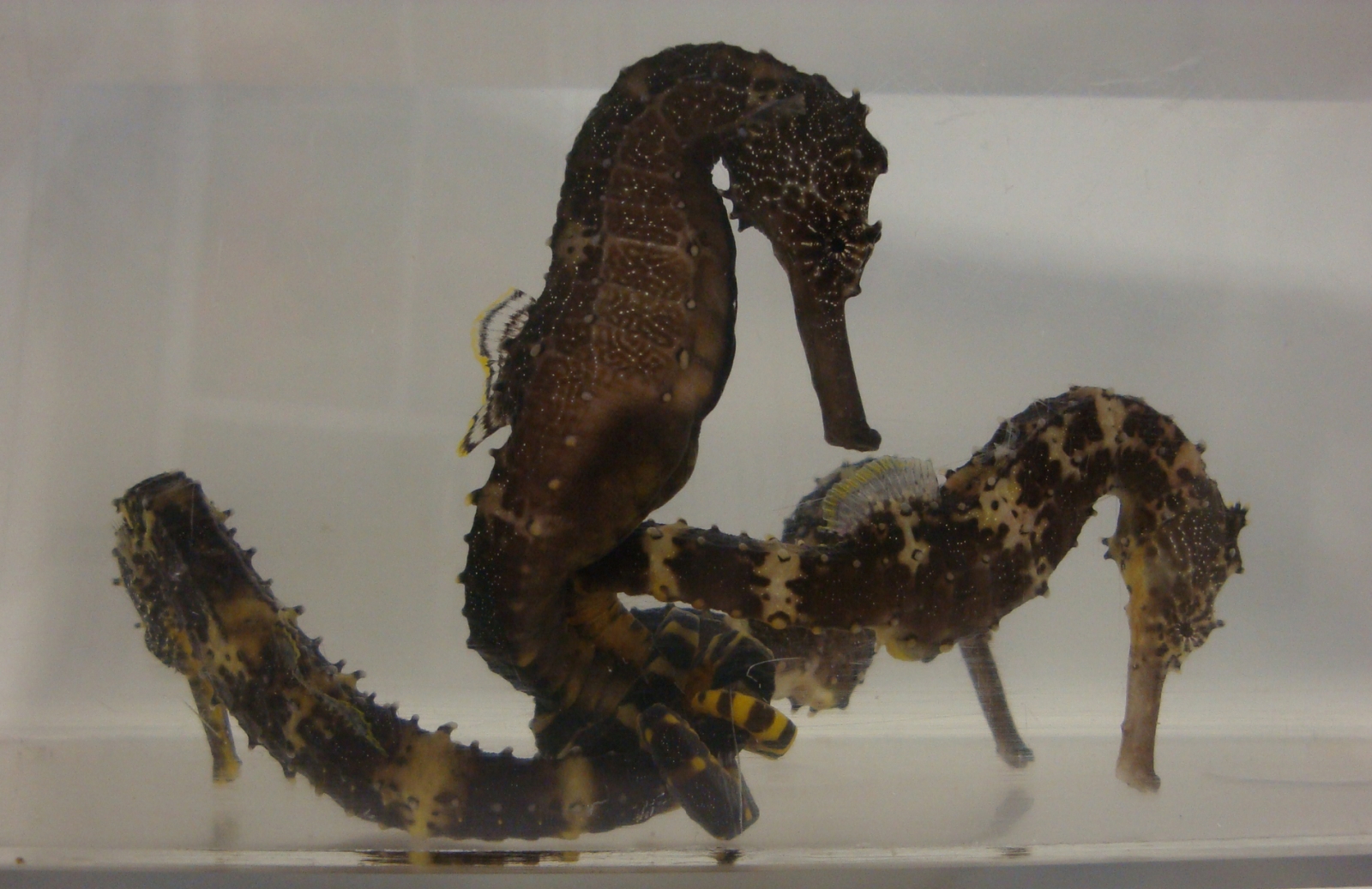
A seahorse gene study reveals evolution of bizarre features?  like male pregnancy

 Image result for A tiger tail seahorse, which has evolved several unique traits, including male pregnancy  Image result for A tiger tail seahorse, which has evolved several unique traits, including male pregnancy  Image result for A seahorse gene study reveals evolution of bizarre features?  like male pregnancy

SEAHORSES HAVE EVOLVED AT A GALLOPING PACE COMPARED WITH THEIR CLOSE RELATIVES, A STUDY HAS NOW SHOWN.

As a result the creatures have acquired a bizarre body shape, eyes that can look in different directions at once, toothless snouts for sucking in prey, and – strangest of all – male pregnancy.
Scientists who mapped the complete genome, or genetic code, of the tiger tail seahorse, Hippocampus comes, identified numerous unique features that had evolved within a short time.
Both the loss and duplication of genes contributed to the rapid changes, said the researchers led by Professor Byrappa Venkatesh from the Agency for Science Technology and Research (ASTAR) in Singapore.
The seahorse owes its unusual appearance to bony plates that reinforce its body and allow it to stand and swim vertically.
A key feature is the absence of pelvic fins, which share the same evolutionary origins as human legs.
The scientists found that an important limb gene called tbx4, common to nearly all vertebrates, was missing from the seahorse genome.
When the same gene was deactivated in zebrafish, the fish also lost their pelvic fins.
Gene duplication, that can give genes entirely new functions, was thought to be how male pregnancy developed in the seahorse.
Males carry developing embryos in a “brood pouch” from which the offspring eventually hatch.
Regulatory elements of DNA that control gene activity are also believed to have played a key role in shaping the seahorse.
Loss of regulatory elements may have taken the brakes off evolution and allowed the seahorse skeleton to be so greatly modified.
Writing in the journal Nature, the authors concluded: “Our genome-wide analysis highlights several aspects that may have contributed to the highly specialised body plan and male pregnancy of seahorses.
“These include a higher protein and nucleotide evolutionary rate, loss of genes and expansion of gene families, with duplicated genes exhibiting new expression patterns, and loss of a selection of potential … regulatory elements.”