Everything you need to know about Irish water charges


BRUSH UP ON ALLOWANCES AND RATES BEFORE CHARGES COME IN AT MIDNIGHT
Every home gets an allowance of 30,000 litres. Homes with children under 18 will get an additional allowance of 21,000 litres per child.
The end is nigh for so called free water supplies? From midnight tonight, water will stop being free.
Free? have we not always paid for our water through our taxes?
Of course we have. It costs in excess of €1 billion to maintain our water supply and over the last three decades that money has been coming out of the general exchequer. Now, however there is a new water charge and the money it raises will be used to maintain our water supply instead.
So we can all look forward to a big tax rebate now that a billion euro of general revenue cash has been freed up?
No. Didn’t think so. Okay then, what’s the damage? Any change from what theCommission for Energy Regulation (CER) announced last August?
Not really – at least not when it comes to the bottom line. Metered rates have been set at €4.88 for 1,000 litres of water – or just under half of one cent per litre – for homes which need both waste and drinking water services. If only one services is needed – if you have a septic tank or private water supply the rate of €2.44 per 1,000 litres applies.
Assessed charges apply to those who do not have meters installed and will be based on the number of people living in a home. It starts at €176 for a one adult home, with an extra €102 added for every additional adult. Children will not be included in assessed charges because they go free. The nearly 1.4 million new customers of Irish Water will pay the assessed charge for the next nine months
Hang on, what if I am on a meter and use less water than the assessed charge?
You will be given a rebate.
How will they know I used less – won’t they have to read my meter today?
No. The meter reading on the last day of every month is automatically recorded and stored for three months so the readers who check your meter at any point between now and Christmas will know what it was set at on day one and make adjustments accordingly.
What about allowances?
Every home gets an allowance of 30,000 litres. Homes with children under 18 will get an additional allowance of 21,000 litres per child.
HOW MUCH WATER DO WE ACTUALLY USE?
Based on international studies, the average person uses about 52,000 litres of water. A typical power shower uses about 80 litres of water a go so if someone has one every day it will cost them 38 cents, or €139 a year. A power shower is the Rolls Royce of showers, however, and should not be confused with a regular electric shower. That uses about 40 litres of water and will cost about €73 a year. Flushing a toilet uses 10 litres of water and if one is flushed 10 times a day, it could end up costing €150 a year. Filling a kettle four times a day will set you back €15 a year.
Intellectually disabled help urged by Professor
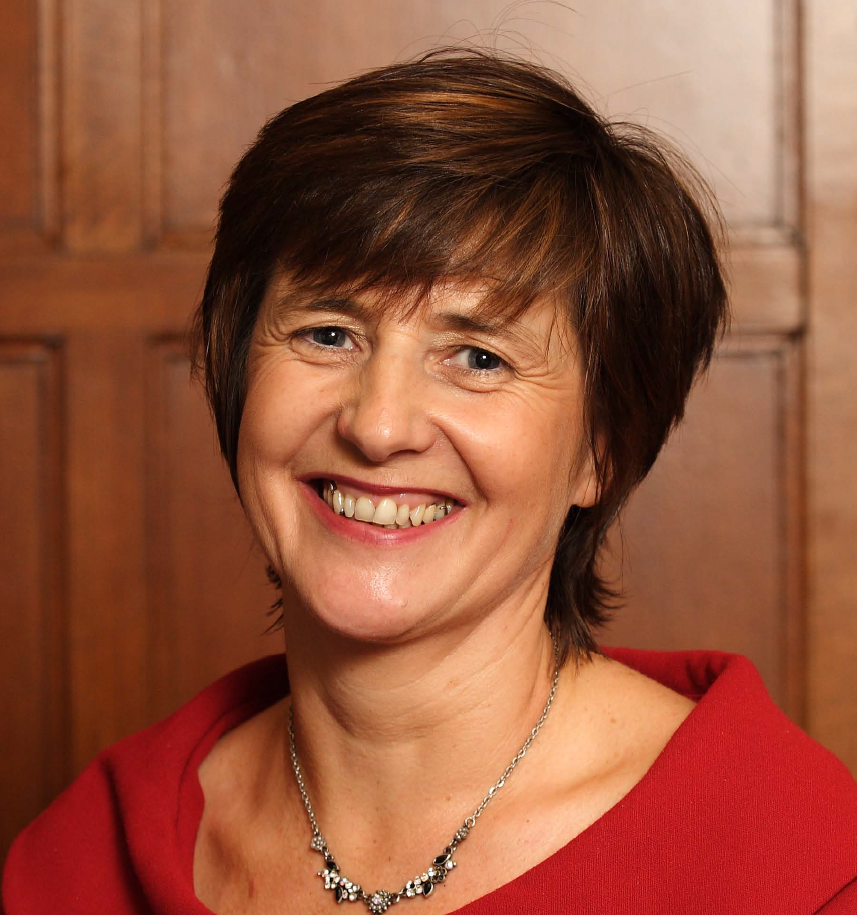
Two thirds of intellectually disabled older people have trouble reading, writing and managing money, research has found.
Three years on from the first review, a unique study on how Ireland’s 30,000 intellectually disabled live has revealed almost two thirds also have difficulty travelling around their local community or else they do not at all.
The head researcher, Professor Mary McCarron of Trinity College, warned about the impact of a combination of old age and mental disability.
“Unless we can address some of these challenges older people with ID are likely to live a poor quality of life as they grow older and ageing in poor health is an empty prize,” she said.
One of the most startling findings involved people with Down syndrome.
The research, compiled as part of The Irish Longitudinal Study on Ageing (Tilda) by Trinity researchers, found people with the condition are almost twice as likely to suffer dementia and are regularly affected by the disease 10 years earlier.
The study of over 40s said since 2010 the prevalence of dementia among people with Down syndrome has almost doubled from 15.8% to 29.9% – a much higher level than the general population.
It said the average age of onset for people with the condition was 55 compared to over 65 for other people.
Other findings on people’s physical well being showed rates of high blood pressure were more than 50% lower for people with an intellectual disability while heart attack rates are almost three times higher among the general population.
Rates of osteoporosis among people with intellectual disabilities doubled over the three years and more than 70% of participants engaged in only low levels of physical activity, which do not really have health benefits.
Obesity and overweight rates are as high as 67% and there was an almost 50% increase in the prevalence of cataracts.
Tilda also found older people with an intellectual disability are generally not married and without any children or grandchildren and are far more reliant on their siblings and extended family.
Two thirds reported having trouble reading or writing, with numeracy and money management while 62.7% reported they were unable to read their own name.
Almost one third had no education.
There was a slight improvement in internet use in the last three years from 7.3% to 10.5%, but it is far below the 77% usage rates among the general population, the study showed.
Just 12.6% said that they were able to turn on a computer.
Ownership of mobile phones remained essentially the same at about 24% and continues to compare poorly with mobile phone ownership figures nationally – less than one in 20 could send a text message.
Prof McCarron concluded: “Our findings raise serious concerns for the planned movement from congregated settings of older adults with more severe and profound levels of ID and higher levels of ill health.
“We promised that movement to the community would improve the quality of people’s lives.
“Unless the community is truly organised and resourced to support ageing people with ID when there are complex health issues, their experience may instead be one of social isolation, loneliness and new forms of institutionalisation.”
The intellectually disabled section of the Tilda study is the first study of its kind in Europe and the only one in the world with the ability to compare the ageing of people with intellectual disability directly with the general ageing population.
Kathleen Lynch, junior health minister responsible for primary and social care, said: “We are very fortunate to have such a rich and valuable repository of information about people with an intellectual disability who are growing old in Ireland.”
Tánaiste’s ‘preference’ is for people to apply through public system for state boards


THE TÁNAISTE HAS SAID IT IS HER “ABSOLUTE PREFERENCE” THAT PEOPLE APPLY FOR STATE BOARD POSITIONS THROUGH THE PUBLIC APPOINTMENTS MECHANISM.
Joan Burton was commenting on controversy surrounding John McNulty’s bid to be elected to the Seanad. He is citing his position as director of the Irish Museum of Modern Art as part of his qualifications.
Mr McNulty was given that job by his Fine Gael colleague Heather Humphreys six days before launching his Seanad bid.
Tánaiste Joan Burton said Fine Gael appointments were a matter for Fine Gael, but added an official mechanism is in place and should be used.
“It’s my absolute preference that when there are nominations to public appointments on state boards that people would apply through the public appointments system,” she said.
“Fine Gael nominees to the Seanad are a matter for the Fine Gael party, just as Labour nominees are a matter for the Labour Party.”
Pregnant in your 40s? You’re not the only one


You may feel slightly nervous about becoming a mother over the age of 40. Don’t worry – having kids later in life is increasingly commonplace. ESRI figures for the 40-44 year age group show that 272 women gave birth for the first time in 2000, 451 did so in 2005 and 797 in 2010. Women giving birth at 45 and older stood at 12 in 2000, 31 in 2005 and 56 in 2010.
HERE ARE SOME TIPS:
1Be aware you may not have the support networks younger mothers can call on. Your own parents are probably getting older, are less mobile and may not be able to rush to your aid at the drop of a hat (or nappy). So look for other ways of organising help – you may have consider a night-nurse or short-term child minder.
2 During pregnancy and after, pay attention to your fitness. You’re at an age where you can no longer take for granted that you will be in good shape – important during pregnancy and essential to physical and mental well being following the arrival of your child. Schedule a daily walk if possible – and do try to exercise at least once a week.
3 Mothers over 40 are twice as likely to suffer post-natal depression. So in those trying months after your child arrives make an effort not to become a housebound recluse. Sign up for mother and baby groups, attend infant yoga classes – whatever is required to get you (and your child) out of the house and socialising with other mothers.
4 If pregnant over 40, the possibility of premature delivery is statistically much higher. Something to be aware of when you receive your due date. Remember, it’s just an approximation – no harm packing your ‘overnight bag’ well beforehand.
The World’s weirdest animals:
TAKE A LOOK AT THE SOME OF THE MOST UNIQUE CREATURES ON THE PLANET
As one of just four white orca whales is spotted just off the coast of Russia, we take a look at some of the world’s most rare animals, including a snake with a foot and a two headed turtle
VIEW THE GALLERY BELOW:
Scientists have recorded remarkable footage of a rare white killer whale off the coast of Russia.
The juvenile, which is one of just four white orca whales recorded, caused a stir when it surfaced right next the the researchers’ boat between the Pacific islands of Onekotan and Paramushir.
Another white whale named Iceberg became a media sensation two years ago after being spotted off the Russian coastline by the Far East Russia Orca Project.
So we have scoured the globe for some more remarkably rare animals that defy belief.

A White Orca
Two-headed turtle
Just last week Kathleen Talbot got a monster shock when she found a two-headed baby snapping turtle trying to cross the road in Hudson, Maine.
She was watching turtle hatchlings to make sure they arrived safely on the other side of the street when she noticed one had been left behind.
It was so dirty she initially thought it has two feet in front, but when she got home and washed it off she realised it had two heads. She decided to call her now pet Frank and Stein.

Weird: Two Headed Turtle
Five-legged lamb
This adorable lamb may have been born with an extra leg but he hasn’t let that slow him down.
The Red West lamb was born in February last year at a French farm owned by Yvan Delage. None of this four siblings had any abnormalities, but this newborn had three front legs.
Sheep born with extra legs do not normally survive or suffer health difficulties, but this lucky lamb did not seem to suffer any adverse effects and was soon frolicking in the fields with his brothers and sisters.

Special: Five-legged-lamb
Snake with a foot
Chinese grandmother Dean Qiongxiu got a nasty shock when she woke to find a snake climbing her bedroom wall in the middle of the night.
But the 66 year-old got an even bigger shock when she spotted the reptile had sprouted a leg and was clinging to the wall with its talons. She was so scared she grabbed a shoe and beat the snake to death before preserving its body in a bottle of alchol.
The snake, which was 16 inches long and as thick as a little finger was then sent to be studied at the Life Sciences Department at China’s West Normal University in Nanchang, where experts were baffled by what caused the mutation.

Terrifying: Snake with a foot
Two-tone lobster
Harley Quin the two-tone lobster became the star attraction at his aquarium after moulting to reveal electric blue skin down one side of his body, and bright red skin down the other.
The chances of a lobster being two separate colours on each half of its body is around on in 50million and Harley is even rarer as his claws are the opposite colours, making him look like he has been divided into four.
He was caught at Bridlington in East Yorkshire in 2010 and has been looked after ever since by staff at Scarborough Sea Life Centre.
Shell-shocked: Harley Quin the two-toned lobster

Cyclops shark
It looks like a creature from ancient mythology, but this shark pup with only one eye was actually found by fishermen in Mexico in October 2011.
The odd looking creature was initially dismissed as a hoax after it was cut out of its mother, an endangered dusky shark. However biologist Felipe Galvan-Magana confirmed the animal was real and said the two eyes had failed to separate due to a rare genetic condition.
Unique: One eyed shark

Albino kangaroo

Rare: Albert, the Albino Kangaroo
This albino kangaroo sticks out like a sore thumb, making it easy to spot. Yet white kangaroos are so rare the sighting made headlines around the globe.
The rare animals, caused by a genetic mutation, often do not survive in the wild without their traditional grey fur to help them blend into the landscape.
The two year-old female Renee, who was spotted at Namadgi National Park near Canberra in Australia in November last year, is so unusual rangers fear she could be targeted by hunters, so her location has been kept a closely guarded secret.
Asia’s unicorn
Some animals are so rare that even the sight of a ‘normal’ specimen in the wild is enough to set pulses racing. One of the best examples is the twin-horned saola.
This antelope-like animal is rated as critically endangered with less than 100 left in the wild and extremely shy. It is spotted so rarely it is dubbed the ‘Asian unicorn’.
In fact when the WWF photographed one using a trap in Vietnam in November last year it was the first time one of the animals had been seen in 12 years, making it a freak event in its own right.


