Pages

Showing posts with label Sligo. Show all posts

Friday, July 21, 2017

Donie's Ireland daily news BLOG.

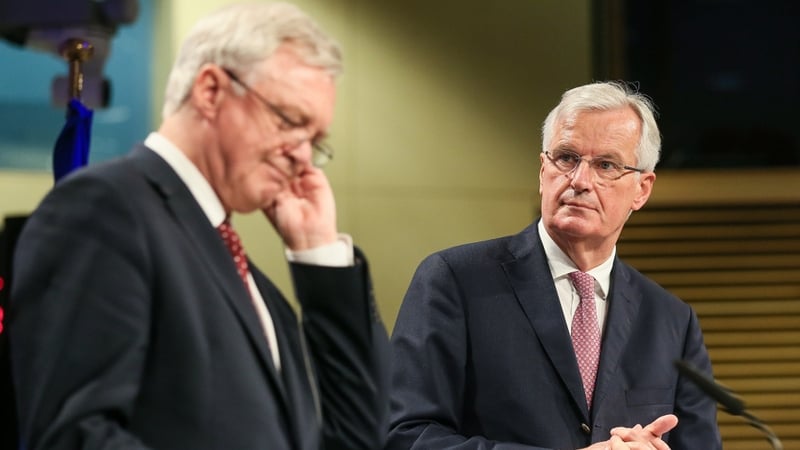
Simon Coveney says he is happy at the direction of Brexit negotiations on Irish issues

Talks focused on avoiding a hard North-South border after Brexit

Image result for Simon Coveney says he is happy at the direction of Brexit negotiations on Irish issues  Image result for Simon Coveney happy at the direction of Brexit negotiations & Michel Barnier and his team

THE BRITISH IRISH CHAMBER OF COMMERCE HELD ITS FIRST MEETING WITH MINISTER FOR FOREIGN AFFAIRS AND TRADE, SIMON COVENEY TD IN LONDON TODAY.

Minister for Foreign Affairs Simon Coveney has expressed satisfaction at the direction of negotiations between Britain and the European Union over Ireland’s specific issues. Speaking in London after meetings about Brexit with academics, diplomats and business representatives, Mr Coveney said more work was needed on some areas.
“In particular, more detailed work is needed on how best to protect North-South co-operation, an essential aspect of the Good Friday Agreement. It has facilitated some of the most tangible benefits from the peace process and contributed directly to the normalisation of daily life in the border region. On the Common Travel Area, I welcome that both sides agreed that it should be maintained. It will now be for the UK side to confirm how it will ensure this,” he said.
The discussions in Brussels did not focus on the future of the Border but Mr Coveney said that talks between the British and EU teams this week about protecting the gains of the peace process were directly related to avoiding a hard Border after Brexit.
“My officials and I will continue to work closely with Michel Barnier and his team to ensure that sufficient progress is made on the Irish specific issues in phase one of the negotiations. Progress on these, on citizens’ rights and the financial settlement would allow parallel discussions to begin this autumn on the EU’s future relationship with the EU,” he said.
“This will require constructive engagement on all issues and a strong political willingness to achieve the best possible withdrawal agreement. Contrary to what some may think, no agreement would be disastrous for everyone. We must continue to work for the closest possible future relationship between the EU and the UK, facilitated by effective transitional arrangements.”
Theresa May on Thursday sought to reassure British business that its concerns would be considered as Britain continues its negotiations with the EU. The prime minister hosted representatives of big companies and business organisations at Downing Street for the first meeting of a new “business council”.
“The prime minister emphasised her desire to listen to the views of business, to channel their experience and to share with them the government’s vision for a successful Brexit and a country in which growth and opportunity is shared by everyone across the whole of the UK,” a Downing Street spokesperson said.
“On Brexit, the prime minister reiterated that the government’s overarching goal is for a smooth, orderly exit culminating in a comprehensive free trade deal with the EU, with a period of implementation in order to avoid any cliff-edges.”

Brexit win for the West of Ireland as medical conference moves from London to Sligo

FIREFLY FOUNDER AND MEDICAL DIRECTOR MARTIN MCGEOUGH AND BIG-WAVE SURFER DR. EASKEY BRITTON LAUNCH FIREFLY SUMMIT 2017, WHICH IS MOVING FROM LONDON TO SLIGO AS A RESULT OF BREXIT.

Image result for Brexit win for the West of Ireland as medical conference moves from London to Sligo   Image result for The Firefly Summit, a conference of 200 podiatrists,

THE FIREFLY SUMMIT, A CONFERENCE OF 200 PODIATRISTS, MAINLY FROM LONDON AND THE REST OF THE UK, WILL MOVE TO SLIGO THIS YEAR.

The summit will see 21 of the podiatry profession’s top minds deliver a series of quick-fire lectures, sharing their hands-on clinical practices.
Firefly, a custom-made orthoses company, made the decision to move the summit to Sligo as a result of the impact Brexit was having on its business.
“When sterling started devaluating on the back of the Brexit announcement, our margins were way down. We have managed to survive – but only just about. We had to decide how we were going to respond to it,” Martin McGeough, Firefly’s founder and medical director said.
While some companies are looking at how to reduce costs or increase prices, Firefly are looking at building relationships with customers who are podiatrists, and by moving the conference to Sligo the company hopes to cement existing relationships with customers and build more.
Firefly is also turning the concept of a medical conference on its head by taking speakers and delegates out of the lecture halls and into nature.
Surfing, hiking, stand up paddle boarding (SUP), golf and other activities are built into the programme of the Firefly Summit, which takes place from September 29-30.
This will allow attendees to connect with the UK and Ireland’s most renowned podiatric consultants and practitioners in a relaxed setting by removing the barriers of traditional conferences, Firefly said.
Podiatry or podiatric medicine is a branch of medicine devoted to the study, diagnosis and medical and surgical treatment of disorders of the foot and ankle.
It is expected that the conference will result in an economic boost of at least €320,000 to the local economy.

What makes a man’s best friend your dog ? It’s in their genes

Image result for What makes a man's best friend your dog ? It's in their genes   Image result for What makes a man's best friend your dog ? It's in their genes

TWO SAINT BERNARD DOGS REST ON A MEADOW AS THEY MAKE THEIR WAY TO THE GREAT SAINT BERNARD MOUNTAIN PASS, NEAR BOURG-SAINT-PIERRE, BETWEEN SWITZERLAND AND ITALY, ON JULY 

Dogs that are extra friendly share certain genetic similarities with people who are born with a developmental disorder sometimes called the “opposite of autism,” which makes them hyper social, researchers said Wednesday.
The report in the journal Science Advances pinpointed changes in two genes that are related to extreme social behavior in dogs, and also in people who are born with Williams-Beuren Syndrome.
People with this condition tend to be highly outgoing, gregarious, empathetic, interested in prolonged eye contact, prone to anxiety and may have mild to moderate learning disabilities and intellectual impairment.
The findings offer new insights into how dogs became domesticated and split paths from their wolf ancestors thousands of years ago.
“It was once thought that during domestication dogs had evolved an advanced form of social cognition that wolves lacked,” said co-author Monique Udell, an animal scientist at Oregon State University.
“This new evidence would suggest that dogs instead have a genetic condition that can lead to an exaggerated motivation to seek social contact compared to wolves.”
Survival of the friendliest
Researchers studied 18 domesticated dogs and 10 captive gray wolves to see how social they were toward people and how they performed on problem-solving tasks.
Given the task of lifting a puzzle box lid to get a sausage treat, the canines were rated on how much they turned to a human in the room for help.
The wolves were more likely to figure out how to get the treat than dogs. The dogs were more likely to stare longingly at the nearby people.
“Where the real difference seems to lie is the dog’s persistent gazing at people and a desire to seek prolonged proximity to people, past the point where you expect an adult animal to engage in this behavior,” said Udell.
Then, researchers took blood samples and to see how the wolves’ and dogs’ genetic traits lined up with their personalities.
They found variations in two genes — GTF2I and GTF2IRD1 — “appeared to be connected to dog hyper sociability, a core element of domestication that distinguishes them from wolves,” said the report.
These genes have previously implicated in the hyper social behaviors of humans with William-Beuren Syndrome.
The changes weren’t identical in humans and dogs. For instance, in dogs, unique genetic insertions called transposons in these genetic regions were linked to a strong tendency to seek out human contact.
Some of these transposons “were only found in domestic dogs, and not in wolves at all,” said the report.
In people, the deletion of genes from this region in the human genome is linked to Williams-Beuren syndrome.
“We haven’t found a ‘social gene,’ but rather an important [genetic] component that shapes animal personality and assisted the process of domesticating a wild wolf into a tame dog,” said a statement by co-author Bridgett vonHoldt, an assistant professor in ecology and evolutionary biology at Princeton University.
How wolves became dogs
Adam Boyko, an assistant professor at Cornell University and expert in dog genetics, called the study “truly interesting and important.”
“It may be one of the first studies to ever identify the specific genetic variants that were important for turning wolves into dogs,” he said in an email.
“That said, the overall sample size in the study is small, so validating the association of these variants in a much larger cohort of diverse dogs would be needed to prove that these are, in fact, the variants in the region driving both the association and the signature of positive selection.”
The topic of just when and how dogs become domesticated thousands of years ago is a subject of much debate in the scientific community.
A separate study out earlier this week in Nature Communications suggested dogs first split from wolves about 40,000 years ago.
It’s unlikely that humans sought out to tame wild wolves. Rather, the process would have started with the animals approaching hunter-gatherer camps in search of food, researchers said.
“Those wolves that were tamer and less aggressive would have been more successful at this” and more likely to befriend humans, explained the report.
The research by Udell and vonHoldt lines up with this theory — that sociability, rather than smarts, drove dogs to become man’s best friend.
“If early humans came into contact with a wolf that had a personality of being interested in them, and only lived with and bred those ‘primitive dogs,’ they would have exaggerated the trait of being social,” vonHoldt said.

Minerals firm plans market listing to fund Sligo zinc drill

ERRIS RESOURCES IS PLOTTING A FLOTATION ON LONDON’S AIM MARKET

‘Potential investors have been told that the company is looking to have its shares admitted to trading as early as August.
Image result for floating on the market listing to fund Sligo zinc drill   Image result for Zinc exploration Ireland

MINERALS EXPLORER ERRIS RESOURCES IS LOOKING TO FLOAT IN ORDER TO RAISE FUNDS FOR DRILLING A ZINC PROSPECT IN SLIGO.

The London-based company is plotting a potential listing on that city’s AIM market, raising as much as £5m (€5.7m).
Potential investors have been told that the company is looking to have its shares admitted to trading as early as August. Erris declined to comment.
The prospect is at Abbeytown in Co Sligo and was the site of a lead mine in the 1950s and 1960s.
Erris believes that zinc, lead, silver and copper are at the site, which it labels historically overlooked. Drilling work that the company has undertaken indicates that there is a potential new mineral zone at the site.
It has presented investors with two scenarios; one, in which it raises £3.5m, releasing just over £1.5m for work at Abbeytown, and another, where it raises £5m, with more than £2.8m for Abbeytown.
A £5m fundraise would give the company a market capitalisation of £9.7m on a fully diluted basis – meaning that share options are included in the calculation of the company’s value, as well as shares.
Meanwhile, another zinc explorer with interests in Ireland, Group Eleven Resources, has plans to float.
The company, which has been backed by former Davy corporate finance chief Hugh McCutcheon, is hoping to list in Canada in the autumn.
“The reason to go to Canada is that Vancouver is really the capital of the junior resource market in the world. But if it made sense for us, I’d love to be listed in Dublin at some stage in the not-too-distant future,” Group Eleven chief executive Bart Jaworski said.
Last week, the company announced a deal to buy 60pc of a prospect which covers areas of Co Longford and Co Westmeath.
It is buying the asset known as the Ballinalack prospect from the Canadian mining giant Teck. The other 40pc of the prospect is owned by a Chinese company. The asset is located 50km west of Europe’s largest zinc mine at Navan in Co Meath.
A big rise in the price of zinc has lifted activity in the Irish sector in recent months.
The island of Ireland is the biggest zinc producer in Europe.
Australian-listed Hannan Metals has been drilling at a prospect in Kilbricken in Co Clare and announced its estimates of the resource potential based on the results earlier this week.
Chief executive Michael Hudson said the result “ranks Kilbricken as one of the top 10 base-metal deposits discovered to date in Ireland. This is a significant initial achievement in a country that is ranked first in the world in terms of zinc discovered per square kilometre since the 1950s.”
He added: “While this resource is substantial, it is also lies open in all directions, with excellent potential for expansion.
“We currently have one drill rig operating a resource expansion programme and we will soon be mobilising additional drill rigs.”
Elsewhere, the mining giant Glencore has resumed drilling at its Pallas Green prospect in Limerick.
“The objective is to better understand certain aspects of the deposit,” a Glencore spokesman said, adding that any decision about building a fully fledged mine at the site was “a long way down the road”.

Potential treatment for Huntington’s disease discovered by NUIG researchers

Collaboration with University of Barcelona aims to find cure for ‘relentlessly fatal’ condition

Image result for Potential treatment for Huntington’s disease discovered by NUIG researchers   Image result for Potential treatment for Huntington’s disease discovered by NUIG researchers

RESEARCHERS AT NUI GALWAY HAVE DISCOVERED WHAT THEY SAY ARE ENCOURAGING EARLY SIGNS FOR A POTENTIAL TREATMENT FOR HUNTINGTON’S DISEASE.

Huntington’s is an inherited neurodegenerative disease that causes serious cognitive and movement defects.
Sometimes called Huntington’s chorea, it is “debilitating, untreatable and relentlessly fatal”, according to the researchers.
Prof Robert Lahue and his team at the Centre for Chromosome Biology and the Galway Neuroscience Centre at NUI Galway collaborated with scientists at the University of Barcelona.
They targeted an enzyme called histone deacetylase 3 (HDAC3), which is thought to alter important biochemical mechanisms in the brain of Huntington’s disease patients and thereby accelerate disease progression.
The study published on Thursday in the journal Scientific Reports shows that blocking HDAC3 with an experimental compound in a pre-clinical model of Huntington’s disease slows cognitive decline and delays the onset of molecular signs of neurodegeneration.
While these results are preliminary, the data shows that the onset of Huntington’s disease is delayed when HDAC3 is blocked in this pre-clinical setting. This is an encouraging first step because currently there are no effective treatments that target the root cause of the disease,” Prof Lahue said.
Prof Lahue noted the key role of the Spanish collaborators and co-authors, Dr Silvia Ginés and Nuria Suelves from the University of Barcelona.
Prof Lahue and Dr Ginés have applied for additional funding to develop the treatment further and to assess additional safety aspects.
Science Foundation Ireland and the European Huntington’s Disease Network supported the research in Ireland.
The Huntington’s Disease Association of Ireland estimates, based on research in Northern Ireland and a population of 4.67 million in 2011, that there are about 500 people here with the condition and a further 2,500 at risk.
While Huntington’s disease is relatively rare, over 9,000 family members in Ireland may require support and information, according to the organisation.
Huntington’s Disease is a genetic condition with each child of an affected parent having a 50 per cent likelihood of inheriting the gene.
Both men and women have equal chances of being affected and most people develop the symptoms between the ages of 30 and 50. About 5-10 per cent of people have onset of symptoms before the age of 20 and 10 per cent after the age of 60.
The average survival time after diagnosis is about 15-20 years, but some people have lived 30 or 40 years with the condition.

Artefact find suggests earlier arrival of humans in Australia
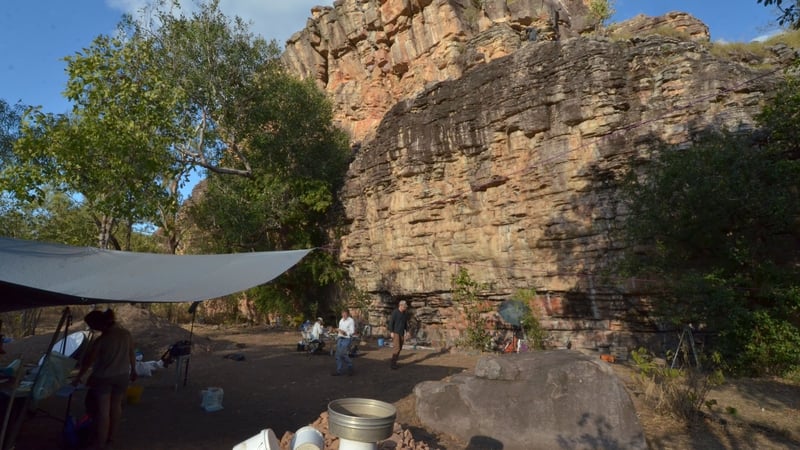
Image result for Artefact find suggests earlier arrival of humans in Australia  Image result for Artefact find suggests earlier arrival of humans in Australia
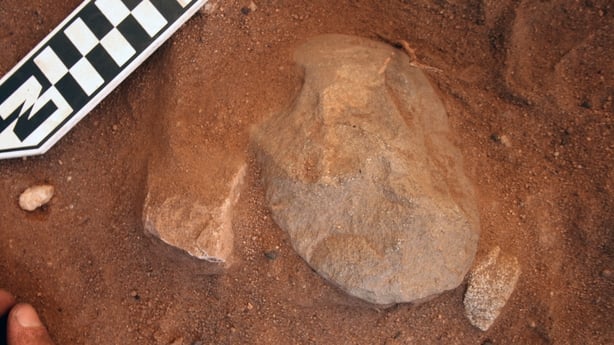
DIGS AT MADJEDBEBE HAVE UNEARTHED STONE TOOLS, OCHRES, PLANT REMAINS AND BONES

Humans arrived in Australia 10,000 years earlier than was previously thought, casting doubt on the theory that they killed off the giant kangaroo and other unique animals, scientists believe.
New artefact evidence suggests that the continent was first occupied about 65,000 years ago, long after the ancient ancestors of modern humans emerged in Africa.
The discovery challenges the theory that people caused the extinction of Australian megafauna including giant kangaroos, wombats and tortoises which disappeared more than 45,000 years ago.
Lead scientist Dr Ben Marwick, from the University of Washington, US, said: “Previously it was thought that humans arrived and hunted them out or disturbed their habits, leading to extinction, but these dates confirm that people arrived so far before that they wouldn’t be the central cause of the death of megafauna.
“It shifts the idea of humans charging into the landscape and killing off the megafauna.
“It moves toward a vision of humans moving in and coexisting, which is quite a different view of human evolution.”
Since 1973, digs at Madjedbebe, a rock shelter in Australia’s Northern Territory, have unearthed more than 10,000 stone tools, ochres, plant remains and bones.
A dating technique called optical stimulated luminescence (OSL) was used to determine the age of the oldest buried artefacts.
The process can show the last time a sand grain was exposed to sunlight up to 100,000 or more years ago.
This and other tests built up a picture of the environment and showed that when the first humans arrived, northern Australia was wetter and colder than it is today.
The findings, published in the journal Nature, support the theory that our species Homo sapiens evolved in Africa before dispersing to other continents, Dr Marwick said.

Monday, January 16, 2017

Donie's Ireland daily news BLOG update

Irish mortgage rates still nearly double the euro area average?

VARIABLE RATE HOLDERS CONTINUE TO PAY PRICE FOR PROFLIGATE BANK LENDING DURING BOOM YEARS

Image result for Irish mortgage rates still nearly double the euro area average?   Related image

IRISH MORTGAGE INTEREST RATES REMAIN NEARLY DOUBLE THE EURO AREA AVERAGE, ACCORDING TO DATA PUBLISHED BY THE CENTRAL BANK LAST FRIDAY.

The weighted average interest rate on new mortgages, excluding renegotiation’s, was 3.38% in November, down 28 basis points year-on-year. The equivalent euro area rate was 1.72%.
Mortgage interest rates in Ireland used to reflect the main European Central Bank (ECB) lending rate, primarily because of the high proportion of tracker mortgages issued during the boom years.
The more recent divergence reflects the premium Irish banks have attached to variable rate mortgages issued since the start of the financial crisis.
Lenders here have resisted political pressure to lower their rates, insisting that lending into to Irish market represents a riskier proposition.
They also argue that Irish costs remain higher because of the higher funding costs they face as a result of the crisis.
Variable rates can rise or fall depending on wholesale interest rates, which are set by the ECB, though banks are not obliged to pass these changes on to customers.
Fianna Fáil is pushing for legislation that would give the Central Bank powers to cap variable mortgage rates, a move that is being resisted by the Central Bank and the Government.
The latest Central Bank data also show the volume of new mortgage agreements amounted to €548 million in November, bringing new agreements to €4.9 billion over the past 12 months.

Oxfam World report reveals ‘an obscene gap’ between the rich and poor.

Eight men’s wealth same as world’s poorest 50%, indicates study ahead of Davos forum

Related image  Related image  Image result for worlds poor

THE GAP BETWEEN RICH AND POOR IS BECOMING INCREASINGLY LARGE, WITH JUST EIGHT INDIVIDUALS OWNING THE SAME WEALTH AS 3.6 BILLION OF THE WORLD’S POOREST PEOPLE, ACCORDING TO NEW RESEARCH.

A report from Oxfam, launched on the eve of the World Economic Forum in Davos, found that the poorest half of the world has less wealth than previously thought, due to new data emanating from China and India. This means that the eight richest men in the world are worth the same as the poorest half of the world’s population, according to wealth distribution data provided by Credit Suisse.
“It is obscene for so much wealth to be held in the hands of just eight men . . . particularly when one in nine people in the world go to bed hungry every night,” said Oxfam Ireland chief executive Jim Clarke. “A fundamental change in the way we manage our economies is required so they benefit everyone, not just a fortunate few. We need a global economy for the 99%, not just the 1%.”
More than 3,000 participants, including Taoiseach Enda Kenny, will descend on the snowy peaks of Davos, Switzerland, this week for the 47th World Economic Forum.
While the annual gathering has long been seen as a playground for the rich and powerful, the event this year is taking place against a background of resurgent populism and increasing public opposition to globalisation. This mood has been manifested in the election success of Donald Trump and the British vote to leave the European Union.
Although the US president-elect will not be attending the event, his inauguration as president of the US on Friday is expected to overshadow the summit. A number of sessions during the week are devoted to globalisation and the challenges posed by growing inequality and the question of wealth distribution. The theme of this year’s forum is “Responsive and Responsible Leadership”, a barely veiled acknowledgement of anxieties about the incoming regime in Washington and the series of elections scheduled to take place across Europe in 2017.
Xi Jinping Keynote address.
Among the most high-profile participants this year is Chinese premier Xi Jinping, who will deliver a keynote address on Tuesday. His presence marks the first visit to Davos by a Chinese leader.
British prime minister Theresa May will deliver a special address on Thursday morning, two days after she is expected to unveil details of her government’s vision for Brexit in a major speech.
British chancellor of the exchequer Philip Hammond will be in Davos on Friday, when he is expected to do a series of interviews and participate in a session titled “Britain and the EU: The Way Forward” with the former Italian prime minister and EU commissioner Mario Monti and others.
While more than 50 heads of state and government will travel to the exclusive Swiss ski resort, some of the world’s most senior banking and corporate executives will also attend the five-day event.
Among the economic heavy-hitters in attendance will be Jim Yong Kim, president of the World Bank, and IMF managing director Christine Lagarde, as well as senior executives from the world’s biggest banks, such as UBS, Goldman Sachs and Deutschebank.
One familiar face on the Davos circuit, the Goldman Sachs chief operating officer Gary Cohn, won’t be present this time. He’s likely to be busy preparing to become Donald Trump’s new chairman of the National Economic Council.
Senior officials from Trump’s transition team will attend the event, however, and are expected to hold a series of bilateral meetings with senior political leaders, including possibly Xi Jinping, on the fringes of the event.
Outgoing US vice-president Joe Biden will address the summit on Wednesday, while US Secretary of State John Kerry will also attend the forum, undoubtedly one of his final official engagements of the Obama presidency.

Gaybo (Gay Byrne) hopes for best in battle against prostate cancer?

‘HE IS DOING WELL. THE TREATMENT IS ONGOING’

Image result for Gaybo (Gay Byrne) hopes for best in battle against prostate cancer?  Gay Byrne on the Late Late Show in 1966  Image result for Gaybo (Gay Byrne) hopes for best in battle against prostate cancer?
Left Pic. Broadcaster Gay Byrne, with wife Kathleen, right pic. the old, the middle & the new L.L.S. hosts. Gay remains positive despite being diagnosed with prostate cancer

IRELAND’S MOST-LOVED BROADCASTER GAY BYRNE IS UPBEAT AND POSITIVE AS HE COMES TO TERMS WITH HIS CANCER DIAGNOSIS, TELLING THE SUNDAY INDEPENDENT: “THE TREATMENT CONTINUES AND WE HOPE FOR THE BEST.”

Gay was his usual sanguine self as he talked about his illness – echoing the thoughts of millions of well-wishers up and down the country who hope for his return to the airwaves in full health.
Last November, with typical understatement, Gay revealed to shocked listeners on RTE’s Lyric FM the disheartening news that he was suffering from cancer.
“I shall not be with our listeners on this day next week. Have to go to hospital… They think they may have discovered a bit of cancer in the prostate and they think it may have moved up into my back.
“I’ve had the most wonderful, fantastic, robust, good health all my broadcasting life,” he said in usual breezy style during his enormously popular show on the classical radio station.
“It’s my turn now… many, many people much worse off. Thank you for your good wishes,” he signed off.
Now, nearly three months on, Gay is in the throes of cancer treatment, but he is tough and resilient and well aware that he is undergoing the same difficulties endured by so many who are touched by the disease in this country.
And he is aware that prostate cancer is very treatable and the chances of a favourable outcome are quite high.
In short, Gay is not feeling sorry for himself but ongoing medical treatment obviously interrupted the usual Christmas and New Year celebrations – a favourite time of year for the couple who were married in 1964.
“Everything is on hold while we do our best to look after Gay,” his wife Kathleen Watkins told the Sunday Independent yesterday.
“He is doing well. The treatment is ongoing. Do thank the many people all over the country who have been in touch,” Kathleen requested.
“We got all the notes and letters and cards. We read all of them. Thank you. Thank you to all those kind people.It’s so much appreciated.”
The broadcasting legend is being looked after by his devoted wife at their home in Ballsbridge and there is lots of help and encouragement from the family – as well as the good wishes of an entire nation.

Local Property Tax in Sligo has highest compliance rate of almost 97% in Ireland

Image result for Local Property Tax in Sligo has highest compliance rate of almost 97% in Ireland  Image result for Local Property Tax in Sligo has highest compliance rate of almost 97% in Ireland  Image result for Local Property Tax in Sligo has highest compliance rate of almost 97% in Ireland

THERE WAS A COMPLIANCE RATE OF 96.8% WITH THE LOCAL PROPERTY TAX IN SLIGO IN 2016 ACCORDING TO THE FIGURES JUST RELEASED BY REVENUE.

The national compliance rate is is estimated at 97% which is in line with previous years.
Revenue, which oversees its collection, say some €5.3 million was collected through the tax in county Sligo last year from almost 30,000 properties. Laois and South Dublin had the highest compliance rate in the country at 99.8%.
The vast majority of householders in County Sligo (43.8%) valued their homes in the lowest bracket of up to €100,000 with 32.1% valuing their houses up to €150,000 and 16.4 falling into the €150,001 to €200,000 category. Just 1.5% valued their homes at over €300,000 and a further 1.5% were in the €250,001 to €300,000 bracket. Approximately 42% of property owners self-assessed the same valuation band as the Revenue estimate and 58% of property owners self-assessed a different LPT valuation band compared to Revenue.
LPT Exchequer receipts in 2016 (at end December) are €463m. This includes approximately €50m in pre-payments for 2017 LPT as well as €70m in payments for 2015 LPT and earlier years. Exchequer receipts also include Household Charge (HHC) arrears. Revenue assumed responsibility for the collection of arrears of HHC from July 2013. By end 2016 in excess of €64m was collected (including nearly €8m in 2016) and over 360,000 additional properties are now HHC compliant.
For 2013, 2014, 2015 and 2016 Revenue issued 212,000, 148,000 and 324,000 and 300,000 compliance letters respectively. In the vast majority of these cases property owners fully complied with their LPT payment obligations, either on a phased basis or by way of a single payment. However, in each year there were a relatively small number of cases that chose to remain non-compliant,
Revenue say it left them with no alternative but to deploy debt collection/enforcement measures or other sanctions to ensure payment. Some 864 cases were referred to the Sheriff in 2016 and 40 cases to external solicitors for collection. Over 20,300 tax clearance requests were refused on foot of LPT non-compliance, of which almost 97% were subsequently granted clearance following mutually acceptable payment solutions.
Revenue deducted LPT from the salaries or pensions of almost 89,000 property owners last year of which over 49,000 ‘rolled over’ from mandatory deductions applied in 2015. Over 11,000 valuations were also increased in 2016 following Revenue compliance interventions.

The BT Young Scientist exhibition category winners

ALL THE WINNERS IN EACH SECTION OF 2016 BT YOUNG SCIENTIST AND TECHNOLOGY EXHIBITION

Image result for The BT Young Scientist exhibition category winners  Image result for The BT Young Scientist 2017 exhibition category winners  Image result for The BT Young Scientist 2017 exhibition category winners
Right picture the overall BT Young Scientist & Technologist of the Year 2017 Shane Curran from Terenure College.
And above left picture:- Shay Walsh, managing director BT Ireland (left) and Minister for Education Richard Bruton (right), with Matthew Blakeney and Mark McDermott of the Jesus & Mary Secondary School, Sligo, runners-up at the BT Young Scientist & Technologist of the Year 2017 with their project Flint on the Moy?
The winners in each category of the 2016 BT Young Scientist and Technology Exhibition have been announced.
1st place Junior group Kinsale Community School, Impact of sound pitch on the biological gustatory perception mechanism, a quantitative comparative study between adults and children.
Biological and Ecological Junior Group Caoimhe Lynch , Sylvie Plant
2nd place Junior group Loreto College – Foxrock, Does Simulating a Lack of Binocular Vision Have An Impact on performance?
Biological and Ecological Junior Group, Jessica Oakley O’Kelly, Margot Moore, Jennifer Leavy
3rd place Junior group St Mary’s Diocesan School, 40 Licks ( trying to determine if being weaned onto certain foods as a baby can effect your development into a super-taster) Biological and Ecological Junior Group Seb Lennon Calum Agnew
1st place Junior individual Christ King Girls Secondary School, An investigation on whether cereal is a healthy breakfast option for Children Biological and Ecological Junior Individual Romy Kolich
2nd place Junior individual Bandon Grammar School, A novel approach to growing Nannochloropsis in a controlled environment and it’s subsequent ability to produce oil Biological and Ecological Junior Individual Gregory Tarr
3rd place Junior individual Sandford Park School Ltd, Time as a variable in bread production Biological and Ecological Junior Individual Oscar Despard
1st place intermediate group Loreto Secondary School – Balbriggan, Does consuming certain varieties of potatoes as a staple food in a diet, increase blood glucose levels & chance of high blood pressure and diabetes in a sample of Rush residents Biological and Ecological Intermediate Group Sophie Weldon Laura Weldon Emma Kleiser Byrne
2nd place intermediate group Tullamore College , Investigating The Difference In Bacterial Contamination When Handling and Using a Device to Insert Contact Lenses Biological and Ecological Intermediate Group Lucy Leonard Michele Mann
3rd place intermediate Group Avondale Community College, Biodegradable plastic pots to minimise the effects of transplant shock. Biological and Ecological Intermediate Group Ayyub Azmat Niall Gaffeny Christopher Makin.
1st place intermediate individual Ardscoil Ris ‘To Bee or not to Bee’: Investigating solutions to falling bee populations using a multifaceted problem solving approach. Biological and Ecological Intermediate Individual David Hamilton
2nd place intermediate individual Colaiste Choilm, Investigating the use of natural plants oils and extracts as an antiproliferative cancer agents. Biological and Ecological Intermediate Individual Aivan Jose
3rd place intermediate individual Bandon Grammar School, A comparison of foot biomechanics in sport playing and non-sport playing teens Biological and Ecological Intermediate Individual Alex O’ Connor
1st place Senior group Midleton College , Foal sickness containment and prevention Biological and Ecological Senior Group Cathal Mariga George Hennessy
2nd place Senior group Loreto Secondary School – Balbriggan, To investigate whether contrast sensitivity can be improved from regular exposure to action video games and the impact on everyday tasks on a teenager with myopia Biological and Ecological Senior Group Chloe Tap Dagmara Dobkowska
3rd place Senior group St Joseph’s Secondary School, Stimulating plant growth using electricity Biological and Ecological Senior Group Niamh McHugh Vitalija Janusonyte
1st place Senior individual Our Ladys College – Drogheda, The Antimicrobial Potential of Tree Bark Extracts Biological and Ecological Senior Individual Niamh Ann Kelly
2nd place Senior individual Coláiste Choilm, An Investigation into the Application of Symsagittera roscoffensis & it’s symbiont Tetraselmis convolutae in Neurobiology and Biotechnology. Biological and Ecological Senior Individual Con Moran
3rd place Senior individual Scoil Mhuire Strokestown , An investigation into the quality of effluent discharging domestic waste water treatment systems (septic tanks) and an apparatus to improve this. Biological and Ecological Senior Individual Abbie Moloney
1st place Junior group Synge Street CBS, Generalisations of Feynman’s Triangle Theorem Chemical, Physical & Mathematical Sciences Junior Group Carl Jones Keiron O’Neill
2nd place Junior group Synge Street CBS, New Conjectures Concerning the Partition Function Chemical, Physical & Mathematical Sciences Junior Group Talha Moktar Abdulrhman Abouryana
3rd place Junior group Sutton Park School, The design and testing of a safe drinking water system for developing countries Chemical, Physical & Mathematical Sciences Junior Group Xiangyu Carbon Mallol Méabh Scahill

A huge glacier crack in the Antarctic ice shelf widens dramatically

Related image Image result for A huge glacier crack in the Antarctic ice shelf widens dramatically

A HUGE CHUNK OF ANTARCTIC ICE IS HANGING ON BY A VIRTUAL THREAD. AT THE EDGE OF THE WEST ANTARCTIC ICE SHEET, A GLACIER IS CRACKING FROM THE INSIDE OUT AT AN ALARMING SPEED. THAT’S SCARY BECAUSE THIS GLACIER, AND OTHERS LIKE IT, KEEP THE ICE FROM FLOWING INTO THE SEA, WHERE IT WOULD RAISE SEA LEVELS BY SEVERAL FEET.

The ice shelf in danger is known as Larsen C. British researchers who are monitoring the crack in this ice shelf believe that only about 12 miles now connect the chunk of ice to the rest of the continent. You can see more images of this ice crack here.
“After a few months of steady, incremental advance since the last event, the rift grew suddenly by a further 18 km [11 miles] during the second half of December 2016,” wrote Adrian Luckman in a statement from the MIDAS Project, which is monitoring changes in the area.
Luckman, a professor at Swansea University in Wales, and head of the MIDAS Project, is referring to a crack that has been growing for years and is now a total of roughly 70 miles long. When that fissure finally reaches the far side of the shelf, British scientists believe that an iceberg the size of Delaware will float off. The ice shelf itself is almost the size of Scotland, and the fourth largest of its kind in Antarctic. The piece that it is getting ready to break off is nearly 2,000 square miles in size.
It’s true that icebergs break off from ice sheets in the Antarctic on a fairly regular basis, but this one is especially significant because of its size, and because it shows that the ice retreat is happening farther inland than scientists had previously observed.
What Could Happen After This Break?
What will happen next? Scientists are uncertain. But the consequences of the break could be dramatic.
“When it calves, the Larsen C Ice Shelf will lose more than 10 percent of its area to leave the ice front at its most retreated position ever recorded; this event will fundamentally change the landscape of the Antarctic Peninsula,” said the MIDAS researchers in a statement about the rift.
The First Time In Over 12,000 Years and this could be part of a broader pattern for ice shelves.
It’s the latest sign of major ice loss in the fast warming Antarctic Peninsula, which has already seen the breakup of two other shelves in the same region, events that have been widely attributed to climate change. Larsen A collapsed in 1995, and much of Larsen B collapsed dramatically in 2002. Scientists have revealed that this is probably not something that has happened in the past 12,000 years or possibly, even more alarmingly, in more than 100,000 years.
So, Antarctica has lost ice shelves before, but none so huge as this one.
The iceberg resulting from this crack will not in itself raise sea levels, but if this ice shelf breaks up even more, that would have an impact on sea levels. Experts believe that if all the ice that the Larsen C shelf currently holds back entered the sea, global waters would rise by around four inches.
Antarctica is geographically a long way from most of us, but what happens there could be an indication of what’s happening with our planet Earth.
Is Climate Change To Blame?
The Project MIDAS group has not made any statement attributing the development at Larsen C to climate change, but has stated that the shelf would be “at its most retreated position ever recorded,” which suggests the possibility of climate change being the cause for this crack.
Previous research has also noted that the Larsen C ice shelf is becoming less thick, making it float lower in the water, which appears linked to the warming of the Antarctic Peninsula in recent decades.
Meanwhile, scientists wait for the anticipated break. Luckman told the BBC that “If it doesn’t go in the next few months, I’ll be amazed.”
But there are few certainties right now apart from an imminent change to the outline of Antarctica’s icy coast. “The eventual consequences might be the ice shelf collapsing in years to decades,” said Luckman.