Pages

Showing posts with label spacecraft. Show all posts

Wednesday, February 11, 2015

Donie's Ireland daily news blog

Finance Minister Michael Noonan ‘pessimistic’ a solution can be found for Greece


The Irish finance Minister Michael Noonan has said he is pessimistic at this stage that a solution can be found for Greece.

The minister, who is travelling to Brussels tomorrow for an emergency meeting of Eurozone finance ministers, told TDs tonight that he did not favour a debt write-down for the country.
Asked if he was optimistic about a solution being found, he replied: “Today I’m pessimistic.
“Because with the various reports I’m reading in the media and the various briefing notes that I get, I don’t see the basis for a solution emerging yet. Many of the proposals that are emanating are, on the face of it, technically impossible.”
And he said he couldn’t predict what would happen over the coming days, but he said the Greek government had to set out what it wanted, and then the focus would shift to the ECB and European Commission to respond, followed by European governments.
Mr Noonan told the Oireachtas Finance Committee that there was a major humanitarian issue in Greece, and that he had sympathy with the Greek people, but he said he wasn’t in favour of a debt write-off. Instead, he suggested he was in favour of suspending the repayment of debt.
“We won’t favour any write-offs of debt, because if you write off debt, it makes a hole in everyone’s balance sheet,” he said.
“But if you park debt, and even if there’s no interest being paid on it, the debt owed to you is still there as an asset on the  balance sheet even if it’s costing the recipient nothing to receive it. So I think there’s space there.
“I want Greece to stay in the Eurozone, so I wouldn’t favour any strategy that would encourage, induce or drive Greece out of the Eurozone.”
Mr Noonan said Ireland had no contact from the Greek authorities either at ministerial or ambassadorial level.
Mr Noonan said there was a problem with the way the bailout programme was implemented in Greece because structural reforms were not made.
“Sovereign countries have responsibilities for running their country, and they have responsibilities for the welfare of their people. The Greek authorities over a number of years did not take the same action as the Irish authorities, the Portuguese authorities or the Spanish authorities.”
Meanwhile, G20 finance ministers tonight urged Greece and its creditors to resolve their difference. US Treasury Secretary Jacob Lew cautioned against “casual talk” that Greece could leave the Euro and recommended a “pragmatic approach” in which the parties can agree on terms that are mutually agreeable.
Earlier, UK Chancellor George Osborne said a Greek exit from the Euro would be very difficult for the world economy.

13 ‘significant’ breech births in Drogheda Hospital an audit reveals


HSE says cases involve diagnosis in advanced labour at Our Lady of Lourdes Hospital

A HSE audit has found 13 ‘significant incidents’ where a breech birth was diagnosed in advanced labour in Our Lady of Lourdes Hospital in Drogheda between May 2012 and June 2014. File photograph: David Sleator/The Irish Times
Thirteen “significant incidents” where a breech birth was diagnosed in advanced labour occurred in Our Lady of Lourdes Hospital in Drogheda over a two-year period, according to the Health Service Executive (HSE).
The death of a baby in the hospital in 2013 followed an undiagnosed breech and this is under examination by the local coroner, the HSE said in a statement.
An internal clinical audit, prompted by the death, established breech was not diagnosed before labour in 21 cases between May 2012 and June 2014. During this period, 7,667 babies were delivered, with 221 of them in the breech position.
“Overall, approximately 4 per cent of babies will be breech at term. It is widely recognised that even in experienced hands there will be a number of undiagnosed breech presentations in labour,” the HSE said.
“It is important to recognise that these 21 cases are not all critical incidents. Breech diagnosed in early labour is not considered a critical incident and would not usually be reported. However, breech diagnosed in advanced labour is a significant incident and would usually be reported.”
The audit found eight of the 21 cases were diagnosed in very early labour, while 13 were diagnosed in later labour.
According to the statement, the audit was not a review or incident investigation of the 21 cases, but was conducted in order to identify if the rate of undiagnosed breech in the hospital was within an acceptable range.
The rate of undiagnosed breech in the hospital was 9.5 per cent of breech births, compared to an expected rate of 20-25 per cent suggested in international studies.
The 21 births included eight midwife-led patients and 13 in consultant-led units.
In 2007, a coroner returned a verdict of medical misadventure in the case of baby Shane McArdle, who died less than 24 hours after being delivered in a breech position at Our Lady of Lourdes. The breech went undiagnosed.
Babies born in the breech position are delivered buttocks or feet first, as opposed to the head. Many breech births are delivered by Caesarean section.
Last month, it emerged seven births involving oxygen deprivation at Portiuncula hospital in Ballinasloe, two of which resulted in death, are under investigation. Separately, some 170 births in recent years are under review by a HSE panel following complaints from patients about a number of maternity units

Varadkar denies plan to require patients to have insurance to access certain GP procedures


Minister rejects warning by Irish Medical Organisation

“Insurers should cover more procedures being done in primary rather than in hospitals, which is much more expensive”
Minister for Health Leo Varadkar has denied the Government has plans to require patients to have health insurance to access certain procedures and services provided by their GPs.
He said the Department of Health had launched a public consultation process in late December 2014 on the scope for private health insurers to cover a fuller minimum range of services provided by GPs in primary-care settings .
The Irish Medical Organisation (IMO) said on Tuesday that the Government was “preparing a mandate that will require patients to have health insurance to access certain procedures and services through their GPs”.
The IMO said the introduction of mandatory private health insurance to fund GP services would destroy many of the positive characteristics of the current GP system in Ireland.
Dr Ray Walley, the chairman of the IMO’s GP committee, said “such a move would see GPs being forced to treat patients differently depending on whether they had insurance or not, that the profitability of insurance companies would force behaviour and business changes on GP practices, that same-day appointments would become a thing of the past, and that independent GPs would be replaced by corporate GP practices with reduced availability of GPs in rural Ireland”.
Mr Varadkar said there were no plans to require anyone to have insurance and therefore it would not involve any change to the law.
He said the initiative launched by the Department of Health in December related to “people who do not have medical cards and now have to pay their GP the full cost of visits and procedures out of pocket”.
“The Government is looking for ways in which more people can get better value from health insurance if they chose to to have it. This would involve more people being reimbursed for GP visits and procedures by their insurers.
“Some people already have insurance policies that covers some of their primary-care costs but most don’t. For example, this means that if they have their in- grown toenail removed in a hospital they are covered by their insurer but if their GP does it they are not and have to pay out of pocket. That makes no sense. Insurers should cover more procedures being done in primary rather than in hospitals, which is much more expensive.”
The Department of Health said the public consultation process was not linked to the Government’s plan for the introduction of universal health insurance.
The department said 29 submissions had been received as part of the consultation process from stakeholders, representative and interest groups and other interested parties. It said these were currently being considered.

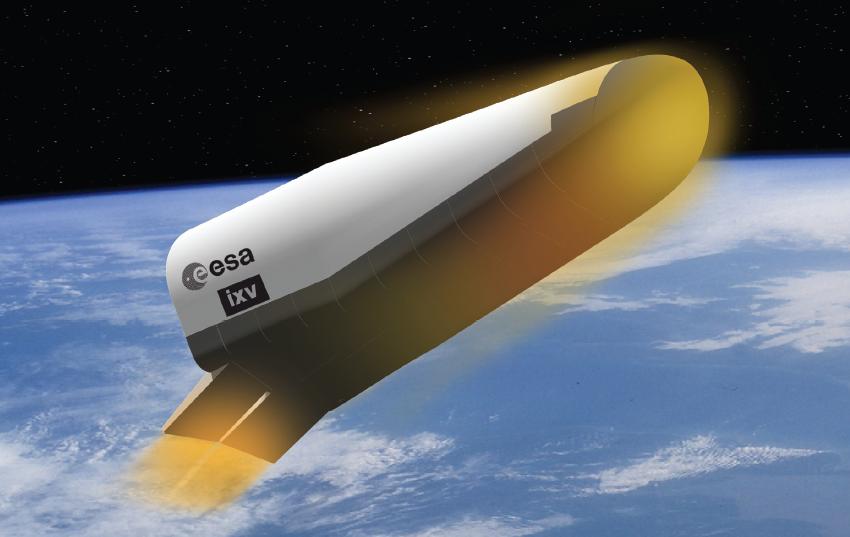
ESA to launch reusable spacecraft into low Earth orbit


Intermediate Experimental Vehicle expected to splash down in Pacific after 1hr 40m

File image of a March 2008 launch from the European Space Agency’s Kourou facility in French Guiana.
The European Space Agency has an important launch on Wednesday from its Kourou launch pad in French Guiana.
The launch is a flight-test of a reusable vehicle that will provide service for visits to low Earth orbit.
Known as the Intermediate Experimental Vehicle or IXV, it is about the size of a family car and weighs about two tonnes.
A European Vega rocket will lift it onto a suborbital path and then release it 340km up and it will continue to climb to about 412km before beginning its short return journey, the agency said.
The flight should prove the IXV can return from space safely. It is expected to splash down in the Pacific Ocean after a total mission time of one hour and 40 minutes.
Flight controllers will use thrusters and aerodynamic flaps like a remote control plane to manoeuvre the craft when in full use.
Irish involvement
There is significant Irish involvement in the IXV, according to Tony McDonald, manager of ESA programmes at Enterprise Ireland.
The Dublin subsidiary of US aerospace company Curtiss-Wright, which employs about 140 people, was involved in developing some of the avionics systems controlling the vehicle.
“It is an experimental re-entry vehicle and it will prove the technology works and can be used on future missions,” Mr McDonald said.
“Proof that space technology works is key when you enter the marketplace. You need show the technology works in the space environment.”
Ireland has 50 companies involved in space technology, employing about 2,000 people, he said.
Some are involved in flight activity, but many are also taking technology developed for space and then using it in downstream non-space sectors such as the aircraft industry and medical devices.
Curtiss-Wright has a long history in engineering, given it arose from the original company set up by the Wright brothers after their successful early flights. The company is also involved in “mission critical” data collection as the IXV is put through its paces during the flight.   

Saturday, December 14, 2013

Donie's Irish daily news BLOG update

RSA chief executive resigns over issues related to company’s Irish subsidiary


RSA is injecting £135m in fresh capital into its Irish unit to ensure it meets regulatory standards for solvency

Insurer RSA’s Chief Executive Simon Lee has resigned over issues related to the company’s Irish subsidiary.
RSA is also injecting £135m (€160m) in fresh capital into its Irish unit to ensure it meets regulatory standards for solvency and has sufficient funds on hand to meet future claims.
This is in addition to the £70m (€83m) in funding put into RSA Ireland in November after financial issues at the subsidiary first came to light.
RSA said it had completed a review of its Irish business and its reserves, the money set aside out of premium income to cover possible future insurance claims.
A further review, which is being undertaken by consultants PwC, will be completed in January.
In a statement to the stock exchange this morning, RSA said the impact of the further cash injection into its Irish operation would reduce its 2013 profits.
It is the third profit warning the insurer has had to issue in the past two months.
RSA Chairman Martin Scicluna said Mr Lee had resigned “to enable a change in leadership” at the company.
In a statement, RSA said he would not receive any severance payment “beyond his contractual entitlement”.

Ireland’s tough economic policies to continue, says finance minister Noonan


THE IRISH ECONOMY IS NOW EMERGING FROM ONE OF THE DEEPEST RECESSIONS IN THE EUROZONE.

The Irish Republic’s exit from its bailout rescue is a “milestone” but not the end of the road, the country’s finance minister has said.
Michael Noonan told a press conference marking the exit that Ireland’s deficit and debt was still far too high.
Ireland has become the first Eurozone nation to complete the lending deal put in place by a group of international lenders, known as the troika.
The country was rescued with an 85bn euro ($117bn; £71bn) package.
It was seen by many in Ireland as a day of humiliation – when the government went cap in hand to the European authorities and the International Monetary Fund.
Three years on, Ireland is escaping the shackles of the bailout and going back to financial markets rather than other governments for its borrowing requirements.
Economic recovery has played an important part in that. Investor confidence, demonstrated by sharply lower borrowing costs, looks secure at this stage.
But Ireland still has to deal with the historic debt burden. It needs growth to help bring down annual deficits – and with an export-focused economy that will depend on continued expansion, rather than reversals in its major trading partners.
“This isn’t the end of the road. This is a very significant milestone on the road,” Mr. Noonan said. “But we must continue with the same types of policies.
“Ireland sought emergency help three years ago to keep its finances under control and has met the terms of the programme, implementing austerity to bring down its budget deficit and rebalance the economy.”
The troika – the European Union, International Monetary Fund, and European Central Bank – have held significant influence on policymaking and the direction of the Irish economy.
Exiting the bailout marks a waning of that influence, but Mr. Noonan said this would not mean a relaxation of the tough policies that he acknowledged had hit the Irish population hard.
“The real heroes and heroines of this are the Irish people,” he said.
But he said the economy was getting better. “People are beginning to spend. Property prices are improving… it’s fragile. But in my view things are building well and I would hope that next year would be better for a lot of people who have made a lot of sacrifices.”
Deep recession
Although Mr Noonan pledged to maintain fiscal discipline, he said the government would consider income tax cuts in the next two budgets to give the economy some support.
“If we can make changes which help the economy to grow better and create extra jobs, those are the kind of things we’ll do,” he said.

Brown Thomas owners to control Arnotts with US-based Apollo group


The owners of Brown Thomas and major US investment fund Apollo look set to take control of Arnotts.

The future of one of the country’s best-loved and most iconic retail names was being heatedly thrashed out last night, with a US investment fund giant said to have won the battle to buy €230m bank debt from IBRC’s special liquidators.
Apollo, a massive investment fund with a strong background in retail acquisitions, was being named by three sources close to the process as the winning bidder for what would amount to control of half of Arnotts.
Yesterday, developer Noel Smyth was told that his company’s bid, in a team-up with the Weston retail dynasty and Smyth’s Fitzwilliam Finance, had been unsuccessful.
The Westons own Brown Thomas as well as the rest of the loans linked to Arnotts, which were sold by Ulster Bank last month.
But while the situation is still in flux, the Irish Independent understands that the Westons, who also own Selfridges in London, may not be entirely out of the running, and the possibility of a joint venture of some kind with Apollo was being mooted last night.
Apollo declined to comment on the process and IBRC’s special liquidator did not respond when contacted.
The Westons and Fitzwilliam Finance have already bought Arnotts’ Ulster Bank debt.
Meanwhile, Arnotts management, who were bidding with British retail investor Meyer Berman, have not been told whether their bid has succeeded.
It’s believed that the price paid for Arnotts’ Anglo debt, being sold off as part of the €25bn liquidation of IBRC, was in the region of €45m. The sale of this debt and the Ulster Bank debt is understood to have priced Arnotts at between €75m and €80m.
Noel Smyth and the Westons recently bought Arnotts’ Ulster Bank loans and were heavy favourites to also snap up the Anglo debt and take control of the department store name, with ambitious plans for its development and expansion.
Apollo Global Management, a New York-based alternative asset management fund, bought MBNA’s former facility in Leitrim, securing 250 jobs.
Apollo has a history of investing in Ireland and has a track record of investment in retail.

Wetherspoon Pubs chain buys Irish pub in Cork


English pub chain Wetherspoon has acquired its second premises in Ireland, the former Newport Cafe in Paul Street Plaza in Cork City.

The Watford-based company intends to create 40 to 45 jobs in Cork by opening its second pub in Ireland by Apr 2014.
The company, which is making its second attempt to enter the Irish market after pulling out during the boom years citing the cost of doing business here, recently bought a premises in Blackrock, Dublin.
It intends to open as many as 30 premises throughout the Republic of Ireland, with three or four to be opened in the next year.
Wetherspoon founder and chairman Tim Martin said they are looking at other sites across the country.
“I am delighted that we have secured our first pub in Cork and our second in the Republic of Ireland. We are looking at other sites throughout the Republic of Ireland and hopefully they will come to fruition in the near future.”
The company is planning on investing €1.5m on developing the premises in Cork and is not ruling out buying other venues in the city.
A spokesperson said the company was not buying pubs cheaply from receivers but would not rule out making such deals in the future.
“Wetherspoon’s are looking at sites and I don’t think we would go direct to receivers or the banks but if we were made aware we might look at them. If premises are for sale for various reasons then we would look at them,” the spokesperson said.
The chain primarily operates in the UK but believes its mix of food, drink, and no-music policy will prove just as successful in Ireland.
“Our logic is that people in England, Scotland, Wales, and Ireland like to eat and drink, simple as that. Pubs in Ireland are very special places. People like products from the Republic and we’ll take that in to account,” the spokesperson added.

Nurse forced to intervene as Doctor tried to take blood from patient with scalpel


Nurse forced to intervene as he was about to cut into elderly woman’s vein, an inquiry was told

A Nurse has described how she cried ‘Jesus, what are you doing?’ and snatched a scalpel from a doctor’s hand, moments before he was about to cut in to an elderly patient’s vein in order to take a blood sample.
The nurse has told a medical council inquiry that she honestly did not believe that Vincent Osunkwo was a proper doctor and that he “didn’t have a clue” how to treat patients.
An inquiry has heard that Dr Osunkwo was appointed to the job of senior house officer at Midland Regional Hospital, Portlaoise, after nobody else applied for the post.
A senior consultant said Dr Osunkwo lacked “basic knowledge that could be expected of any medical student”.
He faces five separate allegations of poor professional performance and professional misconduct arising out of his treatment of patients in the hospital between March 9 and April 12, 2009.
These include that he attempted to read an X-ray upside down, and that he told members of his medical team that a patient was “fine” when that patient was in fact receiving oxygen in intensive care.
It is also alleged that he told a consultant that a scan performed on a patient’s kidney was ‘fine’ when it in fact showed multiple abnormal masses.
Dr Osunkwo has returned to his native Nigeria and did not turn up for the inquiry. He told solicitors representing the CEO of the Medical Council that the allegations against him “border on character assassination”. He has failed to respond to subsequent emails about his case.
Dr Osunkwo applied for an Irish visa in May of this year but was refused entry. His subsequent appeal was also refused.
The inquiry heard evidence from a woman who, at the direction of the Fitness to Practise Committee, was only identified as Nurse X.
She said that on the evening of March 10, 2009, a frail elderly patient was admitted to A&E from a nursing home.
Nurse X said that the woman needed to have her blood type checked in case she required a transfusion and that she asked Dr Osunkwo if he would ‘cannulate’ or insert a tube in to the patient.
“I said to Nurse Buckley, I am concerned that he doesn’t know what he’s doing,” Nurse X told the inquiry.
She continued: “I looked around and Dr Osunkwo had a scalpel in his hand. She (the patient) was crying he was about to cut in to a vein, I said, ‘Jesus what are you doing?”
“I pulled it out of his hand and put it down, I said why? He mumbled something under his breath and had a blank look on his face.
“I didn’t honestly believe that that was a real doctor that night. He just hadn’t a clue how to treat a patient,” she added.
Peter Naughton, a consultant surgeon at Portlaoise until his retirement in 2010 said he would never have been happy to give Dr Osunkwo any clinical responsibility.
Mr Naughton said Dr Osunkwo got the job after the original successful applicant let the hospital down by not turning up. He said the role of senior house officer was advertised nationally but Dr Osunkwo was the only applicant. Dr Osunkwo had previously worked in Crumlin Children’s Hospital but he wasn’t sure if his references had been checked.

Chinese unmanned spacecraft lands on moon


The Jade Rabbit buggy will dig and conduct geological surveys

China landed an unmanned spacecraft on the moon today, state media reported, in the first such “soft-landing” since 1976, joining the United States and the former Soviet Union in managing to accomplish such a feat.
The Chang’e 3, a probe named after a lunar goddess in traditional Chinese mythology, is carrying the solar-powered Yutu, or Jade Rabbit buggy, which will dig and conduct geological surveys.
China has been increasingly ambitious in developing its space programmes, for military, commercial and scientific purposes.
It has moved in lock step with its emergence as a major global economic and political power.
“The dream for lunar exploration once again lights up the China Dream,” Xinhua news agency said in a commentary.
In its most recent manned space mission in June, three astronauts spent 15 days in orbit and docked with an experimental space laboratory, part of Beijing’s quest to build a working space station by 2020.
The official Xinhua news service reported that the spacecraft had touched down in the Sinus Iridum, or the Bay of Rainbows, after hovering over the surface for several minutes seeking an appropriate place to land.
A soft landing does not damage the craft and the equipment it carries.
In 2007, China put another lunar probe in orbit around the moon, which then executed a controlled crash on to its surface.
China Central Television (CCTV) broadcast images of the probe’s location today and a computer generated image of the probe on the surface of the moon on its website.
The probe and the rover are expected to photograph each other tomorrow. The Bay of Rainbows was selected because it has yet to be studied, has ample sunlight and is convenient for remote communications with Earth, Xinhua said.
The rover will be remotely controlled by Chinese control centres with support from a network of tracking and transmission stations around the world operated by the European Space Agency (ESA).
For more than a decade, China has been modernising its economy and developing in areas long dominated by the West particularly the United States. The moon landing will be seen as a demonstration of China’s ability to engage in sophisticated space operations with dual use potential.
China is also developing its own satellite system to rival the US GPS system and has sold satellites to other countries. The landing will also be a point of national pride in the country, which is undergoing difficult economic transitions.