Pages

Showing posts with label Avoidance. Show all posts

Tuesday, February 17, 2015

Donie's Ireland daily news BLOG update

Irish Government blew an opportunity to get a debt write down deal

Says former IMF chief Ashoka Mody

Ireland fell in with what Berlin and Brussels wanted it to do?
  
Left picture above shows Ashoka Mody of the IMF outside the Department of Finance.
THE current Irish government blew an opportunity to get a debt write-down deal and a “slower pace of austerity” from the EU/ECB/IMF troika when it took office four years ago, the former IMF chief of mission to Ireland said today.
“When this (Irish) government came in it had a mandate,” he said in an interview on Newstalks’s Lunchtime programme.

“The new government had so much going for it.

“Ireland fell in with that premise and therefore perpetuated a culture that this current Greek government is trying to break.
“It was on that premise that it won the election and what the deal at that time could have been, I don’t know but it should certainly have been a superior deal. That deal would have required a clear premise on some amount of debt restructuring,” he added.
Ashoka Mody, an economist and a visiting professor at Princeton University, also suggested that the debt accumulated by the previous government was “odious debt” that arguably should not have to be repaid.
In international law such debts are considered to be the personal debts of the regime that incurred them and not those of the State.
While the Government has claimed it has already received a number of concessions from Europe including the promissory note deal on the former Anglo Irish Bank, many believe it should have held out for a debt write-down.
“There was a burden of debt that would legitimately be declared as an odious debt and this was not necessarily because there was something unique about this particular government but because there had been severe and egregious errors that it inherited,” Mr Mody said.
He also said that water charges were symbolic. The financial “burden was borne unequally.”
Greece is still fighting for some kind of deal this week as euro zone finance ministers meet in Brussels.
They are attempting to find common ground with Greece’s’ new government, elected on a pledge of less austerity.
Greece confident as EU meeting looms, sticks to no-austerity pledge
Speaking recently, Finance Minister Michael Noonan said our debt is sustainable – “evidenced by the fact that borrowing costs are the lowest on record.”
Our debt-to-GDP ratio peaked in 2013 at 123pc and fell to an estimated 110pc last year, he said.
The latest figures show the Greek ratio at about 170pc.
Mr Mody also said he was confident that Greece will eventually restructure its debts but he warned against a “bogus restructuring” whereby the country’s problems would not be sorted out properly.
“It’s not in anyone’s interest to draw this out,” he said. “The longer it lasts the longer the political discontent, it’s not just in Greece.“
“The fact that the Greek government is much maligned in Europe is not a surprise.”

Strict new sunbed rules to outlaw ‘happy hours’, make eye-wear compulsory


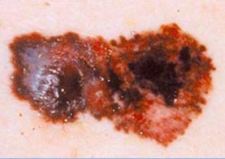
Stricter rules on sunbed use are to be enforced from next month on the back of last year’s ban on under 18s using the tanning machines.

With 150 people dying each year from skin cancer, a tougher regime is being brought in outlawing so-called happy hours or free use of the beds and lamps from March 2.
On top of that, users will also have to wear protective eyewear or glasses and won’t be able to use the machines unless they are being supervised in order to minimise damage to their skin and eyes.
The aim of the increased restrictions is to combat the rising levels of skin cancer in Ireland – with more than 850 new cases of melanoma being reported each year – and to dissuade people under 30 from using the quick, artificial tan.
Health Minister Leo Varadkar said: “The more that someone uses a sunbed, the higher the risk they will get skin cancer.
“The incidence of skin cancer is increasing faster than any other type. So this phase of sunbed measures is all about making sure that adults know the risks.
“More and more evidence is emerging that using a sunbed without protective eyewear can damage the eye and potentially cause cancers.”
The new regulations will require sunbed businesses to display warning signs, provide information on the risks and ban health claims – while new hygiene standards will be also be introduced.
According to figures produced by the National Cancer Registry, there were more than 10,000 cases of skin cancer in 2011 – and the same year there were over 7,000 people living with melanoma.
Inspectors from the Health Service Executive (HSE) environmental health division will be tasked with enforcing the increased restrictions on sunbed use and penalties will be imposed on businesses flouting the rules.
Kathleen O’Meara, head of advocacy and communications at the Irish Cancer Society, claimed sunbed use is as carcinogenic as tobacco or plutonium.
“The new regulations highlight the dangers of sunbed use for everyone, whatever your age or skin type,” she said.
“It is our hope that this legislation will mark a turning point in attitudes to using sunbeds in Ireland. We would advise everyone not to use sunbeds, but it is vital that young people who are most at risk are protected.”
Outlining the new regime, health chiefs revealed skin cancer is the most common type of cancer in Ireland and they warned it is a particular problem because of fair skin.
They noted the 2009 reclassification of sunbed use by the World Health Organisation’s International Agency for Research on Cancer from a group 2A carcinogen – one that is probably carcinogenic to humans – to a group 1 carcinogen – one that is carcinogenic to humans.
The health chiefs warned that ultraviolet radiation will cause cancer.
Liz Yeates, director of public affairs at the Marie Keating Foundation, said: “We know that younger people under the age of 30 who use sunbeds are particularly at risk and have a 75% increased risk of developing malignant melanoma.
“For this reason, we are hopeful that these regulations, in particular the restriction on marketing practices of sunbeds, will have a strong impact with this particular age group.”
Dr Maurice Mulcahy, regional chief environmental health officer, said: “With the introduction of these new provisions, Ireland now will have laws and guidance which will protect the public from the threats to their health and wellbeing, associated with artificial tanning devices by making adults more aware of the risks associated with sunbed use and prohibiting the sale, hire or use of a sunbed by those under 18 years of age.
“We will shortly be writing to all sunbed businesses and will also be actively engaging locally with them over coming weeks, to advise and explain how they can comply with these new legal requirements.”
Companies offering sunbed use will also be required to notify the HSE of their operations and a list of notified tanning shops will be drawn up.

Over 25% of people in Ireland do not take any exercise,

The CSO reveals

cso sport  cso walking

More than a quarter of Irish people do no sport or physical exercise, new figures from the CSO reveal.

A statistical analysis of the sport and exercise data from 2013’s Quarterly National Household Survey showed that almost 73% of people over 15 do some sort of exercise, if recreational walking is included.
45.7% of men and 30.1% of women participate in sport, while walking for fun or fitness is an activity 27.4% of men and 41.7% of women take part in.
That means almost six in ten of us go walking for recreation. In addition, one in five use walking to get where we need to go (instead of driving, cycling or public transport).
Yet that still leaves 27.5% of people over 15 years of age who are not physically active. That includes the 12.8% of us who don’t do any sport, but still walk to get where they’re going, and the 14.7% who do nothing at all.
Of those who do no activity at all, 35% said they had no time, 29% said it was due to illness, injury, or disability, and almost a fifth said it was down to “lack of motivation”.
Gym or sports club memberships were slightly more popular among men, but in general, more than half of us (56.6%) have a membership to a sports or fitness club.
And when it comes to the type of exercise we do, the most popular activity is the gym itself – and similar aerobic activity – which 19.2% of take part in. That’s followed by swimming (14.2%), and cycling (13.6%).
And almost twice as many people play soccer (7.7%) as Gaelic football (4.3%)l
The survey also asked people what health and fitness facilities they’d like to see in their local area, with 18.7% calling for a swimming pool, 11.4% favouring cycle lanes, and just 8.1% saying they’d like to see public walkways.

How to avoid paying Tax legally

A guide for everyone?

Here’s how to legally reduce what you pay in tax.
  

How to reduce the tax bill you pay. You don’t to be rich and famous or have an expensive accountant to trim your tax bill.

With just a little planning you can legally reduce the amount of cash you pay to HMRC – leaving more to spend on whatever you please.

Here’s what you need to know…

How to reduce the amount of income tax that you pay
This is the duty you pay on income, whether that cash comes from an employer, pension or savings account.
The tax is applied on a graduated scale and everyone has what’s known as a personal allowance, where no tax is due. At the moment the personal allowance for most people stands at £10,000 a year, so you don’t pay any income tax until you earn more than this.
On income between £10,000 and £31,865 income tax is applied at a rate of 20% (basic rate) after £31,866 and up to £150,000 of income is subject to a tax of 40% – but taking into account the personal allowance, most people start paying a higher rate of tax when they earn £41,865 a year. Anything more than £150,000 is subject to a tax of 45%. [Note, from April 2015 the personal tax free allowance will be raised to £10,600 and therefore the higher rate tax threshold will increase to £42,385.]

Get married

*From 6 April 2015, a low-earning spouse who doesn’t fully use their personal allowance can transfer up to £1,090 of an unused balance to their partner (as long as the partner is not a higher rate tax payer) by making a claim to HMRC online. Taking advantage of this perk would save a couple up to £212 a year in tax, according to accountants Baker Tilly.
Pensioners who are already eligible to claim the existing Married Couples Allowance (MCA), which is available where on spouse was born before 6th April 1935, will not be eligible for the new relief.
*On the other hand, if you are a higher rate tax payer and your spouse isn’t, you can consider moving savings and investments into their name to attract a lower rate of tax, points out Danny Cox, chartered financial planner at Hargreaves Lansdown.

Use a pension

*When you pay into a pension your cash qualifies for income tax relief. So if you’re a basic rate tax-payer for every 80p you pay into a pension, you receive 20p from the government.
If you’re a high-rate taxpayer the saving becomes more substantial; for every 60p you pay, you get 40p from the government. The average higher rate taxpayer with earnings of £50,200, who makes pension contributions at 5% would reduce an annual tax bill by around £1,000, according to pension provider Prudential.
If you’re under the age of 75 you can contribute up to £40,000 a year into your pension and qualify for tax relief (the Lifetime Allowance you can contribute currently stands at £1.25 million).
Pensions mean tax relief [Members of occupational pension schemes receive basic and higher rate tax relief automatically through their payroll. But it’s thought up to a quarter of higher rate tax payers, who contribute to other kind of personal pension schemes and only automatically receive basic rate tax relief, miss out by not reclaiming the full tax relief on offer,  according to Prudential.
The additional relief can be reclaimed through an annual tax return or by informing HMRC. Claims can be backdated by up to four years if you don’t usually to submit a self-assessment return.
Some political parties are floating the idea of a flat rate of pension tax relief, so if you have unclaimed higher rate tax relief it’s a good idea to claim for it as soon as possible.
*Investing in pension for a non-earning spouse is one of the most generous government pension giveaways, says Danny Cox from Hargreaves Lansdown. Non-earners can make a £2,880 pension contribution and the government will add £720 in tax relief – even if the individual pays no tax.

Reducing tax on your pension income

The theory behind pension tax relief is that when your draw income from your pension it is subject to income tax, so the upfront relief stops the cash from effectively being taxed twice.
However, you can also avoid paying income tax when you draw your pension. At retirement you can normally take 25% of your pension as a tax-free lump sum of cash. And then if further withdrawals fall within the annual personal allowance, these will also be tax-free.

How to reduce the amount of Capital Gains Tax (CGT) you pay

This levy is applied on the ‘gains’ or profit made from assets when you sell them. The tax is charged at a rate of 18% if you’re a basic rate tax payer or 28% if you’re higher rate.
There is an annual allowance where no tax is due, which in the current year stands at £11,000 – using this allowance saves up to £6,160 in tax.

*Register losses

Losses produced by assets can be offset against gains at any time in the future, which in effect increases your tax free allowance. Just remember to register any losses that your assets make with HMRC.

*Use your ISA allowance

Around £158 million in unnecessary CGT payments have been made this tax year alone, estimates research by Unbiased.co.uk. And a sizeable chunk of this comes from people not using their Individual Savings Account (ISA).
Each of us has an annual ISA limit (currently at £15,000) that shelters cash and investments from both CGT and income tax.
If you hold shares or funds outside of your ISA, it can be worth selling – taking gains up to the CGT limit – and then immediately buying them back through your ISA to shelter them from further tax, says Danny Cox from Hargreaves Lansdown.
But remember that Capital Gains Tax can be a better option at 18% or 28%, than income tax at 20% or 40-55%. Therefore, it can be better to have income-producing assets prioritised for an ISA than capital growth assets.

Use a trust to buy a second home for children

You don’t have to pay CGT on profits made from your main home (principal private residence) but you do have to pay it on profits made from additional properties, including those that are used to generate an income, such as buy-to-let.
However, a loophole recently exposed by the Telegraph shows how you can use a trust to buy a second property for your children and flatmates to live in and not to have to pay CGT when you sell it.
As long as the child or children are named as beneficiaries of the trust and live in the home, they will have their own “principle private residence relief” on the property, which means that when you come to sell it, you won’t have to pay CGT. You can read more of the details on how this would work here.

How to avoid Inheritance Tax (IHT)

Under the current rules up to £325,000 of inheritance can be passed on to others without being taxed. After this threshold, assets are taxed at a pretty hefty 40%. On an estate of £500,000, this equates to a tax bill of £70,000.
Partly as a result of rising house prices, more and more people are finding that their estate qualifies for inheritance tax.

*Get married or enter into a civil partnership

Married couples and civil partners can combine their inheritance tax so that double (£650,000) can be left to beneficiaries tax-free; a spouse’s threshold is automatically transferred when one dies.

*Reduce the value of your estate before you die

An obvious way to reduce liability is to reduce the value of an estate before death. You can literally give away your money or assets and this is known as gifting. But it has to be done at least seven years before one dies. If you don’t live seven years after you have made gifts, the assets or cash are subject to tax.
However, there are few ways to get around the seven-year rule: You can give to your spouse without limit and without paying tax. You have a tax-free annual allowance of up to £3,000 to gift cash or assets to anyone of your choice. Unused exemptions from the previous tax year can be carried forward to the present tax year – but no further.
As well as the annual £3,000 allowance, you can gift up to £250 to any number of people without paying inheritance tax. You can also give away your income without paying tax, and there is no limit on this.
Furthermore, parents and grandparents can make one-off marriage gifts (cash or assets) to children or grandchildren of up to £5,000 and £2,500 respectively tax-free. Gifts to charities or political parties, during life or through a will are exempt from inheritance tax.

*Discretionary trusts

If you want to reduce the value of your estate but don’t want your beneficiaries to have rights to your assets or money before you die, you can transfer them to a trust.
This allows gifts to be made under the rules above and also starts the seven-year clock ticking, but the gift is delayed until you decide.  For example, if beneficiaries are children and you don’t want them to receive lump sums of cash until they are an adult, you can specify an age.

People who are chosen among the 100 potential astronauts shortlisted for Mars mission one way trip

   
Hannah Earnshaw from GB.(above) and an Irish scientist Dr Joseph Roche from Ireland are a couple of people who have been shortlisted for a one-way trip to Mars.
The Trinity College based astrophysicist Dr Joseph Roche is among the 100 people named in the third round of selection for the one-way trip.

More than 200,000 people applied to join the proposed one-way Mars One project, aiming to set up a permanent human colony

An Oxford physicist who can recall 90 digits of the mathematical entity pi is among five Britons to make the shortlist of would-be astronauts for a proposed one-way trip to Mars.
Ryan MacDonald, a 21-year-old masters student from Derby, has reached the final 100 candidates for the Mars One project which aims to set up a permanent human colony on the red planet in 2024.
The other British hopefuls are Dr Maggie Lieu, 24, a PhD in astrophysics at the University of Birmingham, Hannah Earnshaw, 23, a PhD student in astronomy at Durham University, Alison Rigby, 35, a science laboratory technician, from Beckenham, Kent, and Clare Weedon, 27, a systems integration manager for Virgin Media, from Addlestone, in Surrey.
Ryan MacDonald believes joining the Mars One project would allow him to leave a legacy.Photograph: Karen Robinson/the Guardian
More than 200,000 people applied for a place on the $6bn mission which the Dutch non-profit organisers plan to film for a reality television series. The original applicants were whittled down to 660 last year, and to the final 50 men and 50 women this month through a series of filmed interviews.
Speaking to the Guardian before making the shortlist, MacDonald conceded that the Mars mission may never get off the ground, but described his motivations for wanting to live and die on the planet.
“The most important thing to do in life is to leave a legacy. A lot of people do that by having a child, having a family. For me this would be my legacy,” he said. “Hundreds of years from now people are not going to know who the President of the United States was.
Everyone will remember who were the first four people who stepped onto Mars.”
Hannah Earnshaw: ‘Obviously it’s going to be challenging, leaving Earth and not coming back.’ Photograph: Karen Robinson/the Guardian
Others have been shortlisted from around the world, including 39 from the Americas, 31 from Europe, 16 from Asia, seven from Africa and seven from Oceania.
“Human space exploration has always interested me, so the opportunity to be one of the people involved was really appealing. The future of humanity is in space,” Earnshaw said.
“My family is pretty thrilled. They’re really happy for me. Obviously it’s going to be challenging, leaving Earth and not coming back. I’ve had support from my friends and family and we can still communicate via the internet.”
The shortlisted candidates will now be tested in groups to test their responses to stressful situations before finding out at the end of the year if they have made the list of 24 people chosen for the mission.
Before any humans are sent to Mars, the Dutch organisation has to find funds to send a robotic lander and communications satellite to the planet. If that goes well, the next step will be to send an “intelligent” rover to scope out a landing spot for habitation modules and life support systems which will be sent up on rockets before the first humans arrive.
Earnshaw said she was “not surprised” by the scepticism the project has drawn. Last year, researchers at Massachusetts Institute of Technology found that any manned mission to Mars would result in the crew dying after 68 days, while critics have pointed out that the estimated cost of Mars One is a fraction of the amount proposed by Nasa.
“It’s a very ambitious mission and requires lots of things going right for humans to leave the planet. But this project is encouraging other people to talk about the wider implications.
Alison Rigby is one of five Britons selected among the 100 would-be astronauts for the proposed Mars One mission. Photograph: Karen Robinson/the Guardian
“It’s definitely feasible. Space travel is risky but at the same time, there is a time scale in place,” Earnshaw said.
Dutch entrepreneur Bas Lansdorp, co-founder of Mars One, said: “The large cut in candidates is an important step towards finding out who has the right stuff to go to Mars. These aspiring martians provide the world with a glimpse into who the modern day explorers will be.”
The shortlisted 100 now face a series of tests to assess how well they work in groups under pressure. Part of their training will take place within a simulated Martian environment. Candidates not selected will have a chance to reapply in a new application round that will open in 2015.  

Saturday, May 18, 2013

Donie's Ireland daily news BLOG Friday


Google accused of using devious techniques to avoid paying corporation taxes


GOOGLE stood accused of using “devious” techniques and “unethical behaviour” to avoid paying tax in Britain, adding fuel to a debate on how companies pay corporation tax that could have huge implications for Ireland.

Google’s Northern Europe boss, Matt Brittin, was called back to testify to the British parliament’s powerful Public Accounts Committee (PAC) after reports suggested the company employed staff in sales roles in London, even though he had told the committee in November its British staff were not “selling” to UK clients and most sales were made out of Ireland.
Transfer pricing
Mr Brittin said the firm was being investigated by the UK tax authority in relation to transfer pricing of services traded between Google UK Ltd and other Google companies, but added that he believed Google fully complied with UK tax law.
He also denied misleading parliament in November, when Mr Brittin told the PAC: “Nobody (in the UK) is selling.” He said all UK sales were conducted by Google Ireland and UK staff were only involved in promotional activity.
That arrangement allows Google to shelter most of its income on UK sales from taxation, since Google Ireland sends most of its turnover to an affiliate in Bermuda.
Such a structure is common among multinationals operating here and makes Ireland a very attractive base for them. If this structure is undermined, it would remove a key selling point for Ireland as a destination for overseas investment.
The committee, however, challenged his November testimony and comments yesterday.
Committee chairwoman Margaret Hodge said Google was not living up to its original motto of “don’t be evil”.
“You are a company that says you do no evil, and I think that you do do evil in that you use smoke and mirrors to avoid paying tax,” she said, adding that the company engaged in “devious, calculated and, in my view, unethical behaviour”.
A Reuters report revealed that Google advertised for staff in London to “close” deals and that LinkedIn profiles of dozens of staff claimed they engaged in such work.
Ms Hodge said the PAC had also been approached by whistleblowers who had said they had worked for Google in London, selling advertising.
On Thursday, Mr Brittin said UK staff did offer discounts to customers to encourage them to buy and that the staff were remunerated partly by commission on sales, but he said the fact Google Ireland was the legal counterparty on trades meant his November comments were not inaccurate.
“The UK team are selling, but they are not closing.”
Google’s auditor, Ernst & Young, was also called to give evidence. John Dixon, head of tax policy at the firm, said there was a grey area between promoting products and concluding sales in Britain, which would, most likely, create a taxable presence for a company in London.
He declined to say whether Google’s arrangement was consistent with not having a tax presence in the UK.
Corporate tax avoidance has become a major issue in Britain, where there are concerns over rising government debt and accusations that the UK tax authority has adopted a light-touch to taxing big businesses.
From 2006 to 2011, Google generated $18bn (€13.5bn) in revenues from the UK, according to statutory filings, and paid just $16m in taxes.

Oil boss warns tax hikes will scare off investors


One of the Irish oil industry’s most high-profile executives Aidan Heavey has warned the Government it risks losing any investment in the sector in Ireland if it tightens the tax regime for exploration here.

Tullow Oil boss Aidan Heavey said imposing more taxes on firms looking for oil here will scare off companies thinking about investing in Ireland.
Earlier this week energy minister Pat Rabbitte said he would review how the State taxes oil and gas firms. While the oil industry maintains that the tax structure should not be toughened up, lobby groups have warned that the country is giving away its oil wealth.
Mr Heavey believes the riskiness of drilling around Ireland outweighs any suggestion that the country should impose higher taxes.
“It is a competitive market for oil and gas; countries all over the world are trying to get explorers in. There’s been a lot of talk about how the State should use the same regime that Norway does, but that doesn’t explain the Norway terms.
“People don’t understand what the Norway terms are, if you spend money on exploration there it’s the cheapest place in the world.
“If you spend $100m (€77m) on drilling and don’t find anything, the Norwegian state gives you a rebate of $78m. They only hit you with tax if you are able to bring your oil to market,” he added. There has been huge interest in the possibility of successful oil exploration around Ireland, especially since Providence Resources found more than one billion barrels of the stuff off Cork, but Mr Heavey made clear the jury was still out on Ireland as a destination for explorers.
“Until we see the really big, deep water reserves of the kind that attract the supermajors, we’ll have to wait and see. There is oil here, but it hasn’t come to market yet,” he added.

Police identify new Madeleine McCann suspects


KATE AND GERRY MC’CANN HAVE WELCOMED NEWS THAT DETECTIVES FROM SCOTLAND YARD HAD IDENTIFIED A NUMBER OF SUSPECTS WHO COULD BE RESPONSIBLE FOR THEIR DAUGHTER’S ABDUCTION.

Detectives conducting a review of the case have produced a list of people who they say are of “interest to the inquiry” and should be questioned.
Detective Chief Superintendent Hamish Campbell, the head of Scotland Yard’s Homicide and Serious Crime Command, said the Portuguese authorities should now reopen its investigation into Madeleine’s disappearance six years ago.
He said the Met’s review, dubbed Operation Grange, had identified “both investigative and forensic opportunities” and said the people of interest could be explored further, if only to be eliminated.
Kate and Gerry McCann expressed their gratitude to the British police and said they were encouraged by the developments.
Their spokesman Clarence Mitchell said: “Kate and Gerry remain very, very pleased with the work that Scotland Yard are doing and have been encouraged by Operation Grange from the day it began.

“BEYOND THAT, THEY SIMPLY WILL NOT COMMENT ON WHAT ARE POLICE OPERATIONAL MATTERS.”

Madeleine went missing from her family’s holiday apartment in Praia da Luz on the Algarve on 3 May 2007.
Her disappearance became the subject of intense international publicity, but no sign of her was ever found and the Portuguese police shelved its investigation amid much criticism in 2008.
In 2011 following a campaign by the McCann family, the Prime Minister, David Cameron, ordered a review of the investigation to be led by Scotland Yard.
A team of 30 officers re-examined thousands of documents, files and other pieces of evidence in a bid to establish some new lines of inquiry.
DCS Campbell praised the progress made by the team and said it had done a “fantastic” job identifying further investigative and forensic opportunities.
He said it was “perfectly probable” that information which could identify the suspect responsible for Madeleine’s disappearance was already within the Portuguese files.
He added: “We have to ask ourselves why are cases unsolved and, on many occasions, we find we passed the suspects by already and the suspect sits within our system.
“The purpose of the review was to look at the case with fresh eyes and there is always real benefit in doing so. The review has further identified both investigative and forensic opportunities to support the Portuguese.
“There is more than a handful of people of interest which could be explored further if only to be eliminated.
“The key things are to investigate the case and our work is happening to support the Portuguese.”
Earlier this month the McCanns said they were encouraged by the news that three women who had been missing in the United States for a decade were found alive and well in Cleveland, Ohio.
In a statement, the couple said: “Their recovery is also further evidence that children are sometimes abducted and kept for long periods. So we ask the public to remain vigilant in the ongoing search for Madeleine.”
DCS Campbell said: “The Portuguese hopefully will pursue some of these investigative opportunities with our assistance. There is room for further work and collaboration to resolve the case.”
He added “You only have to look at the case in Cleveland, Ohio, and the European cases. Of course, there is a possibility she is alive, you cannot exclude it. But the key is to investigate the case and, alive or dead, we should be able to try and discern what happened.”
He added: “The purpose of the review is to look at it with fresh eyes…there has been real benefit in doing it.”
The Scotland Yard review is estimated to have cost around £2 million.

Mobile phones can cause your blood pressure to rise  A new study states


MOBILE PHONE CALLS CAN CAUSE BLOOD PRESSURE TO RISE – ONE OF THE MAJOR CAUSES OF HEART ATTACKS AND STROKES, ACCORDING TO A NEW STUDY.

Researchers found talking on a mobile triggers significant increases in systolic blood pressure that corresponds to the “surge” that occurs with each heartbeat.
This is the higher number in a reading which doctors pay most attention to when assessing a patient’s risk of cardiovascular disease.
The researchers took 12 blood pressure readings at one-minute intervals from 94 patients with mild hypertension.
The participants, whose average age was 53, were seated in a comfortable armchair in a doctor’s consulting room and left alone after the first blood pressure reading was taken using an automatic device.
Researchers phoned the patients at least three times and found that when the patient was on the phone or receiving a call, their blood pressure reading rose from an average of 121/77 on average to
NHS advice is that a blood pressure reading below 130/80 is normal, and anything above 140/90 is considered to be high.
Around one in four people in the UK suffer from high blood pressure, and every day there are about 350 strokes or heart attacks due to high blood pressure.
Wide fluctuations in blood pressure also increase the risks to the heart.
However, the researchers found patients who normally received more than 30 calls a day appeared less likely to undergo spikes in their blood pressure when their phones rang.
Dr Giuseppe Crippa, of William of Saliceto Hospital in Italy, said: “The subset of patients who were more accustomed to phone use were younger, which could show younger people are less prone to be disturbed by telephone intrusions.
“Another possibility is people who make more than thirty calls per day may feel more reassured if the mobile phone is activated since they are not running the risk of missing an opportunity.”
The research, presented to the American Society of Hypertension conference in San Francisco, found that the phone calls did not increase the heart rate, nor the diastolic blood pressure – the lower number in the reading, which measures the force of blood in the arteries when the heart relaxes between beats.

Tackling chronic disease and extending healthy life


Chronic disease in older life will increase, unless key changes are made to our healthcare system and early preventative measures are taken in our lifestyles.

Those were some of the key points made at a breakfast meeting in Dublin city centre, hosted in association with the Ageing Well Network.
The event, on October 24, launched the publication of a report by the Economist Intelligence Unit, ‘Never too Early — Tackling Chronic Disease to Extend Healthy Life Years’.
The report was sponsored by leading healthcare company AbbVie and is based on existing research along with new research, including in-depth interviews with 35 experts in chronic disease and healthy ageing.
   Prof Des O’Neill, Professor of Medical Gerontology at Trinity College Dublin and Consultant Geriatrician at Tallaght Hospital, introduced the session and the panellists. They included Aviva Freudmann of the Economist Intelligence Unit, Professor and Senator John Crown and Prof Charles Normand, Edward Kennedy Chair in Health Policy and Management at Trinity College Dublin.
“Ageing is an opportunity but it is also seen as a problem that needs to be tackled,” said Prof O’Neill. “There are two enemies when we approach the issue of ageing — being simplistic and being intuitive, when actually some things happen in ageing that are counter-intuitive.”
Great diversity: He also referred to the fact that there is great diversity among older people and therefore it can be hard to find unity in this diversity.
“Two 80-year-olds may be much more different than two 40-year-olds. We are getting a mix in older generations — there are people who are continuing to improve in their 80s and 90s and have a great richness to their life. But as well as that, there can be age-related disease and disability — and particularly caused by chronic disease.
“They say that ‘80 is the new 60’ but there is a time around 65 or 70 when we see these chronic diseases really starting to pick up.”
Aviva Freudmann, one of the authors of the report and research director of Continental Europe, Middle East and Africa for the Economist Intelligence Unit, spoke about the objectives of the research, the key findings and conclusions.
“The study says that it’s never too early to take preventative steps and to reduce the incidence of chronic disease,” she said. “It’s not about length of life per se, but about healthy life years.
“We looked at the measures to prevent and manage chronic disease in younger age groups and considered the effects of poor co-ordination in this area among healthcare providers, governments and private employers.”
She outlined the fact that chronic disease is a big issue Europe-wide.
“Some 40 per cent of the European population over the age of 15 have a chronic disease,” she said. “Between 70 and 80 per cent of European healthcare costs are spent on chronic care — this is €700 billion in the EU. And chronic diseases currently account for over 86 per cent of deaths in the EU.”
She said that just less than 3 per cent of health expenditure in the EU is directed towards prevention and said this was a dramatically low figure.
Freudmann summarised the key report findings. These included having preventative health measures in the broadest sense and de-medicalising the care of people with chronic conditions.
She said that we need to achieve greater efficiency and effectiveness in this area and referred to Benjamin Franklin’s statement that “an ounce of prevention is worth a pound of cure.”
She said experts believed that much of the scourge of chronic disease is preventable, or at least can be delayed.
When it comes to primary prevention measures (preventing chronic disease happening in the first place), there are four key factors.
“Having a healthy diet, being physically active and avoiding tobacco and excessive alcohol can prevent 80 per cent of premature heart disease cases, 80 per cent of type 2 diabetes cases and 40 per cent of cancer cases,” she said.
“Early diagnosis and intervention are important too, as part of secondary and tertiary prevention.”
Secondary prevention focuses on early screening and diagnosis, while tertiary prevention is early intervention to slow the progress of diseases that have been identified. Freudmann said that another element of reform is to introduce incentives for long-term thinking about healthy living.
She referred to former Spanish Minister for Health Bernat Soria’s comment that countries have elections every four years but that medical complications will appear in 15-to-20 years. He surmised that today’s politicians will not pay the future price for poor health prevention measures.
The Economist Intelligence Unit report also focused on the fact that chronic conditions have distinct care needs compared to acute conditions and changes need to be made to direct more resources to wellness, prevention, and disease management programmes.
“Care needs to be patient-centred and the majority of chronic disease sufferers require supported self-care,” said Freudmann. “New technologies allow task-shifting from doctors to nurses and community workers, and for patients to be treated in their homes.”
She referred to telematics, e-health systems and telecommunications as being vital tools in this process. Care also needs to be locally given, including one-on-one interaction and peer group communication, which are very effective in promoting healthy choices.
“This kind of model is being used in areas in Denmark, Finland, Sweden and Spain and the results of this approach are measurable in three ways,” she said. “There are improved levels of functioning, a slowing-down in the progress of diseases and a reduced demand for acute care beds.”
Another key finding was that employers and health insurers have major contributions to make in fighting chronic disease.
Freudmann spoke of how BMW redesigned its car production line to help older employees keep working and remain healthy. She also referred to Unilever, which provides free health checks and nutrition advice to reduce absenteeism due to illness.
To complete her talk, Freudmann presented the main conclusions of the study.
“Chronic diseases are on the rise as populations age and the costs are unsustainable for Europe — particularly if we look at the figures for chronic diseases by 2030.
“Healthcare systems are still focused on treating acute cases and there needs to be a big shift in how we treat chronic conditions. The solutions sound simple but they are difficult to achieve and require radical thinking. We must look for solutions beyond the healthcare sector and seek out new forms of partnerships with employers and health insurers.”
Different perspective
  Prof Charles Normand, Edward Kennedy Chair in Health Policy and Management at Trinity College Dublin, then spoke about how some of the principles in the study related to the population in Ireland.
He said he agreed with most of the points raised in the report and would focus on the areas where he had a slightly different perspective.
“The rates of growth in ageing costs have been typically exaggerated,” he said. “People just panic and think ‘it’s so terrible, there’s nothing that we can do about it’.
“But if we can get away from the panic and think more clearly about the issues, we can get to a really important starting point. I think what is more of a challenge is that older people won’t be fobbed-off with substandard healthcare. The rise in expectations of older people is a much greater driver of increased costs.
“I also think we have to get around the fact that it’s changing patterns more than changing levels. We need to change the way we do things. And this is partly reflected in the suggestion about the de-medicalisation of chronic diseases.
“There is evidence that we are getting healthier as we get older. I’m over 60 and I still run for a bus, whereas my father would have just waited for the next one to come. Chronic diseases are still coming but there is some evidence that disability rates are falling at all ages. There is some evidence of a postponement and compression of morbidity.”
Prof Normand, who is a co-investigator in The Irish Longitudinal Study on Ageing (TILDA), went on to talk about the role that obesity plays.
“These positive trends might reverse with the increases in obesity. There’s no evidence that inactivity levels have increased but certainly, calorie intake has gone up. Yes, there should be more physical activity and it’s a continuing problem. There are low levels of activity but they’re not getting worse. The main focus should be on calorie intake.”
Prof Normand picked up on the report’s critique of how healthcare systems are structured around acute care.
“Almost all healthcare systems are organised around something surprisingly going wrong rather than being preventative,” he said. “Some particular challenges are facing Ireland and we have a very hospital-centric form of care — the training models perpetuate that. We have limited development of primary and community care infrastructure and skills.”
Centuries of implications: 
   Prof John Crown also commented on the report.
“I think a number of policy issues are coming up and we have decisions to make now that I think will have centuries of implications for our citizenry,” he said.
He referred to how when Bismarck introduced the first old-age pension in Germany in the 1880s, very few people lived long enough to be able to avail of it for more than a couple of years.
“It’s all changed now — the person who gets to 65 this year gets an average of 20 more years of life,” said the consultant oncologist.
Prof Crown said that there obviously isn’t a huge inflow to the nation’s income and said there was no point talking about how to fix the health system if we don’t fix the economy and he hoped we would be able to do that.
He said there were clear measures we could take to reduce premature morbidity in the population — primarily, reduce smoking and obesity.
“I think we need to focus on smoking and place it at the top of the national agenda. It’s hard to get a serious policy in place to eradicate smoking but it has the single biggest effect on morbidity and is an obstacle to getting to our golden years in good health.”
When it comes to obesity, he said he was himself 25kg lighter today than he was 12 years ago and he made that change prompted by a well-meaning comment from one patient.
“On the issue of weight, it’s critically important to get education right in the beginning and educate parents on this too. We also need to address the alcohol policy in this country.
“Finally, we’ve got to look at the health service. My own gut feeling is that we need a re-thinking of health economics. The funny thing is that people talk about the importance of spending money in an economy but when they talk about health, there’s this feeling that it’s bad to spend on health.
“We need to invest in healthcare and what we want to look at is the waste in healthcare. It’s not bad to spend money; it’s bad to waste money.
“The key things are to get prevention right, to understand outcomes and to make a serious stab at fixing the healthcare system now.”
The breakfast meeting was opened up to questions and comments from the audience, which included representatives from Government departments, academic institutions, non-government organisations and AbbVie, along with other groups and politicians.
The importance of technology in how people manage their own health was also raised.
“There are a multiplicity of sources and a complexity of information,” said Prof O’Neill. “Patients are certainly coming in to their healthcare provider with sheafs of information they have gathered.”
Freudmann said technology was very much a part of the discussion about chronic conditions. “It’s really about directing access to information so that it isn’t a useless kind of chaos. It’s how that system is set up and incentivising it so people get the best resources.”
Prof Normand said that it was very easy to be negative about technologies in healthcare and one had only to spell out five letters — PPARS — to know that technology sometimes did not help. However, he said there were clear examples where electronic records rather than old-style records could be a real benefit to a healthcare team and to the patient. “It’s really about a change of attitudes more than a change in technology. We must remember that the Internet was around a long time before electronic publishing became popular — for many years we still felt compelled to have everything on paper. People getting their head around technology is very important.”
Prof Crown said when it came to technology, we had only to look at how important genome technology has been to cancer research.
Lack of technology
“One thing that concerns me is that a lack of technology can somehow be blamed for the failings of a healthcare system. To say that the problem is a lack of technology is like saying that in Darfur, a famine comes about because of a lack of food system computers, when it’s actually lack of food.” The topic of incentivising good health behaviour was also raised by Prof O’Neill.
Prof Crown said he was a huge believer in social insurance and said he didn’t think we could discriminate against older people when it came to health insurance. “However, I do think something like a no-claims bonus could be introduced so that people who take care of their health by not smoking, not getting obese, could be incentivised for their behaviour.”
One speaker in the audience raised the fact that people in higher socio-economic groups tended to look after themselves better in health terms, whilst things like smoking rates were greater in lower socio-economic groups. He asked if the panel had any ideas on how to improve this.
Freudmann said that as part of the research, it was clear that public education campaigns play a big role.
“Schools are a very important part of this — to get them when they’re young.”
Prof Normand said it was a challenge and that educational campaigns did manage to improve health awareness but that it could result in a widening of the gap between socioeconomic groups, when it came to their awareness.
“If we want to make a dent, we have to put more resources in. If not, we are always going to end up targeting the people who are the healthiest.”
The audience also commented on the difficulties of caring for people who had multiple chronic conditions and needed to see several healthcare professionals. The implications of introducing a ‘fat tax’ to reduce obesity levels were also discussed.
With the final comment of the meeting, Freudmann said that the report was clear in highlighting the importance of health promotion and prevention. In a situation where resources were declining in an economy, the idea of switching allocation of resources could be a sticking point for vested interests.
“To move much of the care out of an acute setting, one has to be able to make the case for it and this usually involves having a cost-benefit analysis. You look at the cost going into it and the health outcomes and cost savings coming out of it.
“We don’t have widespread data for this — no country-wide examples. But when you look at individual cases where it has happened, particularly in Scandinavia, you do see beacons of light which show how it could be done on a broader scale.”
The number of older people living in Ireland is set to increase dramatically in the next 30 years. In 2006, there were 460,000 people over the age of 65. By 2041, this is projected to increase to approximately 1.3-to-1.4 million people.

NASA says giant hole after explosion on the moon as boulder crashes at 56,000 mph


The moon has a new hole on its surface thanks to a boulder that slammed into it in March, creating the biggest explosion scientists have seen on the moon since they started monitoring it.

The meteorite crashed on March 17, slamming into the lunar surface at a mind-boggling 56,000 mph and creating a new crater 65 feet wide. The crash sparked a bright flash of light that would have been visible to anyone looking at the moon at the time with the naked eye, NASA scientists say.
‘It exploded in a flash nearly 10 times as bright as anything we’ve ever seen before.’
Bill Cooke of NASA’s Meteoroid Environment Office
“On March 17, 2013, an object about the size of a small boulder hit the lunar surface in Mare Imbrium,” Bill Cooke of NASA’s Meteoroid Environment Office said in a statement. “It exploded in a flash nearly 10 times as bright as anything we’ve ever seen before.” [The Greatest Lunar Crashes Ever ]
NASA astronomers have been monitoring the moon for lunar meteor impacts for the past eight years, and haven’t seen anything this powerful before.
Scientists didn’t see the impact occur in real time. It was only when Ron Suggs, an analyst at NASA’s Marshall Space Flight Center in Huntsville, Ala., reviewed a video of the bright moon crash recorded by one of the moon monitoring program’s 14-inch telescopes that the event was discovered.
“It jumped right out at me, it was so bright,” Suggs said.
Scientists deduced the rock had been roughly 1-foot-wide and weighted about 88 lbs. The explosion it created was as powerful as 5 tons of TNT, NASA scientists said.
When researchers looked back at their records from March, they found that the moon meteor might not have been an isolated event.
“On the night of March 17, NASA and University of Western Ontario all-sky cameras picked up an unusual number of deep-penetrating meteors right here on Earth,” Cooke said. “These fireballs were traveling along nearly identical orbits between Earth and the asteroid belt.”
Though Earth’s atmosphere protected our planet’s surface from being hit by these meteors, the moon has no such luck. Its lack of an atmosphere exposes it to all incoming space rocks, and the NASA monitoring program has spotted more than 300 meteor strikes that reached its surface since 2005.
Part of the motivation for the program is NASA’s eventual intent to send astronauts back to the moon. When they arrive, they’ll need to know how often meteors impact the surface, and whether certain parts of the year, coinciding with the moon’s passage through crowded bits of the solar system, pose special dangers.
“We’ll be keeping an eye out for signs of a repeat performance next year when the Earth-Moon system passes through the same region of space,” Cooke said. “Meanwhile, our analysis of the March 17th event continues.”
The scientists also hope to use NASA’s Lunar Reconnaissance Orbiter to photograph the impact site to learn more about how the crash occurred.