Pages

Showing posts with label mobile phones. Show all posts

Wednesday, August 12, 2015

Donie's Ireland daily news BLOG update

Germany saved €100bn from Europe’s debt crisis


Fall in borrowing costs far outweigh costs of crisis to economy, says Leibniz institute. 

German chancellor Angela Merkel and finance minister Wolfgang Schaüble. Investors have fled instability in the euro zone for the safety of German bonds since 2010, pushing down interest rates on those bonds.
Germany has saved €100 billion since 2010 because its borrowing costs have fallen during Europe’s debt crisis – savings that outweigh the cost of the crisis to the German economy, an economic think tank has reported.
Investors have fled instability in the euro zone for the safety of German bonds since 2010, pushing down interest rates on those bonds. Paying less interest has helped the government save more than 3 per cent of gross domestic product, the Halle-based Leibniz institute for economic research said.
The institute created a model of a fictitious “normal” situation, without the crisis, to establish what German interest rates would have been, based on inflation and slack in the economy.
The report observed a close connection between political flashpoints in the euro zone debt crisis and fluctuations in the interest rate on German government bonds.
Interest on German government bonds fell sharply when markets saw bad news out of Greece, such as Greek prime minister Alexis Tsipras’s decision in late June to hold a referendum on reforms demanded by its creditors. Similarly, rates rose on good news from Greece.
The total savings from this pattern since 2010, an estimated €100 billion, far outweigh the costs of the euro zone crisis to the German economy, even if Greece were to prove completely unable service its debts, the institute said.
Government bonds in other countries – including France, the United States and the Netherlands – have also benefited in the same way from the crisis, the report suggested, but on a smaller scale.

Over half of Irish people use their phones in the loo


We know you also use your phone as a mirror and to avoid talking to people. Really!

10% of Irish people check their mobile phone 160 times per day, according to a new study.
The research, carried out by Ireland’s newest mobile operator iD, also found that more than half of us (56%) use our phones in the bathroom.
While one in three use it as a mirror. Over 40% of women said they used their phone to check their appearance, compared to 28% of men.
The study also revealed that while Irish people check their phone on average 40 times per day, one in 10 people check their phones 160 times a day. That’s an average of six times per hour, or once every 10 minutes.
One in two people surveyed admitted to using their phone to avoid talking to someone, with 63% of 18-24 year olds being the biggest offenders.
When asked about who you contact most often, a spouse or partner is number one for 49% of people, but before you go thinking we’re all so romantic it’s worth noting that almost one quarter of those aged 25 or younger said they dumped someone over the phone. Ouch. The survey was carried out on 1,000 people.

Turf cutters ‘close’ to agreement on right to cut

  
Plot owners at one of the country’s most contentious bogs are close to a deal to end their row with the Government.
Ross Bog on the Meath-Cavan border has been the scene of protests by turfcutters as rangers from the National Parks and Wildlife Service (NPWS) sought to implement the ban on removing turf under the terms of the EU Habitats Directive.
Members of the Sheelin Turfcutters Association have fiercely defended their right to cut their turf despite the designation of the raised bog as a Special Area of Conservation and gardaĆ­ have attended at the site as tensions rose between the sides.
Last year, almost 100 people marched at Ross Bog to assert their right to continue to cut turf there and to protest against the ban on working the peat banks.
Earlier this year, the association sat down to negotiate with senior officials of the NPWS to ensure they would retain their right to work the bog as their families had done for generations. The meetings in Castlepollard hinged on the amount of bog that would be retained for the plot owners under a relocation scheme that would be acceptable to both sides.
At a recent meeting, the turfcutters were offered 12.9 hectares of bog on which they could continue to cut turf for their own use.
The association declined the offer and has held out for a greater area. The NPWS, which implements the terms of the EU Directive on behalf of the Department of Arts, Heritage and the Gaeltacht, is now to carry out a further survey of the site to examine the possibility of making an improved offer.
However, chairman of the Sheelin Turfcutters Association, Sean Reilly indicated that an agreement between the sides was now close and the survey was expected to be completed within a matter of weeks.

Action needed on climate change before the point of no return
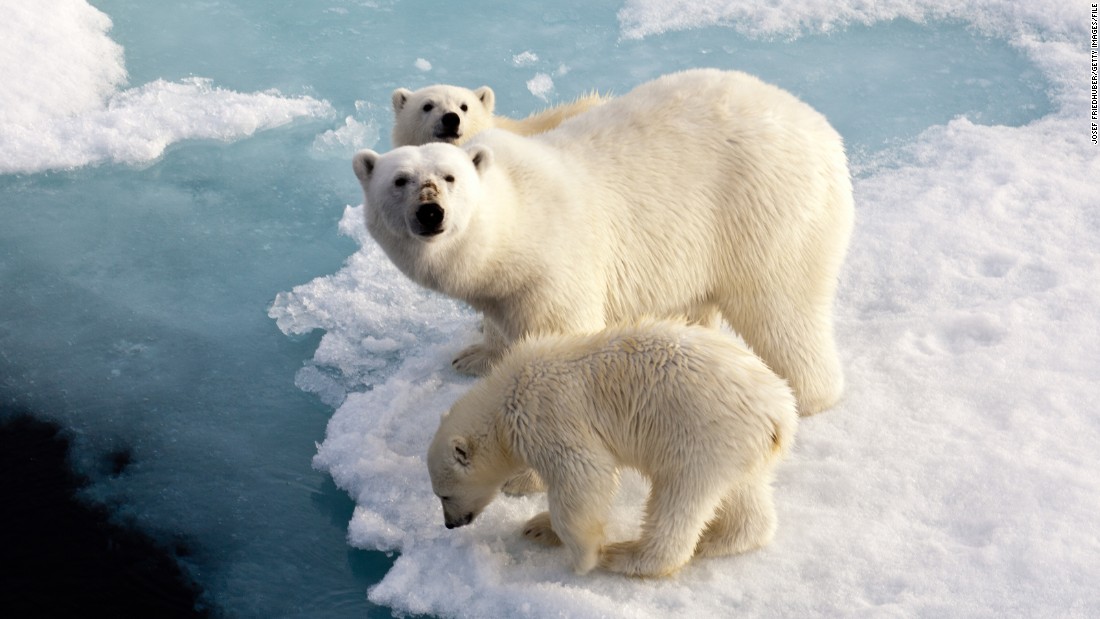
   
The focus on not letting world temperatures rise more than 2C can distract from the fact that many places are already feeling the effects of climate change,
IN 2009, global leaders agreed to try not to let the world warm more than 2C above pre-industrial times. This is sometimes seen as a rule of thumb for keeping on the right side of climate change, within ‘safe’ territory.
But that’s not at all how scientists meant it, Camille Parmesan, an expert in biodiversity at the University of Plymouth in the United Kingdom said. Climate risks don’t begin at 2C, she said; it’s more like where they go from high to intolerably high.
The planet has already warmed by about 0.8C since the late-19th century.
Some of the world’s most iconic places are also the most vulnerable, and they are already feeling the effects.
“We’re already seeing contraction of species in the most sensitive ecosystems, such as those dependent on sea ice or those living on mountain tops,” said Prof Carmen.
“We’re also seeing declines in some tropical systems, such as coral reefs, and the valuable services they provide for fish nurseries, tourism and protection from coastal flooding.”
And that’s just the beginning.
“At more than 2C, we wouldn’t just face losing the most sensitive species but some common ones, too,” said Prof Parmesan.
“So it wouldn’t just be the polar bear and the mountain pika, but other species living in lowland and temperate habitats that aren’t necessarily at risk right now.”
Against this backdrop, the world’s carbon emissions have continued to rise and the task of staying below 2C looms ever larger. Global leaders will meet again in Paris in December to agree on a plan for how to get ourselves on a pathway to achieving 2C in the long term.
But suppose that doesn’t happen. Suppose we collectively decide the task of keeping to this target is too great, or the price of cutting emissions quickly is too high. What would it mean to resign ourselves to a post-2C world? And if not 2C, then what?
Science is helping to answer these important questions. Climate models tell us that if carbon emissions stay very high, global temperatures could reach 4C above pre-industrial temperatures by the end of the century, perhaps even rising to 5C.
And unless emissions cease altogether after that, temperatures will continue to rise long past the end of the century.
And that would mean a world unlike anything we have ever known.
Climate change won’t treat all countries the same. Often the most serious and damaging effects will happen in the countries that are least able to cope.
A global temperature rise of 4C by the end of the century would see parts of Africa warm by up to 6C, making life near impossible for vulnerable urban populations and people working outdoors.
Drying of river basins and falling crop yields would raise the risk of food and water scarcity in many parts of the world, particularly among poorer rural populations.
Society is vulnerable to extreme weather. The UN body whose job it is to assess the science on climate change says the North Atlantic and Western North Pacific will see more strong storms like Typhoon Haiyan, which tore through the Philippines in 2013.
In Europe, heatwaves like the 2003 event, which killed 70,000 people, are already 10 times more likely than a decade ago, and this pattern is set to continue. Scientists also know that warmer air will mean rainfall in heavier bursts, while higher seas will make storms more likely to breach coastal flood defenses.
As humans, we tend to focus on what we experience up here on Earth’s surface. So it’s often overlooked that more than 90% of the heat trapped by greenhouse gases goes into the oceans, warming them up from the surface to hundreds of metres below.
The oceans take up some of the extra carbon in the atmosphere, too, making them more acidic. Warming and acidifying oceans spell bad news for marine ecosystems, including valuable fisheries that people the world over depend on for their food and livelihoods.
As seawater warms, it expands. That’s why, throughout Earth’s history, changing temperatures and sea levels have always been closely linked. Since the turn of the 20th century, the global sea level has risen by nearly 20cm, which is already enough to threaten low-lying island nations such as Kiribati, Tuvalu, or the Maldives.
Even if the oceans continued this steady march, scientists expect sea levels to be at least another half a meter higher by the end of the century. But the higher temperatures rise, the greater the chances of tipping the balance into a totally altered state, which carries far more serious consequences.
At some point, the vast Greenland ice sheet will collapse. Scientists don’t know exactly when this will happen, but they say it’s likely to be with less than 4C of global warming. The collapse wouldn’t happen quickly, perhaps taking centuries or millennia.
But once it starts, we’d be committed to a sea-level rise of several metres. This would inundate some of the world’s biggest cities, including New York and Shanghai.
At the other end of the globe, scientists are already seeing early signs of collapse in parts of the Antarctic ice sheet. And once that starts, it’s likely to be unstoppable.
In the meantime, almost all the world’s glaciers are losing ice. In the Arctic, temperatures are rising more than twice as fast as the global average, and if we stay on a path to 4C, scientists predict there could be no Arctic sea ice left in summer in as little as 30 or 40 years.
The climate system, in all its infinite complexity, is impossible to predict entirely.
There are some things happening that scientists don’t completely understand yet, such as why ice floating on the sea around Antarctica is currently growing slightly.
Scientists think, perhaps counter- intuitively, that it’s down to climate change, too, as the winds encircling the continent push freezing water outward from the coastline, extending the icy platform offshore.
And the climate system could still hold some surprises. As the Arctic warms, the once-frozen ground is thawing and releasing the powerful greenhouse gas methane.
Scientists are unsure yet just how much 4C of global warming could speed up this process.
Two, three, and four degrees are all points along a global warming continuum. None represents a climate precipice, but it’s clear that as the temperature rises, so do the risks.
What’s left to decide is, how much of a chance are we willing to take? The science is solid enough that whatever we choose, we can’t tell future generations that we didn’t know the risks.

Bees ‘prefer gardens with native flowers’


Gardeners keen to help wildlife are advised to plant a variety of flowering plants

Bees and other pollinating insects prefer gardens planted with flowers that are native to the UK and the northern hemisphere, a study has found.
But exotic plants provide nectar and pollen food for bees and hoverflies at times of the year when native flowers are thinner on the ground, while certain foreign blooms can prove a hit with some species, the Royal Horticultural Society research showed.
The researchers, writing in the Journal of Applied Ecology, said the best advice for gardeners keen to help wildlife was to plant a variety of flowering plants, focusing on native and northern hemisphere species but with a selection from further afield.
With around half of gardeners in the UK actively encouraging wildlife into their gardens, the findings will help nature-lovers make their plots more attractive to bees, hoverflies and other insects
Garden border-like plots were planted with three different sets of bulbs, perennials, shrubs, climbers, grass and ferns that were either native to the UK, near-native from the northern hemisphere, or exotic species from the southern hemisphere.
The plots were monitored for the abundance of flowers and the number of pollinating insect visitors over a four year period for the study, which was supported by the Widllife Gardening Forum.
More flowers – wherever they were from – meant more visits from pollinators, but a greater number of insects were recorded on the plots with native and near-native species than the exotic ones, with 40% fewer visits to the beds with flowers from far away.
Short-tongued bumblebee species were found in larger numbers on the native and near-native plants, hoverflies favoured native flowers and honeybees preferred the near-native plots, the study found.
Long- tongued bumblebees and solitary bees were found on all three sets of plants in around the same numbers, but in the exotic plot a third of visits by solitary bees were to one type of plant, the Eryngium agavifolium Griseb, a variety of sea holly.
There were fewer visits to exotic plants in early summer compared to the other plots, but relatively more later in the season when the non-native species were flowering more than the UK and northern hemisphere blooms.
RHS experts said the results showed that gardeners who wanted to encourage and support pollinating insects should plant a mix of flowers from a wide range of geographical regions.
While there should be an emphasis on plants native to the UK and the northern hemisphere, southern hemisphere plants such as Lobelia tupa and Verbena bonariensis can play an important role.
Southern hemisphere plants tend to flower later, extending the flowering season and providing much needed food for bugs and bees after other species have gone to seed.
Lead researcher Dr Andrew Salisbury said: “The UK’s 1,500 species of pollinator are thought to be under increasing pressure due to the loss of habitat and food sources.
“As more traditional habitats have been reduced the role of gardens as havens for pollinators and other wildlife is growing in importance.”
But he said the role native and non-native plants play in helping wildlife had been unclear and confusing before now.
“Now for the first time, gardeners can access robust, evidence-based information on the most effective planting strategy they can adopt if they wish to attract and support pollinators.
“These findings will help gardeners to confidently pack their borders, window boxes and allotments with flowers without getting hung up on the idea that they are somehow doing the ‘wrong thing’ if the plants are not all UK natives,” he said.  

Saturday, June 21, 2014

Donie's Ireland daily news BLOG update

Garda are constrained by budget cuts, says acting Commissioner O’Sullivan 


NóirĆ­n O’Sullivan tells policing event that force has ‘adequate’ resources to meet their obligations.

Acting Garda Commissioner NóirĆ­n O’Sullivan said she believed the force still had adequate resources for policing.
The Garda force had been hit by budget cuts that “constrained” it, but it still had “adequate” resources to meet its obligations, acting Garda Commissioner NóirĆ­n O’Sullivan has said.

AND SHE INSISTED SOME INVESTMENTS WERE BEING MADE.

“This year alone we have bought 140 new cars which are augmenting the fleet. But when new resources and new finances are made available we can prioritise on where those new cars need to go and what types of cars and bikes we need.”
However, despite the reduced resources she believed the Garda was “policing very well”.
“Yes, the numbers have fallen slightly under 13,000,” she said in reference to the total strength of the force and the number former Garda commissioner Martin Calllinan said they should not fall below.
“Nevertheless, we do have adequate resources to police,” Ms O’Sullivan added.
She was speaking at an event in Farmleigh, Phoenix Park, Dublin, in which stakeholders in the justice and policing areas were meeting today for a consultation on how the new Garda Authority would be introduced.
This week the head of the Garda Inspectorate, which reviews all elements of policing in the Republic and advises the Garda and Government on the need for reforms, expressed the clear view that policing was struggling.
Chief Inspector Bob Olsen said the Garda did not have the resources it needed to carry out its work in the way it should.
The IT infrastructure enjoyed by police forces in other countries was not available to gardaĆ­.
Garda vehicles were being switched from urban to rural areas to get more mileage from old vehicles.
It meant the fleet would all require upgrading at the same time and was a financial “time bomb”.
He had previously said Garda training had ground to a halt and that he and his staff were meeting detectives who had never received any training on how to be a detective.
Yesterday the Public Accounts Committee was told by the secretary general of the Department of Transport, Tom O’Mahony, that some parts of the penalty points system were on hold for years because neither the Garda nor Irish Courts Service had the IT it needed to operate them.
Ms O’Sullivan pointed out that Garda recruitment was about to begin again in the weeks ahead, saying it was something the organisation was looking forward to.
The new recruits would enter a Garda culture where the standards expected from them were clear.
The Garda culture needed to “tell them what those standards, values and behaviours are and ensure that the training is adequate and robust enough to foster those values in people”.
The Guerin report, which indentified serious shortcomings in policing in Bailieboro, Co Cavan, “represented an opportunity to review some of the policies and practices around investigations and supervision over sight and management”.
She said an online survey of Garda members since she had assumed her post on an interim basis following the snap retirement of Mr Callinan two months ago reflected the concerns that the main Garda representative bodies had been raising.
“I know the perception is that morale is on the ground. Certainly people are hurting, people are concerned and they were very concerned at everything that has happened.”
However, she believed the visible leadership she had demonstrated and her efforts to travel around and meet members of the force “not alone reinforced confidence in people that it’s business as normal, but that we can build on what has happened in the past, we can learn lessons and get stronger”.
She would “shortly” be in a position to talk about her plans to reorganised Garda Headquarters and also the reforms put in place as a result of the Guerin report.
She was aware of comments by independent TD Clare Daly in the DƔil yesterday when she alleged Mr Callinan, while still in office, had made attempts to contact the main Garda staff associations to ask them to express no confidence in the Garda Siochana Ombudsman Commission.
“I am aware of the reporting today which also says that the Garda associations have refuted that but that’s all I know about that.”
She said the Garda whistleblower Sgt Maurice McCabe had returned to work and continued to enjoy the support of senior management in that regard. However, she did not want to go into specifics about the circumstances of any individual Garda member.

NTMA raises €500m in successful sale of three-month bonds


Taking advantage of positive investor sentiment towards Ireland, NTMA receives bids of €2.1 billion.

Minister for Finance Michael Noonan with NTMA officials in the Treasury Holdings building in Dublin
The National Treasury Management Agency (NTMA) has successfully auctioned a further €500 million in three-month Treasury Bills.
Taking advantage of positive investor sentiment towardsIreland, the NTMA received total bids amounting to €2.1 billion – 4.2 times the amount on offer. The three-month notes were sold at an annualised yield of 0.105 per cent.
Ireland’s borrowing costs have been trading near record lows of late on foot of two recent credit upgrades and further European Central Bank stimulus measures, including an interest rate cut, earlier this month.
he NTMA has raised €6.5 billion of Ireland’s long-term money this year already, bringing it 81 per cent of the way towards its full-year funding target of €8 billion.
Today, the yield on 10-year Irish bonds remained at 2.4 per cent, keeping the State’s borrowing costs below those of the UK.
Investors are buying bonds of peripheral euro zone states amid signs the region’s debt crisis may be over.
The so-called “yield grab” was fuelled earlier this month by comments from ECB chief Mario Draghi that Frankfurt was prepared to take more action if the new measures fall flat.

The cost of posting a letter in Ireland is to increase from July this year


Communications regulator gives An Post green light to raise cost of a stamp to 68 cent. 

An Post has been cleared to increase the cost of postage from July 21st next.
The price of sending a letter is to increase next month. The communications regulator ComReg has given An Post permission to raise the price of its stamps, with effect from Monday, July 21st.
The standard domestic letter rate for items up to 100g will increase from 60cent to 68 cent while the standard international letter rate will increase from 90 cent to €1.00 for items up to 100g.
Despite the increase, An Post said the new rates will remain among the lowest in the EU countries including Britain, France, Belgium and Italy, and well below the EU domestic average of 71 cent.
A range of discount options will continue to remain available to businesses buying stamps in bulk and using meter mail, CeadĆŗnas licence and bulk-mail services.
A spokeswoman for An Post said the increase is necessary due to “ongoing cost reduction initiatives” and to “stem the unsustainable financial losses” arising from the Company’s Universal Service Obligation where losses totalled €55 million in 2013 .
An Post’s annual report published in April of this year showed that in 2013, the company made an operating loss of €11.4 million in spite of an increase in turnover of 0.5 per cent and an extra €20 million from a stamp price increase. The operating loss in 2012 was €17.5 million.

More than half of all mobile phones are Smartphones


Broadband subscriptions and speeds also increase, according to a new Comreg report. 

With the rise in smartphones comes an increase in data volumes, which rose by 48.1% in the year to the end of March to reach 13,897 terabytes
Smartphones are more popular than ever before, according to new figures published by the Communications regulator Comreg.
Its latest quarterly report shows that 57.2% of all mobile phones in use in Ireland are smartphones, up 12.2% for the first quarter 2013.
The study reveals there are now 3,206,880 active 3G and 4G users in the country.
With the rise in smartphones comes an increase in data volumes, which rose by 48.1% in the year to the end of March to reach 13,897 terabytes.
According to the figures there were 5,619,777 mobile phone subscriptions in total in the first three months of 2014, down 0.1% on the previous quarter. Ireland’s mobile penetration rate for the quarter was 121.9%.
Average Revenue Per User (ARPU) was €26 per month, down from €28 on the previous quarter. Comreg attributed the decline in ARPU to cheaper mobile phone plans and increased sales of bundled products.
The total number of text messages sent by mobile users in Ireland was over 2.02 billion in the first three months of the year, down 25% on the same quarter in 2013. The number of multimedia messages (MMS) sent declined by 7.4%.
Fixed voice and mobile voice traffic also declined during the quarter. Fixed voice traffic was down by 1.3% while mobile traffic fell by 0.8%.
Comreg’s report shows that broadband subscriptions rose by 0.7% versus the previous quarter to stand at 1.7 million at the end of March. The estimated household broadband penetration rate was 67%.
Average broadband speeds continue to rise with 56.7% of all subscriptions equal to or greater than 10 Mbps, up from 32.2% for the same quarter a year earlier. Approximately 37.7% of all broadband subscriptions were equal or greater than 30 Mbps up from 21.3%.
The number of WiFi hotspots and access points increased by approximately 18.4% and 16% respectively on an annual basis.
Overall industry retail revenues for telecom companies decreased by 3% according to Comreg. Total retail revenues in the twelve months to March totalled €3.13 billion, down from over €3.22 billion a year earlier.

A Great View of Earth of the Summer Solstice


AN IMAGE OF THE MIDNIGHT SUN OVER THE NORTHERN REACHES OF THE WESTERN HALF OF THE GLOBE.

A new satellite image beautifully highlights the Earth forming a perfect crescent as the midnight sun beams down on the far northern reaches of the globe
Planning to host a party for the summer solstice tomorrow? Here’s a view that will help build some excitement, courtesy of a satellite positioned about 36,000 miles from the Earth’s surface.
Brian McNoldy, a tropical storm researcher at the University of Miami, grabbed an image of the Earth as GOES-West, a satellite operated by the National Oceanic and Atmospheric Administration, that shows the Earth at local midnight last night. It beautifully highlights the earth forming a perfect crescent as the midnight sun beams down on the far northern reaches of the globe.
While the solstice is officially at 6:51 a.m. Eastern on Saturday, McNoldy explained in an email that the image captured is a pretty close representation of what it will look like from the same vantage point. In other words, this is a solstice drill that’s as close to the real thing as possible.
McNoldy also shared another bit of trivia: you won’t see a similar view from the opposite side of the planet. GOES-West, which in satellite parlance sits in a geostationary orbit above the 135°W meridian, snaps a full Earth picture at local midnight everyday. However, GOES-East, its aptly-named partner on the other side of the planet, operates on a slightly different schedule and the closest you’ll get to this view is a photo taken at 12:45 a.m. local time. That view, while still pretty spectacular, would show a warped crescent as opposed the perfection of GOES-West’s view.
Feel free to add that to your trivia game at your solstice party.
The solstice is commonly referred to as the longest day of the year, a statement that leaves most folks in the Southern Hemisphere shaking their heads. A more accurate description of the solstice is that due to the position of the Earth’s orbit around the sun, the North Pole will be angled as close to the sun as possible this year. That makes it seem like the longest day of the year in the northern hemisphere but the shortest in the southern hemisphere. After Saturday, the two hemispheres’ luck will start to reverse which each day getting shorter in the northern half of the globe and longer in the southern half.                   

Friday, April 4, 2014

Donie's Ireland daily news BLOG Thursday

Too early to say if Ireland’s positive tax receipts signals a change of direction


There are positive signs but many variables mean that caution is required?
When the troika was in town, the Government’s strategy was to under-promise and over-deliver. It allowed the Department of Finance hit its headline budgetary targets with something to spare, even if key metrics, such as income tax and VAT, remained in the doldrums.
In the post-bailout world, however, the focus may be shifting back to what’s happening in the real economy.
The exchequer returns for March provide the first clear insight into the health of the State’s finances since the end of last year.
This is because figures for the first two months of the year were distorted by the introduction of the euro-wide Sepa payments system.
At face value, yesterday’s numbers were positive.
Tax revenues in for the first quarter were €9.2 billion, representing an increase of €415 million or 4.7 per cent on the same period last year.
Significantly, tax as a whole was €257 million or 2.9% ahead of profile.
The big question, however, is whether this reflects the marked upsurge in employment last year, and the first inklings of a concerted rise in consumer spending and consumer confidence.
Minister for Finance Michael Noonan has said all along that the clearest signal of what is happening in the economy is the growth in employment.
Up until now, however, this growth has not been showing up – in any meaningful way – in income tax or in domestic demand. The view taken by some is that the new jobs are not in high-paying sectors of the economy.
There is also the fact that disposable income on average remains on a downward slide, not helped by the introduction of a property tax.
Nonetheless, yesterday’s figures indicated income tax receipts were up €129 million, or 3.5 per cent, and were €4 million ahead of the Department of Finance’s expectations.
The main consumption-related taxes, VAT and excise duty, were up 6.4 per cent and 11. 5 per cent respectively.
An eye-catching drop in corporation tax receipts, which came in at €256 million – 35 per cent down on last year – was explained by a once-off tax payment by an unnamed pharmaceutical company made late last year, which had not been factored into the department’s initial projections.
All of this reads positive, perhaps too positive, with so much of the year still to run.
Reading a pattern into the convalescing Irish economy is fraught with difficulty, not least because several factors that will determine the economy’s future trajectory – and indeed the Government’s potential tax receipts – are outside of its control.
Take the situation in the Ukraine. If things worsen, consumers could be facing higher oil and gas prices, which could have an extremely negative effect on consumer spending.
Data for industrial output, exports and hence GDP are being driven by an exceptional fall-off in the profitability of the pharmaceutical sector associated with the so-called patent cliff. This will, in time, be worked through but the overall impact on the economy is difficult to gauge.
The Government’s prediction for GDP growth at the end of last year, which had factored in the patent cliff, was way off.
Then there is the pick-up in euro zone growth, a key requirement for economic recovery here. This is going is the right direction but only just.
All of this means it’s simply too early to state, with any certainty, where the domestic economy is headed.

New debt forgiveness scheme could save Irish SMEs now battered by the downturn


A debt-forgiveness scheme for small and medium enterprises (SMEs) battered by the crash is among proposals to be examined by a high- level working group being set up by the Government, the Irish Independent has learned.
 Irish Banks will be asked to cancel some company debts in exchange for shares in even small firms if the debt-for- equity proposal is taken up, according to sources close to the process.
The radical plan is seen as one possible way to salvage the balance sheets of small businesses battered by the debt bubble and subsequent seven-year crash.
The idea is one of a number on the agenda for the new working group in the process of being established under the umbrella of the State-led Consultative Committee on SME Funding.
Examining ways to encourage investment such as potentially revitalising the old tax break-based Business Expansion Scheme (BES) and the possibility of utilising funds from the National Pension Reserve Fund (NPRF) will also be on the table.
The lack of equity investment for SMEs is emerging as a significant blockage in the economy, particularly as things start to pick up and the demand for capital increases.
Up to now, the big emphasis has been on the supply of credit.
As the volume of lending available has increased both from the banks and from new purpose-built lending funds, the focus is shifting to the issues that are hampering companies’ capacity to borrow.
A good example is the house building trade. Banks and NAMA say they have credit available and there is evidence in Dublin in particular of demand for new homes.
But one reason more houses are not being built is because builders are unable to come up with the share of finance they need to produce to allow banks to lend prudently.
HURTING: Similar issues are hurting other parts of the economy because historic losses have diminished balance sheets even for companies that are now trading well.
It’s a real concern, not least because experience elsewhere is that more companies can end up going to the wall during an economic upturn – when cash is needed for new products – as in a downturn.
The problem is understood to be most acute at the smaller end of the economy – the more than 90% of companies with 10 or fewer employees.
The Consultative Committee on SME Funding brings together representatives of agencies including the Department of Finance, Department of Jobs and Enterprise, Enterprise Ireland and the county enterprise boards as well as industry groups such as ISME and the Small Firms’ Associations and the banks.
At a meeting on March 24, it is understood a decision was taken to set up a new sub-group to try to examine the problems in relation to equity funding.
The make-up of the sub-group has yet to be determined but the plan is to put together a group of six committee members representing a cross-section of industry, banks and government agencies.

Mobile phones now linked to erectile dysfunction?

ACCORDING TO NEW STUDY


Researchers found a positive correlation between increased mobile phone usage and erectile dysfunction – but said the results are inconclusive

In what will prove very unwelcome news to the male population, a new study has linked mobile phones to erectile dysfunction (ED).
But before you throw your phone out of the window in a panic, larger-scale research is needed to prove the findings.
Medical teams in Austria and Egypt identified a positive correlation between carrying a switched-on mobile phone and ED, according to a report published in the Central European Journal of Urology.
The pilot study was based a group of 20 men who had complained of ED for at least six months, as well as another group of 10 healthy men with no history of ED. There was no significant difference between either group regarding age, weight, height, smoking, total testosterone or exposure to other known sources of radiation.
All men completed the German version of the Sexual Health Inventory for Men (SHIM) for evaluation of the International Index of Erectile Function (IIEF), as well as another questionnaire designed to assess their mobile phone usage.
According to the researchers, the men suffering from ED carried their switched-on mobiles for an average of 4.4 hours a day, compared with just 1.8 hours for those without any problems.
But researchers conceded that more data is required to prove the findings.
Mobile phones have previously been linked to an increased risk of cancer, particularly brain tumours. In 2011, the International Agency for Research on Cancer classified mobile phones for the first time in their “gold-standard” rating system. They rated the devices as “group 2B” – meaning that they could “possibly” cause cancer in humans.
However, no conclusive link was found.

Maaaa you won’t believe this.. Irish farmer shows off half-goat - half-sheep ‘A gooeep’

The Kildare 'geep'  The ewe and her geep

A Kildare pub owner and sheep farmer Paddy Murphy (above) is now in fact the proud owner of a ‘gooeep’, a half-goat half-sheep hybrid.

Paddy Murphy thought it was a sign of good luck – to have a black lamb among white.
But it turns out the Kildare pub owner and sheep farmer is now in fact the proud owner of a ‘gooeep’, a half-goat, half-sheep.
“They were all normal lambs except this fella,” he told independent.ie
“He was born about midnight and I noticed it was black for a start, but it was very fast to move. It was too fast for a lamb.
“It also has much longer legs than a lamb, it was then I realised it must be a gooeep.”
Paddy, who owns Murphy’s pub in Ballymore Eustace, said the unusual looking lamb, which also has horns, has caused a bit of a stir in the local area.
“It’s a great attraction at the moment,” he said, “and there’s a great buzz about the place.
“At the moment it’s so fast it’s like a hare among the lambs. It just takes off.”
The gooeep is an extremely rare occurrence in Ireland.
“This is very unusual,” Paddy said, “One farmer had actually told me it’s not possible at all but here he is.”

New study reveals how sharks hunt their prey


From the first sniff of potential prey to their final chomp, sharks have evolved into one of nature’s greatest predators.

The threat sharks pose to humans is vastly overblown. National Geographic, for example, reports that only five people die from shark attacks annually, which means that deer, ants, jellyfish and vending machines all kill more. Still there is something about the ancient predators that strikes fear in the hearts of many. From shark week to Sharknado people seem to have a morbid fascination with the creatures.
While sharks are really not very dangerous to people, they are one of nature’s most highly evolved predators. Sharks have been around for, at least, 400 million years and over that time have evolved to do one thing, really well.
Now, a new study published in the journal PLOS ONE has taken an in-depth look at the hunting process of sharks, from beginning to end. The study, led by scientists from Mote Marine Laboratory, the University of South Florida (USF) in Tampa and Boston University is the first to look at how sharks use their sense of touch, smell and vision to guide their behaviors.
According to past studies, sharks sense prey by smell first, swim upstream towards it, use water movement to locate their target and attack using vision or electroreception. Electroreception is a specially evolved sense which detects electric fields from living prey. However, this is the first study to examine how all of these senses work together and how they may vary between shark species.
“Our findings may surprise a lot of people. The general public often hears that sharks are all about the smell of prey, that they’re like big swimming noses. In the scientific community it has been suggested that some sharks, like blacktips, are strongly visual feeders. But in this study, what impressed us most was not one particular sense, but the sharks’ ability to switch between multiple senses and the flexibility of their behavior,” said Dr. Jayne Gardiner, lead author of the study, in a statement.
For their study the researchers used blacktip, bonnethead and nurse sharks, three very different types of sharks in terms of their habitat, body structure and hunting strategies. They placed the sharks in a specially designed tank and observed their normal hunting process.
The team then blocked the sharks senses one at a time using nose plugs, eye coverings and antibiotics to interfere with their sense of touch and electrically insulating materials to interfere with their electrosensory abilities. As individual senses were compromised, the group studied how the animals hunting behavior changed.
All of this was videotaped so the team could examine and re-examine the behavior of the animals. “We had hundreds of video clips to sort through, and we had to get just the right angle to see when the shark was capturing the prey,” Gardiner said.
The results showed that different sharks reacted differently to the loss of certain senses. With their noses blocked, for example, blacktops and bonnetheads could still find prey but nurse sharks could not. Blocking vision and their lateral line sense of touch simultaneously prevented sharks from striking at the right time, but when only vision was blocked, the sharks could still strike at the right time by detecting water movements. With their electroreception blocked the sharks failed to capture prey, except by luck.
“We sought to discover how sharks use their highly evolved senses to hunt and locate prey, knowing it involved more than just a good sense of smell. What we found was amazing, not only in how the various senses mesh together but also how one shark species can vary from another. Not all sharks behave alike,” said Dr. Bob Hueter, Director of Mote’s Center for Shark Research and co-author of the current study.
Researchers believe that the work with sharks may also help them to understand the behavior and habits of other ocean predators. “Sharks (…) are not unique in their sensory guidance of hunting: They exploit information fields available to all marine species. Thus, the results may be seen as a general blueprint for underwater hunting, modifiable by habitat and by the behavioral specializations of many different aquatic animals from lobsters to whales,” according to the paper.
Currently, many shark species are threatened and endangered. This is largely due to overfishing, but environmental pollution also plays a role. Pollution can interfere with the animals’ senses and their ability to hunt.
The research team hopes that by better understanding their behavior, the animals can be better protected.  “I think the sharks’ abilities to switch between different senses may make them more resilient in the wild. They may be more flexible and better adapted to deal with environmental changes – but not all human impacts. Overfishing is still overfishing,” said Gardener.