Garda Elite units could soon be forced to work out of prefabs because lease ceases


Harcourt Square, Inset GRA President Ciaran O’Neill
ELITE GARDAI WORKING WITH NATIONAL UNITS COULD SOON BE FORCED TO WORK FROM PREFABS WHEN THEY HAVE TO VACATE AN OFFICE BUILDING IN THE COMING WEEKS.
Harcourt Square houses specialist Garda units including the Special Detective Unit, the Drugs and Organised Crime Bureau, CAB, the Fraud Bureau and the National Bureau of Criminal Investigation, among others.
The Sunday World is reporting that real estate investment trust Hibernia REIT bought the site for €70m last year and the current lease on the building is due to expire next month.
Hibernia REIT plans to redevelop the site and last year received planning permission for the first phase of a redevelopment.
Gardaí will soon have to vacate the site and the Office of Public Works (OPW) has been asked to develop a new building where the national units will be based.
A development site on Military Road, near the Phoenix Park, has been recommended as the preferred site by a working group from OPW and Garda management.
However, that has yet to be signed off on and is unlikely to be ready for some time. In the meantime, gardaí will have to be temporarily rehoused.
It is understood prefabs were one of the suggestions put forward for temporary accommodation of some units.
The Garda Representative Association (GRA) has expressed concern at some of the suggested sites.
Ciaran O’Neill, who was elected President of the GRA at the annual conference in Killarney this week, is also the representative for specialist units based in Harcourt Square.
He said: “The Garda Representative Association are aware that the lease on Harcourt Square is due to expire in May 2016.
“We have entered a consultation process at a very late stage and we have a number of concerns that will be raising in that process. We are concerned in respect of some of the proposed temporary relocation sites and the standard of accommodation that will be provided.
“We have a particular concern that there is no budget allocation approved for the proposed new development that will permanently house the National Specialist Units in An Garda Síochána.”
Irish Lawyers fees rose by 5% last year despite clamour to rein in costs


Legal professionals put on the poor mouth, but CSO figures show they hiked up fees last year, Ireland’s high legal fees have come under fire from government ministers, State agencies, businesses and insurers.
Lawyers hiked up their prices last year at a time when the government was pushing through legislation originally intended to address high legal costs.
The cost of legal services rose by just over 5% in a six-month period, according to figures compiled by the Central Statistics Office (CSO).
The increase came as the government was being heavily lobbied by the professional bodies for solicitors and barristers to water down legislation it promised would help reduce fees.
It also suggests the Troika’s demands that Irish legal fees be brought “into the 21st century” may have fallen on deaf legal ears, while the rest of society was forced to endure its harsh austerity measures.
The legal services fees index put together by the CSO based on data from a small number of firms monitors the percentage by which prices rise or fall every three months.
The index shows that after a long period of largely static prices since 2010, prices for legal services rose by 1.3% in the second quarter of 2015 and rose again by 4.1% in the third quarter, and remained at that level until the end of year.
Whether the legal fees continued on their upward trajectory for the first three months of this year remains to seen in the 2016 figures.
But it was the first significant shift in legal prices recorded by the CSO since 2010.
Up to last year, movement in legal prices was marginal with the biggest increase recorded as 2.2pc in 2014, while the biggest decrease in prices was 1.2pc in 2013.
Of course, the latest price hike could be just a blip – as the Law Society suggested last week.
The CSO’s data is based on a small sample of legal prices submitted by up to 20 firms with at least 10 employees on a quarterly basis. The prices include hourly rates for partners and for less senior solicitors, along with fees for conveyancing, litigation and other services.
The Law Society has been at odds with the CSO over its legal prices statistics and disputes the reliability of figures, which it says the CSO itself describes as “experimental” and needing “to be treated with caution”.
However, if the rise in legal prices reflected in the CSO’s figures is not “a blip”, they confirm the European Commission’s worst fears; that officialdom’s appetite to reform the legal profession has been “tamed”.
Since they were first scrutinised by the Troika, Ireland’s legal costs have rung bells all the way to Europe.
In 2011, Istvan Szekely, the head of the so-called Troika overseeing the bailout programme, said the legal profession and its costs needed to be brought “into the 21st century”.
Two years later, the Troika was still unhappy, noting in a draft report that other sectors had experienced “considerable cost adjustments” but legal services remained expensive.
The upshot of the Troika’s dim view of Ireland’s high legal costs was the Legal Services Regulatory Bill, pushed through by Alan Shatter when he was Minister for Justice in 2011, then watered down and diluted – thanks to a four-year legal lobbying offensive – into its eventual incarnation last December.
The legislation originally proposed a “one-stop shop” for barristers and lawyers to set up businesses with other professions – a measure intended to drive competition, lower fees and lower barriers to entry. But these and other measures didn’t make it to the final draft. The Bar Council found aspects of the legislation “unconstitutional”. The Attorney General’s desire to move disciplinary responsibility for solicitors from the Law Society to the new independent legal regulator function was also thwarted. The Law Society retains financial and accounting oversight of solicitors.
In a country report on Ireland published earlier this year, the European Commission’s analysts were sceptical about this supposedly reforming legislation, because of the concessions to the legal profession. “The proof of the pudding will be in the eating,” it said. Much would depend on the new regulatory authority’s ability to “assert its independence” and to “defend society at large from vested interests”.
Critics of Ireland’s high legal costs include the profession’s biggest customers. They include government ministers, numerous State agencies, small businesses, High Court judges and insurers.
Michael Noonan, the Minister for Finance, said legal costs were driving up insurance premiums.
The Medical Protection Society, which indemnifies doctors, has blamed legal fees for driving up health costs for patients and insurance for doctors.
The Health Service Executive’s head of legal services, Eunice O’Raw, herself a barrister, wrote a memo in 2012 saying that legal costs had been “inexplicably high”.
“On occasion, brief fees demanded were of the order of €60,000 or €80,000. Such brief fees for single cases equate with the annual salaries of crown prosecution counsels in England and Wales.”
The maxim goes that the customer is always right. According to the Law Society, the claims about high legal fees are simply wrong. Most firms are non-commercial small practices led by solicitors who saw their incomes drop by 43% during the bust.
“Legal fees have been significantly impacted by the recession and have fallen substantially in recent years in response to intense competition within the profession and downward pressure from clients,” the Law Society said in a statement to the Sunday Independent.
“Because it would infringe competition law, the Law Society does not provide a scale of estimated solicitors’ fees.” Charges are subject to the “normal market forces of supply and demand”.
To finally debunk myths, we asked the Law Society if it would consider conducting its own detailed analysis of legal fees to settle the argument. The Law Society does not get involved in pricing – it leaves that to the free market. Perhaps it’s a project for the new Legal Services Regulatory Authority, whenever the powers that be get around to setting it up.
Babies to be tested to detect drinking during pregnancy


NEWBORN BABIES IN SCOTLAND ARE BEING TESTED FOR ALCOHOL AFTER RESEARCHERS RAISED CONCERNS THAT SOME PREGNANT MOTHERS ARE DRINKING REGULARLY.
Samples from hundreds of babies born at the Princess Royal Maternity Hospital in Glasgow are being studied for molecules which stay inside unborn children when their mothers drink.
Results from an initial pilot study suggest around 40% of mothers consume some alcohol while pregnant, with about 15% drinking more than one or two small glasses of wine a week.
Drinking in pregnancy can lead to long-term harm to the baby, and the more alcohol consumed, the greater the risk, the Scottish government warns.
Previous research found that even moderate drinking during the earliest months of pregnancy may be damaging.
Funded by Glasgow Children’s Hospital Charity, the latest study is to take 750 samples of meconium — the first faeces of a new-born to look for high levels of alcohol by-products. Mothers will also be asked to complete a lifestyle questionnaire.
The occasional drink will not be highlighted by the study, researchers said.
It is hoped the work will lead to targeted messages and interventions and reduce the effects of foetal alcohol syndrome, a condition where children suffer developmental problems because their mothers drank during pregnancy.
Consultant neonatologist Dr Helen Mactier, who is leading the research, said: “Alcohol consumption in pregnancy is almost certainly contributing to a lot of learning disability in Scotland and learning disability is associated with poor school performance and criminality in the long term.”
Dr Mactier said mothers from all walks of life are involved in the study.
She added: “There is an assumption that all problem drinking in pregnancy is associated with poverty and there is no evidence to confirm that.
“It is much easier to conceal problem drinking if you are affluent and if you are clever.”
She added: “I think we’re very well aware that women commonly under-report alcohol consumption in pregnancy. They are scared of repercussions and of being stigmatised and alcohol consumption is normalised in the west of Scotland particularly.
“What one person considers a small drink could be considered a larger drink by someone else. I would concur with the chief scientist’s message that women should not be drinking at all in pregnancy.”
The British Pregnancy Advisory Service said pregnant women “need support, not surveillance”.
A spokeswoman added: “This appears to be a worrying development in what is now the increasing policing of pregnancy.
“It is known that consuming large quantities of alcohol throughout pregnancy can result in lifelong learning disabilities, but little evidence of this at lower levels.
“It is unclear how the information gathered in this study will be used, and whether this will set a precedent for more widespread testing of babies — in order to ‘test’ their mothers’ claims of how much drank while pregnant.”
Pieta House prepare for suicide fundraiser on next Saturday 7th May


Around one million people a year worldwide take their own lives by suicide – more than those who die by homicide, war and road traffic accidents combined.
Around 500 per year take their own life in Ireland; 400 of them male. A study of young Irish men aged from 18 to 34 found that 78% knew someone who had died by suicide, 42% knew more than one person, and 17% had a close friend who completed suicide.
This year Pieta House marks ten years in existence having opened its doors at a time when suicide was still a taboo subject.
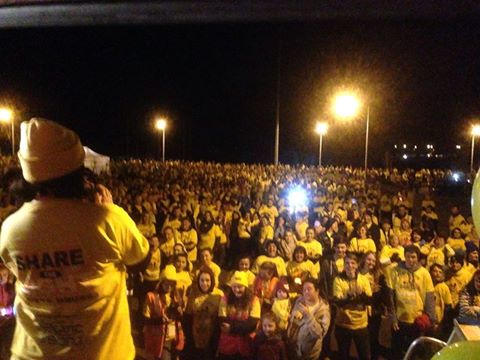
This week the organisation is preparing for Darkness Into Light, an event that is not just the charity’s flagship fundraiser but also a sign of how much the issue is now in the public conscience.
“Nobody would even mention the word then and yet when news got out that we had opened it seemed that we had opened a flood gate of sorrow fear and unspoken grief,” remembers Pieta founder, psychologist Joan Freeman.
Ten years on, the grass roots organisation has helped over 20,000 people in suicidal distress or engaging in self harm. In 2015 Pieta House delivered 49,900 hours of therapy to 5,466 people presenting with suicidal ideation and self-harm.
Today Pieta House has nine centres with a further three planned to open in the next two years – and it depends on fundraising events for a massive 85% of its income.
The Darkness into Light charity walk will place at 4.15am on Saturday, May 7, in 89 venues both at home and abroad – eleven of them in Galway city and county.
The international events – in London, New York, Canada, Abu Dhabi, Sydney, Melbourne and elsewhere – will see 50% of proceeds going to Pieta House and the other half going to a local like-minded charity in the respective area.
A real effort has been made to include the rurally isolated, especially islanders with events running on the three Aran Islands, Inishbofin, Arranmore and Tory Island.
Starting while it’s dark and finishing just as dawn is breaking, this beautiful symbolic event gives hope to people affected by suicide and self-harm.
The charity sees social isolation as a major risk factor; those living in rural areas – and particularly in farming communities – are seen to be at greater risk and have higher suicide rates.
There is no one singular cause, but Mental Health Ireland says that one in four people will experience a mental health problem at some point in their lives.
For the 500 people lost to suicide every year in Ireland a further 9,500 end up in A&E departments as a result of failed suicide attempts and intentional self-harm injuries.
Donna Burke of Pieta House West explains how the removal of barriers is an essential part of Pieta’s success; all services are free and medical referrals are not required.
“The biggest thing is that it’s self-referral; a person that is feeling maybe that they need help or support can just pick up the phone themselves – they don’t need to go through a doctor, they don’t need to go through a medical service of any kind,” she says
Pride can be a major obstacle preventing people from seeking the help they need. This is particularly true with older generations and people living in small town and rural settings.
“The likes of my dad , I know there’s no way he would go to his doctor and open up about not feeling okay,” she says.
But by removing these barriers, privacy has not been compromised and there’s no waiting time. “Anyone can be seen at any time,” says Donna.
Rural isolation has been recognised as another serious cause for concern. The high rate of suicide among men in rural areas was the driving force behind the ‘Mind Our Farm Families’ campaign – a joint initiative between the IFA and Pieta House.
Farmers face many challenges – financial pressures, red tape, long working hours, and isolation are just the tip of the iceberg.
“Unforeseen changes in farming work conditions such as continual bad weather, failing a herd test, bad harvest, isolation, being over worked, financial difficulties, impending retirement, or ill health are all things that might cause a farmer distress or bring on suicidal feelings,” say the Mind Our Farm Families campaigners.
Tom McEvoy of Pieta House West says the trained vets became ‘our eyes and ears on the ground’ and since then they have seen a big increase in numbers attending therapy.
Tom, who lost his own brother to suicide, is keen to encourage men to talk and to facilitate women to empower themselves to lookout for the signs.
That helps those who turn to Pieta House to make the journey from darkness into light – next weekend, tens of thousands around the world will make that journey for real, and by doing so they’ll shine even more light on what was once a stigma in the darkest of shadows.
There are Darkness into Light walks in Galway city, Tuam, Ballinasloe, Ballygar, Clifden, Kinvara, Inismeáin, Inis Oirr, Inis Mór, Inishbofin and An Cheathrú Rua. For further information go to www.dil.pieta.ie
Experts say we may not be the only intelligent civilization in universe?



The question of whether there are other forms of life in the universe has boggled the minds of scientists for time immemorial. And now, University of Rochester physics and astronomy professor Adam Frank has gone on record to say that there may be, or have been other civilizations in our universe, though it would be virtually impossible to communicate with them.
“The question of whether advanced civilizations exist elsewhere in the universe has always been vexed with three large uncertainties in the Drake equation,” said Frank, referring to previous research from the early 1960s.
In 1961, astronomer Frank Drake proposed his eponymous equation which, in brief, lists a number of conditions that would allow technological civilizations to communicate with Earthlings. That was an equation Frank and co-author Woodruff Sullivan of the University of Washington sought to update in their new study.
“We’ve known for a long time approximately how many stars exist,” Frank’s statement continued. “We didn’t know how many of those stars had planets that could potentially harbor life, how often life might evolve and lead to intelligent beings, and how long any civilizations might last before becoming extinct.”
According to Frank, there were still a lot of missing pieces of information when Drake developed his equation over 50 years ago. These included the number of stars that could host some form of life, the evolution progression of other life forms into intelligent creatures, and how long civilizations may exist.
The new A = Nast · fbt equation is based on Drake’s, but has some of the big unknowns eliminated. The “A” refers to the number of technological species that have formed in the universe’s observable history. Nast pertains to the “number of habitable planets in a given volume of the universe,” while fbt refers to the chances a technological species could come about in one of those habitable planets.
Based on the researchers’ findings, the odds that humans are the only intelligent form of life in the universe is one in 10 billion trillion. But the fact that there are such great distances between stars, plus the uncertainty of how long technological species can exist before extinction, means there’s a very, very good chance humans may never communicate with other civilizations in the universe.
“Our results imply that our evolution has not been unique and has probably happened many times before,” said Frank in conclusion. “The other cases are likely to include many energy-intensive civilizations dealing with their feedback onto their planets as their civilizations grow. That means we can begin exploring the problem using simulations to get a sense of what leads to long-lived civilizations and what doesn’t.”


