Pages

Showing posts with label Cancer. Show all posts

Thursday, December 15, 2016

Donie's Ireland daily news BLOG update

It was obvious that Simon Coveney would play hardball with Fianna Fáil over the rent cap issue

TENSIONS WITH FIANNA FÁIL TACKLED AS MINISTER FOR HOUSING ATTEMPTS TO CALL THEIR BLUFF

Image result for Simon Coveney would play hardball with Fianna Fáil over the rent cap issue   Image result for Simon Coveney would play hardball with Fianna Fáil over the rent cap issue  Image result for Simon Coveney would play hardball with Fianna Fáil over the rent cap issue

MINISTER FOR HOUSING SIMON COVENEY HAS PUBLISHED HIS STRATEGY FOR THE PRIVATE RENTAL SECTOR BUT THE PROPOSALS COULD ALREADY BE IN JEOPARDY AS PARTY SOURCES IN FIANNA FÁIL HAVE INDICATED THAT THEY WILL NOT SUPPORT THE STRATEGY.

It was a fight that was coming, but it brought a cargo of subplots and consequence upon its arrival.
For weeks, if not months, resentment has been building in Fine Gael because of the belief of many in the party that Fianna Fáil has had it too good.
Thanks to the confidence and supply deal, Fianna Fáil has been able to dictate the shape of government policy while acting as a curious and at times appalled bystander.
Many in Fine Gael felt it was time Micheál Martin and his spokespeople were reminded who actually is in government, having cowered for so long. They were spoiling for the fight.
“We need to show some balls,” said one female member of the Cabinet at lunchtime in Leinster House yesterday.
When Simon Coveney outlined his plan for maximum annual rent increases of 4 per cent, to apply immediately for a three-year period in Dublin and Cork city and possibly be extended to other pressure points nationally, Fianna Fáil raised objections within hours.
Where the Minister for Housing wanted a maximum 4% annual increase, Fianna Fáil favoured 2%.
A further rollout of coverage?
Fianna Fáil also wanted the initial rollout of the rent caps to be extended beyond Dublin and Cork, and to take in Galway, Limerick, Waterford and commuter areas around the capital.
It seemed that the usual give and take between the minority Government and Martin’s party would apply. One wants 4 per cent, one wants 2 per cent: split the difference and move on.
Yet the Government had a different idea. The great irony was the person who put it up to Fianna Fáil was not the aspirant Fine Gael leader many expected to be at the centre of major disputes between the two parties.
Leo Varadkar is known to have little love for the current governmental arrangement and some in Fianna Fáil suspected it would be the Dublin West TD who would cause them most grief.
They had not anticipated that Simon Coveney would be the one to play hardball. Fianna Fáil TDs around Leinster House looked rattled for the first time in months.
So many issues were at play: the rental strategy itself and its core proposals, the dynamic in the Fianna Fáil-Fine Gael relationship and Coveney’s leadership prospects, and his standing in the parliamentary party.
A leadership challenge?
He is considered to be behind Varadkar among TDs, but should Coveney stand up to Fianna Fáil and win, his leadership chances will surely be enhanced.
He has staked his ambitions on tackling big issues like housing and water and the rental plan is a huge element of what he hopes will be his calling card as a serious contender.
The Cork South Central TD has expended a huge amount of political capital on rent predictability, overcoming the concerns of the most significant players around the Cabinet table: Enda Kenny, Michael Noonan, Paschal Donohoe and Varadkar himself.
As he prepared to attempt to face down Fianna Fáil, the only question yesterday was whether Coveney had the backing of the Taoiseach.
Kenny gave his clear answer at the outset of the weekly meeting of the Fine Gael parliamentary party, amplifying Coveney’s tactic by telling TDs and Senators in his leader’s statement that the Government would withdraw the strategy unless Fianna Fáil backed it.
Fine Gael had called the bluff of Martin and Barry Cowen, his housing spokesman, gambling that Fianna Fáil would be blamed if private rental tenants suffered. Even if that gamble fails, Coveney has still won in one crucial way: he has given his TDs the fight with Fianna Fáil they were pining for.

Irish fishermen now face wipe-out unless fishing rules are changed

ANALYSIS: IRELAND SHOULD USE BREXIT AS BASIS TO RENEGOTIATE EU FISH POLICY, THE INDUSTRY SAYS?

Image result for Irish fishermen now face wipe-out unless fishing rules art changed  Image result for Irish fishermen now face wipe-out unless fishing rules art changed
Fishing boats as seen in Cobh harbour in Co Cork. Fishermen’s representatives have called for a review of EU fishing rules.
Ireland’s fishing industry has breathed a sigh of relief, after Minister for Marine Michael Creed and his negotiating team in Brussels secured an overall six per cent increase for 2017 on last year’s share of quotas.
The outlook had been “dire”, as one representative said, with an initial 68 per cent cut in cod and nine per cent cut in prawns averted.
It was Creed’s first “red-eye” council, where EU fisheries ministers use sleep deprivation as a tactic to haggle for quotas for their fleets.
However, sleep may be in even shorter supply at such negotiations in years to come if Britain leaves the EU.
Oblivious to Brexit, fish know no boundaries, with some 40 different stocks moving between these two islands.
Creed acknowledged on RTÉ Radio’s Morning Ireland on Wednesday that British withdrawal would have a serious impact on the Irish fishing industry – “38 per cent of volume and 36 per cent of value of Irish fishing is in British territorial waters”, he said.
If Britain “attempts to establish a wall around their territorial waters”, this would pose “a significant challenge” he said.
“It would mean the entire fishing network will be displaced to a smaller area,” he said – as in Irish waters, already under severe pressure from Spanish, French and Dutch fleets.
“We will raise questions with the Commission about Ireland’s unique position,” he added, but industry organisations don’t believe the Government has given that “position” sufficient punch.
With 22% of all EU waters off Irish coast, and just two per cent of EU fleet capacity to catch it, Killybegs Fishermen’s Organisation chief executive Sean O’Donoghue has stressed the urgency of taking a strong stand.
The Irish South and West Fish Producers Organisation, whose members have felt the impact for years of Spanish and French fleets, says Ireland should use Brexit to renegotiate the entire Common Fisheries Policy, or face a “wipe-out”.
There are already ominous rumblings about the near future. Britain did not support Ireland at the talks in defending the “Hague Preferences”, which recognise the particular case of coastal communities in allocating quotas.
Also, British Secretary of State James Brokenshire recently reasserted London’s claim over Lough Foyle in response to a parliamentary question in the House of Commons last month. After the Belfast Agreement peace deal, a cross-border body known as the Loughs Agency took responsibility for the Foyle, which was a key strategic naval base during the second world war.
The Department of Foreign Affairs immediately rejected Mr Brokenshire’s assertion that “the whole of Lough Foyle is within the UK.”
A recent Supreme Court decision held that Northern Ireland fishing vessels could not legally fish or harvest mussel seed in the Republic’s territorial waters – under an arrangement known as “voisinage”.
However, it is understood that the Government wants to introduce legislation which would effectively reverse the Supreme Court ruling. At a recent seafood conference hosted by Bord Iascaigh Mhara, British National Federation of Fishermen’s Organisations (NFFO) chief executive Barrie Deas forecast three possible scenarios in relation to Brexit.
The first was unilateral action by Britain to set its own quotas and control its own waters, the second involved bilateral and trilateral negotiations on shared stocks with coastal states, including Ireland and Norway.
The third was a move to a regional management structure by coastal states, a type of “super-regional advisory council”, expanding on the regional councils established as part of the revised Common Fisheries Policy, he said.
This latter scenario could benefit all EU coastal states, he suggested. The rights of coastal states to manage their own stocks – a type of regional management recognised in the most recent EU fish policy – is likely to gain greater currency as those stocks come under event greater pressure.
World demand for seafood is only going up, and the Irish industry is worth 1 billion euro in annual landings. However, foreign landings, transhipped back to Spain with no added value, are also on the increase here.
In an interview with The Irish Times in 1996, then EU fisheries commissioner Emma Bonino gave the most honest description of the community’s vision for “fewer, larger vessels”, spending longer periods of time at sea – such as the Dutch factory ships filmed in Irish waters for the recently released documentary Atlantic (italicss) directed by Risteard Ó Dómhnaill. This would fulfil the European Commission’s aim of providing cheaper fish for the consumer, but at the expense of coastal communities depending on the activity.
Birdwatch Ireland’s representative Sinéad Cummins, who was in Brussels for the fish talks, has urged EU ministers to think of the long term future of communities on the coastline by sticking to scientific advice – and allowing greater public access to the late night deliberations behind firmly closed doors.

Armed units will not change the Garda image, says Nóirín O’Sullivan

A NEW 55-STRONG UNIT WILL TACKLE TERRORISM AND SERIOUS ORGANISED CRIME IN DUBLIN. SAYS TÁNAISTE AND MINISTER FOR JUSTICE FRANCES FITZGERALD TD AS SHE INSPECTS THE NEW GARDA ARMED SUPPORT UNIT (ASU) FOR THE DUBLIN REGION, AT GARDA HQ IN PHOENIX PARK.

Image result for Armed units will not change the Garda image, says Nóirín O’Sullivan  Image result for Armed units will not change the Garda image, says Nóirín O’Sullivan

A new command structure for armed Garda units is to be rolled out early next year, but Garda Commissioner Nóirín O’Sullivan has insisted it will not undermine the force’s unarmed status.
Speaking at the launch of the new Dublin armed support unit, Ms O’Sullivan accepted the manner of its deployment may further marginalise some communities if not managed properly.
“No, I don’t believe people want to see armed police,” she said, when asked if an armed unit would be welcomed on residential streets.
“I think when the units are deployed in their normal operating mode, it’s a softer approach. But when they have to deploy in overt mode they can do that as a tactical deployment.”
The new 55-strong unit will combat the threat from terrorism and serious organised crime in the capital. Plans for its establishment were accelerated when the Kinahan-Hutch feud erupted in Dublin during the general election campaign in the spring.
The gangland activity?
As well as providing an armed Garda presence at Dublin Airport and port, it will also conduct patrols and checkpoints in areas with significant gun feuding or other gangland activity.
The unit represents the final strand of rolling out armed support units in all regions of the country to complement the work of the Emergency Response Unit.
Ms O’Sullivan said all the units specialising in providing an armed response to flashpoint incidents as well as back-up for uniformed unarmed gardaí would now be drawn under a more centralised command.
The new structure represents the first time the armed response specialisation in the Garda has been considered large enough to warrant a dedicated command and training structure.
The commissioner said the establishment of regional support units around the country, and now the armed response unit for Dublin, was “the first step towards allowing us develop the armed response capability that we need right around the country.
“By the first quarter of next year we will establish a National Firearms Command which will mean the Emergency Response Unit and all of the armed response units in the regions will be trained [centrally].”
She said she would be making the case to Government for the creation of a number of senior posts to command the armed teams, all headed by a detective chief superintendent.
A proud tradition?
However, she did not believe the developments represented a move away from the Garda as an unarmed force. “It’s something we’re very proud of; it’s a tradition and a legacy we’ll never give up.”
However, the Garda also needed to “recognise the challenges” of modern policing in the Republic and “have a response commensurate with that”.
The new armed response unit for Dublin will work in the same way as the regional support units around the country. They will patrol in high-powered vehicles – new BMWs and Audi Q7 utility vehicles – dressed in uniforms unique to their unit.
When the need to switch to armed mode arises, they will switch into tactical clothing, comprising black overalls and ballistic vests, helmets and goggles and other protective wear.
They will unlock the firearms secured in the boots of their vehicles and arm themselves with MP7 machine guns, stun guns or a range of pepper sprays. The sprays vary in size and can be used to overpower one suspect at close range or a large group of people over a greater distance.
The vehicles are also kitted out with telescopic ladders, battering rams for breaking in doors and hooligan bars for taking doors off hinges.
The armed units were first recommended by the Garda Inspectorate, led by Kathleen O’Toole, 10 years ago, and the first two were rolled out in Limerick and Cork cities in 2008.
The inspectorate reviewed the report of the Barr tribunal of inquiry into the fatal shooting of John Carthy by the Emergency Response Unit (ERU) in Abbeylara. Its review concluded that second-tier armed response teams were needed to contain incidents involving firearms pending the arrival of the ERU

A decline in top three male cancers as lung cancer rates continue to rise among our women

Image result for A decline in top three male cancers as lung cancer rates continue to rise among our women  Image result for A decline in top three male cancers as lung cancer rates continue to rise among our women
One in three men, and one in four women, will get invasive cancer during their lifetime?

PROSTATE, COLORECTAL, AND LUNG CANCER RATES AMONGST IRISH MEN ARE FALLING OR STEADYING OFF, LATEST FIGURES FROM THE NATIONAL CANCER REGISTRY SHOW.

These three cancers are the most common in Irish men and from 1994 until now, the likelihood of developing them had been increasing steadily.
However the research, completed by analysing data over 21 years, also shows lung cancer rates amongst women continue to rise “significantly”. Lung cancer is now the second most common cancer in Irish women, says the National Cancer Registry 1994-2014.
According to the NCR, current lung cancer rates reflect the prevalence of smoking in previous decades.
“Lung cancer incidence rates in males declined steadily over 1994-2014, while the female rate increased significantly over the same period. As in other developed countries, it is likely that the period of peak smoking prevalence in females occurred some years later than that in males, which would help explain the contrasting lung cancer trends,” the report said.
The chances of men being diagnosed with any kind of cancer has also plateaued however, after nearly 20 years of increases.
But overall, the risk of developing cancer still remains higher for men than for women. There have been significant decreases in breast cancer rates in women, since 2008. The latest figures show this fall continuing in 2014.
Overall, the number of cancers continues to rise nationwide because of an ageing and growing population. Up to 37,600 new tumours were registered annually in 2012-2014. Of these, 30,700 were malignant. There were 16,800 cases of non-melanoma cancer of the skin which, while the most common cancer, is rarely fatal.
Despite improving survival rates, cancer is the second most common cause of death in Ireland, after diseases of the circulatory system — 30% of deaths in Ireland are due to cancer. About 8,700 cancer deaths per year occurred during 2011-2013.
Lung cancer was the most common cause of cancer death, about 21% of the total.
The risk of dying from cancer was about 36% higher for men than for women.
Over four consecutive periods, five-year net survival for all cancers (excluding non-melanoma skin cancer) increased. Between 1994 and 1998, 44% survived. Between 1999-2003 that rose to 51%, by 2004-2008 to 57% and by 2009-2013 to 61%. Ten-year survival figures show a similar trend. At the end of 2014 there were 139,526 persons still alive whose cancer had been diagnosed over the previous 21 years (1994-2014), equivalent to 3% of the Irish population.
The largest number of cancer survivors over the past 21 years had been diagnosed with breast, prostate, bowel cancer, and melanoma of the skin.
Director of the registry and professor of cancer epidemiology at University College Cork, Kerri Clough-Gorr said: “ The incidence trend in male cancers is encouraging, as we no longer see an increase in rates for the three main male cancers. Whether these improvements will be sustained remains to be seen. There is a large and growing number of cancer survivors in our community which will need to be facilitated by expansion of cancer support services.”

SOME CANCER FACTS?

– The risk of an invasive cancer diagnosis, aside from non-melanoma skin cancer, in anyone aged up to 75 is one in three for men and one in four for women.
– The invasive cancer rate in Irish men was 10% higher than the EU average — partly due to increased diagnosis of prostate cancer. Our diagnosis rate is 52% higher.
– The top five most common invasive cancers in men were prostate, colorectal, and lung cancer, lymphoma and melanoma.
– The top five cancers in women were breast, lung, colorectal cancer, melanoma and uterine cancer.

‘A devastating loss to everyone’ As Tributes paid to man as he dies in a landslide incident

THE GARDAI AND THE HSA ARE INVESTIGATING THE MAN’S DEATH?

Image result for 'A devastating loss to everyone' As Tributes paid to man as he dies in a landslide incident   Image result for 'A devastating loss to everyone' As Tributes paid to man as he dies in a landslide incident
Patrick McCaffrey & his beloved wife Helen. 

THE ENTRANCE TO THE PROPERTY WHERE THE MAN LOST HIS LIFE ON A AS A RESULT OF A LANDSLIDE AT THE CONSTRUCTION OF A WIND FARM IN BALLYFARNON, CO. SLIGO.

Investigations are underway after a man died in a workplace accident.
The victim, who worked for Tralee based firm Moriarty Civil Engineering, has been named locally as Patrick McCaffrey (37) from Co Leitrim.
His manager Colin Scott told Independent.ie that everyone connected with the firm is devastated by his tragic death.
He said: “It is absolutely devastating the tragedy which occurred last night.
“Our thoughts and prayers are with Mr McCaffrey’s family. Nothing like this has ever happened before.
“It’s a devastating loss to everyone.”
Local reports indicate that the man died after a landslide incident in the Ballyfarnon area on the Roscommon Sligo border.
The man in his 30s was working on a site in the area when the accident occurred at 6.30pm yesterday evening.
He was pronounced dead at the scene.
Search and rescue operations were hampered by the adverse weather. The coastguard were unable to respond to a request for helicopter assistance shortly before 9pm last night due to foggy weather conditions.
The Gardai and the HSA are investigating the incident.

A seahorse gene study reveals evolution of bizarre features?  like male pregnancy
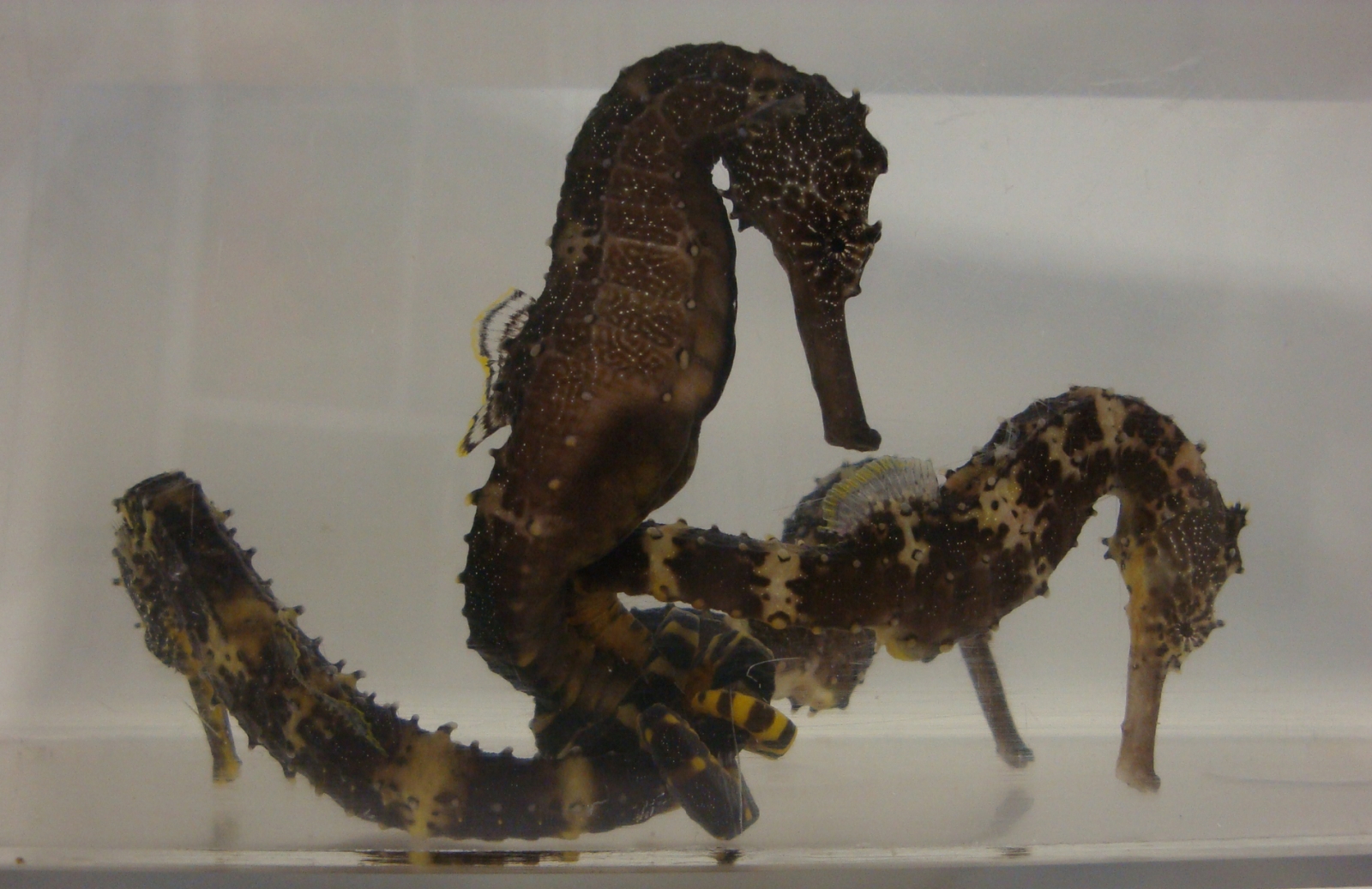
 Image result for A tiger tail seahorse, which has evolved several unique traits, including male pregnancy  Image result for A tiger tail seahorse, which has evolved several unique traits, including male pregnancy  Image result for A seahorse gene study reveals evolution of bizarre features?  like male pregnancy

SEAHORSES HAVE EVOLVED AT A GALLOPING PACE COMPARED WITH THEIR CLOSE RELATIVES, A STUDY HAS NOW SHOWN.

As a result the creatures have acquired a bizarre body shape, eyes that can look in different directions at once, toothless snouts for sucking in prey, and – strangest of all – male pregnancy.
Scientists who mapped the complete genome, or genetic code, of the tiger tail seahorse, Hippocampus comes, identified numerous unique features that had evolved within a short time.
Both the loss and duplication of genes contributed to the rapid changes, said the researchers led by Professor Byrappa Venkatesh from the Agency for Science Technology and Research (ASTAR) in Singapore.
The seahorse owes its unusual appearance to bony plates that reinforce its body and allow it to stand and swim vertically.
A key feature is the absence of pelvic fins, which share the same evolutionary origins as human legs.
The scientists found that an important limb gene called tbx4, common to nearly all vertebrates, was missing from the seahorse genome.
When the same gene was deactivated in zebrafish, the fish also lost their pelvic fins.
Gene duplication, that can give genes entirely new functions, was thought to be how male pregnancy developed in the seahorse.
Males carry developing embryos in a “brood pouch” from which the offspring eventually hatch.
Regulatory elements of DNA that control gene activity are also believed to have played a key role in shaping the seahorse.
Loss of regulatory elements may have taken the brakes off evolution and allowed the seahorse skeleton to be so greatly modified.
Writing in the journal Nature, the authors concluded: “Our genome-wide analysis highlights several aspects that may have contributed to the highly specialised body plan and male pregnancy of seahorses.
“These include a higher protein and nucleotide evolutionary rate, loss of genes and expansion of gene families, with duplicated genes exhibiting new expression patterns, and loss of a selection of potential … regulatory elements.”    

Friday, November 4, 2016

Donie's Ireland daily news BLOG update

Garda call off strike action planned for Friday,

BOTH THE AGSI AND GRA SUSPEND STRIKE ACTION ‘PENDING THE RESULT OF THE BALLOT’

Image result for Garda call off strike action planned for Friday  Image result for Garda call off strike action planned for Friday  Image result for Garda call off strike action planned for Friday
THE ASSOCIATION OF GARDA SERGEANTS AND INSPECTORS (AGSI) AND GARDA REPRESENTATIVE ASSOCIATION (GRA) HAVE SUSPENDED ITS STRIKE ACTION PLANNED FOR FRIDAY.
AGSI president Antoinette Cunningham said: “As a result of proposal received which will be put to a ballot of our membership, [the] AGSI will be calling off its day of industrial action pending the result of the ballot. AGSI are delighted a fundamental right in gaining access to the industrial relations mechanisms, the WRC and the Labour Court for our membership. AGSI are delighted to announce we have gained an uplift in income for all of our members.”
The GRA decision was late Friday night, after they met to discuss the Labour Court recommendations, which said that Gardaí should receive a new €15 payment for every day of annual leave, as well as more money in rent allowance.
It has also proposed that plans to integrate rent allowance into core pay for all Gardaí – which will have a knock-on impact on premium payments and overtime – should be brought forward to the beginning of January 2017.
It says that rent allowance should be restored for recently-recruited Gardaí immediately on the acceptance of the new proposals.
It also recommended that the new €1,459 payment for Gardaí to attend briefings prior to starting their shifts should also be introduced in January, earlier than previously anticipated.
Under Government proposals rejected by the Garda Representative Association (GRA) earlier this week, rent allowance was to be phased in in two parts, half in January 2017 and the other half in January 2018.
The proposed briefing payment had been envisaged originally to commence by April.
The Labour Court has effectively suggested amendments to the original proposals rejected by the GRA earlier this week as well as some new measures.
The court says that a new premium payment should be introduced to Gardaí to reflect uncertainty over the taking of annual leave.
This would provide for an additional €15 for each day of leave they receive.
“The court understands that the operation of the system of administration of justice has the effect of diminishing the certainty of approved annual leave for Gardaí in consequence of their necessary attendance at court hearings even at short notice when on approved leave.”
“The court recommends that this uncertainty should be acknowledged by payment to Gardaí of a €15 premium payment per annual leave day eg a Garda with a leave allowance of 30 days should receive a premium payment per annual leave payment of 30 x €15 per annum. The parties to agree the manner of implementation of this provision. This provision should take effect from the commencement of the next leave year.”
The Labour Court says it accepts that the value of rent allowance has diminished as a result of the evolving rental market. “The court, on the basis of submissions made & recommends that rent allowance should be increased by €500 with effect from 1 January 2017.”
The Labour Court did not make any recommendation in relation to “pay restoration” for Gardaí as this was being addressed in a separate process due to be completed in December.

Tánaiste Fitzgerald hopes new legislative move ends cycle of charity scandals

FRANCES FITZGERALD SAYS REGULATING SECTOR AN ‘ABSOLUTE PRIORITY’ FOR GOVERNMENT

Image result for Tánaiste Fitzgerald hopes legislative move ends cycle of charity scandals  Image result for legislative move ends cycle of Irish charity scandals  Image result for legislative move ends cycle of Irish charity scandals

A DAMAGING CYCLE OF SCANDALS RELATING TO CHARITIES MUST COME TO AN END, MINISTER FOR JUSTICE FRANCES FITZGERALD HAS SAID.

Alluding to the controversy involving suicide charity Console, Ms Fitzgerald said there was a time during the summer when issues surrounding charities dominated the news cycle.
She said the full implementation of the Charities Act 2009 would ensure the sector is no longer clouded by controversy.
Ms Fitzgerald was speaking at the launch of the Charities Institute Irelandwhich has been formed from the merger of Fundraising Ireland and the Irish Charities Taxation Research LTD (ICTR) which represents 180 charities in Ireland.
The institute will deal with issues related to charity taxation, regulation, fundraising standards and overall governance.
Ms Fitzgerald, the Minister for Justice, described the merger as a “brave, practical and thoughtful decision”.
She hoped the CII would work with the Charities Regulatory Authority which she said now has the necessary staff and financial resources required to achieve its goals. An additional €1.7 million was announced in the budget to give the authority the specialist skills to regulate the sector.
Absolute priority
Ms Fitzgerald said the regulation of the charities sector was “an absolute priority” for the Government.
“It will reassure the many thousands of people who generously volunteer their time, energy and money to charitable causes that their efforts serve a noble purpose, which is to assist the most vulnerable citizens in our society.”
CII chief executive Lucy Masterson said the purpose of the institute is to restore “trust and confidence” in the causes and charities people in Ireland support.
“That they know that the money that they are giving is going to the cause that they have a deep connection with,” she said.
Alone, the charity that supports older people to age at home, welcomed the creation of the CII.
Its chief executive Seán Moynihan said: “We hope that this initiative will encourage other charities to get serious about quality and transparency in order to restore public trust and confidence in the sector.”

Some Irish public transport fares to rise by up to 18%,

AUTHORITY ANNOUNCES SAVINGS OF 50% FOR COMMUTERS FROM SOME KILDARE TOWNS

Image result for Some Irish public transport fares to rise by up to 18% Image result for Some Irish public transport fares to rise by up to 18%

THOSE TRAVELLING ON SOME IRISH RAIL SERVICES WITHIN THE SHORT HOP ZONE – SUCH AS LEIXLIP TO DUBLIN – FACE AN 18% PRICE INCREASE.

Many public transport users face significant fare hikes under a National Transport Authority reorganisation of fares.
Within the Dublin area “short hop zones”, some rail fares will rise sharply, including the Leixlip to city centre fare which will increase by up to 18%.
Meanwhile, the cost of an annual adult Luas all-zones ticket, currently €910, will rise to €1,000, before the permitted tax deductions are made. This is a 9.9% rise, far higher than the 3.3% requested.
Currently, a monthly Luas ticket costs €91. A rise to €94 had been requested. However, the NTA approved a rise to €100 per month.
However, it’s not all bad news for commuters, as some will see reductions by as much as 50% in their fares.
Among the winners are residents of Co Kildare, where Sallins and Kilcock stations have been brought into Iarnród Éireann’s Dublin area “short hop zone”. The large savings will also be available to residents of Naas, which is also served by Sallins station.
Outside Dublin, intercity rail tax saver fares will rise by 4%, Cork commuter rail fares will rise by up to 2%, and intercity adult and child weekly tickets will rise by 2%.
Intercity tickets
In many cases, the intercity rail increases actually exceed those requested by Iarnród Éireann – which, in the case of intercity annual tickets for example, tended to be about 2%. The authority set no fare increase on any single or return intercity fares in 2017.
Bus fares outside Dublin will rise by 10 cent for adults and five cent for children when paying by cash on Bus Éireann services. There will, however, be no increase in Leap card fares. One-day, seven-day, monthly and annual bus fares will be adjusted to reflect distance travelled, with some dropping by as much as 5.9% as others rise by up to 2.8%.
Dublin Bus annual tax-saver cards – for journeys on Dublin Bus only – will not change. Dublin Bus monthly and annual tickets – for complex journeys involving other providers such as Luas or Dart – will rise by up to 2.3%.
Tax saver tickets for Bus Éireann vary, with some distances dropping in cost by as much as 5.8% while others rise by up to 2.8%. Iarnród Éireann annual and monthly tickets will rise by 2%, while under the rationalisation of Luas zones, notably merging zones three and four, some student pre-paid Leap cards will actually drop by 3.8% while some zones will rise by 5.9%.

DUBLIN BUS

* Pre-paid Rambler tickets rise by up to 2.9%
* Adult cash fares and Leap card fares will see no change
* Schoolchild Leap bus fares will rise by 2% on Irish Rail

IARNRÓD ÉIREANN

* Dublin short hop zone and intercity fares to increase by 4%
* Cork commuter fares up by up to 2%
* Change to the distance-based fares, pulling in towns to the short hop zone around Dublin, but increasing some fares within that zone

BUS ÉIREANN

* Cash fares up 10 cent for adults, five cent for children
* Daily, seven-day, monthly and annual tickets vary from a drop of 5.9% to a rise of 2.8%
* No increase in child or student returns

LUAS

* Merge zones three and four resulting in fare changes from minus 4.2 per cent to plus 7.4 per cent
* 10 to 20 cent increase in adult single journey cash fares
* Adult prepaid daily, seven-day and 30-day adjusted from minus 4.2% to plus 6.3% The fares will apply from January.
The NTA said the aims of the reorganisation were to better link the distance travelled to the fare price and to offer reductions to children and students.

Smoking causes hundreds of DNA mutation changes

Image result for Smoking causes hundreds of DNA mutation changes  Image result for Smoking causes hundreds of DNA mutation changes  Image result for Smoking causes hundreds of DNA mutation changes

SMOKING LEAVES AN “ARCHAEOLOGICAL RECORD” OF THE HUNDREDS OF DNA MUTATIONS IT CAUSES, SCIENTISTS HAVE DISCOVERED.

Having sequenced thousands of tumour genomes, they found a 20-a-day smoker would rack up an average of 150 mutations in every lung cell each year.
The changes are permanent, and persist even if someone gives up smoking.
Researchers say analysing tumour DNA may help explain the underlying causes of other cancers.
Pamela Pugh, 69, was diagnosed with lung cancer in 2013. She started smoking aged 17 and quit in her early 50s.
But she said: “Even though I gave up many years ago, the effects of smoking caught up with me.
“Had I known as a teenager that smoking caused mutations which would stay with me for life then I would never had started”.
‘Mysterious and complex’
The study, in the journal Science, was carried out by an international group, including the Wellcome Trust Sanger Institute in Cambridgeshire and the Los Alamos National Laboratory in New Mexico.
The analysis shows a direct link between the number of cigarettes smoked in a lifetime and the number of mutations in tumour DNA.
The authors found that, on average, smoking a packet of cigarettes a day led to:
  1. 150 mutations in each lung cell every year

  2. 97 in the larynx or voice box

  3. 23 in the mouth

  4. 18 in the bladder

  5. six in the liver

Joint lead author Prof Sir Mike Stratton, from the Wellcome Trust Sanger Institute, said: “The more mutations there are, the higher the chance that these will occur in the key genes that we call cancer genes, which convert a normal cell into a cancer cell.”
The researchers said that in tissues such as the lung, which are directly exposed to smoke, they could find the mutational signature of the chemicals in tobacco smoke, of which at least 60 are carcinogens.
However, they could not find this same pattern in tissues such as the bladder, which are not directly exposed.
Prof Stratton said in these organs smoking seemed to be accelerating a natural mutational process, but how it did this was “mysterious and complex”.
He said the same investigative approach could be used with other cancers where the underlying causes were less well understood.
“By looking in the genomes of the cancers, we will find the archaeological traces of past exposures which have been responsible for generating the cancers and that may potentially lead to prevention,” he said.
Genetic disruption
Dr David Gilligan, consultant oncologist at Papworth Hospital and Roy Castle Lung Foundation trustee, said: “For every 150 mutations in the cell each year, that is 150 opportunities for lung cancer to develop.
“Lung cancer has been at the bottom of the survival league for many years, but there are many exciting developments, including immunotherapy and genetically targeted drug treatments.”
Ms Pugh has received treatment at Papworth and Addenbrooke’s Hospitals in Cambridgeshire.
She has just spent six months on a trial of a drug that aims to disrupt the genes that drive the growth of lung cancer.
Participants in the Matrix trial have DNA from their tumours examined to check they have genes that may respond to the drug.
But a scan has shown the tumour in Ms Pugh’s right lung is growing, and she has had to leave the trial.
She will now undergo more chemotherapy and radiotherapy.
There are 35,000 deaths a year in the UK from lung cancer, and it is estimated that nine out of 10 cases are preventable.

More & more Women dying of Cancer & here’s why?

Image result for Worldwide, cancer will kill 5.5 million women a year by 2030  Image result for Worldwide, cancer will kill 5.5 million women a year by 2030  Image result for “The Global Burden of Cancer in Women,”

THE NUMBER OF WOMEN DYING FROM CANCER AROUND THE WORLD KEEPS RISING, AND IT WILL TAKE A GLOBAL RESPONSE TO REVERSE THE TREND.

WORLDWIDE, CANCER WILL KILL 5.5 MILLION WOMEN A YEAR BY 2030. THAT’S AN INCREASE OF 57% FROM 2012 WHEN 3.5 MILLION WOMEN DIED FROM CANCER.

Many of these deaths can be prevented, according to a new report, “The Global Burden of Cancer in Women,” presented at the World Cancer Congress in Paris.
Released by The American Cancer Society and Merck KGaA of Darmstadt, Germany, the report examines the physical, societal, and financial impact of cancer in women around the globe.
Cancer rates continue to rise along with world population. It is now the second leading cause of death among women.
It’s a major health and economic threat across the globe. Cancer rates are generally greater in wealthier countries. Now they’re on the rise in developing countries.
One reason is that improved healthcare in those countries is increasing life span.
Another is that as economies improve there are some added risk factors for cancer. These include physical inactivity, unhealthy diet, and having a first child at an older age.
Some of the most commonly diagnosed cancers among women are breast, lung, cervical, and colorectal.
In less affluent countries, these cancers can often go undiagnosed or untreated, leading to a higher mortality rate.
Societal, economic cost
Women with cancer face considerable physical and emotional challenges. So do their families.
Cancer treatment, if you can get it, is expensive. In addition, patients may require the assistance of family or other caregivers as well as transportation to treatment centres.
Indirect costs also include loss of productivity and income, especially when young and middle-aged women are involved.
According to the report, the global economic burden of cancer in 2009 was about $286 billion. Much of that is attributed to premature death of women in the workforce.
In the United States, years of productive life lost to cancer in women were estimated at $82 billion in 2008.
Where you live matters.
Cancer mortality rates for women are highest in Zimbabwe, Malawi, Kenya, Mongolia, and Papua New Guinea.
Mortality rates are lowest in northern and western Africa, Central America, select islands of Oceania, and south-central Asia.
Many cancers can be prevented
According to the report, about one-third to one-half of cancer cases could be avoided based on what we already know about risk factors.
Several common cancers in women have known means of prevention or early detection. Screening and early detection often mean patients have better treatment options and more favourable outcomes.
The report highlights the potential to reduce suffering and loss of life while easing the family and societal economic burden.
Dr. Homayoon Sanati is medical director of breast oncology at the Memorial Care Breast Centre at Long Beach Memorial and Orange Coast Memorial medical centre’s.
In an interview with Healthline, Sanati said there are no real surprises in the report. He is particularly concerned with mortality rates for lung cancer in women.
It surprises me, with all information we have, to see younger women smoking.
He said the problem can be attributed to the rise in women smokers. It’s a trend that began in the 1970s when ads started targeting young women.
“It surprises me, with all information we have, to see younger women smoking,” said Sanati.
“It’s a warning sign that we need to educate patients to stop smoking. We do have screening modalities right now for lung cancer that can reduce mortality,” he said.
Sanati said there’s a low-dose CT scan that can be done once a year in patients who have a history of smoking and are older than 50 years of age. Earlier diagnosis increases the chances of stopping the disease before it spreads.
“There’s also an increase in smoking in China,” he continued. “The effects of smoking show up 20 years later, so it will be a large problem for them pretty soon.”
Preventing breast cancer?
Image result for healthy diet, good body mass index (BMI), and physical activity are important in preventing breast cancer. Sanati said a healthy diet, good body mass index (BMI), and physical activity are important in preventing breast cancer.

“I think these are some of the main issues that can be improved. But some subsets of breast cancer are genetically driven. Patients should be aware of those,” he said.
Sanati doesn’t agree with current U.S. Preventive Services Task Force screening guidelines for breast cancer. Although the United States has good screening modalities and good treatments, he believes less screening may lead to increased mortality five or 10 years down the road.
“Current guidelines recommend a mammogram every other year for women aged 50 to 74. Every other year works for slow growing cancer, but it won’t pick up on fast growing cancers,” he said. “Those are the ones you want to diagnose sooner rather than later.”
Sanati also sees the benefit of self and clinical breast examinations.
“I see patients get diagnosed because they found the mass themselves or their doctor found the mass. There are women alive today because of that,” he said.
Cervical & liver cancer
When it comes to cervical cancer, Sanati expects rates to go down in countries where the HPV vaccine is widely available.
“South American countries are actively promoting vaccinations because the cost of the vaccine is much cheaper than managing cervical cancer. For that reason, the trend should be going down,” said Sanati.
Decline is unlikely in countries that don’t have or promote the vaccine.
In addition, cervical cancer screening, starting with the Pap test, can lower incidence and mortality.
Sanati said we should also pay more attention to liver cancer.
“In certain countries, there’s an increase in liver cancer mostly due to chronic infection with hepatitis B,” he said. “I think we would see a lowering of this trend in those countries as they get more access to hepatitis vaccines.”
“In the United States, liver cancer will become more prominent in the near future,” warned Sanati.
That’s due to diet, a factor well within our control.
“A high sugar diet leads to a condition called ‘fatty liver.’ Sugar gets converted into fat and is stored in the liver. In time, it damages the liver and increases the risk of liver cancer,” explained Sanati.
It’s not inevitable?
The report concluded that the burden of disease, loss of life, and economic hardship is not inevitable.
There are known means of prevention and early detection for the most common cancers among women.
The report suggests that countries need to prioritize cancer education and prevention. It will require support and commitment from the global community.
“We are proud to partner with the American Cancer Society to address the impact cancer has on women worldwide,” Belén Garijo, member of the Executive Board and CEO Healthcare at Merck KGaA, said in a press release. “This collaboration is a first-of-its-kind public-private partnership that recognizes that no one sector can tackle this challenge alone. Improving women’s health and well-being has an uplifting ripple effect on our world, and we know when women do better, our communities do better.”

We are about to see the biggest and the brightest super moon of the 21st century on November 14th

We are about to see the biggest and the brightest supermoon of the 21st century  Image result for We are about to see the biggest and the brightest super moon of the 21st century on November 14th  Image result for We are about to see the biggest and the brightest super moon of the 21st century
Forget all the other super-moons you’ve seen in the past. Or even meteor showers, blood moons and lunar eclipses. Because on November 14, your night sky is going to light up with the biggest full moon you’ll see in a long time.
Super-moons aren’t all that uncommon, but this one’s going to be pretty special because for the first time since 1948, the full moon will be nearest to Earth. And it won’t get this close again until November 25 2034.
If you want to see the astronomical event this year – it’s the supermoon in November. Here’s everything you need to know:
How does a supermoon happen?
A supermoon is a full moon or a new moon (yes a new moon is also classed as supermoon, even if you can’t see it) at its closest point to Earth. The moon orbits Earth in an elliptical plane so sometimes it can come quite close to our planet (which is called a perigee) and at other times, it can be at the furthest point from Earth (which is called an apogee).
The perigee distances can vary but at its closest, the moon is about 30,000 miles (48,000 km) closer to Earth than during apogee. When the sun, the moon, and Earth line up – the occurrence is known as syzygy.
As Nasa explains: “When perigee-syzygy of the Earth-moon-sun system occurs and the moon is on the opposite side of the Earth from the sun, we get a perigee moon or more commonly, a supermoon!”
This occurrence causes the moon to appear much bigger and brighter in our sky than usual.
Why is this supermoon so special?
Supermoons aren’t unusual – we just had one on October 16 and there’s going to be another one on December 14.
But on November 14, the moon’s orbit is also going to bring it even closer to Earth than previous perigee occurrences. To be precise, the distance between Earth and the moon will be a mere 221,524 miles (356,509 km). On average, the moon is about 239,000 miles (384,000 km) away from the Earth.
“On November 14, it becomes full within about two hours of perigee – arguably making it an extra-supermoon,” says Nasa.
“The full moon of November 14 is not only the closest full moon of 2016, but also the closest full moon to date in the 21st century. The full moon won’t come this close to Earth again until November 25 2034.”
How will we be able to see it?
Sometimes it can be difficult to tell whether the moon is a supermoon or not. This is because the moon is too far away for our eyes to perceive the change in distance.
But if you have buildings, trees or the horizon to compare it to, it might appear larger than usual – this is known as “moon illusion”.
“When the moon is near the horizon, it can look unnaturally large when viewed through trees, buildings, or other foreground objects,” says Nasa.
“The effect is an optical illusion, but that fact doesn’t take away from the experience.”
When can you see it?
The moon will become full at 1.52pm GMT on November 14. If you live in the UK, you should be able to see the moon later that evening.
Be sure to get somewhere nice and dark, away from the city lights, if possible, and try and look for reference points which you can use to gaze at the moon – like the horizon or trees.
Let’s just hope the weather holds up its end of the bargain.