Pages

Showing posts with label Detection. Show all posts

Wednesday, November 23, 2016

Donie's Ireland daily news BLOG update

Adams describes the water charges situation as ‘A comedy of errors’

PÁDRAIG Ó CÉIDIGH APPOINTMENT ‘BEYOND REMIT’ OF SIMON COVENEY, SINN FÉIN SAYS

Image result for Adams describes water charges situation as ‘comedy of errors’  Image result for Adams describes water charges situation as ‘comedy of errors’  Related image

INDEPENDENT SENATOR PÁDRAIG Ó CÉIDIGH: DESCRIBED BY TAOISEACH ENDA KENNY AS “AN OUTSTANDING PERSON”.

Sinn Féin president Gerry Adams described the situation as a “comedy of errors” and an “ongoing farce”.
He raised the issue during Leaders’ Questions in the Dáil, in the wake of the announcement by Mr Coveney of Mr Ó Céidigh as chair of the committee which will consider the report of the expert commission on water charges. The commission is due to issue its report at the end of November.
Fine Gael agreed the appointment of Mr Ó Céidigh in talks with Fianna Fáil, and Mr Adams said “the Minister has no authority to appoint the chairperson of an Oireachtas committee as such appointments are a matter for the Dáil. To intervene as the Minister did and to seek to appoint a chair is a serious departure from normal Oireachtas procedure.”
Mr Adams called on Taoiseach Enda Kenny to have the chair of the committee decided by its 20 members when it was established without interference from the Minister.
‘The sound of marching feet’
However, Mr Kenny said: “My, my, how your memory has faded.” The Taoiseach recalled Mr Adams saying he would pay his water charges and Sinn Féin saying it would make the necessary contributions.
“Then when it heard the sound of marching feet out in Tallaght, it decided to reverse engines,” Mr Kenny said.
He said Mr Adams could not say Fine Gael and Fianna Fáil were out of line. Mr Kenny said his party had a very clear view on water charges all along.
Fine Gael’s position had always been that people should pay for water but they had sat down with Fianna Fáil to ensure the Government could do its work, Mr Kenny said.
Fine Gael had a confidence-and-supply arrangement with Fianna Fáil. “It is obviously necessary to have somebody who is competent, objective and capable of chairing deliberations on a complex issue such as this as chairman of an Oireachtas committee,” he said.
Mr Kenny described Mr Ó Céidigh as “an outstanding person, a businessman who is used to seeing clearly through complex issues and making decisions. I am sure he will fulfil his remit in this regards in a very clear, objective and fulfilling way.”
Mr Adams said the agreement was “all about getting Fianna Fáil off the hook on this issue and getting you back into power”.

Ireland’s unemployment figures revised down to new post-crash low of 7.5%

THE LATEST CSO FIGURES SHOW THE NUMBER OF PEOPLE WORKING IN THE STATE HAS REACHED AN EIGHT-YEAR HIGH.

Image result for Ireland's unemployment figures revised down to new post-crash low of 7.5%  Image result for Ireland’s unemployment rate has been revised down to a new post-crash low of 7.5%

THE NUMBER OF PEOPLE WORKING IN THE STATE HAS REACHED ITS HIGHEST LEVEL IN EIGHT YEARS AS CONDITIONS IN THE LABOUR MARKET CONTINUE TO IMPROVE.

Ireland’s unemployment rate has been revised down to a new post-crash low of 7.5%.
The latest official figures from the Central Statistics Office (CSO) suggest the number of unemployed people in the State fell by 34,200 to 164,400 in the 12 months to October.
The updated numbers, contained in the CSO’s Quarterly National Household Survey, also show the number of people working in the State has reached its highest level in eight years.
Despite the uncertain economic backdrop, employment on an annual basis increased by 2.9 per cent, or 57,500, in the third quarter of 2016, bringing the total employment to 2.04 million.
This was the highest level of employment recorded since the fourth quarter of 2008, but still below the 2.16 million peak reached in the first quarter of the same year.
The CSO’s survey reveals employment has now increased for 16 successive quarters and that most of the employment growth is in the full-time category, which rose by 44,800 or 2.9 per cent year on year.
  • ‘Realistic’ Ireland unwilling to host large trading schemes, investment banks told
  • UK will have to pay in some way for smooth transition to Brexit
  • Central Bank set to ease mortgage lending rules
Significantly, the quarterly growth in employment appears to be untrammelled by Brexit.
The figures show employment grew by 0.7% or 13,500 in the third quarter following growth of 0.9% and 0.8% in the previous two quarters.
The construction sector?
Employment also rose in 12 of the 14 employment sectors of the economy with the largest increase recorded in the accommodation and food services sector, which expanded by 13,400 or 9.6%.
The construction sector, which suffered the biggest sectoral decline during the crash, saw employment rise by 9,300 or 7.3%.
The largest decline during the period was in the administration and support services sector, where employment fell by 2,000 or 2.9%.
“We’re going up on a more shallow slope than we declined down at, hence we haven’t returned to figures that are comparable to peak employment,” senior CSO statistician Brian Ring said.
Nonetheless he said the latest figures were consistent with a year-on-year growth in employment of 3%.
Mr Ring also noted the continuing downward trend in long-term unemployment, which fell from 5% to 4.2%, allaying fears that structural unemployment may become a feature of the economy.
Encouraged
Minister for Jobs Mary Mitchell O’Connor welcomed the latest survey, noting the figures put the Government on track to eclipse its target of creating an extra 50,000 jobs this year.
“I am particularly encouraged to see figures showing the vast majority of new jobs are being created outside of Dublin as one of my key priorities remains keeping a focus on job growth in all regions around Ireland,” she said.
Alan McQuaid of Merrion Stockbrokers said: “Although emigration has been a factor to some degree in keeping unemployment down since the financial crisis, the labour market has improved dramatically over the past two/three years, reflecting the strengthening of the economic recovery.”
He also noted the most recent migration estimates showed net inward migration of 3,100 in the year to April 2016 as against net outward migration of 11,600 in 2015, and the first positive figure since 2009.

Device developed by Irish scientists to ‘vastly improve’ detection of prostate cancer

Image result for Device developed by Irish scientists to ‘vastly improve’ detection of prostate cancer   Related image

A DEVICE DEVELOPED BY IRISH SCIENTISTS IS EXPECTED TO LEAD TO A VAST IMPROVEMENT IN PROSTATE CANCER DETECTION.

It can test a non-invasive technique that could significantly increase the chance of finding tumours. Up to now, the potentially life-saving approach to prostate cancer detection remained confined within a research setting.
The test device that mimics the prostate and entire pelvic area was developed by Silvin Knight, a PhD student at Trinity College Dublin’s School of Medicine.
Mr Knight has been working under the supervision of Prof Andrew Fagan, director of the National Centre of Advanced Medical Images at St James’s Hospital and leader of the group.
Mr Knight’s work, funded by the Irish Cancer Society and the Movember Foundation, is published in the journal Physics in Medicine and Biology.
The device that took two and a half years to build and develop makes it possible to test an imaging technique that involves injecting a dye into a patient.
A series of images are taken as the dye leaks in and out of tissue in the prostate. Leakier blood vessels in prostate tissue are a strong indicator of the presence of a tumour. However, the accuracy of the technique that is up to 42% more sensitive compared with biopsy alone could not be adequately tested until now.
“The phantom test device is allowing us to develop a dynamic contrast-enhanced magnetic resonance imaging technique to a higher degree of accuracy than has been possible previously with just imaging patients,” said Mr Knight.
Prostate cancer is the most common cancer among men in Ireland with around 3,400 new cases of the disease identified each year.
Mr Knight said: “Currently, it is difficult for doctors to definitively diagnose prostate cancer using existing techniques. These usually require patients to go through a painful and sometimes inaccurate biopsy procedure.”
Head of research with the Irish Cancer Society, Robert O’Connor, said that the development was hugely significant.
The society and the Movember Foundation is raising awareness about prostate cancer and other men’s health issues this month.

‘Shop and Save campaign’ incentive behind the resurgence of Dunne’s Stores

Image result for 'Shop and Save campaign' incentive behind the resurgence of Dunne's Stores   Related image

THE LATEST DATA SHOWS THAT DUNNES STORES HAD A 22.6% SHARE OF THE MULTI-BILLION EURO GROCERY MARKET DURING THE 12 WEEKS UP TO NOVEMBER 6.

You can bet that if there weren’t Champagne corks popping down at the Dunnes Stores headquarters on Dublin’s George’s Street yesterday, there was at least some smug satisfaction in being back on top.

BECAUSE IT LOOKED FOR A LONG TIME LIKE DUNNES STORES HAD LOST ITS WAY?

Its market share had declined, and it was taking a beating from rival SuperValu, which has developed new ranges and aggressively marketed its Irish and local credentials, heavily involving itself in local communities.
It’s arguable that Tesco’s own slide down the ranks was as much to do with its wider problems as a group, rather than just its ability to compete in the Irish market.
The first line of defence for Dunnes was to slash its own margins.
It did so by introducing its popular ‘Shop and Save’ incentive, where customers get €10 off every €50 they spend. Its popularity even forced rivals to begin accepting the vouchers.
It was an audacious, not to mention expensive, strategy for Dunnes.
Retail experts reckon that since the retailer introduced the scheme over two years ago, it has cost Dunnes tens of millions of euros.
What’s telling though is that Dunnes Stores has been able to afford to run that scheme for so long.
That makes one wonder just what kind of profit margin the chain was previously working off, and that if it was losing money to run the campaign, just how much in accumulated profits the business had on its books.
A substantial amount, certainly, but the business is unlimited, meaning it does not have to file publicly available accounts.
A big challenge now for the chain will be how to introduce an orderly halt to that discounting without losing too many customers, or seeing their spend fall if they do stay with the chain.
To that end, Dunnes Stores has been introducing new products and concepts.
It has also bought the small Dublin-based Café Sol chain to introduce the product to Dunnes Stores, and also acquired artisan butchers Whelans.
And that’s just the food side.
With textiles, it has hauled in top names such as Paul Costelloe, Lennon Courtney and Paul Galvin to front labels it hopes will spur sales with more discerning customers.
It’s all pushing Dunnes Stores more along the lines of Marks and Spencer (where Margaret Heffernan has even been spotted shopping), rather than the Dunnes of old.
And being number one might also stir interest in the chain from potential buyers.
Margaret Heffernan turns 75 next year, her brother Frank Dunne turns 74.
There will come a day when a decision will have to be made about the chain’s future.

An Post accused of ‘devious’ plan to close a Sligo country post office

LOCAL SOOEY PRIEST SPEAKS OUT AS COMPANY REVIEWS CONTRACT AFTER DEATH OF BALLYGAWLEY POSTMASTER.

Image result for An Post accused of ‘devious’ plan to close a Sligo country post office  Image result for Sooey Sligo country post office

A PROTEST LAST WEEK IN SUPPORT OF BALLYGAWLEY POST OFFICE IN CO SLIGO.

A parish priest has spoken out against the closure of a rural post office in Co Sligo which is under threat following the death of the 55-year-old postmaster.
Speaking at the end of Mass in Sooey parish church on Sunday, Fr AB O’Shea urged parishioners to sign a letter, which was available in the church porch, urging An Post not to close the post office in nearby Ballygawley.
Campaigners have accused An Post of using the death of postmaster Colm McTiernan, less than six weeks ago, as an excuse to close the service now being operated by his wife. With 700 post offices nationally believed to be under threat, An Post has announced that the contract for Ballygawley post office is under review.
Fr O’Shea told the congregation it was important to maintain services in the west of Ireland and “not move everything towards the capital”.

‘HEARTBEAT OF THE COMMUNITY’

Thomas Walsh, chairman of Ballygawley Development, said local people were angry, not just because they feared losing their post office , “the heartbeat of the community”. “I know An Post is a commercial company but people feel this is being done in a very callous way”.
He said Mr McTiernan’s wife Antoinette was continuing to operate the post office in their multi-use business which includes a shop and filling station. “An Post is now going through this rigmarole of a process but we feel they are looking for an excuse to close the post office.”
The late postmaster’s brother Padraig said the family were very upset that the contract was put up for review so soon after Colm’s death at the age of 55. “There is no humanity in it. Antoinette has been running it and it is a very busy post office,” he added.
Campaigners said that within a 30-mile radius, four post offices had closed over the past three years, so closure would leave a large geographical area without a service. More than 300 people attended a rally outside the premises last week, including several local school children with letters addressed to Santa.

BIG DECISION?

Angus Laverty, public affairs manager with An Post confirmed the contract for Ballygawley post office was now under review, and said a consultation period would continue until December 2nd. A decision on whether to keep the post office open is expected some weeks later.
Mr Laverty said the company was aware of the sensitivity of the case. “We are always sensitive to the family, and this case was particularly tragic as Colm was only in his 50s and he was our colleague. Unfortunately there is no good time to do this.”
Mr Laverty said that as postmaster, Mr McTiernan had been the person contracted to provide the service, and “unfortunately when a person dies that is the end of the contract”. He said there were 1,130 post offices in the country, 51 of them run by An Post staff , while the rest were operated on a contract basis.

This ancient Chinese bird kept its feathers, and colours for some 130 million years

Image result for This ancient Chinese bird kept its feathers, and colours for some 130 million years   Image result for This ancient Chinese bird kept its feathers, and colours for some 130 million years
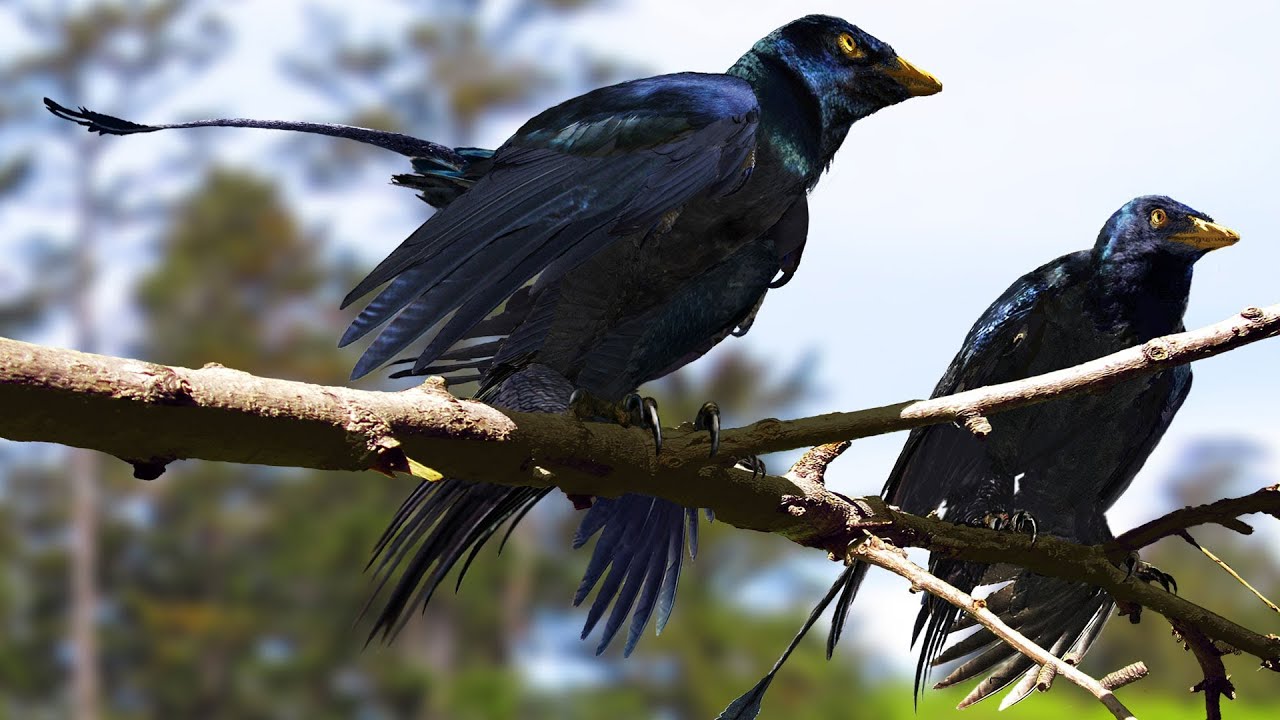
THE FOSSILS OF AN ANCIENT BIRD ON THE LEFT OF PICTURE, EOCONFUCIUSORNIS, REVEALED MICROSCOPIC EVIDENCE OF PIGMENT WITHIN ITS FEATHERS, WHICH WERE PRESERVED FOR SOME 130 MILLION YEARS.

An international team of U.S. and Chinese scientists analyzed the color of the bird, the oldest known avian after the proto-bird Archaeopteryx, by first identifying a protein from its fossilized feathers that enables modern-day birds to fly.
The protein, beta-keratin, is the stuff of nails, feathers, scales and beaks. Evolutionary history and modern genetic evidence indicates that feather keratins evolved from reptilian scale keratins. (Beta-keratin is not to be confused with beta-carotene, the orange pigment found in carrots and other plants.) The keratin proteins are arranged like building blocks to give a particular biological structure its function, akin to the way brick can form a walkway or a chimney.
Scientists studied Eoconfuciusornis beta-keratin buried deep within the animal’s fossilized feathers. They probed the keratin structures to find small, dark grains called melanosomes. These are the little specks within animal cells that give skin and other tissues its color. Although melanosomes had been discovered in fossilized creatures before, it was previously too difficult to tell if the dark granules belonged to the animal itself or ancient microorganisms preserved alongside it.
The trick was to pick out the bird melanosomes embedded within the keratin. “If we couldn’t find the keratin, then those structures could as easily be microbes, or a mix of microbes and melanosomes — in either case, predictions of dinosaur shading would not be accurate,” said study author and North Carolina State University biologist Mary Schweitzer in a news release.
In a new study published in the Proceedings of the National Academy of Sciences, the researchers used an analytical technique not traditionally applied to 130-million-year-old animals. Chinese Academy of Sciences paleontologist Pan Yanhong told the South China Morning Post that, “We must remove many unwanted materials to reveal the keratin proteins, and for the job I borrowed some techniques used in the study of ancient human DNA.” The price of the technique was that parts of the fossil, each sliver about the size of a rice grain, were destroyed in the process.
Eoconfuciusornis — the “early Confucius bird” or “the dawn of the Confucius bird” — was first discovered in 2008, and is thought to have been the size of a crow. It was the first animal known to have a toothless, horned bill like a bird. The specimen used in the current study was found in Hebei, China, where a lake once existed during the beginning of the Cretaceous period. (An amateur paleontologist previously unearthed the slightly younger Confucius bird, Confuciusornis, when he purchased a specimen at a flea market in Jinzhou in 1993.)
As University of Bristol paleontologist Mike Benton told National Geographic at the time of the bird’s discovery, there was a question of just what colors its plumage bore when it was alive. The early Confucius bird could have been brown and black. Or, Benton said, “these might alternatively have been the bright reds, blues, and yellows of modern birds.”
The melanosomes examined with the new technique lent support to the idea that the early Confucius bird’s body was brownish or dark in color. What’s more, the study hinted at future discoveries embedded within additional ancient skins and feathers. As Pan said to the South China Morning Post, “We can use the same technology to study other animals, such as dinosaurs.”   

Monday, April 13, 2015

Donie's Ireland daily news BLOG

Hillary Clinton announces she’s running for president

Hillary Clinton launches an announcement video to officially begin her campaign.
   
After months of anticipation, Hillary Clinton formally announces her presidential campaign
Clinton faces little opposition for the Democratic nomination, but a potentially close general election battle
Hillary Rodham Clinton announced Sunday that she is running for president, launching her campaign with a video statement on her website that replaced months of hints with a declaration that started the campaign on a populist note.
“Americans have fought their way back from tough economic times, but the deck is still stacked in favor of those at the top,” she said in the video. “Everyday Americans need a champion, and I want to be that champion.”
“I’m hitting the road to earn your vote.” Clinton declares?
The widely anticipated announcement marked the official beginning of Clinton’s second run for the White House. The former secretary of State is expected to face only token opposition in her bid for the Democratic nomination, but analysts foresee a close-fought general election as the Democrats seek to win the White House for a third consecutive term.
The launch frees Clinton to start courting voters in states that hold early primaries, as well as to aggressively raise money. Her travel schedule includes visits to the early-battleground states of Iowa and New Hampshire over the next few days.
Launching of Hillary Clinton campaign presents challenges for her team
Campaign aides said that Clinton would spend the next several weeks in key states doing small-scale events, some in voters’ homes, that would be similar to the “listening tour” she conducted at the outset of her successful run for the Senate in New York in 2000. In mid-May, they said, she would hold her first large-scale rally, the formal kickoff event for the campaign.
Hillary Rodham Clinton as takes part in a discussion at the Center for American Progress in Washington on March 23.
Unlike 2008, when she faced high-profile opponents, most viable rivals for the Democratic nomination have stepped aside for Clinton this time, an unusual gesture for a candidate who is not a sitting president or vice president and a sign of Clinton’s political potency. Polls so far have shown overwhelming support for her among Democrats.
Democrats are hopeful that a lack of serious opposition within the party will enable Clinton to head into the general election with a clear advantage, absent the damaging political bruises that tough primaries often produce. The relative unity among Democrats allows Clinton from the start to look for themes that will motivate the party’s supporters while appealing to less-partisan voters who can be crucial to winning a general election.
But there is also danger in an easy path to the nomination. The nominee Republicans pick will likely have been battle-tested and vetted by an intraparty race against several well-funded opponents. If unopposed, Clinton will likely not have that often-valuable dress rehearsal, which can afford a nominee opportunities to falter and recalibrate while the stakes are lower.
Hillary Clinton’s team is preparing behind the scenes, largely out of a closet
As Clinton prepared to launch her campaign, advisors emphasized that she would not take any votes for granted. They are eager to avoid the missteps the candidate made in the 2008 race. In that primary, she entered the race as the clear favorite, but she proved less successful at connecting with voters than then-Sen. Barack Obama, who ultimately bested her.
Clinton built that campaign around her impressive credentials in public service, arguing that no other candidate could match her experience as a senator and first lady. But she miscalculated how voters would perceive her and struggled to make a personal connection and overcome the perception among some voters that she felt entitled to the nomination.
Clinton is expected to address the shortcomings of her last run with a campaign rollout that focuses heavily on the parts of her biography less familiar to voters, particularly her modest upbringing.
Democratic strategists are also looking for this campaign to put more emphasis on Clinton’s potential to make history as the first female president — a big selling point with many voters, particularly women. By coincidence, Tuesday, when Clinton will be meeting voters, is Equal Pay Day, an annual date chosen by advocates for higher pay for women as an opportunity to call attention to the continued wage gap between the sexes.

Ireland’s economic growth now outstripping the rest of Europe, says Ibec

  • Quantitative easing, exchange rates and oil prices are behind boost for the economy
   
Ibec head of policy and chief economist Fergal O’Brien and chief executive Danny McCoy: despite economic growth, the employers’ group has warned that the Government still has limited room to manoeuvre on the fiscal front.
Unemployment will fall below 9 per cent and
gross domestic product will grow by 5.4 per cent this year, a performance that will see Irish economic growth exceed that of the rest of Europe,employers’ group Ibec has said.
In its latest quarterly economic outlook, the group said quantitative easing by the European Central Bank (ECB), lower oil prices and favourable exchange rates were all set to boost the Irish economy.
It nevertheless warned that the Government would still have limited room to manoeuvre on the fiscal front and called on it to prioritise cuts to the marginal tax rate for all workers.
Ibec also called on the Government to “ramp up” capital investment, saying historically low interest rates gave Ireland a “once-in-a-generation chance to invest ambitiously in the country’s future”. It said the Government should commit to spending 4 per cent of GDP on infrastructure by 2020.
“Housing under-supply in key urban centres has the potential to undermine competitiveness and make it more difficult to attract and retain talented workers. The Government needs to do much more to address supply shortages. Our transport network is also far from complete.”
Pay increases
While strong economic growth will in time feed into pay increases, the employers’ group said that different sectors and companies were recovering at different rates.
Two-thirds of domestic services companies and half of traditional manufacturing companies were unable to afford pay increases this year, it said.
On public sector pay, Ibec said pay cuts were likely to be reviewed over the coming years, but productivity improvements must be maintained. It said pay levels should not be allowed to drift way off line with competitor economies again.
“Public sector pension reform is urgently required and it must be part of any review of public sector remuneration.”
Ibec’s head of policy and chief economist Fergal O’Brien said the Government needed to manage the recovery sensibly and the policy of continuing to tax high-skilled workers at a “penal” 52 per cent did not make economic sense.
It said the policy changes sought by Ibec could be delivered while reducing the deficit and debt levels and prioritising balanced recovery across different sectors and regions.
Ibec’s five priorities for the Government’s spring statement are: reducing the marginal tax rate; tax changes to stop “penalising entrepreneurs”; increased capital investment; the prioritisation of education and research; and a sensible review of public sector pay.
Ibec said Ireland needed to start reversing the cuts in education and research immediately. This would include ensuring resources are in place to promote literacy and numeracy, reform the junior cycle, support the professional development of teachers, adequately fund third-level and encourage R&D.

AIB twice as likely as Bank of Ireland to pursue customers

  • AIB most aggressive bank in State when moving against debtors


An AIB spokeswoman said “in all cases the bank seeks a non-legal resolution and implementation of a consensual debt restructuring with borrowers”.
AIB, the State-owned bank, is twice as likely as its main rival, Bank of Ireland, to pursue its customers through the courts over unpaid debts, according to official court records.
An analysis by The Irish Times of all summary judgment cases filed since the beginning of the year reveals AIB is by far the most aggressive bank in the State when it comes to filing such High Court actions against debtors.
Summary judgments applications are when banks or other lenders apply to the court for a fast-track ruling without a trial or witness evidence.
Edmund Honohan, the Master of the High Court and a brother of Central Bank Governor Patrick Honohan, has previously criticised banks for the volume of summary judgment cases, questioning whether they give borrowers a fair chance to defend themselves.
Unpaid debts
AIB had, by the end of last week, filed at least 275 summary judgment actions in 2015 against its customers over unpaid or disputed debts, more than 40% of the total in the State.
Bank of Ireland, which has a larger loan book than AIB, had filed only about 140 cases. Bank of Ireland, however, is twice as likely as AIB to resort to court action against homeowners over mortgage arrears.
About 73 of Bank of Ireland’s applications, more than half its total, were in the name of its mortgage bank.
About 70, or roughly a quarter, of AIB’s summary applications were made by its mortgage arm, indicating the bank reserves the court tactic primarily for non-mortgage borrowers, such as businesses and unsecured loans.
The next most aggressive bank in chasing customers through the courts is Danske Bank, which is winding down its operations here. It has filed just a fraction of the number of cases of its larger rivals, 33 so far this year, but it has a much smaller loan book.
Permanent TSB, which like AIB is State-owned, has not resorted to court action against a single customer in 2015, after filing 10 such cases in 2014.
Start Mortgages, the subprime lender, has filed 10 summary judgment actions so far this year, while ACC has filed 12. The Irish operation of Bank of Scotland, which is also winding up it Irish loan book, has filed 16 such actions.
The National Asset Management Agency, which usually seeks summary judgment against developers with whom it can’t agree repayment schedules, or who breach previous agreements, has taken eight of its clients to court this year.
Responding to the findings a spokewoman for AIB said the bank’s policy was to agree solutions with customers “based on maximum affordability relative to existing debt levels and cash flow expectations” and that “in all cases the bank seeks a non-legal resolution and implementation of a consensual debt restructuring with borrowers”.
Reduced arrears
“AIB reduced its volume of impaired loans by 23% in 2014 from €29 billion to €22 billion. The bank also reduced mortgage arrears in its Irish residential mortgage portfolio by 18% in 2014 in part due to significant levels of debt restructuring agreed with customers on a consensual basis.’’
A Bank of Ireland statement said: “Where customers are encountering difficulties meeting their repayment commitments, it is our policy to work with them to find solutions that are sustainable and meet the needs of both the customer and the bank. We will work with each customer on a case by case basis and will offer a range of options to help them work through their issues. The decision to refer the matter to the courts is a final resort for the bank when all other options have been exhausted.”
Edmund Honohan suggested some Irish summary judgment actions could breach European human rights legislation.
He said the procedure often favoured plaintiffs, and expressed concern that the number of applications was, 12 months ago, on the rise.
Since Mr Honohan expressed his concerns, the volume of applications from Irish banks has slowed slightly.

Irish Coalition will avert property tax crisis in urban areas

  • Says the Tánaiste
   
Tánaiste Joan Burton
Tánaiste Joan Burton has become the latest Government minister to signal measures aimed at ensuring urban homeowners are not hit with spiralling property tax bills.
Ms Burton said the matter had been discussed at Economic Management Council (EMC) level and suggested that some form of cap may be imposed.
The EMC is the main decision-making body of the Government and comprises of Ms Burton, Taoiseach Enda Kenny, Finance Minister Michael Noonan and Public Expenditure Minister Brendan Howlin.
It was reported last week that Mr Noonan promised Fine Gael TDs at their weekly parliamentary party meeting that he would not allow a situation whereby the rise in property prices had a knock-on effect on bills.
Mr Noonan said it would be “absolutely madness” to allow the property tax to rise at the same rate as house prices -which is central to the concerns of Dublin TDs. Mr Noonan said he was conscious that measures must be taken in the short term.
He said an independent review by Dr Don Thornhill would be published in May and that he would take affirmative action after that.
The senior Fine Gael politician said he was open to a number of options, including a freeze on valuation rates and handing more autonomy to local authorities.
Mayo TD Michelle Mulherin put a motion before the Fine Gael parliamentary party proposing that future charges be linked to the average rate of inflation over three years, and be based on the current self-assessment property taxes rates.
She insisted the property tax should only be changed every three years.
Reacting to the concern about spiralling bills yesterday, Ms Burton said the issue would be tackled by the Government.
“Well, there’s been an amount of discussion about this particularly between myself and Taoiseach Enda Kenny and indeed with Michael Noonan, the Minister for Finance.
“Again it’s a significant issue because what’s happened with the rising property prices in Dublin; I think we’re all aware for some people the valuations could rise very, very steeply,” Ms Burton told reporters.
“And Dr Don Thornhill, who did a report on the original property tax, has been commissioned to draw up a further report and when we get his finding the Government will be in a position to act on that.”
The issue of urban homeowners being unfairly treated by the current property tax system has been a bone of contention for Dublin deputies for several months.
Fine Gael TD for Dublin South Olivia Mitchell has said the system penalises Dublin households as they end up paying for services in rural Ireland, where house prices are lower.
The current rate of property tax applies until the end of 2016.

Universal health insurance just another tax, says the IMO

  • Irish Medical Organisation president says doctors favour ‘universal healthcare’
 
Dr Ray Walley (above left) said universal health care was “a philosophy which believes that everybody in this country is entitled to adequate, affordable and high quality healthcare”.
The Government’s plans for universal health insurance would represent just another tax, the new president of theIrish Medical Organisation (IMO) Dr Ray Walley has said.
He said the doctors’ trade union favoured instead a system of universal healthcare.
Dr Walley said universal health care was “ a philosophy which believes that everybody in this country is entitled to adequate, affordable and high quality healthcare when they need it with no bias or favour based on anything other than their health needs”.
He said the country needed to face up to the challenge of reversing the damage inflicted by years of cutbacks across the health services.
He said all categories of doctors, whether they were working in public health, general practice or were consultants or non-consultant hospital doctors knew how fragile a state services were in currently.
“Each of the specialities needs additional resources and the need is urgent.”
The IMO president also said there was an urgent need to tackle the crisis of morale that was “as damaging to the fabric of our health services as the financial cuts have been in recent years”.
‘Undervalued’
He said: “From our studies we know that many medics are exhausted and demoralised. It is simply not acceptable to me that young, highly qualified doctors are leaving this country to work abroad because they cannot contemplate working in an environment where there is career uncertainty… where their work is undervalued… the support services they require to do their jobs are undermined… their remuneration is uncompetitive… and their prospects are underwhelming.”
Dr Walley said a national meeting of GPs which was held at the IMO annual conference on Saturday had shown that many believed the new deal reached with the Government on the provision of free family doctor care for children under 6 was “not perfect”.
However he said it was also clear from the meeting that “there is no doubt whatsoever that it is immeasurably better because of the influence of the IMO negotiating team on the process”.
Dr Walley said that while there would be disagreements at times with the Minister for Health Leo Varadkar, he believed he was a man the IMO could do business with.

Dogs have 98% reliability of sniffing prostate cancer?

  • Research now says
  
Scientists said dogs are able to detect prostate cancer’s specific volatile organic compounds in urine.
Dogs have a 98% reliability rate in sniffing out prostate cancer, according to newly-published research.
The Italian study backs up tests carried out by British charity Medical Detection Dogs.
Co-founder of the Buckinghamshire-based charity Dr Claire Guest says its own research found a 93% reliability rate when detecting bladder and prostate cancer, describing the new findings as “spectacular”.
The latest research, by the Department of Urology at the Humanitas Clinical and Research Centre in Milan, involved two German shepherds sniffing the urine of 900 men – 360 with prostate cancer and 540 without.
Scientists found that dog one got it right in 98.7% of cases, while for dog two this was 97.6%.
They said the dogs are able to detect prostate cancer’s specific volatile organic compounds in the urine but said an important question remains of how a dog would find it in daily practice.
Prostate cancer is the most common cancer in men in the UK, with more than 40,000 new cases diagnosed every year.
Dr Guest said: “These results are spectacular. They offer us further proof that dogs have the ability to detect human cancer.
“It is particularly exciting that we have such a high success rate in the detection of prostate cancer, for which the existing tests are woefully inadequate.”
She said there is now a “reluctance to embrace this tested, time-old technology” but dogs can pick up a scent in a dilution of one to a thousand parts.
There is no single test for prostate cancer but the most commonly used are blood tests, a physical examination or a biopsy.

‘Lost’ sea turtles don’t go with the flow

  
Turtles in the study were less than two years old; they can take 10-20 years to reach sexual maturity
A tracking study has shown that young sea turtles make a concerted effort to swim in particular directions, instead of drifting with ocean currents.
Baby turtles disappear at sea for up to a decade and it was once assumed that they spent these “lost years” drifting.
US researchers used satellite tags to track 44 wild, yearling turtles in the Gulf of Mexico and compared their movement with that of floating buoys.
“This is the first study to release drifters with small, wild-caught yearling or neonate sea turtles in order to directly test the ‘passive drifter’ hypothesis in these young turtles,” said the paper’s senior author Dr Kate Mansfield, who runs the turtle research group at the University of Central Florida.
They go completely different places – drifters and turtles diverge quickly and have very different movement properties Dr. Nathan Putman, NOAA Southeast Fisheries Science Center
She and her team want to improve our understanding of these animals’ behaviour and their whereabouts at sea, in order to help protect them.
There are seven species of sea turtle and all of them are endangered or threatened.
Wrong turtles?
To test the idea that they spend their juvenile years drifting around at the mercy of the current, Dr Mansfield and her colleague Nathan Putman set about catching wild turtles and attaching specially-designed, solar-powered tags.
This is easier said than done, Dr Putman told BBC News.
“They’re not called the lost years for nothing,” he said. “These turtles are tough to catch.”
Turtles spend a lot of time in floating beds of seaweed, but the study revealed concerted swimming efforts
Sometimes a voyage of 100km or more off-shore yielded none of the animals at all; at other times the research team struck it lucky.
“Some trips there’d be a patch of them – 10 little turtles all together. But it took a while to get the sample size that was needed,” said Dr Putman, from the Southeast Fisheries Science Center run by the National Oceanic and Atmospheric Administration (NOAA).
Even when they did find turtles, many of them were the wrong turtles – or so the team thought. They were expecting to see the critically endangered Kemp’s ridley turtle, which is known to nest on beaches in the gulf.
But in fact it was easier to find green sea turtles, whose closest major nesting beach is some 1,000 miles (1,700km) south, in Costa Rica.
“In the first year and a half we didn’t even tag any of the green turtles, because we thought maybe this is a fluke – we won’t get a big enough sample size of these guys,” Dr Putman said.
“But in fact they were much, much more abundant – so we got the permits changed in order to see what these green turtles were doing.”
44 turtles were tagged with solar-powered tracking devices
In the end the study tracked 20 Kemp’s ridley turtles and 24 green turtles, all between six months and two years of age. Each time the team tagged one or more turtles, they released them alongside two buoys or “drifters” with their own satellite tags.
This allowed them to watch the separation between the drifting buoys and compare it to the movement of the turtles.
“We wanted to see – what is the divergence you’d expect based purely on ocean circulation processes, compared to the difference you’d see based on that plus swimming behaviour,” Dr Putman explained.
“The biggest surprise was, when you look at the tracks, they go completely different places. Drifters and turtles diverge quickly and have very different movement properties.”
This indicates that the little turtles are surprisingly active swimmers.
‘Very directed’
Based on ocean current models, the team also calculated the turtles’ actual swimming speed, relative to the water around them. They are not about to break any records: typical estimated speeds were just a few centimetres per second.
But their persistence was impressive, Dr Putman said.
“The turtles were very directed in their swimming, whereas the drifters were not. That was the huge difference.
“The green turtles, for instance, were really set on going east a lot of the time. And the Kemp’s ridley turtles, over large portions of the tracked area… were very convinced that they should be swimming north.”
Dr Rebecca Scott, who studies sea turtle spatial ecology at Geomar Helmholtz Centre for Ocean Research in Kiel, Germany, commented that this was an “important study”.
She told the BBC it offered “new key evidence to support our growing realisation that juvenile turtles do not simply just drift with ocean currents”.
Improvements in tracking technology are beginning to fill in these animals’ “lost years”, added Dr Scott, who has previously tracked hatchlings from the beach using acoustic pingers.
“However, since satellite tags are still too large to attach to tiny hatchling turtles, a big challenge… remains to assess how the relative contributions of ocean current driven dispersal and active swimming develop during the first few critical months of their life.”