Pages

Showing posts with label prostate cancer. Show all posts

Monday, January 16, 2017

Donie's Ireland daily news BLOG update

Irish mortgage rates still nearly double the euro area average?

VARIABLE RATE HOLDERS CONTINUE TO PAY PRICE FOR PROFLIGATE BANK LENDING DURING BOOM YEARS

Image result for Irish mortgage rates still nearly double the euro area average?   Related image

IRISH MORTGAGE INTEREST RATES REMAIN NEARLY DOUBLE THE EURO AREA AVERAGE, ACCORDING TO DATA PUBLISHED BY THE CENTRAL BANK LAST FRIDAY.

The weighted average interest rate on new mortgages, excluding renegotiation’s, was 3.38% in November, down 28 basis points year-on-year. The equivalent euro area rate was 1.72%.
Mortgage interest rates in Ireland used to reflect the main European Central Bank (ECB) lending rate, primarily because of the high proportion of tracker mortgages issued during the boom years.
The more recent divergence reflects the premium Irish banks have attached to variable rate mortgages issued since the start of the financial crisis.
Lenders here have resisted political pressure to lower their rates, insisting that lending into to Irish market represents a riskier proposition.
They also argue that Irish costs remain higher because of the higher funding costs they face as a result of the crisis.
Variable rates can rise or fall depending on wholesale interest rates, which are set by the ECB, though banks are not obliged to pass these changes on to customers.
Fianna Fáil is pushing for legislation that would give the Central Bank powers to cap variable mortgage rates, a move that is being resisted by the Central Bank and the Government.
The latest Central Bank data also show the volume of new mortgage agreements amounted to €548 million in November, bringing new agreements to €4.9 billion over the past 12 months.

Oxfam World report reveals ‘an obscene gap’ between the rich and poor.

Eight men’s wealth same as world’s poorest 50%, indicates study ahead of Davos forum

Related image  Related image  Image result for worlds poor

THE GAP BETWEEN RICH AND POOR IS BECOMING INCREASINGLY LARGE, WITH JUST EIGHT INDIVIDUALS OWNING THE SAME WEALTH AS 3.6 BILLION OF THE WORLD’S POOREST PEOPLE, ACCORDING TO NEW RESEARCH.

A report from Oxfam, launched on the eve of the World Economic Forum in Davos, found that the poorest half of the world has less wealth than previously thought, due to new data emanating from China and India. This means that the eight richest men in the world are worth the same as the poorest half of the world’s population, according to wealth distribution data provided by Credit Suisse.
“It is obscene for so much wealth to be held in the hands of just eight men . . . particularly when one in nine people in the world go to bed hungry every night,” said Oxfam Ireland chief executive Jim Clarke. “A fundamental change in the way we manage our economies is required so they benefit everyone, not just a fortunate few. We need a global economy for the 99%, not just the 1%.”
More than 3,000 participants, including Taoiseach Enda Kenny, will descend on the snowy peaks of Davos, Switzerland, this week for the 47th World Economic Forum.
While the annual gathering has long been seen as a playground for the rich and powerful, the event this year is taking place against a background of resurgent populism and increasing public opposition to globalisation. This mood has been manifested in the election success of Donald Trump and the British vote to leave the European Union.
Although the US president-elect will not be attending the event, his inauguration as president of the US on Friday is expected to overshadow the summit. A number of sessions during the week are devoted to globalisation and the challenges posed by growing inequality and the question of wealth distribution. The theme of this year’s forum is “Responsive and Responsible Leadership”, a barely veiled acknowledgement of anxieties about the incoming regime in Washington and the series of elections scheduled to take place across Europe in 2017.
Xi Jinping Keynote address.
Among the most high-profile participants this year is Chinese premier Xi Jinping, who will deliver a keynote address on Tuesday. His presence marks the first visit to Davos by a Chinese leader.
British prime minister Theresa May will deliver a special address on Thursday morning, two days after she is expected to unveil details of her government’s vision for Brexit in a major speech.
British chancellor of the exchequer Philip Hammond will be in Davos on Friday, when he is expected to do a series of interviews and participate in a session titled “Britain and the EU: The Way Forward” with the former Italian prime minister and EU commissioner Mario Monti and others.
While more than 50 heads of state and government will travel to the exclusive Swiss ski resort, some of the world’s most senior banking and corporate executives will also attend the five-day event.
Among the economic heavy-hitters in attendance will be Jim Yong Kim, president of the World Bank, and IMF managing director Christine Lagarde, as well as senior executives from the world’s biggest banks, such as UBS, Goldman Sachs and Deutschebank.
One familiar face on the Davos circuit, the Goldman Sachs chief operating officer Gary Cohn, won’t be present this time. He’s likely to be busy preparing to become Donald Trump’s new chairman of the National Economic Council.
Senior officials from Trump’s transition team will attend the event, however, and are expected to hold a series of bilateral meetings with senior political leaders, including possibly Xi Jinping, on the fringes of the event.
Outgoing US vice-president Joe Biden will address the summit on Wednesday, while US Secretary of State John Kerry will also attend the forum, undoubtedly one of his final official engagements of the Obama presidency.

Gaybo (Gay Byrne) hopes for best in battle against prostate cancer?

‘HE IS DOING WELL. THE TREATMENT IS ONGOING’

Image result for Gaybo (Gay Byrne) hopes for best in battle against prostate cancer?  Gay Byrne on the Late Late Show in 1966  Image result for Gaybo (Gay Byrne) hopes for best in battle against prostate cancer?
Left Pic. Broadcaster Gay Byrne, with wife Kathleen, right pic. the old, the middle & the new L.L.S. hosts. Gay remains positive despite being diagnosed with prostate cancer

IRELAND’S MOST-LOVED BROADCASTER GAY BYRNE IS UPBEAT AND POSITIVE AS HE COMES TO TERMS WITH HIS CANCER DIAGNOSIS, TELLING THE SUNDAY INDEPENDENT: “THE TREATMENT CONTINUES AND WE HOPE FOR THE BEST.”

Gay was his usual sanguine self as he talked about his illness – echoing the thoughts of millions of well-wishers up and down the country who hope for his return to the airwaves in full health.
Last November, with typical understatement, Gay revealed to shocked listeners on RTE’s Lyric FM the disheartening news that he was suffering from cancer.
“I shall not be with our listeners on this day next week. Have to go to hospital… They think they may have discovered a bit of cancer in the prostate and they think it may have moved up into my back.
“I’ve had the most wonderful, fantastic, robust, good health all my broadcasting life,” he said in usual breezy style during his enormously popular show on the classical radio station.
“It’s my turn now… many, many people much worse off. Thank you for your good wishes,” he signed off.
Now, nearly three months on, Gay is in the throes of cancer treatment, but he is tough and resilient and well aware that he is undergoing the same difficulties endured by so many who are touched by the disease in this country.
And he is aware that prostate cancer is very treatable and the chances of a favourable outcome are quite high.
In short, Gay is not feeling sorry for himself but ongoing medical treatment obviously interrupted the usual Christmas and New Year celebrations – a favourite time of year for the couple who were married in 1964.
“Everything is on hold while we do our best to look after Gay,” his wife Kathleen Watkins told the Sunday Independent yesterday.
“He is doing well. The treatment is ongoing. Do thank the many people all over the country who have been in touch,” Kathleen requested.
“We got all the notes and letters and cards. We read all of them. Thank you. Thank you to all those kind people.It’s so much appreciated.”
The broadcasting legend is being looked after by his devoted wife at their home in Ballsbridge and there is lots of help and encouragement from the family – as well as the good wishes of an entire nation.

Local Property Tax in Sligo has highest compliance rate of almost 97% in Ireland

Image result for Local Property Tax in Sligo has highest compliance rate of almost 97% in Ireland  Image result for Local Property Tax in Sligo has highest compliance rate of almost 97% in Ireland  Image result for Local Property Tax in Sligo has highest compliance rate of almost 97% in Ireland

THERE WAS A COMPLIANCE RATE OF 96.8% WITH THE LOCAL PROPERTY TAX IN SLIGO IN 2016 ACCORDING TO THE FIGURES JUST RELEASED BY REVENUE.

The national compliance rate is is estimated at 97% which is in line with previous years.
Revenue, which oversees its collection, say some €5.3 million was collected through the tax in county Sligo last year from almost 30,000 properties. Laois and South Dublin had the highest compliance rate in the country at 99.8%.
The vast majority of householders in County Sligo (43.8%) valued their homes in the lowest bracket of up to €100,000 with 32.1% valuing their houses up to €150,000 and 16.4 falling into the €150,001 to €200,000 category. Just 1.5% valued their homes at over €300,000 and a further 1.5% were in the €250,001 to €300,000 bracket. Approximately 42% of property owners self-assessed the same valuation band as the Revenue estimate and 58% of property owners self-assessed a different LPT valuation band compared to Revenue.
LPT Exchequer receipts in 2016 (at end December) are €463m. This includes approximately €50m in pre-payments for 2017 LPT as well as €70m in payments for 2015 LPT and earlier years. Exchequer receipts also include Household Charge (HHC) arrears. Revenue assumed responsibility for the collection of arrears of HHC from July 2013. By end 2016 in excess of €64m was collected (including nearly €8m in 2016) and over 360,000 additional properties are now HHC compliant.
For 2013, 2014, 2015 and 2016 Revenue issued 212,000, 148,000 and 324,000 and 300,000 compliance letters respectively. In the vast majority of these cases property owners fully complied with their LPT payment obligations, either on a phased basis or by way of a single payment. However, in each year there were a relatively small number of cases that chose to remain non-compliant,
Revenue say it left them with no alternative but to deploy debt collection/enforcement measures or other sanctions to ensure payment. Some 864 cases were referred to the Sheriff in 2016 and 40 cases to external solicitors for collection. Over 20,300 tax clearance requests were refused on foot of LPT non-compliance, of which almost 97% were subsequently granted clearance following mutually acceptable payment solutions.
Revenue deducted LPT from the salaries or pensions of almost 89,000 property owners last year of which over 49,000 ‘rolled over’ from mandatory deductions applied in 2015. Over 11,000 valuations were also increased in 2016 following Revenue compliance interventions.

The BT Young Scientist exhibition category winners

ALL THE WINNERS IN EACH SECTION OF 2016 BT YOUNG SCIENTIST AND TECHNOLOGY EXHIBITION

Image result for The BT Young Scientist exhibition category winners  Image result for The BT Young Scientist 2017 exhibition category winners  Image result for The BT Young Scientist 2017 exhibition category winners
Right picture the overall BT Young Scientist & Technologist of the Year 2017 Shane Curran from Terenure College.
And above left picture:- Shay Walsh, managing director BT Ireland (left) and Minister for Education Richard Bruton (right), with Matthew Blakeney and Mark McDermott of the Jesus & Mary Secondary School, Sligo, runners-up at the BT Young Scientist & Technologist of the Year 2017 with their project Flint on the Moy?
The winners in each category of the 2016 BT Young Scientist and Technology Exhibition have been announced.
1st place Junior group Kinsale Community School, Impact of sound pitch on the biological gustatory perception mechanism, a quantitative comparative study between adults and children.
Biological and Ecological Junior Group Caoimhe Lynch , Sylvie Plant
2nd place Junior group Loreto College – Foxrock, Does Simulating a Lack of Binocular Vision Have An Impact on performance?
Biological and Ecological Junior Group, Jessica Oakley O’Kelly, Margot Moore, Jennifer Leavy
3rd place Junior group St Mary’s Diocesan School, 40 Licks ( trying to determine if being weaned onto certain foods as a baby can effect your development into a super-taster) Biological and Ecological Junior Group Seb Lennon Calum Agnew
1st place Junior individual Christ King Girls Secondary School, An investigation on whether cereal is a healthy breakfast option for Children Biological and Ecological Junior Individual Romy Kolich
2nd place Junior individual Bandon Grammar School, A novel approach to growing Nannochloropsis in a controlled environment and it’s subsequent ability to produce oil Biological and Ecological Junior Individual Gregory Tarr
3rd place Junior individual Sandford Park School Ltd, Time as a variable in bread production Biological and Ecological Junior Individual Oscar Despard
1st place intermediate group Loreto Secondary School – Balbriggan, Does consuming certain varieties of potatoes as a staple food in a diet, increase blood glucose levels & chance of high blood pressure and diabetes in a sample of Rush residents Biological and Ecological Intermediate Group Sophie Weldon Laura Weldon Emma Kleiser Byrne
2nd place intermediate group Tullamore College , Investigating The Difference In Bacterial Contamination When Handling and Using a Device to Insert Contact Lenses Biological and Ecological Intermediate Group Lucy Leonard Michele Mann
3rd place intermediate Group Avondale Community College, Biodegradable plastic pots to minimise the effects of transplant shock. Biological and Ecological Intermediate Group Ayyub Azmat Niall Gaffeny Christopher Makin.
1st place intermediate individual Ardscoil Ris ‘To Bee or not to Bee’: Investigating solutions to falling bee populations using a multifaceted problem solving approach. Biological and Ecological Intermediate Individual David Hamilton
2nd place intermediate individual Colaiste Choilm, Investigating the use of natural plants oils and extracts as an antiproliferative cancer agents. Biological and Ecological Intermediate Individual Aivan Jose
3rd place intermediate individual Bandon Grammar School, A comparison of foot biomechanics in sport playing and non-sport playing teens Biological and Ecological Intermediate Individual Alex O’ Connor
1st place Senior group Midleton College , Foal sickness containment and prevention Biological and Ecological Senior Group Cathal Mariga George Hennessy
2nd place Senior group Loreto Secondary School – Balbriggan, To investigate whether contrast sensitivity can be improved from regular exposure to action video games and the impact on everyday tasks on a teenager with myopia Biological and Ecological Senior Group Chloe Tap Dagmara Dobkowska
3rd place Senior group St Joseph’s Secondary School, Stimulating plant growth using electricity Biological and Ecological Senior Group Niamh McHugh Vitalija Janusonyte
1st place Senior individual Our Ladys College – Drogheda, The Antimicrobial Potential of Tree Bark Extracts Biological and Ecological Senior Individual Niamh Ann Kelly
2nd place Senior individual Coláiste Choilm, An Investigation into the Application of Symsagittera roscoffensis & it’s symbiont Tetraselmis convolutae in Neurobiology and Biotechnology. Biological and Ecological Senior Individual Con Moran
3rd place Senior individual Scoil Mhuire Strokestown , An investigation into the quality of effluent discharging domestic waste water treatment systems (septic tanks) and an apparatus to improve this. Biological and Ecological Senior Individual Abbie Moloney
1st place Junior group Synge Street CBS, Generalisations of Feynman’s Triangle Theorem Chemical, Physical & Mathematical Sciences Junior Group Carl Jones Keiron O’Neill
2nd place Junior group Synge Street CBS, New Conjectures Concerning the Partition Function Chemical, Physical & Mathematical Sciences Junior Group Talha Moktar Abdulrhman Abouryana
3rd place Junior group Sutton Park School, The design and testing of a safe drinking water system for developing countries Chemical, Physical & Mathematical Sciences Junior Group Xiangyu Carbon Mallol Méabh Scahill

A huge glacier crack in the Antarctic ice shelf widens dramatically

Related image Image result for A huge glacier crack in the Antarctic ice shelf widens dramatically

A HUGE CHUNK OF ANTARCTIC ICE IS HANGING ON BY A VIRTUAL THREAD. AT THE EDGE OF THE WEST ANTARCTIC ICE SHEET, A GLACIER IS CRACKING FROM THE INSIDE OUT AT AN ALARMING SPEED. THAT’S SCARY BECAUSE THIS GLACIER, AND OTHERS LIKE IT, KEEP THE ICE FROM FLOWING INTO THE SEA, WHERE IT WOULD RAISE SEA LEVELS BY SEVERAL FEET.

The ice shelf in danger is known as Larsen C. British researchers who are monitoring the crack in this ice shelf believe that only about 12 miles now connect the chunk of ice to the rest of the continent. You can see more images of this ice crack here.
“After a few months of steady, incremental advance since the last event, the rift grew suddenly by a further 18 km [11 miles] during the second half of December 2016,” wrote Adrian Luckman in a statement from the MIDAS Project, which is monitoring changes in the area.
Luckman, a professor at Swansea University in Wales, and head of the MIDAS Project, is referring to a crack that has been growing for years and is now a total of roughly 70 miles long. When that fissure finally reaches the far side of the shelf, British scientists believe that an iceberg the size of Delaware will float off. The ice shelf itself is almost the size of Scotland, and the fourth largest of its kind in Antarctic. The piece that it is getting ready to break off is nearly 2,000 square miles in size.
It’s true that icebergs break off from ice sheets in the Antarctic on a fairly regular basis, but this one is especially significant because of its size, and because it shows that the ice retreat is happening farther inland than scientists had previously observed.
What Could Happen After This Break?
What will happen next? Scientists are uncertain. But the consequences of the break could be dramatic.
“When it calves, the Larsen C Ice Shelf will lose more than 10 percent of its area to leave the ice front at its most retreated position ever recorded; this event will fundamentally change the landscape of the Antarctic Peninsula,” said the MIDAS researchers in a statement about the rift.
The First Time In Over 12,000 Years and this could be part of a broader pattern for ice shelves.
It’s the latest sign of major ice loss in the fast warming Antarctic Peninsula, which has already seen the breakup of two other shelves in the same region, events that have been widely attributed to climate change. Larsen A collapsed in 1995, and much of Larsen B collapsed dramatically in 2002. Scientists have revealed that this is probably not something that has happened in the past 12,000 years or possibly, even more alarmingly, in more than 100,000 years.
So, Antarctica has lost ice shelves before, but none so huge as this one.
The iceberg resulting from this crack will not in itself raise sea levels, but if this ice shelf breaks up even more, that would have an impact on sea levels. Experts believe that if all the ice that the Larsen C shelf currently holds back entered the sea, global waters would rise by around four inches.
Antarctica is geographically a long way from most of us, but what happens there could be an indication of what’s happening with our planet Earth.
Is Climate Change To Blame?
The Project MIDAS group has not made any statement attributing the development at Larsen C to climate change, but has stated that the shelf would be “at its most retreated position ever recorded,” which suggests the possibility of climate change being the cause for this crack.
Previous research has also noted that the Larsen C ice shelf is becoming less thick, making it float lower in the water, which appears linked to the warming of the Antarctic Peninsula in recent decades.
Meanwhile, scientists wait for the anticipated break. Luckman told the BBC that “If it doesn’t go in the next few months, I’ll be amazed.”
But there are few certainties right now apart from an imminent change to the outline of Antarctica’s icy coast. “The eventual consequences might be the ice shelf collapsing in years to decades,” said Luckman.        

Wednesday, November 23, 2016

Donie's Ireland daily news BLOG update

Adams describes the water charges situation as ‘A comedy of errors’

PÁDRAIG Ó CÉIDIGH APPOINTMENT ‘BEYOND REMIT’ OF SIMON COVENEY, SINN FÉIN SAYS

Image result for Adams describes water charges situation as ‘comedy of errors’  Image result for Adams describes water charges situation as ‘comedy of errors’  Related image

INDEPENDENT SENATOR PÁDRAIG Ó CÉIDIGH: DESCRIBED BY TAOISEACH ENDA KENNY AS “AN OUTSTANDING PERSON”.

Sinn Féin president Gerry Adams described the situation as a “comedy of errors” and an “ongoing farce”.
He raised the issue during Leaders’ Questions in the Dáil, in the wake of the announcement by Mr Coveney of Mr Ó Céidigh as chair of the committee which will consider the report of the expert commission on water charges. The commission is due to issue its report at the end of November.
Fine Gael agreed the appointment of Mr Ó Céidigh in talks with Fianna Fáil, and Mr Adams said “the Minister has no authority to appoint the chairperson of an Oireachtas committee as such appointments are a matter for the Dáil. To intervene as the Minister did and to seek to appoint a chair is a serious departure from normal Oireachtas procedure.”
Mr Adams called on Taoiseach Enda Kenny to have the chair of the committee decided by its 20 members when it was established without interference from the Minister.
‘The sound of marching feet’
However, Mr Kenny said: “My, my, how your memory has faded.” The Taoiseach recalled Mr Adams saying he would pay his water charges and Sinn Féin saying it would make the necessary contributions.
“Then when it heard the sound of marching feet out in Tallaght, it decided to reverse engines,” Mr Kenny said.
He said Mr Adams could not say Fine Gael and Fianna Fáil were out of line. Mr Kenny said his party had a very clear view on water charges all along.
Fine Gael’s position had always been that people should pay for water but they had sat down with Fianna Fáil to ensure the Government could do its work, Mr Kenny said.
Fine Gael had a confidence-and-supply arrangement with Fianna Fáil. “It is obviously necessary to have somebody who is competent, objective and capable of chairing deliberations on a complex issue such as this as chairman of an Oireachtas committee,” he said.
Mr Kenny described Mr Ó Céidigh as “an outstanding person, a businessman who is used to seeing clearly through complex issues and making decisions. I am sure he will fulfil his remit in this regards in a very clear, objective and fulfilling way.”
Mr Adams said the agreement was “all about getting Fianna Fáil off the hook on this issue and getting you back into power”.

Ireland’s unemployment figures revised down to new post-crash low of 7.5%

THE LATEST CSO FIGURES SHOW THE NUMBER OF PEOPLE WORKING IN THE STATE HAS REACHED AN EIGHT-YEAR HIGH.

Image result for Ireland's unemployment figures revised down to new post-crash low of 7.5%  Image result for Ireland’s unemployment rate has been revised down to a new post-crash low of 7.5%

THE NUMBER OF PEOPLE WORKING IN THE STATE HAS REACHED ITS HIGHEST LEVEL IN EIGHT YEARS AS CONDITIONS IN THE LABOUR MARKET CONTINUE TO IMPROVE.

Ireland’s unemployment rate has been revised down to a new post-crash low of 7.5%.
The latest official figures from the Central Statistics Office (CSO) suggest the number of unemployed people in the State fell by 34,200 to 164,400 in the 12 months to October.
The updated numbers, contained in the CSO’s Quarterly National Household Survey, also show the number of people working in the State has reached its highest level in eight years.
Despite the uncertain economic backdrop, employment on an annual basis increased by 2.9 per cent, or 57,500, in the third quarter of 2016, bringing the total employment to 2.04 million.
This was the highest level of employment recorded since the fourth quarter of 2008, but still below the 2.16 million peak reached in the first quarter of the same year.
The CSO’s survey reveals employment has now increased for 16 successive quarters and that most of the employment growth is in the full-time category, which rose by 44,800 or 2.9 per cent year on year.
  • ‘Realistic’ Ireland unwilling to host large trading schemes, investment banks told
  • UK will have to pay in some way for smooth transition to Brexit
  • Central Bank set to ease mortgage lending rules
Significantly, the quarterly growth in employment appears to be untrammelled by Brexit.
The figures show employment grew by 0.7% or 13,500 in the third quarter following growth of 0.9% and 0.8% in the previous two quarters.
The construction sector?
Employment also rose in 12 of the 14 employment sectors of the economy with the largest increase recorded in the accommodation and food services sector, which expanded by 13,400 or 9.6%.
The construction sector, which suffered the biggest sectoral decline during the crash, saw employment rise by 9,300 or 7.3%.
The largest decline during the period was in the administration and support services sector, where employment fell by 2,000 or 2.9%.
“We’re going up on a more shallow slope than we declined down at, hence we haven’t returned to figures that are comparable to peak employment,” senior CSO statistician Brian Ring said.
Nonetheless he said the latest figures were consistent with a year-on-year growth in employment of 3%.
Mr Ring also noted the continuing downward trend in long-term unemployment, which fell from 5% to 4.2%, allaying fears that structural unemployment may become a feature of the economy.
Encouraged
Minister for Jobs Mary Mitchell O’Connor welcomed the latest survey, noting the figures put the Government on track to eclipse its target of creating an extra 50,000 jobs this year.
“I am particularly encouraged to see figures showing the vast majority of new jobs are being created outside of Dublin as one of my key priorities remains keeping a focus on job growth in all regions around Ireland,” she said.
Alan McQuaid of Merrion Stockbrokers said: “Although emigration has been a factor to some degree in keeping unemployment down since the financial crisis, the labour market has improved dramatically over the past two/three years, reflecting the strengthening of the economic recovery.”
He also noted the most recent migration estimates showed net inward migration of 3,100 in the year to April 2016 as against net outward migration of 11,600 in 2015, and the first positive figure since 2009.

Device developed by Irish scientists to ‘vastly improve’ detection of prostate cancer

Image result for Device developed by Irish scientists to ‘vastly improve’ detection of prostate cancer   Related image

A DEVICE DEVELOPED BY IRISH SCIENTISTS IS EXPECTED TO LEAD TO A VAST IMPROVEMENT IN PROSTATE CANCER DETECTION.

It can test a non-invasive technique that could significantly increase the chance of finding tumours. Up to now, the potentially life-saving approach to prostate cancer detection remained confined within a research setting.
The test device that mimics the prostate and entire pelvic area was developed by Silvin Knight, a PhD student at Trinity College Dublin’s School of Medicine.
Mr Knight has been working under the supervision of Prof Andrew Fagan, director of the National Centre of Advanced Medical Images at St James’s Hospital and leader of the group.
Mr Knight’s work, funded by the Irish Cancer Society and the Movember Foundation, is published in the journal Physics in Medicine and Biology.
The device that took two and a half years to build and develop makes it possible to test an imaging technique that involves injecting a dye into a patient.
A series of images are taken as the dye leaks in and out of tissue in the prostate. Leakier blood vessels in prostate tissue are a strong indicator of the presence of a tumour. However, the accuracy of the technique that is up to 42% more sensitive compared with biopsy alone could not be adequately tested until now.
“The phantom test device is allowing us to develop a dynamic contrast-enhanced magnetic resonance imaging technique to a higher degree of accuracy than has been possible previously with just imaging patients,” said Mr Knight.
Prostate cancer is the most common cancer among men in Ireland with around 3,400 new cases of the disease identified each year.
Mr Knight said: “Currently, it is difficult for doctors to definitively diagnose prostate cancer using existing techniques. These usually require patients to go through a painful and sometimes inaccurate biopsy procedure.”
Head of research with the Irish Cancer Society, Robert O’Connor, said that the development was hugely significant.
The society and the Movember Foundation is raising awareness about prostate cancer and other men’s health issues this month.

‘Shop and Save campaign’ incentive behind the resurgence of Dunne’s Stores

Image result for 'Shop and Save campaign' incentive behind the resurgence of Dunne's Stores   Related image

THE LATEST DATA SHOWS THAT DUNNES STORES HAD A 22.6% SHARE OF THE MULTI-BILLION EURO GROCERY MARKET DURING THE 12 WEEKS UP TO NOVEMBER 6.

You can bet that if there weren’t Champagne corks popping down at the Dunnes Stores headquarters on Dublin’s George’s Street yesterday, there was at least some smug satisfaction in being back on top.

BECAUSE IT LOOKED FOR A LONG TIME LIKE DUNNES STORES HAD LOST ITS WAY?

Its market share had declined, and it was taking a beating from rival SuperValu, which has developed new ranges and aggressively marketed its Irish and local credentials, heavily involving itself in local communities.
It’s arguable that Tesco’s own slide down the ranks was as much to do with its wider problems as a group, rather than just its ability to compete in the Irish market.
The first line of defence for Dunnes was to slash its own margins.
It did so by introducing its popular ‘Shop and Save’ incentive, where customers get €10 off every €50 they spend. Its popularity even forced rivals to begin accepting the vouchers.
It was an audacious, not to mention expensive, strategy for Dunnes.
Retail experts reckon that since the retailer introduced the scheme over two years ago, it has cost Dunnes tens of millions of euros.
What’s telling though is that Dunnes Stores has been able to afford to run that scheme for so long.
That makes one wonder just what kind of profit margin the chain was previously working off, and that if it was losing money to run the campaign, just how much in accumulated profits the business had on its books.
A substantial amount, certainly, but the business is unlimited, meaning it does not have to file publicly available accounts.
A big challenge now for the chain will be how to introduce an orderly halt to that discounting without losing too many customers, or seeing their spend fall if they do stay with the chain.
To that end, Dunnes Stores has been introducing new products and concepts.
It has also bought the small Dublin-based Café Sol chain to introduce the product to Dunnes Stores, and also acquired artisan butchers Whelans.
And that’s just the food side.
With textiles, it has hauled in top names such as Paul Costelloe, Lennon Courtney and Paul Galvin to front labels it hopes will spur sales with more discerning customers.
It’s all pushing Dunnes Stores more along the lines of Marks and Spencer (where Margaret Heffernan has even been spotted shopping), rather than the Dunnes of old.
And being number one might also stir interest in the chain from potential buyers.
Margaret Heffernan turns 75 next year, her brother Frank Dunne turns 74.
There will come a day when a decision will have to be made about the chain’s future.

An Post accused of ‘devious’ plan to close a Sligo country post office

LOCAL SOOEY PRIEST SPEAKS OUT AS COMPANY REVIEWS CONTRACT AFTER DEATH OF BALLYGAWLEY POSTMASTER.

Image result for An Post accused of ‘devious’ plan to close a Sligo country post office  Image result for Sooey Sligo country post office

A PROTEST LAST WEEK IN SUPPORT OF BALLYGAWLEY POST OFFICE IN CO SLIGO.

A parish priest has spoken out against the closure of a rural post office in Co Sligo which is under threat following the death of the 55-year-old postmaster.
Speaking at the end of Mass in Sooey parish church on Sunday, Fr AB O’Shea urged parishioners to sign a letter, which was available in the church porch, urging An Post not to close the post office in nearby Ballygawley.
Campaigners have accused An Post of using the death of postmaster Colm McTiernan, less than six weeks ago, as an excuse to close the service now being operated by his wife. With 700 post offices nationally believed to be under threat, An Post has announced that the contract for Ballygawley post office is under review.
Fr O’Shea told the congregation it was important to maintain services in the west of Ireland and “not move everything towards the capital”.

‘HEARTBEAT OF THE COMMUNITY’

Thomas Walsh, chairman of Ballygawley Development, said local people were angry, not just because they feared losing their post office , “the heartbeat of the community”. “I know An Post is a commercial company but people feel this is being done in a very callous way”.
He said Mr McTiernan’s wife Antoinette was continuing to operate the post office in their multi-use business which includes a shop and filling station. “An Post is now going through this rigmarole of a process but we feel they are looking for an excuse to close the post office.”
The late postmaster’s brother Padraig said the family were very upset that the contract was put up for review so soon after Colm’s death at the age of 55. “There is no humanity in it. Antoinette has been running it and it is a very busy post office,” he added.
Campaigners said that within a 30-mile radius, four post offices had closed over the past three years, so closure would leave a large geographical area without a service. More than 300 people attended a rally outside the premises last week, including several local school children with letters addressed to Santa.

BIG DECISION?

Angus Laverty, public affairs manager with An Post confirmed the contract for Ballygawley post office was now under review, and said a consultation period would continue until December 2nd. A decision on whether to keep the post office open is expected some weeks later.
Mr Laverty said the company was aware of the sensitivity of the case. “We are always sensitive to the family, and this case was particularly tragic as Colm was only in his 50s and he was our colleague. Unfortunately there is no good time to do this.”
Mr Laverty said that as postmaster, Mr McTiernan had been the person contracted to provide the service, and “unfortunately when a person dies that is the end of the contract”. He said there were 1,130 post offices in the country, 51 of them run by An Post staff , while the rest were operated on a contract basis.

This ancient Chinese bird kept its feathers, and colours for some 130 million years

Image result for This ancient Chinese bird kept its feathers, and colours for some 130 million years   Image result for This ancient Chinese bird kept its feathers, and colours for some 130 million years

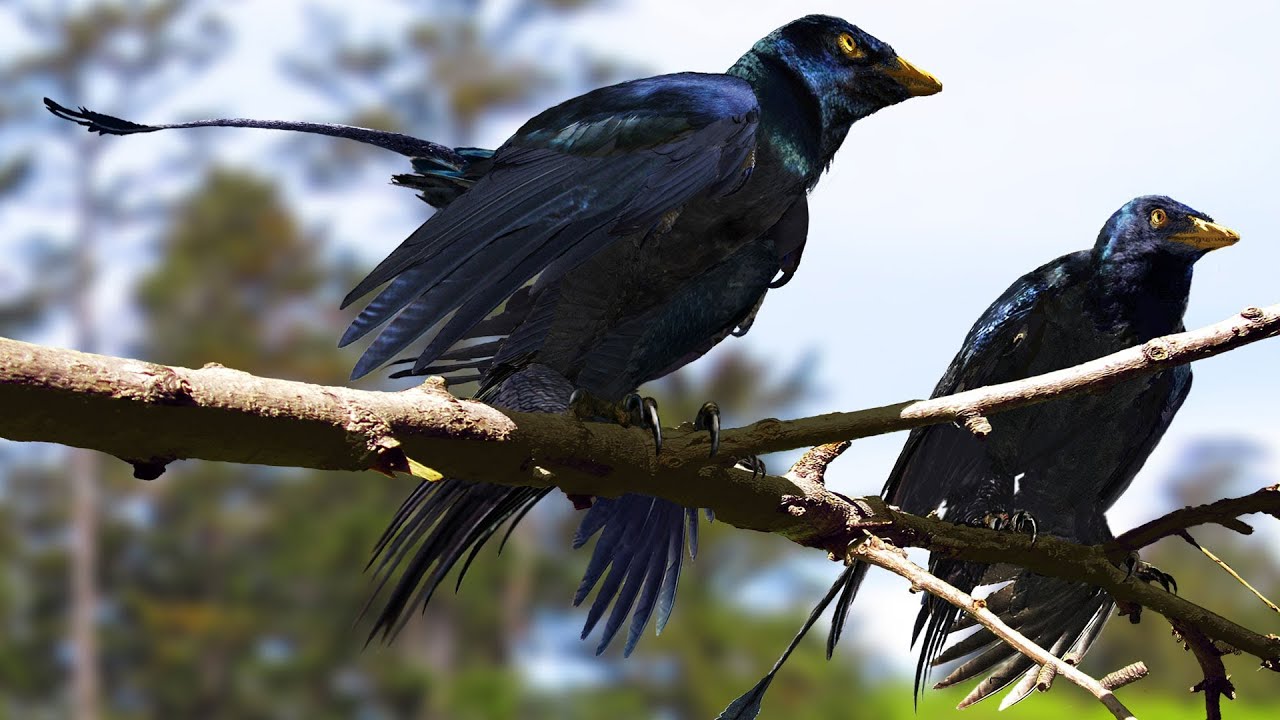
THE FOSSILS OF AN ANCIENT BIRD ON THE LEFT OF PICTURE, EOCONFUCIUSORNIS, REVEALED MICROSCOPIC EVIDENCE OF PIGMENT WITHIN ITS FEATHERS, WHICH WERE PRESERVED FOR SOME 130 MILLION YEARS.

An international team of U.S. and Chinese scientists analyzed the color of the bird, the oldest known avian after the proto-bird Archaeopteryx, by first identifying a protein from its fossilized feathers that enables modern-day birds to fly.
The protein, beta-keratin, is the stuff of nails, feathers, scales and beaks. Evolutionary history and modern genetic evidence indicates that feather keratins evolved from reptilian scale keratins. (Beta-keratin is not to be confused with beta-carotene, the orange pigment found in carrots and other plants.) The keratin proteins are arranged like building blocks to give a particular biological structure its function, akin to the way brick can form a walkway or a chimney.
Scientists studied Eoconfuciusornis beta-keratin buried deep within the animal’s fossilized feathers. They probed the keratin structures to find small, dark grains called melanosomes. These are the little specks within animal cells that give skin and other tissues its color. Although melanosomes had been discovered in fossilized creatures before, it was previously too difficult to tell if the dark granules belonged to the animal itself or ancient microorganisms preserved alongside it.
The trick was to pick out the bird melanosomes embedded within the keratin. “If we couldn’t find the keratin, then those structures could as easily be microbes, or a mix of microbes and melanosomes — in either case, predictions of dinosaur shading would not be accurate,” said study author and North Carolina State University biologist Mary Schweitzer in a news release.
In a new study published in the Proceedings of the National Academy of Sciences, the researchers used an analytical technique not traditionally applied to 130-million-year-old animals. Chinese Academy of Sciences paleontologist Pan Yanhong told the South China Morning Post that, “We must remove many unwanted materials to reveal the keratin proteins, and for the job I borrowed some techniques used in the study of ancient human DNA.” The price of the technique was that parts of the fossil, each sliver about the size of a rice grain, were destroyed in the process.
Eoconfuciusornis — the “early Confucius bird” or “the dawn of the Confucius bird” — was first discovered in 2008, and is thought to have been the size of a crow. It was the first animal known to have a toothless, horned bill like a bird. The specimen used in the current study was found in Hebei, China, where a lake once existed during the beginning of the Cretaceous period. (An amateur paleontologist previously unearthed the slightly younger Confucius bird, Confuciusornis, when he purchased a specimen at a flea market in Jinzhou in 1993.)
As University of Bristol paleontologist Mike Benton told National Geographic at the time of the bird’s discovery, there was a question of just what colors its plumage bore when it was alive. The early Confucius bird could have been brown and black. Or, Benton said, “these might alternatively have been the bright reds, blues, and yellows of modern birds.”
The melanosomes examined with the new technique lent support to the idea that the early Confucius bird’s body was brownish or dark in color. What’s more, the study hinted at future discoveries embedded within additional ancient skins and feathers. As Pan said to the South China Morning Post, “We can use the same technology to study other animals, such as dinosaurs.”