Germany saved €100bn from Europe’s debt crisis


Fall in borrowing costs far outweigh costs of crisis to economy, says Leibniz institute.
German chancellor Angela Merkel and finance minister Wolfgang Schaüble. Investors have fled instability in the euro zone for the safety of German bonds since 2010, pushing down interest rates on those bonds.
Germany has saved €100 billion since 2010 because its borrowing costs have fallen during Europe’s debt crisis – savings that outweigh the cost of the crisis to the German economy, an economic think tank has reported.
Investors have fled instability in the euro zone for the safety of German bonds since 2010, pushing down interest rates on those bonds. Paying less interest has helped the government save more than 3 per cent of gross domestic product, the Halle-based Leibniz institute for economic research said.
The institute created a model of a fictitious “normal” situation, without the crisis, to establish what German interest rates would have been, based on inflation and slack in the economy.
The report observed a close connection between political flashpoints in the euro zone debt crisis and fluctuations in the interest rate on German government bonds.
Interest on German government bonds fell sharply when markets saw bad news out of Greece, such as Greek prime minister Alexis Tsipras’s decision in late June to hold a referendum on reforms demanded by its creditors. Similarly, rates rose on good news from Greece.
The total savings from this pattern since 2010, an estimated €100 billion, far outweigh the costs of the euro zone crisis to the German economy, even if Greece were to prove completely unable service its debts, the institute said.
Government bonds in other countries – including France, the United States and the Netherlands – have also benefited in the same way from the crisis, the report suggested, but on a smaller scale.
Over half of Irish people use their phones in the loo


We know you also use your phone as a mirror and to avoid talking to people. Really!
10% of Irish people check their mobile phone 160 times per day, according to a new study.
The research, carried out by Ireland’s newest mobile operator iD, also found that more than half of us (56%) use our phones in the bathroom.
While one in three use it as a mirror. Over 40% of women said they used their phone to check their appearance, compared to 28% of men.
The study also revealed that while Irish people check their phone on average 40 times per day, one in 10 people check their phones 160 times a day. That’s an average of six times per hour, or once every 10 minutes.
One in two people surveyed admitted to using their phone to avoid talking to someone, with 63% of 18-24 year olds being the biggest offenders.
When asked about who you contact most often, a spouse or partner is number one for 49% of people, but before you go thinking we’re all so romantic it’s worth noting that almost one quarter of those aged 25 or younger said they dumped someone over the phone. Ouch. The survey was carried out on 1,000 people.
Turf cutters ‘close’ to agreement on right to cut


Plot owners at one of the country’s most contentious bogs are close to a deal to end their row with the Government.
Ross Bog on the Meath-Cavan border has been the scene of protests by turfcutters as rangers from the National Parks and Wildlife Service (NPWS) sought to implement the ban on removing turf under the terms of the EU Habitats Directive.
Members of the Sheelin Turfcutters Association have fiercely defended their right to cut their turf despite the designation of the raised bog as a Special Area of Conservation and gardaí have attended at the site as tensions rose between the sides.
Last year, almost 100 people marched at Ross Bog to assert their right to continue to cut turf there and to protest against the ban on working the peat banks.
Earlier this year, the association sat down to negotiate with senior officials of the NPWS to ensure they would retain their right to work the bog as their families had done for generations. The meetings in Castlepollard hinged on the amount of bog that would be retained for the plot owners under a relocation scheme that would be acceptable to both sides.
At a recent meeting, the turfcutters were offered 12.9 hectares of bog on which they could continue to cut turf for their own use.
The association declined the offer and has held out for a greater area. The NPWS, which implements the terms of the EU Directive on behalf of the Department of Arts, Heritage and the Gaeltacht, is now to carry out a further survey of the site to examine the possibility of making an improved offer.
However, chairman of the Sheelin Turfcutters Association, Sean Reilly indicated that an agreement between the sides was now close and the survey was expected to be completed within a matter of weeks.
Action needed on climate change before the point of no return
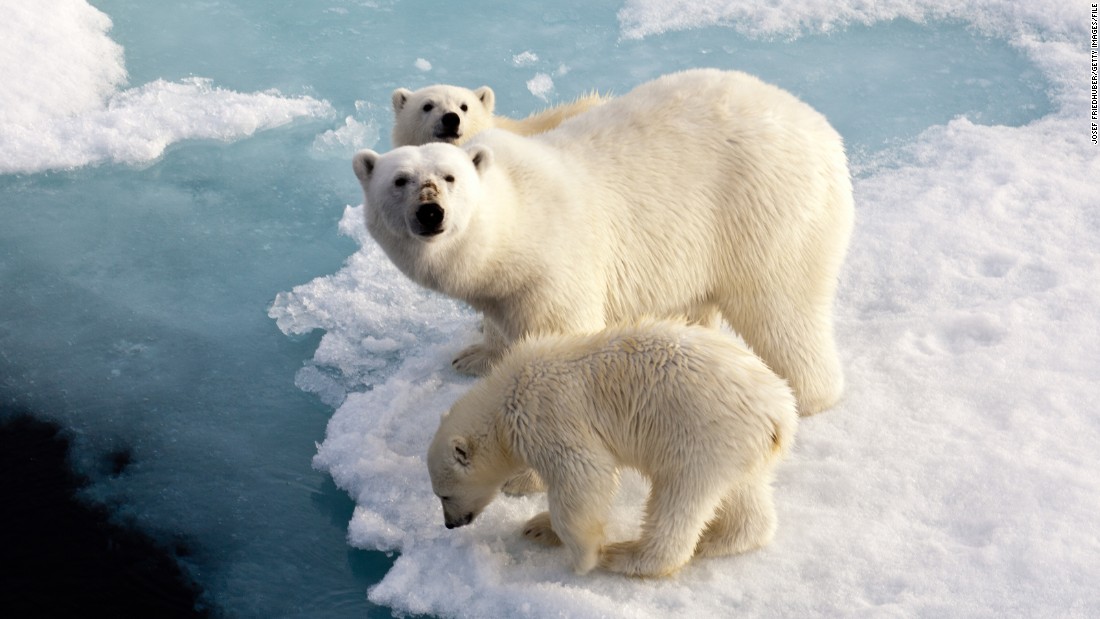

The focus on not letting world temperatures rise more than 2C can distract from the fact that many places are already feeling the effects of climate change,
IN 2009, global leaders agreed to try not to let the world warm more than 2C above pre-industrial times. This is sometimes seen as a rule of thumb for keeping on the right side of climate change, within ‘safe’ territory.
But that’s not at all how scientists meant it, Camille Parmesan, an expert in biodiversity at the University of Plymouth in the United Kingdom said. Climate risks don’t begin at 2C, she said; it’s more like where they go from high to intolerably high.
The planet has already warmed by about 0.8C since the late-19th century.
Some of the world’s most iconic places are also the most vulnerable, and they are already feeling the effects.
“We’re already seeing contraction of species in the most sensitive ecosystems, such as those dependent on sea ice or those living on mountain tops,” said Prof Carmen.
“We’re also seeing declines in some tropical systems, such as coral reefs, and the valuable services they provide for fish nurseries, tourism and protection from coastal flooding.”
And that’s just the beginning.
“At more than 2C, we wouldn’t just face losing the most sensitive species but some common ones, too,” said Prof Parmesan.
“So it wouldn’t just be the polar bear and the mountain pika, but other species living in lowland and temperate habitats that aren’t necessarily at risk right now.”
Against this backdrop, the world’s carbon emissions have continued to rise and the task of staying below 2C looms ever larger. Global leaders will meet again in Paris in December to agree on a plan for how to get ourselves on a pathway to achieving 2C in the long term.
But suppose that doesn’t happen. Suppose we collectively decide the task of keeping to this target is too great, or the price of cutting emissions quickly is too high. What would it mean to resign ourselves to a post-2C world? And if not 2C, then what?
Science is helping to answer these important questions. Climate models tell us that if carbon emissions stay very high, global temperatures could reach 4C above pre-industrial temperatures by the end of the century, perhaps even rising to 5C.
And unless emissions cease altogether after that, temperatures will continue to rise long past the end of the century.
And that would mean a world unlike anything we have ever known.
Climate change won’t treat all countries the same. Often the most serious and damaging effects will happen in the countries that are least able to cope.
A global temperature rise of 4C by the end of the century would see parts of Africa warm by up to 6C, making life near impossible for vulnerable urban populations and people working outdoors.
Drying of river basins and falling crop yields would raise the risk of food and water scarcity in many parts of the world, particularly among poorer rural populations.
Society is vulnerable to extreme weather. The UN body whose job it is to assess the science on climate change says the North Atlantic and Western North Pacific will see more strong storms like Typhoon Haiyan, which tore through the Philippines in 2013.
In Europe, heatwaves like the 2003 event, which killed 70,000 people, are already 10 times more likely than a decade ago, and this pattern is set to continue. Scientists also know that warmer air will mean rainfall in heavier bursts, while higher seas will make storms more likely to breach coastal flood defenses.
As humans, we tend to focus on what we experience up here on Earth’s surface. So it’s often overlooked that more than 90% of the heat trapped by greenhouse gases goes into the oceans, warming them up from the surface to hundreds of metres below.
The oceans take up some of the extra carbon in the atmosphere, too, making them more acidic. Warming and acidifying oceans spell bad news for marine ecosystems, including valuable fisheries that people the world over depend on for their food and livelihoods.
As seawater warms, it expands. That’s why, throughout Earth’s history, changing temperatures and sea levels have always been closely linked. Since the turn of the 20th century, the global sea level has risen by nearly 20cm, which is already enough to threaten low-lying island nations such as Kiribati, Tuvalu, or the Maldives.
Even if the oceans continued this steady march, scientists expect sea levels to be at least another half a meter higher by the end of the century. But the higher temperatures rise, the greater the chances of tipping the balance into a totally altered state, which carries far more serious consequences.
At some point, the vast Greenland ice sheet will collapse. Scientists don’t know exactly when this will happen, but they say it’s likely to be with less than 4C of global warming. The collapse wouldn’t happen quickly, perhaps taking centuries or millennia.
But once it starts, we’d be committed to a sea-level rise of several metres. This would inundate some of the world’s biggest cities, including New York and Shanghai.
At the other end of the globe, scientists are already seeing early signs of collapse in parts of the Antarctic ice sheet. And once that starts, it’s likely to be unstoppable.
In the meantime, almost all the world’s glaciers are losing ice. In the Arctic, temperatures are rising more than twice as fast as the global average, and if we stay on a path to 4C, scientists predict there could be no Arctic sea ice left in summer in as little as 30 or 40 years.
The climate system, in all its infinite complexity, is impossible to predict entirely.
There are some things happening that scientists don’t completely understand yet, such as why ice floating on the sea around Antarctica is currently growing slightly.
Scientists think, perhaps counter- intuitively, that it’s down to climate change, too, as the winds encircling the continent push freezing water outward from the coastline, extending the icy platform offshore.
And the climate system could still hold some surprises. As the Arctic warms, the once-frozen ground is thawing and releasing the powerful greenhouse gas methane.
Scientists are unsure yet just how much 4C of global warming could speed up this process.
Two, three, and four degrees are all points along a global warming continuum. None represents a climate precipice, but it’s clear that as the temperature rises, so do the risks.
What’s left to decide is, how much of a chance are we willing to take? The science is solid enough that whatever we choose, we can’t tell future generations that we didn’t know the risks.
Bees ‘prefer gardens with native flowers’

Gardeners keen to help wildlife are advised to plant a variety of flowering plants
Bees and other pollinating insects prefer gardens planted with flowers that are native to the UK and the northern hemisphere, a study has found.
But exotic plants provide nectar and pollen food for bees and hoverflies at times of the year when native flowers are thinner on the ground, while certain foreign blooms can prove a hit with some species, the Royal Horticultural Society research showed.
The researchers, writing in the Journal of Applied Ecology, said the best advice for gardeners keen to help wildlife was to plant a variety of flowering plants, focusing on native and northern hemisphere species but with a selection from further afield.
With around half of gardeners in the UK actively encouraging wildlife into their gardens, the findings will help nature-lovers make their plots more attractive to bees, hoverflies and other insects
Garden border-like plots were planted with three different sets of bulbs, perennials, shrubs, climbers, grass and ferns that were either native to the UK, near-native from the northern hemisphere, or exotic species from the southern hemisphere.
The plots were monitored for the abundance of flowers and the number of pollinating insect visitors over a four year period for the study, which was supported by the Widllife Gardening Forum.
More flowers – wherever they were from – meant more visits from pollinators, but a greater number of insects were recorded on the plots with native and near-native species than the exotic ones, with 40% fewer visits to the beds with flowers from far away.
Short-tongued bumblebee species were found in larger numbers on the native and near-native plants, hoverflies favoured native flowers and honeybees preferred the near-native plots, the study found.
Long- tongued bumblebees and solitary bees were found on all three sets of plants in around the same numbers, but in the exotic plot a third of visits by solitary bees were to one type of plant, the Eryngium agavifolium Griseb, a variety of sea holly.
There were fewer visits to exotic plants in early summer compared to the other plots, but relatively more later in the season when the non-native species were flowering more than the UK and northern hemisphere blooms.
RHS experts said the results showed that gardeners who wanted to encourage and support pollinating insects should plant a mix of flowers from a wide range of geographical regions.
While there should be an emphasis on plants native to the UK and the northern hemisphere, southern hemisphere plants such as Lobelia tupa and Verbena bonariensis can play an important role.
Southern hemisphere plants tend to flower later, extending the flowering season and providing much needed food for bugs and bees after other species have gone to seed.
Lead researcher Dr Andrew Salisbury said: “The UK’s 1,500 species of pollinator are thought to be under increasing pressure due to the loss of habitat and food sources.
“As more traditional habitats have been reduced the role of gardens as havens for pollinators and other wildlife is growing in importance.”
But he said the role native and non-native plants play in helping wildlife had been unclear and confusing before now.
“Now for the first time, gardeners can access robust, evidence-based information on the most effective planting strategy they can adopt if they wish to attract and support pollinators.
“These findings will help gardeners to confidently pack their borders, window boxes and allotments with flowers without getting hung up on the idea that they are somehow doing the ‘wrong thing’ if the plants are not all UK natives,” he said.


