Pages

Showing posts with label Healthier. Show all posts

Tuesday, August 2, 2016

Donie's Ireland daily news BLOG

Irish Banks Ie “AIB and BoI” move to reassure investors after poor stress test results

EU-wide analysis questions capacity of Irish duo to absorb losses


AIB AND BAND OF IRELAND WILL ISSUE FORMAL STATEMENTS TO THE STOCK MARKETS TO REASSURE INVESTORS IN THE WAKE OF THE STRESS-TEST REPORT.

Irish banks will move to calm stock market nerves on Monday after faring among the worst financial institutions in European stress tests.
Results of EU-wide stress tests by the European Banking Authority (EBA) posed a question mark over both AIB’s and Bank of Ireland’s ability to absorb losses in the event of a prolonged economic downturn.
Both institutions will issue formal statements to the stock markets this morning to reassure investors that their capital position is strong and that the tests do not actually reflect their financial performance.
Their statements are unlikely to differ from those issued at the weekend detailing their immediate reaction to the results.
The EBA found that in an “adverse scenario” AIB’s capital ratio, which measures a bank’s equity against possible risks, such as borrowers failing to repay loans, fell below the level generally required by regulators and markets. The authority found AIB would have a Common Equity Tier 1 (CET1) ratio of 4.3% at the end of 2018, below the 5.5% typically required.
Worst performers
In the same circumstance, the EBA found that Bank of Ireland’s ratio would be 6.1%. AIB was one of the worst performers of 51 lenders in Europe. The result prompted speculation the Government would be forced to delay the lender’s planned privatisation, which it took over in 2009 following the previous year’s financial crash.
However, the bank responded by saying that it was well capitalised and its actual CET1 ratio was 13.3 per cent at the end of June. It argued that the results were projections based on assumptions and should not be seen as an indication of the bank’s future performance.
AIB reported a €1 billion profit for the first six months of the year and last Thursday repaid €1.8 billion to the Government.
Bank of Ireland said the test assumed a severe economic downturn. The lender said its capital position was strong and its ratio was 10.7% at the end of June. It made €560 million profit in the first six months of the year.

Ireland wants the EU drug agency to move to Dublin because of Brexit move

LONDON-BASED EUROPEAN MEDICINES AGENCY WILL BE OBLIGED TO LEAVE THE UK AS A RESULT OF LEAVE VOTE

   
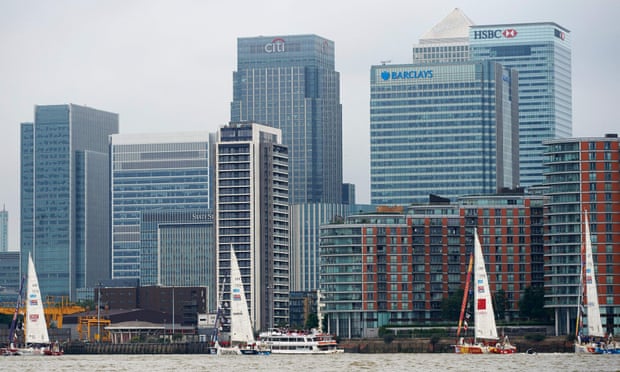
The European Medicines Agency is currently based in London’s Canary Wharf.

THE MINISTER FOR HEALTH SIMON HARRIS SAID MOVES WERE AFOOT TO PUT TOGETHER THE CASE FOR A MOVE TO IRELAND AND THERE WOULD BE A MEETING WITH OFFICIALS IN BRUSSELS TO PRESS THE CASE.

Minister for Health Simon Harris is to mount a bid to bring the European Medicines Agency (EMA) from London to Dublin.
The European Union agency will be obliged to leave the UK as a result of Brexit and Mr Harris intends to make the strongest possible case for it to move to Ireland.
The Minister said this weekend that moves were already afoot to put together the case for a move to Ireland and there would be a meeting with officials inBrussels to press the case.
“This is a huge opportunity for Ireland. There are close to 900 direct jobs involved and many indirect spin-off jobs as well,” said a spokeswoman for Mr Harris.
Last week the Irish Pharmaceutical Healthcare Association called for a relocation of the agency from London to Ireland after Brexit.
Responding to that call, the spokeswoman for the Minister said he had asked his officials to prepare for a bid to bring the EMA to Dublin.
“We will be making the case that Dublin offers significant advantages as a location, not least the advantage of the English language, a strong pharmaceutical and R&D sector presence, as well as a proactive and committed national medicines agency, the HPRA, which has built up close working relationships with the EMA.”
She added that the Department of Health recognised the importance of the EMA’s work and the need to keep any disruption of this work to a minimum.
“Dublin looks like the best fit to achieve this and comes with other key advantages such as excellent air connectivity with other EU capitals, and our educated and flexible workforce,” she said.
Departmental officials have already begun laying the ground work and in September the Minister will be proposing the formal establishment of an interdepartmental, interagency working group to flesh out the details of Ireland’s bid.
The Minister hopes that early meetings can be arranged with relevant officials in Brussels and other EU member states to present Ireland’s case for hosting the agency, which has an important role in the protection of public health across Europe.
The EMA is responsible for the protection of public and animal health across the EU through its scientific evaluation and supervision of medicines.
The agency, which employs 850 people, is currently based at Canary Wharf in London.

Authorities left in dark after toxic asbestos stone mineral exposed at quarry

ALMOST 3,000 TONS OF ASBESTOS-CONTAINING ROCK DELIVERED IN WICKLOW AND SOUTH DUBLIN


BALLINCLARE QUARRY IN SOUTH CO WICKLOW HAS BEEN CLOSED AFTER TESTING REVEALED THE PRESENCE OF NATURALLY OCCURRING ASBESTOS IN THE STONE IT PRODUCES.

Regulatory authorities were not informed for over a month after a cancer-causing mineral was exposed at a Co Wicklow quarry earlier this year, documents show.
Almost 3,000 tons of asbestos-containing rock was distributed to sites around north Wicklow and south Dublin before the presence of the hazardous mineral was notified to authorities, according to documents obtained under freedom of information legislation.
The asbestos was contained in more than 30,000 tons of rock exposed after blasting in Ballinclare quarry in April. Wicklow County Council was informed of the presence of the mineral in late May.
The Kilsaran group, which owns the quarry, said the rock was blasted on April 18th but processing of the material did not start for a time afterwards. During a routine quality control inspection, the company’s technical department discovered an unidentified material and quarantined the area pending test results.
“Once test results were identified, Wicklow County Council were notified and the quarry closed,” said a spokesman.
Since then, the quarry has remained closed and extensive testing for the presence of asbestos has been carried out. While most soil samples showed no or only tiny amounts of asbestos, 10 per cent were found to contain more than 1 per cent asbestos by weight. No asbestos fibres were detected in the air.
In June, Wicklow County Council formally issued Kilsaran with a notice under section 55 of the Waste Management Act 1996. This requires the company to deal with the health and environmental risk resulting from the delivery of the hazardous material to nine sites in the county by sending it back to its source in the quarry. The notice requires the work to be completed within 40 days.
The exact details of the sites have been excised from documents provided under freedom of information. However, there are mentions of new cycle paths in Greystones, the driveways and paths around houses, the service track of a driving range in Co Dublin and the forecourt of a new petrol station.

CRUSHED ROCK?

Kilsaran told the council it had identified 2,739 tons of the blasted and crushed rock which was delivered to about 18 sites in south Dublin and north Wicklow. The remainder of the blasted rock is still in the quarry.
In nine sites, seven of them in Co Wicklow, the material was loose and was not covered with either concrete or asphalt. These sites were covered with heavy plastic and soil as a temporary safety measure.
“This loose, potentially hazardous material poses a risk to public health and the environment,” wrote Michael Boland, executive scientist in the council’s waste management division in an internal memo dated May 31st.
The blasted asbestos-bearing rock in the quarry is not fit for future use, according to the council, which says it is industrial waste that needs to be licensed by the Environmental Protection Agency.
The thousands of tons of returned asbestos-containing rock will be stored in bags in a pit, and covered with dust, a “geo-textile layer”, 100m of stone material and 50cm of topsoil.
Three weeks after the section 55 notice was issued, remediation work had been completed at just four sites.
Decisions had still to be made about the 10 sites where asbestos-containing material was covered with concrete or asphalt before the discovery was made.
The Kilsaran spokesman said this week the remediation process was over 95 per cent complete and is due to end shortly.
The council’s files show that concerns about the issue were raised by a number of individuals. One Greystones resident living across from a building site where asbestos was discovered wanted to know whether this was a health hazard for the family. Another person, who was building a home using 100 tons of material found to be contaminated, said his family has been “left exposed” for a month and had not been told when the material would be removed.

There's little hope for breeding a healthier English bulldog?

A STUDY SHOWS


THE ENGLISH BULLDOG’S FLAT FACE AND ADORABLE SKIN FOLDS ARE JUST A COUPLE OF ITS DISTINCTIVE TRAITS. BUT THESE SAME FEATURES THAT MAKE OWNERS GO GAGA ALSO CAUSE A NUMBER OF HEALTH PROBLEMS, LEADING PEOPLE TO WONDER WHETHER THESE DOGS COULD BE BRED TO BE HEALTHIER.

But a new study finds that boosting the dog breed’s health could be difficult, particularly if breeders don’t cross the English bulldog with another breed. The study found that there’s not much genetic diversity within the English bulldog population, which will make it hard to improve their health without going outside the breed to bring new genes into the mix.
“The English bulldog has reached the point where popularity can no longer excuse the health problems that the average bulldog endures,” study co-author Niels Pedersen, of the University of California, Davis’ School of Veterinary Medicine, said in a statement. “Improving health through genetic manipulations [breeding] presumes that enough diversity still exists to improve the breed from within,” Pedersen said. However, “We found that little genetic ‘wiggle room’ still exists in the breed to make additional genetic changes,” he added.
The features of today’s English bulldog arose from hundreds of years of breeding, but changes to the breed’s traits have become particularly rapid in recent decades, Pedersen said. The dogs have been bred for traits that are desirable to people: a flat face, a short nose, skin folds and a “child-like” appearance and personality, the researchers said.
But many of these same features also give rise to health problems. The dogs’ head structure makes it harder for the animal to pant, which can cause the dog to overheat easily in hot weather and make it difficult for the dog to exercise. The breed is also predisposed to skeletal problems that make it very difficult for English bulldogs to conceive and give birth naturally. In addition, the skin folds make the dogs susceptible todermatitis (skin inflammation) and certain eye conditions. The English bulldogs’ genetics also make them prone to autoimmune disorders and other immune system problems, the researchers said.
In the new study, the researchers wanted to determine whether there was enough genetic diversity within the English bulldog breed to make improvements to the dogs’ health from within the existing gene pool. Genetic diversity refers to the variety of genes within a population.
They analyzed the DNA of 102 English bulldogs, mostly from the United States. They also included 37 bulldogs that had recently visited the vet because of health problems, to determine whether the genes of “sick” bulldogs were significantly different from those of the other dogs.
The study confirmed that the English bulldog population has low genetic diversity, which is the result of breeding that was highly focused on certain traits, the researchers said.
The loss of genetic diversity was particularly severe in a region of the genome that regulates normal immune response, the researchers said. And ongoing attempts to breed English bulldogs so that they have new coat colors and a more compact body type could actually reduce genetic diversity even further, they said.
One way to reduce the health problems of English bulldogs might be to breed them with other dog breeds, the researchers said. Indeed, some breeders have started to cross the English bulldog with an American breed called the Olde English Bulldogge to create the Continental Bulldog, in hopes of reducing the breed’s health problems. However, many breeders feel that any significant changes from the current standard in the breed would mean that the resulting dogs would no longer be English bulldogs, the researchers said.

Birds may hold the key to more efficient drones

RESEARCHERS STUDY AVIAN FLYING TECHNIQUES TO LEARN HOW TO MINIMISE ENERGY CONSUMPTION.


RESEARCHERS HAVE BEEN COPYING AVIAN AERIAL TECHNIQUES TO TEACH INTELLIGENT DRONES HOW TO COVER LONG DISTANCES WITHOUT NEEDING A LOT OF ENERGY.

Researchers have been taking flying lessons from birds, copying their aerial techniques to teach intelligent drones how to cover long distances without needing a lot of energy.
Migratory birds can cover thousands of kilometres between summer and winter nesting locations, often saving energy by hitching a free ride on warm rising air currents.
While these currents can be very turbulent, the birds have developed methods for exploiting the rising air without being overcome by its choppiness.
Researchers from the Salk Institute for Biological Studies at La Jolla,California, the US, are teaching these two tricks – thermal soaring and surviving turbulence – to long-distance autonomous gliders.
The researchers’ goal is to develop a glider that can cover great distances while requiring very little energy.

NEW METHODS?

To this end, Dr Terrence Sejnowski and his colleagues developed numerical models of atmospheric flows in a rising thermal and combined them with reinforcement learning algorithms for a glider.
The glider then learned by repeated exposure how to move through the thermal, gaining altitude for easy sailing and reducing risks to itself if it got too rough or the thermal weakened.
It learned from two cues – how fast the thermal was rising and how much the turbulence twisted the aircraft.
The researchers showed the glider could stay within the thermal where the lift was strongest but still survive the rough conditions.
The glider also learned how to stay out of trouble by following “risk-averse strategies”, the researchers report in the Proceedings of the National Academy of Sciences, published on Monday evening.
The authors say the results of the research could be used to develop autonomous gliders that can travel long distances with minimal energy consumption.

Nasa to launch probe to investigate ‘Armageddon’ asteroid

THE ASTEROID WILL PASS BETWEEN EARTH AND THE MOON IN 2135.

   Photo published for NASA spacecraft to map and return sample of Bennu asteroid  

NASA IS PLANNING TO LAUNCH A PROBE TO COLLECT ROCK SAMPLES FROM AN ASTEROID IT FEARS COULD ONE DAY HIT THE EARTH.

The asteroid, named Bennu, can be seen from Earth as it crosses our orbit every six years.
Bennu, which is around 500 metres in diameter at its equator and travels around the sun at 63,000mph, will pass between Earth and the moon in 2135.
“That 2135 fly-by is going to tweak Bennu’s orbit, potentially putting it on course for the Earth later that century,” Dante Lauretta, professor of planetary science at Arizona University,
“It may be destined to cause immense suffering and death,” he added.
Mr Lauretta, Nasa’s principal investigator in charge of the Osiris-Rex probe mission to Bennu, launching in September, said the probe will map the asteroid, pick up some rock samples and then head back to Earth. He said information on the asteroid’s size, mass and composition could be vital data for future generations.
Osiris-Rex will arrive at Bennu in 2018 and will spend a year surveying the asteroid’s chemical makeup, mineralogy and geologic history. Information gathered during the observation will help scientists understand how its course is affected by absorbing and radiating sunlight as heat.
The probe will then take a sample from the asteroid before heading back to Earth for 2023.  

Sunday, May 31, 2015

Donie's Ireland daily news BLOG

Irish political parties pocket €12.6m in State funding,

Says watchdog


The country’s political parties were paid €12.6m from the State coffers last year, according to figures released by the State’s ethics watchdog.

The four main parties – Fine Gael, Fianna Fail, Sinn Fein and the Labour Party – received combined funding of €5.5m.
The Standards in Public Office Commission (SIPO) details every year the level of funding paid to parties and their politicians under the Electoral Acts.
While the allowances can be used to cover the costs of their political duties, under the rules, an allowance paid under this section can not be used for, or to recoup, election or poll expenses incurred for the purposes of any election or referendum.
Of the political parties in receipt of the funding, Fine Gael received €2.28m – the largest single sum – due to the number of TDs and senators in Taoiseach Enda Kenny’s party.
The Labour Party received €1.29m.
Fianna Fail received €1.17m, according to the figures, followed by Sinn Fein which got €720,000 in funding.
The SIPO figures also detail the extra €7.117m in funding paid to party leaders which is used for staff costs, research and office expenses.
The details released yesterday also show that independent TDs received €563,866 through what is known as the leaders allowance.
Independent senators received €249,130 in State funding in 2014.
The payment of the leaders allowance to independent TDs has been a constant topic of controversy in Dail debates.
Independent TDs have argued that they operate without the backing of large party structures and the money is badly needed.
Analysis by independent TD Catherine Murphy reveals that the 145 deputies belonging to Fine Gael, Labour, Fianna Fail and Sinn Fein will each cost on average 52pc more per year than the Dail’s Technical Group members.
From 2016, SIPO will require all parties to publish national audited accounts.
The decision came after Government ministers pledged greater transparency and accountability over funding.
It is currently carrying out a public consultation process on new rules requiring greater transparency on how the party leaders allowance is spent.
The allowance will be renamed the parliamentary activity allowance, as independent TDs will also be required to report on how they spend it.

In wake of new European ruling it will be illegal to slap a child?


The Irish Coalition is fearful of wading into an issue where public opinion is divided
Slapping is widely practised, though it’s been declining sharply over recent years.
It’s highly unlikely – despite a ruling by the Council of Europe on Wednesday – that Ireland’s laws which permit the slapping of children are a violation of children’s rights.
While legislation which allowed parents use force against their children was repealed in Ireland almost 15 years ago, the defence of “reasonable chastisement” still exists in common law for parents or child carers.
The council found this defence was a violation of the charter whose signatories promise “to protect children and young persons against negligence, violence or exploitation”.
Even though Ireland is out of kilter with much of the rest of Europe, the Government is fearful of wading into an issue where public opinion is divided. That’s why, for much of the past decade, it has tried to fudge the issue by claiming a ban is “under review”.
The Government’s response on Wednesday was strangely familiar: it announced plans for a new review of whether the defence of reasonable chastisement should be maintained in law.
It insists there are plenty of other laws which outlaw the assault or physical harm of children, such as the Child Care Act and the Criminal Justice Act, along with rules and guidelines.
It did, however, throw a bone to the council by pledging to explicitly ban the smacking of children in foster or residential care through new regulations.
If an outright ban were to be introduced, it could have major repercussions. Slapping is widely practised, though it’s been declining sharply over recent years. The Growing Up in Ireland study of three-year-olds found up to 45 per cent of their primary caregivers had previously smacked them, for example.
In theory, the State is now obliged to introduce a clear ban on slapping – or “corporal punishment” in the words of the council – on foot of this week’s ruling.
But the council issued a similar ruling on Ireland’s laissez-faire stance on slapping just over a decade ago – and little action followed.
In reality, Ireland only faces “political peer pressure” from other member states who have introduced bans on slapping. T he real pressure will come from children’s campaigners such as the Children’s Rights Alliance. The Government, meanwhile, seems more than content to keep the issue “under review”.

Irish Women urged to speak out about suicide by Sabina & Fionnuala


Irish women are being urged to start the conversation on suicide by supporting Console’s national awareness campaign.

Sabina Higgins, wife of President Michael D Higgins, joined with the Taoiseach’s wife Fionnuala Kenny to launch the Cosy Up To Console campaign in Swinford, Co Mayo, yesterday.
“Life is our most precious possession and privilege and death our greatest fear and dread. Console’s work shines a light of hope for those who are struggling with darkness and sadness,” said Mrs Higgins.
Console is asking mothers, grandmothers, sisters and friends to get the nation talking about issues surrounding suicide. The campaign is the brainchild of psychotherapist Anne Lynch, manager of the Console Centre in Swinford.
“We have got to get people talking about suicide and what can be done to help those who may be in crisis, a chat over a cuppa is a good way to start that conversation,” said Ms Lynch, who decided to combine knitting sessions with tea and talks.
“We are asking people across the country to get chatting and knitting tea cosies over the next few months. The plan is to sell Console tea cosies as gifts for Christmas. Not only will they raise funds for the organisation, they will also raise awareness as they will get people talking,” said Ms Lynch.
Fionnuala Kenny added her voice to the call, saying: “I am very happy to support this initiative by Console who do fantastic work in the area of suicide prevention and support for people in distress”.
The charity offers counselling services and 24-hour helpline support to people in crisis or affected by suicide.
Speaking about the campaign, Console CEO Paul Kelly added: “Sadly suicide has touched the lives of too many of our people but hope and help are always available at Console and who better to make sure that message is heard in homes and workplaces around the country than the women of Ireland?”
Console can be reached on freephone 1800 247 247 and a list of its resources can be found on http://www.console.ie.

Travel around the world in a first portable ‘eco pod’ luxury hotel


Now you can travel around the world and live in a luxurious hotel at the same time, thanks to a new innovative egg-shaped eco pod.

Now you can travel around the world and live in a luxurious hotel at the same time, thanks to a new innovative egg-shaped eco pod.
A creation by Slovakian firm Nice Architects, the UFO style mini-pod, which is powered solely by solar and wind energy, features an energy-efficient shape and includes its own shower and toilet, sleeping area for two, and kitchenette, reported the Daily Star.
The Ecocapsule’s first look will be offered at the Pioneers Festival in Vienna, Austria, on May 28 and 29, and it can be pre-ordered by the end of 2015.
The capsule features membrane water filters to purify 99.99 percent of bacteria, rendering any natural water source suitable for drinking.
Nice Architects stated “strict management of energy resources” as the reason for their successful survival strategy.
He added that their creation enabled people to reach the frontiers with the luxuries of the hotel room, and could serve “as a cottage, pop-up hotel, or even as a charging station for electric cars.”

Stress is good for you because it makes us stronger & smarter  


Long the anti-hero of fast-forward lives, researchers now believe stress can make you stronger, smarter and more successful, 

Take a moment out of your too-busy, over-packed day to answer this simple question: if you had to sum up how you feel about stress, which statement would be more accurate?
  1. a) Stress is harmful and should be avoided, reduced and managed.
  2. b) Stress is helpful and should be accepted, utilised and embraced.
American health psychologist and stress-has-an-upside advocate Dr Kelly McGonigal admits that, like most harried members of the modern world, she was inclined towards ‘a’.
Stress, she told her clients for over a decade, was public enemy number one; a toxic silent killer that was to blame for everything from the common cold to heart disease, premature ageing, depression, and lots more besides.
However, seven years ago, Dr McGonigal changed her tune after making a startling discovery — stress is harmful only if you believe it to be so, according to ground-breaking research.
She swallowed her pride and admitted that what she had been telling people was wrong.
People sat up and took notice. In 2010, Forbes named her one of the 20 most inspiring women to follow on Twitter. Three years later, she did a TED talk explaining how to make stress your friend. An impressive eight million people have already listened to it.
Now, the Stanford University lecturer hopes to reach even more people with her new book, an inspiring read that charts the new science of stress.
But why should we change our minds about stress? The research which stopped Kelly McGonigal in her tracks was a study that followed 30,000 American adults over an eight-year period, from 1998 to 2006. It asked them how much stress they had experienced in the last year and if they thought it harmful to health.
With a note of irony, Dr McGonigal says: “The bad news first. High levels of stress increased the risk of dying by 43%.”
But — and the story of stress is a story of those significant ‘buts’ — researchers at the University of Wisconsin-Madison found that those who also felt high levels of stress but didn’t believe it to be harmful were not only alive, but thriving.
Researchers looked at death rates among survey respondents and found those who felt stress — and, here’s the clincher, felt negatively about it — were much more likely to fall ill, and even die. However, those with a positive attitude to stress were least affected by it, even less so than those who said they felt almost no stress.
Since the game-changing research, study after study has found that stress isn’t always bad. However, to see for herself Kelly McGonigal went to the Behavioural Research Lab at Columbia University in New York and, under the supervision of psychologist Alia Crum, strapped herself into what she describes as ‘torture equipment’ to assess her physical reactions to a stressful mock interview.
Like those before her, Dr McGonigal was shown one of two videos: the first spelled out the negative impact of stress, while the second explained how stress, if embraced, could enhance your performance.
She was shown the stress-is-enhancing video before being put through her paces by interviewers who were instructed to criticise her no matter what she said.
“One finding blew me away,” she says. “The saliva I had drooled into the test tube provided a sample of two stress hormones: cortisol and dehydroepiandrosterone (DHEA).
“Cortisol suppresses some biological functions that are less important during stress, such as digestion, reproduction and growth. DHEA, however, helps your brain grow stronger from stress. It also counters some of the effects of cortisol.”
We need both of these hormones, but the ratio between the two can influence how they affect health in the long term: cortisol can impair the immune system and lead to depression but DHEA can reduce the risk of anxiety, heart-disease and other stress-related illnesses.
Psychologist Alia Crum found that people who saw the stress-is-good video still produced the same amount of cortisol but changing their perception of stress helped them to produce more DHEA which, in turn, helped them to offset the negative effects of stress.
It follows, Dr McGonigal says , how you view stress influences the way it affects your body.
For instance, she says, instead of thinking of the pounding heart, tense muscles and churning stomach as negative reactions, it helps to think that this is your body becoming energised and preparing to meet the challenge.
That’s all very well but how do you cope with the sweating palms and dry mouth when you have to make an important presentation at work?
When Harvard Business School professor Alison Wood Brooks asked hundreds of people that question, 91% said the best thing to do was to calm down.
She decided to experiment. Some were told to be calm while others were told to embrace the anxiety and feel excited and alive. The ‘excited and alive’ group performed better, according to the audience who said they were more persuasive, confident and competent.
“However,” says Dr McGonigal, “seeing the good in stress doesn’t require abandoning the awareness that, in some cases, stress is harmful. The mindset shift that matters is the one that allows you to hold a more balanced view of stress — to fear it less, to trust yourself to handle it and to use it as a resource for engaging with life.”
Research on stress has uncovered another startling finding — a 2012 study at the University of Freiburg suggests that stress makes you more social; it helps you to connect with others.
When stressed, the pituitary gland produces the happy hormone oxytocin. It’s been dubbed the ‘cuddle hormone’ because it fine-tunes the brain’s social instincts and prompts you to surround yourself with people who care.
“I find this amazing, that your stress response has a built-in mechanism for stress resilience — and that mechanism is human connection,” Dr McGonigal says.
She quotes another US study, conducted by researchers at the University at Buffalo over three years. It asked 1,000 adults (aged between 34 and 93) two questions: how much stress they had experienced in the last year and how much time they had spent helping neighbours.
It found that every major stressful experience increased the risk of dying by 30%. But — and here’s that ‘but’ again — people who spent time caring for others did not suffer the harmful effects of stress.
There’s more to report on the upside of stress. It can give meaning to life. In 2005-6, researchers Gallup World Poll asked people from 121 countries about their experience of stress. Those who felt a great deal of stress also reported being more satisfied with their health, work standard of living, and community.
Dr McGonigal calls this the stress paradox. “High levels of stress are associated with both distress and well-being. Happy lives are not stress-free, nor does a stress-free life guarantee happiness. Even though most people view stress as harmful, higher levels of stress seem to go along with things we want: love, health and satisfaction with our lives.”
Perhaps the worst thing that a person can believe about stress is that you can avoid it.
Dr McGonigal explains: “I’ve come to believe that the most harmful belief is that stress can be avoided. We’re clinging to this — understandably attractive — myth that some day our lives could be stress-free if only we take the right pill, or buy the right bubble bath, or finally make time to meditate.
“None of those stress reduction strategies will get rid of your stress. And being unable to eliminate stress becomes one more thing to beat ourselves up about.”
The secret, then, is to do what seems counterintuitive: embrace your stress and learn how to harness it to become happier, healthier and more successful.

Obesity will become the next main cancer cause’

 Experts now say?


Experts say obesity could replace smoking as the main cause of cancer deaths within 15 years

Tackling obesity is a major priority the Government has said, as a report warns that one in five cancer deaths is caused by it. The alert came at the world’s biggest conference on cancer, which sounded the warning that obesity is killing tens of thousands of people a year in Britain – and the West is about to see it replace tobacco as the leading preventable cause of the disease,
Jennifer Ligibel of the Dana-Farber Cancer Institute at Harvard University told the American Society of Clinical Oncology in Chicago: “The average weight of our citizens is increasing dramatically.
“We’ve really got a critical mass of evidence where we see this relationship, the heavier people are more at risk.
“I think people are aware that being overweight increases the risk of heart disease and diabetes but not that it increases the risk of cancer and their risk of dying from cancer.
“It’s the case with breast cancer, prostate cancer, cancer of the colon and all the gynaecological cancers.”
Smoking is thought to be responsible for a quarter of Britain’s 160,000 annual cancer deaths and Dr Ligibel said obesity could surpass that figure in 10 to 15 years as the population gets fatter while giving up cigarettes.
A Department of Health spokeswoman said: “The Secretary of State has already mentioned that tackling obesity and diabetes will be one of his major priorities for the new Government term.”

The amazing mechanical cheetah that’s the first four-legged robot able to run and jump over hurdles


Could robots take over the world?

Maybe they will, one day. But the intelligence of robots has just leapt forward in a big way (literally) after scientists created a clever mechanical cheetah that can both see and jump over hurdles.
Researchers from Massachusetts Institute of Technology (MIT) say their creation is the world’s first four-legged robot able to run and jump over obstacles at the same time.
How does the robotic cheetah work?
The ground-breaking robot plans it path like a human runner. As it approaches an obstacle, it guesses the object’s height and distance, working out the best position to jump from while adjusting its stride accordingly.
What has the four-legged robot achieved?
According to the MIT researchers, the robotic cheetah has cleared hurdles as tall as 18 inches – more than twice its height – while maintaining a speed of 5mph.
What do the MIT scientists have to say?
Sangbae Kim, assistant professor of mechanical engineering, said: “A running jump is a truly dynamic behaviour.
“You have to manage balance and energy, and be able to handle impact after landing. Our robot is specifically designed for those highly dynamic behaviours.”
Kim and his colleagues plan to demonstrate the cheetah’s running jump at he DARPA Robotics Challenge in California in June and will present a paper on it in July.