Pages

Showing posts with label Brexit. Show all posts

Friday, July 21, 2017

Donie's Ireland daily news BLOG.

Simon Coveney says he is happy at the direction of Brexit negotiations on Irish issues

Talks focused on avoiding a hard North-South border after Brexit

Image result for Simon Coveney says he is happy at the direction of Brexit negotiations on Irish issues  Image result for Simon Coveney happy at the direction of Brexit negotiations & Michel Barnier and his team

THE BRITISH IRISH CHAMBER OF COMMERCE HELD ITS FIRST MEETING WITH MINISTER FOR FOREIGN AFFAIRS AND TRADE, SIMON COVENEY TD IN LONDON TODAY.

Minister for Foreign Affairs Simon Coveney has expressed satisfaction at the direction of negotiations between Britain and the European Union over Ireland’s specific issues. Speaking in London after meetings about Brexit with academics, diplomats and business representatives, Mr Coveney said more work was needed on some areas.
“In particular, more detailed work is needed on how best to protect North-South co-operation, an essential aspect of the Good Friday Agreement. It has facilitated some of the most tangible benefits from the peace process and contributed directly to the normalisation of daily life in the border region. On the Common Travel Area, I welcome that both sides agreed that it should be maintained. It will now be for the UK side to confirm how it will ensure this,” he said.
The discussions in Brussels did not focus on the future of the Border but Mr Coveney said that talks between the British and EU teams this week about protecting the gains of the peace process were directly related to avoiding a hard Border after Brexit.
“My officials and I will continue to work closely with Michel Barnier and his team to ensure that sufficient progress is made on the Irish specific issues in phase one of the negotiations. Progress on these, on citizens’ rights and the financial settlement would allow parallel discussions to begin this autumn on the EU’s future relationship with the EU,” he said.
“This will require constructive engagement on all issues and a strong political willingness to achieve the best possible withdrawal agreement. Contrary to what some may think, no agreement would be disastrous for everyone. We must continue to work for the closest possible future relationship between the EU and the UK, facilitated by effective transitional arrangements.”
Theresa May on Thursday sought to reassure British business that its concerns would be considered as Britain continues its negotiations with the EU. The prime minister hosted representatives of big companies and business organisations at Downing Street for the first meeting of a new “business council”.
“The prime minister emphasised her desire to listen to the views of business, to channel their experience and to share with them the government’s vision for a successful Brexit and a country in which growth and opportunity is shared by everyone across the whole of the UK,” a Downing Street spokesperson said.
“On Brexit, the prime minister reiterated that the government’s overarching goal is for a smooth, orderly exit culminating in a comprehensive free trade deal with the EU, with a period of implementation in order to avoid any cliff-edges.”

Brexit win for the West of Ireland as medical conference moves from London to Sligo

FIREFLY FOUNDER AND MEDICAL DIRECTOR MARTIN MCGEOUGH AND BIG-WAVE SURFER DR. EASKEY BRITTON LAUNCH FIREFLY SUMMIT 2017, WHICH IS MOVING FROM LONDON TO SLIGO AS A RESULT OF BREXIT.

Image result for Brexit win for the West of Ireland as medical conference moves from London to Sligo   Image result for The Firefly Summit, a conference of 200 podiatrists,

THE FIREFLY SUMMIT, A CONFERENCE OF 200 PODIATRISTS, MAINLY FROM LONDON AND THE REST OF THE UK, WILL MOVE TO SLIGO THIS YEAR.

The summit will see 21 of the podiatry profession’s top minds deliver a series of quick-fire lectures, sharing their hands-on clinical practices.
Firefly, a custom-made orthoses company, made the decision to move the summit to Sligo as a result of the impact Brexit was having on its business.
“When sterling started devaluating on the back of the Brexit announcement, our margins were way down. We have managed to survive – but only just about. We had to decide how we were going to respond to it,” Martin McGeough, Firefly’s founder and medical director said.
While some companies are looking at how to reduce costs or increase prices, Firefly are looking at building relationships with customers who are podiatrists, and by moving the conference to Sligo the company hopes to cement existing relationships with customers and build more.
Firefly is also turning the concept of a medical conference on its head by taking speakers and delegates out of the lecture halls and into nature.
Surfing, hiking, stand up paddle boarding (SUP), golf and other activities are built into the programme of the Firefly Summit, which takes place from September 29-30.
This will allow attendees to connect with the UK and Ireland’s most renowned podiatric consultants and practitioners in a relaxed setting by removing the barriers of traditional conferences, Firefly said.
Podiatry or podiatric medicine is a branch of medicine devoted to the study, diagnosis and medical and surgical treatment of disorders of the foot and ankle.
It is expected that the conference will result in an economic boost of at least €320,000 to the local economy.

What makes a man’s best friend your dog ? It’s in their genes

Image result for What makes a man's best friend your dog ? It's in their genes   Image result for What makes a man's best friend your dog ? It's in their genes

TWO SAINT BERNARD DOGS REST ON A MEADOW AS THEY MAKE THEIR WAY TO THE GREAT SAINT BERNARD MOUNTAIN PASS, NEAR BOURG-SAINT-PIERRE, BETWEEN SWITZERLAND AND ITALY, ON JULY 

Dogs that are extra friendly share certain genetic similarities with people who are born with a developmental disorder sometimes called the “opposite of autism,” which makes them hyper social, researchers said Wednesday.
The report in the journal Science Advances pinpointed changes in two genes that are related to extreme social behavior in dogs, and also in people who are born with Williams-Beuren Syndrome.
People with this condition tend to be highly outgoing, gregarious, empathetic, interested in prolonged eye contact, prone to anxiety and may have mild to moderate learning disabilities and intellectual impairment.
The findings offer new insights into how dogs became domesticated and split paths from their wolf ancestors thousands of years ago.
“It was once thought that during domestication dogs had evolved an advanced form of social cognition that wolves lacked,” said co-author Monique Udell, an animal scientist at Oregon State University.
“This new evidence would suggest that dogs instead have a genetic condition that can lead to an exaggerated motivation to seek social contact compared to wolves.”
Survival of the friendliest
Researchers studied 18 domesticated dogs and 10 captive gray wolves to see how social they were toward people and how they performed on problem-solving tasks.
Given the task of lifting a puzzle box lid to get a sausage treat, the canines were rated on how much they turned to a human in the room for help.
The wolves were more likely to figure out how to get the treat than dogs. The dogs were more likely to stare longingly at the nearby people.
“Where the real difference seems to lie is the dog’s persistent gazing at people and a desire to seek prolonged proximity to people, past the point where you expect an adult animal to engage in this behavior,” said Udell.
Then, researchers took blood samples and to see how the wolves’ and dogs’ genetic traits lined up with their personalities.
They found variations in two genes — GTF2I and GTF2IRD1 — “appeared to be connected to dog hyper sociability, a core element of domestication that distinguishes them from wolves,” said the report.
These genes have previously implicated in the hyper social behaviors of humans with William-Beuren Syndrome.
The changes weren’t identical in humans and dogs. For instance, in dogs, unique genetic insertions called transposons in these genetic regions were linked to a strong tendency to seek out human contact.
Some of these transposons “were only found in domestic dogs, and not in wolves at all,” said the report.
In people, the deletion of genes from this region in the human genome is linked to Williams-Beuren syndrome.
“We haven’t found a ‘social gene,’ but rather an important [genetic] component that shapes animal personality and assisted the process of domesticating a wild wolf into a tame dog,” said a statement by co-author Bridgett vonHoldt, an assistant professor in ecology and evolutionary biology at Princeton University.
How wolves became dogs
Adam Boyko, an assistant professor at Cornell University and expert in dog genetics, called the study “truly interesting and important.”
“It may be one of the first studies to ever identify the specific genetic variants that were important for turning wolves into dogs,” he said in an email.
“That said, the overall sample size in the study is small, so validating the association of these variants in a much larger cohort of diverse dogs would be needed to prove that these are, in fact, the variants in the region driving both the association and the signature of positive selection.”
The topic of just when and how dogs become domesticated thousands of years ago is a subject of much debate in the scientific community.
A separate study out earlier this week in Nature Communications suggested dogs first split from wolves about 40,000 years ago.
It’s unlikely that humans sought out to tame wild wolves. Rather, the process would have started with the animals approaching hunter-gatherer camps in search of food, researchers said.
“Those wolves that were tamer and less aggressive would have been more successful at this” and more likely to befriend humans, explained the report.
The research by Udell and vonHoldt lines up with this theory — that sociability, rather than smarts, drove dogs to become man’s best friend.
“If early humans came into contact with a wolf that had a personality of being interested in them, and only lived with and bred those ‘primitive dogs,’ they would have exaggerated the trait of being social,” vonHoldt said.

Minerals firm plans market listing to fund Sligo zinc drill

ERRIS RESOURCES IS PLOTTING A FLOTATION ON LONDON’S AIM MARKET

‘Potential investors have been told that the company is looking to have its shares admitted to trading as early as August.
Image result for floating on the market listing to fund Sligo zinc drill   Image result for Zinc exploration Ireland

MINERALS EXPLORER ERRIS RESOURCES IS LOOKING TO FLOAT IN ORDER TO RAISE FUNDS FOR DRILLING A ZINC PROSPECT IN SLIGO.

The London-based company is plotting a potential listing on that city’s AIM market, raising as much as £5m (€5.7m).
Potential investors have been told that the company is looking to have its shares admitted to trading as early as August. Erris declined to comment.
The prospect is at Abbeytown in Co Sligo and was the site of a lead mine in the 1950s and 1960s.
Erris believes that zinc, lead, silver and copper are at the site, which it labels historically overlooked. Drilling work that the company has undertaken indicates that there is a potential new mineral zone at the site.
It has presented investors with two scenarios; one, in which it raises £3.5m, releasing just over £1.5m for work at Abbeytown, and another, where it raises £5m, with more than £2.8m for Abbeytown.
A £5m fundraise would give the company a market capitalisation of £9.7m on a fully diluted basis – meaning that share options are included in the calculation of the company’s value, as well as shares.
Meanwhile, another zinc explorer with interests in Ireland, Group Eleven Resources, has plans to float.
The company, which has been backed by former Davy corporate finance chief Hugh McCutcheon, is hoping to list in Canada in the autumn.
“The reason to go to Canada is that Vancouver is really the capital of the junior resource market in the world. But if it made sense for us, I’d love to be listed in Dublin at some stage in the not-too-distant future,” Group Eleven chief executive Bart Jaworski said.
Last week, the company announced a deal to buy 60pc of a prospect which covers areas of Co Longford and Co Westmeath.
It is buying the asset known as the Ballinalack prospect from the Canadian mining giant Teck. The other 40pc of the prospect is owned by a Chinese company. The asset is located 50km west of Europe’s largest zinc mine at Navan in Co Meath.
A big rise in the price of zinc has lifted activity in the Irish sector in recent months.
The island of Ireland is the biggest zinc producer in Europe.
Australian-listed Hannan Metals has been drilling at a prospect in Kilbricken in Co Clare and announced its estimates of the resource potential based on the results earlier this week.
Chief executive Michael Hudson said the result “ranks Kilbricken as one of the top 10 base-metal deposits discovered to date in Ireland. This is a significant initial achievement in a country that is ranked first in the world in terms of zinc discovered per square kilometre since the 1950s.”
He added: “While this resource is substantial, it is also lies open in all directions, with excellent potential for expansion.
“We currently have one drill rig operating a resource expansion programme and we will soon be mobilising additional drill rigs.”
Elsewhere, the mining giant Glencore has resumed drilling at its Pallas Green prospect in Limerick.
“The objective is to better understand certain aspects of the deposit,” a Glencore spokesman said, adding that any decision about building a fully fledged mine at the site was “a long way down the road”.

Potential treatment for Huntington’s disease discovered by NUIG researchers

Collaboration with University of Barcelona aims to find cure for ‘relentlessly fatal’ condition

Image result for Potential treatment for Huntington’s disease discovered by NUIG researchers   Image result for Potential treatment for Huntington’s disease discovered by NUIG researchers

RESEARCHERS AT NUI GALWAY HAVE DISCOVERED WHAT THEY SAY ARE ENCOURAGING EARLY SIGNS FOR A POTENTIAL TREATMENT FOR HUNTINGTON’S DISEASE.

Huntington’s is an inherited neurodegenerative disease that causes serious cognitive and movement defects.
Sometimes called Huntington’s chorea, it is “debilitating, untreatable and relentlessly fatal”, according to the researchers.
Prof Robert Lahue and his team at the Centre for Chromosome Biology and the Galway Neuroscience Centre at NUI Galway collaborated with scientists at the University of Barcelona.
They targeted an enzyme called histone deacetylase 3 (HDAC3), which is thought to alter important biochemical mechanisms in the brain of Huntington’s disease patients and thereby accelerate disease progression.
The study published on Thursday in the journal Scientific Reports shows that blocking HDAC3 with an experimental compound in a pre-clinical model of Huntington’s disease slows cognitive decline and delays the onset of molecular signs of neurodegeneration.
While these results are preliminary, the data shows that the onset of Huntington’s disease is delayed when HDAC3 is blocked in this pre-clinical setting. This is an encouraging first step because currently there are no effective treatments that target the root cause of the disease,” Prof Lahue said.
Prof Lahue noted the key role of the Spanish collaborators and co-authors, Dr Silvia Ginés and Nuria Suelves from the University of Barcelona.
Prof Lahue and Dr Ginés have applied for additional funding to develop the treatment further and to assess additional safety aspects.
Science Foundation Ireland and the European Huntington’s Disease Network supported the research in Ireland.
The Huntington’s Disease Association of Ireland estimates, based on research in Northern Ireland and a population of 4.67 million in 2011, that there are about 500 people here with the condition and a further 2,500 at risk.
While Huntington’s disease is relatively rare, over 9,000 family members in Ireland may require support and information, according to the organisation.
Huntington’s Disease is a genetic condition with each child of an affected parent having a 50 per cent likelihood of inheriting the gene.
Both men and women have equal chances of being affected and most people develop the symptoms between the ages of 30 and 50. About 5-10 per cent of people have onset of symptoms before the age of 20 and 10 per cent after the age of 60.
The average survival time after diagnosis is about 15-20 years, but some people have lived 30 or 40 years with the condition.

Artefact find suggests earlier arrival of humans in Australia
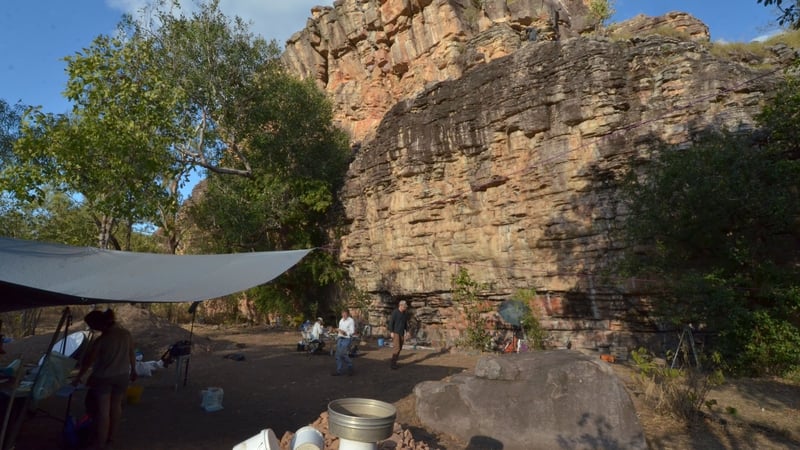
Image result for Artefact find suggests earlier arrival of humans in Australia  Image result for Artefact find suggests earlier arrival of humans in Australia
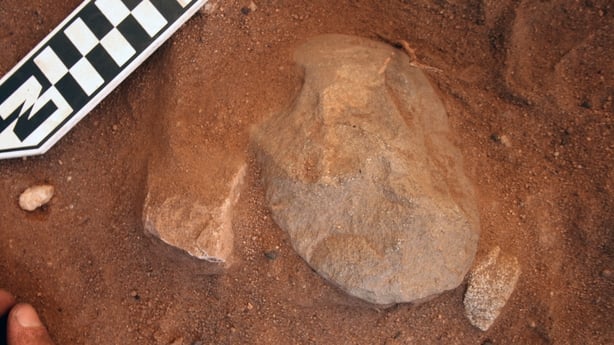
DIGS AT MADJEDBEBE HAVE UNEARTHED STONE TOOLS, OCHRES, PLANT REMAINS AND BONES

Humans arrived in Australia 10,000 years earlier than was previously thought, casting doubt on the theory that they killed off the giant kangaroo and other unique animals, scientists believe.
New artefact evidence suggests that the continent was first occupied about 65,000 years ago, long after the ancient ancestors of modern humans emerged in Africa.
The discovery challenges the theory that people caused the extinction of Australian megafauna including giant kangaroos, wombats and tortoises which disappeared more than 45,000 years ago.
Lead scientist Dr Ben Marwick, from the University of Washington, US, said: “Previously it was thought that humans arrived and hunted them out or disturbed their habits, leading to extinction, but these dates confirm that people arrived so far before that they wouldn’t be the central cause of the death of megafauna.
“It shifts the idea of humans charging into the landscape and killing off the megafauna.
“It moves toward a vision of humans moving in and coexisting, which is quite a different view of human evolution.”
Since 1973, digs at Madjedbebe, a rock shelter in Australia’s Northern Territory, have unearthed more than 10,000 stone tools, ochres, plant remains and bones.
A dating technique called optical stimulated luminescence (OSL) was used to determine the age of the oldest buried artefacts.
The process can show the last time a sand grain was exposed to sunlight up to 100,000 or more years ago.
This and other tests built up a picture of the environment and showed that when the first humans arrived, northern Australia was wetter and colder than it is today.
The findings, published in the journal Nature, support the theory that our species Homo sapiens evolved in Africa before dispersing to other continents, Dr Marwick said.


Tuesday, May 16, 2017

Donie's Ireland daily news BLOG

Investment bank JP Morgan move cements Capital Dock as flagship development

DUBLIN DOCKLANDS SCHEME TO HAVE 32,000SQ M OF OFFICE SPACE AND 190 RESIDENTIAL UNITS

Image result for Investment bank JP Morgan move cements Capital Dock as flagship development  Image result for Investment bank JP Morgan move cements Capital Dock as flagship development

KENNEDY WILSON, THE DEVELOPMENT MANAGER OF THE CAPITAL DOCK SITE, WILL ULTIMATELY OWN AN 85% INTEREST IN THE SITE, WITH NAMA OWNING THE BALANCE.

Capital Dock, where JP Morgan has just acquired a 12,000sq m (130,000sq ft) building, is a development by Kennedy Wilson, an international real estate firm, in Dublin’s south docks. The 613,000sq m (660,000sq ft) development is a joint venture with the National Asset Management Agency (Nama) and Toronto-headquartered Fairfax Financial Holdings.
The US investment bank announced on Monday that it is to acquire a 12,000sq m building in a move that will provide it with the capacity to double its Irish work force to 1,000.
Kennedy Wilson confirmed that the bank would become the first major occupier of the Capital Dock development through a forward-funding sale agreement. It is understood JP Morgan will pay about €125 million for the building, about €10,400 per square metre or €961 per square foot.
“We are excited to welcome JP Morgan, through its acquisition of 200 Capital Dock, as the first major office occupier to commit to this best-in-class mixed-use campus development, to grow its existing business and meet its long-term plans in Ireland, ” said William McMorrow, chairman and chief executive of Kennedy Wilson.
Extending over 1.9 hectares (4.8 acres) on Sir John Rogerson’s Quay, the development will include 32,000sq m (345,000sq ft) of office space and 190 residential units.
Partnership
The partnership between Kennedy Wilson, which is listed on the New York Stock Exchange, and Nama began as the former sought to get zoning for the Capital Docks site. Part of that site was acquired in mid-2013 when Kennedy Wilson and its equity partner took ownership of a 3.4 acre plot.
Kennedy Wilson is reported to have paid €106 million to secure its interest in the site.
In December 2014, a joint-venture agreement was signed between Kennedy Wilson, its equity partner and Nama. The arrangement entailed Kennedy Wilson and Nama merging their adjacent sites at Sir John Rogerson’s Quay.
Kennedy Wilson, the development manager of the site, would ultimately own an 85 per cent interest in the site with Nama owning the balance.
Planning for the site was awarded in October 2015 and site-enabling works began a month later. The main contract was awarded to Sisk in July 2016 and was one of the biggest commercial development contracts awarded in the Irish market in recent years
Nama originally held an interest of 75% in the 22 hectares of undeveloped land in the docklands strategic development zone. It is estimated that about 370,000 sq m (four million square feet) of commercial space and more than 2,000 apartments will ultimately be delivered on the 15 sites originally held by Nama.
Some €250 million is being invested in Capital Dock, which is situated directly opposite the Three Arena in Dublin’s docklands and which will accommodate two large office blocks and a 23-storey residential tower.
In an interview with The Irish Times last year, Kennedy Wilson’s global chairman and chief executive Bill McMorrow said of Capital Dock: “In Los Angeles, that would be a very big development. We’re very proud of that particular project.”
The first of three office buildings is due to be delivered at Capital Dock in late 2017, followed by 190 high-quality residential apartments in mid-2018.
Last year, Alison Rohan, head of Ireland for Kennedy Wilson, said the scheme, which was designed by Irish architecture firm O’Mahony Pike, was the largest mixed-use development in Dublin’s south docks.
“As a campus location offering over 330,000sq ft of flexible office space in addition to on-site residential, leisure and retail amenities, we expect it will appeal to both Irish and international companies looking for a location in the heart of the capital, and from which to grow their business.”

Enterprise Ireland report reveals Brexit impact on Irish exports

CLIENT COMPANIES RECORD BIG DROP IN UK EXPORT GROWTH IN 2016 AS STERLING DEPRECIATES

Image result for Enterprise Ireland report reveals Brexit impact on Irish exports  Image result for major slowdown in the growth of Irish exports to the UK in the wake of Brexit

ENTERPRISE IRELAND CHIEF EXECUTIVE JULIE SINNAMON: “WE HAVE TO WORK ON THE BASIS THAT BREXIT WILL CREATE NEW BARRIERS TO IRISH TRADE WITH THE UK.”

Client companies of Enterprise Ireland have reported a major slowdown in the growth of Irish exports to the UK in the wake of Brexit.
In its latest report, the State agency responsible for helping Irish companies access international markets said export growth to the UK had slowed from 12% in 2015 to 2% last year.
The fall-off was largely due to a decline in food exports, which have been worst hit by the recent depreciation in sterling. The UK accounted for about a third of the €21.6 billion in exports from Enterprise Ireland-supported firms last year.
“The fact that the growth of exports to the UK has slowed suggests that the impact of Brexit on Irish companies has already started,” said Enterprise Ireland chief executive Julie Sinnamon.
“Companies cannot afford to wait until the Brexit negotiations conclude – they must act now,” Ms Sinnamon said. “While diversifying from the UK might have been a desirable objective for Irish companies in the past, Brexit means that it is now an urgent imperative.”
New Euro-zone strategy
In response to the challenges posed by Brexit, Enterprise Ireland has launched a new euro-zone strategy, which aims to boost Irish exports to the bloc by 50% to €6 billion by 2020.
European Commission forecasts ‘robust expansion’ of Irish GDP
Speaking at the launch, Taoiseach Enda Kenny said helping companies to diversify into European markets was a significant plank of the Government’s overall Brexit strategy.
“Following the UK’s decision to leave the EU, the Government immediately acted to ensure our enterprise agencies had additional resources in order to offer all available assistance to our exporters to prepare for the challenges posed by Brexit,” he said.
Enterprise Ireland said its strategy would see it partner some 600 client companies, about half of which are what it described as “euro-zone start” – ie relatively new to the euro-zone market and heavily reliant on the UK.
The remainder were “euro-zone scale”, meaning they were already exporting into the bloc, it said.
Additional resources use?
Ms Sinnamon said some of the additional resources would be used to fund euro-zone market research and feasibility grants.
“This strategy is about driving one of the most significant shifts in the footprint of our client exports in the euro zone,” she said. “We have to work on the basis that Brexit will create new barriers to Irish trade with the UK.
“On the other hand, euro-zone markets can provide currency stability, proximity and potential for growth and opportunities for Irish companies,” she added.
Despite the economic uncertainty hanging over world markets, exports from Enterprise Ireland client companies grew by 6% to €21.6 billion last year. The UK accounted for more than a third of the total.
Export sales grew across most territories, the agency noted, with growth in the United States and Canada jumping by 19% to €3.7 billion, followed by the Asia Pacific region, which was up 16% to €1.8 billion.
On a sector-by-sector basis, the strongest export growth globally was in software and internationally traded services. which grew by 16% to €4.3 billion.
Life sciences, engineering, cleantech, paper print, packaging and electronics exports rose by 10 per cent to €3.9 billion while construction, timber and consumer retail exports increased by 8 per cent to €2.9 billion.

Garda Commissioner O’Sullivan may go before special sitting of committee over Templemore

FITZGERALD BACKS GARDA COMMISSIONER TO ADDRESS ‘DEEP-SEATED ISSUES’

Image result for Garda Commissioner O'Sullivan may go before special sitting of committee over Templemore  Image result for Garda Commissioner O'Sullivan may go before special sitting of committee over Templemore

AN OLD PAL’S PACT IS BEING ACTED OUT IN PUBLIC?

MINISTER FOR JUSTICE FRANCES FITZGERALD HAS BEEN CRITICISED FOR SUPPORTING THE GARDA COMMISSIONER’S RETENTION IN HER ROLE.

The Oireachtas Public Accounts Committee may hold special sittings before the end of this month to re-examine Garda Commissioner NĂ³irĂ­n O’Sullivan on the extent of her knowledge of financial irregularities at Templemore Garda College.
The committee had originally invited the Garda Commissioner to attend its meeting on July 13th as part of its inquiry into the inflated Garda breath-test figures controversy.
However, at its meeting on May 4th, a senior civilian employee in the Garda – director of human resources John Barrett – gave an account of a meeting on the Templemore college issue that contradicted Ms O’Sullivan’s account of how and when she became aware of financial irregularities in the Garda training college.
Members of the PAC said on Monday they wanted the Garda Commissioner to come before it at a much earlier date to respond to that controversy.
Its chair, Sean Fleming (Fianna FĂ¡il), said the committee would decide on Thursday what witnesses, besides the Garda Commissioner, it would recall and the programme of work that would be involved.
Two committee members, Alan Kelly (Labour) and Catherine Connolly (Independent) said they wanted the Garda Commissioner to attend as soon as possible.
Special sittings needed?
In Mr Kelly’s case, he said it should happen as early as next week if possible, and argued that the committee could convene special sittings if necessary.
Ms Connolly said she wanted the hearing to be held “as quickly as possible”. She said the committee “was not happy to wait until July given the urgency and import of the matter”.
Meanwhile, Minister for Justice Frances Fitzgerald said on Monday she continued to support the Garda Commissioner and had no objective evidence that Ms O’Sullivan had done anything wrong.
Ms Fitzgerald is facing increasing political pressure over her support for Ms O’Sullivan as the force remains dogged by a series of controversies.
Fianna FĂ¡il, Sinn FĂ©in and Labour have all strongly criticised Ms Fitzgerald for supporting the Garda Commissioner’s retention in her role.
Sinn FĂ©in deputy leader Mary Lou McDonald and the party’s spokesman on justice Jonathan O’Brien confirmed they would consider tabling a motion of no confidence.

POLITICAL EXPEDIENCY

Ms Fitzgerald said “while of course the Opposition are going to ramp up the pressure and use the commissioner to ramp up pressure indeed on me, I would say that politics and political expediency aren’t going to sort out the very deep-seated issues in relation to An Garda SĂ­ochĂ¡na”.
“I would also say that when you shine a light you see a lot of things that have been kept in the dark for a long period, and by previous governments indeed.
“The issues for example like Templemore and [phone] interception – the interception issues go back to the early 2000s with Fianna FĂ¡il in government for 11 of the last 17 years.
“Templemore, we had reports in 2008, 2009; what action was taken then? And the idea that somehow you blame people who are trying to shine a light and do the current reforms is simply not the way that we are going to get real reform.”

Scientists find gene with key to bowel disorders

The gene, known as MDR1, governs an important extractor system for toxins in the gut, removing damaging substances from intestinal cells.
Image result for Scientists find gene with key to bowel disorders  Image result for Scientists find gene with key to bowel disorders  Image result for Scientists find gene with key to bowel disorders

SCIENTISTS HAVE IDENTIFIED A KEY GENE THAT HELPS TO EXPLAIN AN UNDERLYING CAUSE OF INCURABLE BOWEL DISORDERS, WHICH AFFECT AROUND 15,000 PEOPLE IN IRELAND.

A study found that blocking the effects of the beneficial gene can harm vital parts of the cell, and lead to bowel disease.
The findings boost understanding of the cause of these lifelong conditions and could lead to new treatments, scientists say.
Inflammatory Bowel Disease (IBD) includes disorders such as Crohn’s Disease and Ulcerative Colitis. The causes of these conditions are unknown and there is currently no cure.
The gene, known as MDR1, governs an important extractor system for toxins in the gut, removing damaging substances from intestinal cells, scientists said.
A research team, led by the University of Edinburgh, showed that MDR1 function was lower in people with inflamed IBD compared with those without inflammation.
Experts then showed that mice without MDR1 had faulty mitochondria, parts of the cell known as “batteries”, which play a vital role in energy generation and cell health.
This mitochondrial dysfunction then resulted in colitis, inflammation of the inner lining of the bowel – a defining feature of IBD.
Researchers involved in the study analysed genetic data from 90,000 people, 40,000 of whom had IBD.
The university study also revealed that a drug called Mitoquinone, which protects the mitochondria against toxins, can reduce colitis and promote bowel recovery in the mice lacking MDR1. Scientists have described this as a “significant step forward”.
Lead author Dr Gwo-Tzer Ho, of Edinburgh’s MRC Centre for Inflammation Research, said: “IBD has a serious impact on quality of life. We have shown that MDR1 and mitochondrial function are important jigsaw pieces in the complex causes of IBD. Our studies highlight the importance of shielding the mitochondria from damage. This will open new approaches to drug targets that focus on the mitochondria to better design treatments for patients.”
The study, carried out with researchers at the University of Bristol, the USA and Japan, was published in the journal ‘Mucosal Immunology’.
Ireland’s capacity to conduct clinical trials to be expanded

Increased scale of clinical research has benefited many Irish patients with better outcomes

Image result for Increased scale of clinical research has benefited many Irish patients with better outcomes  Image result for Increased scale of clinical research has benefited many Irish patients with better outcomes  Related image

NORMA HARTE (LEFT), JOAN JORDAN AND DR FIONNUALA KEANE AT THE HRB-CRCI SEMINAR TO MARK INTERNATIONAL CLINICAL TRIALS DAY.

The scale of clinical research has improved dramatically in Ireland over the past five years, leading to better outcomes for patients and helping many avail of innovative treatments. But the health service needs to be better structured to facilitate trials and involve patients more to match achievements elsewhere in Europe, 200 delegates heard on Monday at a national seminar to mark International Clinical Trials Day 2017.
“Without such trials medical progress becomes a matter of chance,” said Prof Joe Eustace chair of the Health Research Bureau Clinical Research Coordination Ireland (HRB-CRCI) which acts as a co-ordinating centre for Ireland’s involvement in clinical trials. While there was a dramatic improvement in the scale of research, it was not yet sufficient for Ireland to become a world-class trial location, he said. In Denmark, which has a similar population to Ireland, it has five times the number of trials in train compared to the Republic.
“Clinical research not only save lives but enhances patients’ lives in the longer term as new products come into the market. Those countries that have embraced research as part of their national healthcare system have also witnessed better outcomes for their patients,” Prof Eustace added.
New clinical trials
Since 2014, there has been a 37% increase in the number of sites conducting clinical research in Ireland. In 2016 there were 15 hospitals and almost 300 clinical investigators working with clinical research facilities and centres around the country. Over the past number of years, more than 100 new clinical trials have opened in Ireland, delegates heard at the event, which was hosted by the HRB-CRCI in Dublin.
Investments in physical infrastructure, researchers and research networks had been the springboard to the recent upsurge in clinical trials activity in our health system, noted Dr Mairead O’Driscoll, interim HRB chief executive. Between now and 2020, it is planned to spend a further €54 million to maintain and expand Ireland’s capacity to conduct clinical trials and healthcare intervention studies, she added.
In practice, there was a need for all interested health professionals to have the capacity to test new innovative treatments, therapies and medical devices with their patients during their daily work, said Dr Pat O’Mahony chief executive of Molecular Medicine Ireland, a body set up by third-level institutions to help medical research yield benefits for patients. “It would mean greater and easier access for patients, and increased opportunities to collect research data… fundamentally increasing the clinical research scale we have in Ireland. Our ultimate aim should be that any patient who needs care, is suitable and has a desire to access novel treatments under development, could have the option to do so,” Dr O’Mahony added.
Paediatric research
Clinical trials were especially important in paediatric research as so many diseases originated during pregnancy or in early childhood, according to Prof Geraldine Boylan, director of the Irish Centre for Fetal and Neonatal Translational Research based in Cork.
Young people were “protected from research” in the past, so much so very few drugs for children were developed. The reality is they cannot be treated as young adults and just given “a smaller dose”. Their make-up was different so they needed to be participants in research, including those at the earliest stages of life, to get the best possible outcomes. Where that involved a young baby, who was very ill at birth, or born prematurely, the whole family needed to be centrally involved, she said.
Prof Boylan outlined the circumstances of the birth of Tara-Lee to Norma and Jason Harte, who was born after a very difficult birth at Cork University Maternity Hospital, without a heartbeat having sustained a brain injury. She was treated in intensive care unit by cooling therapy where her core body temperature was brought down by several degrees over a 72-hour period. Now nearly 20 months old, Tara-Lee had benefited from a treatment which was developed by way of clinical research; her development since had been “absolutely perfect”.
Erin Dolan who lives in Lahinch, Co Clare, outlined how she participated in a clinical trial last year at University Hospital Galway during the months of her pregnancy as a consequence of having diabetes type 1 since she was 10. She had benefitted from continuous glucose monitoring, which accurately indicated her blood sugar level, and helped control high levels so it did not detrimentally affect her baby. While the trial required extra trips to hospital, “it was worth it as it benefited me and other women” in similar circumstances. Her daughter Maeve was born a normal, healthy baby, as a consequence.
User-friendly information
Patients needed to be more centrally involved in Irish clinical research to ensure a better success rate, said Dr Derick Mitchell of Irish Patient Organisations, Science and Industry, which supports delivery of health innovations to people with unmet medical needs.
Patients were trying to find out where clinical trials were happening, but they needed to make informed decisions. Having them centrally involved with user-friendly information of where trials were happening and how to get involved was essential. “Having them involved at the beginning can make a real difference in improving the quality of research,” he said.
For Ireland to be better recognised for its clinical research, where it can be done quickly and to the highest standard, Dr Mitchell said there was a need for clinicians in the health sector to be given “protected time” for their work, and for a central ethics committee to approve research rather than individual hospitals.

Scientists identify a 50-foot mystery sea beast washed up on Indonesian beach?

Image result for Scientists identify a 50-foot mystery sea beast washed up on Indonesian beach?  Image result for Scientists identify a 50-foot mystery sea beast washed up on Indonesian beach?
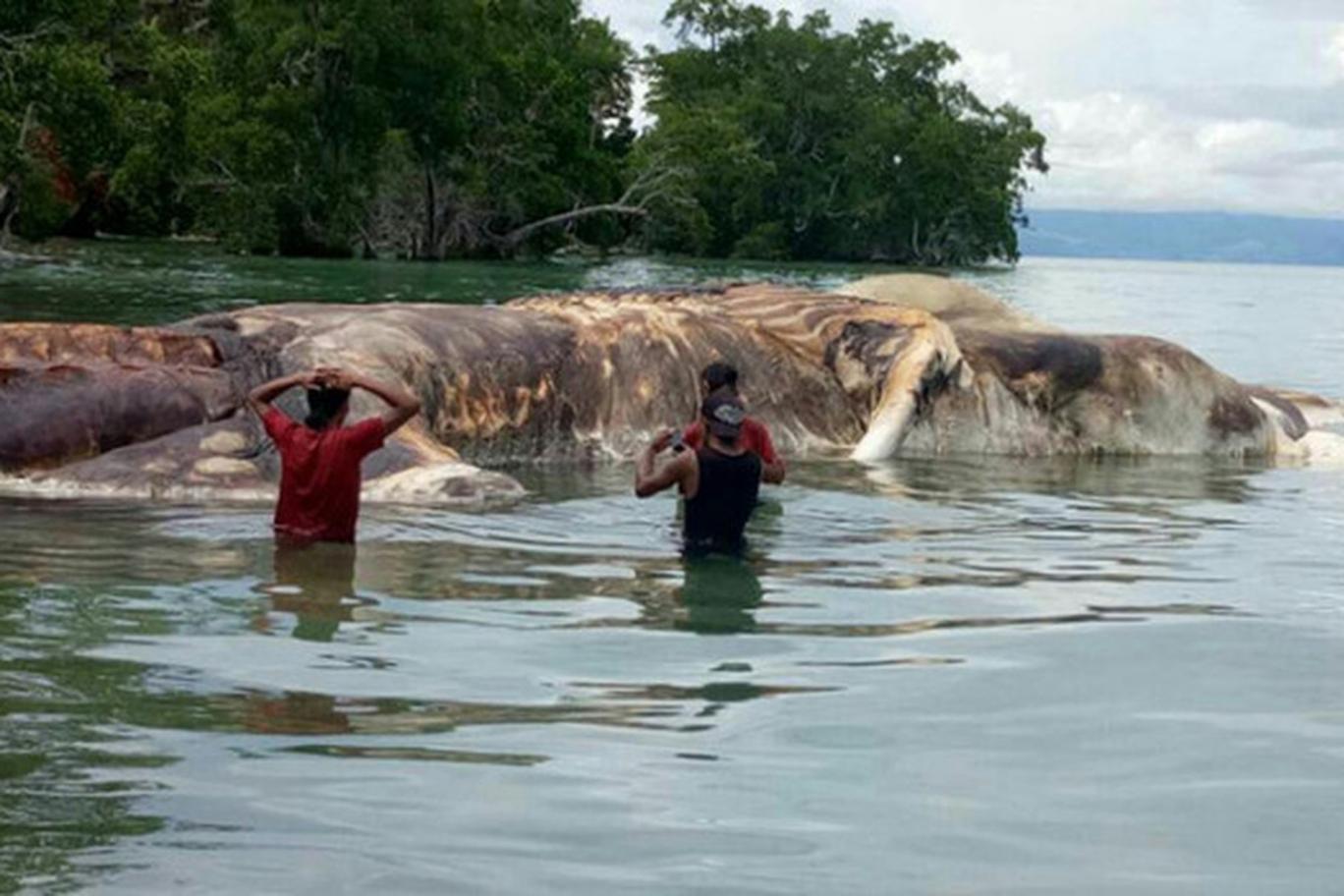
A giant sea creature, possibly with tusks, washed up on a beach in Indonesia last week, freaking out people on the island of Seram and launching a global guessing game to determine what, exactly, it used to be.
A giant sea creature washes up on a beach in the Maluku Islands of Indonesia, cellphones come out and the image goes around the world, prompting thousands to ask: What is it? Meanwhile, Serum Island residents are asking: How do we get rid of this thing?
A giant sea creature, possibly with tusks, washed up on a beach in Indonesia last week, freaking out people on the island of Seram and launching a global guessing game to determine what, exactly, it used to be.
As images of the floating carcass rocketed around the Internet, the scientific community asked itself: What is it? How did it get to an Indonesian island? And what does its presence say about climate change and whale migration habits?
The people of Seram have a more pressing query: How do we get rid of it?
Asrul Tuanakota, a 37-year-old fisherman, initially thought he had discovered a boat stranded in shallow water, according to the Jakarta Globe. On closer inspection, he determined that it was the rotting corpse of a 50-foot-long dead sea creature, possibly a giant squid because the remains looked like tentacles.
Blood seeping from the dead sea beast had turned the water near the coastline a bright red, which didn’t stop locals from wading in for a closer look and snapping pictures.
George Leonard, the chief scientist at the Ocean Conservancy, told the Huffington Post that the rotting carcass was probably a baleen whale, judging by parts of a protruding skeleton and what appear to be baleen plates used to filter out food.
Decomposition gases bloated the whale into a very un-whale-like shape, and some of the noxious gases were seeping out.
Seram, the largest island in the Maluku Island group, is near the migration routes for baleen whales, so it makes sense that one would be nearby. Locals have asked the government to help remove the carcass, the Huffington Post reported.
But dead whales usually sink to the bottom of the ocean, providing a years-long buffet for the creatures that dwell there, according to Live Science. The publication theorized that the whale had a bacterial infection that produced more gases or that it possibly died in warm waters, allowing bacteria to accumulate and gases to expand its body. It also could have died an unnatural death after being clipped by a ship.
Of course, things die in the ocean all the time producing all kinds of weird phenomena. But now fishermen and villages and tourists — and their smartphones — are coming into contact with dead sea things as they go through the circle of life.
For example, fishermen off the western coast of Australia found a humongous floating balloon of flesh that looked as if it was the first sign of an alien invasion. At first, the father and son thought they had encountered a hot-air balloon.
“When we got closer we realized it had to be a dead whale because of the smell,” Mark Watkins told the West Australian.
They snapped photos of the whale balloon, then headed to shore. By then, they said, circling sharks had taken bites of the dead creature, causing it to deflate.
This year, a giant, hairy sea creature washed up on a beach in the Philippines, according to the Daily Mail. Locals believe the unusual occurrence was brought on by a recent earthquake.