Pages

Showing posts with label Irish banks. Show all posts

Tuesday, December 29, 2015

Donie's Ireland daily news BLOG

Fianna Fail to create new State-owned bank if elected

Party’s manifesto will commit to proposals aimed at filling gaps in the banking sector

    
Fianna Fail inance spokesman Michael McGrath said a full State Enterprise Bank would be created and retained regardless of what stake the State retained in other banks.
Fianna Fail would create a new State-owned bank to lend to every company regardless of their size if elected to Government.
The party’s manifesto will commit to a number of proposals aimed at filling what it says are gaps in the banking sector.
Its finance spokesman Michael McGrath said a full State Enterprise Bankwould be created and retained regardless of what stake the State retained in other banks.
Mr McGrath said it has the potential to be a permanent solution to the difficulties businesses have in accessing credit.
He added: “ It would lend to any company, regardless of sector or size, provided it can demonstrate its creditworthiness.
“It would remain in State ownership even if the State disposes of its stakes inBank of Ireland and AIB.
“This was promised by the current government but only partially delivered in the form of the Strategic Banking Corporation of Ireland which has had very limited impact to date.”
Mr McGrath said the dominance of the two pillar banks, Bank of Ireland and Allied Irish Bank, is creating a lack of competition, higher costs for customers and blocking product innovation.
Fianna Fail will commit to examining the sale of EBS as a separate mortgage bank. It is currently merged with AIB.
Mr McGrath said this would “acknowledge the fact that the loss of the building societies has had a long term negative impact on the mortgage market”.
The party would also require the Central Bank to publish targets for dealing with the debt of small and medium enterprises.
It will also call for a code of conduct to be put in place for people seeking to switch their mortgages.
Mr McGrath said: “A strong code would provide certainty to mortgage holders about the process involved and ensure the mortgage holder’s rights are protected.”
The party’s manifesto would also confirm the party’s proposals to introduce legislation to influence the mortgage interest rates charged to customers.
The plans were released as Minister for Finance Michael Noonan criticised the Fianna Fail’s tax proposals.
Mr Noonan said Fianna Fail is opposed to the reduction of income tax and the Universal Social Charge.
He said the party is wedded to “the same high tax, high spend approach by which they ruined our economy last time they were in government”.
The Minister said: “We cannot go back to the same old Fianna Fail who wrecked the economy, have learned nothing from the past and are still the high tax, high spend party.”
In response Mr McGrath said Mr Noonan’s comments were inaccurate, misleading and a desperate attempt to shift focus.
He said Fianna Fail’s budget proposals for 2016 included reductions in the income tax burden for all workers.
Mr McGrath said: “In case Minister Noonan is under any illusions, Fianna Fáil will be proposing a series of reductions in the Universal Social Charge for workers in our election manifesto.
“However, we will do so in a responsible way which also takes account of the need to invest in vital areas of public services so badly neglected by this government such as education, health, housing and justice.”

Five Irish county councils are in serious financial difficulty, 

DONEGAL, MAYO, SLIGO, WATERFORD AND WEXFORD FACE DETERIORATING REVENUE BALANCES


DUBLIN CITY COUNCIL’S SURPLUS INCREASED BY 71% FROM 2013 TO 2014, LEAVING THE COUNCIL WITH €28.35 MILLION IN THE BANK.

Five local authorities – Donegal, Mayo, Sligo, Waterford and Wexford – were grappling with a “significant deterioration” in their finances at the end of last year, according to a report from an independent local government watchdog.
The National Oversight and Audit Commission report into local authority performance found Sligo County Council’s revenue deficit more than doubled from €11.4 million in 2010 to almost €27 million in 2014.
The auditors said the Sligo local authority was the most “adversely affected” in deficit terms over the last five years.
Donegal County Council saw its annual revenue deficit rise from €11.6 to €14.9 million in the period; Mayo’s annual deficit rose from €1.9 million to €5.05 million; and Waterford city and county’s deficit went from €7.57 million to €8.56 million.
In all, 17 of the State’s 31 local authorities were in the red at the end of 2014.
‘Cause of concern’
In a commentary on the figures, the audit commission said “while some of these [17]authorities have made progress on arresting the worsening situation, a small number continue to be a cause of concern”.
In contrast to the financial problems of some, the auditors note Dublin City Council’s surplus increased by 71 per cent from 2013 to 2014, leaving the council with €28.35 million in the bank.
Fingal, South Dublin and Cork County also showed a surplus of more than €10 million at the end of 2014.
Westmeath moved from a deficit of about €1 million per year to a small surplus in 2014 and Clare, Kilkenny and Longford all significantly reduced their deficits in 2014.
According to the audit commission’s report, collection of rates, rents and annuities – although an important element in the financing of local government – were mixed over the period.
Collection levels for rates in 2014 varied from a high of 92 per cent in Fingal to lows of 56 per cent in Donegal and Louth.
The commission said it is carrying out a review of rate collection performance to better understand the contributory factors.

COLLECTION RATE.

Sligo moved from collecting 79% of commercial rates in 2010 to 67% in 2014.
Similarly Mayo’s collection rate fell from 83% to 75%; Donegal went from 61 per cent to 56 per cent; Waterford City and County went from 78% to 72% and Wexford dropped from 72% to 71%.
In terms of rent and annuities, the highest collections were in Laois and Monaghan at 95%, and the lowest in South Dublin at 73%.
Overall, housing loan repayment collection levels show a deterioration from 80% in 2010 to 65& in 2014.
The highest was Fingal at 98% and the lowest were Kildare and Sligo at 42% and 46% respectively.
The audit commission said it is undertaking a more in-depth analysis of the underlying issues associated with revenue account deficits.
The National Oversight and Audit Commission was established in 2014 to provide independent scrutiny of local government performance.
Its mission is to oversee the local government sector by reviewing the financial and operational performance of bodies

One quarter of Ireland’s regional roads have defects

REPORT FROM THE NATIONAL OVERSIGHT AND AUDIT COMMISSION SHOWS DIFFERENCES


KILDARE HAD THE HIGHEST LEVEL OF STRUCTURAL DEFECTS ON REGIONAL ROADS, MAYO HAD THE HIGHEST LEVELS ON LOCAL PRIMARY ROADS.

Almost a quarter of the Republics regional roads have serious structural or surface defects, while many local roads are in even worse condition, according to a report from the National Oversight and Audit Commission.
The auditors’ report, which assessed non-national roads using data supplied by local authorities themselves, looked at regional roads which carry high volumes of traffic, as well as local roads divided into primary, secondary and tertiary.
In league tables drawn up by the auditors damage to local and regional roads is classed in order of severity as as “structural distress”, “pavement defects” or “surface defects”. Kildare had the highest level of structural defects on regional roads, Mayo had the highest levels of structural defects in local primary roads, and Sligo and Westmeath tied for the highest level of structural defects on local secondary roads . The county with the highest percentage of structurally deficient tertiary roads was Co Clare.
In a commentary the auditors said “some key messages emerge”. They found that, overall, 19 per cent of regional roads have moderate to significant pavement defects while a further five per cent of such roads “display structural distress”.
Structural distress
Local primary roads were marginally worse with 27 per cent having pavement defects and 8% displaying structural distress. More than one third of local secondary roads showed moderate to significant pavement defects, while 15% displayed structural distress. Local tertiary roads – commonly known as “boreens” – were in the worst condition with 28% displaying structural distress, while 27% displayed pavement defects.
However the auditors noted the absence of data from a small number of local authorities, including Dún Laoghaire Rathdown, Fingal, South Dublin, Cork City and Meath.
In what could be seen as a warning to these authorities the auditors said the data would in future be used for “the targeting of resources to areas most in need”. If that is the case, authorities which do not supply data on the condition of their roads may lose out on exchequer funding.
Damaged roads
The National Oversight and Audit commission also ranked the damaged roads as a pecentage of the amount of roads by county. Thus, it showed 2.26 per cent of roads in Co Kildare showed “severe structural distress” with extensive loss of pavement surface. A further 5.26 per cent of regional roads in Kildare showed there was “structural distress present”. This was followed by Donegal where 1.77% of regional roads were classed as suffering “severe structural distress” and a further 8.48% of the county’s roads were classed as having “structural distress present”.
In Mayo 2.6% of the roads have defects classed as “severe”. A further 20.83% of the local primary roads in Mayo were classed as having “significant” structural distress.
One per cent of primary roads in both Westmeath and Sligo were found to have severe structural defects, while 15% of Sligo’s secondary local roads were classed as having structural distress present.
In Co Clare 22% of its tertiary roads were classed as having “severe” structural defects and 15 per cent were regarded as having “structural defects present”.
In Mayo 16.3% of tertiary roads were classed as severe, and 8.5% had structural defects.

New rules for farm vehicles on roads begin in January


REVISED STANDARDS FOR THE USE OF AGRICULTURAL VEHICLES ON PUBLIC ROADS TAKE EFFECT FROM NEW YEAR’S DAY.

It follows a review by the Road Safety Authority and the introduction of legislation by Transport Minister Paschal Donohue.
The current regulations are over 50 years in place and deemed to be out of date due to bigger, faster, and more powerful agricultural vehicles being used.
These are generally constructed to highest standards and are capable of carrying out tasks outside the scope of the present regulations.
advertisement
The RSA says it is important the regulatory regime reflects the developments in technology and requires the vehicles to comply with recognised standards.
These relate to key safety areas, like braking, suspension systems, tyres and lighting, as well as the weights for which they are designed.
The RSA says vehicles which do not comply with the new regulations are likely to need only minor remedial works.
Examples are fitment of a flashing amber beacon and/or replacement of the manufacturer’s plate indicating the design axle weights and maximum permitted towable masses.
“Trailers already in service will also be able to continue in use, but, due to varying construction standards, some will need remedial work.
Tractors and trailers operating at higher speeds and weights must also be appropriately plated and speed rated,” it said.
A regulation’s breach may result in a court summons, and a fine of up to €2,500, a prison sentence or both on the person who commits the offence and on the vehicle’s owner.
It is expected most agricultural tractors will comply with the requirements with minimal spend.
However, the ICMSA farm and rural affairs committee chairman, Patrick Rohan, says it has some concerns regarding the practicality of implementing some of the measures.
The ICMSA was acutely aware of the need for farm vehicles and equipment to be properly maintained and ‘fit for purpose’.
However, writing in the association’s newsletter, he said it was determined to ensure any changes do not result in unnecessary costs and restrictions being loaded onto farmers.

Ancient Irish had Middle Eastern ancestry, study reveals

GENETIC RESEARCHERS FIND EVIDENCE OF MASS MIGRATION TO IRELAND THOUSANDS OF YEARS AGO


RECONSTRUCTION OF AN EARLY WOMAN FARMER BY ELIZABETH BLACK.

Evidence of massive migration to Ireland thousands of years ago has emerged from the sequencing of the first genomes from ancient Irish humans, carried out by geneticists from Trinity College Dublin and archaeologists from Queen’s University Belfast.
Sequencing the genome of an early woman farmer, who lived near Belfast 5,200 years ago, showed her majority ancestry originated in the Middle East, where agriculture was invented.
Sequencing the genomes of three men whose bodies dated from the Bronze Age about 4,000 years ago showed one-third of their ancestry came from the Pontic steppe on the shores of the Black Sea.
The woman farmer had black hair, brown eyes and resembled southern Europeans, according to the researchers.
In contrast, the three men, who were from Rathlin Island, had the most common Irish Y chromosome type, blue eyes alleles and the most important variant for the genetic disease haemochromatosis, or excessive iron retention.
The latter mutation is so frequent in people of Irish descent that it is sometimes referred to as a Celtic disease.
This discovery therefore marks the first identification of an important disease variant in prehistory, according to the researchers.
A genome is an organism’s complete set of DNA, including all of its genes.
Each genome contains all of the information needed to build and maintain that organism.
Discovering the sequence of the human genome provides a first step in understanding how the instructions coded in DNA lead to a functioning human being.
The information buried in the genes of ancient bodies is already answering pivotal questions about the origins of Ireland’s people and contemporary cultures, according to the study, published in the international journal Proceedings of the National Academy of Sciences of the USA.
“There was a great wave of genome change that swept into Europe, from above the Black Sea into Bronze Age Europe, and we now know it washed all the way to the shores of its most westerly island,” said professor of population genetics in Trinity College Dublin, Dan Bradley, who led the study.
“And this degree of genetic change invites the possibility of other associated changes, perhaps even the introduction of language ancestral to western Celtic tongues.”
Time travel
Ireland is considered to have intriguing genetics. It has the highest rates of variants that code for lactose intolerance, the western European Y chromosome and several important genetic diseases.
However, the origins of this genetic heritage are unknown.
The only way to discover our genetic past is to sequence genomes directly from ancient people, by embarking on a type of genetic time travel, said Prof Bradley.
In archaeology, opinion has been divided on whether the great transitions in the British Isles from a hunter-gatherer lifestyle to one based on agriculture, and the switch from the use of stone to metal, were due to the adoption of new ways by locals or the influences of new people.
Dr Eileen Murphy, a lecturer in osteoarchaeology at Queen’s University, said the project has demonstrated how ancient DNA analysis can provide the tools to answer such questions.
The ancient Irish genomes sequenced for this study show “unequivocal” evidence for massive migration to Ireland, she said.
“Genetic affinity is strongest between the Bronze Age genomes and modern Irish, Scottish and Welsh, suggesting establishment of central attributes of the insular Celtic genome 4,000 years ago,” said Lara Cassidy, a genetics researcher at Trinity. 

Thursday, December 17, 2015

Donie's Ireland daily nees BLOG

Irish State coffers in balance for first time in a decade

   
A €1.64bn sale of AIB preference shares coupled with better than expected exchequer returns means that the exchequer will be close to balance for the first time since 2007.
AIB will today pay the state €1.64bn in cash from the total bailout funds it received since the financial crash.Finance Minister Michael Noonan is expected to signal today that by the end of the month Ireland will be taking in more than it is spending for the first time in a decade.
Its major capital reorganisation plus the surge in €3bn more than expected in tax receipts so far this year will be added to by the end of year figures.
The increased revenue intake means that Ireland’s borrowing costs will also be reduced while Ireland’s debt ratio will be cut by almost 1% of GDP in 2016.
It is understood the Cabinet discussed the expected end of year returns at its meeting this week.
The AIB transaction marks its first meaningful return of funds to the state after €21bn was pumped into the bank.
Irish taxpayers will still retain 99.8% of the shares in AIB, an investment with a value currently estimated at €11.7bn.
At the beginning of this month, the Government had collected just below €42bn in taxes, almost €3bn more than it expected to collect at the start of the year.
The further income for the exchequer that is expected to be collected by the end of this month will leave the exchequer close to balance —for the first time since the end of the boom in 2007.
Ireland’s debt is now also forecast to fall to 92% of GDP, in line with the euro area average.

AIB to repay Irish State €1.87bn after approval for reorganisation

Bank says it has already paid €3bn to the Government in various fees so far.


AIB chairman Richard Pym told shareholders the bank has paid about €3 billion to the State in fees related to the Government’s guarantees.

AIB will pay the State €1.866 billion tomorrow after receiving shareholder approval for a major capital reorganisation that also puts it on the path back to private sector ownership.
This will mark the first repayment by AIB of the €20.8 billion in bailout funds that it received from the State following the global financial crash in 2008.
AIB will pay the Government €1.7 billion in to redeem 1.36 billion of the 3.5 billion preference shares held by the State. It will also pay a dividend of €166.4 million relating to these shares.
In addition, the balance of preference shares will be converted to ordinary stock for the State and will be admitted for trading on the junior ESM market in Dublin on December 18th.
AIB will also press ahead with a consolidation of its share base, issuing one new share for every 250 held by investors. This will have the effect of reducing the number of shares in issue to 2.7 billion. The new shares will begin trading at 8am on December 21st.
AIB has agreed to the potential issue of warrants of up to 9.99% of the bank’s issued ordinary share capital to the minister for finance at the time of any re-admission of its ordinary shares to a regulated market. And the minister has agreed to redeem the EBS promissory note.
With the State owning 99.8 per cent of the bank, approval for the capital reorganisation was never in doubt but AIB was required to hold an extraordinary general meeting in Dublin to put 12 resolutions to all shareholders.
At the meeting in the RDS, AIB’s chairman Richard Pym said the capital reorganisation would “both strengthen and simplify” its capital structure and position the bank to transition from State to private sector ownership.
Mr Pym told shareholders that since the global financial crash in 2008 and its bailout by taxpayers, AIB has paid about €3 billion to the State in fees related to the Government’s guarantees, and coupon payments on the preference shares and contingent capital notes held by the State.
“Today marks the start of our repayment of the capital and we remain grateful to the Government and taxpayers for their continued support,” Mr Pym said.
Mr Pym told shareholders that he intended to take a poll on each resolution at the end of the EGM, even though the proposals were supported by the Minister for Finance Michael Noonan, who holds 99.8 per cent of the shares.
AIB received a bailout of €20.8 billion from the State post the crash in 2008. In response to a question from a shareholder, AIB chief executive Bernard Byrne said he expects the bank would repay “all of its money (to the State) in a reasonable timeframe”.
Mr Byrne indicated to media after the meeting that this could be a period of five to 10 years.
Mr Pym said the resolutions being voted on at the EGM would give the company a “market-standard capital structure” and would prepare the bank for a main stock market listing.
He said that the timing of an IPO would be subject to market conditions but he expects “very strong investor appetite for the stock” whenever it is brought to the stock exchange, highlighting how two recent debt issuances by the bank were oversubscribed.
Mr Byrne rejected criticism from investment adviser Brendan Burgess that AIB was overcharging its non-tracker mortgage customers. Mr Burgess argued that average mortgage rates across the EU amounts to about 2 per cent while AIB’s average rate is closer to 3.5%.
He said that whenever competition comes back into the Irish market, AIB’s profits would be hit. Mr Byrne responded by saying the bank, unlike its rivals, had reduced its standard variable rate three times over the past 12 months.
Mr Pym rejected a suggestion from TD Shane Ross that AIB should suspend its shares as they were “grossly overvalued” and people who have bought the shares recently stand to lose a lot of money when the capital reorganisation is completed.
The shares are currently trading at about 3.5% while the bank is proposing to convert some of the preference shares held by the State to ordinary shares for 1.7% each as part of the capital reorganisation being voted on at the EGM. This effectively puts a new floor on the bank’s share price.
Mr Pym said the company had repeatedly warned investors that the shares were overpriced and, as such, there is no more information that it can place in the market.
He said the bank would not be seeking a suspension of its shares as it would “mean that no-one in this room could deal in the shares if they wanted to” and “I don’t think it’s up to the company to deny you that opportunity to sell your shares”.

Irish developers slow to build so they can boost their profits after housing price inflation?

Developers can earn some €20,000 on newly built home that sells for €300,000?

      
Nama chief executive Brendan McDonagh (pictured above left) says that many of the developers are “not satisfied” with a profit of €20,000 per house and want to wait until prices rise to the point where it reaches €50,000 or more?
Developers are stalling on building new houses so that they can boost potential profits, National Asset Management Agency (Nama) chief executive Brendan McDonagh told TDs and Senators on Wednesday.
Responding to questions from an Oireachtas committee on Nama’s role in tackling the housing shortage, Mr McDonagh said that developers can now expect to earn a profit of €20,000 on a newly built home that sells for €300,000.
However, he said that many of them are “not satisfied” with a profit of €20,000 per house and want to wait until prices rise to the point where it reaches €50,000 or more.
“It’s profitable to build houses,” Mr McDonagh said. “It’s a question of how much profit people want to make.”
Commercial return
The Government wants Nama to fund the construction of 20,000 new homes between now and 2020, but the legislation establishing the agency demands that it must earn a commercial return from this.
Mr McDonagh said that it has taken a 35 per cent rise in property prices since 2013 to make residential construction viable again. A three-bed home in Dublin, which sells for €300,000, costs €260,000 to €280,000 to build.Central Statistics Office figures show that, as recently as April 2014, the same house would have sold for about €240,000, well short of break-even. Nama chairman, Frank Daly, stressed that the agency could not fund residential building on that basis, as it would not have been confident of getting a commercial return.
A Nama review of its borrowers’ residential sites showed that it can now develop 13,200 new homes on a number of them. It can provide the remaining 6,200 once it gets other sites serviced.
Nama expects to earn more than €1 billion in profits this year, more than double the €473 million it generated in 2014. Mr Daly told the Oireachtas Committee on Finance, Public Expenditure and Reform that it expects to pay a €2 billion surplus to the State once its work is finished in 2020.
Second letter to Cushnahan
Mr Daly also confirmed that he has written a second letter to former adviserFrank Cushnahan, one of those at the centre of the row over Nama’s sale of its Northern Ireland loans to US company Cerberus for €1.6 billion last year.
The chairman wrote to Mr Cushnahan last month, asking why he did not declare that he, former Northern Ireland first minister Peter Robinson and lawyer Ian Coulter met a potential bidder for the Northern loans, US fund Pimco, in May 2013, while he was still a member of Nama’s Northern Ireland Advisory Committee.
Mr Daly said that Mr Cushnahan has yet to reply to his first letter and added that he wrote to him again this week.

FF leader criticises lack of funding for drug treatment

Micheál Martin says cystic fibrosis patients will need help to pay for the new drug Orkambi.

    
The Fianna Fáil leader Micheál Martin’s bottom line was there was no extra provision for a high-tech drug scheme.
Decisions on the reimbursement of the cost of medicines were neither political nor ministerial, Taoiseach Enda Kenny has said.
He said they were made on objective, scientific and economic grounds by the Health Service Executive on the advice of the National Centre for Pharmacoeconomics (NCPE).
Mr Kenny was replying to Fianna Fáil leader Micheál Martin, who said a ground-breaking drug, Orkambi, had arrived on the market to treat cystic fibrosis (CF).
“The response of the authorities in the health service plan, and that of the Government, is that no funding will be made available in 2016 to provide the drug for patients,” Mr Martin said. “The HSE is clear that if the Government wants to fund it, it will have to provide it with additional money.”
Mr Kenny said last month the manufacturer of the drug had submitted a rapid review application to the NCPE as the first step in a pricing and reimbursement application.
The HSE estimated the cost could be about €90 million annually, he said.
“Given the significant budgetary impact, the NCPE is likely to require a full technology assessment of the drug to be carried out before making any recommendation to the HSE on reimbursement, in keeping with the normal procedure.”
Mr Kenny said the Department of Health and the HSE had made significant improvements to the facilities for CF sufferers around the country, particularly isolation units.
“This matter is part of the application process which has a journey to travel,” he said.
Mr Martin said the bottom line was there was no extra provision for the high-tech drug scheme next year, despite the escalating cost of treatment.

Tourist visits to Ireland in 2015 rise to a new record

Tourism Ireland plans to capitalise on the popularity of Star Wars "The Force Awakens"


Tourism Ireland is basing its new publicity campaign around the filming of part of the new Star Wars on Skellig Island.

It’s official – 2015 has seen a record number of people visiting the country.
At an end-of-year review this morning Tourism Ireland estimated that by December 31st, 7.9 million people will have visited Ireland during the year – beating a previous record set in 2007.
Minister for Tourism Paschal Donohoe said he wants to add another 50,000 jobs in the industry by 2025.
Mr Donohoe said he was particularly pleased with this week’s release of Star Wars: The Force Awakens which features scenes shot on Skellig Michael in Co Kerry.
Mr Donohoe, a keen sci-fi fan and collector of Star Wars and other sci-fi figurines, is anticipating further growth next year on the back of the movie.
Tourism Ireland will launch the first phase of its Star Wars campaign on Thursday which aims to encourage fans of the science fiction franchise to visit Ireland.
Niall Gibbons, chief executive of Tourism Ireland, said: “A hugely popular name like Star Wars filming here will bring the magnificent scenery of Skellig Michael and the Wild Atlantic Way to the attention of millions of people around the world.
“It’s a really effective way to reach mass audiences, helping to significantly boost awareness of the Skelligs, the South West and Ireland in general, providing a global platform for Ireland as a holiday destination and whetting peoples’ appetites to come and visit.”
Mr Gibbons said the all-island body was also buoyed value for money indicators which showed holidaymakers’ spending had increased by 29 per cent since the recession.
He also said whereas 43% of visitors from Britain had viewed Ireland as offering poor value for money in 2009, that figure was now around 10 per cent.
Over the period the euro has become weaker against sterling.
“Beyond the negative the figures show most people think Ireland is good value for money”, he said. The second phase of Tourism Ireland’s Star Wars campaign will be unveiled in early 2016.

Dog has been man’s best friend for some 33,000 years, An DNA study finds

First domesticated dogs came about 33,000 years ago and migrated to Europe from south east Asia, rather than descending from domesticated European wolves 10,000 years ago as had previously been thought

   
Man’s best friend came about after generations of wolves scavenged alongside humans more than 33,000 years ago in south east Asia, according to new research.A new study finds Dog has been man’s best friend for over 30,000 years.
Dogs became self-domesticated as they slowly evolved from wolves who joined humans in the hunt, according to the first study of dog genomes.
And it shows that the first domesticated dogs came about 33,000 years ago and migrated to Europe, rather than descending from domesticated European wolves 10,000 years ago as had previously been thought.
Scientists have long puzzled over how man’s best friend came into existence but there is conflicting evidence on when and where wild wolves were first tamed.
First domesticated dogs came about 33,000 years ago and migrated to Europe from south east Asia.
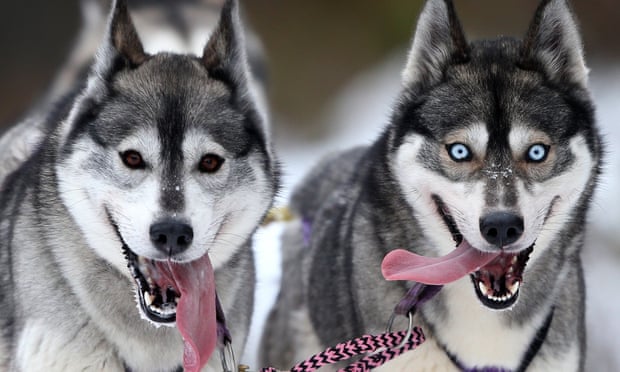
So in one of the largest studies of its kind Professor Peter Savolainen and colleagues sequenced the genomes of 58 members of the dog family including grey wolves, indigenous dogs from south-east and north-east Asia, village dogs from Nigeria, and a collection of breeds from the rest of the world, such as the Afghan Hound and Siberian Husky.
The DNA analysis published in Cell Research found those from south-east Asia had a higher degree of genetic diversity, and were most closely related to grey wolves from which domestic dogs evolved.
Prof Savolainen, of the Royal Institute of Technology, Solna, Sweden, said this indicates “an ancient origin of domestic dogs in southern East Asia 33,000 years ago.”
It is possible an “ecological niche unique in southern East Asia” provided an refuge for both humans and the ancestors of dogs during the last glacial period, with a peak between 26,500 and 19,000 years ago.
Prof Savolainen said: “The mild population bottleneck in dogs suggests dog domestication may have been a long process that started from a group of wolves that became loosely associated and scavenged with humans, before experiencing waves of selection for phenotypes (mutations) that gradually favoured stronger bonding with humans, a process called self-domestication.”
So the history of dogs may involve three major stages including loosely engaged pre-domesticated scavengers, domesticated non-breed dogs with close human-dog interactions, and breed formation following intense human selection for diverse sets of traits.
Prof Savolainen said: “The study of Chinese indigenous dogs thus provide missing links that connect these three major stages.”
The researchers said around 15,000 years ago, a subset of ancestors began migrating towards the Middle East and Africa, reaching Europe around 10,000 years ago.
Although this dispersal is believed to have been associated with the movement of humans, the first movement of man’s best friend out of south-east Asia may have been self-initiated.
This may have been owing to environmental factors, such as the retreat of glaciers, which started about 19,000 years ago.
Dogs from one of these groups then travelled back towards northern China, where they encountered Asian dogs that had migrated from south-east Asia. These two groups interbred, before spreading to the Americas.
Prof Savolainen said the domestic dog, one of our closest companions in the animal kingdom, has followed us to every continent of the world and, as a single species, embodies one of the largest collections of DNA diversity for any on earth.
He said due to their cognitive and behavioural abilities, it has been selected to fulfil a wide variety of tasks including hunting, herding and companionship with the genetic and historical basis of these gene changes intriguing the scientific community, including Darwin.
But despite many efforts studying dog evolution, several basic aspects about the origin and evolution of the domestic dog are still in dispute including several different geographical regions as the proposed birthplace of domestic dogs, and estimations of the date of divergence between wolves and dogs of between 32,000 and 10,000 years ago.
The researchers said around 15,000 years ago, a subset group began migrating towards the Middle East and Africa.
His team analysed the complete DNA of 12 grey wolves, 27 primitive dogs from Asia and Africa and a collection of 19 diverse breeds from across the world to show south east Asian dogs “have significantly higher genetic diversity compared to other populations.”
Prof Savolainen said: “Our study, for the first time, reveals the extraordinary journey the domestic dog has travelled on this planet during the past 33,000 years.”
Chinese indigenous dogs live in the countryside and were sampled across rural China, including many remote regions in Yunnan and Guizhou in southern China.
The breeds include dogs from Central Asia (Afghan Hound) and North Africa (Sloughi), Europe (eight different breeds), the Arctic and Siberia (Greenland dog, Alaska Malamute, Samoyed, Siberian Husky, and East Siberian Laika), the New World (Chihuahua, Mexican and Peruvian naked dog) as well as the Tibetan Plateau (Tibetan Mastiff). These dogs were chosen to cover as many major geographic regions as possible.
Earlier studies have suggested wolves may have been domesticated by the first farmers about 10,000 years ago in the Middle East or Asia, possibly to guard livestock.
But the latest study has found it began much earlier, long before the development of agriculture.