Pages

Showing posts with label current-events. Show all posts

Monday, December 21, 2015

Donie's Ireland daily news BLOG

Ireland’s retail sales to rise by up to 5% this Christmas,

Panic Saturday’ is expected to be one of the busiest days in festive shopping calendar


There has been an “exponential increase” in on-line sales, according to Retail Excellence Ireland.

Retail trade is expected to be up by three to five% this Christmas, according to a new survey.
Retail Excellence Ireland, the group representing retailers, said the poor weather in recent weeks has “very negatively impacted” on-street retail across the State, but that shopping centre retail has been “less affected”.
It reported an increase in convenience grocery sales as consumers “shop local” rather that travelling longer distances to supermarkets.
The weather has also contributed to an “exponential increase” in online sales with many retail operators commenting that Christmas 2015 has marked “a milestone” in how Irish consumers shop.
The survey noted that despite the upturn in some regions, provincial Ireland is “lagging behind” with many operators observing “weak footfall and underwhelming consumer activity”.
It said the Dublin evening economy was “robust and trading exceptionally well”, while the Dublin day-time economy was “performing well”.
The survey also said the Black Friday weekend had been “very robust” for retailers, but that gains were offset by a “very sluggish” two-week period before and after the event. “Many are questioning its continued existence in the Irish retail landscape,” it added.
Panic Saturday
The last Saturdaybefore Christmas is one of the busiest festive shopping days. In the UK panic-buyers and bargain-hunters are expected to flood stores on the busiest day in the Christmas shopping calendar , as high street shops slash prices in an attempt to coax consumers down the aisles.
Retailers including River Island, H&M, Sports Direct, Argos and Sainsbury’s are already offering huge seasonal discounts, with many more sales due to kick off early instead of after Christmas. Discounts are expected to average 45% on what some see as the most stressful shopping day of the year, according to Deloitte.
Around 12.6 million Britons are expected to hit the sales in search of cut-price buys, according to the Centre for Retail Research. A mild autumn and unexpectedly low Black Friday sales have left businesses desperate to shift a build-up of stock, industry experts said.
And thanks to Christmas falling on a Friday this year, ‘Panic Saturday’ is expected to kick off a £6 billion (€8.2bn) six-day spending spree — 23% more than the same period last year when Christmas Day fell on the Thursday.

Recent data shows 55% of Irish people are financially illiterate

   
WE ARE FINANCIALLY ILLITERATE.TEN YEARS ON AND WE STILL DON’T KNOW WHAT A TRACKER MORTGAGE IS, DESPITE ALL THE FINANCIAL WATER UNDER THE BRIDGE, AND THE COLLAPSE OF THE BANKING SYSTEM.

We know this because of recent, unflattering financial data and rankings, which got almost no media coverage.
Rankings are funny. Some rankings get headline news.
Thus, the PISA rankings, which look at science and maths ability, are always good for a headline on how poorly our education system serves us.
With 15% of the 15-year-olds last examined being ‘illiterate’ in science and maths, there is a problem.
It’s not as big a problem as in the US, which scored a 25% share, but it’s still a problem.
Then, there are the university rankings, in which the failure of Irish universities to meet an arbitrarily selected and methodologically protean target is regularly decried.
Again, we are subjected to editorialising and sermonising on how our system fails us.
The questions on financial literacy hardly involve quantum mechanics.
Can the respondent calculate a percentage, differentiate between compound and simple interest, differentiate between spreading and concentrating risk in making decisions about savings, and understand inflation?
Getting three out of four answers correct makes the respondent financially literate.
The study was conducted, by the World Bank and Standard & Poor’s, on more than 150,000 people in 144 countries.
It is a global snapshot of financial literacy.
Globally, a third of the survey respondents were deemed financially literate; in Ireland, it was 55%. In other words, 1.6m adults in Ireland were deemed financially illiterate.

THIS IS PRETTY SERIOUS STUFF.

If half the adult population were literally illiterate, there would be a massive government and social outcry and a plan put in place to remedy it.
Little has been done to improve the situation.
Wealth and financial literacy, both on a national and on an individual basis, are fairly reasonably linked.
However, what is not at all clear is the cause of financial illiteracy.
Although older people have a lower actual literacy, they also display greater confidence in their knowledge, which perhaps suggests how easy it is for the elderly to fall prey to financial scams.
There is a gender issue, too, perhaps related, in that levels of financial literacy tend to be lower among women.
The 2012 PISA study included an examination of school students’ financial literacy and found that, at age 15, there was little gender difference.
Unfortunately, this module of the PISA study was not administered in Ireland, so, again, we find ourselves making policy without evidence.
In fact, earnings are obviously linked to literacy, with rural communities, lower education, and regional impoverishment all being associated with not just lower income outcomes, but also lower financial literacy.
So, does it matter? A lot of research suggests that lower financial literacy, not surprisingly, is associated with poorer financial decision-making in daily life.
In particular, lower financial literacy is associated with lower participation in financial products and with lower forward financial planning, particularly in pension provision or precautionary savings.
Those who are financially less literate tend to have costlier loans and to be more prone to finding themselves in financial difficulties.
They take out costlier loans from costlier borrowers and do not manage these as well as they might.
This happens, regardless of earnings or education or gender — it is the literacy aspect that seems to drive them.
Financial literacy programmes tend to be shoehorned into second-level schools, with little regard for the need to individualise and contextualise.
Those done by financial institutions and advisers, typically in workplaces, are bedevilled by perceptions of marketing.
One thing is clear — financial illiteracy is a problem and one that is being swept under the carpet.

‘We won’t let those bad floods sink our Christmas’ vow defiant locals in Carrick-on-Shannon


Carrick-on-Shannon’s residents take the high road in their on-going battle of the floods.

DSN Fitness Gym owner Siofra O’Connor stands outside her apartment in the Inver Geal apartment complex in Carrick On Shannon last Wednesday. Photo: Tony Gavin
They missed the premiere of the new Star Wars movie due to the three-feet-deep flood in front of the cinema, but the force remains strong with the people of Carrick-on-Shannon.
From assembling make-shift bridges over flooded carparks, organising shuttle bus services across both sides of the river, to sharing toilet facilities with neighbouring businesses and setting up social media groups, natives living along the weir of the marshy bridge say: “We are staying afloat”.
Standing in a newly formed lake outside her apartment block, located in the colourful Inver Geal complex on the Roscommon side of the Shannon, Siofra O’Connor said people are frustrated, but that “there is no point getting down or being depressed”.
“Yes, it’s a ridiculous situation, but we have to focus on solutions,” she said.
“It’s been like living on a movie set for the last two weeks, our apartment complex is surrounded by floods at the front and the Shannon at the back, but the water hasn’t come in, so we have to look at the bright side,” she said.
In 2009, Ms O’Connor, a fitness instructor who runs three businesses in town, was forced to evacuate her old apartment in the same complex – just four doors down.
“The water came up through the floorboards, we were flooded out of it and had to be moved,” said Ms O’Connor, pointing to a car submerged up to the steering wheel in front of her former residence.
“We’ve been lucky, it’s starting to recede. We can’t park outside but that’s minor compared to last time,” she said.
“The whole community is rowing in behind each other; we all understand, we know what people are going through so we’re coming up with new ideas to salvage Christmas and make the best of this situation,” she said.
Although the vast majority of businesses, on both sides of the Shannon, are trading and open for business, parking is a major problem for shoppers and staff.
Mary McEvoy, who works at Enhance Health and Beauty, says so far people are still making the trek for their Christmas beauty treatments, but “we’re not getting much passing trade”.
“There isn’t a lot of footfall and people think we’re closed because of the massive flood outside. It might affect us in voucher sales, but we won’t know that until the end of the month,” said Ms McEvoy, adding that the Roscommon side of the bridge, where Supervalu, Lidl and Mulvey’s Toymaster are based, is the worst hit area.
“The flood has stopped traffic going up the one-way street of the town, and that’s causing a huge bottle-neck at the bridge and preventing people from coming out this side,” she said.
“This place was a flood plain to begin with; businesses shouldn’t have to deal with this. We’re joined up with the Shannon right now, we’re part of the flow,” she said.
“Everybody has an opinion on the floods, but you need experts to look at this and to stop it from happening again. At the moment we have a lot of chiefs and not enough indians,” she said.
Standing behind a wall of sandbags, Rachel O’Malley, manager at Victoria Hall Restaurant, said that, although they’ve remained open, it’s been impossible to access deliveries.
“There has been a big visual impact on us, we’re surrounded by water so people think we’re closed. We’ve had Christmas party cancellations and it’s a tough to swallow. This is usually our busiest time of year,” she said.
Joe Dolan, owner of The Bush Hotel, said flooding on main roads into the town is their biggest problem.
“A lot of our revenue comes from the by-pass, so that’s certainly a blow. But we’re a resilient bunch and we’re remaining upbeat about Christmas week,” he said.
A survey by Retail Excellence Ireland revealed a sharp divide in Christmas shopping between Dublin and the rest of the country, with strong trade in the capital but weak business in provincial stores.
As water levels drop, Leitrim County Council said it will continue to operate a flood management process, but clean-up will not be considered until floods recede.
Flood defences are being maintained and diversions and road closures remain in place at the N4 – between the Townspark and Tesco Roundabout, Park Lane, Quay Street – and the main route from Carrick-on-Shannon to Manorhamilton is closed. Routes to and from Leitrim village are also closed.
Despite limited access to Carrick-on-Shannon, shoppers are being encouraged to buy local this Christmas instead of journeying to Dublin, Sligo and Galway.
However, the children of Carrick-on-Shannon can rest assured that Santa Claus will make it through the floods this Christmas Eve, as local girl, Heidi Caldbeck (11) has asked Saint Nicholas to intervene.
Unknown to her parents, Grainne and Derek, Heidi was fully aware of the anxiety over the Shannon floods while on a trip to the heart of the Arctic Circle in Lapland last week.
Heidi penned a special wish, ‘Make sure Carrick stops flooding’ and placed it in Santa’s ‘Drum of Dreams’.
Santa has told her that he will use “all his powers to help”.

Christmas can be a stressful time but here are five ways to mind your mental health

With so much going on, it’s no surprise so many people find the festive period so stressful.


WITH SO MUCH GOING ON, AND SO MANY DEMANDS ON YOUR TIME AND ATTENTION IT’S NO SURPRISE SO MANY PEOPLE FIND THE FESTIVE PERIOD SO STRESSFUL.

To manage that stress, the people at St Patrick’s Mental Health Services have come up with some ways people can nurture their mental health.
As Clinical Nurse Manager Debbie Van Tonder notes:
“In the run up to Christmas, many people find themselves swept away and overwhelmed by the presents, the cooking, the wrapping, the decorating… But by attempting to take a more mindful approach to festivities, stress-levels can be hugely reduced.”
What is ‘mindfulness’ you ask?
Essentially, it’s derived from a belief of ‘living in the moment’. It’s the practice of purposefully paying attention moment by moment, in a non-judgmental way to the things you do: learning to make time for yourself, learning to slow down and nurture calmness and self-acceptance.
In other words – it’s the opposite of everything going on in this photo…
Here are five tips from St Patrick’s you might like to make note of, in the run-up to Christmas:

1. MAKE A MINDFUL LIST

  • Instead of writing the usual ‘to do’ list that will inevitably include some needless activities, it may be a good idea to sit quietly and ask yourself what activities are going to benefit and nurture ourselves and others and what activities are more avoidable. Focus on what matters.

2. MINDFUL SHOPPING

  • Mindfulness accepts that some experiences are unpleasant, including Christmas queues. See if you can become aware of your reactions when something holds up your progress.
  • Take a moment to ask yourself: What is going through my mind? What sensations are there in my body? What emotional reactions and impulses am I aware of?

3. WALK

  • Physical activity lifts your mood and can reduce stress. Go for a walk and pay attention to the sights, sounds and smells at this time of year. Walk with as much awareness as you can.

4. BREATHE

  • When anxiety or stress gets on top of you, it can be difficult to remember why you should remain calm. By taking three minutes by yourself to meditate, stress-levels can be vastly reduced. Sit quietly and focus on your breathing, in and out.

5. HAVE COMPASSION FOR YOURSELF AND OTHERS

  • Kindness can change an experience completely. The desire in all of us to alleviate suffering is part of what we celebrate at Christmas, the opportunity to share and give. With 1 in 4 people experiencing a mental illness at some point in their life, there is bound to be someone on your Christmas card list who is not feeling festive. Reach out to them. Be kind to yourself and others.

NASA astronauts to go for Monday spacewalk outside ISS


A PAIR OF NASA ASTRONAUTS ON MONDAY MORNING PLAN TO EXIT THE INTERNATIONAL SPACE STATION IN AN EFFORT TO SECURE A RAIL CAR THAT IS STUCK IN THE WRONG PLACE.

The Mobile Transporter, which is holding the station’s 58-foot robotic arm and other equipment, last week stopped rolling on rails just four inches from a work site near the center of the station orbiting 250 miles up.
NASA and its partners want the transporter locked down before the planned Wednesday morning arrival of a Russian Progress resupply ship, which will require the station to maneuver into position and then absorb the force of the docking Progress vehicle.
Scott Kelly, the Expedition 46 commander, and Tim Kopra, who just arrived at the station last week, are expected to begin a minimum three-hour spacewalk around 8:10 a.m.
Watch it live on NASA TV.
Kelly will be the lead spacewalker and wear a suit with red stripes. Kopra will wear an all-white suit.
The spacewalk will be Kelly’s third since he began a yearlong mission in March, and the second of Kopra’s career. It will be the 191st supporting assembly and maintenance of the orbiting research laboratory.
The latching of the Mobile Transporter is not expected to present much difficulty. If it is done quickly, the two astronauts will tackle additional tasks.
Launch of the Progress cargo ship is scheduled for 3:44 a.m. EST on Monday from the Baikonur Cosmodrome in Kazakhstan, and also can be seen on NASA TV.   

Thursday, December 17, 2015

Donie's Ireland daily nees BLOG

Irish State coffers in balance for first time in a decade

   
A €1.64bn sale of AIB preference shares coupled with better than expected exchequer returns means that the exchequer will be close to balance for the first time since 2007.
AIB will today pay the state €1.64bn in cash from the total bailout funds it received since the financial crash.Finance Minister Michael Noonan is expected to signal today that by the end of the month Ireland will be taking in more than it is spending for the first time in a decade.
Its major capital reorganisation plus the surge in €3bn more than expected in tax receipts so far this year will be added to by the end of year figures.
The increased revenue intake means that Ireland’s borrowing costs will also be reduced while Ireland’s debt ratio will be cut by almost 1% of GDP in 2016.
It is understood the Cabinet discussed the expected end of year returns at its meeting this week.
The AIB transaction marks its first meaningful return of funds to the state after €21bn was pumped into the bank.
Irish taxpayers will still retain 99.8% of the shares in AIB, an investment with a value currently estimated at €11.7bn.
At the beginning of this month, the Government had collected just below €42bn in taxes, almost €3bn more than it expected to collect at the start of the year.
The further income for the exchequer that is expected to be collected by the end of this month will leave the exchequer close to balance —for the first time since the end of the boom in 2007.
Ireland’s debt is now also forecast to fall to 92% of GDP, in line with the euro area average.

AIB to repay Irish State €1.87bn after approval for reorganisation

Bank says it has already paid €3bn to the Government in various fees so far.


AIB chairman Richard Pym told shareholders the bank has paid about €3 billion to the State in fees related to the Government’s guarantees.

AIB will pay the State €1.866 billion tomorrow after receiving shareholder approval for a major capital reorganisation that also puts it on the path back to private sector ownership.
This will mark the first repayment by AIB of the €20.8 billion in bailout funds that it received from the State following the global financial crash in 2008.
AIB will pay the Government €1.7 billion in to redeem 1.36 billion of the 3.5 billion preference shares held by the State. It will also pay a dividend of €166.4 million relating to these shares.
In addition, the balance of preference shares will be converted to ordinary stock for the State and will be admitted for trading on the junior ESM market in Dublin on December 18th.
AIB will also press ahead with a consolidation of its share base, issuing one new share for every 250 held by investors. This will have the effect of reducing the number of shares in issue to 2.7 billion. The new shares will begin trading at 8am on December 21st.
AIB has agreed to the potential issue of warrants of up to 9.99% of the bank’s issued ordinary share capital to the minister for finance at the time of any re-admission of its ordinary shares to a regulated market. And the minister has agreed to redeem the EBS promissory note.
With the State owning 99.8 per cent of the bank, approval for the capital reorganisation was never in doubt but AIB was required to hold an extraordinary general meeting in Dublin to put 12 resolutions to all shareholders.
At the meeting in the RDS, AIB’s chairman Richard Pym said the capital reorganisation would “both strengthen and simplify” its capital structure and position the bank to transition from State to private sector ownership.
Mr Pym told shareholders that since the global financial crash in 2008 and its bailout by taxpayers, AIB has paid about €3 billion to the State in fees related to the Government’s guarantees, and coupon payments on the preference shares and contingent capital notes held by the State.
“Today marks the start of our repayment of the capital and we remain grateful to the Government and taxpayers for their continued support,” Mr Pym said.
Mr Pym told shareholders that he intended to take a poll on each resolution at the end of the EGM, even though the proposals were supported by the Minister for Finance Michael Noonan, who holds 99.8 per cent of the shares.
AIB received a bailout of €20.8 billion from the State post the crash in 2008. In response to a question from a shareholder, AIB chief executive Bernard Byrne said he expects the bank would repay “all of its money (to the State) in a reasonable timeframe”.
Mr Byrne indicated to media after the meeting that this could be a period of five to 10 years.
Mr Pym said the resolutions being voted on at the EGM would give the company a “market-standard capital structure” and would prepare the bank for a main stock market listing.
He said that the timing of an IPO would be subject to market conditions but he expects “very strong investor appetite for the stock” whenever it is brought to the stock exchange, highlighting how two recent debt issuances by the bank were oversubscribed.
Mr Byrne rejected criticism from investment adviser Brendan Burgess that AIB was overcharging its non-tracker mortgage customers. Mr Burgess argued that average mortgage rates across the EU amounts to about 2 per cent while AIB’s average rate is closer to 3.5%.
He said that whenever competition comes back into the Irish market, AIB’s profits would be hit. Mr Byrne responded by saying the bank, unlike its rivals, had reduced its standard variable rate three times over the past 12 months.
Mr Pym rejected a suggestion from TD Shane Ross that AIB should suspend its shares as they were “grossly overvalued” and people who have bought the shares recently stand to lose a lot of money when the capital reorganisation is completed.
The shares are currently trading at about 3.5% while the bank is proposing to convert some of the preference shares held by the State to ordinary shares for 1.7% each as part of the capital reorganisation being voted on at the EGM. This effectively puts a new floor on the bank’s share price.
Mr Pym said the company had repeatedly warned investors that the shares were overpriced and, as such, there is no more information that it can place in the market.
He said the bank would not be seeking a suspension of its shares as it would “mean that no-one in this room could deal in the shares if they wanted to” and “I don’t think it’s up to the company to deny you that opportunity to sell your shares”.

Irish developers slow to build so they can boost their profits after housing price inflation?

Developers can earn some €20,000 on newly built home that sells for €300,000?

      
Nama chief executive Brendan McDonagh (pictured above left) says that many of the developers are “not satisfied” with a profit of €20,000 per house and want to wait until prices rise to the point where it reaches €50,000 or more?
Developers are stalling on building new houses so that they can boost potential profits, National Asset Management Agency (Nama) chief executive Brendan McDonagh told TDs and Senators on Wednesday.
Responding to questions from an Oireachtas committee on Nama’s role in tackling the housing shortage, Mr McDonagh said that developers can now expect to earn a profit of €20,000 on a newly built home that sells for €300,000.
However, he said that many of them are “not satisfied” with a profit of €20,000 per house and want to wait until prices rise to the point where it reaches €50,000 or more.
“It’s profitable to build houses,” Mr McDonagh said. “It’s a question of how much profit people want to make.”
Commercial return
The Government wants Nama to fund the construction of 20,000 new homes between now and 2020, but the legislation establishing the agency demands that it must earn a commercial return from this.
Mr McDonagh said that it has taken a 35 per cent rise in property prices since 2013 to make residential construction viable again. A three-bed home in Dublin, which sells for €300,000, costs €260,000 to €280,000 to build.Central Statistics Office figures show that, as recently as April 2014, the same house would have sold for about €240,000, well short of break-even. Nama chairman, Frank Daly, stressed that the agency could not fund residential building on that basis, as it would not have been confident of getting a commercial return.
A Nama review of its borrowers’ residential sites showed that it can now develop 13,200 new homes on a number of them. It can provide the remaining 6,200 once it gets other sites serviced.
Nama expects to earn more than €1 billion in profits this year, more than double the €473 million it generated in 2014. Mr Daly told the Oireachtas Committee on Finance, Public Expenditure and Reform that it expects to pay a €2 billion surplus to the State once its work is finished in 2020.
Second letter to Cushnahan
Mr Daly also confirmed that he has written a second letter to former adviserFrank Cushnahan, one of those at the centre of the row over Nama’s sale of its Northern Ireland loans to US company Cerberus for €1.6 billion last year.
The chairman wrote to Mr Cushnahan last month, asking why he did not declare that he, former Northern Ireland first minister Peter Robinson and lawyer Ian Coulter met a potential bidder for the Northern loans, US fund Pimco, in May 2013, while he was still a member of Nama’s Northern Ireland Advisory Committee.
Mr Daly said that Mr Cushnahan has yet to reply to his first letter and added that he wrote to him again this week.

FF leader criticises lack of funding for drug treatment

Micheál Martin says cystic fibrosis patients will need help to pay for the new drug Orkambi.

    
The Fianna Fáil leader Micheál Martin’s bottom line was there was no extra provision for a high-tech drug scheme.
Decisions on the reimbursement of the cost of medicines were neither political nor ministerial, Taoiseach Enda Kenny has said.
He said they were made on objective, scientific and economic grounds by the Health Service Executive on the advice of the National Centre for Pharmacoeconomics (NCPE).
Mr Kenny was replying to Fianna Fáil leader Micheál Martin, who said a ground-breaking drug, Orkambi, had arrived on the market to treat cystic fibrosis (CF).
“The response of the authorities in the health service plan, and that of the Government, is that no funding will be made available in 2016 to provide the drug for patients,” Mr Martin said. “The HSE is clear that if the Government wants to fund it, it will have to provide it with additional money.”
Mr Kenny said last month the manufacturer of the drug had submitted a rapid review application to the NCPE as the first step in a pricing and reimbursement application.
The HSE estimated the cost could be about €90 million annually, he said.
“Given the significant budgetary impact, the NCPE is likely to require a full technology assessment of the drug to be carried out before making any recommendation to the HSE on reimbursement, in keeping with the normal procedure.”
Mr Kenny said the Department of Health and the HSE had made significant improvements to the facilities for CF sufferers around the country, particularly isolation units.
“This matter is part of the application process which has a journey to travel,” he said.
Mr Martin said the bottom line was there was no extra provision for the high-tech drug scheme next year, despite the escalating cost of treatment.

Tourist visits to Ireland in 2015 rise to a new record

Tourism Ireland plans to capitalise on the popularity of Star Wars "The Force Awakens"


Tourism Ireland is basing its new publicity campaign around the filming of part of the new Star Wars on Skellig Island.

It’s official – 2015 has seen a record number of people visiting the country.
At an end-of-year review this morning Tourism Ireland estimated that by December 31st, 7.9 million people will have visited Ireland during the year – beating a previous record set in 2007.
Minister for Tourism Paschal Donohoe said he wants to add another 50,000 jobs in the industry by 2025.
Mr Donohoe said he was particularly pleased with this week’s release of Star Wars: The Force Awakens which features scenes shot on Skellig Michael in Co Kerry.
Mr Donohoe, a keen sci-fi fan and collector of Star Wars and other sci-fi figurines, is anticipating further growth next year on the back of the movie.
Tourism Ireland will launch the first phase of its Star Wars campaign on Thursday which aims to encourage fans of the science fiction franchise to visit Ireland.
Niall Gibbons, chief executive of Tourism Ireland, said: “A hugely popular name like Star Wars filming here will bring the magnificent scenery of Skellig Michael and the Wild Atlantic Way to the attention of millions of people around the world.
“It’s a really effective way to reach mass audiences, helping to significantly boost awareness of the Skelligs, the South West and Ireland in general, providing a global platform for Ireland as a holiday destination and whetting peoples’ appetites to come and visit.”
Mr Gibbons said the all-island body was also buoyed value for money indicators which showed holidaymakers’ spending had increased by 29 per cent since the recession.
He also said whereas 43% of visitors from Britain had viewed Ireland as offering poor value for money in 2009, that figure was now around 10 per cent.
Over the period the euro has become weaker against sterling.
“Beyond the negative the figures show most people think Ireland is good value for money”, he said. The second phase of Tourism Ireland’s Star Wars campaign will be unveiled in early 2016.

Dog has been man’s best friend for some 33,000 years, An DNA study finds

First domesticated dogs came about 33,000 years ago and migrated to Europe from south east Asia, rather than descending from domesticated European wolves 10,000 years ago as had previously been thought

   
Man’s best friend came about after generations of wolves scavenged alongside humans more than 33,000 years ago in south east Asia, according to new research.A new study finds Dog has been man’s best friend for over 30,000 years.
Dogs became self-domesticated as they slowly evolved from wolves who joined humans in the hunt, according to the first study of dog genomes.
And it shows that the first domesticated dogs came about 33,000 years ago and migrated to Europe, rather than descending from domesticated European wolves 10,000 years ago as had previously been thought.
Scientists have long puzzled over how man’s best friend came into existence but there is conflicting evidence on when and where wild wolves were first tamed.
First domesticated dogs came about 33,000 years ago and migrated to Europe from south east Asia.
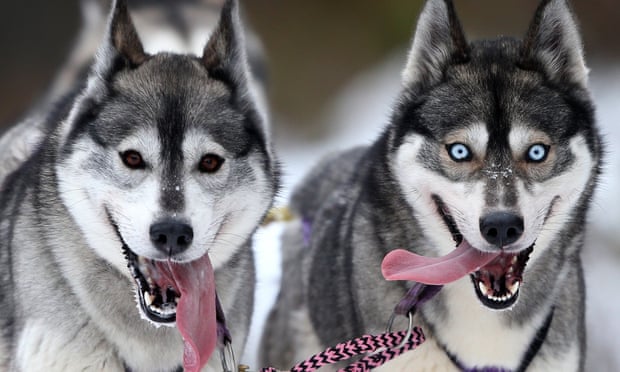
So in one of the largest studies of its kind Professor Peter Savolainen and colleagues sequenced the genomes of 58 members of the dog family including grey wolves, indigenous dogs from south-east and north-east Asia, village dogs from Nigeria, and a collection of breeds from the rest of the world, such as the Afghan Hound and Siberian Husky.
The DNA analysis published in Cell Research found those from south-east Asia had a higher degree of genetic diversity, and were most closely related to grey wolves from which domestic dogs evolved.
Prof Savolainen, of the Royal Institute of Technology, Solna, Sweden, said this indicates “an ancient origin of domestic dogs in southern East Asia 33,000 years ago.”
It is possible an “ecological niche unique in southern East Asia” provided an refuge for both humans and the ancestors of dogs during the last glacial period, with a peak between 26,500 and 19,000 years ago.
Prof Savolainen said: “The mild population bottleneck in dogs suggests dog domestication may have been a long process that started from a group of wolves that became loosely associated and scavenged with humans, before experiencing waves of selection for phenotypes (mutations) that gradually favoured stronger bonding with humans, a process called self-domestication.”
So the history of dogs may involve three major stages including loosely engaged pre-domesticated scavengers, domesticated non-breed dogs with close human-dog interactions, and breed formation following intense human selection for diverse sets of traits.
Prof Savolainen said: “The study of Chinese indigenous dogs thus provide missing links that connect these three major stages.”
The researchers said around 15,000 years ago, a subset of ancestors began migrating towards the Middle East and Africa, reaching Europe around 10,000 years ago.
Although this dispersal is believed to have been associated with the movement of humans, the first movement of man’s best friend out of south-east Asia may have been self-initiated.
This may have been owing to environmental factors, such as the retreat of glaciers, which started about 19,000 years ago.
Dogs from one of these groups then travelled back towards northern China, where they encountered Asian dogs that had migrated from south-east Asia. These two groups interbred, before spreading to the Americas.
Prof Savolainen said the domestic dog, one of our closest companions in the animal kingdom, has followed us to every continent of the world and, as a single species, embodies one of the largest collections of DNA diversity for any on earth.
He said due to their cognitive and behavioural abilities, it has been selected to fulfil a wide variety of tasks including hunting, herding and companionship with the genetic and historical basis of these gene changes intriguing the scientific community, including Darwin.
But despite many efforts studying dog evolution, several basic aspects about the origin and evolution of the domestic dog are still in dispute including several different geographical regions as the proposed birthplace of domestic dogs, and estimations of the date of divergence between wolves and dogs of between 32,000 and 10,000 years ago.
The researchers said around 15,000 years ago, a subset group began migrating towards the Middle East and Africa.
His team analysed the complete DNA of 12 grey wolves, 27 primitive dogs from Asia and Africa and a collection of 19 diverse breeds from across the world to show south east Asian dogs “have significantly higher genetic diversity compared to other populations.”
Prof Savolainen said: “Our study, for the first time, reveals the extraordinary journey the domestic dog has travelled on this planet during the past 33,000 years.”
Chinese indigenous dogs live in the countryside and were sampled across rural China, including many remote regions in Yunnan and Guizhou in southern China.
The breeds include dogs from Central Asia (Afghan Hound) and North Africa (Sloughi), Europe (eight different breeds), the Arctic and Siberia (Greenland dog, Alaska Malamute, Samoyed, Siberian Husky, and East Siberian Laika), the New World (Chihuahua, Mexican and Peruvian naked dog) as well as the Tibetan Plateau (Tibetan Mastiff). These dogs were chosen to cover as many major geographic regions as possible.
Earlier studies have suggested wolves may have been domesticated by the first farmers about 10,000 years ago in the Middle East or Asia, possibly to guard livestock.
But the latest study has found it began much earlier, long before the development of agriculture.