Pages

Showing posts with label Irish patients. Show all posts

Monday, August 8, 2016

Donie's Ireland daily news BLOG update

Irish domestic growth about 6% last year, says NTMA

GDP FIGURE OF 26% SEVERELY OVERSTATED GROWTH, SAYS NATIONAL TREASURY MANAGEMENT AGENCY

     
Conor O’Kelly, chief executive of NTMA: its presentation is the first by an official agency to try and capture a more realistic measure of the economic growth rate.
The underlying growth in Ireland’s domestic economy last year was around 6 per cent, according to estimates by the National Treasury Management Agency, in its latest presentation to investors. The NTMA document says that the GDP growth rate of over 26% in the latest GDP figures severely overstates the growth in economic activity here.
The NTMA’s work is the first calculation by an official agency which tries to capture a more realistic measure of the rate of economic growth. It says that on its calculations the underlying growth in domestic demand in the economy was running around 6.8% at the end of 2015. This measurement is in nominal terms – not taking into account price changes, although as inflation was low the difference for the domestic economy would not be very large.
The NTMA presentation also tries to adjust for the main factors which distorted growth via the multinational and business sectors. It says this would reduce the nominal rate of overall GDP growth to 11% last year. The recent CSO figures showed nominal growth of over 32% in GDP last year, with real growth and adjusted for inflation – of over 26%.
The NTMA warns that the CSO figures will complicate the EU Commission’s judgement about Ireland’s compliance with the rules under the stability and growth pact. These rules state that the deficit must be reduced at a specified rate each year as a percentage of GDP. A committee chaired by Central Bank governor Philip Lane is to look at whether separate more realistic figures can be produced, but the CSO will also have to continue to publish figures using international guidelines.
In a separate paper looking at corporation tax, NTMA economist David Purdue says that 10 companies accounted for more than 40% of corporation tax revenues last year , up from the average of 23.8% which the top 10 accounted for between 2008 and 2012. This could create a vulnerability if the companies relocate, or if there are once-off transactions which hit Irish revenues. However, Mr Purdue says that the market generally believes that the Government has taken a conservative view of likely corporation tax revenues for 2016 and it will probably continue to do so.

A record 530,000 on Ireland’s public hospital waiting lists

NUMBER WAITING LONG PERIODS CONTINUES TO SOAR DESPITE ALL THE GOVERNMENT PROMISES


THE HOSPITAL WITH THE LONGEST WAITING LIST WAS UNIVERSITY HOSPITAL GALWAY, AT 32,000.

A record 530,000 people are on a public hospital waiting list for inpatient, outpatient or day care, new figures show.
The number of patients on waiting lists, and the numbers waiting long periods for an appointment, continue to soar, despite the Government’s promise to spend €50 million a year tackling overcrowding.
A record 430,000 patients were waiting for an outpatient appointment at the end of last month, according to the latest monthly data from the National Treatment Purchase Fund (NTPF).
This is 10,000 up on the previous month. Trends also indicate the rate of increase is accelerating. More than 70,000 of these outpatients have been waiting for an appointment for over a year, while 39,000 have been waiting longer than the 15-month supposed “maximum” waiting time set by the Government.
“These figures are a huge indictment of the performance of the Government, the Department of Health and the HSE in tackling long waiting lists,” commented Fianna Fáil’s health spokesman Billy Kelleher.

COST LIVES?

Delays in seeing patients could result in delays in diagnosing serious conditions in patients, and could ultimately cost lives, he warned.
The hospitals with the longest waiting lists include University Hospital Galway, at 32,000, Cork University Hospital, where 25,000 patients are on the list, and Beaumont Hospital in Dublin, at 27,000. Meanwhile, almost 78,000 people are waiting for inpatient or day case procedures, a slight increase on the previous month. Almost 14,000 of these have been waiting for longer than a year, and 7,000 are on the list for more than the target maximum of 15 months.
Another 20,000 patients are waiting for gastrointestinal procedures, for which a separate list exists. The reasons for the inexorable rise in waiting lists are disputed. The Government blames rising demand, with an additional 20,000 procedures carried out this year.

OVERCROWDING

Earlier in the year, overcrowding in emergency department forced the cancellation of non-urgent appointments elsewhere in the health system and contributed to a rise in waiting lists, but this effect should have diminished since the end of the winter.
Mr Kelleher said it was clear the health system was not employing sufficient numbers of doctors and nurses to meet demand.
Minister for Health Simon Harris has told the HSE to prepare an action plan setting out specific measures to deal with waiting lists to the end of this year. The plan will focus on the longest waiters first, as well as on measures to “validate” lists.
The programme for government provides €15 million to the NTPF to address waiting lists in 2017, on top of the €50 million the Government says it is devoting to the issue. Last month, the fund was given €1 million to fast-track treatment for 3,000 endoscopy patients waiting more than 12 months.
Fianna Fáil has called for the NTPF to be given the role once again of outsourcing operations to the private sector. Mr Kelleher said it was disappointing this would not happen until next year.
Meanwhile, there were 267 patients on trolleys in emergency departments yesterday, at what should be one of the quietest times of the year.
Beaumont and the Mater hospital had the highest number of patients awaiting admission, at 31 apiece.

The proud moment Paddy Barnes led out our Olympic heroes in Rio


IRELAND FLAG BEARER PADDY BARNES PROUDLY LEADS OUT THE IRELAND 77 STRONG TEAM DURING THE RIO OLYMPIC GAMES 2016 OPENING CEREMONY.

Paddy Barnes has fulfilled his dream as the Belfast man proudly led the Irish Olympic team out at the Maracana in Rio.
Barnes led the 77 Irish athletes, who will compete across 14 sports, out in a glitzy Opening Ceremony in the famous Rio stadium.
Fireworks explode while dancers perform during the Opening Ceremony of the Rio 2016 Olympic Games at Maracana Stadium on August 5, 2016 in Rio de Janeiro, Brazil. (Photo by Christian Petersen/Getty Images)
Proud Irishman Barnes revealed his joy when he was chosen as the Irish flag bearer in April this year.
“I’m delighted to have been asked to carry the Irish flag into the Olympic Stadium at the Opening Ceremony,” said Barnes at the time.
“It’s an amazing feeling to represent Ireland at an Olympic Games and I’ve been lucky enough to experience it twice before already.
“Going to my third Olympic Games as the flag bearer for Team Ireland now is just an incredible honour.
“I will be going for gold in Rio in the ring but I will also have the responsibility of helping to build a really positive environment for all Irish athletes. I could not be more excited about the next 100 days.”

Mental health task-force will seek to help young people

OMBUDSMAN FOR CHILDREN NIALL MULDOON HOPES INITIATIVE WILL MAKE A ‘REAL DIFFERENCE’


DR NIALL MULDOON, OMBUDSMAN FOR CHILDREN: HE SAID THE NEW NATIONAL TASKFORCE ON YOUTH MENTAL HEALTH “HAS THE POTENTIAL TO DRIVE REAL CHANGE IN AN AREA WHERE IT IS VERY MUCH NEEDED”.

The Ombudsman for Children has said the new National Task-force on Youth Mental Health will need to ensure it delivers specific actions that will “make a real difference in the lives of young people”.
Dr Niall Muldoon was commenting on the initiative to bring together people appropriately placed to examine issues faced by children and young people.
“The establishment of a [taskforce] is a very positive development and one that has the potential to drive real change in an area where it is very much needed,” he said. However, it must identify “clear actions” which would be “supported with the necessary resources”.
The body was announced by Minister of State for Mental Health and Older People Helen McEntee who will chair. It will meet in September.
Among the group will be a representative from Facebook; Mayo footballerRob Hennelly who has spoken about mental health; and Dr Tony Bates, chief executive of Jigsaw.
Other members include Mary Cunningham of the National Youth Council of Ireland; Grainia Long of the Irish Society for the Prevention of Cruelty to Children; Cian Power from the Union of Students of Ireland; Prof Mary Cannon of the Royal College of Surgeons; Dr Shari McDaid of Mental Health Reform; Moninne Griffith of BeLonG To; Ian Power of SpunOut.ie; and Jim Breen of Cycle Against Suicide. A related group to assist the taskforce will be co-chaired by Niall Breslin, and Emma Farrell.

A new study identifies short list of 20 planets with Earth like properties

AND THE POTENTIAL TO HARBOUR LIFE AS WE KNOW IT?


FINDING LIFE BEYOND EARTH MEANS COMBING THROUGH AN INCREDIBLY VAST ARRAY OF POTENTIAL PLANETARY CANDIDATES, BUT ONE NEW STUDY FROM A TEAM OF RESEARCHERS LED BY SAN FRANCISCO STATE UNIVERSITY ASTRONOMER DR. STEPHEN R. KANE HOPES TO ADD SOME ADDITIONAL SPECIFICITY TO THE SEARCH.

The international group of scientists behind the study examined over 4,000 planets outside of our solar system (exoplanets for those In the know) to identify the ones most likely to harbour life based on the model of the only life-bearing planet we know of: Earth.
The result of the research is a long list of 216 planets from the Kepler list, a catalogue of space-based spheres gathered by the Kepler space observatory launched by NASA in 2009 to identify and observe Earth-sized exoplanets. From that list, which includes all planets found to be within the so-called “habitable zone” surrounding a star in which water could remain liquid on the surface of the celestial body.
As we know from the makeup of our own solar system, occupying that solar sweet spot is crucial for supporting life. Any further away, and water freezes – closer in, and it evaporates. Based again on the only example we currently have (Earth), life generally requires liquid water for sustenance.
From that group of 216 — which fit the broad definition of occupying the habitable zone around their particular star, which meant looking at other factors including size and composition of planets — came a short list of 20 candidates which are located in a more “conservatively” defined habitable zone, and that are small and rocky.
Coming up with a short list of Earth-like planets has very real value to the continued project of searching for signs of extraterrestrial life. Simply investigating every exoplanet identified by Kepler just isn’t feasible in terms of available resources, but a core group of 20 with characteristics that greatly increase the likelihood of finding Earth-like life is manageable.
“There are very limited resources available for studying the atmospheres of terrestrial planets and so the Habitable Zone is used to select those planets most likely to have liquid water on the surface,” Kane explained in an interview. “This will become increasingly important once new facilities, such as the James Webb Space Telescope, are deployed.”
So exactly how likely is it that these new 20 Earth-2’s are home to alien life? That’s not for this study to say.
“Unfortunately we cannot give probabilities that a planet has life at this point since we still only have one data point – the Earth – for which we know life exists,” Kane cautioned. “What we can do is focus our efforts on the planets most likely to yield evidence of extraterrestrial life and that is what we hope our work will provide.”

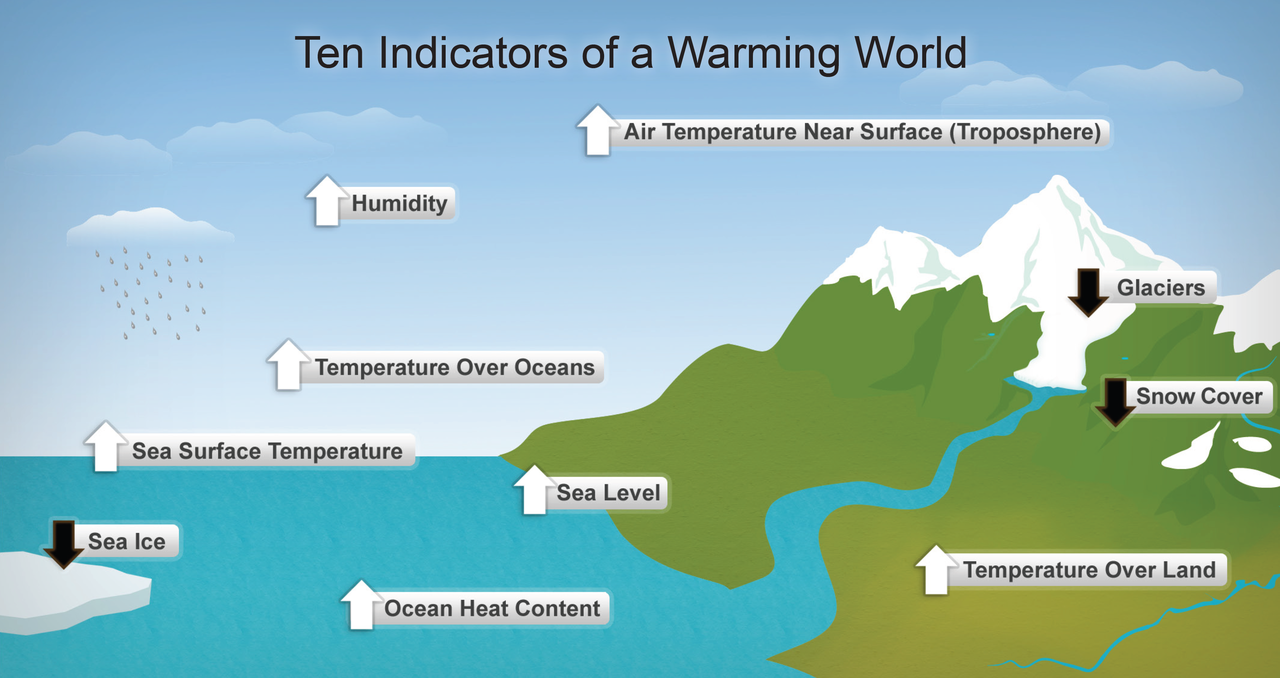
Global warming limit will miss key climate target
     

PARIS CLIMATE SUMMIT AGREED IN 2015 TO LIMIT GLOBAL WARMING TO BELOW 1.5C.

The Paris climate summit in December last year had made a decision to limit global warming to 1.5C, measured in relation to pre-industrial temperatures.
The earth is dangerously close to breaking through a 1.5C upper limit for global warming, climate scientists have warned.
The Paris climate summit in December last year had made a decision to limit global warming to 1.5C, measured in relation to pre-industrial temperatures. Scientists and campaigners had hailed the move as a landmark decision and a major success. By setting the target, they said, desertification, heatwaves, widespread flooding and other global warming impacts could be avoided.
But just eight months after the Paris summit Met Office data prepared by meteorologist Ed Hawkins of Reading University shows that average global temperatures were already more than 1C above pre-industrial levels for every month except one over the past year and it peaked at +1.38C in February and March, the Guardian has reported. Keeping within the 1.5C limit will be extremely difficult, say scientists, given these rises.
The Intergovernmental Panel on Climate Change talks in Geneva this month will likely discuss this alarming rise and scientists will start to outline ways to implement the goals that were set in Paris, the Guardian said. Dates for abandoning all coal-burning power stations and halting the use of combustion engines across the globe — possibly within 15 years — are likely to be set.   

Thursday, February 27, 2014

Donie's news Ireland daily BLOG Wednesday

Construction sector is set to grow in Ireland by 30% for next 4 years 


It is hoped that a boost in the Irish construction industry will begin to attract emigrants back home to Ireland.

A new report by the Society of Chartered Surveyors of Ireland has forecast growth of 30% within the sector over the next four years, with the creation of almost 30,000 jobs.
It is predicted that the upward trend in activity will be driven by the private commercial and residential sectors.
President of the SCSI, Micheál O’Connor, says Dublin is the main driving force behind the positive outlook.
Mr O’Connor also said they have concerns about being able to fill the jobs in the growing sector.
“A lot of construction workers have emigrated and also there’s a lack of school leavers embarking on a career in construction or property,” Mr O’Connor said.
“So that’s going to be a real concern, and it will see a need for potentially emigrants to return home and re-engage in the construction and property sector.”

Irish Government defeated in a Seanad vote on upwards-only rent reviews


Independent Senator Fergal Quinn Bill passes narrowly

The Government has been defeated in the Seanad in a vote on a Private Member’s Bill ending upward only rent reviews.The Bill, moved by Independent Senator Feargal Quinn, was carried by 23 votes to 22, in a division where Senators walked through the Ta and Nil lobbies, having received the backing of fellow Independents.
Earlier, there had been a tie in an electronic vote and the Bill was defeated on the casting vote of Fine GaelCathaoirleach Paddy Burke. When Mr Quinn’s supporters called for a “walk through’’ vote, Independent Senator Paul Bradford had arrived in the chamber and supported the Bill.
The Bill now goes to the Dáil for consideration.
Mr Quinn said his Bill, the Upward Only (Clauses and Reviews) Bill 2013, was anything but arbitrary or discriminatory.
“The reason this Bill targets upward only clauses in the commercial sector is because of the damage which has been done to that sector by the existence of such clauses,’’ he added.
Mr Quinn said the legislation did not seek to impose any burden on landlords as a class, and it merely sought to allow market rents to prevail.

Sligo capital of the North-West out to resurrect its fortunes


Like so many other places in the Irish State ‘The capital of the northwest Sligo’ lost the run of itself during the boom period.

Sligo rightly sees itself as the “capital of the northwest”, easily outpacing Enniskillen. With a royal charter granted in 1613, it defines itself as a “city” even though the population within the perfect circle that marks the urban boundary is fewer than 20,000 – a far cry from the European threshold of 100,000 for city status.
Designated as a development “gateway” under the 2002 National Spatial Strategy (NSS), Sligo has significant strengths – not least its unrivalled topographical setting, with Ben Bulben on one side and Knocknarea on the other, and the fast-flowing Garavogue river sweeping right through the town centre.
Borough architect Seán Martin notes that Sligo experienced a “dramatic period of change in the 19th century when our port, which could then be considered the equivalent of an international airport, was bringing trade, farming materials, plant, stock, coal and timber to and from Sligo”, generating local prosperity.
Much of this wealth was invested in fine buildings such as Sligo courthouse, the Town Hall, bank branches such as the superb Victorian Italianate Ulster Bank at Hyde Bridge, the Model School that lives on as the Niland Gallery and the former St Columba’s mental asylum, which is now an unusual Clarion Hotel.
Like so many other places in Ireland, though, Sligo lost the run of itself during the boom years. Hugely optimistic population projections were made and large tracts of land on the outskirts were rezoned for residential development.
Crazy prices were paid, even by the local authority, for land in areas such as Bellinode.
In town, river walks were laid out along both sides of the Garavogue, lined by new apartment buildings and old warehouses with cafes and shops at quay level. The old Silver Swan Hotel, at Hyde Bridge, was replaced by an angular glazed prow-like structure, The Glasshouse, Hotel, with a vacant eight-storey apartment block alongside it.
The N4 dual-carriageway was driven through the town centre, isolating Sligo’s cathedral from the railway station, and the envisaged “streetscape” along its length – intended to present a new face of Sligo – never materialised. Neither did the Treasury Holdings plan for a major shopping centre on the Wine Street car park.
The twice-daily scheduled Aer Arann air service to and from Dublin ceased operating three years ago after its PSO (public service obligation) subsidy was withdrawn. Passenger numbers had plummeted to 26,000 a year – and it turned out that the subsidy was costing taxpayers €95 for each passenger.
 On the plus side, Strandhill Airport – owned 50% by the Sligo County Council – is still the base for an Irish Coast Guard Search and Rescue helicopter and it is used regularly to fly out fresh shellfish to France.
The Dublin-Sligo rail service has also been improved, with trains now running frequently, and more is promised.
Unlike Limerick, there is no specific new vision or strategy for Sligo once its county and borough councils merge, other than the current Sligo County Development Plan (2011-2017) and the borough’s Sligo and Environs development plan (2010-2016). These will no doubt be reconciled after the councils become a single authority.
Even though the borough did not have an independent corporation, Seán Martin believes that it will “not be so challenging to make transition” because there is not another big urban centre in the county;  The new municipality of North Sligo would largely consist of the urban area and satellites from Ballysadare to Rosses Point.

Irish Nurses workload is too much? Results show education is linked to the patients survival rate

Prof Anne Scott (above picture right), of the School of Nursing in Dublin City University, who led the Irish arm of the study, said there was a significant variation in nurse staff ratios between hospitals and even wards here.

Between administering medications (as above) and coordinating care, nurses are some of the busiest health care professionals, often placed as the first point of contact for patients. Perhaps it comes as no surprise, then, that a recent study suggests patients are more likely to die after common surgeries when the nurses who care for them have heavier workloads.

Results of the study are published in The Lancet, where researchers from nine European countries report on data derived from over 420,000 patients in 300 hospitals.
They say that for every extra patient added to a nurse’s average workload, the chance of surgical patients dying within 30 days of admission increases by 7%.
However, they also found that a 10% increase in the ratio of nurses who hold a bachelor degree is linked to a 7% decrease in the risk of death.
To conduct their study, the team evaluated responses from more than 26,500 nurses and reviewed medical records for the hundreds of thousands of patients aged 50 years or older who were discharged after common surgeries, such as hip/knee replacements, appendectomy, gall bladder surgery and vascular procedures.
Their investigation took into account each patient’s risk of death and included age, sex, type of surgery, type of admission and the presence of certain chronic conditions. In addition, the team considered hospital characteristics, such as bed size, teaching status and technology.
Lead researcher Prof. Linda Aiken, from the University of Pennsylvania School of Nursing in the US, says:
“Our findings emphasize the risk to patients that could emerge in response to nurse staffing cuts under recent austerity measures, and suggest that an increased emphasis on bachelor’s education for nurses could reduce hospital deaths.”

‘EVIDENCE MAY BE DEEMED TOO EXPENSIVE TO ACT UPON’

In detail, the report shows that the overall percentage of patients who died in the hospital within 30 days of admission was low, between an average of 1.0-1.5%.
But this percentage varied from hospital to hospital and ranged from less than 1% to more than 7%, the researchers say.
Additionally, nurse workload and education levels differ among countries. For example, the average patient-to-nurse ratio in Spain was 12:7, whereas in Norway this was 5:2.
In terms of education, all nurses in Spain and Norway had a bachelor’s degree, compared with an average of only 10% in Switzerland. In England, 28% of nurses had bachelor’s degrees.
The authors write about their findings in detail:
“These associations imply that patients in hospitals in which 60% of nurses had bachelor’s degrees and nurses cared for an average of six patients would have almost 30% lower mortality than patients in hospitals in which only 30% of nurses had bachelor’s degrees and nurses cared for an average of eight patients.”
Prof. Aiken says the European findings mirror data from the US suggesting “that a safe level of hospital nursing staff might help to reduce surgical mortality, and challenge the widely held view that nurses’ experience is more important than their education.”
The team says their findings back a European Union (EU) decision last year to approve education for nurses within higher education institutions starting after 12 years of general education.
In a linked comment to the study, Alvisa Palese, from the University of Udine in Italy, and Roger Watson, from the University of Hull in the UK, write that this latest research provides support for appropriate patient-to-nurse ratios.
“Whether these findings are used to inform health care policy or how they are implemented in practice will be interesting to see,” they say.

Kepler telescope bags huge haul of planets


The science team sifting data from the US space agency’s (Nasa) Kepler telescope says it has identified 715 new planets beyond our Solar System.

In the nearly two decades since the first so-called exoplanet was discovered, researchers had claimed the detection of just over 1,000 new worlds.
Kepler’s latest bounty orbit only 305 stars, meaning they are all in multi-planet systems.
The vast majority, 95%, are smaller than our Neptune, which is four times the radius of the Earth.
Four of the new planets are less than 2.5 times the radius of Earth, and they orbit their host suns in the “habitable zone” – the region around a star where water can keep a liquid state.
Whether that is the case on these planets cannot be known for sure – Kepler’s targets are hundreds of light-years in the distance, and this is too far away for very detailed investigation.
The Kepler space telescope was launched in 2009 on a $600m (£360m) mission to assess the likely population of Earth-sized planets in our Milky Way Galaxy.
Faulty pointing mechanisms eventually blunted its abilities last year, but not before it had identified thousands of possible, or “candidate”, worlds in a small patch of sky in the Constellation Lyra.
It did this by looking for transits – the periodic dips in light that occur when planets move across the faces of stars.
Of something like 3,600 candidates recorded, just over 20% have now been moved up to the status of confirmed detections by the Kepler team.
“This is the largest windfall of planets that’s ever been announced at one time,” said Douglas Hudgins from Nasa’s astrophysics division.
“Second, these results establish that planetary systems with multiple planets around one star, like our own Solar System, are in fact common.
“Third, we know that small planets – planets ranging from the size of Neptune down to the size of the Earth – make up the majority of planets in our galaxy.”
When Kepler first started its work, the number of confirmed planets came at a trickle.
Scientists had to be sure that the variations in brightness being observed were indeed caused by transiting planets and not by a couple of stars orbiting and eclipsing each other.
The follow-up work required to make this distinction – between candidate and confirmation – was laborious.
But the sudden dump of new planets announced on Wednesday has exploited a new statistical approach referred to as “verification by multiplicity”.
This rests on the recognition that if a star displays multiple dips in light, it must be planets that are responsible because it is very difficult for several stars to orbit each other in a similar way and maintain a stable configuration.
“This technique that we’ve introduced for wholesale planet validation will be productive in the future. These results are based on the first two years of Kepler observations and with each additional year, we’ll be able to bring in a few hundred more planets,” explained Jack Lissauer, a planetary scientist at Nasa’s Ames Research Center.
Sara Seager is a professor of planetary science and physics at the Massachusetts Institute of Technology, but is not involved in the Kepler mission.
She commented: “With hundreds of new validated planets, Kepler reinforces its major finding that small planets are extremely common in our galaxy. And I’m super-excited about this, being one of the people working on the next generation of space telescopes – we hope to put up direct imaging missions, and we need to be reassured that small planets are common.” 

Friday, May 31, 2013

Donie's all Ireland daily news BLOG Thursday

HSE West claims the reorganisation of public hospitals will result in improved patient outcomes?


THE HSE WEST STRESSED THIS WEEK THAT THE REORGANISATION OF PUBLIC HOSPITALS INTO HOSPITAL GROUPS WILL RESULT IN GREATER EFFICIENCY, ACCOUNTABILITY AND IMPROVED OUTCOMES FOR PATIENTS. THE GROUPS COME AS A TRANSITION TO INDEPENDENT HOSPITAL TRUSTS.

The Minister for Health’s decision will mean that the west/north west group will consist of University Hospital Galway and Merlin Park Hospital, Sligo Regional, Letterkenny General, Mayo General, Portiuncula and Roscommon County Hospital. NUI Galway will be the academic partner for this group.
The rationale behind the formation of the groups was the large number and range of acute hospitals operating in relative isolation, the duplication and fragmentation of resources, and the difficulty in recruiting and retaining key staff. The inequitable distribution of workloads and resources was another reason for setting them up, a meeting of the HSE West’s regional health forum was told this week.
Bill Maher, the chief executive of the Galway and Roscommon University Hospitals Group, said the new hospital groups have been described by the health minister as the “most fundamental reform of the Irish acute hospital system in decades”. It is recommended there should be six such groups in Ireland.
He outlined the group has more autonomy to manage resources, both funding and staffing, in a way that is appropriate to the needs of patients.
“We have already started developing our strategic plan, working to national standards of quality and care. This will outline how we will play to the strengths of each of the hospitals in the group so that they will develop services that meet the needs of their patients and of which their locality will be proud.
Steering group
“In addition we have plans in place for a steering group to progress integration and prepare for our transition to a trust. It is our intention to become the first hospital trust in the country.”
The HSE West has already had a head start with part of the group already up and running for more than a year now.
“We have developed effective corporate and clinical governance structures along with quality and safety systems for patient care. This will make it easier to integrate all the hospitals into a common governance arrangement and put structures in place to bring the seven hospitals to the next level of performance and accountability.”
Mr Maher outlined that the Minister had approved the appointment of five non-executive directors to the group.
‘The board has met four times this year including meetings in Roscommon and Portiuncula. Our next board meeting will take place in Galway on 18 June and will be held in public. This is the first of two public board meetings planned for this year which will provide real local accountability to the public we serve.”
However, Cllr Padraig Conneely, the chairperson of the HSE West’s regional health forum, expressed concern about the geographical spread of the new hospital group. He feared there would be a return to the “bad, old days of the HSE” with a “very huge geographical spread and fragmented accountability”. Sligo and Donegal were a long way away from a management perspective, he felt.
He said Mr Maher was doing a “good job” but wondered if he would be able to control such a large group. He feared the new group with its seven hospitals would be “awkward” and “hard to control”.
A number of other forum members from outside Galway voiced similar concerns saying the hospitals within Mr Maher’s remit had now gone from four to seven.
Mayo Fine Gael councillor Seamus Weir said Galway to Letterkenny was a long way and he feared the hospitals in between would not just be “squeezed” but “pulled apart”.
Letterkenny Fianna Fail councillor Ciaran Brogan feared Donegal would become the “poor relation”.
Bill Maher said he was confident the HSE will build on the success of the local hospital group. He said he recognised the geographical aspect of it and while it did concern him he said the HSE had a “very good way” of doing things and with support these new bodies will be successful.

Irish consumer sentiment hits a four-month high for May 2013


Irish consumer sentiment registered its strongest rise in four months in May though confidence in the country’s economic prospects remained fragile, a survey showed on Wednesday.

The KBC Bank Ireland/ESRI Consumer Sentiment Index improved to 61.2 in May from 58.9 a month earlier, to hit its highest level since January.
Only 10% of around 800 consumers surveyed expected to see an improvement in their personal financial situation in the coming year compared to 56 percent who see a further weakening.
“A broadly stable sentiment reading for May suggests Irish consumers remain cautious,
” Austin Hughes, economist at KBC Bank Ireland, said.
“While they may read or hear of an improvement in some economic indicators, this hasn’t translated into more meaningful measures such as their own financial situation,” he said.
The survey’s authors said that low inflation and a cut in European Central Bank interest rates may have helped sentiment, but this fell short of the feelgood factor evident in recent German and U.S. consumer sentiment data.
The May reading will likely add to calls for the government to ease its programme of spending cuts and tax hikes in the 2014 budget from the 3 billion euros ($3.9 billion) planned, Hughes said.
“A slightly smaller adjustment than previously envisaged might reduce downside risks to sentiment and spending later in 2013 and into next year,” he said.
The survey’s sub-index to measures consumers’ perceptions of their future financial situation rebounded to 51.3 following three monthly declines.
The index of current economic conditions increased by 0.6 to 76.0.

Irish drinkers consuming over the recommended units of alcohol a day are risking cancer


Irish people are consuming more than 700 times the recommended safe level of alcohol needed to prevent drink-related cancers, a major European conference has been told.

Overall, the risk of developing cancer is smaller if you stick within the guideline amounts, which are around:
  • One standard drink a day for women e.g. a glass (175ml) of wine or a pint of beer or cider.
  • Two standard drinks a day for men e.g. 2 glasses (175ml) of wine or 2 pints of beer or cider.
We don’t yet fully understand the link between alcohol and cancer, but research has proven two things:
  1. Alcohol damages your DNA, which is a risk in itself
  2. Alcoholic drinks have a lot of calories; being overweight also increases your risk of cancer
Alcohol is a known carcinogen (cancer-causing agent) and is responsible for one in 10 male cancers and one in 33 female cancers in Ireland. This amounts to around 900 cases of cancer every year.
Alcohol can increase the risk of a number of types of cancer, including liver, breast, colon and mouth cancer.
Speaking at the official conference of European Week Against Cancer, which is being hosted by the Irish Cancer Society (ICS), Prof Peter Anderson, of the Institute of Health and Society at Newcastle University in the UK, explained that the average Irish person who drinks alcohol and consumes around 37g per day. This is over 700 times the recommended exposure level set by the European Food Safety Authority to prevent food and drink-related cancers.
“The guidelines for alcohol consumption are not strong enough, particularly when considering it as a carcinogenic. By comparison, there are more stringent guidelines in place for restricting the use of pesticides on fruit than there are for controlling alcohol consumption in humans,” he pointed out.
He told the conference that from a public health perspective, the government should ban all alcohol advertising and sponsorship, as it has done for tobacco products.
“Alcohol advertising helps foster more favourable drinking experiences and promotes social approval for consumption. It will not be possible for Irish society to develop a healthier relationship with alcohol if alcohol continues to be marketed in such an aggressive fashion,” he insisted.
Meanwhile, according to ICS head of advocacy, Kathleen O’Meara, Ireland has one of the highest rates of cancer in the world and the role of alcohol can no longer be ignored.
“We now know that one in 10 cancers in men and one in 33 in women are caused by drinking. When people smoke as well as drink, the two work in combination to substantially increase the risk of cancer. Alcohol and tobacco are estimated to account for about three-quarters of oral cancer cases in Europe,” she explained.
She said that reducing the number of people who develop cancer ‘will require all decision-makers to make this a priority issue and work together to develop solutions’.
The conference was told that even heavy drinkers can reduce their risk of cancer. For example, research has shown that the risk of developing cancer of the mouth throat and oesophagus falls over time if a person stops drinking.
“Alcohol is one of the key determinants not only for cancer but also of other chronic diseases such as cardiovascular disease and diabetes. It is crucial that we work together to make the European public aware of the risks of drinking too much alcohol,” added Prof Maja Primiz-Zakelj, president of the Association of European Cancer Leagues.

Avatar therapy helps schizophrenia patients silence their tormenting voices

A PILOT STUDY SHOWS THIS?


Psychiatrists are developing a system that can help people with schizophrenia control and sometimes silence the tormenting voices in their heads by confronting a computer avatar of them.

In a pilot study of 16 patients who underwent the British experimental treatment, known as “avatar therapy”, doctors found almost all of them reported a reduction in how often they heard voices and how severe the distress caused by them was.
The first stage in the therapy is for the patient to create a computer-based avatar by choosing a face and a voice for the entity they believe is talking to them.
The system then synchronises the avatar’s lips with its speech, enabling a therapist to speak to the patient through the avatar in real time. The therapist encourages the patient to oppose the voice and gradually teaches them to take control of their hallucinations.
“Even though patients interact with the avatar as though it was a real person, because they have created it they know that it cannot harm them, as opposed to the voices, which often threaten to kill or harm them and their family,” Professor Julian Leff, who developed the therapy, told reporters.
“The therapy helps patients gain the confidence and courage to confront the avatar, and their persecutor.”
Schizophrenia is a psychiatric disorder that affects around one in 100 people worldwide. Its most common symptoms are delusions and auditory hallucinations, or hearing voices.
Leff said patients often told him the voices were the worst feature of their condition. “They can’t think properly, they can’t concentrate, they can’t work and they can’t sustain social relationships,” the professor of mental health sciences at University College London told the briefing.
In the pilot study, three of the patients, who until the trial had been tormented by voices for between 3-1/2 and 16 years, stopped hearing them completely after working with the avatar system.
Each therapy session was also recorded and given to the patient on an MP3 player “so that the patient essentially has a therapist in their pocket which they can listen to at any time when harassed by the voices”, Leff said.
As a result of the early success, the medical charity The Wellcome Trust has given Leff’s team 1.3 million pounds ($2 million) to test the therapy in a larger group of patients.
Thomas Craig, a psychiatrist who will lead the larger trial at King’s College London’s Institute of Psychiatry, said auditory hallucinations were particularly disturbing for patients and can be extremely difficult to treat successfully.
“The beauty of the (avatar) therapy is its simplicity and brevity,” he said. “Most other psychological therapies for these conditions are costly and take many months to deliver.”
He added that if the larger trial proved successful, avatar therapy could be widely available within a few years, since the technology is relatively simple and many mental health professionals already have the skills needed to deliver it.

Scientists find the oldest feathered dinosaur yet in China


Scientists say this 160-million-year-old fossil, found in northeastern China, indicates that dinosaurs began evolving into birds earlier than previously thought

An on-line survey result below shows that Scientists outside of China should examine the fossil?
Yes    94%,  |   No       6%.
When did birds first emerge from among the dinosaurs? It’s an argument that has plagued paleontologists and cast a shadow over the reputation of Archaeopteryx, a feathered dinosaur that has long been considered the earliest known bird.
Now, scientists say they found an even older feathered dinosaur – one that reestablishes Archaeopteryx as part of the bird lineage even as it may simultaneously dethrone Archaeopteryx as the earliest known “bird.” The study, published online in the journal Nature, provides a key link in the evolutionary chain of events that led from dinosaurs to birds.
“It pushes [back] the origins of birds — or origin of animals that are very closely related to the bird,” said Luis Chiappe, a vertebrate paleontologist at the Natural History Museum of Los Angeles who was not involved in the paper. “And that’s quite exciting.”
But some say the fossil may just represent a bird-like dinosaur, not a true bird — and in any case, could have been altered before scientists had a chance to study it.
The new find, christened Aurornis xui, was discovered in northeastern China in the Liaoning Province. The 20-inch, chicken-sized fossil is estimated to be about 160 million years old, about 10 million years older than Archaeopteryx.
After a thorough examination of the fossil researchers from Europe and China constructed a computer-generated family tree that puts both Aurornis and Archaeopteryx in the Avialae family – the group of dinosaurs whose only living representatives are birds.
“Around the origin of birds 160 million or so years ago, there were many fossils that were experimenting with birdness — getting more and more bird-like,” Chiappe said. “What exactly the line is that made it to birds is not entirely clear … and this is just one candidate.”
The study authors argue that Aurornis represents the earliest known bird, but other scientists say it could be part of a group of bird-like dinosaurs that were developing feathers and bird-like features but never quite got off the ground, evolutionarily speaking.
“You’re looking at an animal that is either a very primitive bird or something very closely related to birds,” Chiappe said. “I tend to think that it’s not a bird, but that it’s one of those true very close ancestors of bird.”
In any case, it’s possible the fossil has been altered because it seemed almost too good to be true – too perfectly preserved, Chiappe said. He noted that as many as 80% of fossils in Chinese museumsare thought to be artificially “enhanced” in some way.
“I’d like to see the animal at some point,” Chiappe said, referring to the fossil.