Pages

Showing posts with label Irish growth. Show all posts

Monday, August 8, 2016

Donie's Ireland daily news BLOG update

Irish domestic growth about 6% last year, says NTMA

GDP FIGURE OF 26% SEVERELY OVERSTATED GROWTH, SAYS NATIONAL TREASURY MANAGEMENT AGENCY

     
Conor O’Kelly, chief executive of NTMA: its presentation is the first by an official agency to try and capture a more realistic measure of the economic growth rate.
The underlying growth in Ireland’s domestic economy last year was around 6 per cent, according to estimates by the National Treasury Management Agency, in its latest presentation to investors. The NTMA document says that the GDP growth rate of over 26% in the latest GDP figures severely overstates the growth in economic activity here.
The NTMA’s work is the first calculation by an official agency which tries to capture a more realistic measure of the rate of economic growth. It says that on its calculations the underlying growth in domestic demand in the economy was running around 6.8% at the end of 2015. This measurement is in nominal terms – not taking into account price changes, although as inflation was low the difference for the domestic economy would not be very large.
The NTMA presentation also tries to adjust for the main factors which distorted growth via the multinational and business sectors. It says this would reduce the nominal rate of overall GDP growth to 11% last year. The recent CSO figures showed nominal growth of over 32% in GDP last year, with real growth and adjusted for inflation – of over 26%.
The NTMA warns that the CSO figures will complicate the EU Commission’s judgement about Ireland’s compliance with the rules under the stability and growth pact. These rules state that the deficit must be reduced at a specified rate each year as a percentage of GDP. A committee chaired by Central Bank governor Philip Lane is to look at whether separate more realistic figures can be produced, but the CSO will also have to continue to publish figures using international guidelines.
In a separate paper looking at corporation tax, NTMA economist David Purdue says that 10 companies accounted for more than 40% of corporation tax revenues last year , up from the average of 23.8% which the top 10 accounted for between 2008 and 2012. This could create a vulnerability if the companies relocate, or if there are once-off transactions which hit Irish revenues. However, Mr Purdue says that the market generally believes that the Government has taken a conservative view of likely corporation tax revenues for 2016 and it will probably continue to do so.

A record 530,000 on Ireland’s public hospital waiting lists

NUMBER WAITING LONG PERIODS CONTINUES TO SOAR DESPITE ALL THE GOVERNMENT PROMISES


THE HOSPITAL WITH THE LONGEST WAITING LIST WAS UNIVERSITY HOSPITAL GALWAY, AT 32,000.

A record 530,000 people are on a public hospital waiting list for inpatient, outpatient or day care, new figures show.
The number of patients on waiting lists, and the numbers waiting long periods for an appointment, continue to soar, despite the Government’s promise to spend €50 million a year tackling overcrowding.
A record 430,000 patients were waiting for an outpatient appointment at the end of last month, according to the latest monthly data from the National Treatment Purchase Fund (NTPF).
This is 10,000 up on the previous month. Trends also indicate the rate of increase is accelerating. More than 70,000 of these outpatients have been waiting for an appointment for over a year, while 39,000 have been waiting longer than the 15-month supposed “maximum” waiting time set by the Government.
“These figures are a huge indictment of the performance of the Government, the Department of Health and the HSE in tackling long waiting lists,” commented Fianna Fáil’s health spokesman Billy Kelleher.

COST LIVES?

Delays in seeing patients could result in delays in diagnosing serious conditions in patients, and could ultimately cost lives, he warned.
The hospitals with the longest waiting lists include University Hospital Galway, at 32,000, Cork University Hospital, where 25,000 patients are on the list, and Beaumont Hospital in Dublin, at 27,000. Meanwhile, almost 78,000 people are waiting for inpatient or day case procedures, a slight increase on the previous month. Almost 14,000 of these have been waiting for longer than a year, and 7,000 are on the list for more than the target maximum of 15 months.
Another 20,000 patients are waiting for gastrointestinal procedures, for which a separate list exists. The reasons for the inexorable rise in waiting lists are disputed. The Government blames rising demand, with an additional 20,000 procedures carried out this year.

OVERCROWDING

Earlier in the year, overcrowding in emergency department forced the cancellation of non-urgent appointments elsewhere in the health system and contributed to a rise in waiting lists, but this effect should have diminished since the end of the winter.
Mr Kelleher said it was clear the health system was not employing sufficient numbers of doctors and nurses to meet demand.
Minister for Health Simon Harris has told the HSE to prepare an action plan setting out specific measures to deal with waiting lists to the end of this year. The plan will focus on the longest waiters first, as well as on measures to “validate” lists.
The programme for government provides €15 million to the NTPF to address waiting lists in 2017, on top of the €50 million the Government says it is devoting to the issue. Last month, the fund was given €1 million to fast-track treatment for 3,000 endoscopy patients waiting more than 12 months.
Fianna Fáil has called for the NTPF to be given the role once again of outsourcing operations to the private sector. Mr Kelleher said it was disappointing this would not happen until next year.
Meanwhile, there were 267 patients on trolleys in emergency departments yesterday, at what should be one of the quietest times of the year.
Beaumont and the Mater hospital had the highest number of patients awaiting admission, at 31 apiece.

The proud moment Paddy Barnes led out our Olympic heroes in Rio


IRELAND FLAG BEARER PADDY BARNES PROUDLY LEADS OUT THE IRELAND 77 STRONG TEAM DURING THE RIO OLYMPIC GAMES 2016 OPENING CEREMONY.

Paddy Barnes has fulfilled his dream as the Belfast man proudly led the Irish Olympic team out at the Maracana in Rio.
Barnes led the 77 Irish athletes, who will compete across 14 sports, out in a glitzy Opening Ceremony in the famous Rio stadium.
Fireworks explode while dancers perform during the Opening Ceremony of the Rio 2016 Olympic Games at Maracana Stadium on August 5, 2016 in Rio de Janeiro, Brazil. (Photo by Christian Petersen/Getty Images)
Proud Irishman Barnes revealed his joy when he was chosen as the Irish flag bearer in April this year.
“I’m delighted to have been asked to carry the Irish flag into the Olympic Stadium at the Opening Ceremony,” said Barnes at the time.
“It’s an amazing feeling to represent Ireland at an Olympic Games and I’ve been lucky enough to experience it twice before already.
“Going to my third Olympic Games as the flag bearer for Team Ireland now is just an incredible honour.
“I will be going for gold in Rio in the ring but I will also have the responsibility of helping to build a really positive environment for all Irish athletes. I could not be more excited about the next 100 days.”

Mental health task-force will seek to help young people

OMBUDSMAN FOR CHILDREN NIALL MULDOON HOPES INITIATIVE WILL MAKE A ‘REAL DIFFERENCE’


DR NIALL MULDOON, OMBUDSMAN FOR CHILDREN: HE SAID THE NEW NATIONAL TASKFORCE ON YOUTH MENTAL HEALTH “HAS THE POTENTIAL TO DRIVE REAL CHANGE IN AN AREA WHERE IT IS VERY MUCH NEEDED”.

The Ombudsman for Children has said the new National Task-force on Youth Mental Health will need to ensure it delivers specific actions that will “make a real difference in the lives of young people”.
Dr Niall Muldoon was commenting on the initiative to bring together people appropriately placed to examine issues faced by children and young people.
“The establishment of a [taskforce] is a very positive development and one that has the potential to drive real change in an area where it is very much needed,” he said. However, it must identify “clear actions” which would be “supported with the necessary resources”.
The body was announced by Minister of State for Mental Health and Older People Helen McEntee who will chair. It will meet in September.
Among the group will be a representative from Facebook; Mayo footballerRob Hennelly who has spoken about mental health; and Dr Tony Bates, chief executive of Jigsaw.
Other members include Mary Cunningham of the National Youth Council of Ireland; Grainia Long of the Irish Society for the Prevention of Cruelty to Children; Cian Power from the Union of Students of Ireland; Prof Mary Cannon of the Royal College of Surgeons; Dr Shari McDaid of Mental Health Reform; Moninne Griffith of BeLonG To; Ian Power of SpunOut.ie; and Jim Breen of Cycle Against Suicide. A related group to assist the taskforce will be co-chaired by Niall Breslin, and Emma Farrell.

A new study identifies short list of 20 planets with Earth like properties

AND THE POTENTIAL TO HARBOUR LIFE AS WE KNOW IT?


FINDING LIFE BEYOND EARTH MEANS COMBING THROUGH AN INCREDIBLY VAST ARRAY OF POTENTIAL PLANETARY CANDIDATES, BUT ONE NEW STUDY FROM A TEAM OF RESEARCHERS LED BY SAN FRANCISCO STATE UNIVERSITY ASTRONOMER DR. STEPHEN R. KANE HOPES TO ADD SOME ADDITIONAL SPECIFICITY TO THE SEARCH.

The international group of scientists behind the study examined over 4,000 planets outside of our solar system (exoplanets for those In the know) to identify the ones most likely to harbour life based on the model of the only life-bearing planet we know of: Earth.
The result of the research is a long list of 216 planets from the Kepler list, a catalogue of space-based spheres gathered by the Kepler space observatory launched by NASA in 2009 to identify and observe Earth-sized exoplanets. From that list, which includes all planets found to be within the so-called “habitable zone” surrounding a star in which water could remain liquid on the surface of the celestial body.
As we know from the makeup of our own solar system, occupying that solar sweet spot is crucial for supporting life. Any further away, and water freezes – closer in, and it evaporates. Based again on the only example we currently have (Earth), life generally requires liquid water for sustenance.
From that group of 216 — which fit the broad definition of occupying the habitable zone around their particular star, which meant looking at other factors including size and composition of planets — came a short list of 20 candidates which are located in a more “conservatively” defined habitable zone, and that are small and rocky.
Coming up with a short list of Earth-like planets has very real value to the continued project of searching for signs of extraterrestrial life. Simply investigating every exoplanet identified by Kepler just isn’t feasible in terms of available resources, but a core group of 20 with characteristics that greatly increase the likelihood of finding Earth-like life is manageable.
“There are very limited resources available for studying the atmospheres of terrestrial planets and so the Habitable Zone is used to select those planets most likely to have liquid water on the surface,” Kane explained in an interview. “This will become increasingly important once new facilities, such as the James Webb Space Telescope, are deployed.”
So exactly how likely is it that these new 20 Earth-2’s are home to alien life? That’s not for this study to say.
“Unfortunately we cannot give probabilities that a planet has life at this point since we still only have one data point – the Earth – for which we know life exists,” Kane cautioned. “What we can do is focus our efforts on the planets most likely to yield evidence of extraterrestrial life and that is what we hope our work will provide.”

Global warming limit will miss key climate target
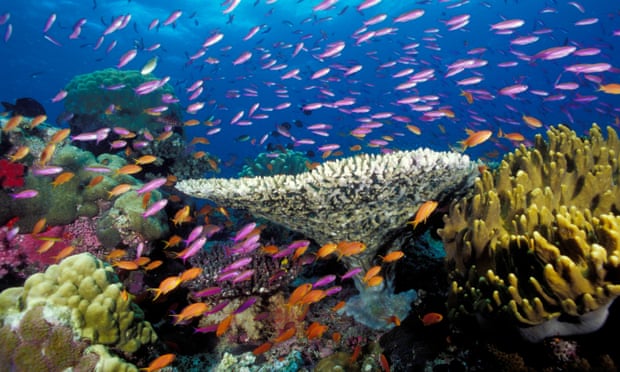
     

PARIS CLIMATE SUMMIT AGREED IN 2015 TO LIMIT GLOBAL WARMING TO BELOW 1.5C.

The Paris climate summit in December last year had made a decision to limit global warming to 1.5C, measured in relation to pre-industrial temperatures.
The earth is dangerously close to breaking through a 1.5C upper limit for global warming, climate scientists have warned.
The Paris climate summit in December last year had made a decision to limit global warming to 1.5C, measured in relation to pre-industrial temperatures. Scientists and campaigners had hailed the move as a landmark decision and a major success. By setting the target, they said, desertification, heatwaves, widespread flooding and other global warming impacts could be avoided.
But just eight months after the Paris summit Met Office data prepared by meteorologist Ed Hawkins of Reading University shows that average global temperatures were already more than 1C above pre-industrial levels for every month except one over the past year and it peaked at +1.38C in February and March, the Guardian has reported. Keeping within the 1.5C limit will be extremely difficult, say scientists, given these rises.
The Intergovernmental Panel on Climate Change talks in Geneva this month will likely discuss this alarming rise and scientists will start to outline ways to implement the goals that were set in Paris, the Guardian said. Dates for abandoning all coal-burning power stations and halting the use of combustion engines across the globe — possibly within 15 years — are likely to be set.   

Tuesday, December 15, 2015

Donie's Ireland daily news BLOG

Almost half of Irish prisoners re-offend within three years of release

CSO says true figure may be higher as not all offences recorded on Garda Pulse computer system

   
Almost half of all prisoners released in 2009 had reoffended within three years, a study by the Central Statitics Office (CSO) has found.
Almost half of all prisoners released in 2009 had reoffended within three years, a study by the Central Statistics Office (CSO) has found.
The 47.5% recidivism rate was a decrease from the 51% recorded for prisoners who were released in 2008. The decrease did not apply for all categories of crime, with the recidivism rate for burglars increasing to 69.9% from 60.8%.
The numbers do not include prisoners who were subsequently convicted of minor road traffic offences, and the CSO has cautioned that as the statistics involve recorded offences, the true figure may be higher as a CSO review had found that not all offences reported to the Garda Síochána were recorded on its Pulse computer system.
In 2007, 7,507 individuals were released from custody, of which 3,563 reoffended within three years, based on the CSO’s exmination of prision service and Garda records.
The recidivism rate was higher for males than females, and decreased with increasing age. Likewise, the rate differed with differing categories of offences.
The lowest recidivism rates were amongst those jailed for sexual and fraud offences, while the higher were for those jailed for offences against Government, justice procedures and organisation of crime, and public order and social code offences.
The great majority of re-offenders (64.7%) did so within six months of being released.
A separate study of recidivism among people who were placed on probation or community service orders in 2009, found that 37.3% re-offended within three years. The rate was lower than the 41% recorded for the 2008 cohort.
The CSO pointed out that the two groups, those sent to jail and those given probation and community service orders, involved people in different circumstances and so the differing recidivism rates should not be compared.

Survival rates for cancer in Ireland are improving

A new report says

   
Survival at five years following diagnosis improved from 57%c to 61% for bowel cancer patients. It is also up from 80pc to 82pc for breast cancer and from 56% to 62% for cervical cancer.
More people diagnosed with common cancers are surviving – but men have a 30% higher risk of dying from the disease than women, the annual report of the National Cancer Registry has revealed.
Acting director Dr Harry Comber said that survival at five years following diagnosis improved from 57% to 61% for bowel cancer patients. It is also up from 80% to 82% for breast cancer and from 56% to 62% for cervical cancer.
The figures compare patients diagnosed in 2008-2012 compared to 2003-2007.
However, the risk of dying is still higher for men due to a range of reasons including the kinds of cancers they get, such as lung and stomach, which have a higher mortality rate.
“For every cancer you look at, men tend to have poorer survival than women do. Some of it may be due to later stage diagnosis or they tend to be in poorer health. There is a difference that is not fully explained,” he said.
Overall, the risk for men of developing cancer, which had been rising steadily since at least 1994, may now be plateauing. The risk of lung cancer continues to fall for men, due to so many quitting smoking – but it is still increasing for women.
The report shows that about 37,000 new cancers or other tumours were registered annually in 2011-2013, of which about 30,000 were malignant, meaning they were potentially fatal. Of this 30,000, 10,000 were non-melanoma cancers of the skin, which is the commonest cancer, but is rarely fatal.
But there is a rise in people being diagnosed with melanoma, the most dangerous form of skin cancer, linked to getting badly sunburned at a young age.
Almost 9,000 people died of cancer in 2012, around the same as from cardiovascular disease. Lung cancer was the most common cause of cancer death – one in five of the total.
At the end of 2013 there were around 124,000 cancer survivors who had been diagnosed over the previous 20 years. Some 29,828 of these were breast cancer survivors; 28,432 had prostate cancer; 16,754, bowel cancer and 8,510 had melanoma of the skin.
Dr Comber said: “Cancer now accounts for 30pc of all deaths in Ireland. . . The number of cases is still increasing, but there has been no recent increase in risk overall for men. . . However, the recent fall in female smoking has not yet made any impact on female risk. Cancer risk in women continues to rise.”

A Sligo GP embraces changing face of the modern practice with new App.

    
A new app that enables patients to consult GPs remotely was launched this week. MeeDoc, the start-up company that developed the app, is working closely with a number of GPs throughout Ireland, including Enniscrone-based GP, Dr. Patrick McSharry.
The MeeDoc app can be used by anyone feeling unwell to contact a GP, discuss their symptoms, receive a diagnosis and have a prescription delivered to their local pharmacy. Using their smartphone, patients can send images of their physical symptoms, hold video-conferencing sessions with their GP, and obtain repeat prescriptions.
Commenting today (02.12.15), Dr. Patrick McSharry, who has worked as a GP in Enniscrone for four years, said: “I am working with MeeDoc because this app offers the type of flexibility and access that consumers expect in the 21st Century.
“I know from many of my patients that, for anyone working fulltime, it can be difficult to get a doctor’s appointment that suits their schedules. With MeeDoc, they can consult their GP without leaving their home. The convenience factor that MeeDoc provides will encourage people to initiate consultations on issues they may otherwise ignore for too long.”
Dr. McSharry says he views the MeeDoc app as a way of doctors making themselves more available to their patients in a more flexible way. The app was developed in Finland in 2012 by a team of doctors, designers and engineers. It has attracted over 8,000 registered users in Finland – where GP visits are free – and is now expanding into the UK, Spain, Switzerland, and other Nordic countries, as well as Ireland.
Commenting at the Irish launch of the app Mikko Kiiskilä, Co-Founder and CEO of MeeDoc, said: “With MeeDoc, we’re hoping to revolutionise the healthcare experience – for both patients and GPs. This is a tool that cuts down on costs, saves time, and gives greater flexibility to all involved in the healthcare process.
“MeeDoc allows people to consult a GP of their choice, even if they’re away on holidays or travelling for work. For example, if you’re in Dublin or Cork for work and you feel unwell, you can easily contact your local GP back in Sligo for advice through a secure encrypted platform.
“There will always be as much a need as ever for physical examinations and face-to-face consultations in some circumstances. But imagine how much more efficient the health service could be if it truly embraced the cost and time savings that top-class technologies can provide.
“In the future, we want to see every GP surgery in Sligo – and throughout Ireland – using MeeDoc to communicate with their patients. Medicine is no different to any other profession in terms of the need to keep pace with technological change.”
How MeeDoc Works: MeeDoc is available free from the App Store, Google Play and through a web app. When users download the app, they must sign in and set up their profile. Once registered, they can access the list of available Irish registered GPs, along with details of their professional backgrounds and qualifications, before engaging in a consultation. Users can select a GP, send a message and receive a prompt reply.
A consultation costs €34, and a user’s credit card is only charged after the consultation is complete.
If a prescription is required, the MeeDoc GP will fax it to a pharmacy of the patient’s choice, and forward the original prescription by post. To mark its launch, MeeDoc is offering a 50 per cent discount for a user’s initial consultation.

Lower oil prices bolster Irish economy growth

Ireland has the most unusual coincidence of growth of 7% and zero inflation

   
Oil prices are notoriously volatile and it remains to be seen if the current low levels can be maintained.
There was a real whiff of nervousness and fear in the oil market early Monday, as the price of a barrel of Brent crude dropped towards levels last seen in 2008. Prices bounced strongly back later, but the general trend in oil prices in recent months has been only one way: downwards. Remember that as recently as October prices were over $50 a barrel.
Lower oil prices are one of the reasons why Ireland has the most unusual coincidence of growth of 7% and zero inflation. In fact, the most recent figures for November showed consumer prices were 0.2% lower than a year ago, with a monthly fall in November largely attributable to falling energy costs.
As an oil importer, lower oil prices are clearly a boost to Ireland, cutting costs for consumers and businesses. Along with low interest rates, it is part of a global picture helping growth here while still keeping inflationary forces low.
The downside is that falling oil prices add to fears of a bout of deflation across Europe – which could have a serious long-term impact on growth – but for the moment the ECB is confident its policy of lower interest rates and quantitative easing is bearing fruit.
Oil prices are notoriously volatile and it remains to be seen if the current low levels can be maintained. Iranian production is due to add to the glut on the market next year – when an embargo on its production ends – and fears remain about the extent of growth in both developed and emerging markets.
Unless OPEC, whose December meeting ended in a chaotic lifting of production quotas, can get its act back together, there is nothing to suggest a sustained upward movement in prices is on horizon. For the moment the extraordinary combination for Ireland of strong growth and no inflation looks set to continue for a while yet.

The eldest child NOT always the most intelligent despite what scientists suggest

A recent study found a very small difference in IQ scores – but it’s so tiny that it has little significance for any individual child.


The first-born gets more attention – but does that make a difference?

Headlines recently proclaimed the eldest child is the brightest, with undivided attention from parents the essential ‘ vitamin ’ that helps to make them smarter than their brothers and sisters.
Research by a team from Leipzig University in Germany claims to show each child after the first is slightly less bright as they have to “share” parents.
The team pooled results of 20,000 people from the UK, Germany and the US looking at IQ and personality tests.
Research found a drop in IQ of around 1.5 points for each extra sibling, but no character differences were found.
Researcher Julia Rohrer said she didn’t specifically examine why eldest children seem to be brainier, but “one theory is that following children dilute their parents’ resources”.
She added: “While the first-born gets full parental attention, at least for some months or years, late-borns will have to share this from the beginning.”
Sibling science: Older children often teach younger ones
Rohrer added another possible ¬explanation: a “tutoring” hypothesis in which older children could benefit from showing their little brothers or sisters how the world works.
She said: “Teaching other people has high cognitive demands. Children need to recall their own knowledge, structure it and think of a good way to explain it to younger siblings – which could provide a boost to intelligence for some first-borns.”
Well, I’m not sure about that. My younger sister is, I’ve always thought, way more intelligent than I am.
I, for one, am sceptical about the significance of a 1.5 higher IQ score. That’s tiny.
A highly respected newspaper, The New York Times, shared my scepticism about those results and came up with a different conclusion.
In contrast to the research headlines, it said the study found that birth order itself had no effect on character, though it may slightly affect intelligence. That word “slightly” refers to the 1.5 IQ point advantage found in first-borns.
The three large ongoing studies about this are certainly thorough. The British study follows people born in 1958, the German one started in 1984 and assessment of Americans born between 1980 and 1984 is still ongoing.
But no matter how the researchers diced and spliced the data, they could find no link between birth order and any personality traits.
The study did find evidence that older children have a minor advantage in IQ scores, but the difference is so small that it has little significance for any individual child. So the message here is that this “eldest is brightest” theory should be taken with a pinch of salt.   

Friday, December 12, 2014

Donie's Ireland daily news BLOG

Dead babies placed in coffins of unrelated adults until ’80s, HSE says


The scale of ‘tandem burial’ practice and how it developed is unknown

The Health Service Executive (HSE)has said the practice of “tandem burials” in which the bodies of dead infants were placed in the coffins of unrelated adults was historical but that it did not know precisely the scale of the practice or how it developed in the first place.
However it accepted the practice was likely to have caused “much distress and upset for families both at that time and now”.
The HSE said from the limited information available, it understood that the practice of tandem burials ceased in the early 1980s.
It said it was important to note that the practice did not occur in HSE hospitals today.
The health authority said it was unclear why the practice of tandem burials had evolved.
“The scale of the practice is difficult to determine due to the changed landscape of all healthcare facilities, including maternity hospitals, from that time to today.”
“Furthermore, the record-keeping for such practices was not sufficiently comprehensive in order to allow a full picture in relation to the practice to be established.”
HSE director general Tony O’Brien briefed the Department of Health on the practice at the end of August. This followed enquiries made to the HSE over the summer by a family about deceased relatives.
Mr O’Brien said in a letter to then secretary general of the Department of Health Ambrose McLoughlin it was not certain that the families of both of the deceased babies and adults would always have been informed of the practice.
It occurred in “exceptional circumstances” in the case of a newborn baby who died in hospital and where the other options for burial, in a hospital or religious plot, “were not selected”.
The remains of the baby would then be placed in a coffin of a deceased adult.
The letter, which was obtained by RTÉ under the Freedom of Information Act said: “Our understanding is that the remains would have been placed with adult remains and that ideally the awareness and understanding of both families involved would have been sought, though this is not guaranteed.”
Mr O’Brien stated that the practice had been confirmed by current hospital staff, particularly mortuary staff, who were employed during the period in question.
Fianna Fail health spokesman Billy Kelleher said the revelations raised a number of questions about certain practices in hospitals.
“The information, while vague, will be very distressing for families who may have placed their faith in their local hospital to bury their loved one.”
“We need to establish what hospitals were carrying out this practice, how long did it go on for, and were family members of both deceased notified of the burial procedure. The HSE must be up-front and honest about these issues and ensure that adequate support measures are put in place for all of the families affected.”

Irish economy ekes out growth in third quarter, on track for strong 2014

  
Ireland’s economy grew just 0.1% in the third quarter as an austerity-weary public appeared to refrain from spending, but the country is still set to be the fastest-growing economy in Europe this year, data showed on Thursday.
That was weaker than some analysts expected, but a surge in gross domestic product in the first six months of the year means little if any quarter-on-quarter growth is now needed to meet government projections for GDP to expand almost 5% this year.
“Today’s data confirm the economy has expanded at a rapid pace in 2014 – although not quite as strong as the exceptional breakneck 6% plus some had expected,” said Conall Mac Coille, chief economist at Davy Stockbrokers.
“This confirms we are on course to be the fastest economy in Europe,” said Mac Coille.
Despite the low quarter-on-quarter figure, the economy grew 3.5% compared with the same quarter last year, the data showed. After exiting its EU/IMF bailout last year, Ireland has been outperforming the rest of the euro zone, where growth is faltering.
It was the third straight period of quarterly growth following an expansion of 1.1% from April to June that saw GDP rise a hefty 7.3% year-on-year, the Central Statistics Office (CSO) said on Thursday, revising the figures down a touch.
The government’s austerity drive has helped get the economy back on track, but it has also tested the public’s patience. Tens of thousands of people marched on parliament on Wednesday to protest against the final round of government measures, frustrated at feeling no effect of the recovery they are hearing so much about.
The uneven nature of the recovery was demonstrated in a breakdown of the figures, which showed personal consumption was flat year-on-year having contracted in the second quarter, while exports and investment soared.
A number of economists said the data was surprising given that retail sales volumes rose by almost 5% in the third quarter and consumer confidence hit a seven-year high.
Thursday’s data means the economy has grown 4.9% year-on-year so far this year, the CSO said, a figure finance minister Michael Noonan said kept the government on track to meet its 2014 targets.
The better-than-expected growth in the first half has allowed the government to cut income tax from next month, the first reversal of the austerity drive that began in 2008 and intensified under the bailout programme that Ireland completed last year.
The government wants to bring in further tax cuts in a year’s time, as protests grow 15 months ahead of a parliamentary election. But it will need continued momentum in the economy to do so.

Emergency legislation to be rushed through to close penalty points loophole


The Minister for Transport, Tourism and Sport, Paschal Donohoe.
The transport Minister Paschal Donohoe is to rush through emergency legislation to close a penalty points loophole.
The Fine Gael politician announced today that the measures are required to address a “technical issue” in the law governing the system.
“Amending legislation is being drafted to ensure that there will be no interruption to the enforcement of road traffic offences under the penalty points system,” the minister said.
“This legislation will be published tomorrow and progressed through the Oireachtas next week. In the continued interest of road safety, I will not be making further comment until the publication of the legislation, after which point I will make a full statement,” he added.
The loophole has given rise to fears that ten of thousands of penalty points issued in recent months will be rescinded.
The announcement today came after formal advice was received by Attorney General Maire Whelan.

Potential new pill to curb obesity a step closer


Dr Gardiner suggested that in humans it might be possible to reduce cravings for glucose by altering one’s diet and a drug acting on this system could potentially prevent obesity.

Scientists have made a significant start towards creating an obesity pill. A team of researchers from Imperial College London have discovered the exact brain mechanism that drives our appetite for foods rich in glucose and could lead to treatments for obesity. Glucose is a component of carbohydrates, and the main energy source used by brain cells.
By studying rats, the team identified a mechanism that appears to sense how much glucose is reaching the brain, and prompts animals to seek more if it detects a shortfall. The researchers believe it may play a role in driving our preference for sweet and starchy foods.
Dr. James Gardiner from Imperial’s department of medicine who led the study, said: “Our brains rely heavily on glucose for energy. It’s clearly a very important nutrient, but in our evolutionary past it would have been hard to come by. So we have a deep-rooted preference for glucose-rich foods and seek them out.”
The researchers hypothesised that an enzyme called glucokinase might play a role in driving our desire for glucose. Glucokinase is involved in sensing glucose in the liver and pancreas. It is present in the hypothalamus, an area of the brain that regulates a variety of essential functions including food intake, but its exact role was unclear.
“This is the first time anyone has discovered a system in the brain that responds to a specific nutrient, rather than energy intake in general. It suggests that when you’re thinking about diet, you have to think about different nutrients, not just count calories,” Dr Gardiner said.
Dr Gardiner suggested that in humans it might be possible to reduce cravings for glucose by altering one’s diet and a drug acting on this system could potentially prevent obesity.

Could this BEE HIVE SEALANT be the cure for baldness?

Insects may answer to hair growth problem


Hair today gone tomorrow: Baldy has no use for a brush.

A compound bees use to repair their hives can boost hair growth in a buzzing discovery for bald people.
The natural sealant – called propolis – was tested on mice that had been shaved or waxed, and experts today revealed those that had the treatment re-grew their fur faster than those that did not.
Bees use the substance to seal small gaps in their hives, but now the scientists say the find could help develop new hair loss therapies.
The experts – headed by Dr Ken Kobayashi, of Hokkaido University in Japan – said after propolis was applied, the number of special cells involved in growing hair increased.
They said growth “occurred without any detectable abnormalities in the shape of the follicles”.
Despite using shaved mice rather than those unable to grow fur, the researchers – whose findings are published in the Journal of Agricultural and Food Chemistry – expect it could also apply to baldness.
They say hair loss often results from inflammation, and propolis contains anti-inflammatory properties.

Crocodiles are closely related to our birds


If you had to think of an animal most closely related to birds, perhaps crocodiles would not be your first choice.

But the two are related, according to new research, although crocodiles are apparently ‘stuck in the past’.
Both share a common ancestor that lived about 240 million years ago and also gave rise to the dinosaurs.
But crocodilians – that’s the group which includes crocodiles, caimans, alligators and gharials – have evolved at a slower rate.
In fact, new genome, or genetic code, studies have revealed their unusually slow rate of genetic evolution.
The unspeedy progress of the reptiles has helped scientists build up a genetic picture of the “archosaurs” which pre-dated dinosaurs, pterosaurs, birds and crocodilians.
Fast in life, but not so quick with evolution
US lead scientist Dr Richard Green, from the University of California at Santa Cruz, said: “The ticking of the molecular clock in the crocodilians is much slower than in other lineages we’re used to looking at, like mammals, which means we can see back into their past more cleanly.
“We know from fossils that the body plan of crocs has remained largely unchanged for millions of years.”
The team sequenced the genomes, or genetic blueprints, of three crocodilian species, the American alligator, the saltwater crocodile, and the Indian gharial.
The analysis, published in the journal Science, indicates that the ancestor of all archosaurs had an extremely slow rate of molecular evolution, which speeded up in the bird lineage.
After the meteor strike thought to have wiped out the dinosaurs 66 million years ago, surviving birds experienced a rapid burst of evolution.
This led to nearly all the species of birds seen on Earth today, numbering more than 10,000.

There’s more than 10,000 types of birds in the world

In related studies, also reported in Science, researchers compared the genomes of 48 bird species selected from all major avian groups and including the woodpecker, owl, penguin, hummingbird and flamingo.
Among other findings, they discovered that birdsong evolved independently at least twice.
Birds were also found to have lost their teeth about 116 million years ago, when the dinosaurs still ruled.