Pages

Showing posts with label Irish people. Show all posts

Monday, December 1, 2014

Donie's Ireland daily news BLOG update

Nine staff members of a care home on leave ‘as a protective measure’ after abuse allegations


Nine members of staff at a centre for intellectual disabilities have been taken “off duty” following allegations made by an undercover reporter.

Nine members of staff at a centre for intellectual disabilities have been taken “off duty” following allegations made by an undercover reporter.
The Health Service Executive (HSE) took the action as a “protective measure” after receiving a letter detailing the allegations from RTE’s Investigations Unit.
The letter detailed how footage was shot by the undercover reporter at the Aras Attracta facility in Swinford, Co Mayo over a number of weeks.
It contained allegations of force feeding, slapping, kicking and physical abuse and named a number of staff.
Although the HSE has yet to view the footage, it took immediate steps.
Identified staff were taken off duty and the HSE resolved to set up an independently-led inquiry.
The Health Information and Quality Authority and the gardai are also investigating allegations of abuse and poor standards at the centre.
The HSE said actions such as those alleged were wholly unacceptable in any facility.
Gardai were already investigating the sudden death in November 2012 of a long-term resident at the home, Albert Loughney.
HSE national director for social care Pat Healy said it had taken immediate action to deal with the allegations.
Mr Healy said the measure of placing staff on temporary leave is “normal practice for situations like this” and the reports of staff mistreating residents at the Aras Attracta care unit in Mayo are “wholly unacceptable”.
“If these claims are true, it is unacceptable practice and unacceptable behaviour,” Mr Healy told RTE Radio One’s Today with Sean O’Rourke programme.
He explained that the HSE have already put several measures in place and have notified An Garda Siochana about the allegations.
“Over 59 recommendations were made as a result of audits and all of them have been put in place.
“There have been significant changes at the facility, additional staff have been appointed, as well as a number range of training programs being put in place which aim to safeguard vulnerable adults, as well as a whole range of other issues,” he said.
“Indeed we have a further report in progress at HIQA at the moment, work needs to be done but progress has been made.
“Clearly what I’ve been saying and what I’ve said in this statement – any behaviour of that nature is wholly unacceptable.”
Mr Healy said he wished to provide reassurance to the families of residents and residents at the care facility that the matters are being treated as urgent and have been brought to their attention.
The centre cares for 100 people, 95 of whom are residents and five of whom use the facility for respite care.
Mr Healy said he has not seen footage from an upcoming Prime Time programme, but acted immediately when they received a formal letter of complaint from an individual.
“The minute we got that letter we put a range of measures in place and have taken immediate actions at the centre itself to ensure appropriate services are being provided to residents there.
“As well as the fully established investigations, there is a review process to look at standards overall, to see what else remains to be done.
“It is important to say, as well, that this type of policy is being rolled out across the country,” he added.
Meanwhile, Taoiseach Enda Kenny said he expects to see the results of the independent investigations as soon as possible.
“These actions are intolerable. There are a number of independent investigations underway and I expect to see the results as soon as possible,” he told RTE News at One programme.
“Particularly for the families and patients involved, this is a situation that is truly intolerable.
“Minister Kathleen Lynch informed me of the situation last weekend and I’m satisfied it’s being independently investigated.”

UCC students awarded for bumble bee technology


Students created energy-neutral smart beehive using big data and mobile technology

The energy neutral smart beehive created by the UCC students can autonomously monitor the activity of the bee colony and conditions within the beehive.
A project by a group of University College Cork (UCC) students has won a global competition for using smart technology to help the plight of the humble honey bee.
The students created an energy-neutral smart beehive for the IEEE /IBM Smarter Planet Challenge 2014. The competition organisers had asked students worldwide to come up with an innovative solution to a grand challenge facing their community.
The UCC pilot project uses big data, mobile technology, wireless sensor networks and cloud computing to look at the impact of carbon dioxide, oxygen, temperature, humidity, chemical pollutants and airborne dust levels on the honey bees, using solar panels for an energy neutral operation.
The energy neutral smart beehive, currently in its first pilot phase, can autonomously monitor the activity of the bee colony and conditions within the beehive.
The data, which are stored in an active beehive, are protected through traditional methods including cryptography. The bees also help protect the data.
The students’ research will allow bee keepers to monitor their hives at times that were previously difficult or impossible such as during the night, heavy rain or in the depths of winter.
As part of the competition the student projects had to fit into one or more key areas, including: big data/analytics, cloud computing, cyber security or mobile technologies.
The prize-winning UCC project, entitled: (2B) OR!(2B): From the beehive to the cloud and back, was based on a Boolean theme and was also inspired by Shakespeare.
UCC president Dr Michael Murphy said mathematician George Boole’s theories of logic and probabilities are as powerful today as they were back in the 1800s.
“I am delighted that his work has inspired our current students to create novel solutions to an urgent global problem and helped them win an international competition in the process.”
The IEEE/IBM Smarter Planet Challenge competition is run by the largest engineering organisation in the field, the Institute of Electrical and Electronic Engineering, and the €5,000 prize was sponsored by IBM.

Why bowel cancer can sometimes outsmarts the treatment


A new study that challenges the prevailing view of how bowel cancer develops in the large intestine is published in Nature Medicine.

Cancer Research UK scientists have discovered that bowel cancer may not be restricted to starting its journey in the stem cells in the lining of the intestines as previously thought.
The researchers, based at the Wellcome Trust Centre for Human Genetics, studied a hereditary faulty gene which can cause bowel cancer in middle age. The faulty gene causes normal cells to behave like immortal stem cells and develop tumours of their own- challenging the theory that normal cells have a fixed fate and limited lifespan.
The cells lining the bowel are continuously replaced – new ‘daughter’ cells are produced by immortal stem cells to replace those that have worn out.
Many types of cancer are caused when chemical messaging goes wrong. Scientists analysed polyp samples from hereditary bowel cancer patients and found disruption of a key signalling pathway involved in stem cell control. They found the same problem in a wider selection of bowel cancer tumours. When they altered the key signalling molecule in the lab it caused daughter cells that had moved out of the stem cell zone to behave like stem cells and develop into tumours.
This could ultimately explain how some cancers become resistant to chemotherapy, as stem cells killed by the treatment may be continually replaced by cancerous daughter cells.
Dr Simon Leedham, Cancer Research UK funded researcher at the Wellcome Trust Centre for Human Genetics, said: “This study has implications for drug development and tumour treatment. If these signalling pathways are disrupted in tumours then daughter cells could revert back to behaving like stem cells and then replace any cancer stem cells killed by chemotherapy.
“This may be one of the mechanisms behind tumour resistance to chemotherapy but could also represent a potential drug target. If we can restore the disrupted signalling balance in tumours then we may be able to stop daughter cells from replacing cancer causing stem cells and increase the effectiveness of our current therapies. “
Nell Barrie, senior science communications manager at Cancer Research UK, said: “This is an important step forward in understanding the underlying mechanisms behind bowel cancer. Mapping out how cancer cells communicate and behave in the bowel will help us find key weaknesses we can target with new treatments, to ultimately improve the outlook for patients.”

Here’s how many people have signed up to pay water charges


Some 900,000 people in Ireland have registered to pay water charges, meaning more than 700,000 have yet to do so.

A spokesperson for Irish Water confirmed that over 25,800 people registered from Saturday to Wednesday of last week.
This is an average of 5,000 people a day – up from 3,000 a day the previous week.
Last month, the Government announced a revised package on water charges, meaning an adult living on their own will pay €60 per year for water when a €100 rebate is included – around €1.15 a week.
People who don’t register will receive an automatic €260 bill and will not qualify for the €100 rebate.
Late payment penalties of €30 for a single adult household and €60 for other households will be added to bills three months following a  year of non-payment. Over four years of non-payment, penalties could accumulate to €1,640.
If you refuse to pay, the charges will be attached to your home meaning water bills would remain outstanding if you tried to sell your home.

LAWYERS

Earlier today, the Irish Times reported that Irish Water has paid more than €5 million to three Dublin law firms since it was set up last year – working out at about €81,000 per week.
Sinn Féin’s Environment Spokesperson Brian Stanley said the money the company was spending on lawyers and consultants would be put to better use if spent on fixing leaks.
“Hardly a week goes by without another story which highlights the enormous waste of taxpayer’s money by Irish Water,” Stanley stated.
Environment Minister Alan Kelly has previously defended the amount it has cost to set up the utility, saying it was “on a par” with costs incurred to establish similar companies abroad.
Another protest against water charges has been planned for Wednesday, 10 December.

Just €5m of allotted €20m mental health funding spent

  
IMN has learned that just €5 million of the €20 million in additional funding for mental health staffing provided in 2014 has been spent on the sector to date, with half of the funds allocated to the overall health budget.
In a statement to this publication, the HSE said that, of the €20 million allocated to mental health this year, €5 million was spent on “unfunded costs arising in mental health in 2014”, €5 million was allocated to commence hiring of new staff, and €10 million was allocated to provide support to the health budget.
According to the Executive, the €5 million spent on “unfunded costs” in mental health included the opening of additional beds and external placements for complex child and adult service users. Another €5 million was allocated to commence hiring of additional staff in the latter part of 2014, and €10 million was “allocated to provide once off support to the overall health service budget management strategy as approved within the national service plan”, the HSE said.
“It is key to note that the entire €20 million allocation in 2014 has been retained in full for spend on mental health in 2015 and all subsequent years,” the HSE added.
According to the HSE: “The €20 million allocated to mental health in 2014 provided for approximately 250/260 posts to be recruited, at a maximum cost in 2014 of €5 million with the full funding available for all posts in 2015.”
The HSE National Service Plan for 2014 stated: “The provision in Budgets 2013 and 2014 of ringfenced investments of €35 million and €20 million, in mental health, is enabling the continued strengthening of our community teams, increased suicide prevention resources and clinical programme development and implementation. The €20 million for 2014 will allow us commit to between 250 and 280 posts. New spend in 2014 related to the €35 million and €20 million will need to be phased in order to live within the overall available resource. The recruitment process for these new posts will commence in the first quarter of 2014, with all posts targeted to be in place in 2014.”
The HSE advised IMN, however, that earlier this year the Mental Health Management Team carried out a workforce analysis and approved allocations were made in September for more than 200 posts to be recruited.
According to the HSE, some of these posts may be in place before the end of the year, “however, the majority will likely not have started until the early months of 2015, requiring additional targeted recruitment campaigns, resulting in posts being in place later than planned at the outset of this year.”
Meanwhile, in the HSE National Service Plan for 2015, which was published late last week, mental health was allocated €756.8 million for 2015, along with additional Programme for Government funding of €35 million.

DNA is tougher than you and there’s Science to prove it


As we have heard from the Mythbusters, the only difference between screwing around and science is writing it down.

Well, kids, sometimes scientists try things just because reasons. For instance, some molecular biologists at the University of Zurich who were already sending up a sounding rocket to do gravity tests on DNA decided to smear a couple of samples on the hull of the rocket, for laughs. Except theywrote it all down and published it, which is mostly the difference between you strapping stuff to bottle rockets and what people with research grants do.
They were curious to see how much, if any, of the cells would survive low earth orbit. What they found was slightly alarming.
Not only did over half the samples survive re-entry in to the Earth’s atmosphere, over a third of the DNA was still usable.
“We were totally surprised. We never expected to recover so many intact and functional active DNA,” said Cora Thiel, lead author on the study. “Our findings made us a little bit worried about the probability of contaminating space crafts, landers and landing sites with DNA from Earth.”
Sounding rockets are used for short experiments that need to be carried out in space. The one in this test, for instance, was only out for 13 minutes. The plasmids that were sent up in this flight were of two different genes, one that provides antibiotic resistance to bacteria, and one that encodes green flourescent protein. (Plasmid DNA is not the same as chromosomal DNA, and is about 10 times smaller than bacterial DNA.)
When the samples came back they were still able to make bacteria strain resistant, and stuff glow green. The possibility that we’re sending the material to make life on other planets accidentally, by not sterilizing the hardware we send out well enough, is apparently very real.
Sequencing the DNA revealed that it didn’t contain more than a handful of mutations, which may or may not be a result of its time in space.
“We cannot say how these big chromosomal DNA molecules would react under the same conditions and this should be investigated in a separate experiment,” said Oliver Ullrich, the biochemist who co-authored the paper. “However, we speculate that small plasmid DNA molecules might be more resistant to re-entry conditions than chromosomal DNA, which is also packed with proteins.”
So this means we’re going to have to launch more rockets squirted with DNA. And that’s too much double entendre for me to deal with on a Monday.  

Saturday, May 10, 2014

Donie's Ireland daily news BLOG Friday

New Justice reform pledged following Guerin 300 page report


INVESTIGATIONS INTO THE WHISTLE-BLOWER CLAIMS FINDS SHATTER AND GARDAÍ FAILED TO ADEQUATELY INVESTIGATE ALLEGATIONS.

Taoiseach Enda Kenny and Minister for Justice Frances Fitzgerald have said a “root and branch analysis” of the Irish justice system will be carried out as a result of the findings of an investigation by barrister Sean Guerin into allegations of corruption and malpractice in the force published today.
In his 300-page report on a dossier of claims handed in by Garda whistleblower Sgt. Maurice McCabe, Mr Guerin concludes that An Garda Síochána and former minister for justice Alan Shatter failed in their duties to properly investigate matters raised by Sgt McCabe.

THE REPORT VINDICATES SERGEANT MCCABE CLAIMS.

It says a comprehensive commission of investigation is “desirable in the public interest” to ensure “continuing confidence in the institution of An Garda Síochána and the criminal justice system”.
Responding to the report this evening, Taoiseach Enda Kenny said a root and branch analysis of the policy and practice of the administration of justice in Ireland is now needed. Mr Kenny said the Dail would debate the content of the Guerin report next week and he would welcome the contributions of all members.
“This is not just about politics, it is about getting it right for the people of our country-for the citizens, for the next generation, for everybody to have integrity, belief and faith in an Garda siochana, in the accountability, in the transparency in the way it is run,” he told reporters in Gort, Co Galway.
The newly appointed Minister for Justice Frances Fitzgerald said its findings reaffirm that “we must now enter a new era of policing in this country and that organisational reform and cultural change is essential.”
She said it raises “fundamental questions about the treatment and response to victims of crime which must be addressed as a matter of priority. The content and the findings are extremely grave.”
Interim Garda commissioner Noirín O’Sullivan said she was studying the report’s findings closely in conjunction with senior management “ to identify immediate actions that can be taken as part of our process of change that is currently underway”.
Sergeant Maurice McCabe tonight welcomed the findings of the Guerin report and said it had vindicated him.
“It is a good day after six years of fighting the system. Now I hope my family and I can move on.”
Sgt McCabe expressed his thanks to Fianna Fail leader Michael Martin for taking on his case and forwarding his file outlining his concerns over Garda conduct to Taoiseach Enda Kenny.
Sgt also mentioned that despite the findings of the Guerin report “I am still restricted from accessing Pulse”. He added that there had been no contact from anyone in senior Garda management after the report was published.
The findings? 
Mr Guerin found that the “overall impression given by the internal Garda investigative process was that complaints or matters of concern were put through a process of filtration or distillation so that, by the end of the process, any matter of concern had been removed as a form of impurity, and only what was good was found to remain.”
Mr Guerin said the terms of reference for such a commission should include “definite matters of urgent public importance” such as:
- two incidents involving Jerry McGrath, who was later convicted of murdering Sylvia Roche-Kelly in Limerick 2007
- the investigation of sexual offences and child pornography offences by a priest with particular regard to the loss of a computer seized during the course of that investigation

Car sales in Ireland up 30.7% in first four months of this year


THE NUMBER OF NEW PRIVATE CARS ON IRISH ROADS ROSE 44.9% LAST MONTH.

The number of new private cars licensed for the first time rose by 30.7% in the year to the end of April, according to new figures from the Central Statistics Office.
The data show there were 51,123 new private cars licensed over the four-month period. The number of used imported cars licensed was 18,154, a rise of 21.8% compared to the same period a year earlier.
The number of new private cars on Irish roads rose 44.9% last month to 11,757, as against 8,113 cars for the same month a year earlier.
There were 1,502 new goods vehicles registered in April 2014, up 33% on April 2013.
Overall, the total number of all vehicles licensed in April 2014 was 20,593, up 32.3% compared with the 15,567 vehicles registered in the corresponding month last year.
Volkswagen was the most popular new private car to be licensed last month, followed by Nissan, Toyota and Ford.
Of the 11,757 new private cars licensed last month, 74.2% were diesel and 24.7%, petrol.

Seven Irish children killed by horror flesh eating bug over 2 years


Seven  children have died from a lethal flesh eating bug that has been spreading in Ireland over the past two years.

The terrifying disease is now killing in higher numbers than meningitis and more than half of the 66 children who contracted the infection had to be treated in hospital intensive care units, with 70% needing surgery.
The invasive Group A Streptococcus infection (iGAS) hit three times as many girls as boys and 42% of those infected were aged two years or younger.
In some cases the disease was so aggressive that doctors had “little time for effective intervention”, a major European conference in Dublin has heard.
Two Irish doctors, Prof Karina Butler, consultant pediatrician at Our Lady’s Hospital in Crumlin, and Dr Juliette Lucey, from the infectious diseases departments at Our Lady’s and Temple Street Children’s Hospitals, described a “resurgence” of iGas in this country in the past two years.
They told the European Society of Paediatric Infectious Diseases in the National Conference Centre that 66 children were identified with confirmed or probable iGAS infection in the past two years.
Seven of these children died and half of the infected children were admitted to hospital intensive care units. They included 15 children with severe breathing difficulties, pneumonia and other serious lung and throat conditions.
Surgery was needed in 70% of cases to insert chest drains for complicated lung abscesses, remove infected skin around wounds or make incisions to relieve pressure.
COMPLICATION OF CHICKENPOX: Prof Butler said that one-in-five 20% of children developed iGas as a complication of chickenpox, but almost half (42%) had no identifiable risk factor.
She stressed the need for an effective vaccine and also said more vaccinations against chickenpox could prevent up to 20% of the iGas cases.
iGas is now killing more children than meningitis in children’s hospital across the country. It has a rate of more than 10% compared to 3-5% for meningitis in children and young people in this country.
“Much of the spotlight in recent years has been on diseases such as meningitis, whooping cough and other well-known infections in children,” she added.
“iGAS infections in children and young people are now on the rise in Ireland and most likely in other developed nations too.”
The infectious disease expert also said that while over 50% of the children needed to be treated in intensive care units, most of them had no identifiable risk for severe disease.
“Early identification and appropriate treatment and, ultimately GAS vaccination, are needed if outcomes are to improve,” she said.
The infection is difficult to diagnose but prompt diagnosis and treatment are essential and surgically removing infected tissue “may be life-saving”.

Increase in the number of Irish people facing heart failure


The number of people developing heart failure in Ireland is on the rise.

The Irish Heart Foundation says there has been an increase in the number of cases due to “an ageing populationobesity andpoor lifestyle
Around 90,000 people in Ireland live with heart failure, but the group says thousands of people are at risk of missing fatal symptoms.

TODAY IS HEART FAILURE AWARENESS DAY.

Consultant cardiologist at St. Vincent’s Hospital in Dublin Professor Kenneth McDonald said: “Heart failure is a very prevalent problem in Ireland. There are approximately 100,000 people with this condition.”
“It occurs as a result of many other heart conditions such as heart attacks, for example, or long-standing high blood pressure.
“What people become aware of is increasing breathlessness with activity, or fatigue.”

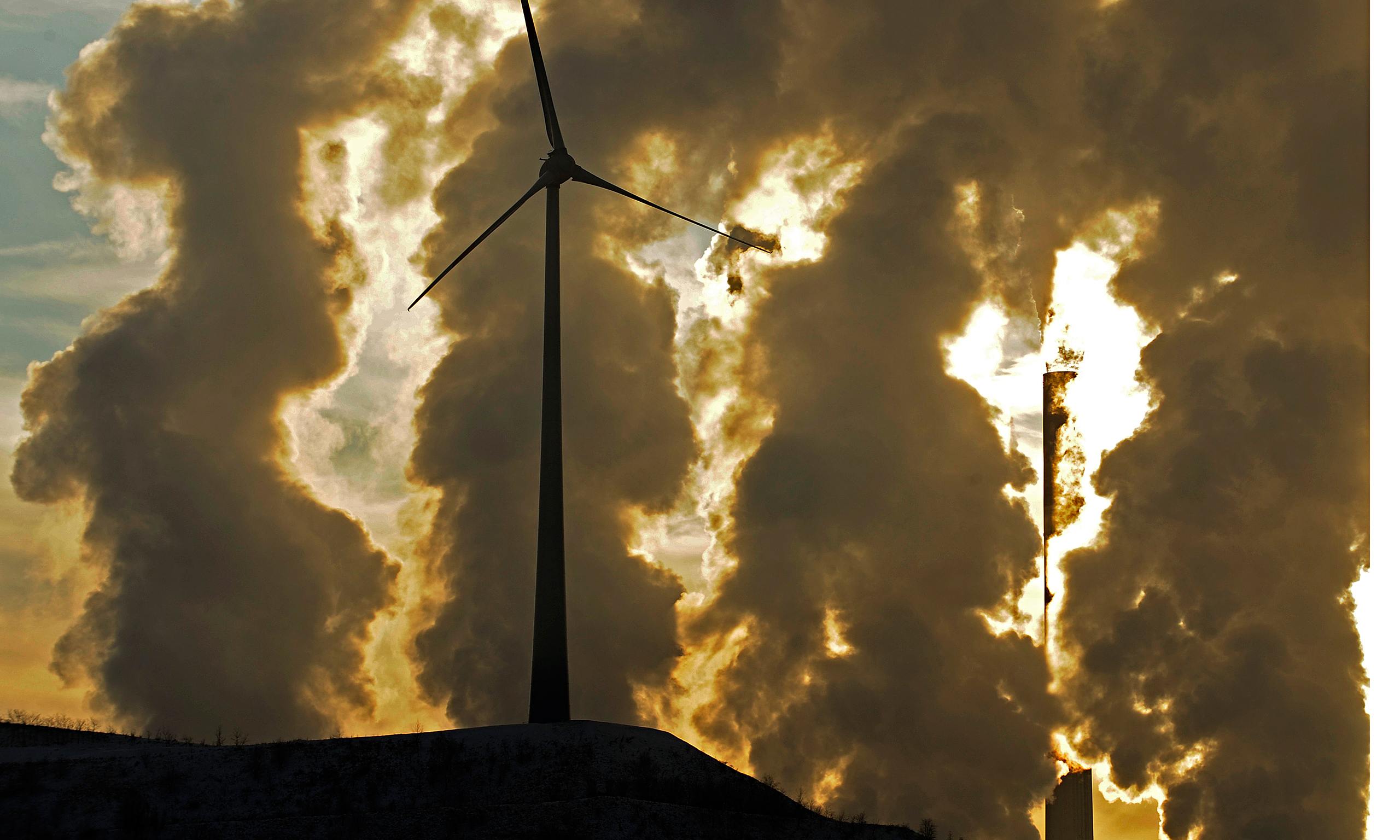
Ireland reduces its greenhouse gas emissions by 11.5% in 2013


Electricity sector emissions fall 11.5% while food and drink industry gases rise 4%.

Greenhouse gas emissions by the electricity sector fell 11.5% in Ireland last year.
Ireland’s greenhouse gas emissons fell in 2013, largely because of an 11.5 % drop in emissions from the electricity sector, according to the Environmental Protection Agency (EPA).
It said this decrease may be partly due to extended shutdowns of units at the 1,200-megawatt Moneypoint coal-fired power station on the Shannon estuary coupled with the availability of renewables.
Large energy users covered by the EU Emissions Trading Scheme (ETS) cut their contribution by 7% compared to 2012, while cement industry emissions fell by 4% due to lower production.
Almost 100 major industrial installations in Ireland participate in the ETS. These include sites operating in the power generation, cement, lime, oil refining, food and drink, pharmaceuticals and electronics.
Bucking the trend, companies in the food and drink sector reported an overall increase of 4% in their emissions last year, reflecting strong growth in production in this export-led sector.
“Overall, recorded emissions show a welcome downward trend for 2013,” said EPA senior manager Dr Maria Martin. “However, this result does not detract from our awareness of the need to decouple carbon emissions from economic growth.
“We need radical structural reform of the EU Emissions Trading Scheme in order to ensure that the price of carbon will be at a level which incentivises real change in how we manage our energy requirements and reduce our greenhouse gas emissions”.

Earthly astronomers catch best-ever image of MASSIVE solar flare


Five telescopes catch X-class belch in exquisite detail. 

A combined effort by four space telescopes and one Earth-bound observatory has successfully snapped the best images yet of a huge solar flare that erupted from the Sun’s surface.
The solar explosion occurred at 1:48pm EDT (5:48pm GMT) on March 29 and was an X-class flare, the largest type yet recorded by astronomers. The combined imaging from all the astronomical instruments involved has produced the most detailed pictures and video yet of the coronal mass ejection for future study.
NASA had three space-based telescopes focused on the area – the Interface Region Imaging Spectrograph, (IRIS), the Solar Dynamics Observatory (SDO), and the Reuven Ramaty High Energy Solar Spectroscopic Imager – with the Japanese Space Agency’s Hinode spacecraft and the National Solar Observatory’s Dunn Solar Telescope in New Mexico also sending in data.
Each of the five telescopes focused on different regions of the flare’s path out of the Sun’s environs. NASA’s SDO, for example, took images of the flare in relation to the entire star, whereas IRIS peered deep into the Sun’s lower atmosphere to image the first flare recorded by that orbital platform.
The whole effort was coordinated by the Dunn Solar Telescope, which identified the most likely spot for a big flare. It pinpointed the probable eruption point a day in advance of the flare, giving time for orbital platforms to focus in and, luckily, the eruption occurred at a good viewing time for the Dunn team to see it here on Earth.
“This is the most comprehensive data set ever collected by NASA’s Heliophysics Systems Observatory,” said Jonathan Cirtain, project scientist for Hinode at NASA’s Marshall Space Flight Center in Alabama.
“Some of the spacecraft observe the whole sun all the time, but three of the observatories had coordinated in advance to focus on a specific active region of the sun. We need at least a day to program in observation time and the target – so it was extremely fortunate that we caught this X-class flare.”
The size of the solar flare makes this an ideal event for larger study – X-class coronal mass ejections are the largest observed by man so far, although it’s theorized that a solar eruption in 1859 that burnt out telegraph systems across Europe and the US was an as-yet-unseen Z-class flare – at least 40 times as large as March’s display.
Were such a huge flare to occur today, the effects could be catastrophic. Satellites would be disabled and Earth-bound electric systems could take a major hammering and fail completely. A solar eruption 25 years ago knocked out power over large parts of Quebec and polar satellites suffered serious problems.
By coordinating observations, NASA and other space agencies are trying to learn as much as they can about the most violent phenomena in our Solar System. Doing so not only helps understand the Sun’s workings better, but could also allow the development of mitigation strategies,   

Sunday, January 5, 2014

Donie's Ireland news BLOG Saturday

IDA created more than 7,000 net jobs in 2013


THE NET NUMBER OF JOBS CREATED BY THE IDA IN 2013 BROKE THE 7,000 MARK – THE LARGEST JUMP IN MORE THAN A DECADE.

More than 161,000 people are now employed in multi-national companies attracted to Ireland by the IDA. It created 13,367 jobs but 6,296 jobs were also lost during the year.
The IDA is the semi-state agency responsible for attracting foreign direct investment into the country.
STRONG: It’s a strong result for chief executive Barry O’Leary, who steps down from the post later in the year.
His successor has not yet been selected, but he or she is expected to be in place by around the middle of the year.
“These will be my final set of results as chief executive of IDA as I intend to pursue other opportunities outside the organisation as soon as my successor is in place,” Mr O’Leary said.
“I wish to thank everyone, inside and outside the organisation, for their kind support during my time in the most fulfilling and stimulating of roles.”
Throughout the year 164 investments were won, up 13pc on 2012, and 78 new companies invested in Ireland for the first time. This is up 18pc on 2012.
While the record jobs numbers are a major boost for the agency, it struggles to meet its target of attracting foreign direct investment to the regions.
Mr O’Leary said the IDA would be building three buildings – two 25,000 sq ft manufacturing facilities in Waterford and Athlone – and an office building in Letterkenny.
It is the first time that the IDA has built a facility in four years.
The buildings will be marketed by the IDA in a bid to attract companies into those areas.
Mr O’Leary has been chief executive since 2008, having replaced former civil servant Sean Dorgan.
“At a certain point of time you have to step down from whatever job you’re in,” Mr O’Leary said.
Jobs Minister Richard Bruton described Mr O’Leary as a “tremendous leader”.
Mr Bruton said the hope is to exceed the job creation target in 2014.

Irish public to be asked if driverless cars is the correct road to take

  
A Google self-driving car at the Google headquarters in Mountain View, California & a gentleman waves from a self-driving car.

Irish drivers and passengers will be asked for their opinions on ‘driverless cars’ before they are licensed for use here.

The Road Safety Authority (RSA) is promising to hold a public consultation process before any decision is made to allow driverless cars to be tested on the roads.
There is growing momentum behind driverless cars, with Britain giving the go-ahead for them to be tested on its public roads as long as there is a driver in the vehicle in the event of an emergency.
Google’s driverless car has now driven more than 500,000 miles in the US without causing an accident – about twice as far as the average American driver goes before crashing.
Driverless cars containing sensors and guided by satellite navigation systems have been hailed as having the potential to reduce the 1.2 million people killed in car accidents every year worldwide. And they could have benefits for rural pubs whose customers could get home without fear of failing the drink driving test.However, the RSA has adopted a cautious approach and warned that they are still a “long way off” in this country.
RSA spokesman Brian Farrell said the crucial issue would be the safety of driverless cars.
LIABLE: “There needs to be strong legislation to support it, not just in Ireland but in the EU as well,” he said.
Such legislation would have to deal with issues such as whether the driver would still be legally liable if there was a minor or even fatal accident involving their driverless car. And any driverless cars going on the roads also have to get approval from the EU.
Mr Farrell promised there would be a public consultation process on driverless cars before any trials were carried out here. He said it would take some time before driverless cars become the norm on public roads.
“More development and trials will be required to help the technology mature and to prove the reliability of such systems to ensure that public safety is not compromised,” he said.
Google Ireland spokeswoman Celine Crawford said the company currently had no plans to test its Google Car here.

Irish people in denial about their dental health care

  
Four out of five Irish people think their teeth and gums are healthy and look good – however, the reality is somewhat different as people are now visiting the dentist far less often than they used to.
A new survey has found 23% of people are visiting the dentist less often since 2010 while nearly 60% of those surveyed said they would only consider visiting the dentist in an emergency.
According to the survey of 750 adults, which was carried out for the Irish Dental Association (IDA), 46% of Irish people are spending less on dental health while 41% rarely if ever think of visiting their dentist.
IDA Chief Executive Fintan Hourihan said the survey showed the impact the recession was having on dental health as well as a ‘disconnect’ between what people think and how they act.
“One in four Irish people are attending the dentist less often. In population terms this equates to 760,000 adults. It’s clear this is having a hugely negative impact on the dental health of the population. While over 80% believe their gums are healthy, according to the most recent national oral health survey, 80% of Irish people have some form of gum disease.”
The survey found that while 94% of respondents said they thought dental health was important almost 60% said they would only attend a dentist when they really need to or in an emergency.
“Financial pressures are definitely a factor here but so also is the lack of information from the HSE. The survey shows that only half of Irish adults are aware of their State dental entitlement of a free check up and only one in three have availed of it,” Mr Hourihan said.
He called for a restoration of the dental cover benefits which were previously available under the medical card and PRSI schemes but were withdrawn due to Government cutbacks.

Early screening test for pre-eclampsia being developed by Irish startup


The bioscience company has received three-quarters of a million euro to develop what it calls “breakthrough blood test”.is shown how the blood test works.

An Irish Bio-science company has secured €750,000 to develop a test which could detect pre-eclampsia risk in pregnant women at an early stage of their pregnancy.
Pre-eclampsia can be a fatal condition and doesn’t generally make itself known until the second half of the term of pregnancy. At that time, the only treatment option should it escalate (the high blood pressure symptom can be incredibly dangerous for mother and baby) can be early delivery of the baby.
Irish start-up Metabolomic Diagnostic is developing a blood test called ‘PrePsia’ which it is hoped will detect women at high risk of developing pre-eclampsia, allowing for early treatment before the condition deteriorates.
Junior minister for research and innovation, Seán Sherlock, said that the investment from Enterprise Ireland, AIB Seed Capital Fund and SOSventures Ireland Fund is vital. He said:
This is an important investment, given the potential significance of this metabolomic diagnostic test, the results of which include saving lives.
There are currently 5,000 pregnant women from all over Europe involved in giving blood specimens to test Metabolomic Diagnostics technology.
The company is based in Little Island in Cork.
For those seeking further information, clarification and support on pre-eclampsia, visit preeclampsia.org, the website of the Pre-eclampsia Foundation, a registered charity and patient advocacy group.

Fire near Knock airport under control

  
A fire at an industrial unit in a business park, close to Ireland West Airport in Knock, Co Mayo has been brought under control.
The building has been extensively damaged but there are no reports of any injuries. Fire service personnel were alerted to the blaze at the detached unit, just after 6.30pm.
All scheduled arrivals and departures to the nearby airport had been completed by the time the fire broke out.
Fire fighters have been dispatched from Swinford, Charlestown and Ballaghaderreen.
It is understood the factory where the blaze broke out is located on the Old Airport road. The premises is no longer occupied.

5 Antarctic facts for climate change sceptics


Five indisputable truths for sceptics who say that MV Akademik Shokalskiy’s ‘failed’ mission disproves scientific theories on ice

To most people the prolonged stranding of the MV Akademik Shokalskiy in thick pack ice off the coast of Antarctica is an unfortunate incident that provided passengers with rather static scenery for their Christmas and New Year celebrations.
But to some climate change contrarians, repeated attempts to free the vessel from the ice are proof that the theory of climate change is flawed or, at best, exaggerated. After all, a warming planet has no ice at all, right?
In Sydney’s Daily Telegraph, Roger Franklin dispensed with analysis of ice extent, the cyrosphere and the like to get to the heart of the matter – expedition leader Chris Turney is a “warmist” whose understanding of Antarctica amounts to little more than it gets “really, really cold”.
The Australian newspaper darkly intoned that the stranding was a “hard lesson for those who persistently exaggerate the impact of global warming”.
Helpfully, the newspaper said that researchers aboard the Akademik Shokalskiy have suffered an “embarrassing failure” in their mission, which apparently was not to follow in the footsteps of explorer Douglas Mawson and build on his scientific observations but to prove beyond doubt that climate change is real.
ABC science broadcaster Adam Spencer took to Twitter to lament that “you’d fail a year 8 science test if you presented the misunderstandings” contained in The Australian‘s editorial. To help clear up the confusion, here are some basic Antarctic facts.
1. It is large and cold
  The Antarctic is an enormous frozen continent that covers about a fifth of the southern hemisphere. It is the driest, windiest continent on Earth, covered by ice that can reach 4 kilometres deep.
A new world record for a low temperature was set in December when a NASA satellite clocked a reading of minus 93.3 degrees Celsius on the east Antarctic plateau.
Surrounding the vast glacial, or land-based, ice is sea ice, which contracts and expands depending on the season. This is an important distinction, which we will get to shortly.
2. It is not the same as the Arctic
Essentially, the Antarctic is a continent of ice surrounded by cold water.
The Arctic is a semi-enclosed ocean, almost completely surrounded by land. Steadily warming land and sea temperatures have had a visible impact on the Arctic, with its extent reaching record lows in recent years.
The loss of ice in Antarctica does not appear to be as dramatic and it is even increasing in places, leading some to believe this means global warming is not occurring.
“When people talk about an increase in ice they are actually talking about sea ice, which is completely different from continental ice. Warmer oceans help melt the ice and make it thinner, which has been observed in the Arctic. In Antarctica it’s more complicated. It is losing continental ice while sea ice has been increasing by about 1 per cent a decade,” said Tony Press, chief executive of the Antarctic Climate and Ecosystems Co-operative Research Centre based at the University of Tasmania.
3. Climate change is having varying impacts
 Studies have found Antarctica has lost about 100 billion tonnes of continental ice a year since 1993, causing the global sea level to rise by about 0.2mm a year.
The latest climate report from the Intergovernmental Panel on Climate Change, released last year, said there was “high confidence” that the Antarctic ice sheet had been losing ice during the past two decades.
But this loss, caused by warming oceans, has been countered by an increase in ice in the Ross Sea region. This is the result of a range of factors, including climate change.
4. The ship did not get “frozen in”
 Contrary to some of the more outlandish claims made by climate change deniers, the ship was not suddenly enveloped by ice due to rapidly plummeting temperatures.
It was pinned by ice from the Mertz glacier, a well-established ice formation.
“In the last few years the ice near where the ship is bogged has become less accessible,” Press said. “This will eventually break up and move away, depending on wind patterns, storms, tidal activity and ambient temperatures. These are variable, local conditions.”
5. Research takes time
The Australian Antarctic Division has been collecting data on ice flow, thickness and other such things in east Antarctica for more than 50 years.
Despite this, the organisation admits there are still gaps in scientific understanding of the Antarctic, mainly around the dynamics of ice sheets. This understanding will be improved by rigorous analysis of gathered evidence.
It’s unlikely a single ship getting stuck in ice will cause a major deviation in researchers’ findings.