Pages

Showing posts with label Irish universities. Show all posts

Wednesday, September 7, 2016

Donie's Ireland daily news BLOG update

Volkswagen company representatives walk out of Mayo court emissions case

Image result for Volkswagen company representatives walk out of Mayo court emissions case  Image result for Judge Mary Devins ruled   Image result for Volkswagen company representatives walk out of Mayo court emissions case

LEGAL REPRESENTATIVES FOR VOLKSWAGEN WALKED OUT OF COURT IN MAYO TODAY AFTER LABELLING AN ONGOING COURT CASE REGARDING EMISSIONS AS “ENTIRELY INAPPROPRIATE AND UNFAIR”.

Barrister Paul Fogarty and two instructing solicitors from A&L Goodbody walked out of Castlebar District Court after Judge Mary Devins ruled that she would continue with the case.
Earlier Mr Fogarty told Judge Devins that his clients, Volkswagen Group Ireland and Volkswagen AG had obtained legal advice that the court had no jurisdiction to take the case.
He said that as a result representatives were not present in court and the defence would be calling no witnesses.
Mr Fogarty said his clients also took the view that there were serious issues in relation to orders previously made by the court in the case and raised concerns about the manner in which evidence would be given by witnesses for the claimant. He said the manner of the case was “highly unconventional”.
He informed Judge Devins that the respondents would be seeking a judicial review in the matter.
Judge Devins said the case would continue “without Hamlet” and later referred to the actions of the legal team as a “spectacular walk out”
The case, before Castlebar District Court is being taken by mother of three Eithne Higgins Croghan, Boyle, Co Roscommon.
She is seeking compensation after Volkswagen admitted cheating on emissions tests last year.
The case will deal with whether there was an issue with carbon dioxide (CO2) and / or oxides of nitrogen (NOx) emissions on the vehicle in question.
Ms Higgins’ claim states that there may be implications in respect to the payment of Vehicle Registration Tax or road tax as a result of incorrect emissions data.
The court heard that after the emission revelations emerged she attempted to trade in her car at three different garages, each time unsuccessfully.
Evan O’Dwyer, representing Ms Higgins criticised the respondents and their legal representation, stating that he and his client had been ‘bullied’. He also criticised the manner in which the respondents had treated the court by arriving late on one occasion, failure to make a witness available, failure to provide adequate data and the failure of the respondents to attend court. He also claimed he had received letters from A&L Goodbody threatening him with contempt while Ms Higgins had received three letters stating the company would pursue her for costs if she proceeded with the case.
“There has been a system of bullying going on in this case from the beginning. Bullying of Ms Higgins, myself and laterally this court. Attempts have been made to goad this court so that a judicial review could be sought.
“They are trying to set-up this court for a judicial review,” he added.
He added that the quality of information provided by Volkswagen “belittles” the court.
A statement from Volkswagen Group Ireland’s technical services manager Stephen McDonnell was read into the record. Mr McDonnell did not attend despite having been directed by the judge to do so.
His statement stressed that CO2 emissions were not linked to the NOx emissions.
However, this was dismissed by emissions expert Horace Calvert Stinson who said it didn’t stack up with theory, practice or experience.
He stressed the issue of CO2 and NOx could not be separated adding they were “intimately related” and were completely interdependent on each other.
Dr Calvert Stinson said the data provided by Volkswagen was not sufficient in this case and was not fit for purpose.
This was also the view of Michael Lehmann who was involved in the Volkswagen litigation in the US. He said the level of information provided to the court fell well below the data provided for similar cases in the US adding that there was a “complete absence of hard data”.The case continues tomorrow Wednesday.

Bruton says Irish universities must agree to reform if they want more money

EDUCATION MINISTER RESPONDS TO COLLEGES’ DEMANDS AFTER FALL IN RANKINGS

Image result for Bruton says universities must agree to reform if they want more money  Image result for irish universities world rankings  Image result for irish universities world rankings

RICHARD BRUTON: HE DISMISSED SUGGESTIONS BY SOME UNIVERSITY LEADERS THAT A PROPORTION OF CORPORATION TAX SHOULD BE SET ASIDE EXCLUSIVELY FOR THE THIRD-LEVEL SECTOR

Universities must agree to a series of reforms in return for any increases in funding, Minister for Education Richard Bruton has said.
Mr Bruton conceded that universities were under funding pressure following the publication of global rankings that saw all but one of the State’s universities fall, but said “virtually every part of the public service” was experiencing similar problems.
He was “absolutely” considering reforms in return for additional funding, but also suggested that any such increases – which university heads say are vital to sustain the system – would only come about as part of a longer-term plan.
“I made it absolutely clear that any new money, whether it comes from students, employers or, indeed, it comes from the State, it has to be locked into policy tools that deliver the priorities that people would expect,” Mr Bruton said in response to calls from heads of universities and third-level teachers for more funding for their institutions.

SKILLS GAPS

“That means meeting the skills gaps and the requirements of the war for talent in the enterprise world, meeting our needs to bring through from areas of disadvantage and disability and seeing them participate to the full, and showing that we can drive innovation to high standards.
“So I would be very keen to see a reform in the funding mechanism as well as the amount of funding so that we can leverage more impact from our higher education system.”
Heads of universities said the fall in the global rankings of Irish universities was the consequence of a decade of cutbacks to the sector, and third-level representatives warned of a crisis in the colleges caused by growing student numbers and a lack of investment.
Trinity is the only Irish university ranked in the top 100 international universities, and it and all other universities here except NUI Galway are rated lower than last year in this year’s world university rankings.

CRISIS

However, Mr Bruton avoided conceding there was a crisis in the sector, and spoke of the necessity for a longer-term plan for reforming the funding of higher education.
He dismissed suggestions by some university leaders yesterday that a proportion of corporation tax should be set aside exclusively for the third-level sector.
Two months ago a major report into the funding of higher education by former trade union leader Peter Cassells said the sector needed a long-term funding solution, and laid out options, including increased State investment and a student-loan system.
Mr Bruton has not yet indicated his preferences, but said he wanted to build a political consensus on the issue. He said the report would soon be discussed by the Oireachtas education committee.
However, he also indicated that higher education was only one of a number of sectors that would be seeking priority in the forthcoming budget, citing especially pressures in housing and health.

Emergency treatment for severe low blood glucose is recalled by drugs watchdog

Image result for Emergency treatment for severe low blood glucose is recalled by drugs watchdog  Image result for Emergency treatment for severe low blood glucose is recalled by drugs watchdog  Image result for Emergency treatment for severe low blood glucose is recalled by drugs watchdog
A RECALL OF CERTAIN BATCHES OF GLUCAGEN HYPOKITS, USED FOR THE EMERGENCY TREATMENT OF SEVERE LOW BLOOD GLUCOSE, WAS ORDERED BY THE COUNTRY’S DRUGS’ WATCHDOG TODAY.

The reason for the recall is that in a small number of units (0.006% approx.) the syringe needle has become detached from the syringe. Units with a detached needle cannot be used to prepare the medicine for administration.
The Health Products Regulatory Authority (HPRA) said it is  advising patients and carers to check the batch number on any GlucaGen Hypokit units they may have at home or in their possession and to return any of the affected product to their pharmacist where a replacement will be provided.
GlucaGen HypoKit is packaged with a syringe containing sterile water for injection which is used to prepare the medicine for use.
They are used in emergency situations to treat severe hypoglycaemia in children and adults with diabetes mellitus.
While a very small number of units are likely to be impacted, a delay in emergency treatment could have significant health consequences and, therefore, units from affected batches should not be used and should be returned to the dispensing pharmacy where a replacement will be provided.
Two batches of Novo Nordisk GlucaGen HypoKit and two batches of PCO Manufacturing GlucaGen Hypokit are being recalled in Ireland and this represents a total of 8,064 units.
The affected batch numbers, which are printed on the product label along with an expiry date, are as follows:
Patients and carers who have a GlucaGen Hypokit with a batch number which is not mentioned above, do not need to return the unit to their pharmacy.
The HPRA will closely monitor the recall and provide further updates as necessary on http://www.hpra.ie
How to Identify the Batch Numbers:- Novo Nordisk GlucaGen HypoKits:
  1. Firstly check if you have a GlucaGen HypoKit which has a marketing authorisation no. PA218/31/2.
  2. If the GlucaGen HypoKit has this authorisation number, then next check the batch number to confirm if it is one of the batches being recalled. The batch number can be found on the part of the label highlighted by the red box below.
  3. If the batch number is FS6X249 or FS6X592, then please contact your pharmacist to return the unit and to receive a replacement unit.
PCO Manufacturing GlucaGen HypoKits:
  1. Firstly, check if you have a GlucaGen HypoKit which has a marketing authorisation no. PPA465/331/1.
  2. If the GlucaGen HypoKit has this authorisation number, then next check the batch number to confirm if it is one of the batches being recalled. The batch number (which is a combination of BN and PC numbers) can be found on the parts of the label highlighted by the red boxes below.
  3. If the batch number is BN: FS6X718 / PC: 206 or BN: FS6X718 / PC: 208, then please contact your pharmacist to return the unit and receive a replacement unit.

New Head of Environmental Science at IT Sligo

Image result for New Head of Environmental Science at IT Sligo   Image result for New Head of Environmental Science at IT Sligo

DR FRANCES LUCY (PICTURED) HAS BEEN APPOINTED AS THE NEW HEAD OF DEPARTMENT OF ENVIRONMENTAL SCIENCE AT INSTITUTE OF TECHNOLOGY, SLIGO.

She succeeds Dr Billy Fitzgerald who has recently retired from the role.
Dr Lucy is a native of Cork, and has been living in Drumkeerin, County Leitrim since she first joined the Institute in 1992.
During that time she has immersed herself in a wide range of teaching, course development and research in the Dept. of Environmental Science.
She is also Director of the Institute’s Centre for Environmental Research Innovation and Sustainability (CERIS), and has over twenty years experience in the areas of invasive alien species (IAS) management and freshwater ecology.
She carried out her PhD while working in the institute, and her topic area was on the dynamics of zebra mussel populations in Lough Key.
“I am very proud to be appointed as Head of the Department of Environmental Science,” said Dr Lucy. “Our students are the future guardians of the environment and we work hard to give them the best student experience that is achievable.
“At IT Sligo, they get the education, skills and work experience they need to walk straight into the workplace. There are extremely good job prospects for graduates from our environmental, occupational safety and health and archaeology courses,” she said.
Dr Lucy is currently the lead Principal Investigator for a new three-year Irish EPA research project on ‘Prevention, Control and Eradication of Invasive Alien Species’ (2016-2019).
Beyond her IT Sligo roles, she is chairperson of the Environmental Sciences Association of Ireland and a Board Member of the Irish state agency, Inland Fisheries Ireland.

New Scientific study reveals changes to our taste buds.

Image result for New Scientific study reveals changes to our taste buds.  Image result for New Scientific study reveals changes to our taste buds.  Image result for New Scientific study reveals changes to our taste buds.
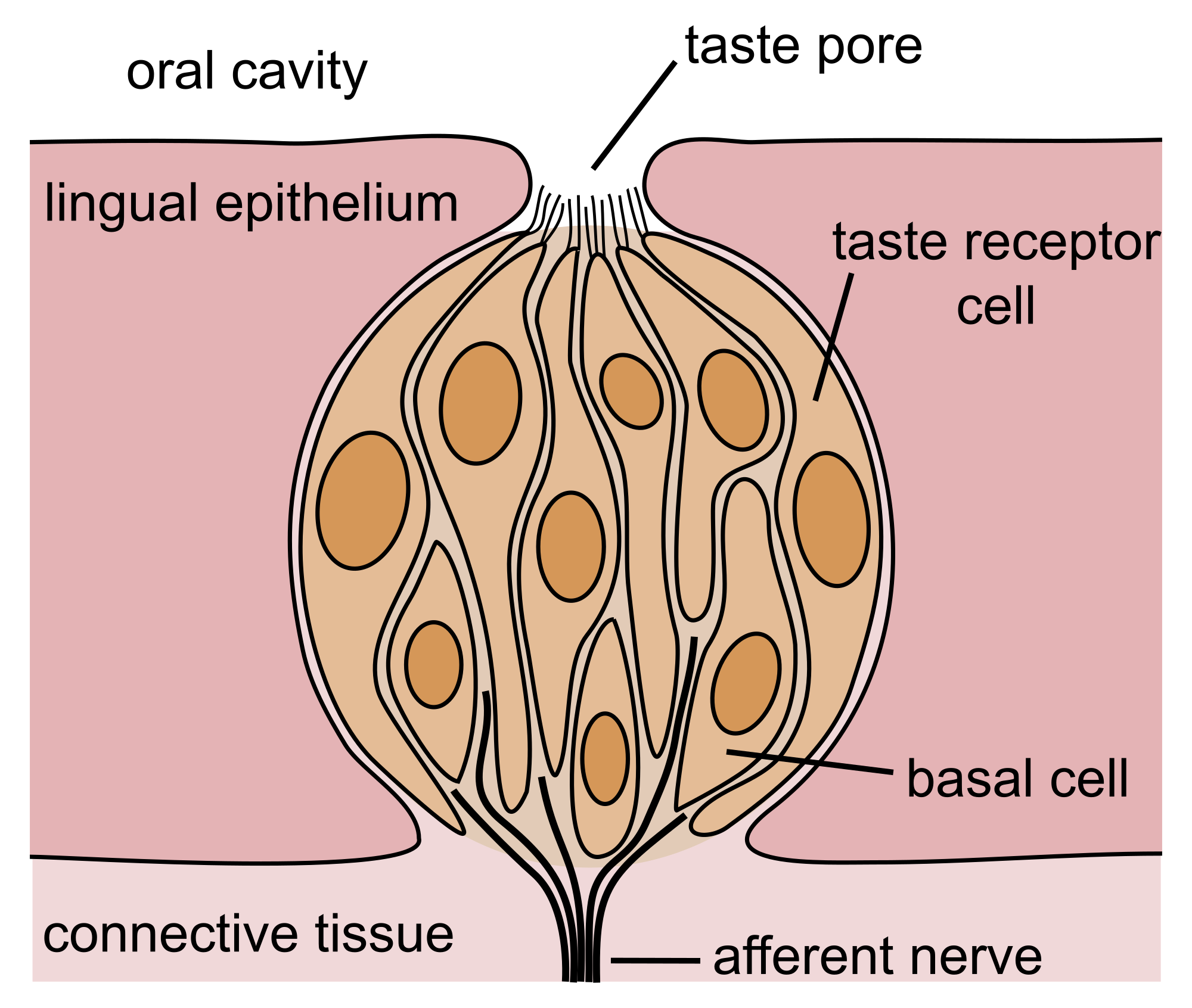
Researchers at Oregon State University in Corvallis conducted a study published in the New Scientist that suggests foods rich in carbohydrates have a uniquely distinct taste, revealing that “starchy” could be a noteworthy taste in its own right. Researchers found that the human taste palette can distinguish carbohydrates in certain foods like pasta, potato and bread.
“Every culture has a major source of complex carbohydrates. The idea that we can’t taste what we’re eating doesn’t make sense,” Juyun Lim at Oregon State University said, according to the New Scientist.
The team gave volunteers a range of different carbohydrate solutions during the experiment. “They were able to detect a starch-like taste in solutions that contained long or shorter carbohydrate chains. They called the taste ‘starchy,'” said Lim. “Among the participants, Asians indicated a “rice-like” flavor whereas Caucasians described the taste as being “bread like” or “pasta like.”
“Like eating flour,” she added. Researchers have not yet identified the taste buds that specifically differentiate between starchy and non-starchy foods but studies are ongoing. The five basic tastes – sweet, sour, bitter and salty – might be making room for another one “umani,” a savory taste that was also identified during the study.       

Tuesday, February 11, 2014

Donie's news Ireland daily BLOG update Monday

UK and Ireland team up for first time in joint Singapore trade mission


Ireland and the UK will undertake their first ever joint trade mission at the Singapore Airshow – Asia’s largest airshow and one of the most important in the world due to the Asia Pacific region’s position as the world’s biggest air travel market.
The trade mission is part of a programme of cooperation to strengthen relations over the next decade led by UK prime minister David Cameron and Irish taoiseach Enda Kenny.
It is being led by Ireland’s jobs minister Richard Bruton, UK transport minister Stephen Hammond and Northern Ireland enterprise minister Arlene Foster with support from UK Trade & Investment (UKTI),Enterprise Ireland and Invest Northern Ireland.
Enterprise Ireland and UKTI’s shared exhibition stand is jointly branded and set up as a working lounge and business-to-business meeting space for use by delegates on the joint mission.
Talking ahead of the mission, Hammond said: “The UK and Ireland both have open and globalised economies and we share a commitment to boosting growth as the cornerstone of economic recovery and job creation.
“The UK aerospace sector is a global success story. Half of the world’s commercial aircraft fly on wings made in the UK, and every 2.5 seconds an aircraft powered by Rolls-Royce engines takes off or lands somewhere in the world. This week’s trade mission will encourage greater collaboration and partnership between UK and Irish aerospace companies strengthening our offer to international buyers.”
Bruton said the mission was an important part of a “wider programme of cooperation between Ireland and the UK”.
“The aerospace industry is one of Ireland’s most valuable and technically advanced industries. Today, Ireland is recognised as a leading location for aviation, MRO, technology, engineering and aviation finance.
“This first joint mission has attracted an impressive list of companies from Ireland, Northern Ireland and the UK that will demonstrate our considerable combined strengths in the aerospace sector at Asia’s largest air show.”
Foster added: “In Northern Ireland, aerospace generates revenues in excess of £1bn and employs over 8,000 highly qualified staff.
“There are approximately 50 companies active in the sector with core strengths in precision engineering; supplying critical components and services to all of the major aerospace programmes in the world. This contributes to ensuring the UK remains Europe’s number one aerospace manufacturer and second only to the US globally.”
Other business in Singapore
During his time in Singapore, Hammond will also attend an international aviation summit, where he will be meeting with counterparts from the region to continue discussions on an aviation agreement that would cut the cost of flying and improve connectivity between the EU and South East Asia.
Hammond will seek to maintain the UK’s status as a leading global maritime hub by strengthening ties with the government of Singapore, who are expanding the world’s second-largest port. He will also meet representatives from business and industry to discuss opportunities for transport which include rail, metro and bus operations.

Irish workers could be forced to pay 15% of their wages into a private pension

?

Every worker in Ireland could be forced to contribute up to 15% of their gross income into a mandatory pension scheme, according to a proposal by the Society of Actuaries in Ireland.

Only half of the working population has a private pension scheme, which will put huge pressure on the State pension in the future, according to the SAI’s Cathal Fleming.
In a major review of pensions in the country, the SAI recommends that a system of mandatory pensions for public and private sector workers, as well as the self-employed, should be introduced from 2019 onwards. It recommends that initially employees contribute roughly 2%-3% of their gross salary to the pension scheme, but that this would grow to an average of between 10%-15% over a 15-20 year period.
The Government would also make contributions to each pension either in the form of tax relief or a direct cash contribution similar to the SSIA savings scheme, although this may not be politically palatable over the near term because of the state of the national coffers, said Mr Fleming.
“It is important that every pension scheme is in the form of an individual account so that each person can see how much they have built up at the end of every year and it is not seen just as another form of taxation,” he added.
It is envisaged that the pensions would be managed by a combination of a government body and three or four private fund management firms.
The report found that auto-enrolment pensions would be less effective because international experience shows that there is a high level of exemptions and opt-outs with these schemes.
Ireland and New Zealand are the only two OECD countries that do not have mandatory pension schemes. The Minister for Social Protection Joan Burton announced last year that a mandatory or quasi-mandatory pension scheme could be introduced once the economy picks up.
The SAI said that it is releasing this paper to assist policymakers and contribute to the debate.

Irish college fee increases back on the menu in funds row


The area of higher Irish college fees is looming again as universities prepare to put pressure on the Government to tackle the issue of who will foot the growing bill for third-level education.

Universities are to launch a new campaign warning the Education Minister that he faces a stark choice: give more Exchequer money to third-level colleges or raise fees substantially from 2016.
Under Ruairi Quinn, the charge for students has been rising by €250 a year, to a maximum of €3,000 in September 2015. At the same time, Exchequer funding for third-level institutions has been falling.
A new Government will be in place by September 2016, and Mr Quinn has shown no appetite to pursue the debate over funding of third-level beyond 2015.
If full fees are introduced, students could end up paying at least €6,000-€7,000 a year – and more, depending on the course. A loan system would involve students paying back some or all of the cost after they graduate.
The State currently contributes about €1.1bn a year to third-level, but it is estimated that much more is needed – almost half as much again, €500m, by 2020.
The focus of a new campaign by the country’s seven universities is the academic year starting September 2016, when the current Transition Year orJunior Cert students start college.
It’s a debate that will not be welcomed either by Government or parents/students – one or both of which will end up paying more.
If ongoing constraints on national finances limit how much more the State can pay, the result is likely to be higher fees, a student loan system or a mixture of both.
But the Irish Universities Association (IUA) believes that, difficult though the choices may be, the debate cannot be put off any longer.
IUA chair and Trinity College Provost, Dr Paddy Prendergast, told the Irish Independent that a lack of public investment in higher education was endangering social and economic development.
The IUA has finalised plans for a campaign aimed at putting the funding issue centre-stage on the political agenda.
As part of the campaign, they are gathering information on the situation in other countries, and will host a symposium in September to debate options.
Dr Prendergast said that the development of Irish higher education would be “resource intensive”.
He warned that “the serial scaling back of public investment in higher education is damaging our competitiveness and imperilling our social and economic development in the medium to longer term”.
“It is important that Government works with the universities to develop an agreed funding model that is sustainable into the future, and gives the higher educator sector greater financial certainty so it can plan,” he added.
Millions of euro have been cut from the university budgets in recent years, at the very time that student numbers are on the rise.
Applications for college entry this year have, to date, topped 73,000 – almost 10,000 more than they were in February 2008.
Those figures will continue to increase as a result of the baby boom that started in the late 1990s and the need for a third-level qualification in order to get a job in the so-called smart economy.
FUNDING CUTS
Universities are increasingly concerned about their ability to maintain quality and to compete in the global market in which they now operate.
The funding cuts, and their effect for instance, on staffing levels, are among the factors blamed for the slip by Irish universities in international rankings of third-level colleges.
Such global rankings are increasingly dominated by high spending universities in Asia and the US – putting them in a better position to catch the eye of research investors and the lucrative international student market.
The dramatic fall in Exchequer support means that the State is now contributing less than half the total income that universities generate.
Much of the rest comes from research grants and endowment, which raises another thorny issue for the universities – public sector employment controls inhibit their freedom to recruit staff and pay the market rate to attract necessary talent.

25% of Irish people at risk of developing chronic obstructive pulmonary disease


DOCTORS URGE PEOPLE TO AVAIL OF FREE NATIONAL SCREENING PROGRAMME

One in 25 Irish people are at risk of developing chronic obstructive pulmonary disease (COPD) due to a combination of inherited genes and exposure to cigarette smoke, a new study has found.
The study, by researchers from the Alpha One Foundation, the Royal College of Surgeons (RCSI) and Harvard University, is published this month in the American Journal of Respiratory and Critical Care Medicine.
The debilitating lung condition is linked to alpha-1 antitrypsin deficiency (alpha-1), an inherited condition affecting almost 250,000 people in this country.
Alpha-1 antitrypsin is a protein which protects the lungs and people with lower than normal amounts of this protein are at an increased risk of developing COPD.
The research proves for the first time that the estimated one in 25 people in Ireland who have inherited a combination of one normal (M) and one abnormal (Z) alpha-1 antitrypsin gene have an increased risk of developing the condition.
Prior to this study, the increased risk of developing COPD as a result of alpha-1 deficiency was only definitively known to affect people who inherit two abnormal (ZZ) alpha-1 genes.
Cigarette smoke is the most influential factor in determining whether people who carry this combination of genes (MZ) are at a greater risk of COPD compared to those who have two normal alpha-1 genes (MM).
Doctors leading the research are urging people diagnosed with COPD – an estimated 440,000 people – to get tested for alpha-1 antitrypsin deficiency through a free national screening programme.
Professor Gerry McElvaney, Professor of Medicine at RCSI, principal investigator and chairman of the Alpha One Foundation Ireland said the research was a major breakthrough in understanding the heightened risk of COPD for people with have the combination of one normal and one abnormal alpha-1 antitrypsin gene.
“If people know that they have a genetic predisposition to developing COPD, it allows intervention at an earlier age, encourages smoking cessation and prevents a further decline in lung function in a disease that is otherwise preventable. It also provides an opportunity for other family members to get tested for alpha-1.”
Dr. Kevin Molloy, Royal College of Surgeons in Ireland, the lead author of the study said Alpha-1 deficiency is massively underdiagnosed both in Ireland and internationally.
“As this research has an impact on a large number of people who have the MZ gene combination, the research will greatly increase awareness and diagnosis of alpha-1. Knowing that you have a genetic predisposition to developing COPDshould e ncourage people to avoid exposure to cigarette smoke if they definitively know they have a higher risk of developing this debilitating lung condition.”
The alpha-1 screening programme is funded by theDepartment of Health and Children and run by the Alpha One Foundation. It can be diagnosed by a simple blood test.
For more information on how to be tested contact the National Centre for Alpha-1 at Beaumont Hospital or visit http://www.alpha1.ie
The charity Irish Guide Dogs today announced that a record number of people were trained in its services during the course of last year.
The services include the charity’s guide dog programme, assistance dog programme for children with autism, its mobility programme, including long-cane training and independent living skills for people who are vision impaired, and its child mobility training.
Some 197 people were trained last year and the charity said it is planning to increase this number to 240 this year.
The charity also said it had raised more money through fundraising in 2013 compared with 2012.
Irish Guide Dogs chief executive PĆ”draig Mallon said the figures would “change lives for the better”.
“This is a great achievement in challenging times and it is reassuring that the public continue to value our work and trust us to deliver much needed services for people who are vision impaired and for families of children with autism,” he said.

Record number’s of Irish people trained in guide dog services last year


Roy Keane right picture who has promoted Guide Dogs for the blind for a good number of years now.

IRISH GUIDE DOGS RAISED MORE MONEY IN FUNDRAISING IN 2013 THAN 2012.

The charity Irish Guide Dogs today announced that a record number of people were trained in its services during the course of last year.
The services include the charity’s guide dog programme, assistance dog programme for children with autism, its mobility programme, including long-cane training and independent living skills for people who are vision impaired, and its child mobility training.
Some 197 people were trained last year and the charity said it is planning to increase this number to 240 this year.
The charity also said it had raised more money through fundraising in 2013 compared with 2012.
Irish Guide Dogs chief executive PĆ”draig Mallon said the figures would “change lives for the better”.
“This is a great achievement in challenging times and it is reassuring that the public continue to value our work and trust us to deliver much needed services for people who are vision impaired and for families of children with autism,” he said.

Is the Loch Ness Monster now dead?


NO SIGHTINGS HAVE BEEN REPORTED THIS YEAR so far?

Is Nessie dead? Reports suggest the iconic Loch Ness Monster has not been spotted in over a year.

This is the first time in about 90 years that there has been such a long absence of sightings,  BBC News has reported.
Gary Campbell, who keeps records of sea monster sightings, said nobody has claimed to have spotted Nessie in 18 months.
“It’s very upsetting news and we don’t know where she’s gone,” Campbell told the BBC. “The number of sightings has been reducing since the turn of the century but this is the first time in almost 90 years that Nessie wasn’t seen at all.”
Loch Ness Monster sighting only really began less than a century ago. The monster gained its fame in 1933, when a local newspaper published a story on the rumored creature lurking in the dark body of water, LiveScience reported. Some believe Nessie was first spotted back in A.D. 565; a Catholic Church-based legend claims St. Columba scared off a monster that was threatening a man in the loch.
Some believe Nessie is a long-necked aquatic dinosaur, while others don’t think the creature exists at all. Past photos taken of the beast have been deemed hoaxes, depicting thins such as ducks splashing in the water or waves. One picture was believed to have not been taken on Loch Ness at all.
The creature has been allegedly spotted on numerous occasions throughout the past several decades.
The loch is 20 miles long and about a mile wide in most areas. If monsters did exist in the loch they would be trapped as no waterways lead from the body of water to the ocean.
“So far 1,036 reported sightings have been recorded and there were some in 2012,” Campbell told the BBC. “I’m convinced that Nessie has just taken some time out and will be back with a vengeance this year.” 

Friday, May 10, 2013

Donie's Ireland news BLOG on Thursday


Emigration exodus of 300,000 people from Ireland in the past four years  

A nyc of Irl SURVEY SHOWS


Over 300,000 people have emigrated in the last four years. 

Over one quarter of Irish households have seen a close family member emigrate in the past two years, according to a survey commissioned by the National Youth Council of Ireland. 

Half of those aged between 18 and 24 have considered emigrating. 
Four out of ten adults aged between 25 and 34 have also considered leaving the country.
The survey is part of a new report on emigration and its impact on young people. 
It suggests that emigration is not just a matter for the country’s youth, as over one quarter of those aged between 35 and 54 have also considered moving abroad.
One in ten Irish people had seen a close family member emigrate and had considered doing the same thing themselves.
In the past four years, over 300,000 people have emigrated from Ireland; 40% were aged between 15 and 24.
The NYCI, an umbrella body which represents over 50 youth organisations around the country, is calling for the Government to develop and implement a strategy for Irish emigrants.
It also wants to see the appointment of a dedicated minister with responsibility for emigration policy and for the Irish abroad.
Speaking on RTƉ’s Morning Ireland, Deputy Director of the National Youth Council of Ireland James Doorley said that many young Irish people emigrating to Australia, Canada and elsewhere faced issues when they arrived in a new country such as accessing health services or looking for work. 
Mr Doorley said that the experience of emigration for many young Irish people was often positive but there was a need for a Government strategy to assist those who struggled after emigrating.
The survey also shows that most young Irish people intended to return home to Ireland after five years abroad. 
Mr Doorley said that some young people travel to Canada with enough money in savings to support themselves financially for one month without realising that it can take six months to get a job.
He said in other destinations people struggle with loneliness and other issues. 
He said the NYCI wanted the Government to engage with young Irish people abroad who may be having difficulties adapting to their new homes.
NUI Galway nominated among the world’s top universities
  
Academics and employers gathered to announce the world’s top universities in 30 individual disciplines as part of the 2013 QS World University Rankings by Subject.
NUI Galway, along with eight other Irish institutions appeared on the list of the world’s top 200 universities. And considering that some 678 third level education facilities were ranked in total, Galway’s overall positioning should boost its credentials as a university worth attending. 
The subject area ranking, which covers mathematics, economics, history, environmental sciences, and 25 other distinctions, is based on last year’s rankings data. NUI Galway featured in five of the 30 subjects including English language and literture (151 – 200), history (101 – 150), computer science and info systems (101 – 150), pharmacy and pharmacology (151 – 200), and law (151 – 200)
Speaking of the announcement, president of NUI Galway, Dr Jim Browne, said: “This is very good news for NUI Galway as the QS World University Rankings by Subject series takes into the account the opinion of academics and employers via a global survey confirming that our position globally is on the rise.
We operate in a global market, competing for students and research support on an international playing field, and this international recognition of the quality of our research and teaching from academic and employer opinions around the world are very significant.” 
Now in its third year, The QS World University Rankings by Subject series is the only internationally approved evaluation that allows prospective students to compare universities in their particular area of interest.
The 2013 QS World University Rankings by Subject evaluated 2,858 universities and ranked 678 institutions in total. 
Ireland’s headline inflation rate remained flat last month just as it did twelve months ago, according to new data from the (CSO). Inflation as measured by the consumer price index was 0.5 per cent on an annual basis.
The CSO data shows the most significant annual price increases were in increases in alcoholic beverages & tobacco (+5.3 per cent), education (+4.8 per cent) and miscellaneous goods & services (+2.5 per cent). There were decreases in communications (-4.6 per cent), furnishings, household equipment & routine household maintenance (-3.4 per cent) and clothing & footwear (-1.8 per cent).

Irish rate of inflation continued to fall for April 


Services saw inflation of 1.7% but price of goods fell by 1%

The annual rate of inflation for services was 1.7 per cent to the end of April although the price of goods decreased by 1.0 per cent. When mortgage interest repayments are stripped out services increased by 2.5 per cent in the year since April 2012.
Isme, the Irish Small and Medium Enterprises Association, warned the Government against complacency over the figures which it said masked real increased government costs.
“If we are serious about making the transition from a reliance on domestic demand to a sustainable export-led growth, we must bring all of our costs in line with our trading partners,” said ISME chief executive, Mark Fielding.
“The reality, from a business viewpoint, is that state cost increases, in particular, utility costs, local authority rates and charges continue to negatively impact businesses, who themselves have cut their manageable costs to the bone.”

€1.4m Illegal cigarettes seized in Galway and Louth


400kg of tobacco and counterfeit vodka also discovered by gardaĆ­ and Revenue officials

Black market cigarettes and tobacco valued at more than €1.5 million have been seized in counties Galway and Louth.
A search by Revenue customs officials at a commercial property in Athenry, Co Galway yesterday yielded a haul of some 2 million Benson & Hedges brand cigarettes, which were valued at €950,000.
The cigarettes were brought into the State from Belgium through Dublin Port, Revenue said.
Separately, gardaĆ­ and Revenue officials discovered a haul of 1.2 million cigarettes, valued at €550,000, and 400kg of tobacco, valued at €180,000, during a search of a property at Faughart near Dundalk. Counterfeit vodka was also discovered during the search.
Nobody has been arrested in connection with the hauls, which Revenue said if sold on the black market would have resulted in a loss of more than €1.3 million to the exchequer.

Genetic Test Helps Predict Risk of Prostate Cancer Recurrence


Prostate cancer ranks as the most common internal malignancy diagnosed in men in the United States, but often does not require extensive treatment.

A study using tissue samples from men who underwent surgical removal of the prostate at UC San Francisco confirmed that a genetic test that measures cell cycle progression (CCP) — an indicator of how rapidly cancer cells are growing and dividing — can be a useful tool for predicting who will have a recurrence of the disease, especially when combined with existing information from laboratory and pathology tests.
The CCP score provides a biomarker that eventually might help guide decisions about whether to pursue additional treatment after surgery, such as radiation therapy.
The study, published in the Journal of Clinical Oncology (2013 Apr 10;31(11):1428-34), used the UCSF Urologic Oncology Database to access tissue samples and medical records from men who had undergone prostatectomy at UCSF and been followed for at least five years after surgery.
A commercial laboratory operated by Myriad Genetics, the company that developed the test, conducted genetic analysis of the tissue samples to determine a CCP score in 413 patients. The researchers at UCSF then examined how well the CCP score predicted which men had a recurrence of their disease after surgery.
The CCP score was also evaluated with another validated predictive score, the Cancer of the Prostate Risk Assessment post-surgery score (CAPRA-S). The CAPRA-S score is based on preoperative PSA levels and information gleaned from surgery, including how much the tumor has invaded tissues surrounding the prostate and how aggressive he cancer cells look when examined under a microscope.
Investigators found that the CAPRA-S and CCP together they were more useful than either alone, and that adding the CCP was especially helpful in men who appeared to have low-risk disease based on the CAPRA-S score alone.
In addition to the 413 patients in the UCSF group, the researchers also looked at the predictive results of the CCP combined with the CAPRA-S in a group of patients previously studied at the Scott and White Clinic in Georgetown, TX, for whom longer-term follow-up was available. The combination of the CCP and CAPRA-S again accurately predicted recurrence in this group.
“One of the big challenges in prostate cancer is knowing when and how aggressively to treat patients,” said Matthew R. Cooperberg, MD, MPH, lead author of the study. “Biomarkers such as the CCP can provide valuable data to guide treatment decisions.”
The UCSF Urology Department is currently running additional studies with the CCP score, as well as other promising biomarkers and imaging tests, in men who have not undergone surgery or other treatments.
“Our hope is that these tests will help more men with low-risk prostate cancer avoid unnecessary treatment, while ensuring that those with more aggressive cancers do not miss the window of opportunity for cure,” said Cooperberg.
This research was funded by Myriad Genetics and by grants from the Department of Defense and National Cancer Institute.

Southampton scientists climb Everest for study


SCIENTISTS AND MEDICAL STAFF FROM SOUTHAMPTON ARE TACKLING ONE OF THE HARSHEST ENVIRONMENTS IN THE WORLD TO STUDY THE IMPACT OF LOW OXYGEN LEVELS ON THE HUMAN BODY.

The University of Southampton team has travelled to Nepal to carry out vital research into hypoxia – which is a common problem for patients in intensive care.

They are climbing to base camp of Mount Everest.

The scientists hope the expedition will give them a better understanding of why the condition can lead to death.