Pages

Showing posts with label Volkswagen. Show all posts

Friday, September 23, 2016

Donie's Ireland daily news BLOG update

Cash buyers In Ireland pay less for properties than those who need a mortgage?

Image result for Cash buyers In Ireland pay less for properties than those who need a mortgage?   Image result for Cash buyers In Ireland pay less for properties than those who need a mortgage?

CASH BUYERS ARE PAYING LESS FOR PROPERTIES THAN THOSE WHO NEED TO GET A MORTGAGE AND FIRST-TIME BUYERS ARE BEING SQUEEZED OUT OF THE MARKET.

The findings are contained in the newly revamped property price index from the Central Statistics Office (CSO) which is now based on stamp duty returns and includes cash buyers for the first time.
The CSO data now shows that the collapse in property prices was more pronounced than previously thought, while the recovery has been slightly stronger.
For example, the peak-to-trough fall in residential property prices was 54.4%, not 50.9% as recorded previously.
Similarly, the price increase from the trough to July of this year is 43.2% using the new index, whereas it was previously estimated as 37.4%.
The CSO confirmed that cash buyers — who are estimated to make up around 50% of the market — pay less for property than those who must buy their house by securing a mortgage between 2010 and 2016 and that the differential was most pronounced when the market was at its lowest and outside of Dublin.
Throughout the period 2010 to 2015, former-owner-occupiers have consistently paid the most on average for housing, followed by first-time buyers. Non-occupier households have consistently paid the least.
The CSO also found that first-time buyers have gradually been pushed out of the market between 2010 to 2015.
In 2010, they represented 53.1% of all household market transactions filed. By 2015, first-time buyers’ share fell to just 24.4% of the market. In the first seven months of 2016, first-time buyers accounted for 24.6% of household market purchases.
Across the country, residential property prices rose by 6.7% in the year to July. This compares with an increase of 4.9% in June and a rise of 6.1% recorded in the year to July 2015.
Residential prices increased by 2.5% in the month of July compared with an increase of 1% in June and an increase of 0.8% in July of last year.
Residential property prices are currently 34.7% lower than at their highest level in April 2007.
Prices declined steadily over the years 2010 to 2011, followed by a bottoming-out in 2012 to 2013.
“Since then, prices have risen again. However, the rise in prices has been uneven, with noticeable fluctuations up to the present point in time,” noted the CSO.
In the Dublin residential property market, prices increased by 3.8% in the 12 months to July. This compares with an increase of 2.5% in the year to June and an increase of 4.5% in the year to July 2015.
Dublin residential property prices increased by 1.6% in the month of July compared with an increase of 0.4% in June and an increase of 0.4% in July of last year.
Residential prices in the capital are now 58.2% higher than their lowest level but remain 35.3% below their peak price level in 2006.

The Irish Labour Party made mistakes in office, Says Brendan Howlin

LABOUR PARTY THINK-IN TOLD ECONOMIC IMPLOSION WOULD HAVE HAPPENED WITHOUT PARTY

Image result for The Labour Party made mistakes in office, Brendan Howlin admits   Image result for The Labour Party made mistakes in office, Brendan Howlin admits

Labour Party leader Brendan Howlin with Andrew Montague, Rebecca Moynihan, Ged Nash and Kevin Humphreys: “We are rightly proud of the many things we did in office. But we’re also honest enough to recognise that we didn’t get everything right.”

Labour Party leader Brendan Howlin has conceded the party made mistakes in office, but said the current Government was interested in power and nothing else.
Speaking to the Parliamentary Labour Party at its think-in yesterday, Mr Howlin said the Government was leading “a do-nothing Dáil”.
“If [it] survives at all, these will be known as the lost years,” said Mr Howlin.
“Politics is about the resolution of differences in a peaceful and civilised manner – not pretending they don’t exist.”
In the 1990s and again in 2011, Labour entered government when the country was in chaos, but twice it left office when the country had returned to economic growth.
“Had Sinn Féin or the anarchists entered government in 2011 Ireland would now have no economy to speak of. We wouldn’t have been talking about health and housing at the election just gone.
“We’d have been talking about our economic implosion, the collapse in foreign direct investment, soaring joblessness and unimaginable hardship. There would have been no debate about the scale of the recovery because things would still be getting worse.”
The liberal society
For 40 years Labour has been the parliamentary vanguard of change which has seen Ireland transformed from a narrow intolerant society to a more pluralist and liberal society.
“There are many in Ireland who only see problems as opportunities for political gain. They will always have a certain advantage over those of us that seek to solve such problems.”
Labour’s election manifesto was principled and progressive and would have helped to build a fair society: “But, frankly, I think many Irish people had stopped listening to Labour.
“Let’s be honest enough to recognise why. By the time the election came around, we faced an enormous challenge in having any of our messages heard.
“I’ve said this before – and I will continue to say it – we recognise that we made plenty of mistakes along the way; that there is a gap between what people heard us say and what they saw us do.” Mr Howlin said this was partly because governing during a crisis was messy and distracting and stopped the party from being clear about some of the things it had achieved.
“But partly also because we made some particularly high-profile promises in areas such as third-level fees. And we didn’t always deliver.
“We are rightly proud of the many things we did in office. But we’re also honest enough to recognise that we didn’t get everything right.”

Yahoo admits information from 200m accounts stolen by hackers

HACKED DATA MAY INCLUDE BIRTH DATES, USER NAMES AND PASSWORDS GOING BACK TO 2012

Image result for Yahoo admits information from 200m accounts stolen by hackers  Image result for Yahoo admits information from 200m accounts stolen by hackers  Image result for Yahoo admits information from 200m accounts stolen by hackers

DATA BREACH REVELATION WOULD CONFIRM REPORTS SAME HACKER WHO STOLE DATA FROM LINKEDIN WAS NOW SELLING INFORMATION FROM 200 MILLION YAHOO ACCOUNTS.

Yahoo announced on Thursday that the account information of at least 500 million users was stolen by hackers two years ago.
In a statement, Yahoo said user information – including names, email addresses, telephone numbers, birth dates, passwords, and in some cases security questions – was compromised in 2014 by what it believed was a “state-sponsored actor.”
It did not name the country involved. The company said it was working with law enforcement officials. It encouraged users to review their online accounts for suspicious activity and to watch out for suspicious emails.
The announcement comes as Verizon Communications moves forward with its $4.8 billion acquisition of Yahoo. It is unclear what effect the breach, if any, will have on Yahoo’s sale price.
That will most likely depend on what Verizon learns about Yahoo’s security controls. But security experts say the incident could have far-reaching consequences for users beyond Yahoo’s services.
“The stolen Yahoo data is critical because it not only leads to a single system but to users’ connections to their banks, social media profiles, other financial services and users’ friends and family,” said Alex Holden, the founder of Hold Security, which has been tracking the flow of stolen Yahoo credentials on the underground web.
“This is one of the biggest breaches of people’s privacy and very far reaching.”
The revelation would confirm earlier reports that the same hacker who stole data from LinkedIn was now selling information from Yahoo! accounts on a dark web marketplace.
Hacker named Peace
The data for sale includes user names, scrambled passwords and birth dates and probably dates from 2012, Motherboard reported in August, citing the cyber-attacker, who went by the name Peace.
Yahoo! said at the time it was investigating the claim. Many of the stolen accounts in a sample of data obtained by Motherboard were no longer in use and had been cancelled.
The sale of all of the data for just under $2,000 (€1,781) also suggested that the information itself was of little value, either because most of it was obsolete, made up, or useless because the hackers had already attacked legitimate accounts and exhausted their need for the data.
Whatever the scale of the alleged breach, the incident shows the danger of large datasets spilling into the hacker underground and being used for criminal purposes for years without the breached companies knowing or taking minimal action based on whatever data hackers tell them was taken.
LinkedIn said in May it was investigating whether a breach of more than six million user passwords in 2012 was bigger than originally thought, following a hacker’s attempt to sell what was purported to be login codes for 117 million accounts.
Reset passwords?
The company said it appeared more data was taken in the initial compromise and that the company was just learning about the larger amount through the hacker’s posting. Like many internet companies that have been breached, LinkedIn only reset passwords of everyone it believed was part of the breach at the earlier time, which amounted to 6.5 million users.
It is unclear what steps, if any, Yahoo has taken since learning about the alleged compromise.
Reports of the security breach come just as chief executive Marissa Mayer is about to close a deal that ends the once-dominant internet firm’s independence.
Verizon is acquiring its internet assets for $4.8 billion, bringing the web portal together with long-time rival AOL. The telecommunications company will pick up services that still draw a billion monthly users, including mail, news and sports content and financial tools.

Volkswagen investors seek compensation in emissions cheating scandal,

A COURT RULES

Image result for Volkswagen investors seek compensation in emissions cheating scandal  
VW Making Slow Progress On Fixing Rigged Diesels In Europe
  Image result for Volkswagen investors seek compensation in emissions cheating scandal
Vera Jourova, European Union Commissioner for Justice, Consumers and Gender Equality, presents the results of the 2016 Consumer Markets Scoreboard in Brussels, Belgium on September 5. Questions mainly focused on Dieselgate and Volkswagen, due to a scandal involving the manipulated data of emission tests.
Volkswagen (VW) faces 8.2 billion euros ($9.1 billion) in damages claims from investors over its emissions scandal in the legal district where the carmaker is based, a German court said on Wednesday.
About 1,400 lawsuits have been lodged at the regional court in Braunschweig near Volkswagen’s Wolfsburg headquarters, the court said.
The Braunschweig court said it received some 750 lawsuits on Monday alone, which marked the first business day after the anniversary of VW’s diesel emissions test-rigging scandal.
It said it brought in extra staff to process suits submitted by shareholders concerned September 18 – the day VW’s manipulations were disclosed a year ago – could be the deadline to file.
Plaintiffs say the German carmaker didn’t inform shareholders quickly enough over its cheating software, which was installed in up to around 11 million vehicles worldwide.
VW, which faces lawsuits and investigations across the world, has consistently said it did not break capital markets regulations in the disclosure of its cheating.
The biggest claim at the Braunschweig court, totaling 3.3 billion euros, was filed by lawyer Andreas Tulip on behalf of institutional investors around half a year ago.
The court detailed additional complaints on Wednesday, saying they included a filing by institutional investors for 30 million euros in damages, two investor groups demanding 1.5 billion and 550 million euros respectively and an investment company that sued the carmaker for 45 million euros.
It would take about four weeks to fully process the additional claims, the court said.
Complaints have also been filed by German state pension funds.
VW has so far set aside about $18 billion to cover the cost of vehicle refits and a settlement with US authorities, but analysts think the bill could rise much further as a result of lawsuits and regulatory penalties.
VW pledged to fix all cars equipped with illicit engine software in Europe by autumn 2017, the European Commission said on Wednesday after talks with the carmaker to ensure it is doing enough for affected customers.
At a meeting with consumer Commissioner Vera Jourova, VW board member Francisco Javier Garcia Sanz committed to a plan to inform customers by year’s end of the need for a technical fix to bring diesel cars into line with EU caps on toxic nitrogen oxide emissions, Jourova’s spokesman said.
The German carmaker also committed “to have all cars repaired by autumn 2017,” spokesman Christian Wigand said, adding the carmarker would offer clients “proof of conformity.”
VW has admitted that it installed improper software that deactivated pollution controls on more than 11 million diesel vehicles that had been sold around the world.
EU officials have called on the German carmaker to do more to compensate European clients since its $15 billion settlement in the US for using the cheat software, saying it is unfair for them to be treated differently.
“Volkswagen committed to an EU-wide action plan today, which is an important step toward a fair treatment of consumers,” Jourova said in a statement.
Volkswagen has rejected suggestions it may have breached EU consumer rules and said that it does not see the need to compensate affected car owners.
Europe’s largest automaker is making slow progress on fixing cars in Europe, having repaired less than 10 percent of the 8.5 million affected models in Europe.
It said the majority of the cars in Europe can be repaired by the end of this year, but an unspecified number will have to wait.
VW group models with 1.2 liter and 2.0 liter engines require only a software update on pollution control systems, but about 3 million 1.6 liter models also require a mesh to be installed near the air filter.

Native (aboriginal) Australian DNA reveals ancient inter-breeding profiles

Image result for Native (aboriginal) Australian DNA reveals ancient inter-breeding  Image result for Native (aboriginal) Australian DNA reveals ancient inter-breeding  Image result for Native (aboriginal) Australian DNA reveals ancient inter-breeding

DNA FROM NATIVE AUSTRALIANS HAS REVEALED EVIDENCE OF ANCIENT INTERBREEDING WITH AN UNKNOWN BRANCH OF HUMANITY THEIR ANCESTORS ENCOUNTERED AS THEY MIGRATED OUT OF AFRICA.

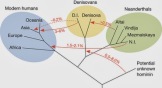
Genetic traces of the mysterious early humans, whose fossil remains have never been found, are still carried by Australian aboriginal people.
The same study suggests that indigenous tribes from Australia and Papua New Guinea have one of the oldest human pedigrees on the planet.
It also points to a single “exit” from Africa by early modern humans around 72,000 years ago.
Experts disagree on whether present-day non-African people are descended from explorers who left Africa in a single exodus or a series of distinct waves of travelling migrants.
The new research supports the single migration hypothesis. It indicates that Australian aboriginal and Papuan people both originated from the same out-of Africa migration event some 72,000 years ago, along with ancestors of all other non-African populations alive today.
Tracing the Papuan and Australian groups’ progress showed that around 50,000 years ago they reached “Sahul”. This was a prehistoric supercontinent that once united New Guinea, Australia and Tasmania – they were separated by rising sea levels.
Here in “Sahul”, they met and interbred with the unknown race of humans, who may have had links with Siberian Denisovans.
If you’re wondering exactly who the Denisovans were, they were a distinct sub-species of the human family that has been extinct for many thousands of years, like the Neanderthals.
Study leader Professor Eske Willerslev, from Cambridge University, said: “We don’t know who these people were, but they were a distant relative of Denisovans, and the Papuan/Australian ancestors probably encountered them close to Sahul.”
The research addressed “fundamental questions” about human evolution, he added.
“Technologically and politically, it has not really been possible to answer those questions until now,” said Prof Willerslev.
“We found evidence that there was only really one wave of humans who gave rise to all present-day non-Africans, including Australians.”
The findings have been published in the journal Nature. And they show that aboriginal Australians are descended directly from the first people to inhabit the continent.
Once in Australia, the ancestors of today’s aborigine communities remained almost completely isolated from the rest of the world’s population.
That was until a few thousand years ago, when they came into contact first with some Asian populations followed by European explorers in the 18th century.    

Wednesday, September 7, 2016

Donie's Ireland daily news BLOG update

Volkswagen company representatives walk out of Mayo court emissions case

Image result for Volkswagen company representatives walk out of Mayo court emissions case  Image result for Judge Mary Devins ruled   Image result for Volkswagen company representatives walk out of Mayo court emissions case

LEGAL REPRESENTATIVES FOR VOLKSWAGEN WALKED OUT OF COURT IN MAYO TODAY AFTER LABELLING AN ONGOING COURT CASE REGARDING EMISSIONS AS “ENTIRELY INAPPROPRIATE AND UNFAIR”.

Barrister Paul Fogarty and two instructing solicitors from A&L Goodbody walked out of Castlebar District Court after Judge Mary Devins ruled that she would continue with the case.
Earlier Mr Fogarty told Judge Devins that his clients, Volkswagen Group Ireland and Volkswagen AG had obtained legal advice that the court had no jurisdiction to take the case.
He said that as a result representatives were not present in court and the defence would be calling no witnesses.
Mr Fogarty said his clients also took the view that there were serious issues in relation to orders previously made by the court in the case and raised concerns about the manner in which evidence would be given by witnesses for the claimant. He said the manner of the case was “highly unconventional”.
He informed Judge Devins that the respondents would be seeking a judicial review in the matter.
Judge Devins said the case would continue “without Hamlet” and later referred to the actions of the legal team as a “spectacular walk out”
The case, before Castlebar District Court is being taken by mother of three Eithne Higgins Croghan, Boyle, Co Roscommon.
She is seeking compensation after Volkswagen admitted cheating on emissions tests last year.
The case will deal with whether there was an issue with carbon dioxide (CO2) and / or oxides of nitrogen (NOx) emissions on the vehicle in question.
Ms Higgins’ claim states that there may be implications in respect to the payment of Vehicle Registration Tax or road tax as a result of incorrect emissions data.
The court heard that after the emission revelations emerged she attempted to trade in her car at three different garages, each time unsuccessfully.
Evan O’Dwyer, representing Ms Higgins criticised the respondents and their legal representation, stating that he and his client had been ‘bullied’. He also criticised the manner in which the respondents had treated the court by arriving late on one occasion, failure to make a witness available, failure to provide adequate data and the failure of the respondents to attend court. He also claimed he had received letters from A&L Goodbody threatening him with contempt while Ms Higgins had received three letters stating the company would pursue her for costs if she proceeded with the case.
“There has been a system of bullying going on in this case from the beginning. Bullying of Ms Higgins, myself and laterally this court. Attempts have been made to goad this court so that a judicial review could be sought.
“They are trying to set-up this court for a judicial review,” he added.
He added that the quality of information provided by Volkswagen “belittles” the court.
A statement from Volkswagen Group Ireland’s technical services manager Stephen McDonnell was read into the record. Mr McDonnell did not attend despite having been directed by the judge to do so.
His statement stressed that CO2 emissions were not linked to the NOx emissions.
However, this was dismissed by emissions expert Horace Calvert Stinson who said it didn’t stack up with theory, practice or experience.
He stressed the issue of CO2 and NOx could not be separated adding they were “intimately related” and were completely interdependent on each other.
Dr Calvert Stinson said the data provided by Volkswagen was not sufficient in this case and was not fit for purpose.
This was also the view of Michael Lehmann who was involved in the Volkswagen litigation in the US. He said the level of information provided to the court fell well below the data provided for similar cases in the US adding that there was a “complete absence of hard data”.The case continues tomorrow Wednesday.

Bruton says Irish universities must agree to reform if they want more money

EDUCATION MINISTER RESPONDS TO COLLEGES’ DEMANDS AFTER FALL IN RANKINGS

Image result for Bruton says universities must agree to reform if they want more money  Image result for irish universities world rankings  Image result for irish universities world rankings

RICHARD BRUTON: HE DISMISSED SUGGESTIONS BY SOME UNIVERSITY LEADERS THAT A PROPORTION OF CORPORATION TAX SHOULD BE SET ASIDE EXCLUSIVELY FOR THE THIRD-LEVEL SECTOR

Universities must agree to a series of reforms in return for any increases in funding, Minister for Education Richard Bruton has said.
Mr Bruton conceded that universities were under funding pressure following the publication of global rankings that saw all but one of the State’s universities fall, but said “virtually every part of the public service” was experiencing similar problems.
He was “absolutely” considering reforms in return for additional funding, but also suggested that any such increases – which university heads say are vital to sustain the system – would only come about as part of a longer-term plan.
“I made it absolutely clear that any new money, whether it comes from students, employers or, indeed, it comes from the State, it has to be locked into policy tools that deliver the priorities that people would expect,” Mr Bruton said in response to calls from heads of universities and third-level teachers for more funding for their institutions.

SKILLS GAPS

“That means meeting the skills gaps and the requirements of the war for talent in the enterprise world, meeting our needs to bring through from areas of disadvantage and disability and seeing them participate to the full, and showing that we can drive innovation to high standards.
“So I would be very keen to see a reform in the funding mechanism as well as the amount of funding so that we can leverage more impact from our higher education system.”
Heads of universities said the fall in the global rankings of Irish universities was the consequence of a decade of cutbacks to the sector, and third-level representatives warned of a crisis in the colleges caused by growing student numbers and a lack of investment.
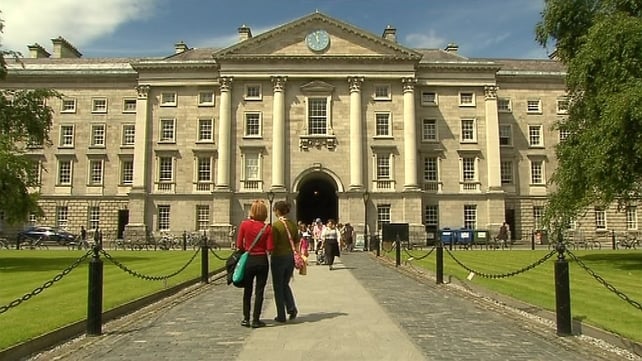
Trinity is the only Irish university ranked in the top 100 international universities, and it and all other universities here except NUI Galway are rated lower than last year in this year’s world university rankings.

CRISIS

However, Mr Bruton avoided conceding there was a crisis in the sector, and spoke of the necessity for a longer-term plan for reforming the funding of higher education.
He dismissed suggestions by some university leaders yesterday that a proportion of corporation tax should be set aside exclusively for the third-level sector.
Two months ago a major report into the funding of higher education by former trade union leader Peter Cassells said the sector needed a long-term funding solution, and laid out options, including increased State investment and a student-loan system.
Mr Bruton has not yet indicated his preferences, but said he wanted to build a political consensus on the issue. He said the report would soon be discussed by the Oireachtas education committee.
However, he also indicated that higher education was only one of a number of sectors that would be seeking priority in the forthcoming budget, citing especially pressures in housing and health.

Emergency treatment for severe low blood glucose is recalled by drugs watchdog

Image result for Emergency treatment for severe low blood glucose is recalled by drugs watchdog  Image result for Emergency treatment for severe low blood glucose is recalled by drugs watchdog  Image result for Emergency treatment for severe low blood glucose is recalled by drugs watchdog

A RECALL OF CERTAIN BATCHES OF GLUCAGEN HYPOKITS, USED FOR THE EMERGENCY TREATMENT OF SEVERE LOW BLOOD GLUCOSE, WAS ORDERED BY THE COUNTRY’S DRUGS’ WATCHDOG TODAY.

The reason for the recall is that in a small number of units (0.006% approx.) the syringe needle has become detached from the syringe. Units with a detached needle cannot be used to prepare the medicine for administration.
The Health Products Regulatory Authority (HPRA) said it is  advising patients and carers to check the batch number on any GlucaGen Hypokit units they may have at home or in their possession and to return any of the affected product to their pharmacist where a replacement will be provided.
GlucaGen HypoKit is packaged with a syringe containing sterile water for injection which is used to prepare the medicine for use.
They are used in emergency situations to treat severe hypoglycaemia in children and adults with diabetes mellitus.
While a very small number of units are likely to be impacted, a delay in emergency treatment could have significant health consequences and, therefore, units from affected batches should not be used and should be returned to the dispensing pharmacy where a replacement will be provided.
Two batches of Novo Nordisk GlucaGen HypoKit and two batches of PCO Manufacturing GlucaGen Hypokit are being recalled in Ireland and this represents a total of 8,064 units.
The affected batch numbers, which are printed on the product label along with an expiry date, are as follows:
Patients and carers who have a GlucaGen Hypokit with a batch number which is not mentioned above, do not need to return the unit to their pharmacy.
The HPRA will closely monitor the recall and provide further updates as necessary on http://www.hpra.ie
How to Identify the Batch Numbers:- Novo Nordisk GlucaGen HypoKits:
  1. Firstly check if you have a GlucaGen HypoKit which has a marketing authorisation no. PA218/31/2.
  2. If the GlucaGen HypoKit has this authorisation number, then next check the batch number to confirm if it is one of the batches being recalled. The batch number can be found on the part of the label highlighted by the red box below.
  3. If the batch number is FS6X249 or FS6X592, then please contact your pharmacist to return the unit and to receive a replacement unit.
PCO Manufacturing GlucaGen HypoKits:
  1. Firstly, check if you have a GlucaGen HypoKit which has a marketing authorisation no. PPA465/331/1.
  2. If the GlucaGen HypoKit has this authorisation number, then next check the batch number to confirm if it is one of the batches being recalled. The batch number (which is a combination of BN and PC numbers) can be found on the parts of the label highlighted by the red boxes below.
  3. If the batch number is BN: FS6X718 / PC: 206 or BN: FS6X718 / PC: 208, then please contact your pharmacist to return the unit and receive a replacement unit.

New Head of Environmental Science at IT Sligo

Image result for New Head of Environmental Science at IT Sligo   Image result for New Head of Environmental Science at IT Sligo

DR FRANCES LUCY (PICTURED) HAS BEEN APPOINTED AS THE NEW HEAD OF DEPARTMENT OF ENVIRONMENTAL SCIENCE AT INSTITUTE OF TECHNOLOGY, SLIGO.

She succeeds Dr Billy Fitzgerald who has recently retired from the role.
Dr Lucy is a native of Cork, and has been living in Drumkeerin, County Leitrim since she first joined the Institute in 1992.
During that time she has immersed herself in a wide range of teaching, course development and research in the Dept. of Environmental Science.
She is also Director of the Institute’s Centre for Environmental Research Innovation and Sustainability (CERIS), and has over twenty years experience in the areas of invasive alien species (IAS) management and freshwater ecology.
She carried out her PhD while working in the institute, and her topic area was on the dynamics of zebra mussel populations in Lough Key.
“I am very proud to be appointed as Head of the Department of Environmental Science,” said Dr Lucy. “Our students are the future guardians of the environment and we work hard to give them the best student experience that is achievable.
“At IT Sligo, they get the education, skills and work experience they need to walk straight into the workplace. There are extremely good job prospects for graduates from our environmental, occupational safety and health and archaeology courses,” she said.
Dr Lucy is currently the lead Principal Investigator for a new three-year Irish EPA research project on ‘Prevention, Control and Eradication of Invasive Alien Species’ (2016-2019).
Beyond her IT Sligo roles, she is chairperson of the Environmental Sciences Association of Ireland and a Board Member of the Irish state agency, Inland Fisheries Ireland.

New Scientific study reveals changes to our taste buds.

Image result for New Scientific study reveals changes to our taste buds.  Image result for New Scientific study reveals changes to our taste buds.  Image result for New Scientific study reveals changes to our taste buds.

Researchers at Oregon State University in Corvallis conducted a study published in the New Scientist that suggests foods rich in carbohydrates have a uniquely distinct taste, revealing that “starchy” could be a noteworthy taste in its own right. Researchers found that the human taste palette can distinguish carbohydrates in certain foods like pasta, potato and bread.
“Every culture has a major source of complex carbohydrates. The idea that we can’t taste what we’re eating doesn’t make sense,” Juyun Lim at Oregon State University said, according to the New Scientist.
The team gave volunteers a range of different carbohydrate solutions during the experiment. “They were able to detect a starch-like taste in solutions that contained long or shorter carbohydrate chains. They called the taste ‘starchy,'” said Lim. “Among the participants, Asians indicated a “rice-like” flavor whereas Caucasians described the taste as being “bread like” or “pasta like.”
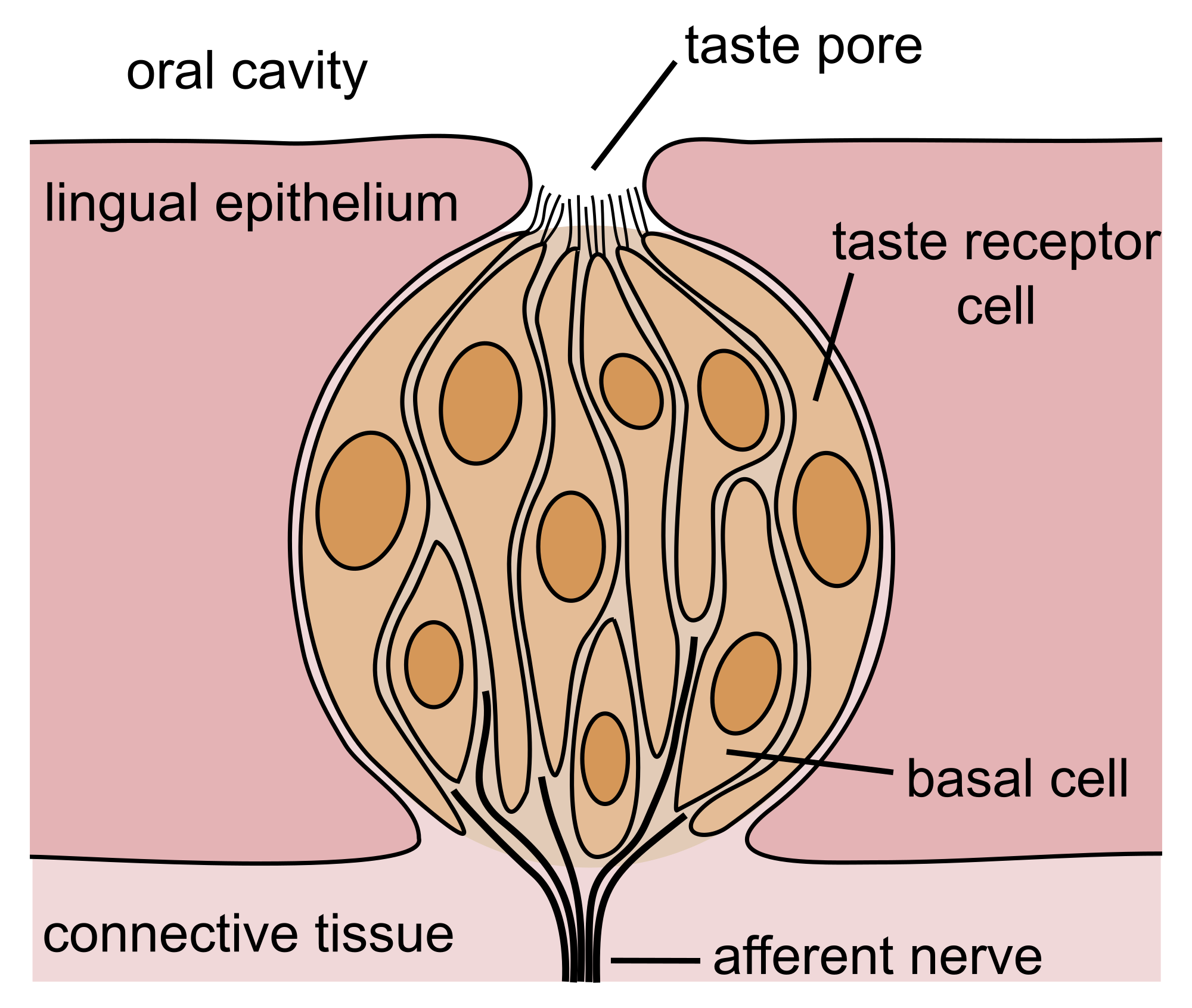
“Like eating flour,” she added. Researchers have not yet identified the taste buds that specifically differentiate between starchy and non-starchy foods but studies are ongoing. The five basic tastes – sweet, sour, bitter and salty – might be making room for another one “umani,” a savory taste that was also identified during the study.       

Friday, October 2, 2015

Donie's Ireland daily news BLOG update

Virgin Media/UPC will launch Irish mobile service on October 5, 2015


Virgin Media, formerly UPC, will launch its new Virgin Mobile brand in Ireland on October 5th.

The service is to offer unlimited data (with a fair usage cap of 30GB), voice and texts for €25 a month. Alternatively, customers can go for a limited data bundle with 1GB data and 250 minutes of voice and 250 texts for €15 a month.
Existing Virgin Media or UPC customers will be able to avail of either offer for free for the first three months.
The new service will launch with 3G data services, but plans to upgrade to 4G in the first half of 2016. New Virgin Mobile numbers will utilise the 089 prefix.
Virgin Media will sell the new mobile services online athttp://www.virginmedia.ie and through existing Virgin Media/UPC stores in Dublin, Limerick, and Cork.
Interestingly, the service will not launch with a series of handsets. Virgin Mobile is currently putting together a selection of handsets that will be available next year.
Speaking at the launch Virgin Group Founder Richard Branson said: “This is a fantastic day for me and everyone at Virgin Media.”
“I’m thrilled to bring our brand to homes and businesses all over Ireland. Virgin Media is going to shake up the market with an unbeatable service – we have a great foundation to build on and there are no limits to what we want to achieve for our customers.”

20% of shop scales gave false readings in 2014


More than one in five weighing scales in shops gave false readings last year, while more than a third of taxi meters also failed inspection.

According to the annual report of the National Standards Authority of Ireland (NSAI), 31% of 2,130 vehicle taxi meters tested failed inspections, while 21% of weighing scales in shops tested by NSAI inspectors failed.
Despite this, however, last year saw a sharp increase in the compliance rates among petrol stations. Of the 5,941 petrol/diesel pumps tested by NSAI inspectors to ensure they were calibrated correctly, just 393 failed (7%). Some of the reasons for failures include the petrol/diesel pumps or taximeters had recently been repaired, altered or adjusted, or the seals were broken or damaged.
NSAI inspectors issued warnings to the businesses affected, specifying that the issue be rectified within a certain time frame. The NSAI also investigated 128 consumer complaints of inaccurate weights and measurements.
Throughout 2014, NSAI inspectors conducted 5,659 site visits to businesses, testing 15,032 instruments, from alcohol or liquor dispensers to scales for retail and points of sale.
Head of NSAI’s legal metrology division Paul Turner said not all petrol pumps were under-dispensing petrol to unsuspecting motorists.
“NSAI’s inspectors not only protect consumers, they also look out for traders as well. We had instances where petrol pumps can over-dispense. Ensuring petrol pump instruments are tested on an annual basis, not only increases consumer confidence, but also can potentially save business owners thousands of euro in lost petrol and diesel,” he said. A total of 545 construction industry-related audits were conducted in areas such as external wall insulation systems, window energy ratings, product certifications, air tightness and cavity bead insulation. All 545 were found to be compliant.
Over 7,500 automotive approvals were granted for vehicles, components and systems, focusing on issues such as emissions, engine power, tyres and seat belts.
The NSAI is the Irish approval authority for an EU scheme where a manufacturer can obtain certification for a vehicle type in one EU country and market it EU-wide without further tests.

Pay increase for workers in security and the contract cleaning sectors


Ged Nash signs order to boost minimum hourly wage for some 50,000 employees. 

Minister for Business and Employment, Ged Nash has brought in regulations that will see an hourly wage increase for those working in contract cleaning and security. Photograph: Dave Meehan/The Irish Times
About 50,000 workers in the security and contract cleaning sectors are to receive pay increases under new employment regulation orders.
Under the new measures signed on Thursday by Minister for Business and Employment Ged Nash, pay for 30,000 contract cleaning personnel will rise to €9.75 per hour.
Pay for 20,000 security industry staff will increase from €10.01 to €10.75 per hour.
Mr Nash urged employers in the retail, accommodation and hospitality sectors, who have so far not engaged in revised wage-setting mechanisms – known as joint labour committees – in their sectors, to do so.
He said as the economy continued to improve these employers could face a squeeze in their labour forces.
Mr Nash made the announcement of the new employment order covering the security and contract cleaning sectors at the launch of the new Workplace Rations Commission.
This forms the centrepiece of major new reforms to the State’s industrial relations machinery which came into effect on Thursday.

Ged Nash signs order to boost minimum hourly wage for some 50,000 employees


Minister for Business and Employment, Ged Nash has brought in regulations that will see an hourly wage increase for those working in contract cleaning and security. 

About 50,000 workers in the security and contract cleaning sectors are to receive pay increases under new employment regulation orders.
Under the new measures signed on Thursday by Minister for Business and Employment Ged Nash, pay for 30,000 contract cleaning personnel will rise to €9.75 per hour.
Pay for 20,000 security industry staff will increase from €10.01 to €10.75 per hour.
Mr Nash urged employers in the retail, accommodation and hospitality sectors, who have so far not engaged in revised wage-setting mechanisms – known as joint labour committees – in their sectors, to do so.
He said as the economy continued to improve these employers could face a squeeze in their labour forces.
Mr Nash made the announcement of the new employment order covering the security and contract cleaning sectors at the launch of the new Workplace Rations Commission.
of major new reforms to the State’s industrial relations machinery which came into effect on Thursday.

The Irish among the most tolerant people in Europe


Irish people are among the most tolerant people in Europe, but despite this there has been an increase in the number of people saying they have been discriminated against in the past year.

Gender, disability, gay or transgender, different race or religion — it is all the same to the vast majority of Irish people even when it comes to being the Taoiseach, work colleagues or someone having a relationship with a son or daughter.
The only issue where the Irish discriminate more than any other nation is when it comes to where a person lives. A third believe that your address can militate against you getting a job — three times more than the EU average.
However, a quarter of those asked in Ireland said they had experienced discrimination in the previous 12 months — up a full 16 points since the last survey in 2012. This is the highest increase in the EU.
The survey coincides with a report from the EU’s Fundamental Rights Agency which warns that xenophobia is on the rise in Europe, and especially against Jews and Muslims.
Their report says it is difficult to know the true extent of anti-Semitism because many countries do not collect figures on this crime while they believe it is under-reported in other countries. Three quarters of those asked said they believed anti-Semitism had increased online in the past five years.
Gardaí registered two incidents in 2013, the latest date for figures, the highest was 13 in 2010.
A conference in Brussels yesterday was told that half of Europeans believe that discrimination based on religion or belief is widespread — up from 39% three years ago. This comes at a time when migrants, mainly Syrian Muslims are seeking asylum in the EU.
Muslims suffer from the lowest levels of social acceptance among religious groups with just two thirds of those questioned across the EU saying they would be fully comfortable having a Muslim work colleague; and less than a half being alright with one of their adult children having a relationship with a Muslim.
While Irish people were the most tolerant when it came to the religion of the person “elected to the highest political office” in the country, Muslims were the most unpopular with 84% saying they would not be comfortable with a Muslim Taoiseach. This compared to 96% being happy with a Christian; 92% with an atheist or Buddhist; and 91% with a Jew.
The survey overall asked people how comfortable they would be with having a woman; a person with a different ethnic or religious background; a person with a disability; or a gay person being elected Taoiseach, working with them, being in a relationship with their son or daughter.
In all of these areas the Irish were either the most tolerant or among the top three or four nationalities, but even so, 20% did not believe gay, lesbian and bisexual people should have the same rights as heterosexuals. The Irish were the third most comfortable having a son or daughter in a same- sex relationship at 74%; and 58% were not fazed by a relationship with a transgender person.
The Irish are a little more shy with people kissing or holding hands in public — 72% approved, which is the EU average; while having homosexuals being demonstrative is at 56% — a higher tolerance than the average.

Almost 80,000 Volkswagen cars in Ireland have the heating software


Almost 80,000 Volkswagen cars here have been fitted with the emissions-cheating software

After days of speculation, Volkswagen Ireland confirmed that 79,348 cars on Irish roads are affected.
The specific numbers of vehicles in Ireland affected per brand are: Volkswagen passenger cars (34,387), Audi (16,485), Seat (4,365), ?Skoda (16,004) and Volkswagen commercial vehicles (8,107).
These are vehicles sold through the Volkswagen authorised dealer network in Ireland. However, the company said the number of affected used vehicles which have been imported “is still under clarification”. This number could be up to an additional 30,000 cars, the company said.
In a statement, the company said it would be contacting customers with details of how to rectify the problem.
“Affected customers will be contacted, with details of a process to get their vehicles corrected in the near future. In the meantime, all vehicles are technically safe and roadworthy.
“Under the action plan, the Volkswagen Group brands whose vehicles are affected will present the technical solutions and measures to relevant responsible authorities in October. Customers with these vehicles will be kept informed over the coming weeks and months,” said the statement. The company also said an online service will be provided for concerned Volkswagen customers, so they can check if their cars have been fitted with the software.
“In the coming days, the VIN (Vehicle Identification Number) details of affected vehicles will be released centrally from brands to retailers. In addition, an international online self-serve process for customers to check if their vehicle is affected based on VIN will be set up.”
“In addition for Ireland, a website for all brands based on registration number is planned to cover both domestic sales and privately imported used vehicles from other markets, such as the UK,” said the statement.

Monkeys share similar visual illusions as us humans

A new study has revealed that monkeys and humans see visual illusions in a similar way.


A new study has revealed that monkeys and humans see visual illusions in a similar way.

According to researchers at Georgia State University, humans and monkeys perceive and misperceive the world similarly, which reflects resemblances in these species’ perceptual systems and their interpretation of their physical worlds.
The research team conducted two computer experiments with human adults and monkeys
In the first experiment, monkeys and humans completed a computer task that required them to choose the larger of two central dots that were sometimes surrounded by the Delboeuf rings.
Humans perceived the Delboeuf illusion, overestimating central dots when small rings surrounded them and underestimating the size of central dots when large rings surrounded them. Monkeys, on the other hand, did not show evidence of the illusion.
In the second experiment, monkeys and humans played a computer game in which they were required to classify a central dot as small or large.
The researchers found evidence of the Delboeuf illusion in all three species. Capuchin monkeys and rhesus monkeys, like humans, classified dots presented inside large rings as small more often than the same-sized dots presented inside small rings.
This showed that the context created by the ring, which was supposed to be ignored, generated a visual illusion. Monkeys and humans alike misperceived dot size depending on outer ring size.
Researcher Audrey Parrish said that the results showed that humans and monkeys share similarities in their perceptual systems, adding that they perceived and misperceive some types of physical stimuli in similar ways.
Parrish concluded that monkeys were an appropriate model for studying human perception and that contextual cues affect perception in ways that are shared across species.