Pages

Showing posts with label Jobseekers. Show all posts

Tuesday, September 6, 2016

Donie's Ireland daily news BLOG update

Irish State to shut controversial ‘vulture fund’ tax loopholes

USE OF FUNDS’ CHARITABLE STATUS TO BE TACKLED IN FINANCE BILL, DEPARTMENT VOWS

Image result for Irish State to shut controversial ‘vulture fund’ tax loopholes  Image result for Michael McGrath: the Fianna Fáil finance spokesman

MICHAEL MCGRATH: THE FIANNA FÁIL FINANCE SPOKESMAN SAYS HE WROTE TO THE MINISTER AND THE CHAIRMAN OF THE REVENUE COMMISSIONERS, URGING THEM TO CLOSE THE LOOPHOLE.

The Government has committed to close off a number of controversial tax loopholes as part of a drive to ensure tax transparency and fairness in the wake of the Apple tax ruling.
The Department of Finance confirmed yesterday that a loophole in legislation dating to 1997 that has allowed vulture funds avoid tax by gaining charitable status will be closed off in the Finance Bill, to be published after the budget.
Provisions of the legislation, especially section 110 of the Finance Act 1997, have allowed such funds – which have acquired billions of euro of distressed debt and properties – to register as charities and minimise their tax bills to negligible amounts.
Their use of the legislation in this manner has also been examined by the Charities Regulator.
A spokesman for the Department of Finance said yesterday that the change, as reported by the Sunday Business Post, is being considered in the context of the Finance Act.
Fianna Fáil finance spokesman Michael McGrath said yesterday that he wrote to Michael Noonan and the chairman of the Revenue Commissioners last month, urging them to close the loophole.
“I wrote that the use of aggressive tax avoidance by the funds did not seem to be consistent with section 110..
“I would hope the Government is minded to shut it down.
Introducing legislation option?
“I also said that if Revenue was of the opinion it did not have existing powers to deal with this, legislation should be brought forward and that Fianna Fáil would be happy to support it,” he said.
The department is now examining the legislative option as a means of addressing the loophole.
It forms part of a broader move by the Government to repair Ireland’s reputation internationally after it was damaged by a series of controversies over its tax structure, not least by the European Commission ruling on Apple. In addition to a review of the corporation tax set-up, the Government has made a commitment to achieve tax justice, a key demand of Independent Minister Katherine Zappone.
An important concession achieved by the Minister for Children was that any tax opinion would be valid for a maximum of five years. This would represent a significant change.
Ministers from Fine Gael and from the Independent ranks agreed yesterday that internal communications between the dominant party and its Coalition partners needed to be put on a more structured basis, rather than the slightly informal nature of operations until now.
The Independent Alliance has appointed experienced lawyer Tony Williams as a special adviser and programme manager, and he will undertake that liaison work within government. The group is also expected to appoint a press officer this month to represent its views and position in government.
A Fine Gael Minister said yesterday the “mood music” this week was a measurable improvement from the tense exchanges that took place during the vote on the private members’ motion on fatal foetal abnormalities.

APPLE RULING

Sinn Féin finance spokesman Pearse Doherty confirmed the party had tabled an amendment to the Government motion on its appeal of the Apple ruling, to be heard in the Dáil on Wednesday. The amendment calls on the Government to spend the €13 billion on essential services.
However, with support from Fianna Fáil and from Labour, the Government is expected to have a comfortable majority in the Dáil.

CSO to revise property price index to include cash purchases

MOVE COMES AFTER CRITICISM THAT ITS MORTGAGE DATA-BASED INDEX ONLY COVERS 50% OF MARKET

Image result for CSO to revise property price index to include cash purchases  Image result for CSO to revise property price index to include cash purchases

THE NEW INDEX IS EXPECTED TO BE PUBLISHED BY THE END OF SEPTEMBER. 

The Central Statistics Office has responded to criticism of how it calculates property price trends by substantially revising its price index, which is now set to include cash purchases for the first time.
The new index, which tracks house prices across the country, had been due to launch this week but has now been postponed and is expected to be published by the end of September.
Including data on cash purchases may lead to a substantial revision of the index. The most recent index for example showed that prices across the country rose by 6.6 per cent in the year to June, but once it is reconstituted, this figure may change.
Since its launch in 2011, the index has been based on mortgage data from lenders only but now it will be based on stamp duty returns. Given that cash buyers accounted for about 47 per cent of all transactions in the first six months of the year, and more than 50 per cent in previous years, the index has to date only reflected price trends in about half of the market.

THE NEW INDEX

The new index will replace the existing monthly Residential Property Price Index and will be based on stamp duty returns made to the Revenue Commissioners, which is the same data source as the Residential Property Price Register (RPPR), maintained by the Property Services Regulatory Authority.
It means that it will cover both cash and mortgage-based transactions for the first time, as well as all market purchases of houses and apartments. When the index was first launched in 2011, e-stamping had only been introduced, and the CSO was unable to access Revenue data, hence the reliance on mortgage statistics.
The CSO said the move represents a “significant methodological improvement” over the existing index, as in addition to the stamp duty information, data from the RPPR will be matched with Building Energy Rating certification data provided by the Sustainable Energy Authority of Ireland, and locational characteristics from the GeoDirectory and census 2011 small area population statistics.
The new index will also include regional indices, giving a breakdown of price and transactions trends in specific areas, such as Dublin city and Dún Laoghaire–Rathdown, as well as statistics drawn from Eircodes.
It will also include details on the characteristics of sellers and buyers.
One omission in the new index is data on institutional buyers, such as the likes of real estate investment trusts, and it will also exclude non-market transactions.

Some 2,137 young jobseekers in Donegal as Youth Council calls for moves to reduce figure

Image result for Some 2,137 young jobseekers in Donegal as Youth Council calls for moves to reduce figure   Image result for young jobseekers in Donegal

THE NATIONAL YOUTH COUNCIL OF IRELAND (NYCI) HAS CALLED FOR MEASURES TO REDUCE YOUTH UNEMPLOYMENT IN COUNTY DONEGAL AND NATIONWIDE.

Data from the Department of Social Protection shows that the number of young people in Donegal in receipt of Jobseeker’s Allowance or Benefit is 2,137.
“This number is still far too high and investment to tackle the continued high level of youth unemployment are needed,” according to James Doorley, deputy director at the National Youth Council of Ireland (NYCI), which represents youth organisations working with over 380,000 young people nationwide.
As part of its pre-budget submission published recently, the NYCI is calling for an investment of €30m in a renewed Youth Guarantee scheme and asking Government to incentivise education, training and work experience for young people by reversing the cuts in payments to young people on these schemes. Mr Doorley said:
“While youth unemployment has declined from the crisis levels of the 2009 to 2013 period, the most recent figures indicate that we have almost 40,000** young people on the live register – of whom 16,000*** have been on the register for one year or more. In Donegal alone there are 2137 young people in receipt of Jobseekers payments. We need action now to support these young people on the path to employment.”

The cleanest (and the most littered) parts of Ireland

 Image result for The cleanest (and the most littered) parts of Ireland   litter  Image result for The cleanest (and the most littered) parts of Ireland

ILLEGAL DUMPING NEAR RATHFARNHAM IN DUBLIN EARLIER THIS YEAR.

A survey has revealed the cleanest and most littered areas in the country.
Only 2 of 25 towns surveyed were deemed littered, but 7 of the bottom 8 places on the list were city areas in Dublin, Cork and Galway.
Kilkenny was named Ireland’s cleanest area in the survey by Irish Business Against Litter, while Farranree in Cork was Ireland’s only ‘litter blackspot’.
The previously littered towns of Athlone, Portlaoise and Ennis all improved to ‘Clean to European Norms’, while Maynooth shot up 19 places in the rankings.
Dublin city centre had its best ever showing, with Grafton Street, Temple Bar and Christchurch receiving top marks.
“Dublin City Council has done a fine job in presenting the capital at its best in what was an important summer for tourism,” says IBAL’s Conor Horgan. “This job was complemented by the roads around Dublin Airport being exceptionally clean. At the same time Ballymun and North Inner City were littered, so we’re not near to solving the capital’s litter problem yet.”
Galvone in Limerick city and Mahon in Cork city were also found to be littered.
These survey findings bear out our contention that while our city centres are generally well maintained, disadvantaged areas continue to be the source of much of the litter in our country,” continues Horgan.
According to IBAL, litter is a symptom of social neglect, and councils need to look at a community-wide response targeting those areas where the problem is at its worst.
“Work at keeping these areas clean for six to twelve months and they are likely to stay clean, and the community can have pride in their neighbourhood, “ says Horgan. “That does cost money initially, but the payback will be significant.”
The survey also found that while littering had decreased, dumping is on the rise; IBAL are concerned that mandatory pay-by-weight bin charges, due to be introduced next year, could encourage dumping.

Red kite chicks bred in Fingal for first time in 100 years

FLEDGLINGS IN THE AIR AFTER EFFORTS TO REINTRODUCE SPECIES INITIALLY BESET BY PROBLEMS.

Image result for Red kite chicks bred in Fingal for first time in 100 years  Red-Kite-2-web   Image result for red kite in flight

THE SUCCESSFUL FINGAL FLEDGLING COMES AFTER GET, ALONG WITH THE NATIONAL PARKS AND WILDLIFE SERVICE AND THE WELSH KITE TRUST, BROUGHT BACK RED KITES TO IRELAND BETWEEN 2007 AND 2011.

Three newly fledged red kite chicks are soaring over Dublin after a successful breeding programme.
Years of patient efforts to reintroduce red kites into Ireland have resulted in three chicks being fledged in two nests in Fingal this year, the Golden Eagle Trust (GET) said.
It is good news for the kites, which last bred in north Co Dublin more than 100 years ago, but bad news for rats and crows which are among the birds’ favourite fodder.
Efforts to reintroduce the species in Ireland in recent years were initially beset by problems due to the use of second generation rodenticides, leading to a campaign for the responsible use of such chemicals.
The successful Fingal fledgling comes after GET, along with the National Parks and Wildlife Service and the Welsh Kite Trust, brought back red kites to Ireland between 2007 and 2011.
Strategic locations
The Fingal Red Kite release programme was part of the final year of the project and the final batch of 53 red kites was released in 2011 at various strategic locations in Fingal.
Dr Marc Ruddock of GET said the confirmation of the three chicks in 2016 is “hugely rewarding” and means there are now six established pairs of kites.
Hans Visser, biodiversity officer at Fingal Co Council, said this was a “pretty amazing” result as red kites were last breeding in north Co Dublin more than a century ago.
The presence of the species here dates back much earlier. Numerous red kite bones were uncovered from excavations of the 11th century Wood Quay site in Dublin, and were also noted in the Phoenix Park in the 14th century.       

Monday, January 19, 2015

Donald's Irish daily news stories.

“Steady the Ship” A crucial week for Europe and the euro coming up


All the heavy hitters at the ECB are preparing for the announcement of Europe’s QE plan this week – but the markets have already priced in the play, says Investec’s Justin Doyle

Financial traders speak in their own language – one known for banal and gratingly cliched expressions or proverbs.
I avoid them where possible, but one that I unabashedly and unapologetically throw around when I see fit is: “Buy the rumour, sell the fact”.
I use it sparingly – but I use it because it is brilliantly descriptive and, more often than not, it’s a perfect fit for the foreign exchange market.
It describes an overstretched market that has fully priced in the result or outcome of a future event or events. When the result of said future events are realised and only just meets expectations (or, God forbid, disappoints), the rebound in price can be vicious and unforgiving.
So, as we approach the most eagerly-anticipated European Central Bank (ECB) meeting for months, if not years – in tandem with what could be a game-changing Greek election – I’m dusting off my handbook as I type.
After last month’s disappointing ECB meeting on December 4, with Eurozone inflation data continuing to worsen, ECB President Mario Draghi said the bank would adopt a wait-and-see approach – they would reassess the monetary stimulus situation early in the New Year.
Pressed on exactly when that would be, he alluded to the fact that it would probably be at the March 5 meeting.
At that time, the markets were expecting the ECB to unveil their landmark sovereign/corporate bond purchase (QE) programme at the upcoming January 22 meeting, at the latest. March 5 would have been a whole 13 weeks away.
Thirteen weeks is a very long time in FX markets. It didn’t take long for the ECB’s benchmark EUR/USD rate to turn heel from multi-year lows of around $1.22 and head back up towards $1.26 – and these were unacceptable levels for a Central Bank hell-bent on keeping the value of the single currency subdued.
Mr Draghi ordered his foot soldiers onto the streets, and ECB policy makers have been hogging the newswires since mid-December.
With the exception of some of the German contingent, most – if not all – of the ECB heavy hitters have been preparing the markets for a January 22 QE announcement. The first negative Eurozone inflation print in almost six years, due mostly to lower oil prices, has given the language added impetus.
Greece popped ominously back into the headlines in late December after Greek prime minister Antonis Samaras (of the New Democracy party) called a snap general election for January 25, after he failed to get enough votes to support his nomination for president.
While Greece isn’t the basket case it was at the height of the EZ debt crisis (2010-2012), a disillusioned, austerity-ravaged electorate are still dealing with close to 25pc employment.
As a result, Alexis Tsipras and his far-left Syriza party have enjoyed a comfortable lead of almost 3pc over Samaras’ party in the opinion polls for over a year now.
It is entirely possible that Syriza won’t enter government with an outright majority, but it does look like it will be the biggest party.
In the worst-case scenario it looks likely that Mr Tsipras will head up any coalition government that is formed after the election.
Markets are jittery again – and rightly so. Mr Tsipras is adamant that he wants Greece to stay in the euro -but he is also adamant that he wants to end austerity and kick-off debt negotiations with the Troika.
Much to the horror of the ECB and the delight of Irish exporters to the US, the growing expectations and the demands for a large Fed or Bank of Japan-style QE programme from the ECB – allied with the uncertainty surrounding the upcoming Greek general election – have all formed a perfect storm.
It has helped to quickly push the EUR/USD rate to nine-year lows of just under $1.17 earlier in the week.
I fear, however, that these two major event risks are fully priced into an already stretched short euro market.
I genuinely hope I’m wrong, but my greatest concern is that the ECB may have overplayed its hand and lulled willing market players into what maybe yet another massively underwhelming announcement on January 22.
With expectations so high, the ECB must provide total clarity and transparency on the exact size, breakup (sovereign/corporate bonds) and a time line of the purchases.
Mr Draghi has pointed out on several occasions in recent months that he would like the ECB balance sheet to return to levels not seen since in the middle of the debt crisis.
At its highest level it was just over €3trn. Currently at just over €2trn, it figures that the ECB are eyeing a €1trn purchase programme. With the German voting members of the ECB still wary and the Greek election around the corner, I feel that seeking consensus on the full €1trn may be an ask too far – and an announcement of anything under €500bn will be massively disappointing.
The ECB has form in the disappointment arena – and if the Scottish referendum tells us anything, it is that polls are only polls and a swing of 6pc or 7pc on the day could hand the Greek election to the pro-Europe Samaras and his ND party.
The single currency is at multi-year lows against the currencies (USD and GBP) of our two largest non-euro denominated trading partners, a great opportunity to hedge short-term exposure ahead of what could be the first important ‘Buy the rumour, sell the fact’ event of 2015.

‘I miss that bit of lung they took away – but not badly, mind you’


Frank Cox got lung cancer at the same age his dad died from it.

FRANK COX kept getting chest infections in 2006 and 2007 – they just would not clear up.
Eventually his GP sent him for a chest X-ray which confirmed his worst fear: he had lung cancer. He was 66 years old at the time – the same age his father was when he died from the disease in 1961.
“You’re sort of in denial when you’re told, you think: ‘It’s not happening to me.’ I was off the cigarettes for 16 years at that stage, but the damage was done: I was on them since I was 16 or 17 years old.
“The doctor said I had given myself a chance by giving them up. He told me if I was still smoking we wouldn’t be doing surgery, we’d be doing chemo to prolong my life, not save it,” Frank recalls.
Luckily his cancer was detected at a very early stage. He successfully underwent surgery and three months of chemotherapy.
Frank (now 73) got the five-year all-clear in 2012.
“It was great, it really was … I was a bit nervous. It was a great relief, it’s always at the back of your mind.”
I miss that bit of lung they took away – not badly, mind you. I can climb stairs, but I would feel it if I was rushing or ran somewhere … If you saw a bus coming and you made a dart for it, that’s when you’d miss it.
Frank now does peer support with the Irish Cancer Society (ICS), where he talks to newly-diagnosed patients over the phone.
When I was diagnosed I didn’t know anything about it. I wanted to talk to somebody who had been diagnosed and had surgery and come out the other side. It’s different to hearing from doctors and nurses, you need to speak to somebody who has been through it.

Awareness

Aoife McNamara is a Lung Cancer Information Nurse with the ICS. She said that increased awareness of the disease is needed as it is now the “biggest cancer killer in Ireland and worldwide”.
About 1,800 people die from lung cancer in Ireland each year.
Frank (far left) at an ICS awareness-raising event outside Leinster House.
Aoife said women are becoming more at risk of the disease than they once were.
The mortality rate of lung cancer among men has decreased in recent years while the rate in women has steadily increased. The mortality and incidence rates in Irish women are among the highest in Europe.
Lung cancer might have been seen as a man’s disease, but that’s not the case any more.
Aoife said this is directly linked to an increased number of women taking up smoking.
She said that thanks to various campaigns, women in Ireland are “very breast aware” when it comes to cancer symptoms.
“However, this is not the case when it comes to lung cancer, despite the fact that it overtook breast cancer as biggest cancer killer in women in 2011.”
Aoife said it’s important for people to know the symptoms of lung cancer and go to their GP if they’re concerned.

Symptoms include:

•           A cough that won’t go away

•           Shortness of breath

•           Repeated chest infections

•           Coughing up blood and phlegm

•           Unexpected weight loss

•           Swelling of the neck or face

•           Sore throat

Aoife said 90-95% of lung cancer cases are directly linked to smoking. She said anyone trying to give up cigarettes should contact the National Smoker Quitline on Freephone 1800 201 203.

Instructors on jobseeker schemes were JobBridge interns – An audit to happen


A Departmet of Social Protection report into a €6m Job Club schemes raises concerns.

The Department of Social Protection has said it will examine an audit on training schemes for jobseekers in which the instructors themselves were on JobBridge internship and Tús trainee schemes.
The Department of Social Protection has said it will examine an audit on training schemes for jobseekers in which the instructors themselves were on JobBridge internship and Tús trainee schemes.
An audit of Job Club schemes, carried out by an internal departmental audit unit last July, found some JobBridge interns were providing training workshops on their own to club participants.
The details of the audit were carried on RTÉ radio’s This Week programme.
Job Club schemes are run by private operators and financed by the Department of Social Protection at an average cost of €6 million a year. They aim to provide services to job seekers such as CV preparation and IT skills, through individualised supports, ‘drop in’ services and formal workshops of one to four weeks long.
There are 50 schemes countrywide and participants receive an additional €20 a week on top of their social welfare payment.
The audit, completed last July, examined Job Clubs in Dublin, mid-Leinster and in the South. It found some of the training and workshops were being delivered by instructors who were participants on Tús training and JobBridge programmes.
JobBridge is an internship scheme offered to unemployed people and Tús is a community employment scheme for unemployed people. Participants in both schemes receive a top-up on their social welfare payment similar to that paid to Job Club participants.
Auditors found on some Job Club schemes, JobBridge interns were delivering part of the workshops on their own. The job descriptions provided to the audit team said the roles of the JobBridge interns covered the entire duties of a Job Club leader and assistant, the two senior grades of staff working at Job Clubs.
They also found one private operator fell well below the minimum standard required for the scheme, but had still been allowed to continue to run clubs.
The report raised concerns that a lack of over sight of the clubs could lead to contracts being renewed where the minimum standard was not being met. It also had data protection concerns and noted inconsistencies in the awarding of the €20 allowance.
In a statement issued to The Irish Times, the Department of Social Protection said JobBridge had been very successful in providing work experience for participants to break the cycle of unemployment.
Independent evaluation showed “three in five participants secure employment after completing their internships”, the statement said.
It also said JobBridge was subject to strict control measures to ensure the internship did not displace an existing position and appropriate training and development was provided, with suitable mentoring and support.
“In practice, internships are, and can be offered, across all job types from basic entry level roles through to roles with greater responsibilities”.
It said the department would examine and respond as appropriate to the internal audit report.

Irish beef farmers eye stake in lucrative US market

  
Standing inside one of the sheds that are the winter homes for his 550-strong herd of Limousins and Belgian Blues, Robin Talbot recounts the cows daily routine with an almost paternal fondness. Among other things, his livestock and their autumn-born calves have a fresh bed every day and their diet is prepared with the help of a nutritionist.
“Everything they eat is grown on my farm,” he says, pointing to a group of about 50 heifers due to be slaughtered in a few weeks’ time. “I am pretty sure 90 per cent of them will meet the top market specifications.”
Mr Talbot, one of Ireland’s leading cattle farmers, produces prime beef steak for the domestic and European markets from his 600-acre farm outside the village of Ballacolla, the heartland of grazing country amid the flat fields of County Laois in Ireland’s midlands.
But the lucrative market in the US, the largest consumers of beef in the world, has been denied him — until now.
Following an deal agreed recently between Washington and Dublin, he and his fellow Irish beef farmers are gearing up to sell their product to the US for the first time since a 15-year ban was imposed on European beef in the wake of the “mad cow disease” outbreak in the 1990s.
As Europe’s biggest beef exporter — overseas sales of Irish beef in 2014 were worth €2.3bn, accounting for about a fifth of all Irish food and drink exports — the reopening of the US market offers a potential lifeline to farmers such as Mr Talbot at a tough time for the industry.
With prices at home and in Europe at a low, and with beef producers in seemingly perennial dispute with the meat processing industry, the higher prices that beef in the US can fetch — up to €1 a kilogramme extra by some estimates — could turn the battle for mere survival into something approaching a decent profit.
“It can be a game-changer, but it depends on how we respond,” says Mr Talbot. “There is high potential in it, but there is a lot of work to be done.”
Mr Talbot’s caution tempers some of the excitement with which the announcement of Ireland’s return to the US beef market was greeted locally.
Although the US market is vast — its consumers eat an estimated 11m tonnes of beef each year, of which just 10 per cent is imported from the likes of Mexico and Australia — cracking it will be tough for a small country such as Ireland.
The danger of putting too much faith in the fickle US consumer was captured in a recent cartoon in the Irish Farmers Journal, the industry bible. It depicted a conversation between an Irish farmer — sporting a Stetson, cowboy boots and spurs, a horse tethered nearby — and his sceptical wife, who asked: “Aren’t you going a bit far with this beef news from the USA?”
Jer Bergin, national treasurer of the Irish Farmers’ Association, also counsels caution. “There is a little bit of irrational exuberance about the US market,” he says.
But he agrees that Irish beef has a potentially unique selling point — the cattle are grazed on family farms set amid the lush green pastures of rural Ireland, a country with which the US has close emotional links.
This is in many ways a simplified view of Irish beef farming — many Irish cattle eat food supplements too, because grass alone is not always enough to “finish” them for food. But Irish food exporters have a template — the success of Kerrygold, the butter brand masterminded by business tycoon Tony O’Reilly. Kerrygold is the number one imported butter brand in the US, according to Bord Bia, the Irish food board.
However, unlike the dairy industry, relatively homogenous and which was for many years backed by the state, the Irish beef industry is private and disparate.
So without a co-ordinated approach by independent producers, cracking the US market will be a significant challenge. Indeed, before the US ban, Europe exported just 1,500 tonnes of beef there.
Still, if grass-reared beef is becoming increasingly popular in the US, as evidence suggests, Irish farmers would be in a prime position to capitalise. Mr Talbot believes it is a market where farmers such as him can succeed. “We have a story worth selling,” he says.

See the spaceX falcon 9 rocket crash land at sea

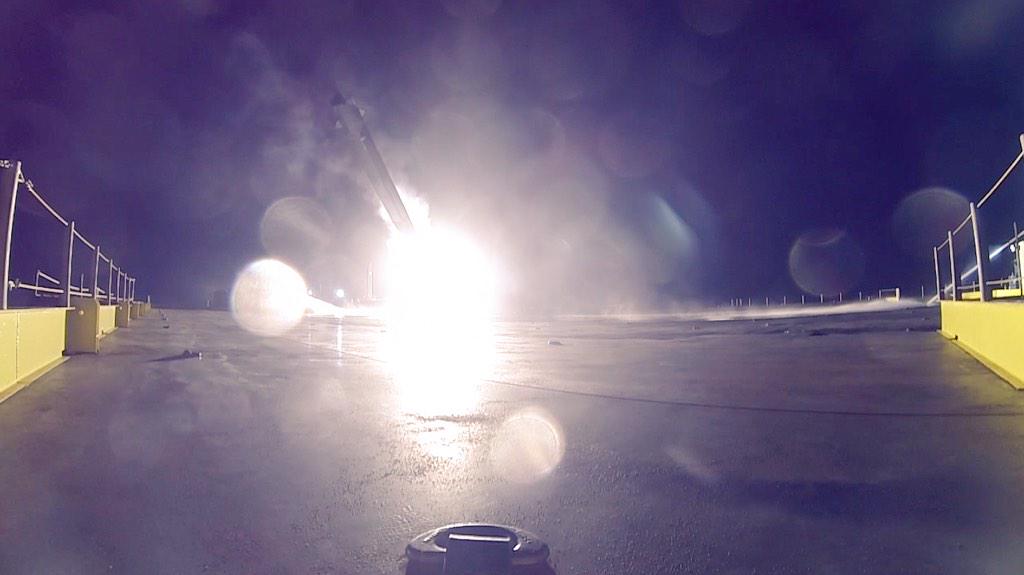
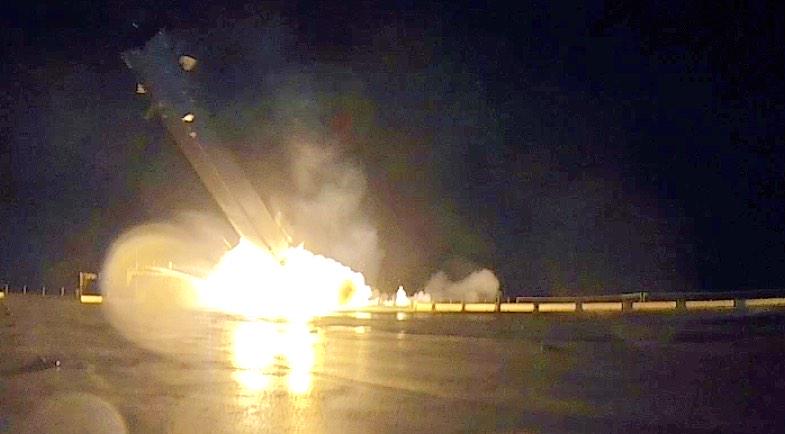
View image on Twitter  View image on Twitter View image on Twitter
Give it up for ambition. After an initial delay, Elon Musk’s SpaceX successfully launched its Falcon 9 rocket on a resupply mission to the International Space Station last week. In 2015, there’s nothing all that ambitious about an unmanned rocket launch. What was ambitious was what came afterwards—or what was supposed to come afterwards.
SpaceX intends to cut the cost of launching people and products into space in half. The company hopes to accomplish this by building stage-one rockets that are designed to not only survive reentry, but will land upright. If SpaceX can pull that trick off, then the rockets can be easily captured and rapidly reused, thus taking much of the cost out of space travel.
Last week’s mission was supposed to see the rocket land upright onto an unanchored floating barge (aka “drone spaceport ship”) in the middle of the Atlantic Ocean. This is no easy feat. SpaceX itself only pegged mission success at 50 percent (though Musk later said that hepulled those numbers out of the air). But let’s just agree that it’s a really hard engineering barrier to overcome.
Unfortunately, it didn’t work this time. The rocket did manage to land on the barge, but it couldn’t make the landing and exploded on impact. As Elon Musk tweeted shortly thereafter “Rocket made it to drone spaceport ship, but landed hard. Close, but no cigar this time. Bodes well for the future tho.”
Musk then went on to tweet “Didn’t get good landing/impact video. Pitch dark and foggy. Will piece it together from telemetry and … actual pieces.” But some new footage must have been found, because SpaceX just tweeted the following Vine footage taken at the point of impact explosion:
Yesterday, Musk himself tweeted out a number of spectacular stills from the crash:
About these ads
Occasionally, some of your visitors may see an advertisement here.