Pages

Showing posts with label Drugs. Show all posts

Tuesday, February 7, 2017

Donie's Ireland daily news BLOG

Irish Government Ministers divided over inviting Donald Trump to Ireland?

KENNY TO GO AHEAD WITH WHITE HOUSE TRIP BUT DECLINES TO CLARIFY IF HE WILL INVITE TRUMP HERE

Image result for Irish Government Ministers divided over inviting Donald Trump to Ireland?   Image result for Irish Government Ministers

US PRESIDENT DONALD TRUMP: MINISTERS ARE AT ODDS OVER WHETHER TAOISEACH ENDA KENNY SHOULD INVITE THE US PRESIDENT TO IRELAND.

Government Ministers are divided over whether Taoiseach Enda Kenny should invite US president Donald Trump to visit Ireland.
Mr Kenny has confirmed he will proceed with his trip to the White House on St Patrick’s Day despite protest from Opposition parties.
However, the Taoiseach has declined to clarify whether he will issue an invitation to Mr Trump to come here.
Minister for Social Protection Leo Varadkar and Minister of State at the Department of Health Finian McGrath have both said they would not support such a proposal being made.
“I’m not sure what purpose it would serve,” Mr Varadkar said. “An invite will be the Taoiseach’s decision. I wouldn’t invite him.”
Minister for Jobs Mary Mitchell O’Connor and Minister for Finance Michael Noonan have indicated they would back a visit from the president.
  • Ministers at odds over inviting Donald Trump to Ireland
  • Diarmaid Ferriter: Supine pragmatism will define Irish dealings with Trump
  • Hundreds attend protest against Trump at US embassy
‘Appalling policies’
Mr McGrath, an Independent Alliance Minister, told The Irish Times: “I do not think we should invite him. His statements and policies are appalling and have to be rejected.”
Mr Varadkar questioned what purpose a visit would have, insisting he would not issue such a request.
Speaking last week, the Taoiseach declined to rule out an invitation to Mr Trump, saying that he would consider the question of an invitation when he was in Washington for St Patrick’s Day.
However, newspaper reports on Sunday said Mr Kenny had decided not to invite Mr Trump.
A Government spokesman then followed up stressing that Mr Kenny’s remarks still stood, but that the Taoiseach would be concentrating on raising the plight of illegal Irish immigrants in the United States when he meets Mr Trump.
Government sources stressed the importance of the meeting with the US president went beyond the occupant of the White House at any one time.
The Minister for Finance said an invitation should not be ruled out but insisted the timing must be right. Mr Noonan was strongly criticised when he welcomed Mr Trump to Ireland previously.
Strong links
While Ms O’Connor claimed Ireland needed to actively work to maintain the strong links with the United States. She said she fully supported Mr Kenny in his decision to travel to meet Mr Trump.
“There are over 150,000 Irish people employed in US companies here in Ireland and I would like to make sure that there is US investment into the country,” Ms O’Connor said.
“I want to see US investment so I want to see a good collaborative environment and a good collaborative relationship between Ireland and the US.”
Mr Trump had planned a visit to Ireland during the election campaign but it did not proceed.

Brexit already hitting English businesses, A UK survey finds

UP TO 58% OF RESPONDENTS FROM BRITAIN’S BIGGEST FIRMS SEE NEGATIVE IMPACT

Image result for Brexit already hitting English businesses, A UK survey finds   Image result for Brexit already hitting English businesses, A UK survey finds

“BUSINESS IN THIS COUNTRY IS ALREADY FEELING THE PAIN OF THE ECONOMIC UPHEAVAL OF LEAVING THE EU,” SAID BEN PAGE, CHIEF EXECUTIVE OF IPSOS MORI.

Business is already suffering from Brexit, according to some of Britain’s biggest companies, lending weight to a cross-party effort by MPs this week to avert the risk of the UK crashing out of the EU without a deal.
Despite a stream of positive economic data, an Ipsos Mori survey of senior executives from more than 100 of the largest 500 companies found 58 per cent felt last year’s vote was already having a negative effect on their business.
Just 11 per cent found the Brexit decision had meant a positive impact while nearly a third – 31 per cent – thought it had made no difference to their company.
“Business in this country is already feeling the pain of the economic upheaval of leaving the EU,” said Ben Page, chief executive of Ipsos Mori. “There is no sign that this is likely to ease this year.”
Company bosses have voiced concern about losing competitive advantage against European rivals if tariffs rise after Brexit, adding to the cost of producing and exporting goods.
Investors also appear to be waiting for greater clarity about the outcome of Brexit negotiations before committing funds to longer-term projects.
Theresa May will this week face a rebellion by pro-European Tory MPs who fear that she could walk away from the negotiating table in Brussels without a deal, with potentially serious effects for business.
The prime minister has said she would prefer “no deal to a bad deal”, raising the prospect of Britain leaving the EU to fall back on World Trade Organization rules, including tariffs.
Steve Baker, a Tory Eurosceptic MP, said up to 27 Tory MPs could this week back a “wrecking amendment” in the committee stage of the bill authorising Mrs May to invoke Article 50 and trigger Brexit.
The amendment would give parliament a say if Mrs May concluded that no deal was possible, in effect requiring her to go back to Brussels to seek better terms. She will order Tory MPs to oppose the measure.
For Labour, the agony over Brexit continues, with Jeremy Corbyn facing the prospect of losing two of his closest allies – Diane Abbott and Clive Lewis – if they defy him and vote against the Article 50 bill on its third reading on Wednesday.
Mr Corbyn said he had yet to decide whether to impose a three-line whip requiring Labour MPs to back Brexit, but hinted that he would show clemency to rebels in any event: “I am a very lenient person,” he told Radio 4’s The World this Weekend.
The Commons battles over Brexit have been played out against a benign economic backdrop, confounding those who predicted a downturn after a Leave vote.
The Office for National Statistics reported last month that the UK was the fastest growing economy in the G7 last year, and was not yet showing any signs of the slowdown that many economists predicted would follow the vote to leave the EU in June.
But the less rosy sentiment from business is supported by economic forecasters, with Sir Charlie Bean of the Office for Budget Responsibility and former deputy governor of the Bank of England saying last week that the strong consumer spending seen after the Brexit vote in June was likely to fall away in coming months.
Bank of England figures show that consumer borrowing growth in December slowed to its lowest in more than two years, while consumer confidence has also dipped.
Two-thirds of the 114 FTSE 500 business leaders surveyed believe the business environment will become more negative over the next 12 months, while only 13 per cent believed the opposite.
A large majority – 84 per cent – said that it was “vital” to their business that the government handled Brexit negotiations well. But half said they were not confident in the government’s ability to negotiate the “best deal possible” with the EU for UK companies.
An even larger majority – 96 per cent – was confident their business could adapt to the consequences of leaving the EU, and more than two-thirds had already taken action in response to the referendum result. A tenth were moving business outside the UK.
In terms of their priorities for the forthcoming negotiations, the business leaders said movement of labour and access to skilled labour came the highest, followed by securing free trade or retaining the single market with the EU and passporting rights.

Nurses’ union talks break down & are now likely to give notice of industrial action

Related image  Related image  Related image

TALKS BETWEEN THE HSE AND NURSES’ UNIONS THAT HAVE BEEN ONGOING FOR THREE WEEKS ENDED THIS EVENING WITHOUT AGREEMENT.

Now, unions will meet to discuss potential industrial action.
The INMO told Health Service management that proposals have to be “radically improved” before any further discussion can take place.
The talks were focused on staffing, recruitment and retention.
They were aimed at restoring the current nursing/midwifery workforce to “at least 2007 levels”.
  1. In a statement issued to the media, the INMO said HSE management,
  2. “Refused to allow Directors of Nursing and Midwifery fill all posts which become vacant during 2017;
  3. Refused to guarantee that sufficient funding would be made available to allow the permanent employment of all Irish trained nurses and midwives graduating in 2016/17; and,
  4. Refused to guarantee replacement of maternity leave vacancies on a one for one basis.”

A 17% rise in complaints to the Food Safety Authority of Ireland

Image result for 17% rise in complaints to the Food Safety Authority of Ireland  Image result for live insects# complaints to the Food Safety Authority of Ireland  Image result for 17% rise in complaints to the Food Safety Authority of Ireland

A LIVE INSECT IN A DESSERT, A HUMAN NAIL IN A TAKEAWAY MEAL, AND A CIGARETTE BUTT IN A BAG OF CHIPS WERE AMONG THOUSANDS OF COMPLAINTS MADE BY THE PUBLIC TO THE FOOD SAFETY AUTHORITY.

New figures from the FSAI show its advice phoneline received 3,202 complaints by consumers relating to food, food premises, and food labelling last year. That was an increase of 17% on the 2015 figure of 2,739.
Meanwhile, the number of complaints about food poisoning jumped by 45% last year compared to 2015.
A total of 1,126 complaints were made relating to unfit food, 864 to hygiene standards, 741 to suspect food poisoning, 221 to incorrect information on food labelling, and 60 related to non-display of allergen information.
Grievances about poor hygiene standards were up 34% on the previous year, while complaints about incorrect information on food labelling were up 15% and those on unfit food was up 7%.
Edel Smyth, FSAI’s information manager, said Irish people are far more likely to complain about hygiene standards than they may have been in the past.
“The statistics from our advice line service continue to show an upward trend, with consumers expressing much more concern and being more conscious about the food they consume, and are being increasingly vigilant about food safety issues,” she said.
“There is a culture developing among consumers, which indicates zero tolerance towards poor hygiene standards and, in particular, food that is unfit to eat.”
The FSAI report says contamination of food with foreign objects was also frequently reported by consumers.
In 2016, reports included allegations of food contaminated with insects and glass, as well as other foreign objects.
Examples included a live insect found in a packaged dessert, a long black hair in garlic sauce, a human nail in a takeaway meal, glass in a dessert, plastic rope in a takeaway meal, and a cigarette butt in a bag of chips.
Other complaints in relation to poor hygiene standards referred to dirty customer toilets, rats observed on the premises, and dirty tables and floors.
In one case, a consumer complained about a staff member at a deli sneezing into their hands and then preparing sandwiches without washing their hands.
All complaints received by the FSAI were followed up and investigated by its enforcement officers throughout the country.
Its advice line received a total of 10,497 queries in 2016 from not only consumers but people working in the food service sector, such as manufacturers, retailers, researchers, and consultants.
The most popular queries were regarding legislation on food labelling requirements, allergens, and additives, as well as requests for FSAI publications.
FSAI chief executive Pamela Byrne said the advice line, as well as the agency’s website are important resources for the food industry where its experts are available to assist food business owners and managers to fully understand their legal requirements.

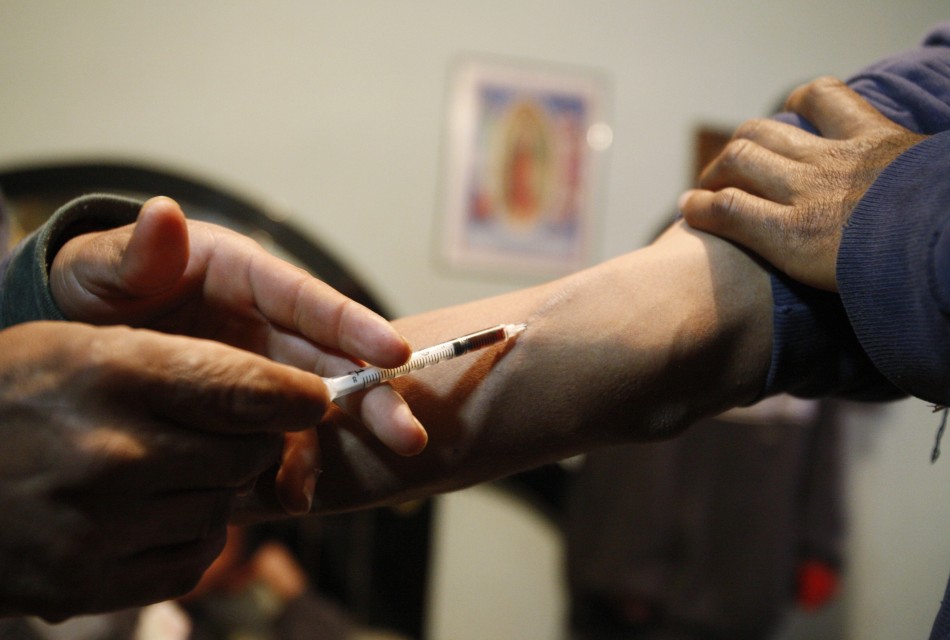
Proposed plan to open injection facility in Dublin for drug users

LAWS WOULD EXEMPT DRUG USERS FROM PROSECUTION IF FOUND WITH CERTAIN DRUGS AT CENTRE

Image result for Proposed plan to open injection facility in Dublin for drug users  Image result for Proposed plan to open injection facility in Dublin for drug users  Related image

THE PROPOSED INJECTION CENTRE WOULD OPEN FOR 12 HOURS A DAY, SEVEN DAYS A WEEK AND WOULD COST BETWEEN €1.5 MILLION AND €1.8 MILLION PER YEAR.

The Government will on Tuesday discuss legislation which would exempt drug users from prosecution if found with certain illegal drugs in a supervised injection facility.
Minister for Drugs Catherine Byrne will seek approval to proceed with plans which would open such a facility in Dublin’s city centre.
The centre would open for 12 hours a day, seven days a week and would cost between €1.5 million and €1.8 million per year.
Government sources stressed the Misuse of Drugs Act, which controls the possession of substances, will still apply.
Exemption from prosecution will only be applicable to authorised users when on the premises and injecting with the licence holder’s permission.
A Government source stressed: “In all other circumstances, inside and outside a supervised injecting facility, the offence of possession of a controlled drug still applies.
“The possession of a drug for the purpose of selling and supplying it to another is unaffected and remains a crime.”
A concern?
Gardaí will be able to enter the premises without a warrant but they will not be able to arrest those inside.
There has been some concern that Gardaí may be unable to adequately enforce the law while reflecting the Government policy.
Ministers have said the law must be clear and insisted there can be no ambiguity which would affect the powers of the Gardaí.
The legislation will also provide an exemption for licence holders to allow them to possess or prepare a controlled substance on the premises.
The initiative, which was first proposed by the former Labour Party minister of state Aodhán Ó Ríordáin, has caused some concern.
However, Ms Byrne will stress the facility will not become a free-for-all for those who want to inject drugs.
Government sources say the aim is to minimise the harm associated with injecting drugs by providing a controlled environment.
The Health Service Executive will be asked to run the facility and will consult with An Garda Síochána and community groups before its establishment.
Minister for Education Richard Bruton has requested that the centres do not open near schools.
Debated
Mr Bruton has asked that proximity to children must be considered as part of the discussion on location and called for schools to be consulted ahead of any decision being made.
The legislation proposed by Ms Byrne is not prescriptive in terms of location but sets out policies which should be considered.
The level and the nature of drug use, paraphernalia and incidents of overdose or death should be factors, according to the Minister.
The legislation, if passed by Cabinet, will be debated in the Dáil and the Seanad.
It is expected the facility may be open by September. It will not be a new building but one that is unused at present.
If the pilot project is successful, it is envisaged a number of others will be opened across the country.
However, funding has only been set aside for one facility and the Department of Health has been advised any additional spend must come from within expenditure allocations.

The moon will smash Earth and turn our planet’s surface into a sea of fire, scientists warn

Image result for The moon will smash Earth and turn our planet’s surface into a sea of fire, scientists warn Image result for The moon will smash Earth and turn our planet’s surface into a sea of fire, scientists warn

STARGAZERS SET OUT THE GRIM DESTINY OF OUR PLANET’S SATELLITE, WHICH WILL PLOUGH INTO HUMANITY’S HOME WORLD IN THE VERY DISTANT FUTURE

The moon is locked into a death spiral which will eventually cause it to smash into Planet Earth, an astronomer has warned.
This apocalyptic event is likely to be so devastating that it will turn the surface of our home world into a seething pit of red hot lava.
The moon will plunge into Earth, although humans may not be around to see it
“The final end-state of tidal evolution in the Earth-Moon system will indeed be the inspiral of the Moon and its subsequent collision… onto Earth,” Jason Barnes, a planetary scientist at the University of Idaho, told Forbes.
“The energy released in the merging would re-melt the Earth into a magma ocean.”
Sadly, humans won’t be around to see this disaster – because they will probably have been wiped out in another one like?
According to the Global Catastrophic Risks 2016 report, the biggest threats humanity should prepare for are climate change-related catastrophes, natural pandemics and nuclear war.
These were all listed as high priority and had the highest likelihood of occurring in the next five years.
However, other threats to look out for include pandemics from man-made pathogens, failure of geo-engineering projects, and catastrophic disruption from artificial intelligence.
In terms of mitigating risks, the report draws comparisons with fatal car accidents, where governments have mandated basic safety features, such as seatbelts and air bags.
It states that while the risk of human extinction is small, at 0.1% each year, it means that a person is five times more likely to die in an extinction event than a car crash.
Catastrophic climate change poses such a high risk due to the cumulative effects of rising carbon dioxide levels, feedback loops in the carbon cycle, and lack of action and financial investment.
The report states of the need for the international community to take strong action to avoid the upper limits of global temperature change, which could have devastating impacts on food security and human life.
The sun will one day swell to a huge size and fry everything on Earth
The moon will crash into Earth in about 65 billion years, which is about 59 billion years after everything in our planet has been burned alive in the death throes of the sun.
If our species manages to avoid being wiped out by nuclear war, doomsday space rocks or apocalyptic epidemics, we may live to see the day our closest star swallows up much of the solar system.
“Five billion years from now, the Sun will have grown into a red giant star, more than a hundred times larger than its current size,” Professor Leen Decin from the KU Leuven Institute of Astronomy said last year.NASA astronaut Eugene Cernan, last man to walk on the moon, dead at 82
Earth will be hit by an asteroid that will wipe out life as we know it today… but not for a million years, say boffins.
“It will also experience an intense mass loss through a very strong stellar wind. The end product of its evolution, 7 billion years from now, will be a tiny white dwarf star.    

Saturday, November 19, 2016

Donie's ireland daily news BLOG update

Ireland could be facing an even bigger recession,

FF LEADER MARTIN SAYS IRELAND’S ECONOMIC MODEL UNDER THREAT FROM BREXIT AND GLOBAL DOWNTURN

Image result for Ireland could be facing an even bigger recession says Michael Martin  Image result for Ireland could be facing an even bigger recession says Michael Martin   Image result for Ireland could be facing an even bigger recession says Michael Martin

FIANNA FÁIL LEADER MICHEÁL MARTIN WARNS OF THREATS TO IRELAND’S ECONOMIC MODEL.

Ireland could be facing an even bigger recession than the one it has just come through as a result of Brexit and a potential downturn in the world economy, Fianna Fáil leader Micheál Martin has warned.
In an address to the Small Firms Association (SFA), Mr Martin said both threats represented a “defining moment” for the State and its economic model.
“This is not about a conventional economic shock but a direct challenge to our core economic system.”
Mr Martin warned that without a credible response Brexit could result in hundreds of business closures and thousands of jobs losses as well as lower investment in infrastructure and weaker public services.
He highlighted a recent report by the Economic and Social Research Institute and the Department of Finance, which forecast a possible €12 billion loss to national income from a hard Brexit scenario with Britain exiting the single market altogether.
Aside from Brexit, Mr Martin said many countries were now turning their backs on the sort of trade co-operation that smaller countries such as Ireland were reliant upon.
“As for the impact of last week’s US presidential election, it is very brave person indeed who can predict what American policy will be next year let alone in four years’ time,” he told the SFA’s annual lunch event in Dublin’s Mansion House.
Mr Martin said Ireland’s basic economic strategy was no longer sustainable and that Ireland’s economic base needed to be broadened with a particular emphasis on indigenous companies.
In his address, the Fianna Fáil leader also spoke of the threat to public finances from union pay demands. While union leaders had been forthright in sounding the alarm over Brexit they were were less cognisant of the fragile state of the public purse, he said.
“We need to step back before the pay situation gets out of hand. Surely after what we have just been though, an angry, relativities-driven escalation of industrial disputes is that last thing we need?” he said.
Also addressing the event was outgoing SFA chairman AJ Noonan, who warned Ireland may lose out in the race to attract UK businesses here in the wake of Brexit because of the “punitive” tax regime.
“In terms of Brexit, the current message we are sending as a country is ‘relocate to Ireland and pay more tax’ – not a winning formula,” he said.
“Our tax system is not working for owner-managers, our employees and our future prospects,” he said, suggesting some elements of the political system were too obsessed with the redistribution of wealth by taking more from those in work.

Enda Kenny speaks with US Vice President-Elect Mike Pence on electoral success

Image result for Enda Kenny speaks with US Vice President-Elect Pence on electoral success  Image result for Enda Kenny speaks with US Vice President-Elect Pence on electoral success

TAOISEACH ENDA KENNY HAS SPOKEN TO US VICE PRESIDENT-ELECT PENCE ON THE PHONE LAST NIGHT FRIDAY.

During a 15-minute phone conversation, Mr Kenny congratulated the Vice President-Elect on his recent electoral success alongside Donald Trump.
According to a Government statement, Mr Kenny also expressed his intention to engage positively with the new administration on a number of issues to the mutual benefit of Ireland and the U.S.
It was said Mr Kenny raised the issue of the undocumented Irish in the U.S and expressed his determination to work with the President and Vice President-Elect in seeking a solution to the issue.
But chances of a resolution appear less likely under a Trump administration.
There is considerable disappointment in the Irish American community that little or no progress was made during President Barack Obama’s two terms.
The Taoiseach is said to have referred to the economic ties between the two countries, including the long standing and productive relationship Ireland has with many US companies, as well as the fact that there are 100,000 Americans employed in Irish companies across America.
“Both men spoke of Vice President-Elect Pence’s strong Irish heritage and the Taoiseach expressed the wish that the Vice President-Elect might visit here again sometime in the future,” the statement added.
Mr Kenny was one of the first leaders to speak to Mr Trump following his election victory earlier this month.
This is despite describing the President-elect as a racist earlier this year.

Vacancies filling rift between the Commissioner and Tánaiste Fitzgerald

Image result for Vacancies filling rift between the Commissioner and Tánaiste Fitzgerald   Image result for Gardai senior vacancies not filled

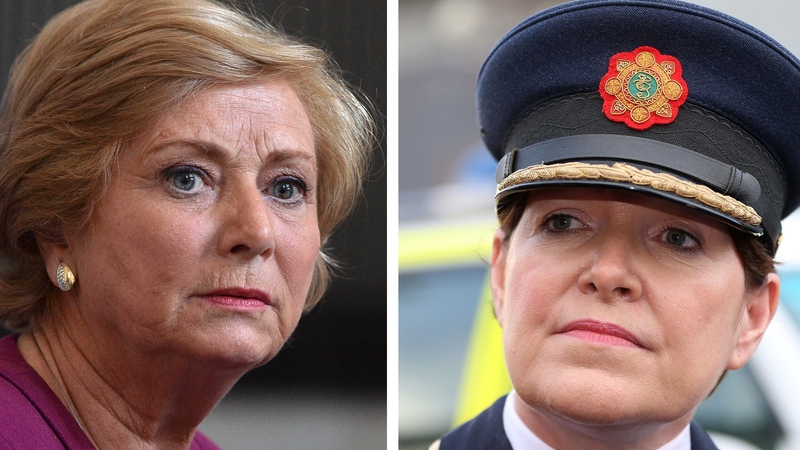
TÁNAISTE AND JUSTICE MINISTER FRANCES FITZGERALD WITH GARDA COMMISSIONER NÓIRÍN O’SULLIVAN.

Major tensions have surfaced between Justice Minister and Tánaiste Frances Fitzgerald and Garda Commissioner Nóirín O’Sullivan over the filling of a series of key vacancies within the force.
Ms Fitzgerald has held up the promotions of a significant number of officers, including two assistant commissioners, after coming under pressure from the Policing Authority.
The newly established watchdog is understood to have voiced concern over the number of proposed promotions – meaning the jobs could remain unfilled until next year.
Sources say there is major anger within the force over the holding up of the promotions, and that the long-running vacancies weaken An Garda Síochána as a whole.
Some officers believe the decision not to send the list for Cabinet approval is “punishment” for Garda unions securing a special pay deal.
“This led to tensions between the Commissioner and Government and it is damaging to the force as a whole,” said a source.
It now seems likely that the Policing Authority will be given a much greater say over the appointments process within the force.

The ‘right to be forgotten’ and go play is ultimate in the protection of Ireland’s children

The right to play, giving more powers to Gardaí, and the abolition of direct provision centres were also contained in the report.

Image result for The 'right to be forgotten' and go play is ultimate in the protection of Ireland's children   Image result for changing the law so that children’s information can be removed from the Internet (‘right to be forgotten’)  Related image

A REPORT HAS RECOMMENDED OVER 100 CHANGES THE GOVERNMENT SHOULD MAKE TO SAFEGUARD CHILDREN INCLUDING CHANGING THE LAW SO THAT CHILDREN’S INFORMATION CAN BE REMOVED FROM THE INTERNET (‘RIGHT TO BE FORGOTTEN’), AND ENSURING CHILDREN’S RIGHT TO PLAY.

The report, compiled by a Rapporteur on Child Protection, is over 180 pages long, and discusses a range of subjects including the vulnerability of children with disabilities and the gaps in legislation in relation to technological advancements that leave children unprotected.
Other changes recommended include teaching children about consent in child sex abuse cases, and shielding children in court if absolutely necessary.
Tanya Ward, CEO of the Children’s Rights Alliance said that this report was different from others as it focused on children who were “left behind” – such as children in homeless accommodation and children in direct provision centres.
Speaking to RTÉ’s News at One, she said that although there were some ambitious longterm recommendations, there were also ‘interim ‘ suggestions made in the report.
Here are some of the most important recommendations made by Special Rapporteur Professor Geoffrey Shannon.
Consent education is a must?
In his report, Special Rapporteur raised concerns about and highlights the need for adequate sex education to teach children and young people about consent and to challenge the concept of ‘victim blaming’ or holding the victim responsible for sexual violence or crime committed against them.
Shannon is commenting on provisions in the Criminal Law (Sexual Offences) Bill which allows for children to give evidence in court behind a screen in certain circumstances.
He states that “this should be avoided whenever possible”, and the bill is currently before the Houses of the Oireachtas.
The report also highlights the fact that gardaí don’t have the power to search and seize mobile phone devices that they suspect of containing images of children if the device is outside the home.
The report also calls for the gardaí to be given better powers when requesting information from companies like Google and Facebook.
Children’s digital rights.
For the first time, Prof. Shannon discusses the right to be forgotten, pinpointing the risks to children’s online identity. Activity on social media may be instant, but the unintended consequences for children when they post something online can last beyond childhood.
The report says:
The relevance for children of the ‘right to be forgotten’ should be acknowledged, children should be educated about the matter, and it should be understood that the age at which an individual posts information online should be considered a very important factor in decisions about whether to remove an individual’s personal information from sites.
Children with disabilities?
Shannon also brings a special focus to children with disabilities in his report.
This is very relevant in the context of the ‘Grace case’ and the attention that it has brought for the treatment of children with intellectual disabilities.
Shannon calls for an examination of the effectiveness of the government’s Stay Safe Programme (a personal safety skills programme for specialised mainstream primary schools) for children with disabilities.
He is also calling for Ireland to ratify the UN Convention on the Rights of Persons with Disabilities.
Young People in the Justice System.
There are also some harsh criticisms of the method of judicial punishment for children in trouble with the law detention -the report says that detention centres “should be a measure of last resort”.
Against the backdrop of progress in the youth justice area and difficulties at the Oberstown Detention Campus, the report calls for more “imaginative community sanctions” for children.
While the Garda Diversion Programme has been extremely successful over the years, there are other, new diversion models in operation in other jurisdictions that should now also be explored. It is also calling for further attempts to “avoid the use of force, including restraint, of children in custodial settings”.
The right to play.
The report calls for child protection training and standards for people working in the field of play. He highlights the fact that children from disadvantaged groups lose out the most when it comes to play and recreation.
Children have a right to play, recreation, rest and participation in the arts.
Prof. Shannon highlights the serious and immediate developmental impact this is having on children and calls for a Government-led national strategy to address this and make sure that all children can access this basic right.
Other issues detailed in Prof. Shannon’s report include direct provision for asylum seekers, which he recommends should be abolished. In the interim, he suggests that living standards in direct provision centres should be improved. He also focuses on poverty and calls for national measures to address the nutritional needs of families.
The report is due to be debated before the Houses of the Oireachtas in the coming weeks.

Irish Pharmacists warn over drug driving and prescription medicines

AN RSA REPORT SHOWS 30% OF PEOPLE KILLED ON ROADS IN IRELAND IN 2013 WERE ON PRESCRIPTION MEDICATION

Image result for Irish Pharmacists warn over drug driving and prescription medicines Image result for Irish Pharmacists warn over drug driving and prescription medicines  Image result for Irish Pharmacists warn over drug driving and prescription medicines

THE IRISH PHARMACY UNION SAID IT WAS URGING DRIVERS TO BE AWARE OF THE DANGERS OF DRIVING AFTER TAKING MEDICINES, PARTICULARLY THOSE WHICH CAN CAUSE DROWSINESS.

Drivers who take prescription medicine should consult their pharmacist about whether it is safe for them to operate a vehicle after doing so, the Irish Pharmacy Union has said.
The union said it was urging drivers to be aware of the dangers of driving after taking medicines, particularly those which can cause drowsiness.
It comes after RTÉ reported a Road Safety Authority (RSA) internal report showed 30% of people who died in road crashes in Ireland in 2013 had taken prescription medicine.
The report examined 109 coroners’ reports and found 31% of those who died in crashes had consumed alcohol, while 30% had taken a prescription medicine.
The report stated that prescription medication includes drugs that legally require a medical prescription to be dispensed and include drugs such as benzodiazepines, antidepressants, antipsychotics and antiepileptic drugs.

SEDATIVE HYPNOTIC.

“Initial observation would indicate that presence of prescription medications appear to be over-represented in road traffic collision (RTC) fatalities, with 34 (30%) of all RTC fatalities having prescription medication found on toxicology. Benzodiazepine, a sedative hypnotic, was the most common prescription medication on toxicology.”
Irish Pharmacy Union executive committee member Caitriona O’Riordan said the data was very disturbing.
“Neither the Gardaí nor the RSA know if the medications that the unfortunate crash victims concerned were taking had been prescribed or were obtained illegally.
“The key point is that there are possible side-effects from some medications, and it’s vitally important that before driving people should ask their pharmacist if there is any possibility that the medicine may impact on their ability to drive safely,” she said.
“Many medications carry warnings to be aware of the dangers of drowsiness or other side-effects, and those warnings are there for a reason; it is absolutely vital that everyone taking medications discusses possible side-effects with their pharmacist and also reads the advisory notes with the medication,” she said.

CHARITY PLACES 380 PAIRS OF SHOES OUTSIDE DÁIL TO HIGHLIGHT RATE OF MALE SUICIDE

Image result for CHARITY PLACES 380 PAIRS OF SHOES OUTSIDE DÁIL TO HIGHLIGHT RATE OF MALE SUICIDE  Image result for We need to talk about our mental health more in Ireland and put pressure on our government to prioritise mental health services  Image result for We need to talk about our mental health more in Ireland and put pressure on our government to prioritise mental health services

A TOTAL OF 380 PAIRS OF SHOES WERE LAID OUTSIDE DÁIL ÉIREANN TODAY, SYMBOLISING THE NUMBER OF IRISH MEN WHO DIE BY SUICIDE EACH YEAR.

The Movember Foundation, which organised the event, said it is aiming to help reduce the rate of male suicide by 25% by 2030.

THE PROTEST WAS REPLICATED IN THE UK, US, AUSTRALIA AND CANADA AHEAD OF INTERNATIONAL MEN’S DAY, WHICH HAPPENS TOMORROW.

Doug Leddin, a Movember participant and mental health advocate from Dublin said: “We need to talk about our mental health more in Ireland and put pressure on our government to prioritise mental health services.
“Unless you spend a day in the shoes of someone who is suffering it’s extremely hard to know what we’re going through. I was in a dark place and I suffered alone for a long time.
“Movember is a brilliant way to spread awareness of men’s health, raising funds and getting guys talking and being more open about mental or physical challenges they might be facing.”
Neil Rooney, Director of The Movember Foundation Ireland, said too many men are dying too young and before their time.
“The Movember Foundation is investing in projects that are having a real impact on the lives of men in Ireland and around the world,” he said.
“By engaging with men where they are, and understanding what works best, we’re helping make change happen sooner, before it’s too late.
“While the state of men’s health has come a long way since Movember started in 2003, there’s still so much work to be done and we won’t stop until men are living healthier, happier and longer lives.”
Three out of every four suicides in Ireland happen to men. On average, 32 men a month take their own life in the country.

Stephen Hawking warns humanity may only have 1,000 years left

Image result for Stephen Hawking warns humanity may only have 1,000 years left   Image result for Stephen Hawking warns humanity may only have 1,000 years left

FAMED THEORETICAL PHYSICIST STEPHEN HAWKING HAS SPENT HIS LIFE PONDERING BIG QUESTIONS ABOUT THE WIDER UNIVERSE. IN RECENT YEARS, HE’S TURNED HIS ATTENTION CLOSER TO HOME, TALKING ABOUT AI, CLIMATE CHANGE, ALIEN INVASION, AND OTHER THREATS TO THE FUTURE OF HUMANITY.

NOW, HE’S PUT AN EXPIRATION DATE ON OUR SPECIES IF WE DON’T GET INTO SPACE. HE’S GIVING US JUST 1,000 YEARS.

Hawking’s latest warning came in a speech delivered at Britain’s Oxford University Union. He noted that Earth is fragile, as is any single planet. The odds of a catastrophic global event wiping out humanity in any given year is slim, but over the course of years the chance becomes quite high. Human activity is only increasing those odds as well.
Hawking noted in the speech that some of the most pressing concerns for the future of humanity could come in the next century, as artificial intelligence is perfected and global climate change continues to affect civilization. When something happens on Earth, we don’t want all of humanity to be here, according to Hawking. The best way to keep the species going is to make sure we’ve got a backup — humans on other planets and maybe even in other star systems.
But where could we go? The easiest way to get humans off of Earth is to colonize Mars, and there are some ambitious plans to make that a reality within our lifetimes. The SpaceX Interplanetary Transport System is designed to shuttle as many as 200 people to Mars in each three month trip. Launches would only happen when the orbit of Mars put it close enough to Earth for such a quick journey. It’s certainly feasible to move people to Mars, but creating a functional society is still an unknown. Mars has no magnetic field to protect people from radiation and its thin atmosphere isn’t breathable.
Mars is a good start, but being in a completely different solar system would be the ultimate backup for humanity. Astronomers are constantly finding potentially habitable exoplanets, but we can’t get to any of them with current technology. The most likely target for further examination is Proxima Centauri, which harbors an exoplanet that may be Earth-like. First, we need to get a closer look at it, which the upcoming James Webb Space Telescope can manage. A few centuries ago, wooden sailing ships were the fastest way to travel, so who know what we’ll have in another couple generations? Proxima Centauri might not seem that distant.
A whole millennium might sound like a lot of time, but humanity has existed in more or less its current form for about 100,000 years. It’d be an awful shame if all this progress we’ve made was for naught in just 1% of that time. We should probably get on this.