Pages

Showing posts with label Orca whales. Show all posts

Monday, June 8, 2015

Donie's Ireland daily news BLOG update

Anti-water charge protests groups around Ireland plan another national day

Image result for Anti-water charge protests groups around Ireland plan another national day  
Anti-water charges groups from around the country have announced plans for another national day of demonstration.
60 groups from across the country have decided to join forces, in order to bolster their opposition to the fees.
Up to 300 people attended a forum in Dublin earlier where plans for a large protest in Dublin this coming July were discussed.
Anti-Austerity Alliance TD Paul Murphy has said that it is important that the campaign reaches every corner of the country.
“This is really a campaign to make sure that every part of the country has active local groups giving people the arguments why not to pay,” said Deputy Murphy.
“People need to see that in their local community there are other people like them who are not paying and that gives them confidence to stick together. So we had a series of workshops about how that can take place across the country. People can fundraise and organise street meetings, public meetings and protests.”

Over 500 migrants rescued by Irish Navy Vessel the LÉ Eithne this weekend


Over 500 migrants have been rescued in the Mediterranean by the Irish Navy Vessel the LÉ Eithne this weekend.

Efforts are continuing to save more people tonight as hundreds more flee war torn countries during a good spell of weather.
A British ship the HMS Bulwark has more than a thousand migrants on board this evening.
One of them, Abdul Karim Saleh says he left Sudan with a toothbrush, a passport photo of himself and a few hundred euro, leaving his family behind.
“My brothers and sisters are very young, I came to try to help them. We have no schools, we have no hospitals, so it is a difficult life,” said Mr Saleh.

Mayo investment of €180m. to create 130 jobs on new power generating station
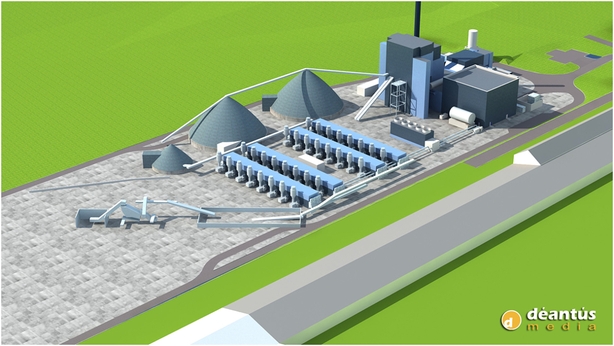
   
The Taoiseach Enda Kenny has announced a new 42 megawatt biomass combined heat and power generating station is to be built in Mayo with the creation of 350 jobs over the next two years. 
The location of the project is the old Ashai site in Killala and will involve an investment of €180 million.
The company involved, Mayo Renewable Power, is backed by an American investment company based in New Jersey, Weichert Enterprise.
Stated Deputy Kenny: “I thank Gerald Crotty, the chairman of Mayo Renewable Power, for selecting Mayo as the location for the power station and for his determination in seeing this important project through.
“Building work will start on the site this month and will give employment of up to 350 people during the two-year construction phase.
“When in operation up to 30 people will be employed full-time at the plant and in excess of 100 will be employed indirectly in growing, harvesting, transport and other ancillary services associated with the plant.
“This investment is a vote of confidence in the Irish economy and is part of the recovery that is beginning to spread to every region of Ireland.
It will be the largest biomass power station to have been built in this country to date and will contribute to reducing our greenhouse emissions.
“The overarching objective of the Government’s energy policy is to ensure secure and sustainable supplies of competitively priced energy to all consumers. Bioenergy has a critical role to play in meeting our target to ensure 16% of our energy requirements come from renewable sources by 2020.
“In order to meet this target, Ireland is committed to meeting 40% of electricity demand, 12% of its heat, and 10% of its transport, from renewable sources. The new Mayo plant will help us meet our targets.
“The power station will burn biomass such as Willow, Spruce, Miscanthus and Mesquite, and the ‘waste heat’ from the station will be used in an adjoining fuel processing plant to refine the biomass for commercial use.
“This will offer a great opportunity to farmers in the region to grow biomass crops which require little maintenance and where they will have a ready market for sales.
“This investment is another positive announcement for Mayo and will, no doubt, assist in attracting further investment to the country.”

Why are signs up and down the UK losing their letters?

   
Have you noticed letters conspicuously missing from cinemas, street signs, and book shops around the country? Bu there’s a very important reason why it happens.
It’s National Blood Week starting from June 8 and NHS Blood and Transplant have launched the campaign, to highlight the need for more blood donors.
The letters A, O, and B have gone missing on signs for Odeon, Waterstones, and even Downing Street.
There are 40% fewer new blood donors now than there were 10 years ago and, if we want the nation’s blood stocks to remain at a safe level for the future, 204,000 new volunteers are needed to come forward this year.
A, O, and B are the letters which make up the blood types, and the campaign is hoping to show that unless more donations are made, types could go missing and there may not be enough available for patients when they need it.

Fake Orca whale capsizes in effort to scare off seal lions out of Oregon port


There’s some-fin fishy about that orca, isn’t there? Hang on, that’s not a real Orca at all!

Whale whale whale, what do we have here? Whale hello there.

In an effort to scare off sea lions from the docks of the Oregon coast docks, a fake, life-size orca with a human man sitting inside (no, we’re not making this up) was spotted bobbing about in the sea.
The 32ft killer whale replica made the usually boisterous sea lions silent with fear as he sailed into view on Thursday night. However, his intimidating presence didn’t last long as the orca-boat capsized and floated around belly-up for some time. Having a whale of a time (Joshua Bessex/AP) It all got a little bit over-whale-ming (Joshua Bessex/AP)
Still, Port of Astoria executive director Jim Knight says there’s “a chance” they’ll try the orca again today.
Earlier on Thursday, officials had to find a replacement motor for the 32-foot replica that belongs to a whale watching business. It was brought overland from Bellingham, Washington. John Wilfer, whale driver The Oregon sea lions think the ocra boat looks a  bit seal The presence of sea lions hanging out near Astoria put jobs as risks as they damage docks, prevent boaters from using the docks and eat lots of salmon.

Endangered ducklings take their first paddle at UK zoo

   
Two very rare, and very cute white-winged ducklings have been spotted paddling in their pond for the first time at Chester Zoo.
The pair who hatched out last month were caught on camera enjoying their first dip with their mum.
The species are listed as endangered by the International Union for the Conservation of Nature.
It’s thought there are as few as 250 white-winged ducks left in the wild.
They birds are normally found near swamps and woodlands but widespread destruction of forests and wetlands means they are under threat.      

Wednesday, May 6, 2015

Donie's Ireland daily news BLOG

Irish Cabinet to discuss debt collection


THE DISCUSSION WILL BE BASED ON A REPORT BY THE LAW REFORM COMMISSION

The Cabinet is to discuss a proposal tomorrow to deal with the general area of debt and debt collection.
It is understood the discussion will be based on a report by the Law Reform Commission on debt management and reinforcement in 2010.
The Cabinet will discuss proposals to change the procedures around the collection of debt.
In particular it will recommend that imprisonment as last resort in certain cases should end as proposed by the Law Reform Commission.
Instead the proposal going to Cabinet will recommend that attachment orders should apply to wages and social welfare payments.
This would be a last resort.
It is understood that a minimum threshold would apply to social welfare payments so that large amounts could not be taken out.
The proposals, it is understood, would apply to water.

10,000 new jobs in Ireland’s burgeoning marine economy by 2020


10,000 new jobs in Ireland’s burgeoning marine economy by 2020

We’re due an explosion in jobs in the marine sector in Ireland over the next few years, with the skills needed already abundant in the Irish labour pool, according to a new report
The current marine economy employs more than 16,000 people in Ireland, and that number actually has the potential to double by 2020, owing to growth in the industry as a whole.
The vast nature of the maritime industry means that professionals from right across the labour spectrum are represented already – for example engineers, biologists, scientists, researchers, lawyers, management, architects, technicians, crane operators, sailors and food handlers.
The roles that will be required, should this major expansion in the industry happen, will be so general that people will merely need some side-stepping training.
The skills identified by the report – written up by the Expert Group on Future Skills Needs (EGFSN) – include engineers, people with boat-handling skills and hydrographic surveyors.
Careers can be ‘marinised’
Many roles are not exclusive to a marine environment, for example, electrical and mechanical engineers, lawyers, technicians and welders are all land -based occupations, but with a top-up qualification or training an individual’s skills can be ‘marinised’ to enable them to work in a marine or offshore environment.
“With our position on the western periphery of Europe facing the Atlantic Ocean and its energy resources, our deep water ports and our 7,500 km coastline. Ireland is well placed to capitalise on the growing potential of the global marine economy and create sustainable jobs in the coastal regions,” said chairperson of the EGFSN, Una Halligan.
“However, an important aspect will be the co-ordinated effort on the part of all the marine sectors to raise awareness of the excellent and rewarding careers in the sector and attracting people to the opportunities available.”
Cluster of companies in Cork
The industry is pretty exciting at the moment. Last December, three companies in the Cork cluster of marine industry – Resolute Marine, an ocean energy company; Exceedence, a spin-out from UCC’s Beaufort Research Centre, and Royal Marine, a global salvage company – expanded significantly.
US company Resolute Marine is setting up a European HQ in Cork, with 80 jobs to be filled over the next five years. Exceedence is creating five new jobs in marine renewable energy financial consultancy in 2015, while Resolve Marine is hiring six people at its European HQ in Cork harbour this year.
The whole area of fishing and general marine research is massive already, but the marine energy is a cool niche, with Irish interests throughout.
Waterford leads the way
Waterford Institute of Technology’s Telecommunications Software & Systems Group (TSSG) is coordinating an aquaculture research project, for example, that will pool knowledge and tech to improve the global fish farm industry.
With an ultimate aim of boosting both production and jobs in the aquaculture arena, AquaSmart is being led by Dr Steven Davy in Waterford, with the €3.1m project funded through the European Commission’s Horizon 2020 programme.
Slovenia, Spain, Portugal, Greece and Israel will also take part in the two-year programme, with the pooling of resources the prime tool in this project’s aim of improving knowledge in the whole area of fish farming.

Prostate cancer rates higher in the west of Ireland


There were more cases of prostate cancer registered in the west of Ireland than in the rest of the country between 1994 and 2012, a report has found.

A recent study by the National Cancer Registry, which tracked cancer rates during that time, has found higher numbers of men in western counties with the disease than in other parts of the country.
The map also reveals that lung cancer was significantly higher in Louth, Carlow, Kildare and Dublin.
Acting director of the Irish Cancer Directory, Dr Harry Comber, says men in the west are not necessarily more prone to prostate cancer.
Instead, he says, that a test to detect the disease was first rolled out in the east and has spread to other parts of the country in recent years, boosting detection rates.
“If you look at it closely, the test was initially used mostly in more affluent areas, more prosperous areas where people went to doctors privately and said :’I want a get a PSA test’,” he said.
“But then gradually it just spread across the country and more men right across the country started to hear about this test, and they started to go to their GP and say: ‘I want to have this test done’.”.

How to build and maintain strong bones

  
How to build and maintain strong bones
Osteoporosis, a disease that causes bones to become weakened and brittle over time, affects millions of people across the globe. The International Osteoporosis Foundation says an osteoporosis-related fracture occurs roughly once every 3 seconds, accounting for more than 8.9 million fractures a year.
Younger individuals typically heal from fractures more quickly than older adults, who often discover that fractures greatly impede their mobility and quality of life.
Bone health is important at any age, but it is particularly crucial as a person gets older. Without a strong framework of bones, the body collapses on itself and rates of fracture increase. Fortunately, there are several ways to keep and maintain strong bones.
Bones are largely made up of a protein called collagen, which is bound together by calcium and other trace minerals. Vitamin D and calcium work in concert, with vitamin D helping the body to absorb calcium so it can find its way into bones. Experts advise getting the right ratio of calcium, protein and vitamin D to safeguard against osteoporosis.
The Institute of Medicine suggests that adults get between 600 and 800 international units (IUs) of vitamin D every day, and between 1,000 and 1,300 milligrams of calcium daily. Dairy products, such as low- and nonfat milk, yogurt and cheese, are high in calcium. Dark green vegetables and almonds contain calcium in smaller amounts. Obtaining calcium and vitamin D through natural sources is always preferable, but doctors may suggest supplementation if foods are not providing what a person needs to meet the minimum recommended levels.
Exercise is another important component of building strong bones. The National Osteoporosis Foundation says 30 minutes of exercise each day can help. Higher-intensity exercises should be mixed with lower-intensity workouts for the best results. Weight-bearing exercises, such as hiking, dancing and stair-climbing, can build between 1 and 3 percent of bone. An exercise regimen also should include lifting weights or using resistance bands.
Activities that promote good posture and flexibility can help improve balance and alignment of the body. Perform stretches smoothly and slowly after exercising to maintain your range of motion.
Quitting smoking also can promote strong bones. Smoking has been linked to poor skeletal health in both men and women, and the longer one smokes, the greater one’s risk for fracture.

UK researchers develop new, improved ovarian cancer test

    
A new screening method that looks at changes in the level of CA125 in the blood can detect twice as many women with ovarian cancer as conventional strategies, suggest results from a giant trial led by researchers at University College London and published in the Journal of Clinical Oncology.
Using a statistical calculation to interpret changing levels in the protein gave a more accurate prediction of individual risk of developing the disease, compared to the conventional screening method which uses a fixed ‘cut-off’ point for CA125, according to data from one arm of the UK Collaborative Trial of Ovarian Cancer Screening (UKCTOCS), the world’s largest ovarian cancer screening study involving more than 202,000 women.
Researchers detected cancer in 86% of women with invasive epithelial ovarian cancer, whereas the traditional test used in previous trials or in clinical practice would have identified fewer than half of these women (41% or 48%, respectively).
The findings indicate that CA125 “can be an accurate and sensitive screening tool, when used in the context of a woman’s pattern of CA125 over time,” said Ian Jacobs, President of The University of New South Wales, Australia, chief investigator of the trial, and co-inventor of the statistical approach. “What’s normal for one woman may not be so for another. It is the change in levels of this protein that’s important,” he stressed.
The researchers are hoping that the approach will prove able to pick up ovarian cancer early enough to boost survival rates. Full data from the UK Collaborative Trial of Ovarian Cancer Screening (UKCTOCS), which should provide some definite evidence on whether the new CA125 method can save lives, are expected later this year.

Irish killer whales in danger of dying out from pollution

  
Killer orcas whales off the coast of Ireland.
A group of killer whales that have become a familiar sight in Irish waters are at risk of dying out from pollution.
The pod of orcas – believed to have dwindled to approximately seven in number – migrate between the coastal areas of Scotland and Ireland.
They are believed to be the only resident population of the species in the region, according to local scientists.
Despite their threatening name, the killer whales have become quite a popular attraction in our waters.
However, latest studies indicate that contamination through pollution in their food may be making the mammals infertile.
“It’s been long established that stranded whales have measured high levels of pollution and that this contamination is known to affect reproduction,” marine biologist Simon Berrow of the Irish Whale and Dolphin Group told independent.ie.
“However, we have followed this particular pod for almost 30 years and it has not calved once. The theory is that live animals are suffering from the same contamination.”
Dr Berrow said that some analysis in live killer whales has already been done, with some early test work already published.
“We are awaiting results and further collaborative testing. We should have more definitive answers within the next few months.”