November general election most likely as Kenny set to reveal party’s key pledge
Radical welfare changes on payments to benefit working families, says Taoiseach Kenny.
 Enda & Joan joined at the hips?
Taoiseach Enda Kenny, who is leaning strongly towards calling a November general election, will tonight unveil a key element of Fine Gael’s manifesto by pledging no one will receive more in welfare payments than they could earn at work.
Mr Kenny’s decision to announce the “working family payment” plan at the Dublin Chamber of Commerce annual dinner will further fuel speculation he intends to call a general election shortly after the budget.
It means a November election is now very much on the cards but the precise date will depend on the timetable for getting the Finance Bill and the Social Welfare Bill through the Dáil.
Officials in the Department of Finance have already been told to draw up a slimmed down version of the Finance Bill giving effect to the budget changes that can be passed quickly through the Dáil.
Kenny’s speech?
In his speech tonight Mr Kenny will pledge to change the welfare system to ensure people at work can be sure of being better off than if they were on welfare. A similar commitment was included in the British Conservative Party’s successful general election platform earlier this year.
A new “working family payment” will be aimed in particular at families with one or more children.
Mr Kenny will outline how it will be targeted at low-income families by supplementing, on a graduated basis, the income of a household while at the same time incentivising more hours and full-time work.
A key feature of the payment will be to better align it with existing jobseeker supports aimed at creating a seamless transition from welfare to work for families while removing many of the welfare traps facing families with existing schemes such as the family income supplement.
The Taoiseach will outline why, in his opinion, such a scheme is needed.
“It is clear that the lack of a job in Ireland is by far and away the leading cause of inequality in our society. There are still far too many traps that lock parents in particular into welfare dependency. In many cases for couples with children work simply does not pay.
A radical approach.
“This is why the next government needs to adopt a far more radical approach if we are to successfully help jobless households back into work.
“For these reasons I expect the theme of radical welfare reform, along with lowering the tax burden on low- and middle-income workers, to make work pay will be a key election issue,” he is due to say.
The Taoiseach will also outline why he believes the next government needs to do more for households trapped in a cycle of poverty in which nobody is working. He will claim the “working family payment” will be the helping hand up on to the career ladder for many unemployed parents.
Tánaiste Joan Burton is strongly opposed to an early election. A meeting of the parliamentary Labour party last night heard a “unanimous” preference from TDs and Senators for an election next spring.
At the meeting, Ms Burton repeated her position that the election should be held next year. TDs and Senators told the meeting it was imperative the banking inquiry complete its work and the legislation to give effect to public sector pay rises agreement was passed.
“There was a real sense of frustration that there is a feeding frenzy around November,” said one TD.
“It is starting to undermine the image of a unified and coherent Government. There is a real feeling the Taoiseach should come out and talk to Joan. It is starting to look embarrassing to us at this stage.”
Thousands apply for grant without paying their water bills
Alan Kelly asks Irish people not to ‘pull a fast one’ over the new water conservation payment


At least tens of thousands of people have applied for the water conservation grant without having paid their water bills, an analysis of the figures shows.
The water conservation grant amounts to €100 and was introduced by the Government to enable households to “adopt a more environmentally friendly approach” to water usage in the home.
Minister for the Environment Alan Kelly has urged people not to “pull a fast one” by applying for the grant without paying their bills..
As of tonight, 732,800 grant applications had been received, while the number of people who registered with Irish Water by the deadline of June 30th stands at 1.3 million.
This amounts to an overall application rate of 56%.
Speaking on Wednesday, Michael McNicholas, chief executive of Ervia, the parent company forIrish Water, said that almost 54 per cent of those who have registered have paid their bills.
That percentile amounts to 702,000 people.
This figure means that at least 30,800 people have applied for the conservation grant without paying their bill.
The deadline?
The deadline to apply for the grant expires at midnight on Thursday night.
The Department of Social Protection released a statement on Wednesday urging those who have paid their water bills to apply for the grant.
The statement said a total of 395,000 households have already received their grant payment.
It is expected that all payments will be made by the end of October.
Approximately 363,000 calls on the subject have been received by the department’s helpline to date, with about 50,000 of those coming in the last two days.
Due to the high volume of calls, an additional helpline has been made available.
The numbers are: 076-1087890, 02-12065880, or 1890-100043. The lines will be open from 8.30am until midnight.
Electric Ireland to reduce home electricity prices by 2%
Move comes after Bord Gáis Energy shaved 2.5% off its residential gas prices


Electric Ireland is to reduce its standard electricity prices for residential customers by an average of 2%.
Electric Ireland has announced it will reduce its standard electricity prices for residential customers by an average of 2% from next month.
The reduction, which comes into effect on November 16th, will benefit the average residential customer with a saving of €24.11 (including VAT) per year.
Must shop around’
Minister for Energy Alex White welcomed the move and said customers should “shop around” to ensure they are getting the best deal possible.
“Electric Ireland’s welcome move on prices, which comes in advance of increased winter energy demand, will be welcomed by families and businesses,” he said.
“It is the second such move by a major energy supplier in recent weeks, which suggests that conditions are right for other companies to follow. This is good news and I would encourage all consumers to shop around to ensure that they get the best price available.
“Even if consumers don’t want to change supplier they can call their supplier and ensure they have the best package on offer.”
In September, Bord Gáis Energy announced plans to shave 2.5% off its residential gas prices in a move which saw the average consumer make an annual saving of just over €20.
It also announced its intention to cut its unit rate of electricity by a further 2 per cent which would lead to electricity bill savings of €24.34 a year.
Household bills
Earlier this year, Mr White held a series of meetings with the energy suppliers to discuss the speed with which wholesale energy price reductions were being reflected in household bills.
Electric Ireland executive director Jim Dollard said the company was “happy to be able to continue to reduce prices for our electricity customers again this winter”.
“This reduction, combined with last year’s reduction, means the average residential bill will have reduced by almost €50,” he said.
“We are committed to offering the best value products in a very competitive marketplace and I believe today’s announcement will be good news for our 1.2 million residential customers.”
Irish men drink and smoke more than women,
says a health survey
Healthy Ireland study raises concerns over risky sex, snacking and low levels of exercise


While smoking is in decline, drinking alcohol remains a majority pursuit, engaged in by 76% of the population. Just over half of us drink at least weekly.
Significant variations in wellbeing between men and women and across social classes emerge from the first national survey of people’s health in almost a decade.
Men drink, binge drink and smoke more, but are also more likely to be highly active, and heavier, than women, according to the Healthy Ireland survey.
Wealthier groups smoke less but drink more alcohol in general than people in the most deprived areas, where binge drinking is higher.
The survey published by the Department of Health carries encouraging signs for the nation’s health, including falling smoking rates, a levelling off in obesity and positive levels of good mental health and social connectedness.
There are also numerous areas of concern, including high levels of risky sexual activity, binge drinking and snacking, and low levels of physical exercise.
Smoking is twice as common in deprived areas compared to more affluent groups, and levels of obesity among young women are twice those among male 15- to 24-year-olds.
More than 7,500 interviews were carried out for the survey, the first study of this size since 2007.
A reason for optimism?
Minister for Health Leo Varadkar said the findings provided some reason for optimism but also highlighted risks such as the prospect of a dramatic risk in chronic diseases.
The survey expresses concern that a majority of men who recently had sex with men did not use a condom. However, the study presents evidence of “more widespread risky behaviour”, with 17% of all those having sex with someone outside of a steady relationship not using any form of contraception.
“The exposure to risk for these individuals is significant,” it says.
Most of us describe our health in positive terms, with 85 per cent saying it is good or very good. Yet one-quarter of the population has a long-standing illness, and over half of this group experience limitations in everyday activities.
High blood pressure and back pain are the most common ailments, both experienced by one in eight people. One in 10 of us suffer from arthritis or an allergy, according to the survey.
On average we visit the GP 4.3 times a year, and women are more frequent attenders than men.
However, the overall figure masks a substantial variation between people with medical cards (6.3 visits a year) and those without any card (2.9 visits).
Smoking prevalence is falling, and Ireland is on the way to being tobacco-free, according to the survey. The proportion of regular smokers has dropped from 24% in the last national survey in 2007 to 19%.
Occasional smoking is also down, from 5 per cent to 4%.
People in the most deprived areas are over twice as likely to be smokers compared to the most affluent group – 35% against 16%.
While smoking is in decline, drinking alcohol remains a majority pursuit, engaged in by 76% of the population. Just over half of us drink at least weekly.
Men drink more frequently than women, and more over-55s drink weekly than among other age groups.
Drinking to excess
The survey says drinking is a core part of Irish life and “more worryingly” drinking to excess on a regular basis is also commonplace.
Four out of 10 drinkers in Ireland drink to harmful levels on a monthly basis, and one-fifth do so on a weekly basis.
“Given that one in six of those drinking at harmful levels felt in the past 12 months that their drinking harmed their health, it is likely that many of those drinking in that way are unaware of the risks associated with it.”
Alcohol consumption rises with social class but binge drinking is highest in the most deprived areas, the survey also finds.
It uses the WHO definition of binge drinking as six or more standard drinks on a single occasion, equivalent to three pints of beer. The drinks industry considers this threshold too low.
Two-thirds of the population are not sufficiently active, a negative finding compounded by the fact that people spend on average more than five hours a day sitting. Four in 10 men are highly active, but only 24% of women are.
Physical activity is not a cure-all for weight issues, however; 23% of those who are obese are highly active.
On diet, one in four people say they eat the recommended five portions of fruit and vegetables a day, while 22% say they don’t eat fruit or vegetables daily. Snacking is widespread, with 62% saying they eat an average of two snacks a day.
Sugared drinks.
Some 15% drink sugar-sweetened drinks but, worrying, consumption is twice this level among young people aged 15-24 years.
Men are more likely to be overweight than women and overall, 37% of the population has a normal weight, 37% are overweight and 23% are obese. Obesity is highest in more deprived areas.
The report finds encouraging levels of good mental health and reasonable levels of social connectedness in the population. Rubbish or litter lying around, and house break-ins, emerged as major sources of concern in this respect.
Rare Wood house-harmless spider discovered in Co Antrim cliffs


The funnel-web spider prefers the outdoors compared its relative the house spider.
A rare spider has been found in Northern Ireland for the first time – but fear not, it is completely harmless.
The Wood house-spider, or malthonica silvestris, discovered on cliffs at Whitehead in Co Antrim, is a close relative of house spiders that people are complaining about bugging their homes at the moment.
However, it is normally half the size of the eight-legged creepy crawlies that send many of us into histrionics.
And unlike the typical house spider, this spider – which has only been recorded in Cork so far on the island – prefers to live in crooks and crevices in natural outdoor surroundings rather than in the warmth of your home.
One theory on the creature’s movements may be that it is venturing north because of the warmer weather.
Adam Mantell, Buglife’s Northern Ireland Officer is the entomologist who found and identified the spider during a survey said: “This is a really exciting discovery.
“Not only is this the first record for Northern Ireland, but it is very rare across the rest of Ireland too.
“With two out of three of our bugs in decline and so much wildlife disappearing from our countryside, it’s brilliant to have some good news for once, and add another spider to the list of species found in Northern Ireland.”
Sneezing Monkeys & ‘Walking Fish’ are a fascinating new species discovered
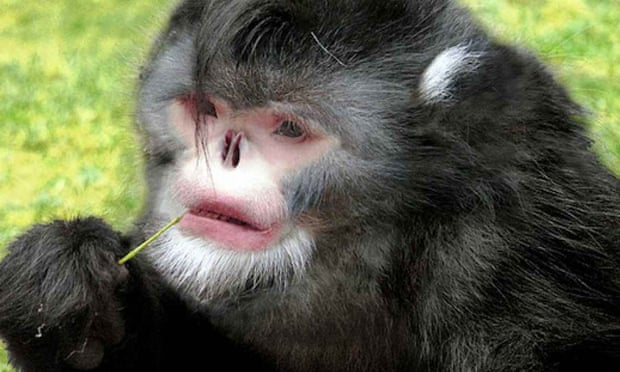

A monkey that sneezes whenever it rains, a fish that can survive out of water for four days and a venomous pit viper that is as lovely to look at as a piece of jewelry: These are just a few of the hundreds of new species discovered over the past few years in the diverse but highly threatened region of the east Himalayas.
Between 2009 and 2014, scientists discovered a total of 211 new species in the region, which stretches from central Nepal in the west to Myanmar in the east and includes the kingdom of Bhutan, as well as parts of northeast India and southern Tibet.
An average of 34 new plant and animal species have been discovered annually in the region for the past six years, according to a newly released report from the World Wildlife Fund (WWF).
“I am excited that the region — home to a staggering number of species including some of the most charismatic fauna — continues to surprise the world with the nature and pace of species discovery,” Ravi Singh, CEO of WWF-India and chair of the WWF Living Himalayas Initiative, said in a statement. [101 Animal Shots You’ll Go Wild Over]
‘Charismatic fauna’
Among the most impressive new species included in the WWF’s report is the sneezing monkey, which scientists nicknamed “Snubby.” The unusual critter lives in a remote region in northern Myanmar, an area of rugged mountains and dense forests. Snubby has an upturned nose (hence its nickname) that has a tendency to collect rainwater, causing the black-and-white–hued monkey to sneeze when it rains. To avoid sneezing fits, the animals spend rainy days with their heads tucked between their knees, according to the WWF.
Northern Myanmar is also home to a tiny but terrifying new species of fish, Danionella dracula, which is the size of a minnow but has pointy fangs jutting out from its jaws. Another strange fish from the eastern Himalayas is Channa andrao, a snakehead fish with some truly strange qualities. The vibrant blue fish can “walk” on land by wriggling around on its belly. The fish’s ability to breath air means it can live on land for a few days before returning to its freshwater habitat.
The only new reptile discovered in the eastern Himalayas since 2009, the bejeweled lance-headed pit viper (Protobothrops himalayansus), is also something special. Even if you don’t like snakes, it’s hard to deny this venomous serpent’s beauty. The reptile’s striking, diamondlike pattern and red-brown coloration give the snake a bejeweled quality.
‘At a crossroads’
All of these newly discovered species may sound like great news to anyone who appreciates biodiversity, but the WWF report also highlights the many threats facing the east Himalayas. Perhaps the most pressing is climate change, with the threat of habitat loss caused by deforestation, development and overgrazing not far behind.
Only 25 percent of the original habitats in the region remain intact, according to the WWF report, which found that rapid development has affected the vast majority of the region’s lands.
“The eastern Himalayas is at a crossroads. Governments can decide whether to follow the current path towards fragile economies that do not fully account for environmental impacts, or take an alternative path towards greener, more sustainable economic development,” Sami Tornikoski, leader of the WWF Living Himalayas Initiative, said in a statement.
In total, the Himalayas are home to an estimated 10,000 plant species and 300 mammal species. Nearly 1,000 different species of birds call the region home, along with hundreds of species of reptiles, amphibians and freshwater fish. In the new WWF report alone, more than 130 new species of plants were discovered in the area.
The challenge that organizations like the WWF face is to both conserve the species that scientists have already identified and protect a region that likely shelters even more creatures and plants waiting to be discovered.


