Bus Eireann Unions may halt strike when a proposal issue is settled


BUS EIREANN UNIONS MAY HALT THE STRIKE WHEN THE INDUSTRIAL RELATIONS’ COURT AS A LAST RESORT ISSUES A PROPOSAL TO END THE DISPUTE.
A Labour Court hearing began this afternoon after a third round of talks collapsed at the Workplace Relations Commission this morning.
It is unclear when the court will issue its recommendation, but it likely to try to do so as soon as possible.
When the recommendation is issued, a collective decision will be taken by all five unions on whether to suspend industrial action while a ballot on the proposal takes place. Sources indicated they are likely to lift the pickets.
A total of 1,900 workers have been on strike for over two weeks over payroll cuts as the company attempts to stave off the threat of insolvency next month.
Many passengers have turned to private operators and management fears that many may not return when the dispute is resolved.
Opportunity to strike a deal in Bus Eireann dispute ‘squandered’, says SIPTU representative.0:00 / 01:44
Speaking on his way into the hearing, Siptu Transport Division Organiser, Greg Ennis, said a decision had not been taken on whether industrial action would called off.
He said after the court issued its recommendation, the national committees of the five Bus Eireann unions will take a collective decision on “the best course of action”.
General Secretary of the National Bus and Railworkers Union, Dermot O’Leary, said unions would make a submission to the court today and it may decide to engage in talks with the parties this evening.
He claimed there are “forces at play” that would prefer to see the demise of Bus Éireann, rather than concentrate on securing its future.
Unions claimed they had agreed savings worth €18m through a voluntary redundancy scheme and efficiencies at last night’s talks.
It is understood that there were disagreements when management sought further savings by replacing basic pay, overtime and premium rates with a single rate.
They questioned why further savings were needed “to deal with a €9m problem”, which is the value of the company’s losses last year.
Acting Chief Executive Ray Hernan has warned that Bus Éireann faces insolvency next month.
In a statement, Bus Éireann said progress was made at talks and agreement reached to eliminated many inefficiencies in work practices.
However, it said “an offer” made by the company to help deliver “financial viability” was rejected by unions representing drivers.
“We apologise to our customers for any inconvenience caused as a result of the ongoing industrial action,” said a spokesperson. Secretary of the National Bus and Railworkers Union, Dermot O’Leary, said unions would make a submission to the court today and it may decide to engage in talks with the parties this evening.
He claimed there are “forces at play” that would prefer to see the demise of Bus Éireann, rather than concentrate on securing its future.
Unions claimed they had agreed savings worth €18m through a voluntary redundancy scheme and efficiencies at last night’s talks.
It is understood that there were disagreements when management sought further savings by replacing basic pay, overtime and premium rates with a single rate.
They questioned why further savings were needed “to deal with a €9m problem”, which is the value of the company’s losses last year.
Acting Chief Executive Ray Hernan has warned that Bus Éireann faces insolvency next month.
In a statement, Bus Éireann said progress was made at talks and agreement reached to eliminated many inefficiencies in work practices.
However, it said “an offer” made by the company to help deliver “financial viability” was rejected by unions representing drivers.
“We apologise to our customers for any inconvenience caused as a result of the ongoing industrial action,” said a spokesperson.
Cystic Fibrosis Ireland welcomes new HSE medication deal


Health Minister Simon Harris right pic told the Dáil on Tuesday that agreement had been reached “ in principle” between the HSE and Vertex on the commercial terms for the supply of Orkambi and Kalydeco to patients from next month. And left pic Jillian McNulty, who suffers from cystic fibrosis, has fought long and hard to get the drug funded by the HSE.
Cystic Fibrosis Ireland has welcomed the long-awaited deal completed by the HSE and drug manufacturer Vertex to make a wonder CF drug available.
Almost 600 patients will benefit from Orkambi and Kalydeco because of their particular CF genotype. These drugs slow the progression of the illness, reduce hospitalisation caused by sudden worsening of the condition, and reduce dependency on other drugs like expensive antibiotics.
CFI chief executive Philip Watt said there “ is a very innovative element to the agreement which is that it is inclusive of ‘pipeline drug therapies’ from the same company that are currently showing promise in the advance stages of clinical trials”.
“Even with Orkambi and Kalydeco, there will be around 30% of the CF population that still has no drug that treats the underlying cause of their condition in Ireland. This is why a pipeline deal is so important. There also may be better drugs for those on existing Vertex drugs coming down the line.”
Health Minister Simon Harris told the Dáil that agreement had been reached “ in principle” between the HSE and Vertex on the commercial terms for the supply of Orkambi and Kalydeco to patients from next month.
Orkambi can be used by patients aged 12 and over while Kalydeco can be used on children aged 2-5.
Mr Harris said: “Both parties are now working to finalise the contractual arrangements and complete approval processes in advance of May 1. I want to also especially acknowledge that this has been an extraordinarily difficult time for CF patients, their families, and friends as they have been waiting for this process to conclude.”
About 40 people with CF had been receiving the treatment on a trial or compassionate-use programme.
Once the deal has been scrutinised by HSE lawyers, it will go before Cabinet for final approval.
Fianna Fáil TD Marc McSharry said “while the agreement in principle is welcome, the fact that it has taken this long to get to this point is beyond reprehensible”.
Water charges refund’s now on the cards as FG and FF agrees a deal
Barry Cowen and Simon Coveney below left picture.


WATER CHARGES ARE NOW DEAD IN THE GROUND AND HOUSING MINISTER SIMON COVENEY MUST BEGIN WORK ON ISSUING REFUNDS TO ALMOST ONE MILLION LAW-ABIDING HOUSEHOLDS?
After 10 days of frantic negotiations Fianna Fáil performed yet another u-turn on its policy to finally vote through a report on the future funding of domestic water services.
But their water spokesman Barry Cowen denied capitulating to Housing Minister Simon Coveney, arguing the party had ensured the “failed regime is gone”.
Mr Coveney will now begin work on legislation that will see around 70,000 a year hit with levies for “excessive” usage of water.
Every person will be allowed use 226 litres of water per day before risking prosecution.
And builders will be required to install meters in all newly built homes.
Fianna Fáil had objected to the word “excessive” and the further rollout of meters but backtracked on foot of fresh legal advice provided to the Oireacthas water committee.
Asked if he accepted Mr Coveney had won the battle, Mr Cowen replied: “I don’t care about whether it’s 2-nil, 3-nil, 5-nil or 10-nil or 1-1 or whatever it might be.
“When the spin fades away the facts will remain that there are no changes and Fianna Fáil has honoured its commitments.”
He said 10 days had been wasted on foot of Fine Gael game-playing which he suggested was the result of the leadership battle between Mr Coveney and Social Protection Minister Leo Varadkar.
“Maybe you can ask Mr Varadkar if he’s happy now because it’s the same deal that was there 10 days ago,” he said.
Mr Cowen said if he expected others to abided by the legal advice then he would have to do so himself.
“Charges are gone, they are not coming back,” he said, adding that if households “wilfully abuse water I have no problem with them being fined”.
However, Solidary TD Paul Murphy who has led the anti-water charges movement last night urged people to start digging up water meters.
He noted that only houses with meters will be liable for excessive usage charges.
“So if people are out there and they currently have water meters that they don’t want to have, I’d suggest that if they get rid of those water meters then they can’t be faced with any charge whatsoever,” he said.
Mr Murphy said general charges were gone but they Fine Gael and Fianna Fáil had done a “backroom dodgy deal”.
As tensions rose yesterday Taoiseach Enda Kenny told Mary Lou McDonald not to come into the Dáil “exuding righteousness” on water charges.
Mr Kenny claimed Sinn Féin’s view on paying for water was “sabotaged” by the by-election victory of Solidarity’s Paul Murphy in November 2014.
“Then the sound of marching feet in Tallaght changed your view,” he said.
The Fine Gael leader was responding to an attack from Ms McDonald who said the “bully boys” of Government were trying to sabotage the work of the Committee set up to decide on the future funding of domestic water services.
“You are now trying to bully your friends in Fianna Fáil into a U-turn,” she said, in reference to the fact that new legal advice appears to have persuaded Micheál Martin’s party to accept significant changes to the committee’s final report.
“The argument on water has been won on the streets by thousands of protesters who marched at countless demonstrations.
“Your refusal to accept defeat on the issue of water represents a real crisis for democratic representation,” Ms McDonald said.
Department of Finance figures suggest next Irish budget will be more moderate
PRESSURE ON THE PUBLIC FINANCES IS EXPECTED TO INCREASE IN THE RUN-UP TO BUDGET 2018


MINISTER FOR FINANCE MICHAEL NOONAN (ABOVE LEFT) WHO WILL PRESENT THE LATEST FORECASTS TO THE DÁIL COMMITTEE ON BUDGET OVERSIGHT ON NEXT THURSDAY.
The room for tax cuts and spending increases in the next budget is likely to be considerably smaller than the 2017 package because of new spending commitments entered into last year, according to updated Department of Finance calculations.
While Budget 2018 is expected to allow for a €1.2 billion budgetary adjustment, the real room for manoeuvre could be as little as €570 million because of the carryover effects of measures contained in Budget 2017.
Pressure on spending from an ageing population and pay rises agreed under the Lansdowne Road deal have already limited the Government’s budgetary options.
Further concessions on public pay amid the threat of strike action from unions or a significant shift in the current tax trend could leave the Government with even less scope.
A spending review, scheduled to take place prior to Budget 2018, is expected, however, to generate “efficiency gains” within the system that will free up some additional money, albeit this is not expected to radically alter the Government’s position.
In a draft stability programme update, which will be submitted to the European Commission later this month, the department said the Irish economy is on target to create 55,000 additional jobs this year and a further 50,000 in 2018, bringing the unemployment rate below 6%.
Brexit threat.
It said the economy was growing strongly, but warned that the threat of Brexit and a changed policy stance in the US meant that “a continuation of robust economic expansion cannot be taken for granted”.
The department has reduced its projections for economic growth in 2019, 2020 and 2021 by roughly 0.5% each year on account of the greater likelihood of the UK opting for some form of hard Brexit.
However, the department upgraded Ireland’s growth outlook for this year amid a stronger-than-expected end to last year.
The department is now projecting that gross domestic product (GDP) will expand by 4.3% this year, from 3.5% at the time of the last budget. For 2018 a growth rate of 3.7% is projected.
A ‘Resilience’
The document says the key goal of budget policy is to improve the “resilience” of the economy so that any adverse developments can be absorbed “with minimal fallout”.
The documents forecast that Ireland will meet its borrowing forecasts of reducing the structural budget deficit to 0.5% of GDP by next year. This assumes that growth meets forecasts and that the scale of tax cuts and spending increases in the budget are in line with what was envisaged in earlier plans.
The department will finalise its pre-budget forecasts, including the amount of money it will have to spend on budget day, in a summer economic statement. Prior to that, Minister for Finance Michael Noonan will present the latest forecasts to the Dáil Committee on Budget Oversight on Thursday.
A separate report from the National Competitiveness Council, meanwhile, has warned that Ireland’s failure to invest in infrastructure or to tackle under-resourcing in education would take it toll on the economy, particularly in the wake of Brexit.
Scientists unravel the knotted mystery of the loose shoelace
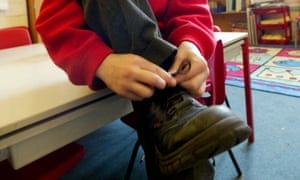


Researchers discover how laces come undone and offer alternative way to tie them that does knot involve your granny
The lead research said his curiosity about why shoelaces came undone intensified when he began teaching his child how to tie them.
Things can start to unravel at any moment, but when failure occurs it is swift and catastrophic. This is the conclusion of a scientific investigation into what might be described as Sod’s law of shoelaces.
The study focused on the mysterious phenomenon by which a shoe is neatly and securely tied one moment, and the next a flapping lace is threatening to trip you up – possibly as you are running for the bus or striding with professional purpose across your open-plan office.
In a series of experiments involving a human runner on a treadmill and a mechanical leg designed to swing and stomp, the scientists revealed that shoelace knot failure happens in a matter of seconds, triggered by a complex interaction of forces.
Oliver O’Reilly, a professor of mechanical engineering at the University of California Berkeley and the study’s senior author, said: “It’s unpredictable but when it happens, it’s in two or three strides and it’s catastrophic. There’s no way of coming back from it.”
The study found that the stomping of the foot gradually loosens the knot while the whipping forces produced by the swing of the foot act like hands tugging on the ends of the laces. As the tension in the knot eases and the free ends start to slide, a runaway effect takes hold and the knot suddenly unravels.
The findings also revealed what knot experts, such as sailors and surgeons, have long suggested: that the granny knot many of us use to tie our laces comes undone far quicker than an alternative method that is no more complex.
Robert Matthews, a physicist at Aston University in Birmingham who was not involved in the latest work, said: “It’s provided hard scientific backing for what many people have long suspected: that the traditional way of tying shoelaces is pretty rubbish.”
O’Reilly said he was inspired to investigate after spending decades pondering why laces spontaneously unknot themselves – an intellectual niggle that intensified when he came to teach his daughter how to tie her laces.
The scientist enlisted a pair of PhD students and initial tests revealed that sitting on a chair and swinging your leg or stamping your foot does not generally cause a knot to come undone. It appeared to be a combination of both motions that conspired to unravel laces.
Next, the scientists captured slow-motion video of a runner on a treadmill. They found that the foot strikes the ground at seven times the force of gravity and as the fabric of the shoe squashes down on impact, extra lace is freed at the top of the shoe, causing the knot to loosen slightly with each stride. Meanwhile, the swinging leg causes the lace’s free ends to whip back and forth tugging them outwards. As the knot loosens, the friction holding the knot tight decreases, and as the free ends lengthen, the whipping force goes up, leading to an avalanche effect.
“The interesting thing about this mechanism is that your laces can be fine for a really long time, and it’s not until you get one little bit of motion to cause loosening that starts this avalanche effect leading to knot failure,” said Christine Gregg, a graduate student at UC Berkeley and a co-author.
The scientists tested two basic versions of the standard knot and bow: the square knot and the weaker granny knot. In a square knot, you start by crossing the lace in your right hand in front of the one in your left hand and then threading it under the left one. For the bow you repeat the process, but crossing the end that’s now in your right hand behind the one in your left (with added loops to make the bow). In a granny knot the same overhand motion is repeated for both knot and bow.
According to the data, the lace slippage rate was cut by at least a factor of five using a square knot compared with a granny knot. “Simply reversing the way we form the final knot when tying laces makes a huge difference,” Matthews said.
O’Reilly said: “With the strong [square] knot you might be able to get through the day without it failing.” Although he admitted to still using the granny knot himself through habit.
The study suggests the square knot works better because the impact of the foot loosens the knot more slowly, but the scientists were not able to establish why this is the case.
Biggest asteroid in 13 years is going to fly past Earth on today Wednesday



On Wednesday the 12th, our planet’s going to get a close shave from an alarmingly large chunk of space rock – as the biggest asteroid in 13 years sails past.
The asteroid, known as 2014 JO25, will sail safely past 1.1 million miles away – but NASA says, ‘this will be a very close approach for an asteroid of this size’.
There’s no chance the asteroid will hit Earth – and is roughly 2,000 feet wide.
It was discovered in May 2014 by astronomers at the Catalina Sky Survey near Tucson, Arizona
NASA says, ‘The asteroid will approach Earth from the direction of the sun and will become visible in the night sky after April 19. It is predicted to brighten to about magnitude 11, when it could be visible in small optical telescopes for one or two nights before it fades as the distance from Earth rapidly increases.’
Small asteroids pass within this distance of Earth several times each week, but this upcoming close approach is the closest by any known asteroid of this size, or larger, since asteroid Toutatis, a 3.1-mile asteroid, which approached within about four lunar distances in September 2004.


