Pages

Showing posts with label credit rating. Show all posts

Saturday, February 6, 2016

Donie's Ireland daily news BLOG

The rating agency Fitch upgrades Ireland credit prospects from A- to A

MOVE FOLLOWS A POSITIVE REASSESSMENT OF THE PROSPECTS FOR STRONG ECONOMIC GROWTH


INVESTORS USE RATINGS AGENCY STANDINGS TO GUIDE DECISIONS ON WHERE TO PUT THEIR MONEY.

Ratings agency Fitch has given the Coalition parties a pre-election boost, upgrading its rating on Ireland’s national debt.
The agency said late on Friday it was changing Ireland’s rating from A- to A, with a stable outlook.
The move follows a positive reassessment by Fitch of the prospects for strong economic growth in Ireland and steady improvements in the public finances. At the end of a week in which the unemployment rate fell to 8.6%, the agency also cited a strong projection for further employment growth.
Investors use ratings agency standings to guide decisions on where to put their money, so an upgrade in Ireland’s rating should help to hold down the cost of raising new debt.
Although the assessments of Fitch and its rivals are crucial, Ireland’s borrowing costs have also been compressed by the European Central Bank’s bond-buying campaign.
Irish’s 10-year bond yields are trading at a low level, and the 2026 bond had an interest rate of just under 1 per cent on Friday, having traded around 0.85 per cent during the week.
However, some nervousness ahead of the general election has led to a small increase in the gap between Irish bonds and those of other EU countries such as France and Belgium over the past week or so. The NTMA is due to raise new funds next week, so the Fitch move will be welcome.
Fitch, in a statement, referred to the strong macroeconomic performance and an improving budget picture. It particularly noted the move to a so-called primary budget surplus – a measure of the national borrowing position before repayments on the national debt are included.
Fitch is forecasting a 4% rise in GDP this year and believes Ireland’s debt to GDP ratio is now on a firmly downward path.
The agency has been very positive in previous assessments of the Coalition’s performance, saying after the October budget that some fiscal easing ahead of the election was not a surprise.
Fitch said then the overall budget package was consistent with improving public finances, although it said the stimulus was “pro-cyclical and therefore likely to increase economic volatility”.
At the same time, it said this year’s budget did not change its expectation of further deficit narrowing.
“The sovereign’s fiscal credibility has been underlined by its meeting of the original excessive deficit procedure deadline set nearly five years ago, after reducing the headline deficit by nearly 10 [percentage points]\.”
The upgrade from Fitch came as US bond investor Michael Hasenstab of the Franklin Templeton fund, who bought 10 per cent of the Irish bond market after the State was bailed out, said he had exited his Irish position.
He added, however, that the bonds should continue to perform well. Mr Hasenstab said the recent underperformance of Irish bonds was “short-term noise”, praised the State’s “strong” economy and dismissed any lasting fallout from the “Brexit” debate.
“Irish yields deserve to be more in line with core European yields,” said Mr Hasenstab, who made big profits on his 2011 Irish bet, which he made when the State was locked out of financial markets and its 10-year bond yields peaked around 15%.

Renua Ireland will & could form part of the next government says Lucinda Creighton


RENUA IRELAND HAVE CLAIMED THEY WILL HOLD THE BALANCE OF POWER AFTER THE ELECTION and it could be with Fine gael.

Lucinda Creighton’s party are convinced they will enter coalition with Fine Gael despite remaining “wary” of the party, she said today.
Ms Creighton said her party is adamant it will form part of the next government, whatever that may be.
“It is important for us and indeed it is important for the Irish people that Renua Ireland will be a part of the next government,” she said.
“You have to look at the numbers and at the moment the likelihood is; it’s not a certainty, but the likelihood is that the next Government will be led by Enda Kenny as Taoiseach.”
However she added that there is “no difference” between Fianna Fáil and Fine Gael who have played “Punch and Judy politics” over the past decade.
“Anything can happen. It’s going to be a long campaign. We will be mounting a serious challenge and we are just focusing at the moment on winning as many seats as we can,” she said.
She said the party was still wary of Fine Gael considering the length of time it took Mr Enda Kenny to rule out doing a deal with Tipperary Independent TD Michael Lowry.
Speaking on radio this morning, Mr Kenny said he would not consider doing business with Mr Lowry after the General Election.
Mr Creighton said: “I was delighted after 13 opportunities, the Taoiseach finally 10 days later ruled out Michael Lowry. I think it was important…But I think we have to be wary of that.”
Speaking outside Dublin Castle this afternoon, the party outlined their red-line issues which they claim will not be sacrificed in any negotiations for a new coalition after the General Election.
Renua want to establish a public commission on a flat tax which would report in nine months.
They would also introduce a Fiscal Responsibility Bill to prevent “the boom-and-bust politics that has plagued our economy”.

INMO calls off planned industrial action by the nurses
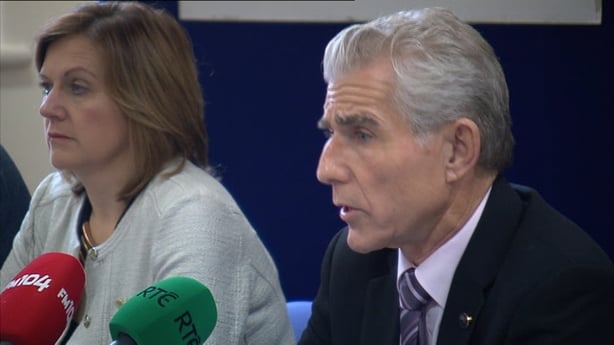
  

NURSES HAVE CALLED OFF PLANNED INDUSTRIAL ACTION AT SEVEN OF THE COUNTRY’S EMERGENCY DEPARTMENTS.

Members of the INMO have accepted revised proposals to tackle overcrowding and staffing at emergency departments in hospitals around the country.
They have voted 71% in favour of the revised proposals from the Workplace Relations Commission.
The INMO has said: “(We) will now insist that all of the hospital and group level structures, involving engagement between hospital management and INMO ED members continues on a weekly basis.
“This is necessary to ensure continuous implementation of the, now agreed, System Wide Escalation Policy which places the pressures on Emergency Departments at the centre of all health service activity.
“In accepting these revised proposals our members have reaffirmed that this dispute was always about patient care and ensuring a save working environment which must minimise overcrowding and maximise the ability of nurses to practice safely with manageable workloads.”
INMO General Secretary Liam Doran added: “Our members constantly stated, in all of the information meetings held recently, that this was never about pay and conditions but it was all about ensuring the unacceptable situation, in Emergency Departments, was prioritised, by management.”
Minister for Health Leo Varadkar has welcomed the outcome of the vote.
“I welcome this decisive ‘yes’ vote by Emergency Department INMO members who voted by a margin of 71% to accept the measures proposed by the Workplace Relations Commission,” said Minister Varadkar.
“I can assure staff of my personal commitment to seeing that the agreement is implemented in full.
“We are making progress in reducing ED overcrowding. The number of patients on trollies today is 20% lower than it was this day last year, in spite of the influenza outbreak.”

Lifetime bans proposed for horse doping in Ireland

HORSE RACING IRELAND WELCOMES ANTI-DOPING TASK FORCE RECOMMENDATIONS

    
Horse Racing Ireland chief executive Brian Kavanagh (centre pic)
A lifetime ban for any horse who has been illicitly administered prohibited substances and increased frequency of out of competition testing are two of the main recommendations from a report published on Thursday by Horse Racing Ireland.
The Irish Thoroughbred Industry Anti-Doping Task Force was set up following the disqualification of trainer Philip Fenton in 2014 after he was found to have banned animal substances, including anabolic steroids, in his possession.
In response the HRI board, in conjunction with the Turf Club, established a 16-member industry-wide Anti-Doping Task Force, chaired by HRI vice-chair and now senior steward of the Turf Club, Meta Osborne, to assess the issues.
The findings of the report have now been made public with the main recommendation being a lifetime ban from Irish racing for horses administered a banned drug at any time, anywhere in the world.
They also advocate no automatic therapeutic use exemption for anabolic steroids, while underlining the need for the Irish racing and breeding industries to have access to a laboratory which meets the best international standards, is based in Ireland and operates under either a permanent relationship with, or a long-term support from, the Irish racing authorities.
Augmented out of competition testing and a significant increase in the number of samples collected and analysed each year to achieve operational and cost efficiencies are two other key points.
A single national equine drug control laboratory should be considered, according to the report, with the need for the Turf Club to establish a dedicated Anti-Doping Unit also underlined.
Educational programmes and clear guidelines as well as ongoing research into the issue of doping are also recommended, with the Task Force reconvening in six months to review progress.
HRI has approved expenditure of over €1.8 million to purchase new laboratory equipment and ensure appropriate facilities while it will also support the cost of additional sampling, higher levels of out of competition testing and the creation of a new the anti-doping unit through its integrity budget.
Brian Kavanagh, HRI chief executive, said: “Setting up the Anti-Doping Task Force was vital in order to protect the reputation of our racing and breeding industry, and Horse Racing Ireland welcomes the consensus reached and the strong recommendations that have been set out.
“The industry is worth over €1 billion annually to the Irish economy, and our international position as a world leader must be maintained.
“HRI will support the recommendations of the Task Force through the significant and continuing investment that is being announced today.
“The issue of illegal performance-enhancing drugs is one that needs to be addressed worldwide and Ireland is now to the fore in tackling this problem head on. Our primary concern is to ensure that Ireland’s racing and breeding industries have drug testing systems that meet the best international standards.”
Osborne was pleased to see the recommendations being implemented so swiftly in the sport.
She said: “I am delighted that the Anti-Doping Task Force has produced an agreed consensus statement and report which the industry has been able to support and unite behind.
“The key objectives are to eliminate cheating and to ensure that horse welfare is paramount.
“The announcement of a lifetime ban for any horse found to have been illicitly administered any substance “prohibited at all times“ including anabolic steroids is an unequivocal statement that cheats will not be tolerated within Irish racing.
“The Turf Club will continue to work with Horse Racing Ireland in this vital area to ensure that we have the resources and structures in place to maintain the highest levels of integrity in our sport, and thereby to safe-guard the international reputation of the Irish thoroughbred industry.”

DNA evidence unearths major population shift at the last Ice Age-end

DNA evidence from the ancient bones and teeth of people who lived in Europe near the end of the last Ice Age shows a major shift in the population around 14,500 years ago during a period of severe climatic instability.

    
DNA evidence from the ancient bones and teeth of people who lived in Europe near the end of the last Ice Age shows a major shift in the population around 14,500 years ago during a period of severe climatic instability.
“We uncovered a completely unknown chapter of human history: a major population turnover in Europe at the end of the last Ice Age (Late Pleistocene to the early Holocene),” said lead author Johannes Krause of the Max Planck Institute for the Science of Human History in Germany.
The researchers pieced this missing history together by reconstructing the genomes of 35 hunter-gatherer individuals who lived in Italy, Germany, Belgium, France, the Czech Republic, and Romania from 35,000 to 7,000 years ago.
“There has been a real lack of genetic data from this time period, so consequently we knew very little about the population structure or dynamics of the first modern humans in Europe,” Krause added.
The new data show that the mitochondrial DNA of three individuals who lived in present-day Belgium and France before the coldest period in the last Ice Age belonged to haplogroup M.
This is remarkable because the M haplogroup is effectively absent in modern Europeans but is extremely common in modern Asian, Australasian and native American populations.
The absence of the M haplogroup and its presence in other parts of the world had previously led to the argument that non-African people dispersed on multiple occasions to spread across Eurasia and Australasia.
The researchers say the discovery of this maternal lineage in Europe in the ancient past now suggests instead that all non-Africans dispersed rapidly from a single population, at a time they place around 50,000 years ago.
Then, at some later stage, the M haplogroup was apparently lost from Europe.
The biggest surprise, however, was evidence of a major turnover of the population in Europe around 14,500 years ago, as the climate began to warm.
“Our model suggests that during this period of climatic upheaval, the descendants of the hunter-gatherers who survived through the Last Glacial Maximum were largely replaced by a population from another source,” explained Adam Powell, senior author at the Max Planck Institute in a paper published in the Cell Press journal Current Biology.
The next step is to construct a more comprehensive picture of the past by analysing the complete genomes of these ancient individuals along with additional specimens representing more times and places.  

Saturday, May 17, 2014

Donie's Ireland daily news BLOG update

Ireland’s credit rating goes up by two notches to Baa1

STABLE OUTLOOK BY MOODY’S UPGRADE


Outlook ‘stable’ it says four months after ratings agency restored State to investment grade.

The move comes four months after Moody’s restored Ireland’s credit rating to investment grade.
Moody’s has upgraded Ireland’s credit rating by two notches to Baa1 from Baa3, with a “stable outlook”, it announced tonight.

 THIS IS THE SECOND TIME IN SIX MONTHS THAT IRELAND’S credit RATING WAS RAISED.

The New York agency listed three key drivers for the rating. First they said that the recent pick-up in the State’s growth momentum will “speed up ongoing fiscal consolidation and put the government’s debt metrics on a steeper downward path than previously anticipated”. This would lead to a “significantly improved outlook for Ireland’s medium-term public debt trajectory,” it said.
The agency also said there had been a “very sharp reduction” if off-balance sheet exposures. The recovery in the property market resulted in a considerable reduction in government contingent liabilities, it said.
This was due to both the “accelerated asset sales of Ireland’s National Asset Management Agency (NAMA) and to the disposal of the Irish Bank Resolution Corporation (IBRC) portfolio,” it said.
Thirdly it said Ireland had an improved credit rating relative to its peers. Compared to other Baa-rated euro counties including Italy and Spain the State’s credit profile was “recovering more quickly” .
However it warned that the State’s credit profile remained constrained by “high public debt level, still-sizeable fiscal deficits and significant banking sector risks, including a high stock of non-performing loans.”But it said such negative factors were partly offset by the States institutional and economic strengths as well as the Government’s “significant cash balance”.
The National Treasury Management Agency chief executive John Corrigan welcomed the decision which meant all three rating agencies rate Ireland at BBB+ or equivalent. This “ clearly ranks Ireland as an investment-grade credit and reflects the confidence in Ireland shared by investors generally,” he said in a statement last night.
He was pleased that “one of the main drivers” was “the sharp reduction in Government contingent liabilities due in part to the accelerated asset sales by NAMA.”
Moody’s also said the State’s short-term rating has been upgraded to P-2 from P-3. The agency also raised the State’s foreign and local currency country ceilings for long-term debt and deposits from Aa3 to A2 and country ceilings for short-term foreign deposits have been raised to Aa3 from A2.
The move comes four months after Moody’s restored Ireland’s credit rating to investment grade.
In January, Moody’s lifted Ireland’s government debt rating one notch from junk to “Baa3”, the lowest investment-grade rung, with a positive outlook. Moody’s said the reasons for the upgrade were the growth potential of the economy and the Government’s exit from the EU-IMF bailout programme.
Kristin Lindow, Moody’s Investors Service lead analyst for Ireland, also said in March that there was no doubt the Irish economy had turned the corner, with the agency expressing faith in the country’s ability to manage its debt levels in the coming years.
Moody’s raised Portugal’s rating last week, and earlier this week a ratings upgrade for Ireland was deemed “more likely than not” by Owen Callan, fixed income dealer at Danske Bank, who cited the agency’s “generally bullish view” on the euro zone.
“Some investors may scratch their head about valuations for Ireland,” Rainer Guntermann and David Schnautz, analysts with Commerzbank, wrote in a note to clients this week, adding the economic backdrop was “mixed.”
Prior to the financial crisis Ireland held a “triple A” rating, the highest possible. Moody’s awarded Ireland this top grade in 1998, but by July 2011, it had cut the country’s sovereign debt rating to non-investment grade, or junk.
The two other main credit ratings agencies, Standard & Poor’s and Fitch, both rate Ireland as “BBB+”, the equivalent of a Moody’s “Baa 1” grade.

No limits on getting ahead for today’s Irish top business women


C style SUITEd WOMEN TELL FIONA REDDAN HOW THEY CAN HELP THEMSELVES AND EACH OTHER

Earlier this year Vanity Fair ran a cover story on the woman hired to save Yahoo. “Will Success Spoil Yahoo’s Marissa Mayer?” the US publication asked. It’s difficult to imagine the magazine – or indeed any publication – running the same headline alongside a male CEO. Could success, for example, spoil Microsoft’s newly appointedSatya Nadella or Albert Manifold of Ireland’s largest company, CRH?
Yes, women are making progress in the corporate world in greater numbers than ever before. But are they being held back in business by traditional stereotyping? In a survey of the “c-suite” of Ireland’s Top1000 companies, which examined the gender of senior management in each of the organisations included in this year’s magazine, our survey found that 25 per cent of all c-suite roles among Ireland’s Top1000 companies are now held by women. This compares favourably with a recent study in the US, which showed that about 15 per cent of similar roles are held by women.
However, there remains a disconnect between these figures and the number of women assuming top roles. Women occupy chief executive or managing director positions in just eleven per cent of Ireland’s top companies, according to the Top1000 survey. Carolan Lennon, managing director of Eircom’s wholesale business and a member of Eircom’s senior executive team, argues that quotas may be needed to redress the balance and that sometimes “the end justifies the means”.
“Do I think boards and organisations and governments would be improved if they had a more balanced membership? I do,” says Lennon. “And I believe the only way we can make that happen is to introduce quotas. Otherwise progress will be so slow we won’t make a difference.”
Not everyone agrees, however. Suzanne Weldon, marketing director at BWG, says she is “not a fan” of quotas. “I’ve always got ahead on merit, on doing the right job, and getting the right results.”
Women are in broad agreement, however, that to increase the number of women participating at senior levels of an organisation, support is essential. “I certainly mentor a lot of women. I believe that as a senior businesswoman I have a responsibility to help and encourage other women. If we want to reach 30 per cent we have to keep talking about it,” says Lennon.
Melanie Sheppard, finance director with Pfizer Healthcare Ireland, agrees that to ensure women are encouraged to play as full a role as they desire in the workplace, support, advice and role models are essential. “The power of role models is very strong; so is the absence of such role models.”
But it’s also about taking responsibility for your own career choices.
Central to Sheryl Sandberg’s recent rallying cry for women to heighten their
engagement in the workforce was the message of “leaning-in” and taking a “seat at the table”. It’s something that is echoed in the experiences of the senior women of the Top1000.
“You have to own your own career, to put yourself in the frame,” advises Lennon. “Put your hand up, make sure you’re available and that you have the skills to succeed.”
She says that when presented with a job opportunity, most women – even when they might be the best candidate – can think of eight reasons why they shouldn’t apply. “But women need to take some ownership and push themselves forward,” she says.

Just one binge drinking session can damage your health potentially for life

(AND WOMEN ARE the WORST AFFECTED)


  • One night of heavy drinking can cause bacteria to leak from the gut (as in above right graphic picture)
  • This causes an increased level of toxins to build-up in the blood
  • These cause the body to produce immune cells associated with fever, inflammation and tissue destruction
Many people who do not consider themselves to be heavy drinkers let their hair down occasionally and allow themselves one too many.
Now, new research suggests that even this occasional indulgence could cause permanent damage to their health.
U.S. researchers found that just one night of heavy drinking could be enough to have significant negative impacts upon health.
Just one night of binge drinking could damage a person’s health permanently, research suggests (file picture)
They say this is because it causes bacteria to leak from the gut, causing increased levels of toxins in the blood.
The researchers, at the University of Massachusetts Medical School, say these toxins cause the body to produce immune cells involved in fever, inflammation and tissue destruction.
‘We found that a single alcohol binge can elicit an immune response, potentially impacting the health of an otherwise healthy individual,’ said lead author Gyongyi Szabo, a professor of medicine at the university.
‘Our observations suggest that an alcohol binge is more dangerous than previously thought.’
Binge drinking is defined by the National Institute on Alcohol Abuse and Alcoholism (NIAAA) as drinking that brings blood alcohol concentration to 0.08g/dL or above.
For a typical adult, this is equivalent to consuming five or more drinks for men, or four or more drinks for women, in about two hours, depending on body weight.2
Heavy drinking causes bacteria to leak out of the gut and increase toxin levels in the blood. This can cause inflammation and tissue destruction
Binge drinking is known to be dangerous in the short term because it increases the risk of injury.
Over the long term, binge drinking is also known to damage the liver and other organs.
But the new research provides key evidence that a single alcohol binge can also cause damage to health.
To assess the impact of binge drinking, 11 men and 14 women were given enough alcohol to raise their blood alcohol levels to at least .08 g/dL within an hour.
Blood samples were then taken every 30 minutes for four hours after and again 24 hours later.
Dr Szabo and colleagues found that the alcohol binge resulted in a rapid increase in endotoxin levels in the blood.
Endotoxins are toxins contained in the cell wall of certain bacteria that are released when the cell is destroyed.
They also found evidence of bacterial DNA in the bloodstream, showing that bacteria had permeated the gut. Compared to men, women had higher blood alcohol levels and circulating endotoxin levels.
Earlier studies have tied chronic alcohol use to increased gut permeability, meaning potentially harmful products can travel through the intestinal wall and be carried to other parts of the body.
Greater gut permeability and increased endotoxin levels have been linked to many of the health issues related to chronic drinking, including alcoholic liver disease.

LRC chief Mulvey denies breaching the “one person one salary rule”

  
LRC chief says he did not lobby to retain fees Kieran Mulvey said his appointment as chairman of the Irish Sports Council – for which he receives a €9,000 fee – predated a Government circular that one person should receive only one salary.
Chief executive of the Labour Relations CommissionKieran Mulvey has said his appointment as chairman of the Sports Council – for which he receives a €9,000 fee – predated a Government circular that one person should receive only one salary.
Mr Mulvey is on a salary of €156,000 as chief executive of the commission – the equivalent of a deputy secretary general in a Government department and is also paid nearly €9,000 as chairman of the council.
He said his salary as head of the commission was determined by the Government and he had experienced the same pay cuts as others of his level in the public service. He said he was also chairman of the council, which is a State body.
A daily newspaper yesterday published details of a letter sent by Mr Mulvey to the Department of Transport in which he made inquiries about plans by it to cut the fees paid for his post as chairman of the council.
The letter described the fees as “quite small” and said the chairmanship required considerable out-of-hours commitments at evening and weekend events.
Speaking in Killarney, where he was attending the delegate conference of the trade union Impact, he denied he had lobbied to keep the fees.
He said he had been told the payments were to be ended and he had inquired as to why this was the case.
‘It’s not a big issue’ Mr Mulvey said the department had looked at his warrant of appointment as chairman of the council and restored the fees.
Asked whether he would be prepared to relinquish the payments he said this was a matter for the Government to decide.
“It is not really a big issue,” he said.
He said the secretary general of the department also took the view he was not in breach of the one-person, one-salary principle.
Separately, speaking at the conference, he said the private sector in Ireland over the last five years had gone through a “torrid period of attrition” in terms of workers’ rights, pay levels and ultimately in relation to unemployment.
However, he said over the last 18 months he had noticed certain pay movements in some sectors of the economy which gave rise to pay increases of 2 to 4 per cent.
Progressive agreement
“These have been negotiations through successful strategies by unions such as Siptu, Mandate, TEEU and the CWU. So collective bargaining is alive and well. It has withstood the rigours of those who believed that trade unions were dead and should be dusted off.”
Mr Mulvey said that in the public service if it had not been for the Croke Park agreement and subsequent Haddington Road deal – warts and all – “there would have been unilateral decisions made by the previous and current governments that would have effectively brought about the end of collective bargaining” in the sector.

Nine facts you never knew about your common garden snail

THEY HAVE 14,000 TEETH AND SOME CAN EVEN KILL YOU


Your everyday garden snail is one of the most common sights of the British countryside but how much do you actually know about them?

Snail trail: They may be one of the slowest creatures on the planet but what else do you know?
Gardeners are being encouraged to bowl snails out of their back yards to stop them munching on their prized plants.
New research suggests that if you remove them some 65-feet away from your garden- around the same length as a cricket pitch – they will not return.
Chemical pellets are often used to combat the pesky mollusks but this new method could be just as effective.
The humble garden snail is one of the most common sights of the British countryside but how much do you actually know about them?
Walk – or slide – this way.

 OLD HEADS

  A snail’s lifespan is dependant on what exact species they are and what habitat they live in.
Some only live for 5 years but can if lucky enough can live to as long as 25.

BEST FOOT FORWARD

While it may not look like it snails slide around on a single foot.
The one long muscle acts just like a human extremity and helps them grip and push themselves along the ground.

ARE THEY POISONOUS?

Marine species of snail are poisonous but most of the land-based examples are not.
If you are sick after eating them it’s almost certainly because they weren’t cooked properly.
The sea-based cone snail is one of the most deadly creatures in the world with a single sting even able to cause death.

LIFE IN THE FAST-ISH LANE

The slime – which is in fact mucus – helps lubricate the floor and helps them pass along with less friction.
With this being the case snails often travel in the mucus trails of others to move faster.

MAXING RELAXING

A snail carries another snail on its shell in a garden
Despite their speedy slime lanes rather unsurprisingly snails are one of the slowest creatures on the planet.
They usually move at a steady pace but can reach a dizzying 50 yards per hour – 1.3cm per second.

YOU CAN EAT THE SLIME

Yes you read that correctly – you can eat the slimy trail left behind.
A popularly peddled myth is that snail slime makes a food inedible but a simple wash and it should be good to go.
Remarkably some research suggests it can be used to treat stomach ulcers.

EYE EYE

  Snails are almost completely blind and they don’t have any mechanism of hearing sounds either.
With the kind of sensory deprivation their sense of smell is extraordinary.
They can apparently locate food from as far away as a few metres, which for an animal of their minuscule dimensions is quite the distance.
You might not think so to look at them but snails actually do have teeth.
In fact the average garden snail has over 14,000 of them – a costly scale and polish for sure.

DOG EAT DOG

Three-year-old Homer came out of his shell last year to claim the title of the planet’s largest pet snail. Weighing 450g and measuring 25cm long Homer lives with proud owner Joe Billington, ten
Officials in Florida have called in a bizarre method to cause the growing problem of giant snails – using Labrador retrievers.
As many as 128,000 snails were caught as part of an aggressive extermination campaign but more help was needed which saw canines called in.
“They’re very good at detecting the Giant African Land Snail,” said Richard Gaskalla, the head of plant industry at the Florida Agriculture Department.
“So we’re building four-legged technology into this program as quickly as we can.”