Pages

Showing posts with label cures. Show all posts

Monday, October 3, 2016

Donie's Ireland daily news BLOG update

As many as 350 patients are dying due to lack of ICU capacity’ says Sligo Consultant

IRELAND SPENDING A LOT OF MONEY ON HEALTH BUT OUTCOMES ARE CONSISTENTLY POOR, A CONFERENCE IS TOLD

Image result for As many as 350 patients are dying due to lack of ICU capacity’ says Sligo Consultant   Image result for Dr Fergal Hickey, consultant in emergency medicine at Sligo General Hospital

UP TO 350 PATIENTS ARE DYING EACH YEAR AS A RESULT OF CAPACITY CONSTRAINTS IN INTENSIVE CARE UNITS, THE ANNUAL CONFERENCE OF THE IRISH HOSPITAL CONSULTANTS ASSOCIATION HAS BEEN TOLD.

Dr Fergal Hickey, consultant in emergency medicine at Sligo General Hospital, also said that capacity deficits in neurosurgery was leading to deaths that could be avoided or disability that could be avoided.
He said Ireland was spending a lot of money on the health service. He said he was not arguing that more money was not needed, but rather he wanted to highlight that the country was not getting good outcomes from the funding currently being provided to the health service.
Dr Hickey said OECD figures showed that Ireland was one of the top-spending countries on health but that outcomes were “quite consistently poor”.
“Most of this comes down at the end of the day to severe capital under-investment. We have a history of dreadful decision making and very politicised decision making.”
He said when the Fine Gael/Labour coalition came to power one of the first things it did was to change the HSE capital plan to include new emergency departments and ancillary services in Kilkenny and Wexford to facilitate two Government ministers. He said both locations needed new emergency departments and other facilities but they probably didn’t have the greatest need.
Dr Hickey told the conference that “we should stop lusting after false gods” including that much more work can be performed in primary care.
“It can’t and it won’t,” he said.
He said the other false god was that if additional doors into the hospital were created that this would in some way improve capacity.

The eighth amendment is precious and wonderful so says Archbishop Martin

EAMON MARTIN CALLS ON POLITICIANS NOT TO LEAVE THEIR CATHOLIC FAITH OUTSIDE DOOR
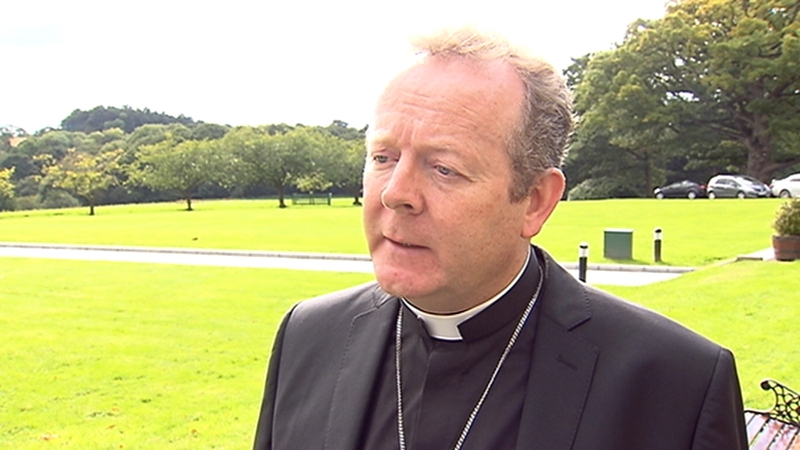
Image result for The eighth amendment is precious and wonderful so says Archbishop Martin   Image result for The eighth amendment is precious and wonderful so says Archbishop Martin

EAMON MARTIN SAID THE CHURCH WOULD CALL ON POLITICIANS NOT TO LEAVE THEIR CATHOLIC FAITH OUTSIDE OF THE DOOR WHEN IT CAME TO ISSUES OF PUBLIC POLICY.

The eighth amendment to the Constitution has been described as “something precious and wonderful’’ by the Catholic Archbishop of Armagh Eamon Martin.
“It is a very clear statement at the foundation and sub-structure of our laws that everyone has an equal right to life… the mother, an elderly person who is terminally ill, and the unborn child,’’ he said.
In an interview on the RTÉ Radio programme This Week, Dr Martin said it was “gravely wrong’’ to believe that the life of any human being could be taken at any stage.
He said the decision to have a referendum was not a matter for the Catholic Church.
“We would wonder if this is really the big issue that people on the doorsteps want to talk about,’’ he added.
“There are many issues in this country at the moment about tax, about water charges, about jobs, and we are aware, of course, there are sections of society who are calling for a referendum.”
Asked if it was possible to be a Catholic and support abortion in certain circumstances, Dr Martin replied: “I think if you are a Catholic who wishes to be informed by the teaching of your Church, you will not find in the teaching of the Church a statement that says you can support the deliberate and intentional taking of human life at any stage.’’
Dr Martin said the Church would call on politicians not to leave their Catholic faith outside of the door when it came to issues of public policy.
He said the Church had not been asked to fund any particular group in the campaign to repeal the amendment, although it knew there were many people working in the area of pro-life who felt they were powerless, particularly when they said there were huge amounts of money coming into other groups advocating a repeal of the eight amendment.
A citizens’ assembly, which will first consider a possible referendum on the Eighth Amendment, meets in Dublin Castle on October 15th.
It will look at the Eighth Amendment to the Constitution which, as article 40.3.3, underpins Ireland’s strict abortion laws. It will be chaired by Supreme Court judge Mary Laffoy.
Government sources do not expect it to return with its recommendations until towards the end of the first half of 2017.

The Irish health service needs the equivalent of six extra large hospitals?

Image result for The HSE needs the equivalent of six extra large hospitals?   Image result for The HSE needs the equivalent of six extra large hospitals?

MEDICAL CONSULTANTS SAY THE HEALTH SERVICE NEEDS THE EQUIVALENT OF SIX EXTRA LARGE HOSPITALS.

The Irish Hospital Consultants Association says hundreds more acute beds are needed to bring the service to an “internationally acceptable” level.
The IHCA is holding its annual conference in Kilkenny today.
Association President, Dr Tom Ryan claims hospital overcrowding has an impact on patient safety:” Internationally hospitals would operate at 80% capacity, and this is done in the interests of public safety and in the interests of cost effectiveness.
“Irish hospitals operate at about 95% occupancy and this has obvious implications on patient safety, it is difficult to control infections.”

Meanwhile:–

Ireland very lucky to have avoided winter healthcare calamity?

THOUSANDS OF ADDITIONAL HOSPITAL BEDS NEEDED, IRISH HOSPITAL CONSULTANTS ASSOCIATION SAYS

Pictured L to R are the outgoing IHCA President Dr Gerard Crotty with the incoming President Dr Tom Ryan, Consultant in Intensive Care and Anaesthesia, SJH, and newly elected Vice President, Dr Roy Browne, Consultant Psychiatrist, Phoenix Care Centre  Image result for the president of the Irish Hospital Consultants Association Dr Thomas Ryan has said.  Image result for the president of the Irish Hospital Consultants Association Dr Thomas Ryan has said.
Above pictured L to R are the outgoing IHCA President Dr Gerard Crotty with the incoming President Dr Tom Ryan, Consultant in Intensive Care and Anaesthesia, SJH, and newly elected Vice President, Dr Roy Browne, Consultant Psychiatrist, Phoenix Care Centre
 IRELAND HAS BEEN LUCKY SO FAR TO HAVE AVOIDED A MAJOR HEALTHCARE CALAMITY DURING SURGES IN ACTIVITY IN HOSPITALS IN WINTER, THE PRESIDENT OF THE IRISH HOSPITAL CONSULTANTS ASSOCIATION HAS SAID.
Ireland has been lucky so far to have avoided a major healthcare calamity during surges in activity in hospitals in winter, the president of the Irish Hospital Consultants Association has said.
In an address to his organisation’s annual conference in Kilkenny Dr Thomas Ryan warned that while the country had been fortunate to date, that luck might not hold out. He called for a massive expansion in the number of hospital beds and a significant increase in the number of consultants.
“The longer the current model of healthcare continues, the more likely we are to encounter a major winter-time calamity.”
Dr Ryan said the number of additional acute hospital beds that were required to provide an internationally acceptable health service in Ireland is equivalent to six large hospitals such as the Mater University Hospital or Cork University Hospital or Galway University Hospital.
He said because of existing capacity deficits, “the public is being forced to accept healthcare rationing as hospitals continue to prioritise balancing inadequate budgets, with the provision of safe and timely care for patients being relegated to a secondary consideration”.
Dr Ryan said there were too few acute beds open in Irish hospitals and that of those that were available, as many as 500 – 600 were occupied by patients who had completed the clinical phase of their treatment and who were ready for discharge.
He said the shortage of accessible acute hospital beds was “the root cause of the trolley crisis in emergency departments countrywide.”
He forecast that the trolley crisis would worsen this winter as it had for well over a decade.
He said it was a reflection of a failing hospital system.
“As many as five per cent of our acute hospital beds are not accessible to treat acute patients awaiting admission and care. These clinically-discharged patients reside in acute hospitals as a direct consequence of the lack of funding for home care packages, nursing home beds and specialist rehab beds.”
Dr Ryan also said there were insufficient consultants working in Irish hospitals.
“We are short consultants in practically all specialties with about two-thirds the number of consultants recommended in the Hanly report in 2003.”
“However since the Hanly report, the Irish population has increased at a faster pace than anticipated and the demand for care has grown significantly.”
“The public has become immune to never-ending stories on the ‘crisis’ in our acute hospitals. However the many unresolved problems in our hospitals are now at such a critical level that patient safety is compromised on a daily basis. Many of our hospitals are running at an internationally unacceptable occupancy rate of more than 95per cent which has an adverse impact on patient safety.”
“We have a failing hospital system which is rationing healthcare to patients. The reductions in acute hospital and ICU beds and the cumulative cuts in investment for equipment and infrastructure have resulted in a stark mismatch between patient needs for care and the means to deliver it. When the first priority of a hospital is to be ‘within budget’, then the result is longer waiting lists, the trolley crises, overcrowding, cancellation of essential surgery and poor patient safety and care.”
Dr Ryan said there was an urgent neeed to strengthen healthcare governance.
“There is an urgent need to strengthen healthcare governance in Ireland. Patient safety should be the first priority in all our hospitals and therefore each hospital and Community Healthcare Organisation should have a board, which includes patient representatives, GPs and practising consultants to which the management is accountable. This is not the case at the moment”, said Dr Ryan

Your hangover cures & How to beat the morning after blues using the contents of your cupboard

Image result for Your hangover cures & How to beat the morning after blues using the contents of your cupboard  Image result for Your hangover cures & How to beat the morning after blues using the contents of your cupboard

IT’S BEEN A HEAVY NIGHT AND THE MORNING FEELS EVEN HEAVIER. BUT HELP IS AT HAND AND NOW IT IS CLOSER THAN YOU THINK? IF YOU ARE SOBER ENOUGH MAYBE YOUR KITCHEN HAS THE ANSWER?

Last night was so fantastic that being able to remember it it would only tarnish the beautiful memory.
This morning, however, you’re wishing your whole sorry existence could be wiped away as easily as your recollections of every conversation from yesterday’s evening of fun.
Happily, help might be closer than you think.
Inside your cupboard are lurking various yucky, half forgotten items that might just cure that hangover you’ve been clobbered with.
Here are some of the household goods which might just cure your your post-booze blues.
What about Sprite?  Image result for Your hangover cures & How to beat the morning after blues using the contents of your cupboard
Chinese researchers recently claimed this lemon and lime fizz helped drinkers’ bodies process alcohol more efficiently
Chinese researchers recently claimed this lemon and lime fizz helped drinkers’ bodies process alcohol more efficiently.
The booze analysts examined the effects of 57 drinks and found that Sprite was the best at beating the morning after blues.
Sprite is said to boost the body’s ability to remove a chemical called acetaldehyde, which which is produced when alcohol is broken down and causes many of the symptoms of a hangover.
Pickle juice? Image result for Your hangover cures & How to beat the morning after blues using the contents of your cupboard
The salt and vinegar reportedly restore the levels of electrolytes.
This isn’t going to be the tastiest of hangover cures, but bear with us.
If you take a swig from the pickle jar, the salt and vinegar reportedly restore the levels of electrolytes.
This means a quick shot of brine will leave you feeling hydrated – but probably even more sick than before.
And then theres Espresso coffee?   Image result for Your hangover cures & How to beat the morning after blues using the contents of your cupboard
Coffee dilates blood vessels in the brain, which could make headaches disappear.
Italian people think the best way to combat a hangover is to knock back a load of super strong espressos.
Their thinking relies on the fact that coffee dilates blood vessels in the brain, which could make headaches disappear.
But it could give everyone around you a sore head when you subject them to your hyper-caffeinated babbling.
Beer what ?????    Image result for Beer helps hangover
Some scientists think a small drink can help the body removes toxic by-products
In Denmark, they call a hair of the dog brew a “Reparationsbajer”, or repair beer, because it makes you feel better after a night on the booze.
Some scientists think a small drink can help the body removes toxic by-products from several drinks consumed the night before.
However, drinking on a daily basis is a surefire way to stumble into alcoholism, which will mean you pretty much always have a hangover.
What about lemon?  Image result for Your hangover cures & How to beat the morning after blues using the contents of your cupboard
Rubbing a lemon into your armpit whilst drinking could prevent the next morning becoming a nightmare.
Don’t bother trying to squeeze this lemon, because that’s not what the cure is based on.
Puerto Ricans reportedly believe that rubbing a lemon into your armpit whilst drinking could prevent the next morning becoming a nightmare.
And it makes you smell nice, which is probably the only scientifically proven part of this remedy.
Some raw eggs.  Image result for Your hangover cures & How to beat the morning after blues using the contents of your cupboard
A Prairie Oyster involves mixing an egg yolk with Worcestershire sauce as well as salt and pepper
A classic hangover cure called a Prairie Oyster involves mixing an egg yolk with Worcestershire sauce as well as salt and pepper.
This should then be swallowed whole, taking care not to break the egg.
However, this cure is not recommended for pregnant women – or anyone else for that matter.

Check out our top tips for seeing and photographing the Aurora in Northern Ireland

Image result for Check out our top tips for seeing and photographing the Aurora in Northern Ireland  Image result for Check out our top tips for seeing and photographing the Aurora in Northern Ireland  Image result for Check out our top tips for seeing and photographing the Aurora in Donegal & Northern Ireland

PHOTOGRAPHING THE AURORA BOREALIS IS SOMETHING THAT IS ON MANY PEOPLE’S BUCKET LIST AND THE GUYS AT NORTH COAST AURORA WATCH HAVE GIVEN US SOME TOP TIPS ON SNAPPING THE PHENOMENON

The aurora taken from Cave Hill Belfast with photographer Marty McClinton in the foreground
The Aurora Borealis, or as they are sometimes better known as, the Northern Lights, have once again been providing a light show above the skies of Northern Ireland .
Spectacular photographs of the solar phenomenon have recently been shared on numerous timelines, but how do you know when it’s going to appear and how do you capture it for posterity?
North Coast Aurora Watch, a Facebook page started by Ron Kelly, dedicated to providing real time alerts in the event of an aurora display along the North Coast gave us some of their top tips and information as to the best places from where to see and photograph this wonderful sight!
  1. Follow North Coast Aurora Watch and check the Aurora activity. The main things to look for are the KP value (the higher the value, the further south the lights could possibly be seen) and Bz value (the direction of the Earths Magnetic Field)
  2. Get yourself a DSLR camera that has a manual mode and a tripod – the tripod needs to be sturdy and tall.
The northern lights taken at Dunluce Castle, Image result for The northern lights taken at Dunluce Castle,
  1. Find a good spot – This can be as simple as looking on Google earth or looking up historical buildings in your area or by asking other Aurora Hunters. It is usually better to find somewhere with little or no ambient lighting.
On the North Coast, there are a few main sites that are used – Dunluce Castle, Mussenden Temple, Kinbane Castle Gortmore Viewpoint and Ballintoy. However, there are many more across the Province and probably some have yet to be photographed
  1. Get your camera settings right – The camera itself needs to have a manual mode, where you can adjust the ISO. You need to be able to shoot a long exposure, ideally 30 seconds. A low F ratio (ratio of the lens’s focal length to the diameter of the entrance pupil) is also good, most 18-55mm standard lenses comes normally with a lower f ratio of 3.5, other lenses go lower. A wide angle lens is preferable.
Focus is a big thing. Focus your lens to infinity then bring it back very slightly. This can sometimes be difficult to do at night. A tip is to focus your camera during the dusk on a far away light, then use a piece of tape to hold the focus ring on the lens to the body keeping it in place. All other settings can be adjusted while you are out hunting.
The aurora at Ballintoy harbour, a favourite with Games of Thrones fans, 
Image result for The aurora at Ballintoy harbour, a favourite with Games of Thrones fans
  1. Safety is a priority. Aurora hunters go to the darkest places, in an attempt to avoid light pollution. You could find yourself standing near a cliff edge, close to crashing waves, in a field in the middle of nowhere. Always tell someone where you are going.
  2. Dress for the conditions. Warm clothes have to be worn because the aurora season is generally in the winter because of the longer nights. Warm clothing also includes a good pair of walking boots.
  3. Be prepared with equipment – Bring spare batteries, you could be out for quite a while and you never know how many photographs you are going to take. Bring a good, bright torch and if possible, have a red lens cover for the torch. Red light doesn’t affect your night vision as much as white light.
  4. Check the levels again then get on the road. Don’t forget, stay in contact with someone.
With over 10,000 followers since North Coast Aurora Watch started in 2014 there is no doubting the tremendous local interest in the northern lights.
Aurora photograph taken from Ballykelly in Co Londonderry looking over Lough Foyle towards Co Donegal.
“This page wouldn’t be what it is without the input from our followers,” said Chris, one of the page’s administrators.
“We go mainly on live sightings from wherever our followers are so we couldn’t do it without them.
“The great thing is we have followers with some knowledge who also help out new aurora hunters with settings and locations which enables us to share this fantastic spectacle.”
“However, you don’t always need a camera to see the spectacle. If it’s strong enough, you can sometimes see it with the naked eye.”    

Wednesday, January 28, 2015

Donie's Ireland daily news BLOG update

Irish economy is not a model for other countries? says President Higgins


Citizens have paid ‘a very high price’, president tells tells Strasbourg assembly

President Michael D Higgins at the Council of Europe in Strasbourg on Tuesday where he delivered his address ‘The Future of Parliaments: Addressing the Challenges’.
Ireland should not be taken as a model for other countries struggling to overcome economic crisis, President Michael D Higgins said repeatedly on Tuesday during a day-long visit to the 47-member Council of Europe and the European Court of Human Rights.
“I don’t think the Irish Government is seeking to give lectures to members of the EU or the Council of Europe,” Mr Higgins replied to a correspondent from the Chinese news agency Xinhua who noted that Ireland now has the highest economic growth in the euro zone.
In the question-and-answer session following Mr Higgins’s address to the Parliamentary Assembly, a Turkish representative asked what was the secret to Ireland’s success.
“This adjustment has taken place with a huge sacrifice by the people of Ireland,” Mr Higgins replied, reiterating his allusion to the “narrow version of fiscal orthodoxy” that “seems predicated on a de-peopled economy.”
The Irish economy “is not a driverless car. It has citizens abroad who paid a very high price,” the President continued. “It is not appropriate to use Ireland as some kind of exemplar.”
Sunday’s election in Greece brought the far left anti-austerity Syriza party to power. Though he never mentioned Greece by name, it was writ large in Mr Higgins’s speech.
He called on parliaments “to muscle themselves into this debate, and to take it back from what I regard as unaccountable sources”. It was, he added, “a view that I share with Pope Francis”.
Emotional debate
Mr Higgins’s visit was almost sidelined by an emotional debate at the Parliamentary Assembly over the continued suspension of Russia’s participation in the Council of Europe because of its annexation of Crimea.
Anti-Russian protesters are encamped across the street from the council’s headquarters.
In his speech to the assembly, Mr Higgins called the war in eastern Ukraine “the disquieting return to our continent of grave geopolitical fractures, carrying disastrous human consequences”.
The Islamist attacks that killed 17 people in Paris earlier this month were another recurring theme. Like the war in eastern Ukraine, “new forms of fanaticism and conflict” pose “a profound challenge to democracy and social cohesion”, Mr Higgins said.
These new forms of violence “arise at the obscure intersection of global geopolitical tensions, individual trajectories and beliefs, and complex structures of social inequalities”, he continued.
In response to a question from Joe O’Reilly TD, a member of Ireland’s delegation to the Strasbourg Assembly, Mr Higgins said European countries “have neglected conversations with those who advance faith systems based on fundamental texts”.
“We have created a kind of void into which those who would exploit [youths] have moved like predators… We must be able to look at a stranger as someone with whom we share vulnerabilities – not as an aggressor.”
Political speech
Despite the care taken by Mr Higgins to avoid political controversy, it was a highly political speech, if one read between the lines.
In a veiled reference to dissatisfaction in the UK with the Council of Europe and the European Court of Human Rights (ECHR), which is part of it, the President expressed his “disquiet” at what he called “endeavours under way in some quarters that risk undermining the very legitimacy of both the court and the Convention on Human Rights”.
It was, for Ireland, “a very serious matter for concern”, Mr Higgins continued. “The European Convention on Human Rights must remain the cornerstone of human rights protection in Europe.”
Membership in the council and Ireland’s implementation of the European Convention on Human Rights “have been fundamental in consolidating the rule of law and supporting positive social change in Ireland,” Mr Higgins said.
Michael O’Boyle is the second-ranking lawyer at the ECHR, which employs 700 people and accepted its one millionth application last month. “This court has the most developed case law regarding human rights anywhere in the world,” Mr O’Boyle said after taking Mr Higgins on a tour of the court.
Ireland pays to have the proceedings of the ECHR webcasted on the internet, “an archive of hearings that plays a big part in law schools throughout the world”, Mr O’Boyle said.
“Ireland has always taken this court very seriously… There is absolutely no question mark regarding Ireland’s respect for this court.”

New mortgage 90% loans rule allow relief for first-time buyers


Banks to be able to lend 90% up to €220,000 as phase-in plans abandoned

The new 80% loan to value limit will be introduced for most borrowers, in a significant tightening of the current lending regime.
New mortgage rules announced by the Central Bank will allow first-time buyers some relief from the new 80 per cent loan to value limit.
For first time buyers, banks will be able to lend 90 per cent up to a value of €220,000. Above that the 80 per cent limit will apply.
The new rules, which are effective immediately, have been announced this evening.
The move will significantly reduce the amount of deposit which first-time buyers have to save when buying a home.
However, the 80 per cent limit will be introduced for most borrowers, in a significant tightening of the current regime, designed to protect banks and borrowers from getting into difficulties with future lending.
The Central Bank Commission decided on the new rules at a meeting on Tuesday. Non first-time home buyers will generally be restricted to borrowing 80 per cent of the property’s value.
A 70 per cent limit will apply for banks lending to investors purchasing buy-to-let properties.
Plans to phase in the new rules have been abandoned, with the higher limit on borrowings up to €220,000 designed to address concerns about the impact on first time buyers.
Under the existing rules – which normally allow a bank to lend 90 per cent of the value of the house – a first-time buyer would require a €35,000 deposit on a home valued at €350,000. Under the new rules this will rise to €48,000.
Had the 80 per cent limit applied to the entire loan, the deposit required would have been €70,000.
The changes follow a consultation period on the proposed new lending rules. Original proposals to impose an 80 per cent cap on all new home-buyers had met a wave of opposition.
The Central Bank said a certain number of loans – up to 15 per cent of loans by value for principal dwelling – could breach the new limits, offering some flexibility to lenders and borrowers.
Housing loans for borrowers who are in negative equity and who are obtaining a mortgage for a new property are not subject to the LTV limits and will be assessed separately.
The rules will also mean that people buying homes will face a limit that loans should not exceed 3.5 times income.
Again some exceptions will be allowed on this. Switcher mortgage loans and housing loans for the restructuring of mortgages in arrears are not covered by the regulations.
Central Bank governor Patrick Honohan said the measures would reduce financial vulnerabilities for lenders and borrowers.

Ireland rankings falls in international health service index


Ireland slips eight places to 22nd in 2014 Euro Health Consumer Index

Ireland is ranked 22nd in the 2014 Euro Health Consumer Index, down from 14th the previous year.
Ireland has tumbled down an international ranking of health services after its waiting list data was found to have lost credibility.
Ireland is ranked 22nd in the 2014 Euro Health Consumer Index, published Tuesday, down from 14th the previous year.
While overall healthcare performance in Europe has improved despite reduced spending in many countries, Ireland was one of the few states to lose ground.
The index says this is because it decided to use feedback from patient organisations in relation to waiting times rather than rely on official data.
It took this step after six years of persistent patient criticism, having decided the official waiting list data had “lost credibility”.
“Ireland is a strange artefact among the healthcare systems of northwestern Europe,” said Dr Arne Bjornberg, head researcher of the index.
“Patient empowerment is on the level ofRomania, waiting times as long as inSweden (which is bad!) and healthcare inequity is evident.”

‘Extreme dissatisfaction’

The fact so many Irish people have private health insurance in addition to their entitlements under the public system could be interpreted as “an extreme case of dissatisfaction” with the public system.
Dr Bjornberg said Ireland should take radical action to improve patient information and empowerment and reduce waiting to the level of other EU members.
While the level of hospital-acquired infection has fallen in Ireland in recent years, the improvement was not sufficient to escape a red score on this indicator, he said.
“Ireland has no longer a total ban on abortion, which is an improvement, but abortion still requires approval by people who are frequently [men aged] 50+ … This is a far cry from abortion being a woman’s right,” he also commented.
The index, which is compiled from a combination of public statistics, patient polls and independent research, ranked the Netherlands first, followed by Switzerland, Norway,Finland and Denmark.

VHI to cut prices on 7 of its lowest cost health plans


Move which will apply from March is a sign spiralling health insurance prices have eased

VHI IS TO CUT THE COST OF SEVEN OF ITS PLANS BY 3%.

The country’s largest health insurer, the VHI, is to reduce the price of seven of its lowest cost insurance plans.
The price of all its other health insurance plans is to be frozen, the company said.
VHI said the cost reductions would be up to 3% in some cases. The seven insurance plans to have their prices reduced are: One Plan Starter, One Plan Starter Day to Day, One Plan 500, One Plan 250, One Plan 150, First Plan Level 1 and Family Plan Level 1.
VHI chief executive John O’Dwyer said by focusing on savings and efficiencies the company was in a position to announce premium reductions on seven plans together with no price increase on any of our plans on the 1st March 2015.
“The business is performing well and over the last two years has delivered solid financial results. We continue to attract new business and our most recent offers have proved very successful and attractive to young families.
“Also, we are committed to continuing to drive an ambitious cost containment programme with a view to securing savings which can be passed directly to our customers.
This cost containment programme has focussed on a number of key areas such as reduced rates for consultants and hospitals, increased use of clinical indicators and clinical audit and the continued movement of treatment to the most cost-efficient setting. All of these factors are facilitating today’s price decrease.”
VHI said that a family of two adults and two children on its One Plan Starter Day to Day plan renewing in March could save €55 on the price they paid last year under the new reductions.
The company said there would be savings of €91 in the case of a family on its “Family Plan Level 1”.
Vhi also said it would put in place a half price children’s offer on four plans – One Plan Family, Parents & Kids Excess Plan, Teachers’ Plan Select and Nurses’ Plan Select — for customers joining or renewing these plans from 1st March 2015 until 30th April 2015.
Last November Minister for Health Leo Varadkar announced a series of measures designed to tackle the problem of rising health insurance premiums.
The package included a reduction in stamp duty, lower premiums for young adults, the previously announced introduction of Lifetime Community Rating and a reduction in the Health Insurance Authority Levy.
The Minister said his proposals built on Budget measures which included a freeze on hospital bed charges, and no decrease in the relievable amount for tax relief purposes

Cancer research advanced by scientists un-boiling Boiled Eggs


The struggle to find a cure for cancer could have received a huge boost from the most unlikely of sources, the boiled egg.

As Liz Neporent of ABCNews.com reports, scientists have found a way to un-boil hard-boiled eggs which could lead to advances in the fight against cancer. The common factor between cancer research and boiled eggs is that they use and contain proteins respectively.

Unboiled eggs: Researchers spin dissolved egg whites

As lead researcher Gregory Weiss explains, the proteins which egg whites consist off have a certain shape which changes when you boil them. “Once you boil them, the proteins stay intact but they change their conformation,” he said.
Weiss is a professor of chemistry and molecular biology at the University of California, Irvine, and his team have disproven the long-held belief that boiling an egg was an irreversible. Now they can recover and reuse the proteins by reversing the process.
The team first managed to separate the whites from the yolks before soaking them in a chemical called urea, which dissolves them. The whites were then spun at high speed in a machine called a “vortex fluid machine,” a process which returns them to their original state in a matter of minutes.

Vast improvement in reliability

The speed of the process will aid those who work with similar proteins in cancer research. Proteins are useful in the field but until now scientists have struggled to consistently make them unfold into the right format, with the majority of them turning out useless. Weiss and his team have discovered a simple way of returning them to their original forms which doesn’t take a prohibitively long time.
“We are already using it in our cancer research here,” Weiss said, and he hopes that the method will be used more widely in the near future.
Weiss also moved to head off any expectations of uncooking other foodstuffs, claiming that although it is theoretically possible, the team have not even tried to unboil a yolk. It should also be possible to reverse cook a chicken, but the result would be thoroughly unappetising.

Arctic PCBs may cause performance issues for male polar bears: says new research

Study finds PCBs weaken bears’ penis bones

  
As if they didn’t have enough problems, male polar bears now have to worry about this: PCB contamination that weakens their penis bones.

Climate change may affect the higher latitudes of the globe more than anywhere else on earth, putting habitats like that of the polar bear at risk.
And now a new study suggests industrial pollutants put the polar bear’s nether regions at risk as well.
That’s because wind and water-borne pollutants — polychlorinated biphenyls, or PCBs — have been linked to lower bone density in the polar bear’s penis bone.
PCBs, used for decades in hundreds of industrial applications such as paint, rubber production and electrical transformers, have been banned by a United Nations treaty since 2001.
But the chemical breaks down in the environment very slowly and, because of air temperatures and currents, concentrate at the earth’s polar regions.
Using a hospital x-ray technique, scientists from Denmark and Canada measured the bone density of penis bones — or the baculum — from almost 300 polar bears born between 1990 and 2000 from north-eastern Greenland and the Canadian Arctic
They then compared their data to locally recorded data of a range of harmful pollutants, finding a link between PCBs and lower bone density in the polar bear’s baculum.
They also found polar bears with higher PCB levels to have smaller testes.
The exact function of penis bones, which a number of mammals other than humans have, is not known, but the scientists suggest a weaker baculum could prevent successful mating.
“If it breaks, you probably won’t have a bear which can copulate,” Danish researcher Christian Sonne from Aarhus University said in an online article in the New Scientist.
The article quotes a biologist from the University of Edmonton, Andrew Derocher, who says the impact of pollutants are compounded on malnourished polar bears unable to find enough to eat because of habitat destruction.
“Skinny bears have higher levels of circulating pollutants, so the concern is that a polar bear that is nutritionally stressed may become more vulnerable to the effects of pollution at the same time,” he said in the article.
Sonne said he now plans to study the effect of food stress and pollutants have on evolutionary changes of the polar bear.
The study on bacula, published in the February 2015 edition of Environmental Research, points out that more research needs to be conducted before PCBs can be said to cause the lower bone density in the baculum of polar bears.