Michael Noonan outlines Budget tax cuts to Cabinet
USC REDUCTIONS AND INHERITANCE TAX CHANGES PLANNED


MINISTER FOR FINANCE MICHAEL NOONAN: THE GOVERNMENT HAS ABOUT €1 BILLION TO SPEND IN THE BUDGET, SPLIT ON A 2:1 BASIS BETWEEN SPENDING INCREASES AND TAX CUTS.
A range of tax cuts – including reductions in the USC and changes to inheritance tax – have been outlined to Cabinet by Minister for Finance Michael Noonan.
With Budget 2017 two weeks away, Mr Noonan outlined a rough outline of the plans to his ministerial colleagues at Cabinet on Tuesday.
The Government has about €1 billion to spend in the Budget, split on a 2:1 basis between spending increases and tax cuts.
Mr Noonan told Ministers that he is likely to reduce the lowest two USC rates by half a point each – from 1 per cent and 3 per cent to 0.5 per cent and 2.5 per cent respectively.
He will also raise the threshold at which people enter the lowest USC rate, effectively taking more people out of the USC net. The USC entry point is currently set at €13,000.
The Minister will also further increase the threshold at which inheritance tax for gifts between parents and children will be levied.
In his last budget, Mr Noonan began a process of gradually increasing the inheritance tax thresholds – by raising it from €225,000 to €280,000.
It is understood that Budget 2017, which will be presented on October 11th, will raise it again by as much as €40,000, as part of a multi-year process to eventually raise it to €500,000.
However, while the Government is planning to raise the threshold, it is not proposing to cut the 33 per cent tax rate applied to bequests over the threshold. This rate increased in 2009 from 20 per cent.
A tax credit for self-employed people announced in last year’s budget will also be extended.
The “earned income tax credit” worth up €550 was announced last year and it is likely to be doubled in a fortnight’s time.
Mr Noonan also told his colleagues he intended to help first time house buyers, but did not give any specifics, and said he will provide further support for start up companies.
Children’s Minister Zappone and Fine Gael at odds over childcare proposals


PARTY MEMBERS UNHAPPY MINISTER FOR CHILDREN’S SCHEME NEGLECTS ‘SQUEEZED MIDDLE’
Minister for Children Katherine Zappone had put forward a plan for a subsidised childcare scheme initially aimed at lower income families.
The Minister tasked with drafting the Government’s childcare plan was kept in the dark as alternatives to her proposed scheme, which was criticised for neglecting middle-income earners, were mooted in budget talks.
Minister for Children Katherine Zappone had put forward a plan for a subsidised childcare scheme initially aimed at lower income families.
However, a number of Fine Gael members were unhappy as the proposal did not help the ‘squeezed middle’ – those earning between €32,800 and €70,000 – and wanted the subsidies to be given to parents across all income groups.
Alternative options to the Minister’s proposals were discussed elsewhere in Government – unbeknown to her – as recently as late last week, when concerns about the plan were being raised.
The Minister’s scheme, as outlined to a Cabinet sub-committee, suggested the initial steps would focus on families with a combined parental income of €47,000 or less, with the income thresholds rising over a number of years.
One of the alternative options discussed was rolling out subsidised childcare over a number of years based on the age of the child. For example, in the first year it would cover children aged up to one before being broadened over time to cover those aged up to three, when they can begin to avail of free pre-school care.
Sources said such a proposal would have income limits, meaning it would not apply to the State’s wealthiest people.
Such a proposal is likely to be more favourable to Fine Gael backbenchers but a spokesman for Ms Zappone last night stressed it had not been discussed with her or the Department of Children.
The spokesman also said Ms Zappone fully intended to stick to her plan.
A spokesman for Ms Zappone said: “These anonymous sources in no way reflect the content of the ongoing budget negotiations.”
While Taoiseach Enda Kenny last week said Ms Zappone had been asked to restructure elements of the scheme, he yesterday indicated it would focus on low incomes and “expand as the economy improves and more money becomes available”.
Meanwhile, Minister for Finance Michael Noonan outlined a range of likely tax cuts at yesterday’s Cabinet meeting. The Government has around €1 billion to spend in the budget, which Ministers have said will be split on a 2:1 basis between spending increases and tax cuts.
Mr Noonan told his colleagues he was likely to reduce the lowest two USC rates by half a point each – from 1 per cent and 3 per cent to 0.5 per cent and 2.5 per cent respectively.
Threshold
He will also raise the €13,000 threshold at which people enter the lowest USC rate, effectively taking more out of the USC net.
The threshold for inheritance tax on gifts between parents and children is also expected to be raised from €280,000 to €320,000.
A tax credit for self-employed people will also be extended. An “earned income tax credit” worth up to €550 was announced last year and it is likely to be doubled in a fortnight’s time. Mr Noonan also told his colleagues he intended to help first-time house buyers but did not give any specifics, and said he would give further support to start-up firms.
World’s first baby born with new 3 parent technique. “It’s revolutionary.”

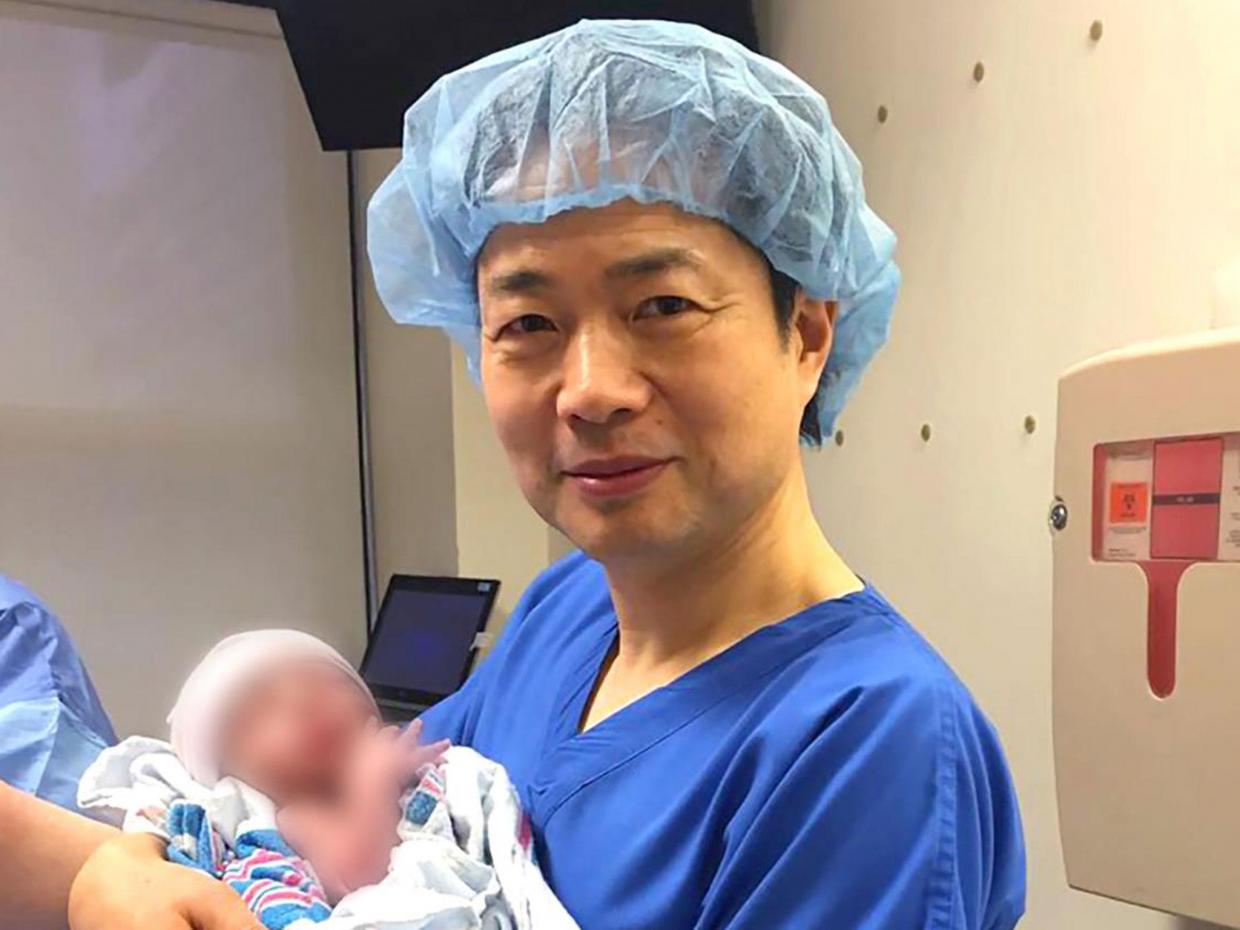

It’s a boy! A five-month-old boy (middle picture) is the first baby to be born using a new technique that incorporates DNA from three people, New Scientist can reveal. “This is great news and a huge deal,” says Dusko Ilic at King’s College London, who wasn’t involved in the work. “It’s revolutionary.”
The controversial technique, which allows parents with rare genetic mutations to have healthy babies, has only been legally approved in the UK. But the birth of the child, whose Jordanian parents were treated by a US-based team in Mexico, should fast-forward progress around the world, say embryologists.
The boy’s mother carries genes for Leigh syndrome, a fatal disorder that affects the developing nervous system. Genes for the disease reside in DNA in the mitochondria, which provide energy for our cells and carry just 37 genes that are passed down to us from our mothers. This is separate from the majority of our DNA, which is housed in each cell’s nucleus.
Around a quarter of her mitochondria have the disease-causing mutation. While she is healthy, Leigh syndrome was responsible for the deaths of her first two children. The couple sought out the help of John Zhang and his team at theNew Hope Fertility Center in New York City.
Zhang has been working on a way to avoid mitochondrial disease using a so-called “three-parent” technique. In theory, there are a few ways of doing this. The method approved in the UK is called pronuclear transfer and involves fertilising both the mother’s egg and a donor egg with the father’s sperm. Before the fertilised eggs start dividing into early-stage embryos, each nucleus is removed. The nucleus from the donor’s fertilised egg is discarded and replaced by that from the mother’s fertilised egg.
But this technique wasn’t appropriate for the couple – as Muslims, they were opposed to the destruction of two embryos. So Zhang took a different approach, called spindle nuclear transfer. He removed the nucleus from one of the mother’s eggs and inserted it into a donor egg that had had its own nucleus removed. The resulting egg – with nuclear DNA from the mother and mitochondrial DNA from a donor – was then fertilised with the father’s sperm.
Zhang’s team used this approach to create five embryos, only one of which developed normally. This embryo was implanted in the mother and the child was born nine months later. “It’s exciting news,” says Bert Smeets at Maastricht University in the Netherlands. The team will describe the findings at the American Society for Reproductive Medicine’s Scientific Congress in Salt Lake City in October.
Neither method has been approved in the US, so Zhang went to Mexico instead, where he says “there are no rules”. He is adamant that he made the right choice. “To save lives is the ethical thing to do,” he says.
The team seems to have taken an ethical approach with their technique, says Sian Harding, who reviewed the ethics of the UK procedure. The team avoided destroying embryos, and used a male embryo, so that the resulting child wouldn’t pass on any inherited mitochondrial DNA. “It’s as good as or better than what we’ll do in the UK,” says Harding.
A remaining concern is safety. Last time embryologists tried to create a baby using DNA from three people was in the 1990s, when they injected mitochondrial DNA from a donor into another woman’s egg, along with sperm from her partner. Some of the babies went on to develop genetic disorders, and the technique was banned. The problem may have arisen from the babies having mitochondria from two sources.
When Zhang and his colleagues tested the boy’s mitochondria, they found that less than 1 per cent carry the mutation. Hopefully, this is too low to cause any problems; generally it is thought to take around 18 per cent of mitochondria to be affected before problems start. “It’s very good,” says Ilic.
Smeets agrees, but cautions that the team should monitor the child to make sure the levels stay low. There’s a chance that faulty mitochondria could be better at replicating, and gradually increase in number, he says. “We need to wait for more births, and to carefully judge them,” says Smeets.
TWO WOMEN, ONE MAN AND A BABY
A Jordanian couple has been trying to start a family for almost 20 years. Ten years after they married, she became pregnant, but it ended in the first of four miscarriages.
In 2005, the couple gave birth to a baby girl. It was then that they discovered the probable cause of their fertility problems: a genetic mutation in the mother’s mitochondria. Their daughter was born with Leigh syndrome, which affects the brain, muscles and nerves of developing infants. Sadly, she died aged six. The couple’s second child had the same disorder, and lived for 8 months.
Using a controversial “three-parent baby” technique (see main story), the boy was born on 6 April 2016. He is showing no signs of disease.
JUROR’S excused for a fortnight as judge considers legal issue in FitzPatrick trial


The former Anglo Irish Bank director Sean FitzPatrick.
JURORS IN THE TRIAL OF FORMER ANGLO IRISH BANK CHAIRMAN SEAN FITZPATRICK HAVE BEEN TOLD THEY WILL NOT BE REQUIRED AGAIN UNTIL MONDAY WEEK.
Judge John Aylmer told the jury there was a legal issue which he had to deal with before the trial can proceed.
“That is not unusual,” he said.
Mr FitzPatrick (68), of Whitshed Road, Greystones, Co Wicklow, is facing 27 separate charges of misleading Anglo’s auditors Ernst & Young.
Before they retired all of the charges were read to them.
Judge Aylmer said when they return counsel for the prosecution Dominic McGinn would open the case.
“That lengthy and daunting indictment will be made clear to you,” he said.
The judge said it was “an awful lot to digest” but it would be explained.
Judge Aylmer reminded the jury not to seek information about the case outside the courtroom.
“For God’s sake don’t be tempted to publish your own views on the matter on social media,” he added.
The trial is expected to last 12 weeks. Mr FitzPatrick has denied the charges.
These include 21 counts of making misleading, false or deceptive statements to the auditors of Anglo Irish Bank, contrary to section 197 of the Companies Act 1990.
The offences allegedly occurred on dates between 2002 and 2007 and carry a maximum five year jail term.
They include five counts alleging Mr FitzPatrick did not disclose to auditors Ernst & Young arrangements temporarily reducing the balance of loans to him or persons connected to him at the end of the financial year. The reductions cited ranged in size from €4.3m to €88.9m.
He also faces six charges of giving false information contrary to section 242 of the Companies Act 1990 on dates between 2002 and 2008.
The offences carry a maximum jail term of three years. All counts relate to Mr FitzPatrick allegedly producing financial statements giving a false figure for the aggregate value of loans to directors of Anglo.
Half of Pluto’s heart contains liquid water; NASA finds miracle on the dwarf planet


NASA MADE AN INTERESTING DISCOVERY ABOUT PLUTO AND ANNOUNCED IT HOURS BEFORE THE PRESS BRIEF ABOUT JUPITER’S EUROPA. EVEN SO FAR FROM THE SUN, THE DWARF PLANET HAS LIQUID WATER.
Early last year, Pluto’s “heart” was discovered and it made the world coo at the dwarf planet. Though removed under the classification of what counts as a “real” planet, the dwarf planet continues to astound as scientists find that even so far away from the heat of the sun, Pluto actually has liquid water.
Due to the distance of Pluto from the sun, it should only contain layers upon layers of ice. But last year, when the National Aeronautics and Space Administration’s (NASA) New Horizon spacecraft flew past it, scientists began to suspect that there might be a subsurface ocean.
Since the discovery of Pluto’s heart, a team led by Brandon Johnson, an assistant professor in Brown University, focused on getting to know the Sputnik Planum or the western lobe of the heart. The team believed that the love was caused by an asteroid impact. But the interesting and more pressing question arose when the Planum demonstrated positive mass instead of the opposite.
“An impact crater is basically a hole in the ground. You’re taking a bunch of material and blasting it out, so you expect it to have negative mass anomaly, but that’s not what we see with Sputnik Planum,” said Johnson, as reported by Express.
Pluto once again defies expectations and instead shows that the crate has positive mass as a result of the meteor which in turn caused the subsurface ocean to even out across the dwarf planet. Because it was so astounding, natural curiosity took over and the scientists wanted to “run computer models of the impact to see if this is something that would actually happen.”
The results of their tests yielded and stated that the production of a positive mass anomaly is sensitive to how thick, how salty, and how dense the water is. Thus, the ocean layer of at least 100 kilometers “has to be there.”
Though the thermal models of Pluto’s structure do suggest the existence of a liquid ocean, scientists are still on the lookout of important information that can explain how it is possible in the first place. Once again, Pluto astounds the scientific community, and we wouldn’t have it any other way.


