Pages

Showing posts with label Childcare. Show all posts

Wednesday, September 28, 2016

Donie's Ireland daily news BLOG update

Michael Noonan outlines Budget tax cuts to Cabinet

USC REDUCTIONS AND INHERITANCE TAX CHANGES PLANNED

Image result for Michael Noonan outlines Budget tax cuts to Cabinet   Image result for With Ireland's Budget 2017 two weeks away

MINISTER FOR FINANCE MICHAEL NOONAN: THE GOVERNMENT HAS ABOUT €1 BILLION TO SPEND IN THE BUDGET, SPLIT ON A 2:1 BASIS BETWEEN SPENDING INCREASES AND TAX CUTS.

A range of tax cuts – including reductions in the USC and changes to inheritance tax – have been outlined to Cabinet by Minister for Finance Michael Noonan.
With Budget 2017 two weeks away, Mr Noonan outlined a rough outline of the plans to his ministerial colleagues at Cabinet on Tuesday.
The Government has about €1 billion to spend in the Budget, split on a 2:1 basis between spending increases and tax cuts.
Mr Noonan told Ministers that he is likely to reduce the lowest two USC rates by half a point each – from 1 per cent and 3 per cent to 0.5 per cent and 2.5 per cent respectively.
He will also raise the threshold at which people enter the lowest USC rate, effectively taking more people out of the USC net. The USC entry point is currently set at €13,000.
The Minister will also further increase the threshold at which inheritance tax for gifts between parents and children will be levied.
In his last budget, Mr Noonan began a process of gradually increasing the inheritance tax thresholds – by raising it from €225,000 to €280,000.
It is understood that Budget 2017, which will be presented on October 11th, will raise it again by as much as €40,000, as part of a multi-year process to eventually raise it to €500,000.
However, while the Government is planning to raise the threshold, it is not proposing to cut the 33 per cent tax rate applied to bequests over the threshold. This rate increased in 2009 from 20 per cent.
A tax credit for self-employed people announced in last year’s budget will also be extended.
The “earned income tax credit” worth up €550 was announced last year and it is likely to be doubled in a fortnight’s time.
Mr Noonan also told his colleagues he intended to help first time house buyers, but did not give any specifics, and said he will provide further support for start up companies.

Children’s Minister Zappone and Fine Gael at odds over childcare proposals

Image result for Children's Minister Zappone and Fine Gael at odds over childcare proposals   Image result for Children's Minister Zappone and Government at odds over childcare proposals

PARTY MEMBERS UNHAPPY MINISTER FOR CHILDREN’S SCHEME NEGLECTS ‘SQUEEZED MIDDLE’

Minister for Children Katherine Zappone had put forward a plan for a subsidised childcare scheme initially aimed at lower income families.
The Minister tasked with drafting the Government’s childcare plan was kept in the dark as alternatives to her proposed scheme, which was criticised for neglecting middle-income earners, were mooted in budget talks.
Minister for Children Katherine Zappone had put forward a plan for a subsidised childcare scheme initially aimed at lower income families.
However, a number of Fine Gael members were unhappy as the proposal did not help the ‘squeezed middle’ – those earning between €32,800 and €70,000 – and wanted the subsidies to be given to parents across all income groups.
Alternative options to the Minister’s proposals were discussed elsewhere in Government – unbeknown to her – as recently as late last week, when concerns about the plan were being raised.
The Minister’s scheme, as outlined to a Cabinet sub-committee, suggested the initial steps would focus on families with a combined parental income of €47,000 or less, with the income thresholds rising over a number of years.
One of the alternative options discussed was rolling out subsidised childcare over a number of years based on the age of the child. For example, in the first year it would cover children aged up to one before being broadened over time to cover those aged up to three, when they can begin to avail of free pre-school care.
Sources said such a proposal would have income limits, meaning it would not apply to the State’s wealthiest people.
Such a proposal is likely to be more favourable to Fine Gael backbenchers but a spokesman for Ms Zappone last night stressed it had not been discussed with her or the Department of Children.
The spokesman also said Ms Zappone fully intended to stick to her plan.
A spokesman for Ms Zappone said: “These anonymous sources in no way reflect the content of the ongoing budget negotiations.”
While Taoiseach Enda Kenny last week said Ms Zappone had been asked to restructure elements of the scheme, he yesterday indicated it would focus on low incomes and “expand as the economy improves and more money becomes available”.
Meanwhile, Minister for Finance Michael Noonan outlined a range of likely tax cuts at yesterday’s Cabinet meeting. The Government has around €1 billion to spend in the budget, which Ministers have said will be split on a 2:1 basis between spending increases and tax cuts.
Mr Noonan told his colleagues he was likely to reduce the lowest two USC rates by half a point each – from 1 per cent and 3 per cent to 0.5 per cent and 2.5 per cent respectively.
Threshold
He will also raise the €13,000 threshold at which people enter the lowest USC rate, effectively taking more out of the USC net.
The threshold for inheritance tax on gifts between parents and children is also expected to be raised from €280,000 to €320,000.
A tax credit for self-employed people will also be extended. An “earned income tax credit” worth up to €550 was announced last year and it is likely to be doubled in a fortnight’s time. Mr Noonan also told his colleagues he intended to help first-time house buyers but did not give any specifics, and said he would give further support to start-up firms.

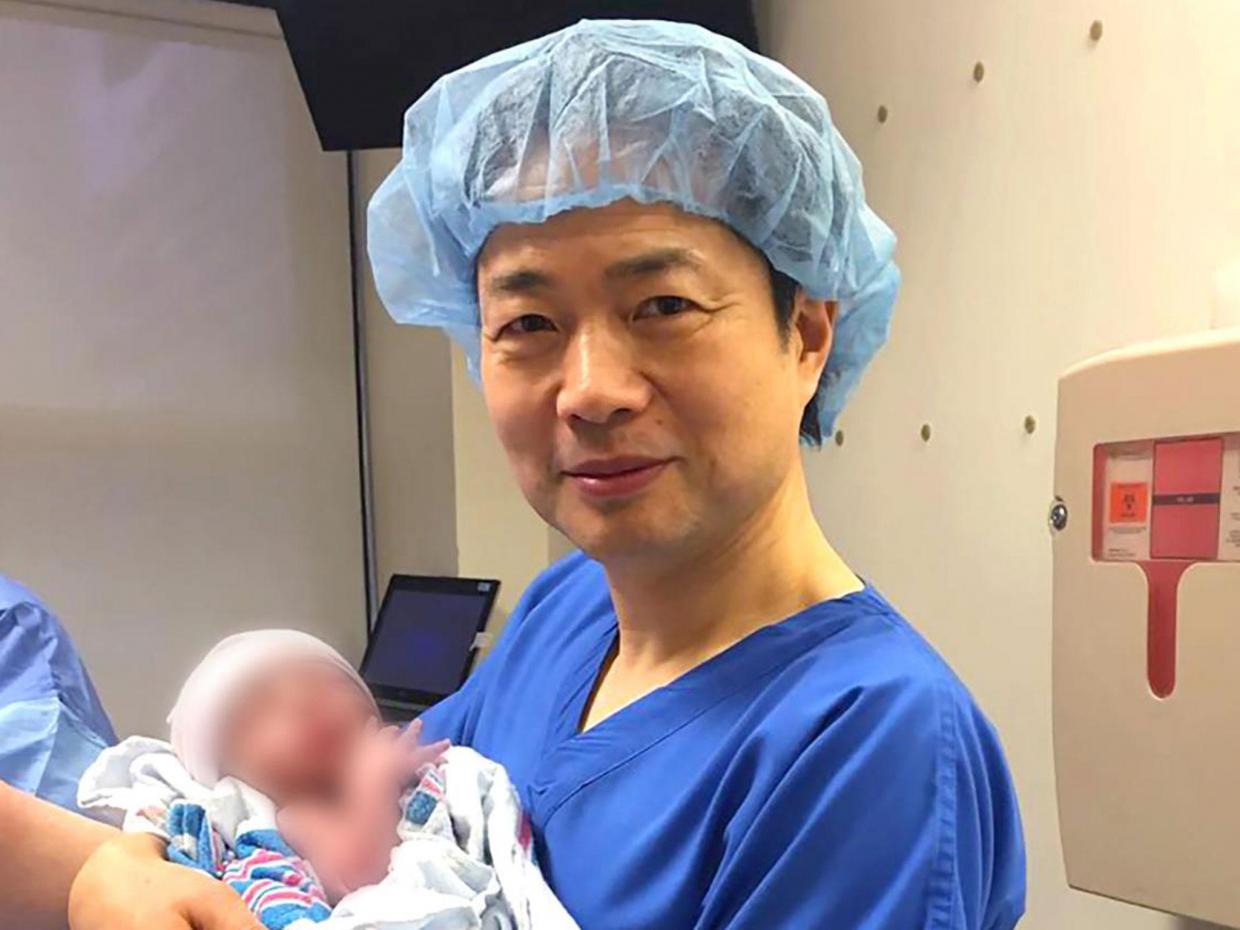
World’s first baby born with new 3 parent technique.  “It’s revolutionary.”

Image result for World’s first baby born with new  the 3 parent technique Image result for World’s first baby born with new  the 3 parent technique Image result for World’s first baby born with new  the 3 parent technique

It’s a boy! A five-month-old boy (middle picture) is the first baby to be born using a new technique that incorporates DNA from three people, New Scientist can reveal. “This is great news and a huge deal,” says Dusko Ilic at King’s College London, who wasn’t involved in the work. “It’s revolutionary.”

The controversial technique, which allows parents with rare genetic mutations to have healthy babies, has only been legally approved in the UK. But the birth of the child, whose Jordanian parents were treated by a US-based team in Mexico, should fast-forward progress around the world, say embryologists.
The boy’s mother carries genes for Leigh syndrome, a fatal disorder that affects the developing nervous system. Genes for the disease reside in DNA in the mitochondria, which provide energy for our cells and carry just 37 genes that are passed down to us from our mothers. This is separate from the majority of our DNA, which is housed in each cell’s nucleus.
Around a quarter of her mitochondria have the disease-causing mutation. While she is healthy, Leigh syndrome was responsible for the deaths of her first two children. The couple sought out the help of John Zhang and his team at theNew Hope Fertility Center in New York City.
Zhang has been working on a way to avoid mitochondrial disease using a so-called “three-parent” technique. In theory, there are a few ways of doing this. The method approved in the UK is called pronuclear transfer and involves fertilising both the mother’s egg and a donor egg with the father’s sperm. Before the fertilised eggs start dividing into early-stage embryos, each nucleus is removed. The nucleus from the donor’s fertilised egg is discarded and replaced by that from the mother’s fertilised egg.
But this technique wasn’t appropriate for the couple – as Muslims, they were opposed to the destruction of two embryos. So Zhang took a different approach, called spindle nuclear transfer. He removed the nucleus from one of the mother’s eggs and inserted it into a donor egg that had had its own nucleus removed. The resulting egg – with nuclear DNA from the mother and mitochondrial DNA from a donor – was then fertilised with the father’s sperm.
Zhang’s team used this approach to create five embryos, only one of which developed normally. This embryo was implanted in the mother and the child was born nine months later. “It’s exciting news,” says Bert Smeets at Maastricht University in the Netherlands. The team will describe the findings at the American Society for Reproductive Medicine’s Scientific Congress in Salt Lake City in October.
Neither method has been approved in the US, so Zhang went to Mexico instead, where he says “there are no rules”. He is adamant that he made the right choice. “To save lives is the ethical thing to do,” he says.
The team seems to have taken an ethical approach with their technique, says Sian Harding, who reviewed the ethics of the UK procedure. The team avoided destroying embryos, and used a male embryo, so that the resulting child wouldn’t pass on any inherited mitochondrial DNA. “It’s as good as or better than what we’ll do in the UK,” says Harding.
A remaining concern is safety. Last time embryologists tried to create a baby using DNA from three people was in the 1990s, when they injected mitochondrial DNA from a donor into another woman’s egg, along with sperm from her partner. Some of the babies went on to develop genetic disorders, and the technique was banned. The problem may have arisen from the babies having mitochondria from two sources.
When Zhang and his colleagues tested the boy’s mitochondria, they found that less than 1 per cent carry the mutation. Hopefully, this is too low to cause any problems; generally it is thought to take around 18 per cent of mitochondria to be affected before problems start. “It’s very good,” says Ilic.
Smeets agrees, but cautions that the team should monitor the child to make sure the levels stay low. There’s a chance that faulty mitochondria could be better at replicating, and gradually increase in number, he says. “We need to wait for more births, and to carefully judge them,” says Smeets.

TWO WOMEN, ONE MAN AND A BABY

A Jordanian couple has been trying to start a family for almost 20 years. Ten years after they married, she became pregnant, but it ended in the first of four miscarriages.
In 2005, the couple gave birth to a baby girl. It was then that they discovered the probable cause of their fertility problems: a genetic mutation in the mother’s mitochondria. Their daughter was born with Leigh syndrome, which affects the brain, muscles and nerves of developing infants. Sadly, she died aged six. The couple’s second child had the same disorder, and lived for 8 months.
Using a controversial “three-parent baby” technique (see main story), the boy was born on 6 April 2016. He is showing no signs of disease.

JUROR’S excused for a fortnight as judge considers legal issue in FitzPatrick trial

Image result for JUROR'S let go for a fortnight as judge considers legal issue in FitzPatrick trial  Image result for Judge John Aylmer
The former Anglo Irish Bank director Sean FitzPatrick.

JURORS IN THE TRIAL OF FORMER ANGLO IRISH BANK CHAIRMAN SEAN FITZPATRICK HAVE BEEN TOLD THEY WILL NOT BE REQUIRED AGAIN UNTIL MONDAY WEEK.

Judge John Aylmer told the jury there was a legal issue which he had to deal with before the trial can proceed.
“That is not unusual,” he said.
Mr FitzPatrick (68), of Whitshed Road, Greystones, Co Wicklow, is facing 27 separate charges of misleading Anglo’s auditors Ernst & Young.
Before they retired all of the charges were read to them.
Judge Aylmer said when they return counsel for the prosecution Dominic McGinn would open the case.
“That lengthy and daunting indictment will be made clear to you,” he said.
The judge said it was “an awful lot to digest” but it would be explained.
Judge Aylmer reminded the jury not to seek information about the case outside the courtroom.
“For God’s sake don’t be tempted to publish your own views on the matter on social media,” he added.
The trial is expected to last 12 weeks. Mr FitzPatrick has denied the charges.
These include 21 counts of making misleading, false or deceptive statements to the auditors of Anglo Irish Bank, contrary to section 197 of the Companies Act 1990.
The offences allegedly occurred on dates between 2002 and 2007 and carry a maximum five year jail term.
They include five counts alleging Mr FitzPatrick did not disclose to auditors Ernst & Young arrangements temporarily reducing the balance of loans to him or persons connected to him at the end of the financial year. The reductions cited ranged in size from €4.3m to €88.9m.
He also faces six charges of giving false information contrary to section 242 of the Companies Act 1990 on dates between 2002 and 2008.
The offences carry a maximum jail term of three years. All counts relate to Mr FitzPatrick allegedly producing financial statements giving a false figure for the aggregate value of loans to directors of Anglo.

Half of Pluto’s heart contains liquid water; NASA finds miracle on the dwarf planet

Image result for Half of Pluto’s heart contains liquid water; NASA finds miracle on the dwarf planet    Image result for Half of Pluto’s heart contains liquid water; NASA finds miracle on the dwarf planet

NASA MADE AN INTERESTING DISCOVERY ABOUT PLUTO AND ANNOUNCED IT HOURS BEFORE THE PRESS BRIEF ABOUT JUPITER’S EUROPA. EVEN SO FAR FROM THE SUN, THE DWARF PLANET HAS LIQUID WATER.

Early last year, Pluto’s “heart” was discovered and it made the world coo at the dwarf planet. Though removed under the classification of what counts as a “real” planet, the dwarf planet continues to astound as scientists find that even so far away from the heat of the sun, Pluto actually has liquid water.
Due to the distance of Pluto from the sun, it should only contain layers upon layers of ice. But last year, when the National Aeronautics and Space Administration’s (NASA) New Horizon spacecraft flew past it, scientists began to suspect that there might be a subsurface ocean.
Since the discovery of Pluto’s heart, a team led by Brandon Johnson, an assistant professor in Brown University, focused on getting to know the Sputnik Planum or the western lobe of the heart. The team believed that the love was caused by an asteroid impact. But the interesting and more pressing question arose when the Planum demonstrated positive mass instead of the opposite.
“An impact crater is basically a hole in the ground. You’re taking a bunch of material and blasting it out, so you expect it to have negative mass anomaly, but that’s not what we see with Sputnik Planum,” said Johnson, as reported by Express.
Pluto once again defies expectations and instead shows that the crate has positive mass as a result of the meteor which in turn caused the subsurface ocean to even out across the dwarf planet. Because it was so astounding, natural curiosity took over and the scientists wanted to “run computer models of the impact to see if this is something that would actually happen.”
The results of their tests yielded and stated that the production of a positive mass anomaly is sensitive to how thick, how salty, and how dense the water is. Thus, the ocean layer of at least 100 kilometers “has to be there.”
Though the thermal models of Pluto’s structure do suggest the existence of a liquid ocean, scientists are still on the lookout of important information that can explain how it is possible in the first place. Once again, Pluto astounds the scientific community, and we wouldn’t have it any other way.  

Friday, December 4, 2015

White Paper to address concerns over Ireland’s wind power

Minister Alex White denies ministerial rift with Alan Kelly over wind turbine regulations


Minister for Energy Alex White warned Opposition TDs they could not reduce energy policy to the legitimate concerns that local communities have on the issue

The Government’s White Paper on energy will be published next week and will address “tension” between energy policy and the “genuine concern” local communities have about wind turbines, according to the Minister for Energy.
Alex White also warned Opposition TDs they could not reduce energy policy to the legitimate concerns that local communities have.
They had to match that to “what we need to do as a country to have a renewable energy policy that meets the challenges of the future”.
Mr White has denied a ministerial rift between himself and Minister for the Environment Alan Kelly over draft wind energy guidelines, published two years ago but still not decided on. A final decision had been expected in 2014.
The guidelines deal with turbine size, their shadow flicker, noise levels and the setback distance from dwellings. Planning applications for wind turbines are currently operating on guidelines from 2006.
Fianna Fáil’s Robert Troy had asked if talks between himself and Mr Kelly had broken down.
He said Mr Kelly favoured a distance of between 600m and 1.5km from dwellings but that Mr White was on record in disagreeing with long distances from housing because it would wipe out onshore wind energy in Ireland.
Mr White insisted: “Nothing has broken down between Ministers in relation to it. The departments are continuing to consider what would be the best set of guidelines. But we have guidelines in place at the moment.”
The Minister said there was a good argument to make the guidelines statutory with a very strong case for changing them to deal with the issue of noise and shadow flicker.
However, he said “the issue of having a setback distance that’s unconnected to the issue of noise or shadow flicker is more problematic in my view and I’ve been very honest about that.
“If we put in place a setback distance of the kind some people are advocating, it would wipe out onshore wind in this country as a renewable.”
International best practice
Mr Troy said Fianna Fáil had published its alternative policy and had visitedDenmark to consult the experts in a country that is held up for international best practice.
He said Denmark had moved away from onshore to offshore wind energy. His party was committed to meeting the European Union targets but the wind issue was one of huge concern.
“It might not be a big issue in the centre of Dublin but it is in my constituency of Longford-Westmeath,” he said in reference to Mr White’s Dublin South constituency.
Confirming the White Paper would be published next week, Mr White said a central element would be addressing the genuine tension between what needed to be done with renewable energy and the genuine concerns of citizens.
New draft provisions to regulate wind energy were published two years ago, which included noise limits of 40 decibels and a setback distance of 500m.

Over 3,500 HSE public patients waiting three months for colonoscopy

Irish Cancer Society warns disease will have advanced in some due to delay in diagnosis


More than 3,500 public patients have been waiting at least three months for a colonoscopy. Private patients can access the test within 12 days.

Some of the 3,510 patients currently waiting more than three months for a colonoscopy will have a cancer that may have advanced because diagnosis was delayed, the Irish Cancer Society has warned.
The number of patients waiting that long for the test peaked in October at 4,235 before dropping back to 3,510 by the end of November. This is an increase of 954 people on the same time last year.
The society said that colonoscopy waiting times are unacceptable and highlight the health gap between those who can pay and those who cannot. Private patients can access the test within 12 days.
The consequence of a person waiting more than three months for a colonoscopy could be that if they have bowel cancer, it may be diagnosed at a later stage. This means that there may be fewer treatment options available than if it had been caught earlier and the treatment prescribed could be more invasive. The survival rates also decrease the later the stage of the cancer at diagnosis.
“The Irish Cancer Society is deeply concerned by the large number of people waiting longer than three months for a colonoscopy,” the society said. “The HSE is a long way off meeting its target of performing 100 per cent of colonoscopies within 13 weeks.
“Currently, 41 per cent of patients are waiting longer than three months for the cancer test. The tragic reality is that we can expect some colorectal [bowel] cancers to be diagnosed when the patients on waiting lists eventually receive their colonoscopy.”
Investment
The organisation’s head of advocacy Kathleen O’Meara added that long-term solutions were required to solve the ongoing issues and called for investment to ensure enough radiographers and gastroenterologists were working in Irish hospitals.
“We also want GPs to have clear guidelines for when they should refer a patient for a colonoscopy and when another investigation is better suited,” she said.
“Additionally, we are hopeful that hospitals working within the same hospital group will co-ordinate their colonoscopy workloads so that a situation where endoscopy suites in one hospital are under-utilised while a hospital in the same group is overburdened, is avoided.”
The November waiting list figures show an overall drop of 725 patients in the past month. “It is certainly a move in the right direction but given no one should be waiting more than 13 weeks and the fact that there are still 3,510 public patients waiting more than this time, the drop needs to continue and the underlying problem solved,” Ms O’Meara said.
Separately, research from the Lancet Oncology shows the price of new cancer drugs varies by 28 per cent to 388 per cent between high-income countries in Europe and Oceania .
The study reveals that overall the UK and Mediterranean countries such as Greece, Spain, and Portugal pay the lowest average unit manufacturer prices for a group of 31 originator cancer drugs (new drugs under patent), whereas Sweden, Switzerland, and Germany pay the highest prices.

The trial of mother for cruelty to eight children collapses

Jury told technical difficulties were to blame as video link evidence had not been recorded


The trial of a mother who faces charges of cruelty and neglect towards eight of her children (Not the above family) over a six-year period has collapsed due to technical difficulties at Galway courthouse.

It was discovered late on Wednesday evening that a live video link facility, which was used to allow a child give evidence from another room in the courthouse that afternoon, was not recording her evidence to the trial.
Judge Karen O’Connor explained to the jury on Thursday morning that, by law, evidence heard by video-link “shall” be recorded, but unfortunately, in this case, she said, this did not occur in relation to the girl’s evidence on Wednesday afternoon.
Judge O’Connor said she had no alternative but to discharge the jury “with regret”.
She told jurors a new trial will begin with a new jury in due course.
Judge O’Connor then listed the case for trial on January 12th.
The woman, who cannot be named in order to protect the identity of the children, pleaded not guilty to 44 charges before Galway Circuit Criminal Court.
The charges include child cruelty by wilfully assaulting, ill-treating, neglecting, or abandoning the children, or causing or allowing the children to be assaulted, ill-treated, neglected, or abandoned, in a manner likely to cause unnecessary suffering or injury to their health or well-being.
The offences, contrary to section 246 (1) and (2) of the Children Act 2001, are said to have occurred on dates between September 1st, 2006, and May 12th, 2011.
Shane Costelloe SC, prosecuting, told the jury on Wednesday some of the children would be giving their evidence for the prosecution by either live videolink from a separate room in the courthouse or, in the case of the younger ones, by previously taped interviews with specially-trained Garda interviewers.
Physical abuse
Mr Costelloe said it would be the prosecution case that after the children were taken into care in May 2011, and were placed with foster parents, they began to tell of how their mother physically abused them over the years.
They recounted stories of how she used to assault them with wooden spoons, a leather belt and a bamboo back-scratcher, and hit their heads off the furniture. She would also pour washing-up liquid down their throats if they said a bad word.
Two of the boys recalled their mother threw them out of her car one day because they were messing and had spilled icecream in the back seat. They said she then drove the car at them and they had to jump up on a hedge to avoid being hit.
The eldest child gave evidence by videolink telling the court “she was not a proper mother”.
“She abandoned her children,” the girl said. The girl said that when her mother started drinking sessions in the house it would always end in violence for the children. “There would be violence towards me too. My mother came home from a concert once very drunk … her partner told her I said a bad word and my mother dragged me off the couch by my hair. She dragged me into the kitchen and put my face down into the sink.
“She started to choke me and she began filling the sink with water to drown me – just because of one word,” the girl said.
She recalled her mother leaving the home to go drinking around the time of her 14th birthday. She said the mother returned home the next day and slapped her across the face while saying “that is your birthday present”.

Urgent need now to educate Irish youth as HIV cases skyrocket


Deirdre Seery (above left), Cork Sexual Health Clinic, said a new generation of young people had not been targeted by safety campaigns.

A marked rise in the number of people being diagnosed with HIV has prompted calls for new information campaigns and a nationwide introduction of free test kits.

So far this year, there have been 427 new cases of HIV, compared to 342 this time last year, figures from the HSE’s Health Protection Surveillance Centre show.
The statistics were discussed yesterday as part of a meeting of the Oireachtas health committee, held to mark World Aids Day.
“The age group of people most at risk of HIV is getting younger,” said Tiernan Brady of the Gay and Lesbian Equality Network. “There is a real and urgent need to educate a new generation of young people, and young gay and bisexual men in particular, about HIV and the importance of knowing your HIV status.”
r Brady tsaid that, since 2005, the number of gay men diagnosed with HIV had increased by 210%.
“It is clear from the latest figures that HIV remains an issue of critical concern for gay and bisexual men,” he said. “The figures for 2015 show that gay and bisexual men are the group most likely to acquire HIV.”
CEO of the Cork Sexual Health Clinic, Deirdre Seery, called for a rise in rapid, free, community-based tests and new information campaigns.
“There are new, younger generations of people becoming HIV positive who would not have been exposed to the old safer sex and safer drug use campaigns,” she said.
Also yesterday, Health Minister Leo Varadkar unveiled HIV Ireland, formerly the Dublin Aids Alliance.
“This rebranding is a positive step which can only build on all the good work the organisation has performed so far,” he said, adding the Government would pilot a rapid HIV test service.
“Early detection allows treatment to start early, it minimises the long-term health implications, and reduces potential new infections,” he said.

Taller or bigger people might live shorter lives, according to scientific research


Bad news for big people – you might have a shorter lifespan than your smaller counterparts, research suggests.

A new study on wild house sparrows showed how changes in DNA that are linked to ageing and lifespan take place as body size gets bigger.
The research centred on telomeres, a special DNA structure which all animals, including humans, have at the ends of their chromosomes and are said to function like “the protective plastic caps at the end of shoelaces”.
Who needs such a good view anyway?
Growing a bigger body means cells divide more and part of our telomeres are eroded, making cells and tissues function less well, researchers say. So, you may be able to reach the milk at the back of the top shelf at the supermarket, tall people, but your DNA isn’t happy about it.
The study, conducted jointly by the University of Glasgow’s Institute of Biodiversity, Animal Health & Comparative Medicine and the Centre of Biodiversity Dynamics at the Norwegian University of Science and Technology, found that skeletally bigger house sparrows had shorter telomeres.
Pat Monaghan, regius professor of zoology at the University of Glasgow, who supervised telomere analysis, said: “The reason why the bigger individuals have shorter telomeres might also be related to increased DNA damage due to growing faster. Being big can have advantages, of course, but this study shows that it can also have costs.”
Those tiny birds have nothing to worry about, really (Tomas Belka/birdphoto.cz/Univers)
Thor Harald Ringsby, associate professor in population ecology at the Norwegian University of Science and Technology, said: “The results from this study are very exciting and broad-reaching. It is especially interesting that we obtained these results in a natural population.
“The reduction in telomere size that followed the increase in body size suggests one important mechanism that limits body size evolution in wild animal populations.”
The findings are published in the Proceedings of the Royal Society B journal. The study was funded by the European Research Council and the Research Council of Norway.  

Monday, June 29, 2015

Donie's Ireland daily news BLOG update

Minister Charles Flanagan confirms three Irish deaths in Tunisia attacks


Relatives of Co Westmeath couple Laurence and Martina Hayes contacted by officials.

A German tourist recounts the moment a gunman began firing on beachgoers in an attack that killed at least 38 people.
Irish tourists intending to travel to Tunisia over the coming weeks should “exercise extreme caution”, the Minister for Foreign Affairs has said.
Charlie Flanagan issued the warning has he confirmed that three Irish citizens died in Friday’s terror attack. Mr Flanagan said he had been in contact with their families over recent days.
Laurence and Martina Hayes, a couple in their 50s from Athlone, Co Westmeath and Lorna Carty from Robinstown, Co Meath, were killed in the attack on Sousse.
The Minister said he did not believe any further Irish people were injured in the incident and he urged those planning to travel to the region to be “extremely vigilant and extreme caution”.
He told RTE’s This Week programme: “I would urge those there to continue to liaise with tour operators on the ground and with the consular assistance from Foreign Affairs.
“My travel advice for Tunisia is to exercise extreme caution. Anyone wishing to visit the region, anyone with holiday plans over the next few days or weeks I wish to acknowledge the Tunisian authorities have declared the incident to be over but nevertheless I would urge Irish citizens heading there and those in Tunisia to remain extremely vigilant, to follow instructions given to them by the police, the tour operators, the hotels.”
Mr Flanagan said he was not in the “business of imposing travel bans” but his advice for anyone travelling there was to exercise “extreme caution”.
Relatives of Laurence and Martina Hayes have been contacted by Irish officials, a Department of Foreign Affairs spokeswoman said. The department has set up an information line for those affected by the attack: 00353 1 408 2000.
Westmeath Gaelic Athletic Association (GAA) has tweeted a message of condolence to the family. “Sincere sympathy to the Hayes family Athlone who suffered their tragic losses in the terror shooting in Tunisia,” it said.
The Irish ambassador accredited to Tunisia, David Cooney, is working with Irish citizens still in the country.
Ms Carty, a nurse and mother of two adult children, had travelled to Tunisia with her husband Declan, a well-known dairy farmer.
The couple received the Tunisian holiday as a gift from a relative as Mr Carty was recovering from heart surgery.
Their daughter Hazel (18) had just completed her Leaving Cert and is believed to have been notified of her mother’s death while on holiday in Turkey.
Their son Simon (21), a science student at UCD, was at home in Robinstown. The authorities are gradually identifying those killed in the attack.
One of the British victims has been named as Adrian Evans, who worked for Sandwell Council in the WestMidlands. Joel Richards, reported to be Mr Evans’s nephew, was also named as a victim.
It is understood Mr Richard’s was a student at the University of Worcester.
Birmingham-based Gaelic football club James Connolly’s GFC also paid tribute to Mr Richards, tweeting that the club was “devastated” to learn of his death.
They said he was an “exceptionally-talented footballer” who represented both club and county “with conviction” on numerous occasions. Mr Richards’s 16-year-old brother Owen is reported to have survived the attack.
The attack has seen thousands of tourists rush to leave Tunisia. An Aer Lingus flight from Monastir arrived in Dublin last night and other Irish holidaymakers in the country are expected to cut short their holiday and return home. It is unclear how many Irish nationals were in Tunisia at the time of the attack.
Sunway managing director Tanya Airey has offered her “sincere condolences” to all Irish nationals affected by the attack. The Irish tour operator provides holidays to Tunisia.
The company flies weekly on Friday’s to Tunisia. She said a number of Irish Sunway holidaymakers had decided over the weekend to remain in Tunisia.
The tour operator is expected to make a call this week on whether to allow those booked to depart on Friday to travel to Tunisia.
In a tweet she noted that the department advises extreme caution but has not issued a “do not travel” notice.
Irish citizens returning on Friday night told RTÉ of the chaos during the attack, describing a large explosion and gunfire. Many praised the staff for the assistance they gave guests.
Six nationalities are among the 39 dead.
They are thought to have been killed by a 23-year-old Tunisian aviation student Seifeddine Rezgui who disguised himself as a tourist and began firing at holidaymakers on a beach using a Kalashnikov hidden in a beach umbrella. Islamic State has claimed responsibility for the attack.
Fifteen of the dead are from Britain.
Confirming the figure, British foreign minister Tobias Ellwood said the Sousse atrocity was “the most significant terrorist attack on British people” since July 7th, 2005, when 52 people were killed.
Speaking at the Foreign Office, Mr Ellwood said: “Sadly, I can confirm that at least 15 British nationals were killed in yesterday’s atrocity but I should stress that the number may well rise as several more have been seriously injured in this horrific attack.”

Tánaiste Burton concerned over universal health insurance cost in Ireland


Joan Burton criticises some of the models put forward for the scheme as very expensive.

Joan Burton: The Labour Party is fully committed to UHI, though not at any cost.
Tánaiste Joan Burton has criticised some of the models put forward for universal health insurance (UHI) as potentially very expensive.
Ms Burton was speaking as the drift in Government over the roll-out of UHI continued to increase.
She said the Labour Party is fully committed to the plan, though not at any cost.
“I have said we want a better service, but in the context of health insurance we want an affordable health insurance system,” M/s Burton said.
“Some of the models that have been put forward have suggested very high charges potentially for individuals and families. Some of the figures being spoken about would concern me.
“We need to look for a model that is efficient, effective and good value for money.”
UHI is a major commitment in the Programme for Government, but there has been no progress on bringing forward the scheme.
Both M/s Burton and Minister for Health Leo Varadkar have separately cast doubts over the roll-out.
Mr Varadkar said a “big bang approach” was not the right way forward and small steps needed to be taken.
Reilly cornerstone
Within weeks of entering office, Mr Varadkar began playing down introducing the scheme in its current form. It was one of the cornerstones of his predecessor James Reilly.
Taoiseach Enda Kenny has insisted he wants the model introduced in full.
Asked if he was watering down previous proposals, Mr Varadkar said: “No, we are modifying them and making them achievable and setting out realistic timeframes.
“One of the things I wanted to do when I took over in health,” he added, “was to start making concrete steps to universal health care, and we see that now with under 6s.”
Private patients
UHI would seek to eliminate Ireland’s two-tier health system by effectively making everyone a private patient. It is officially the Government’s healthcare reform blueprint.
Under a White Paper published by Dr Reilly, the system was to involve a multipayer model of competing private health insurers and a State- owned VHI.
The paper proposed that everyone would be covered for standard services, including GP and hospital treatment.
Mr Varadkar slowed down the introduction of UHI when he took office last summer.
Speaking yesterday, the Minister said making the change in small steps was the best way forward.
“There is a total commitment from both parties that we want to achieve universal health care, a single-tier health service based on need and not on ability to pay. But how we get there needs to be mapped out,” Mr Varadkar said.
“If we learned anything from the last couple of years, even from the difficulties we had getting the over-sixes and the over-70s over the line, it has been quite how difficult making change in health service can be. But we are still committed doing it.”

The Tánaiste Joan Burton is to enforce lone parent changes despite childcare fears


The Tánaiste Joan Burton has insisted she will press ahead with changes to the lone parent allowance despite accepting that childcare issues remain a serious problem in Ireland.

From next Thursday parents of children aged seven and older will no longer be entitled to the one-parent family payment.
Ms Burton defended the changes which come into force for over 30,000 families and insisted the move was not a cut.
The changes have been met by opposition from a number of groups including One Family which said that it would not work without childcare and after school services.
Ms Burton said she had set up a “significant number of supports” for families but acknowledged childcare remains a serious issue.
“I also want to stress as well that really I have put into place a seven-year transition period and one of the reasons I did that is I would be very anxious to see childcare in general improved in this country.
“I’m conscious as a society and a country we’ve a long way to go to get the kind of childcare system that I would like to see,” she told the Irish Independent.
The Labour leader said funding had been provided to the Department of Children for the provision of after school care services. She added that the changes would result in more single parents returning to work.
However, One Family said it has seen a surge in calls from worried parents who have worked out that they are set to lose between €30 and €140 under the plans.
Speaking about the claims from One Family, Ms Burton said her department would look at these cases if given the details.
“But the key thing we’re doing is that over the next period we will be calling in and inviting in to their local Intreo office any lone parent who has queries, we’ll work with them, we’ll work with their employers, if they give us the permission to do that, to seek to help them actually get back to work,” she added.
Meanwhile Ms Burton said the country could face “significant risks” if the Labour Party does not have a strong presence in the next government.
While Labour is facing a huge challenge at the next election, she said she remained optimistic about the return of sitting Labour TDs. Ms Burton said it was difficult to envisage how the Government would have operated fairly in terms of the difficult decisions that had to be made without the presence of Labour.
“It is the Labour Party which has held the line in terms of having fairness, in terms of protecting the basic rates of social welfare, in terms of insisting, given our demographics, on investment in new schools, in terms of addressing other deficiencies in our infrastructure,” she said.
She said it would be difficult to look at a post-election government without a strong Labour presence warning there might be “significant risks not just to economic growth but also to fairness in society and to addressing key social problems” without the party.
She refused to accept the party was facing a significant drop in TDs saying: “I’m an optimist and I believe that we have a very good story to tell”.

10 top tips to ensure your farm tyres are in tip-top shape before you go harvesting

  
Leaving machinery checks until the last minute before doing a job on the farm can result in unexpected machine downtime, according to Gordon Brookes, Michelin’s Technical Manager.
“Time, weather and crop constraints make it essential that machinery is ready for use,” Brookes says.
“The worst possible time to suffer tyre-related downtime is during the busy harvest period, so it really pays to ensure your machines are set up perfectly and ready to roll in advance.”
  1. Check your combine’s tyres for damage
During previous harvests tyres may have suffered accidental damage, leaving them with bulges, cuts or tears.
Checking the tread area and sidewalls right down to the wheel trim now guarantees that any problems can be detected as soon as possible.
Leaving damage unchecked can result in costly tyre failure and harvest interruptions.
  1. Check for flat spots
Long periods of inactivity can leave tyres with a ‘flat spot’ due to one section of the casing being deflected, creating massive vibrations on the road.
To combat this, mark the affected area of the tyres, move the combine into direct sunlight with other sections of the tyres deflected.
If possible inflate the tyres above your standard operating pressure for a couple of hours, whilst ensuring the manufacturer’s maximum inflation pressure is not exceeded.
Warming the tyres in the sunlight will prompt the casing to return to its normal shape.
  1. Check your tyre pressures
Ensure that tyres are inflated to the correct pressure in readiness for harvest, considering maximum cyclic load in the field and whether the combine will be used on side slopes or intensively on the roads.
  1. Tyre choice
If you need new tyres, or a new machine, take tyre choice seriously.
Tyre choice can make the difference between a good harvest and a great one and for most combines and foragers.
There is now a tyre that contains Ultraflex Technology, which limits soil compaction and disturbance on headlands whilst offering greater operator comfort, manoeuvrability and load capacity.
  1. Transport width
Is your combine too wide for the road or gateways and would a narrower tyre speed up the harvesting process?
If so, there are now tyres for combines that are narrower but have a greater contact with the ground.
For example, a Michelin 900/60 R32 conventional tyre assembly could be replaced by a Michelin IF 800/70 R32 assembly, giving a 15% larger footprint whilst making the combine 200mm narrower.
  1. Rear tyres
Rear tyres can affect the efficiency of the combine but are more commonly neglected. Rear tyres should be operated appropriately in line with manufacturer recommendations.
Farmers often don’t always realise that many of these tyres are designed for industrial machinery and require very high pressures which can cause damage on headlands.
It’s therefore important to allocate the same time specifying rear tyres as you would the front set.
  1. Regular tyre inspections
Daily tyre inspections can often be overlooked but are essential in prolonging tyre life and machine availability.
Spotting cuts and tears as they appear helps ensure they can be repaired in a timely manner and limits machine downtime.
  1. Watch those wheels
To prolong tyre life, wheels need to be kept in tip-top condition too. Kerbing or hitting a pothole can affect a machine’s wheel alignment, leading to rapid and uneven wear on the rubber.
  1. Putting the brakes on
It’s common sense advice that accelerating slowly and braking progressively maximises tyre life.
Easing off the brakes and making a conscious effort to accelerate gently can pay dividends in keeping rubber in service for longer.
  1. Other tyres are just as important
Make sure that all machinery involved in the harvest is in excellent condition and tyres inflated to the correct pressure, not just the harvester itself.
Consider grain carting as an example; is the road work intensive? If so, the tractor and trailer tyres need to be inflated accordingly to reflect this intensive operation.

Marital separation Sometimes ‘Morally Necessary’

Say’s Pope Francis

  
Nuns greet Pope Francis as he arrives to lead the weekly audience in Saint Peter’s Square at the Vatican on Thursday. The pope, speaking at his weekly general audience, said sometimes separation is “morally necessary.”
Pope Francis, speaking on family issues, says that sometimes marriages are so damaged that it is “morally necessary” for a husband and wife to separate.
“There are cases in which separation is inevitable,” the pontiff said at his weekly general audience. “Sometimes it can become even morally necessary, precisely when it comes to subtracting the weaker spouse, or small children, from more serious injuries caused by arrogance and violence, by humiliation and exploitation … and by indifference.”
“Let us ask the Lord for a strong faith to see with his eyes the reality of family life, and for a deep love to approach all families with his merciful heart,” he said.
The Associated Press notes: “Francis has been making a series of statements about family issues ahead of a much-anticipated October synod, or meeting, of bishops to address the topic. The bishops will take up many issues, including how the church can be more welcoming to divorced Catholics who remarry without going through the church process that declares their first marriage null.”
The church has long said that divorced members cannot participate in communion. Time magazine writes: “There’s no precise estimate worldwide, but according to Georgetown University’s Center for Applied Research in the Apostolate, some 4.5 million Catholics in the United States (alone) are divorced and remarried without an ‘annulment,’ a declaration from a church court that the first marriage was invalid.”
In December, speaking in an interview with the Argentine newspaper La Nacion, Francis said the church must consider ways to integrate divorced and civilly remarried people.”