Pages

Showing posts with label Anglo Irish bank. Show all posts

Wednesday, September 28, 2016

Donie's Ireland daily news BLOG update

Michael Noonan outlines Budget tax cuts to Cabinet

USC REDUCTIONS AND INHERITANCE TAX CHANGES PLANNED

Image result for Michael Noonan outlines Budget tax cuts to Cabinet   Image result for With Ireland's Budget 2017 two weeks away

MINISTER FOR FINANCE MICHAEL NOONAN: THE GOVERNMENT HAS ABOUT €1 BILLION TO SPEND IN THE BUDGET, SPLIT ON A 2:1 BASIS BETWEEN SPENDING INCREASES AND TAX CUTS.

A range of tax cuts – including reductions in the USC and changes to inheritance tax – have been outlined to Cabinet by Minister for Finance Michael Noonan.
With Budget 2017 two weeks away, Mr Noonan outlined a rough outline of the plans to his ministerial colleagues at Cabinet on Tuesday.
The Government has about €1 billion to spend in the Budget, split on a 2:1 basis between spending increases and tax cuts.
Mr Noonan told Ministers that he is likely to reduce the lowest two USC rates by half a point each – from 1 per cent and 3 per cent to 0.5 per cent and 2.5 per cent respectively.
He will also raise the threshold at which people enter the lowest USC rate, effectively taking more people out of the USC net. The USC entry point is currently set at €13,000.
The Minister will also further increase the threshold at which inheritance tax for gifts between parents and children will be levied.
In his last budget, Mr Noonan began a process of gradually increasing the inheritance tax thresholds – by raising it from €225,000 to €280,000.
It is understood that Budget 2017, which will be presented on October 11th, will raise it again by as much as €40,000, as part of a multi-year process to eventually raise it to €500,000.
However, while the Government is planning to raise the threshold, it is not proposing to cut the 33 per cent tax rate applied to bequests over the threshold. This rate increased in 2009 from 20 per cent.
A tax credit for self-employed people announced in last year’s budget will also be extended.
The “earned income tax credit” worth up €550 was announced last year and it is likely to be doubled in a fortnight’s time.
Mr Noonan also told his colleagues he intended to help first time house buyers, but did not give any specifics, and said he will provide further support for start up companies.

Children’s Minister Zappone and Fine Gael at odds over childcare proposals

Image result for Children's Minister Zappone and Fine Gael at odds over childcare proposals   Image result for Children's Minister Zappone and Government at odds over childcare proposals

PARTY MEMBERS UNHAPPY MINISTER FOR CHILDREN’S SCHEME NEGLECTS ‘SQUEEZED MIDDLE’

Minister for Children Katherine Zappone had put forward a plan for a subsidised childcare scheme initially aimed at lower income families.
The Minister tasked with drafting the Government’s childcare plan was kept in the dark as alternatives to her proposed scheme, which was criticised for neglecting middle-income earners, were mooted in budget talks.
Minister for Children Katherine Zappone had put forward a plan for a subsidised childcare scheme initially aimed at lower income families.
However, a number of Fine Gael members were unhappy as the proposal did not help the ‘squeezed middle’ – those earning between €32,800 and €70,000 – and wanted the subsidies to be given to parents across all income groups.
Alternative options to the Minister’s proposals were discussed elsewhere in Government – unbeknown to her – as recently as late last week, when concerns about the plan were being raised.
The Minister’s scheme, as outlined to a Cabinet sub-committee, suggested the initial steps would focus on families with a combined parental income of €47,000 or less, with the income thresholds rising over a number of years.
One of the alternative options discussed was rolling out subsidised childcare over a number of years based on the age of the child. For example, in the first year it would cover children aged up to one before being broadened over time to cover those aged up to three, when they can begin to avail of free pre-school care.
Sources said such a proposal would have income limits, meaning it would not apply to the State’s wealthiest people.
Such a proposal is likely to be more favourable to Fine Gael backbenchers but a spokesman for Ms Zappone last night stressed it had not been discussed with her or the Department of Children.
The spokesman also said Ms Zappone fully intended to stick to her plan.
A spokesman for Ms Zappone said: “These anonymous sources in no way reflect the content of the ongoing budget negotiations.”
While Taoiseach Enda Kenny last week said Ms Zappone had been asked to restructure elements of the scheme, he yesterday indicated it would focus on low incomes and “expand as the economy improves and more money becomes available”.
Meanwhile, Minister for Finance Michael Noonan outlined a range of likely tax cuts at yesterday’s Cabinet meeting. The Government has around €1 billion to spend in the budget, which Ministers have said will be split on a 2:1 basis between spending increases and tax cuts.
Mr Noonan told his colleagues he was likely to reduce the lowest two USC rates by half a point each – from 1 per cent and 3 per cent to 0.5 per cent and 2.5 per cent respectively.
Threshold
He will also raise the €13,000 threshold at which people enter the lowest USC rate, effectively taking more out of the USC net.
The threshold for inheritance tax on gifts between parents and children is also expected to be raised from €280,000 to €320,000.
A tax credit for self-employed people will also be extended. An “earned income tax credit” worth up to €550 was announced last year and it is likely to be doubled in a fortnight’s time. Mr Noonan also told his colleagues he intended to help first-time house buyers but did not give any specifics, and said he would give further support to start-up firms.

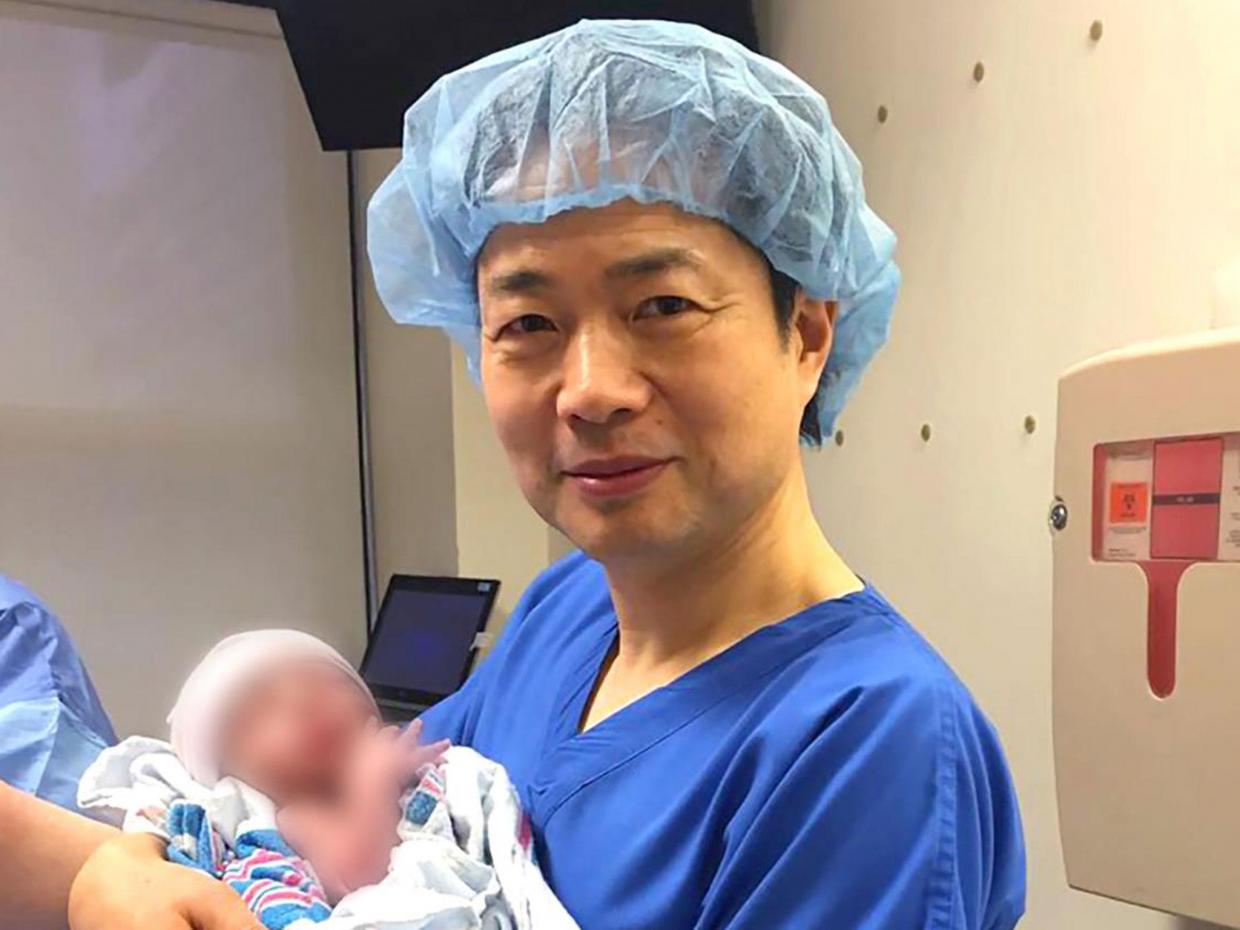
World’s first baby born with new 3 parent technique.  “It’s revolutionary.”

Image result for World’s first baby born with new  the 3 parent technique Image result for World’s first baby born with new  the 3 parent technique Image result for World’s first baby born with new  the 3 parent technique

It’s a boy! A five-month-old boy (middle picture) is the first baby to be born using a new technique that incorporates DNA from three people, New Scientist can reveal. “This is great news and a huge deal,” says Dusko Ilic at King’s College London, who wasn’t involved in the work. “It’s revolutionary.”

The controversial technique, which allows parents with rare genetic mutations to have healthy babies, has only been legally approved in the UK. But the birth of the child, whose Jordanian parents were treated by a US-based team in Mexico, should fast-forward progress around the world, say embryologists.
The boy’s mother carries genes for Leigh syndrome, a fatal disorder that affects the developing nervous system. Genes for the disease reside in DNA in the mitochondria, which provide energy for our cells and carry just 37 genes that are passed down to us from our mothers. This is separate from the majority of our DNA, which is housed in each cell’s nucleus.
Around a quarter of her mitochondria have the disease-causing mutation. While she is healthy, Leigh syndrome was responsible for the deaths of her first two children. The couple sought out the help of John Zhang and his team at theNew Hope Fertility Center in New York City.
Zhang has been working on a way to avoid mitochondrial disease using a so-called “three-parent” technique. In theory, there are a few ways of doing this. The method approved in the UK is called pronuclear transfer and involves fertilising both the mother’s egg and a donor egg with the father’s sperm. Before the fertilised eggs start dividing into early-stage embryos, each nucleus is removed. The nucleus from the donor’s fertilised egg is discarded and replaced by that from the mother’s fertilised egg.
But this technique wasn’t appropriate for the couple – as Muslims, they were opposed to the destruction of two embryos. So Zhang took a different approach, called spindle nuclear transfer. He removed the nucleus from one of the mother’s eggs and inserted it into a donor egg that had had its own nucleus removed. The resulting egg – with nuclear DNA from the mother and mitochondrial DNA from a donor – was then fertilised with the father’s sperm.
Zhang’s team used this approach to create five embryos, only one of which developed normally. This embryo was implanted in the mother and the child was born nine months later. “It’s exciting news,” says Bert Smeets at Maastricht University in the Netherlands. The team will describe the findings at the American Society for Reproductive Medicine’s Scientific Congress in Salt Lake City in October.
Neither method has been approved in the US, so Zhang went to Mexico instead, where he says “there are no rules”. He is adamant that he made the right choice. “To save lives is the ethical thing to do,” he says.
The team seems to have taken an ethical approach with their technique, says Sian Harding, who reviewed the ethics of the UK procedure. The team avoided destroying embryos, and used a male embryo, so that the resulting child wouldn’t pass on any inherited mitochondrial DNA. “It’s as good as or better than what we’ll do in the UK,” says Harding.
A remaining concern is safety. Last time embryologists tried to create a baby using DNA from three people was in the 1990s, when they injected mitochondrial DNA from a donor into another woman’s egg, along with sperm from her partner. Some of the babies went on to develop genetic disorders, and the technique was banned. The problem may have arisen from the babies having mitochondria from two sources.
When Zhang and his colleagues tested the boy’s mitochondria, they found that less than 1 per cent carry the mutation. Hopefully, this is too low to cause any problems; generally it is thought to take around 18 per cent of mitochondria to be affected before problems start. “It’s very good,” says Ilic.
Smeets agrees, but cautions that the team should monitor the child to make sure the levels stay low. There’s a chance that faulty mitochondria could be better at replicating, and gradually increase in number, he says. “We need to wait for more births, and to carefully judge them,” says Smeets.

TWO WOMEN, ONE MAN AND A BABY

A Jordanian couple has been trying to start a family for almost 20 years. Ten years after they married, she became pregnant, but it ended in the first of four miscarriages.
In 2005, the couple gave birth to a baby girl. It was then that they discovered the probable cause of their fertility problems: a genetic mutation in the mother’s mitochondria. Their daughter was born with Leigh syndrome, which affects the brain, muscles and nerves of developing infants. Sadly, she died aged six. The couple’s second child had the same disorder, and lived for 8 months.
Using a controversial “three-parent baby” technique (see main story), the boy was born on 6 April 2016. He is showing no signs of disease.

JUROR’S excused for a fortnight as judge considers legal issue in FitzPatrick trial

Image result for JUROR'S let go for a fortnight as judge considers legal issue in FitzPatrick trial  Image result for Judge John Aylmer
The former Anglo Irish Bank director Sean FitzPatrick.

JURORS IN THE TRIAL OF FORMER ANGLO IRISH BANK CHAIRMAN SEAN FITZPATRICK HAVE BEEN TOLD THEY WILL NOT BE REQUIRED AGAIN UNTIL MONDAY WEEK.

Judge John Aylmer told the jury there was a legal issue which he had to deal with before the trial can proceed.
“That is not unusual,” he said.
Mr FitzPatrick (68), of Whitshed Road, Greystones, Co Wicklow, is facing 27 separate charges of misleading Anglo’s auditors Ernst & Young.
Before they retired all of the charges were read to them.
Judge Aylmer said when they return counsel for the prosecution Dominic McGinn would open the case.
“That lengthy and daunting indictment will be made clear to you,” he said.
The judge said it was “an awful lot to digest” but it would be explained.
Judge Aylmer reminded the jury not to seek information about the case outside the courtroom.
“For God’s sake don’t be tempted to publish your own views on the matter on social media,” he added.
The trial is expected to last 12 weeks. Mr FitzPatrick has denied the charges.
These include 21 counts of making misleading, false or deceptive statements to the auditors of Anglo Irish Bank, contrary to section 197 of the Companies Act 1990.
The offences allegedly occurred on dates between 2002 and 2007 and carry a maximum five year jail term.
They include five counts alleging Mr FitzPatrick did not disclose to auditors Ernst & Young arrangements temporarily reducing the balance of loans to him or persons connected to him at the end of the financial year. The reductions cited ranged in size from €4.3m to €88.9m.
He also faces six charges of giving false information contrary to section 242 of the Companies Act 1990 on dates between 2002 and 2008.
The offences carry a maximum jail term of three years. All counts relate to Mr FitzPatrick allegedly producing financial statements giving a false figure for the aggregate value of loans to directors of Anglo.

Half of Pluto’s heart contains liquid water; NASA finds miracle on the dwarf planet

Image result for Half of Pluto’s heart contains liquid water; NASA finds miracle on the dwarf planet    Image result for Half of Pluto’s heart contains liquid water; NASA finds miracle on the dwarf planet

NASA MADE AN INTERESTING DISCOVERY ABOUT PLUTO AND ANNOUNCED IT HOURS BEFORE THE PRESS BRIEF ABOUT JUPITER’S EUROPA. EVEN SO FAR FROM THE SUN, THE DWARF PLANET HAS LIQUID WATER.

Early last year, Pluto’s “heart” was discovered and it made the world coo at the dwarf planet. Though removed under the classification of what counts as a “real” planet, the dwarf planet continues to astound as scientists find that even so far away from the heat of the sun, Pluto actually has liquid water.
Due to the distance of Pluto from the sun, it should only contain layers upon layers of ice. But last year, when the National Aeronautics and Space Administration’s (NASA) New Horizon spacecraft flew past it, scientists began to suspect that there might be a subsurface ocean.
Since the discovery of Pluto’s heart, a team led by Brandon Johnson, an assistant professor in Brown University, focused on getting to know the Sputnik Planum or the western lobe of the heart. The team believed that the love was caused by an asteroid impact. But the interesting and more pressing question arose when the Planum demonstrated positive mass instead of the opposite.
“An impact crater is basically a hole in the ground. You’re taking a bunch of material and blasting it out, so you expect it to have negative mass anomaly, but that’s not what we see with Sputnik Planum,” said Johnson, as reported by Express.
Pluto once again defies expectations and instead shows that the crate has positive mass as a result of the meteor which in turn caused the subsurface ocean to even out across the dwarf planet. Because it was so astounding, natural curiosity took over and the scientists wanted to “run computer models of the impact to see if this is something that would actually happen.”
The results of their tests yielded and stated that the production of a positive mass anomaly is sensitive to how thick, how salty, and how dense the water is. Thus, the ocean layer of at least 100 kilometers “has to be there.”
Though the thermal models of Pluto’s structure do suggest the existence of a liquid ocean, scientists are still on the lookout of important information that can explain how it is possible in the first place. Once again, Pluto astounds the scientific community, and we wouldn’t have it any other way.  

Wednesday, February 10, 2016

Donie's Ireland daily news BLOG update

The Labour party says Sinn Fein would push the tax rate for Ireland's rich to above 62% if elected?

  ?  

THE LABOUR LEADER JOAN BURTON WITH ALAN KELLY AND BRENDAN HOWLIN TD DURING THE FORMAL LAUNCH OF THE LABOUR PARTY GENERAL ELECTION CAMPAIGN AT THE BORD GAIS THEATRE, DUBLIN.

The Labour Party took the battle to the two main Opposition parties at the launch of its general election campaign in Dublin today.
Tánaiste Joan Burton and senior colleagues Brendan Howlin and Alan Kellymade forceful attacks on Fianna Fáil and Sinn Féin.
Ms Burton excoriated Sinn FĂ©in’s plans to introduce a third income tax rate of 48% for those earning over €100,000.
“Beware of Sinn FĂ©in creeping into the night and raising taxes for those earning over €100,00 by a swingeing 6%.”
She said a similar tax introduced in France had had very detrimental consequences: “It would push the tax rate for a lot of workers in Ireland above 62 per cent. I would be fearful for that in an an open economy.”
Mr Howlin said the Irish people had much more to fear from Fianna Fáil than anything else.
“The part that once apologised for its role in the economy now wants us to forget. We won’t.
“Personally, I’m in politics long enough to remember the last time they inflicted carnage on the Irish people in the 1970s and 1980s. They are serial offenders. They cannot be let back.”
The tone of the launch in the Bord Gáis Energy Theatre was more forceful that similar events held by other parties. Many of the party’s Ministers were present, as were most of its candidates.
The party is running 36 candidates in the election, one less than the number of TDs returned in the last election.
In her speech, Ms Burton said Labour had a vision of a shared recovery, using economic strength to build a decent society.
Setting up the stability versus chaos theme that has characterised the approach of both Government parties, she said: “A distinct fault line has already developed in this campaign, between (the Coalition) and the alternative, those wo talk down Ireland’s resurgence for their own political ends.
“We offer hope and a better future, they offer anger and despair.”
In reference to the volatility suggested by opinion polls, she said Ireland could not afford the luxury of having no government for months on end as has happened in Spain.
She also asserted Labour stood for progressive politics, instancing its stance on same sex marriage and on the eighth amendment to the Constitution (on abortion).
On another dominant theme, the fiscal space, Mr Howlin said Labour’s assessment of the net amount was the same as Fine Gael’s, €10.1 billion. He said there was potential for that sum being larger, depending on tax and economic policies.
Ms Burton quipped at the end that she would no longer use the term. “It’s a new kind of F word, the Fiscal Space,” she said.
On the so-called rainy day fund (a contingency fund in the even of a future shock) Mr Howlin said Labour would have unallocated money but it would not be an enormous sum. He said his preference was to spend money on fast-tracking capital projects.
In a series of questions about a row involving Mr Kelly and TipperaryIndependent TD Michael Lowry over alleged favouritism in a Newstalk interview, Ms Burton said the party would be fighting a robust campaign.
Referring to herself as a Northside Dubliner, she said: “We can be tough enough. When the going gets tough the tough get going. That’s what we are asking all candidates to do in the election.”

Meanwhile?

Sinn Féin proposes increased income tax for higher earners

PARTY MANIFESTO COMMITS TO RETAINING USC BUT ABOLISHING WATER CHARGES AND THE PROPERTY TAX.


SINN FÉIN WILL CREATE A HIGHER RATE OF INCOME TAX FOR THOSE EARNING MORE THAN €100,000 AND REMOVE ANYONE EARNING LESS THAN €19,500 FROM THE UNIVERSAL SOCIAL CHARGE (USC) NET IF IS ELECTED TO GOVERNMENT.

The party unveiled its general election manifesto on Tuesday and reaffirmed its previous commitments to abolish property tax and water charges.
It says it will keep the USC but will exempt 277,000 people from the levy by raising the threshold to €19,572.
Similar to the position of other parties, Sinn Féin also says it will move towards equal treatment of the self-employed in the tax system.
It will raise taxes by increasing Capital Acquisitions Tax and Capital Gains Tax for “passive investments that don’t help the real economy”.
Income over €100,000 will be subject to an additional 7% of tax, private pension tax relief’s will be reduced, a new 15.75% rate of employers’ PRSI will be levied on the portion of salary above €100,000 and a sugar tax and betting tax will also be introduced.
‘A wealth tax’
A new “wealth tax” will also be examined, but was not included in the manifesto because it has not been fully costed.
Donegal TD Pearse Doherty, the party’s finance spokesman, said Sinn FĂ©in is working off Department of Finance figures to calculate the amount of money that may be available to the next government, the so-called “fiscal space”.
When asked what Sinn FĂ©in would do if economic growth did not continue in line with Department of Finance forecasts, Mr Doherty said the manifesto did not take account of the €1.2 to €1.5 billion that is expected to become available due to the loosening of EU budgetary rules.
Fine Gael and Labour are including this figure in their calculations of how much the next government will have to spend.
Mr Doherty said the party will leave aside €1.2 billion in unallocated funding for capital or current expenditure that could be used as a buffer against economic shocks.
Sinn FĂ©in says it will have another €1.7 billion to spend because it will raise some taxes and believes another €366 million will be available from “savings in public spending”.
Of the €10.68 billion it believes it will have to spend, €3.3 billon will be set aside for health; €2.3 billion for housing; €1.9 billion for education; €912 million for social welfare; €858 million for childcare; €420 million for justice; €900 million for water infrastructure and €1.6 billion for transport.
Unallocated money
The €1.2 billion in unallocated money will be earmarked for areas such as acute hospitals, public sector pay and social protection.
Sinn Féin says its investment in infrastructure and public services will create 250,000 jobs over the next five years, 20,000 of which will be in the public sector.
This includes the recruitment of an additional 3,000 gardaĂ­. Closed Garda stations will be reopened.
The party also reaffirmed its commitment to repealing the Offences Against the State Acts, including the abolition of the Special Criminal Court.
In health, the manifesto commits Sinn FĂ©in to recruiting 6,600 “additional frontline health workers, including consultants, nurses, midwives, dentists and allied health professionals”.
The number of hospital beds will be increased by 1,000, with 3,800 additional nursing home beds.
Other manifesto commitments include: ending direct provision; holding a referendum to enshrine neutrality in the Constitution; stopping the involvement of Irish troops in EU battlegroup; returning powers from the EU to member states and national parliaments, and reforms of the EU to reduce the power of the European Commission.
The party will also cut the salary of the taoiseach, ministers and TDs and introduce a partial list system, combined with seven seat constituencies, for Dáil elections.

A former Anglo Irish director said he saw nothing improper about ILP deposits

BANKER SAYS HE WAS ACTING UNDER THE DIRECTION OF HIS FORMER CEO DAVID DRUMM

  
A former Anglo director has told the trial of four senior bankers accused of conspiring to mislead investors that he did not think there was anything improper about Anglo Irish Banks placing the money with ILP or with them taking the deposit.
A former Anglo director has told the trial of four senior bankers accused of conspiring to mislead investors that he was acting under the direction of his former CEO David Drumm when he approached Irish Life about an interbank loan of €7bn.
The four men (pictured above), including former Irish Life and Permanent (ILP) CEO Denis Casey and Anglo Irish Bank’s former Head of Finance Willie McAteer, are accused of conspiring to mislead investors by using interbank loans to make Anglo appear €7.2 billion more valuable than it was.
Mr McAteer (65) of Greenrath, Tipperary Town, Co. Tipperary and Mr Casey (56), from Raheny, Dublin are on trial alongside Peter Fitzpatrick (63), from Malahide, Dublin, who had been ILP’s former director of finance and John Bowe (52), from Glasnevin in Dublin, who had been Anglo’s head of capital markets .
They have all pleaded not guilty at Dublin Circuit Criminal Court to conspiring together and with others to mislead investors through financial transactions to make the bank appear €7.2 billion more valuable than it was between March 1st and September 30th, 2008.
The trial resumed in evidence before the jury on Tuesday after six days of legal argument when Diarmaid McGuinness SC, defending Mr Bowe, continued his cross-examination of Matt Cullen, the former director of treasury at Anglo.
Mr Cullen said that during a meeting with David Drumm, the then CEO of Anglo, Mr Drumm asked him if he would approach ILP “to ask Irish Life for six or seven billion for us in September”.
He said he was sitting beside Mr Drumm and he was specifically asked to approach David Gantley, his counterpart at ILP. Asked if he was “acting under Mr Drumm’s direction” the witness replied “absolutely”.
Mr Cullen previously testified that the scheme to raise “six or seven billion” in corporate deposits involved money being transferred by Anglo to ILP. It would then be put back on deposit by Irish Life Assurance (ILA), the non-banking entity owned and managed by ILP, so it would appear in Anglo’s accounts as a corporate deposit.
He said the money had to come from ILA so that it would show up as a corporate deposit as opposed to an interbank loan. Non-banking deposits, from the likes of life assurance and pension funds, have a greater value than inter-bank loans from the point of view of the markets as they were considered “stickier” or more long term, the trial has heard.
The corporate deposits figure was for publishing in the bank’s full year accounts, when the money would be seen as deposits coming in from ILA.
Mr Cullen also gave evidence about a similar “back to back” transaction between Anglo and ILP which took place in the run up to Anglo’s half year accounts on March 30th.
He said he had not been given instructions to conceal the deposits of €750mn and €1bn from either within Anglo or from the financial regulator. He agreed that the transactions were real transactions.
He said he didn’t think there was anything improper about Anglo placing the money with ILP or with them taking the deposits.
Counsel asked him about the practice of “trying to fine tune” a balance year for the year end account, asking: “Is there anything wrong in your view of the bank trying to look it’s best on the day”?
Mr Cullen replied: “I assume not”. Counsel compared it to Mr Cullen asking his wife and children to go out looking their best on an important day, to which Mr Cullen replied: “I want to go home tonight”.

Horses can read human emotions, according to new research


PSYCHOLOGISTS STUDIED HOW 28 HORSES REACTED TO ANGRY AND HAPPY HUMAN FACES?

Horses really can read human emotions, new research study reveals.
They have been shown to be able to distinguish between angry and happy human faces for the first time.
Psychologists studied how 28 horses reacted to seeing photographs of positive compared to negative human facial expressions.
When viewing angry faces, the horses looked more with their left eye, a behaviour associated with perceiving negative stimuli. Their heart rate also increased more quickly and they showed more stress-related behaviour.
‘It’s interesting to note that the horses had a strong reaction to the negative expressions but less so to the positive’
Study co-leader Amy Smith.
The study, published in the journal Biology Letters, concluded that this response indicates that the horses had a “functionally relevant understanding” of the angry faces they were seeing.
The researchers said the effect of facial expressions on heart rate had not been seen before in interactions between animals and humans.
Study co-leader Amy Smith, a doctoral student at Sussex University, said: “What’s really interesting about this research is that it shows that horses have the ability to read emotions across the species barrier.
“We have known for a long time that horses are a socially sophisticated species, but this is the first time we have seen that they can distinguish between positive and negative human facial expressions.”
Ms Smith added: “It’s interesting to note that the horses had a strong reaction to the negative expressions but less so to the positive.
“This may be because it is particularly important for animals to recognise threats in their environment. In this context, recognising angry faces may act as a warning system, allowing horses to anticipate negative human behaviour such as rough handling.”
A tendency for viewing negative human facial expressions with the left eye specifically has also been documented in dogs.
Study co-leader Professor Karen McComb said: “There are several possible explanations for our findings.
‘Emotional awareness is likely to be very important in highly social species such as horses’ Professor Karen McComb
“Horses may have adapted an ancestral ability for reading emotional cues in other horses to respond appropriately to human facial expressions during their co-evolution.
“Alternatively, individual horses may have learned to interpret human expressions during their own lifetime.
“What’s interesting is that accurate assessment of a negative emotion is possible across the species barrier despite the dramatic difference in facial morphology between horses and humans.
“Emotional awareness is likely to be very important in highly social species such as horses – and our ongoing research is examining the relationship between a range of emotional skills and social behaviour.”
The horses were recruited from five riding or livery stables in Sussex and Surrey. They were shown happy and angry photographs of two unfamiliar male faces.
The experimental tests examined the horses’ spontaneous reactions to the photos, with no prior training, and the researchers were not able to see which photographs they were displaying so they could not inadvertently influence the horses.

Scientists have discovered that bacteria can now see?

SOLVING A 300-YEAR-OLD MYSTERY   LOW DOWN BACTERIA CAN “SEE” IN MUCH THE SAME WAY AS HUMANS, RESEARCH HAS RECENTLY SHOWN.
Each bacterial cell acts as a microscopic eyeball or fibre optic filament, scientists said.
The discovery solves a mystery that has vexed scientists for more than 300 years – how do bugs that rely on sunshine to survive sense light?
The answer is they do it by turning their whole body into a camera-like lens that focuses light on to a particular spot. This triggers movement away from the focal point and towards the light source.

SCIENTISTS HAVE BEEN STUDYING BUGS TO SEE HOW THEY SENSE LIGHT?

Lead researcher Professor Conrad Mullineaux, from Queen Mary University of London, said: “The idea that bacteria can see their world in basically the same way that we do is pretty exciting.”
The team studied Synechocystis, a species of cyanobacteria – bugs that form the green slime on rocks and pebbles and which, like plants, photosynthesise to tap into energy from the sun.
An ability to sense light is crucial to the survival of these ancient microbes that evolved more than two billion years ago.
Previous studies have shown that they possess an ability to pinpoint the position of a light source and move towards it. The new research shows that they achieve this by using their bodies as tiny lenses.
As light hits the spherical surface, it focuses on to a point on the other side of the cell. Within minutes, the bugs grow tiny tentacle-like structures called pili that reach out and pull the bacteria towards the light source.
Mullineaux added: “Our observation that bacteria are optical objects is pretty obvious with hindsight, but we never thought of it until we saw it. And no one else noticed it before either, despite the fact that scientists have been looking at bacteria under microscopes for the last 340 years.”
A Synechocystis cell is about half a billion times smaller than the human eye.
As in the case of the human eye retina, the image cast on to the back of the cell is upside down. But its resolution is much lower, producing only a blurred outline.
A Synechocystis cell is a whole lot smaller than an eye.
While the bacterium studied acts as a spherical lens, the scientists believe light-sensitive rod-shaped bacteria behave like threads of optical fibre.
The findings, published in the journal eLife, demonstrate how evolution can converge even in organisms as different as bacteria and humans.