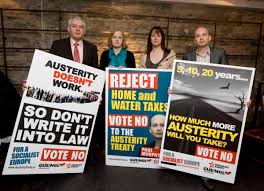
The eviction of a elderly couple from their home in Killiney Dublin 'A ghastly sight'
‘It's a sign of the times we are in’
The eviction of a couple from their home in Killiney, Co Dublin, yesterday has been raised in the Dáil and prompted a protest at the Dublin City Sheriff’s Office.
Gardaí and bailiffs removed Brendan Kelly (71) and his wife Asta (63) from their home at St Matthias Wood, Killiney, Co Dublin around lunchtime yesterday.
A video taken by a neighbour and posted on YouTube shows the couple being removed.
The couple had fallen behind on their mortgage payments, issued by the institution previously known as Irish Nationwide Building Society.
The couple pitched a tent outside their home and slept in it last night.
St Matthias Wood is an exclusive cul-de-sac development of five luxury detached homes situated off Church Road in Killiney. It was built in 2004 by Castlepark.
The couple had operated a successful business in Germany, selling Irish textiles to German holidaymakers, under the brand-name Irland Haus.
At one point, they owned two shops in the exclusive north German island resort of Sylt, and another on the shores of Lake Tegernsee in Baveria.
However, in the late 1990s they decided to sell the business and return to Ireland, investing their money in the Irish property market.
They built a sizeable portfolio of properties, owning several houses in the greater Dublin area.
The couple purchased their Killiney home shortly after it was constructed in 2004 for €3.2 million, with the aid of a €2 million mortgage from Irish Nationwide.
The property is on the market with an asking price of €2.2 million.
Speaking to RTÉ radio this morning Mr Kelly said although the couple were aware the bailiffs were coming, “no circumstances justified” the manner of the eviction.
“The Government have said that they will go out of their way to make sure that people stay in their family homes. This sort of behaviour by a Government-owned bank does not make that claim credible”.
Mr Kelly denied that he was aggressive towards the bailiffs carrying out the eviction. He said he was a landlord by profession and rented quite a number of “good quality” properties around the city.
He said the mortgages on these properties were held by Permanent TSB and Bank of Scotland Ireland.
Asked why they had not sold properties from their portfolio to meet their debts, Mr Kelly said it was practically impossible to sell a property at the moment. The couple met their financial advisers today.
Speaking to radio station Spin 1038, as bailiffs representing the bank entered her home yesterday, Ms Kelly (63) said she and her husband had had trouble paying the mortgage.
In a statement to The Irish Times last night, the Irish Bank Resolution Corporation, with which the building society has merged, confirmed it had served a repossession order on a house in Killiney. It said it could not comment on individual cases but “a full legal process” had been followed.
Sinn Féin TD Mary Lou McDonald told the Dáil today while this eviction was only receiving media coverage because of the location of the house, it was symptomatic of the housing crisis.
Tánaiste and local TD Eamon Gilmore, described images of the eviction as “distressing” and said although the Kellys had not been in contact with him, he was seeking further details on the case.
A small number of Occupy Dame Street protestors staged a sit-in at the Dublin City Sheriff’s Office this afternoon in protest at the eviction.
State company Eirgrid to develop €240m power grid in the west of Ireland ‘Called Grid-West’
Above is Michael Garrick of Tobin Consulting Engineers, and Dermot Byrne and Andrew Cooke of Eirgrid discuss some of the details of the first phase of a €240 million electrical development project in the west of Ireland.
The state company Eirgrid will launch a €240 million development project for the west of Ireland next week.
It is planning to develop the electricity grid in Co Mayo and surrounding counties in a project called Gridwest.
The plan will involve an investment of some €240 million to strengthen the existing power infrastructure in the region.
One of the main aims of the exercise is to underpin the region’s ability to attract investment that will lead to the creation of new jobs.
It will formally launch Gridwest next week.
The move will mark the start of a consultation process with residents, business and other interested parties.
The company launched a similar programme for the south and east of the Republic last week, which is valued at some €500 million.
Eirgrid, which is responsible for managing the national electricity network, published its annual report yesterday, which showed that the company’s operations made €30.3 million profits last year.
The company is waiting for a Government decision on a Meath-Tyrone power link which had to be abandoned after a planning hearing collapsed in June 2010.
A discovery that Eirgrid’s planning application included the wrong height of some of the pylons led to the collapse of the hearing.
Local interest groups, who say they are concerned about the impact on property values, health and the landscape, want the cables run underground.
An expert group appointed by the Minister for Communications, Energy and Natural Resources, Pat Rabbitte, reported earlier this year that placing the power lines under the ground would add over €300 million to the project’s cost and would carry other risks.
Various parties, including Eirgrid, made submissions to a series of Oireachtas committee hearings on the issue.
The interconnector is vital to guaranteeing energy supplies to the region involved.
The Government is due to make a decision on the issue after the Minister brings a memo on security of energy supplies to Cabinet, which he is due to do shortly.
Eirgrid is in the process of putting in place a power link between Ireland and Britain, a link that will come ashore in north Co Dublin.
Cable-laying is due to being shortly, and the work will be finished by the autumn.
Following the completion of the project, which will cost in the region of €600 million, Eirgrid will consider developing further such links with Britain and France
Gardai are planing a crackdown on roaming burglars in Ireland
GARDAI are to attempt a massive crackdown on urban burglary gangs who are roaming the country.
The shocking rise in burglaries is to be tackled by a new operation targeting gangs. It comes in the wake of an epidemic of break-ins in Dublin.
Garda stations in the capital and surrounding counties reported sharp rises in burglaries in recent weeks. Nationally, the rate is up 8pc.
The new garda plan, Operation Fiacla, will be directed specifically at roaming criminals who commit house thefts around the country.
Justice Minister Alan Shatter, whose own home was burgled in March, said he is concerned about the increase in break-ins.
concern: However, gardai are now employing targeted strategies to “counter this trend and have had major successes within the last 10 days”, he told the Garda Representative Association conference in Athlone, Co Westmeath.
Garda Commissioner Martin Callinan revealed two individuals suspected of committing 20 burglaries in the west of Ireland were arrested on Monday morning.
“The increase in burglaries is certainly a concern for us and it is something that we have been discussing for the last day and a half in Templemore,” he said. “We have launched an operation, Fiacla, which will deal with this, particularly travelling criminals.”
Burglar put his gun to my head
SHOCK: Gun pointed at Gerry Garvey in his home
A VICIOUS DUBLIN-BASED BURGLARY GANG THREATENED TO SHOOT CHILDREN DURING A VIOLENT BREAK-IN.
Dad-of-four Gerry Garvey was handcuffed and his 16-year-old daughter bound with cable ties as the gang ordered his wife to give them money from a safe.
The vicious thugs then put a sawn-off shotgun to his head and threatened to kill his wife and children if they didn’t comply with their demands.
Today a Dublin suspect was in custody following the terrifying raid on the family’s home.
The 41-year-old from Clondalkin and a second suspect (48), from Cork, were being quizzed about the burglary.
Mr Garvey, his wife Anne, and their children – a twin boy and girl, aged 16 and twin boy and girl, aged 14 – were held hostage at their home by three men on Monday night.
The gang made off with a sum believed to be around €4,000 from the house near Pallasgreen in Limerick. The attack began at around 9.40pm, when the gang broke into Sunville House – which used to be a restaurant – through a patio door.
The three men wore balaclavas and were armed with a sledgehammer and sawn-off shotgun. After storming in, the men started screaming.
“They put a gun to my head as my daughter watched on. They were threatening to kill me and I tried to stay as calm as I could,” Gerry Garvey said.
Anne Garvey was upstairs when raiders broke in – and her husband and daughter were downstairs in the living room.
“They put handcuffs on Gerry and shoved him to the ground while one of them put the sawn-off shotgun to his temple.
“They wanted money and said if they did not get it they would shoot Gerry. They wanted the key (of the safe). I did not give the key to them, and opened the safe myself,” Mrs Garvey said.
Their 16-year-old daughter added: “Dad was on the floor and I was near him. The one with a sledge hammer was taking care of me and the guy with my dad was the main guy and had the gun and was just threatening to kill him.
“Then the guy with the sledgehammer brought me over to where my dad was so we would not go anywhere. One had the gun to my dad’s head and I was right beside him.
“They had me tied with a cable tie and I was crouched down by dad.”
After Mrs Garvey handed over money, the raiders fled. At around 11pm, gardai in Buttevant, Co Cork, stopped a car for speeding and became suspicious of the two male occupants.
They searched the grey BMW and found a large sum of cash.
They two men, which included the man from Clondalkin, were taken to Mallow Garda Station. They appeared before Mallow District Court yesterday in relation to the speeding offence, before they were arrested outside the courthouse in relation to the home invasion.
Polar bears are 450,000 years older than we first thought they were
Endangered predator may be particularly vulnerable to rapid climate change in Arctic, experts fear
The polar bear is a much older species than previously thought and probably emerged as the Arctic’s top land predator when a cold-adapted bear diverged from an ancestral brown bear about 600,000 years ago, a study has found.
The findings suggest that the evolution of the world’s largest land carnivore was a much slower process than originally believed, which indicates that the polar bear may be more vulnerable to rapid climate change in the Arctic than previously suggested.
A year ago, scientists produced DNA evidence to suggest that polar bears evolved from ancient brown bears about 150,000 years ago, which surprised many experts because it was a relatively short time for such a big, specialised mammal to have evolved.
This led some to speculate that the polar bear may be able to adapt to the far faster climate changes now taking place in the Arctic, where the sea ice on which the animals hunt has disappeared at a dramatic rate over the past 40 years. However, this earlier study was based on mitochondrial DNA which accounts for less than 1 per cent of an animal’s genetic material and is only inherited through the maternal line.
The latest study, published in the journal Science, is based on the much larger amounts of DNA within the animal’s chromosomes, which contains a more complete genetic history of the species.
When scientists compared chromosomal DNA of 19 polar bears to the similar DNA of other bear species, they found a clear relationship with the brown bear, which sometimes has overlapping territories with the polar bear, especially during warmer periods.
The scientists estimate that the last common ancestor of polar bears and brown bears lived between 338,000 and 934,000 years ago. The most likely date, however, was about 600,000 years ago, when coincidentally there was a marked global cooling resulting in one of the most pronounced ice ages, said Frank Hailer of the Biodiversity and Climate Research Centre in Frankfurt.
“It was the first dramatic cooling period of the ice ages. Our data on the polar bear lineage may be coincidental but it fits in with the time period when the climate was very cold,” he said.
In recent years there have been several reports of encounters between male polar bears and the smaller brown bear resulting in fertile offspring. One hybrid was the result of a hybrid polar-brown bear mating with a pure-bred polar bear.
Dr Hailer said the earlier study on mitochrondrial DNA could be explained by something similar happening about 150,000 years ago, when female brown bears mated with male polar bears resulting in fertile female offspring that “back-crossed” with pure-bred male polar bears, carrying their mitochondrial DNA with them.
“It shows that polar bears and brown bears hybridised about 150,000 years ago and then backcrossed into the main polar bear population. The mitochondrial DNA of polar bears today stems from this period,” Dr Hailer said.
Ireland’s Agri-food industry keeps on growing & is now reaping it’s just rewards
AMID THE seemingly relentless narrative of economic gloom, one sector of the Irish economy is holding its own. Ireland’s agri-food industry is flourishing. Food and drink exports increased by 12 per cent last year, reaching close to €9 billion, a record.
Having stayed in the shadows during the economic boom, the industry is firmly back centre stage, as the Government and policymakers try to ease the Irish economy out of recession. It is not difficult to see why. Irish agriculture embodies what is hoped will be the twin catalysts for the Irish economic recovery – exports and innovation.
Despite its reputation as an insular, domestic-focused industry, one of the defining attributes of the sector is its high dependence on export activity. More than 90 per cent of Irish beef and 85 per cent of dairy products are exported. Similarly, the indigenous industry has been at the forefront of scientific and nutritional innovation, as it develops more added-value products in the field of infant formula and whey-based protein nutritionals, and positions itself at the premium end internationally in terms of dairy and meat consumer goods.
But despite all the optimism, the industry is not without its challenges.
It is worth remembering that the Irish agri-food sector still relies on subsidies at a primary level. Irish agriculture may be performing well, but it is doing so in a highly protected market. The Common Agricultural Policy (Cap), the cornerstone of EU agriculture policy, effectively shelters European agriculture from the vagaries of the free market.
Though the methods by which Cap supports farmers has moved from a system of price intervention towards direct financial support to farmers, Cap still represents about 40 per cent of the EU budget, though this figure is falling. Ireland receives close to €2 billion a year in subsidies, mostly through single direct payment. An estimated 70 per cent of farm income derives from direct payments, according to the Irish Farmers’ Association.
Many commentators, including Prof Alan Matthews of Trinity College Dublin, have questioned the commercial viability of a sector that is so heavily supported.
Supporters argue that the system is essential to guarantee a stable food supply, produced to the highest environmental and safety standards for European consumers, as well as stressing its centrality to the rural economy.
While Cap is due to be reformed in 2014, the main changes will most likely concern the renegotiation of the current system whereby different rates are paid to different members and enhanced environmental requirements, rather than any substantive changes. Whatever its critics’ misgivings, Cap is here to stay in some form for the near to medium term.
The other more immediate issue for the sector is its inherent volatility. Like most commodity-based industries, agriculture is a cyclical business. Last year’s growth in Irish food and drink exports was due to high commodity prices as much as any increase in the volume of product sold. The disparity in dairy prices over the last few years exemplifies this price volatility. Milk hit 40 cent a litre in 2007, only to fall to nearly 20 cent within 18 months. Already this year milk prices have weakened from last year’s highs, with one co-op, Arrabawn, reducing the amount it pays farmers for milk earlier this week.
Although research shows underlying global food demand is on an upward growth trajectory as the population increases exponentially, short-term volatility is a reality of the business.
DAIRY: But despite the economic complexities, food production holds huge opportunities for growth. For Ireland, dairy holds the most potential. In 2015 the European milk quota system, which has capped the amount of milk European farmers have been permitted to produce since 1984, is to be abolished.
Ireland is particularly well placed to capitalise on the change, as its grass-based method of production allows it produce milk cheaper than most competitors. While competitors such as New Zealand and the US are expected to increase production by 2020, Europe as a whole is only expected to deliver modest growth allowing Ireland to benefit, though some price deflation is expected as Europe opens up to the market.
Ireland has already established itself internationally as an innovator of dairy-based products. Major listed companies such as Kerry Group and Glanbia have become world leaders in the food and ingredients space, with Glanbia, in particular, capitalising on the growing demand for nutritional products.
Irish co-ops, such as Dairygold and Connacht Gold, have also been to the forefront in cultivating new markets and products, exporting in some cases 98 per cent of the milk they produce, often in collaboration with the Irish Dairy Board.
Lakeland Dairies, which enjoyed a 52 per cent rise in profits last year to €6.85 million on revenues of €472 million, processes about 85 per cent of its milk into powder, which it then exports across Europe and particularly into North Africa. It is also exports branded food service and ingredients products to about 70 countries worldwide.
But despite the success of the Irish dairy industry in cultivating new products and markets, hurdles remain. Ireland’s export opportunities into some markets are limited by trade agreements between other countries. For example, New Zealand, has a bilateral agreement in place with China since 2008, which effectively prohibits Irish milk producers from competing in the space.
Hence the emphasis during this week’s trade mission to China of developing niche, premium-quality dairy products for the huge Chinese consumer market, rather than focus on bulk-selling of milk.
The Irish Dairy Board launched a Kerrygold-branded UHT milk product, which it has been developing specifically for the Chinese palette over the past 18 months with Lakeland Dairies, while Glanbia launched a new whey protein brand for the infant formula market, bringing to 9,000 tonnes the volume of dairy ingredients it exports to China.
Access to markets aside, the other main challenge for the Irish dairy industry is its preparedness for the abolition of milk quotas. The Government predicts a 50 per cent jump in milk volumes following the end of quotas. Ensuring farmers and processors have the capacity for this increase will be challenging.
One contentious issue is the question of consolidation of the co-operative sector, something believed to have been a factor behind recent tension at the Irish Co-operative Society (Icos) which culminated in the exit of its chief executive after a year in the role.
Seen just a few years ago as the necessary price for survival among Irish co-ops, the momentum behind the call for further consolidation appears to have abated in the last yea. This may reflect a certain complacency as milk prices reached record highs, though senior figures in the industry have also questioned the long-term suitability and sustainability of the kind of national consolidation model epitomised by New Zealand, where the country’s main co-ops merged to form dairy company Fonterra.
Nonetheless, it is widely accepted that some form of co-operation is essential if the Irish dairy industry is to compete internationally. Exploratory discussions between Dairygold and Glanbia, which will need extra processing capacity post-2015, about a new processing facility have taken place, while a buy-out of the Glanbia co-op by its 54 per cent co-op shareholders may also resurface as a possibility.
Another concern is whether producers are sufficiently prepared for expansion. The relatively small size of Irish farms, coupled with cultural issues such as the historical reluctance of Irish farmers to lease out land for cultivation and use despite tax incentives, may be barriers to development. Teagasc is playing a key role at producer level, working closely with farmers to improve the quality of their produce by focusing on animal health, nutrition and breeding issues, moves that also lead to more cost-competitive production. Encouraging better farming also has knock-on effects on Ireland’s sustainability agenda, as Bord Bia markets Ireland’s “green” credentials.
BEEF: While the dairy industry is set to take centre stage in Irish farming over the next few years, there is more limited scope for expansion within the beef industry. Ireland is one of the top-five beef exporters in the world and number one in Europe, but the industry is heavily dependent on EU subsidies.
It is widely accepted that any change to the single farm payment would have a serious impact on the viability of beef farming. So too would the liberalisation of world markets, given the large-scale operations and low production costs involved in the production of beef in non-EU bloc countries.
Minister for Agriculture Simon Coveney has outlined Ireland’s strong opposition to any relaxation of the rules to allow more South American beef into Europe, citing among many reasons the disparity in production and traceability standards required of South American and Irish beef. The issue is likely to come to the fore in next year’s negotiations on Cap.
Nonetheless, the Irish beef industry has rebounded from the meat scandals of the past, and has successfully managed to market itself as a premium, high-priced product.
While in the 1990s about 50 per cent of Irish beef went to non-EU countries such as the Gulf states, 98 per cent now goes directly on to the shelves of European retailers. Irish processors have built up direct relationships with the top retailers rather than depending on wholesalers. Again, Ireland’s green image is key to branding Irish beef as a premium product.
The suggestion that China may relax its ban on the import of Irish beef which emerged from the recent trade visit, is also welcome.
Irish pork has also managed to recover from the dioxin scare in late 2008. Again China is seen as a major player, as it accounts for half the global production and consumption of pork. It is expected to increase its imports by about 20 per cent as domestic demand outstrips supply. A visit to Ireland last year by leaders from the Chinese pork industry was seen as a key stage in the development of further trade links in this area.
While tillage farming accounts for a relatively small proportion of agricultural land use in Ireland, most cereal growers had a particularly strong year last year, reflecting strong yields. However, potato producers have been struggling, faced with historically-low prices and decline in consumption.
Other areas of growth are in the prepared foods, artisan and SME sector. A number of small, privately owned Irish companies are making their mark. Companies such as Shannon-based ABC Nutrition have made strides in the sports nutrition market internationally, while the sale of John Teeling’s Cooley Distillery to US drinks company Beam for $95 million illustrates the demand for Irish-branded products.
 Potential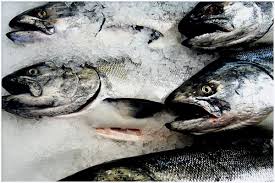
There is also a growing move to develop Ireland’s fish farming industry, with the Asian market a specific focus.
Above all, this week’s trade mission to China illustrates the possibilities open to Ireland in niche and ancillary services related to the agri-food industry. The range of contracts secured – Red Mill’s contract to provide the first imported horse feed into China, an application by Irish fruit company Keeling’s for a licence to export Irish-grown fruit directly to China, and Samco’s development of a corn silage system for the Chinese market – shows the huge potential offered by the agri-food sector internationally in new areas. For a country the size of Ireland, securing a niche in the global market may just be the way forward.
 No
No